
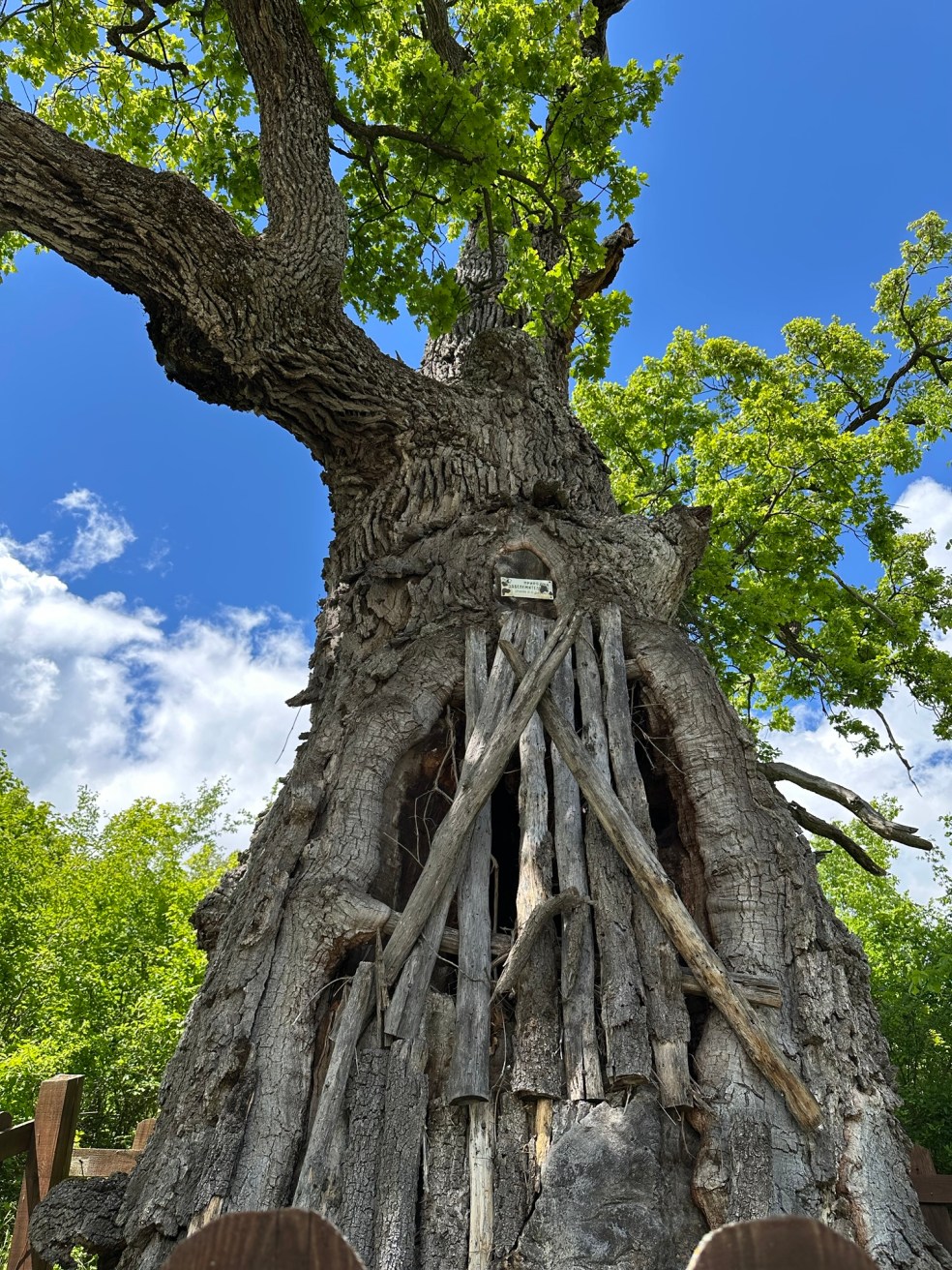
One of my favourite Old English poems, and my first translation from Old English! The translation is accompanied by a photo of a six-hundred-year-old downy oak at the entrance to Bosnek village, on the south side of Mt Vitosha in Bulgaria, which has resisted the twists and turns of life.
DEOR
Weland himself among worms experienced misery,
The single-minded nobleman endured hardships,
Had for himself as companions sorrow and longing,
Winter-cold pain, often found woe,
After Niðhad laid fetters on him,
Supple sinew-bonds on the better man.
That passed, so may this.
To Beadohild was not her brothers’ death
In mind so grievous as her own thing,
That she had readily perceived
That she was pregnant, could never
With courage have considered how that should be.
That passed, so may this.
We have heard that Mæðhild’s lamentations
Were endless, Geat’s wife,
That sorrowful love deprived her of all sleep.
That passed, so may this.
Theodric had for thirty winters
The Mærings’ burgh; that was known to many.
That passed, so may this.
We have heard about Ermanaric’s
Wolfish thought; he had widely the people
Of the Gothic kingdom; that was a grim king.
Many a warrior sat bound by sorrows,
Woe in expectation, wished constantly
That his kingdom would be overcome.
That passed, so may this.
Sits a sorrowful person, deprived of joy,
Grows dark in mind, it seems to him
His share of hardships may be endless.
He may then consider that throughout the world
The wise Lord turns constantly,
On many nobles bestows honour,
Certain fame, on others a share of woes.
As for myself, I should like to say this:
I was for a time the Heodenings’ bard,
Dear to my lord; Deor was my name.
I had for many winters a profitable position,
A loyal master, until Heorrenda now,
A song-skilled man, received the right to lands
The protector of nobles had previously afforded me.
That passed, so may this.
An Old English poem of consolation found in the tenth-century Exeter Book, translated by Jonathan Dunne. It is possible to view the manuscript of the Exeter Book online. The poem is on folios 100r and 100v. I first read the poem with the help of my tutor at City Lit, Stephen Pollington.
 Stones Of Ithaca