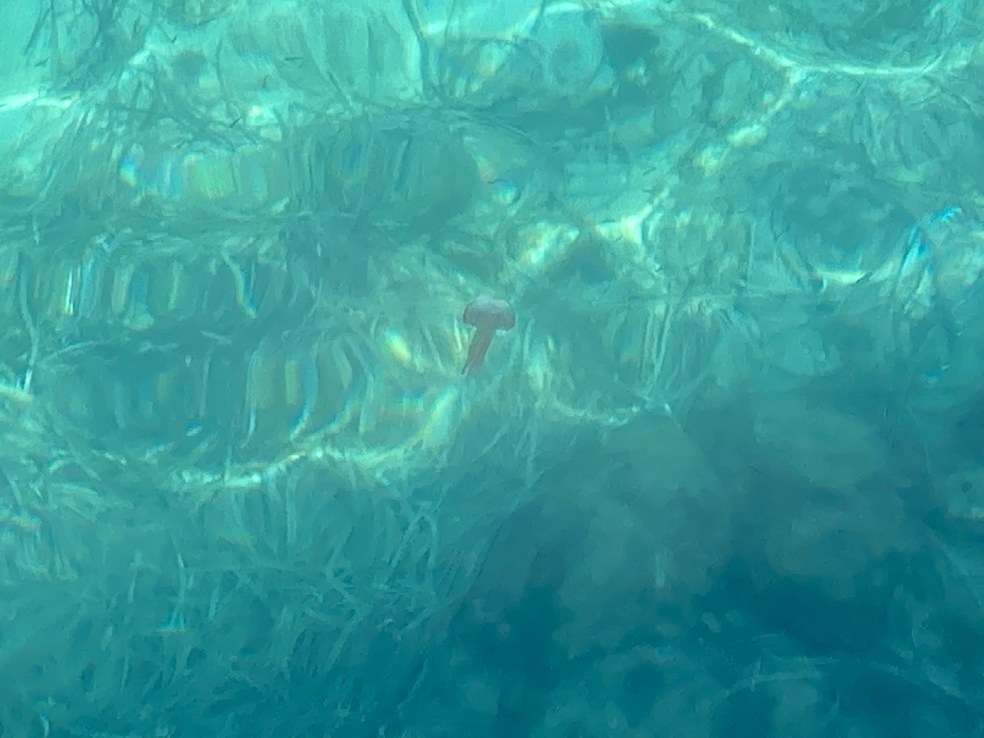
Jellyfish Sting

I swam

not with Tom Cruise,

not with Anthony Hopkins,

not with Kim Kardashian

but with a cormorant

fishing

in flips and furls

seemingly oblivious of me

as I cut silently

through the water

I start the day like this

– arms outstretched,

hands upturned,

palms white,

seeking the sun

and then I draw

a long arc

like Moses

watching the Israelites

fighting the Philistines

keeping God on their side

The sea is

an altar cloth

– an antimension –

which I open

and wipe with a sponge

I begin my prayer

above the water

“Lord Jesus Christ,

have mercy on me”

After a while

my prayer descends

I no longer enunciate

the words

as my mouth goes

below water

My mouth is now

the underside of the boat

(I have learned

something of

the spiritual life)

But when I turn

the sea changes

a dark cloak

has been cast over it

with coruscating

sequins

that prevent me

seeing

below the surface

A sudden

searing pain

wraps itself

around my wrist

I thought pain

was supposed to be

a knife

a spit

something driven in

not something wrapped around

an embrace

an arm around the shoulder

and what to do

when the threat

is your milieu

– you cannot get out

of it

except by swimming

to shore

you cannot stay still

Prayer is tossed

to the four winds

safety is the priority

now

and as I head

to the shore

another hidden enemy

still has time

to give me

a parting shot

On the beach

I accost some locals

unsure as yet

what has attacked me

Jellyfish,

they say

Then how do you swim?

I ask

The old Greek lady

gazes at me

through dark tinted

glasses

I can just make out

the pearls

of her eyes

We look,

she replies

Jonathan Dunne, 28 June 2022
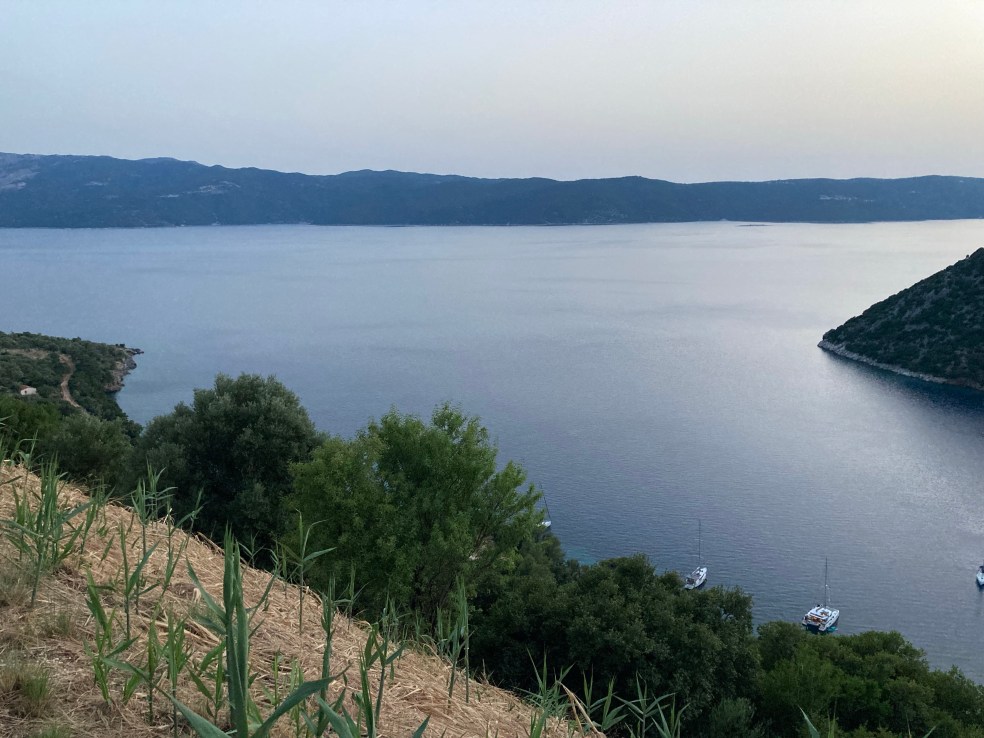
Polis Bay

We swam to the little beach

where the cold water

was like

petrol on the surface

or someone had

dropped a slush puppie

We decided to swim

across the opening of the bay

despite the danger of

speedboats

yachts

catamarans

Tsveta panicked

because of a jellyfish

hanging in midwater

observing us from

a floor or two

below the surface

The water where it

became dark blue

was soft and warm

like a baby’s blanket

– not at all

the feared monster –

soft rolls of water

lapping against our faces

occasionally slapping my cheek

spitting in my ear

but only when I looked around

Eyes front,

they seemed to be telling me

A catamaran had entered

the bay

a sporty speedboat

made a pretence of

doing the same

only to exit just as quickly

A tease perhaps of fate

a distraction

a nick in the skin

of faith

The fact is

not a single boat

endangered our crossing,

unusually so in a bay

where speedboats

can come and go

every two minutes

What helped us across, I think,

was the reference of the beach

– Takis’ hut,

the end of the sunbeds,

the end of the beach,

only the rocks left

that line of primitive writing

that runs all around

this island of Ithaca

where we have arrived

and left again

Familiar landmarks

were staging posts

(there is no halfway point

and, even if there were,

it would have moved

by the time you got

to it

in this fluid

version of reality)

We aimed for the rocks

– the horse (or lion),

the kiss,

the wombs with a cross

and more writing

in them –

the rocks did not move,

only the water went

from dark blue

to turquoise green

to lemony

and I realised

I felt no fear

– no fear of the deep,

so deep you could not

see the bottom,

the bottom – like stabilisers,

like a father’s steadying hand –

had been removed

and God laughed

– I heard him –

lighting for us

a row of scintillating candles

pinpricks of light

on the sea’s surface

that were mirrored

from where we had come

Jonathan Dunne, 27 June 2022

The Name

That is what the verse, my verse,

that of the chosen poets, is for.

To give eternity to things.

Herein lies, then,

its true birth.

Oh, the anguish of baptizing you,

waiting for the right word

to appear!

Followed by the pain,

that ardent pleasure

of making the waiting time eternal.

It will come without its name,

naked, through the silence.

Oh, the anguish of baptizing you,

the glorious miracle of finding your name!

Because there are words that lived

only a moment

(the font, in the shade,

the luminous altar,

the invested poet),

there are also dead words

and others that live alone.

And words that throb

in the blood of a priest’s fingers.

And words to close the eyes of the dying.

And light words

that are carried by the wind.

You can live…

The name that like a blanket

will cover your body awaits you.

It will get in your blood,

it will get in your life,

in your gestures and your hours.

It will watch over your sleep.

You will have the same fragrance as your name,

which, in silence,

will always be making you,

and will be the only part of you

you take from this world.

from Shadow on Air by Grass (1959) by the Galician poet Luís Pimentel, translated by Jonathan Dunne