Turner paid a visit to the Schöllenen Gorge in 1802. This gorge is formed by the upper Reuss, a river in Switzerland, and provides access to the St Gotthard Pass. Turner made several drawings of this scene, like the one I would like to talk about, The Devil’s Bridge and Schöllenen Gorge, some of which he later turned into paintings.
Here is the drawing:
The bridge, called the Devil’s Bridge, had recently been destroyed during fighting between the French and Russians in 1799 (the War of the Second Coalition, part of the French Revolutionary Wars) and had just been rebuilt when Turner visited. The figures in white on the left of the bridge are thought to be Russian soldiers, and on the right can be seen some pack-mules on the track as it leaves the bridge.
This is how far a physical description of this drawing would go, but the Bulgarian poet Tsvetanka Elenkova in her poetry collection Turner and the Uncreated Light offers a spiritual vision of this drawing, as she does of numerous paintings by Turner, so that we, the viewer, might go further than the physical vision and discover something new, something that critics have overlooked (among them John Ruskin, who described this drawing as ‘curiously bad’).
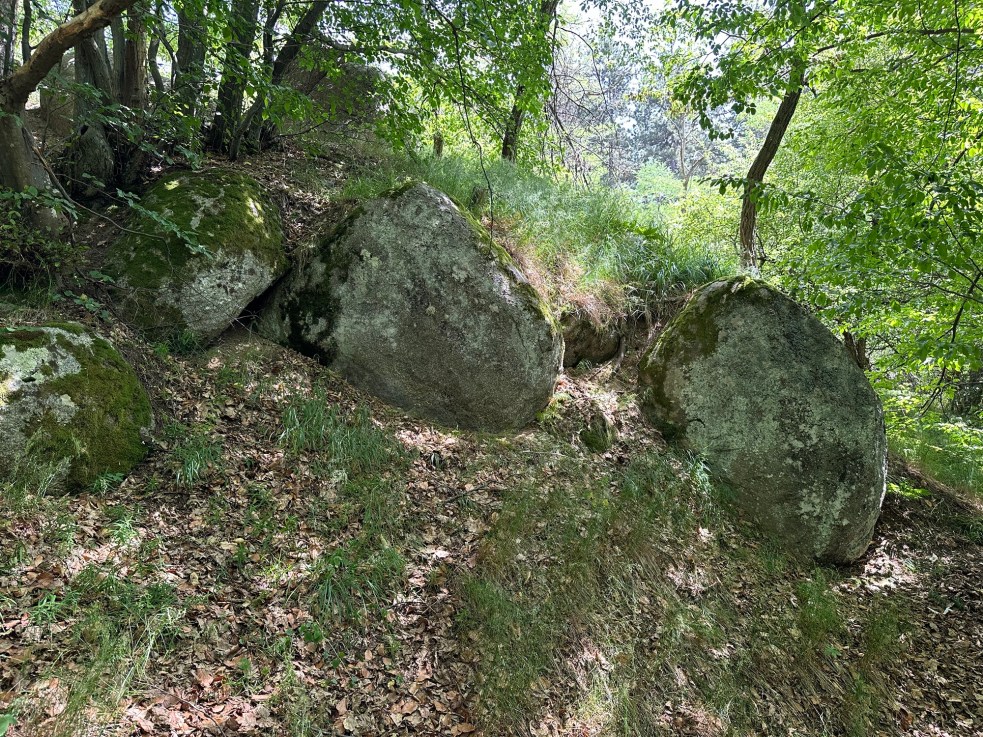
The first thing we note, as I myself noted some fifteen years ago, at the beginning of my spiritual journey, are the faces in the rock. Look at the rock behind the bridge, above the Reuss Falls. These faces are often recumbent, gazing upwards (not at us), as if towards the other world (or something that we cannot see). There is one in the lighter (brown) patch on the right. You can clearly see the hair, the thick eyebrows, the eyes, the nose, the fleshy lips. There is another on the left, where the Falls begin, looking slightly perturbed. I have walked on the mountain near Sofia, where I live, and often come across such faces. They seem frozen in time, as if awaiting reanimation. They do not communicate, they simply look (beyond you). I think Turner here has faithfully drawn the landscape, and this landscape contains faces (as we often find in clouds, for example, or other aspects of nature).
But what the poet pays attention to is the shape of the gorge, which from the top of the mountains down to the arch of the bridge forms a chalice. The Falls would be inside this chalice, and the thin stream of water that falls down in a vertical line would be the stem of the chalice. I think once you see this chalice, it is difficult to look at the drawing without seeing it (this is typical, in my experience, of spiritual vision, it is like a security door at the airport, once you go through it, you cannot go back and unsee what you have seen).
Particularly remarkable is the cliff face on the right, beneath the track with the pack-mules, because here there seem to be two or three figures of saints. The one in the middle is very clear. We see their upper half, the vestments, the darker skin and hair, and a very distinct halo. Anyone who is familiar with an Orthodox church will know that in the altar at the far eastern end of the church, the frescoes in the first row often depict Church Fathers (Basil the Great, John Chrysostom, Gregory the Theologian). These figures are often very tall (in comparison, for example, with the figures in the next row up, which shows the Communion of the Holy Apostles). So Elenkova concludes that we are in a kind of stone church, the centre of which is the chalice (in the Orthodox liturgy people commune from the chalice, the body and blood of Christ are given together directly from the chalice in a spoon).
Elenkova understands the Russian soldiers on the left to be priests (dressed in white). They are bringing the gifts in order to offer them to the people and from the people to God. And we see that the figure or pack next to the mule on the right (it is difficult to make out clearly) has a red cross.
But perhaps most important for the poet is the figure of a child wrapped in swaddling clothes that can be seen inside the chalice (top left). It is as if we have a depiction of the whole life of Christ on this earth, from his nativity to his bloody crucifixion (the red cross). There would be no crucifixion – and resurrection – without the nativity, no less remarkable in itself, that God should become human. As the poet says, in a way it is to be expected that God can resurrect, he is after all eternal, but to take on human form, to contain himself in his mother’s womb and to be born into his creation, is unusual.
From this nativity comes all the teaching, the miracles, and then Christ’s crucifixion and resurrection, leading to the celebration of the Orthodox liturgy and the communion of the people.
So again, the poet offers us a spiritual vision of Turner’s paintings and drawings, and this vision is very important for us to begin to see the world we live in. If we don’t see the world we live in, then we are walking in darkness and we are liable to make the wrong decisions. We are, in effect, the blind leading the blind because our spiritual eyes haven’t been opened. The problem with spiritual sight is that we don’t realize we don’t have it. Once our physical eyes are opened when we are babies, we think that we can see – ourselves in a mirror, the world around us (which we generally think has been put there for us to do with what we like). But we are still missing an essential element – the intrinsic worth of things. And this spiritual sight is only given to us when we believe, when we turn our hearts to God and begin to participate in the sacraments of the Church. Christ healed the man born blind in John, chapter 9. We are all the man born blind, in need of having our spiritual eyes opened so that we can see, which is the journey of the mind into the heart, the purpose of all Orthodox asceticism.
Jonathan Dunne, http://www.stonesofithaca.com



 Stones Of Ithaca