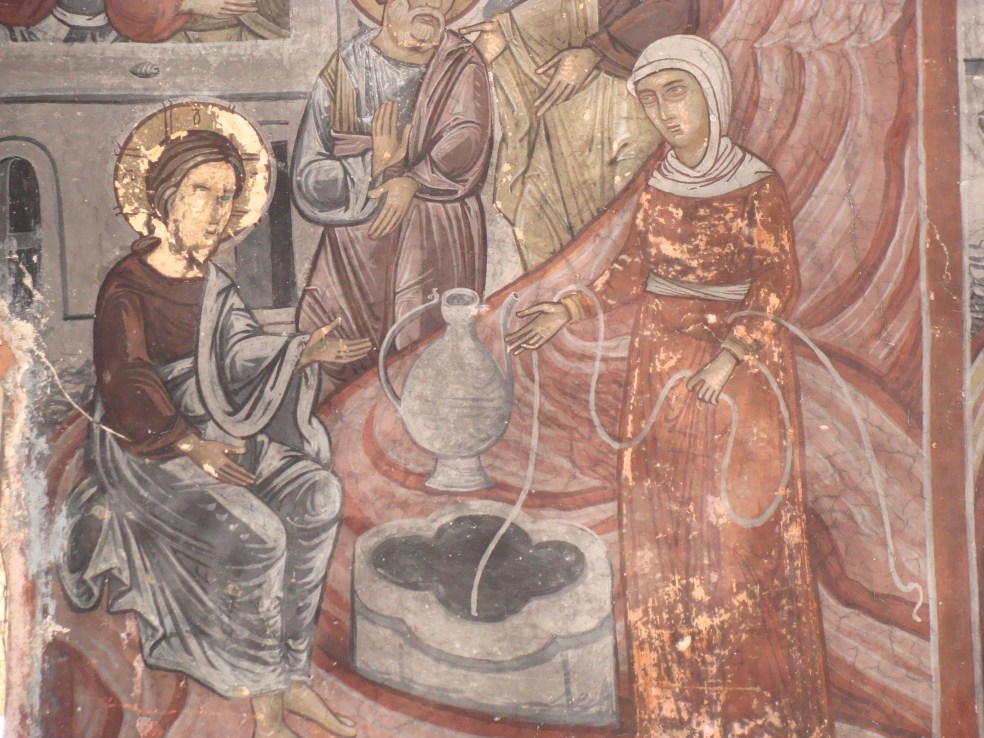
3rd Sunday of Advent

Readings: Zephaniah 3:14-20; Isaiah 12:2-6; Philippians 4:4-7; Luke 3:7-18

The Book of the Prophet Zephaniah was written in the early part of the reign of King Josiah, between 635 and 625 BC. The name Zephaniah means “the Lord has hidden” or “defended by God” and it is thought he was related to an earlier king of Judah, Hezekiah. Most of the three chapters that make up this short book of the Bible are devoted to God’s judgement of human wickedness, but the compilers of the lectionary have taken pity and provided the short passage at the end of the book, which deals with final blessings, in which a remnant of the people of Israel remains humble and is saved.

So it is a book of warning: refrain from your wilful sinning, or else! In this sense, Zephaniah has a lot in common with the last of the prophets, John the Baptist, who also warned the social elite to refrain from their wickedness and hypocrisy. Both prophets were voices in the wilderness, calling for social justice and pure minds, a plea that was just as ignored then as it is today.

In Zephaniah’s time, the cult of other deities – false gods, idols – has developed in Jerusalem. He warns of God’s impending wrath, which will come with the destruction of Jerusalem at the hands of the Babylonian army fifty years later, in 586. This led to the Babylonian captivity, when large numbers of Judeans were forcibly relocated to Babylonia. This exile is later referenced in Psalm 137, “By the rivers of Babylon we sat and wept when we remembered Zion”, memorably turned into a song by Boney M.

So the warning goes unheeded. The Book of Zephaniah is often regarded as a reversal of the creation story in Genesis, chapter 1. After the wonderful creation of God’s world, order is now to give way to disorder and destruction. This reminds me of the second law of thermodynamics, which states that as energy is transferred or transformed, more and more of it is wasted. Entropy, the gradual decline into disorder, is inevitable.

I have observed this. After you start something new, there seems to be a period of grace, a honeymoon period, when everything goes swimmingly and the earth appears to be a paradise. But then little by little things start to go wrong, difficulties arise that need fixing, a noisy neighbour moves in upstairs, the car breaks down, someone falls sick. Sometimes the obstacles to a peaceful existence pile up and they can appear insurmountable. Life on earth may not seem so desirable, as the aches and pains increase. But this is clearly a stage of human existence and, as such, we must understand it.

Clearly we are meant to be tested. The people of Zephaniah’s time must have felt that order as they knew it was falling apart all around them, as idol worshippers proliferated, forming a tide that King Josiah was unable to hold back. They are not the only ones. Those who trod the path to Babylon, condemned to exile, must have felt that God had abandoned them, just as the monks of Lindisfarne in 793 AD must have been dismayed when the Viking raiders arrived in their ships to pillage and plunder and a reduced group of the faithful – the remnant of Israel – plodded around the kingdom of Northumbria with their precious cargo, the incorrupt body of St Cuthbert, until founding the city of Durham and building a church to house the relics more than two hundred years later. Exiles are not short.

And clearly we are not meant to view life on earth as our final destination. We will be forced to move on. The Durham-born author Benjamin Myers has a wonderful book called Cuddy, in which he puts himself in the minds of that retinue of faithful followers who accompanied Cuthbert’s body on its exile from Lindisfarne. He describes this pilgrimage, this forced march, as follows:

Walking and thinking

         praying and fasting;

         the endless act of

         facing yourself.[1]

So perhaps this is a time for home truths, for facing up to ourselves and stretching our limits, the limits of what we believe to be possible.

We seek heaven on earth. We are uncomfortable with the idea of discomfort. There is a wonderful collection of stories on the Church of England’s website at the moment, “Women of the Nativity” (cofe.io/WomenNativity), which focuses on the experiences of women such as Sarah, Abraham’s wife, and Mary. In the first story, Sarah grumbles and complains when she is forced to up sticks and leave her comfortable home in Ur, next to the Euphrates. In her experience, the Lord appearing to Abraham means nothing but disruption and dashed hopes. She talks about this God who keeps messing with her life. When Abraham’s younger brother dies, his father, Terah, announces that they are leaving. They trail across the desert for months and come to a place called Haran. When Terah himself dies, they continue to Canaan. Sarah talks about her laughter, which used to be spontaneous, but the older she gets, the more jaded it becomes. This is in stark contrast to the unfulfilled prophecies of Zephaniah – “Sing… shout aloud… Be glad and rejoice with all your heart” – a message that is repeated in Paul’s letter to the Philippians: “Rejoice in the Lord always.”

How many of us do this? How many of us “shout aloud and sing for joy”, as it says in the Canticle from Isaiah? Very few. That is because we are in exile, we haven’t arrived yet.

And now we come to the nub of the matter. As Sarah bemoans her fate, Abraham turns to her (in the imagined version by Paula Gooder) and tells her to “have patience”, to “have faith”. We are in the season of Advent. This also is a time of anticipation, of looking forward to events that have yet to happen. In this sense, perhaps the meaning of Advent is the closest to that of the lives we lead. The singing and rejoicing that they all seem to talk about haven’t happened yet. We are still on the way.

So we have a stark choice, like a path that forks before us. We can choose trust or we can succumb to its opposite, fear. I suspect most people’s faith is a combination of these two things. We would not be human if we didn’t feel a certain trepidation, especially when events seem to be spinning out of control. Where is this rejoicing, this singing for joy?

John the Baptist provides part of the answer. In today’s passage from Luke, he places great emphasis on bearing fruit and I have noticed that even in harsh circumstances, when the sun is beating down or the tent has a hole in it, it is still possible to bear fruit – if we put our mind to it. We need to do this, as well as avoiding the excesses John warns the tax collectors and Roman soldiers about.

When we put our trust in the Lord, we are tested, certainly. Every pilgrimage has its blisters. But can we see through the whirling storm to the calmness within? That is the question we must ask ourselves. What is our faith worth?

What touches me most about Zephaniah’s final epiphany is the way it will not just be us who are rejoicing, but God as well. “He will take great delight in you; in his love he will no longer rebuke you, but will rejoice over you with singing.” God will also be singing. We all long for that look of unconditional love, the love of a parent, of a father in the home. We don’t want to be a wandering people forever. But God’s word is true. Sarah conceived Isaac. Abraham became the father of a great nation. Mary gave birth to the Saviour while remaining a virgin. All the women in these stories – Sarah, Huldah, Abigail, Elizabeth… – show one quality in common: patience. They have often waited twenty or thirty years for the outcome they wished for to disentangle itself.

It is patience that makes what appears impossible to become possible in time.

Let us pray:

Almighty God,

purify our hearts and minds,

that when your Son Jesus Christ comes again as

judge and saviour

we may be ready to receive him,

who is our Lord and our God.

Amen.

Jonathan Dunne, www.stonesofithaca.com


[1] Benjamin Myers, Cuddy (London: Bloomsbury Publishing, 2024), p. 111.
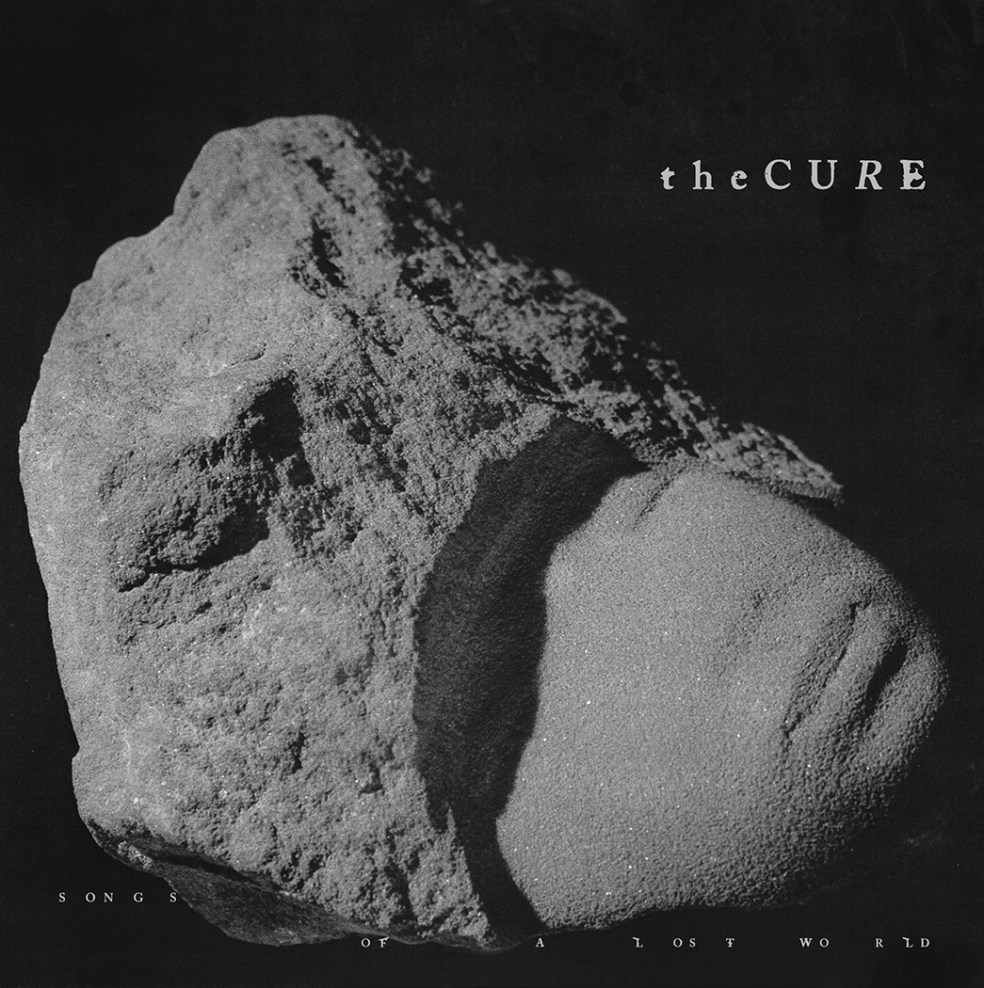
Review of “Songs of a Lost World” by The Cure

“Songs of a Lost World” is The Cure’s fourteenth studio album and was released on 1 November 2024. It has created a lot of expectation among diehard Cure fans, such as myself, because it comes sixteen years after their last studio album (“4:13 Dream”, 2008). But I think it’s more than that. Who among Cure fans of the eighties remembers an album called “4:13 Dream”? I certainly don’t. For me, there’s the first four albums – “Three Imaginary Boys” (1979), “Seventeen Seconds” (1980, with the epic “Forest” intro, though I was always very partial to “M”), “Faith” (1981, my God, that album got me into Oxford, no, not the album, the 12” version of “Faith” with “Charlotte Sometimes” on the other side, listening out of my bedroom window before going to bed), “Pornography (1982, somehow I feel this should have been their earliest album) – plus “Disintegration” (1989). I left off listening to The Cure after “Disintegration”. Was it that awful album “Wish”, or just the fact my life took another direction, I went abroad and had other things to think about? “Songs of a Lost World” has reunited us all with our past.

And it was an epic past. Robert accompanied us through adolescence and into adulthood. He formed us, somehow. Most of my university friends will remember me for liking The Cure. That was a defining characteristic, something that set me apart. It may even have taken me off the rails. I underperformed at university, and I think that is due, in part at least (add in the fact that no other decade has surpassed the eighties in terms of quality music), to my obsession with The Cure.

Now, “Songs of a Lost World” makes all of that (and believe me, there has been some soul searching along the way) worthwhile. Robert gifts us a look into our past, just as with the epic “Endsong” he himself looks into his past, standing outside in the garden with his father at the time of the Moon landing in 1969 and wondering if there could really be people up on this white, blood-red orb.

What sets Robert apart as a musician is that he doesn’t mince his words. He doesn’t claim that there is some small light at the end of the tunnel most of us find ourselves in. There is simply “nothing”. That old world, the world we felt comfortable in, the world of the eighties, has disappeared and, much as we might wish it would return, it won’t. We are faced with economic instability, environmental degradation, and not enough time for anything really. It’s like time, which used to be so generous, suddenly became stingy. We are rationed. We grab some release here or there, but soon it’s back to the grindstone, trying to keep up, without the possibility of taking a step back and considering where our lives are headed because they seem to just be going round and round in circles. We are donkeys chasing our tails in a pathetic attempt to pay the bills.

Robert gives us time. He makes that time available. He hasn’t changed. Even if he says he is “left alone with nothing at the end of every song”, he carries on writing them. He can’t stop himself. The creative urge is irresistible. We know we’re not going to succeed – life, that hungry animal, is going to get us in the end. But we continue regardless. Because what other choice do we have? We can’t just down tools, go on strike. We have responsibilities.

There is a moment in this album that makes the last thirty-five years of waiting worthwhile. It is the instrumental bridge in the middle of “Endsong” (7:59 mins). I think at this point Robert and his fellow travellers – Simon, Jason, Roger, Reeves – grasp something of eternity. Damn, they take hold of it by the tail and fly off into the night sky, laughing inanely as the sparks scatter all around them. So, for all the times we have been fucked, all the times we have been treated badly, all the times life has let us down and there hasn’t been an answer, we have our moment of vindication, our moment of glorious, exploding hope.

Yes, tomorrow it will be back to the grindstone, to all the bureaucracy and demands that humans impose on each other because they can’t think of anything better to do. But now, even though we know the whole system is flawed, a human construct based on the desire to possess, we have our secret weapon. We have seen.

And this is what Robert gives us – vision. One of my favourite tracks on the album is “Warsong”. Honestly, it reminds of my late wife’s family. “All we will ever know is bitter ends for we are born to war.” This message could be taken to be pessimistic. Much of the album could be understood in this vein. It doesn’t seem to hold out much hope – of a better world, of kinder relationships (which is all we really hanker after), of a better understanding of our environment, the nature that gives us life and should be at the top of any political programme. This is why older people become so attached to animals. They see the goodness in them, the lack of deceit.

And yet it gives hope. It gives strength. And this is what Cure fans are so grateful for. Thank you. That rocket-speed launch into eternity is all I need. To know that it exists. What every human being is waiting for, and not getting, is a just world order (and perhaps not to have to die). This is the basis of all world religion – that we can be better than this, that we can act with kindness, that someone out there cares about us. Life is a journey towards the realization that greed, self-interest, the desire to possess, needs to be reined in. What life is there without forgiveness? Without mercy?

“Left alone with nothing. Nothing. Nothing. Nothing.” This is how the album ends. Yes, but it’s not “nothing”, is it? It’s something better than this.

Review by Jonathan Dunne, http://www.stonesofithaca.com

Video

Theological English (13): Believe

In this fourteenth video on “Theological English”, Jonathan Dunne looks at the importance of the word “believe” in the Christian Gospel. The word “believe” crops up again and again in the Gospel – this is what God requires of us: to believe in him, to believe in his name, in order to receive – the power to become children of God, eternal life, salvation, healing. When we believe, all things become possible. The video focuses on John 7:38 and the verse from Scripture: “Out of the believer’s heart shall flow rivers of living water.” Once again, language is not only used to convey the message – it is the message.

To access all the videos in this course, use the drop-down menu “Theological English (Video Course)” above. The videos can be watched on Vimeo and YouTube.

Word in Language (20): Believe

I have always been confused whether we are supposed to receive a sign and then believe, or to believe and then receive a sign as a result of our belief, a confirmation, as it were. That is, does God open the doors of our senses to the other world, we perceive the other world and therefore believe, or does he open the doors of our senses as a result of our belief? Is it possible to believe something (or someone) you have never seen?

What set me on the journey of faith was an experience I had in 2001 on the island of Procida in the Bay of Naples, Italy. I asked for a sign and I got one. So in a way my belief was a result of the sign I received. But that sign came about because I asked for it, so I was predisposed, I had realized the limitations of my self, my need for the other, I had pulled down the walls of my self-sufficiency, thrown open the gates, invited God in. Is this, therefore, the procession of faith: an understanding of our own limitations leads to a call to God, which leads to a response on his part, which leads to faith on ours?

BELIEVE itself is a very interesting word. It spells VEILED in reverse (remember the physical pair, pair of letters that look alike, b-d, one of which is a mirror image of the other). Well, the mysteries are veiled, aren’t they? We don’t see them at once, but they reveal themselves to us gradually, in response to the level of our faith and repentance.

But BELIEVE contains another word: if we take a step in the alphabet (b-c) and apply the phonetic pair l-r, we get RECEIVE. Christ said to his disciples, ‘Truly I tell you, there is no one who has left house or brothers or sisters or mother or father or children or fields, for my sake and for the sake of the good news, who will not receive a hundredfold now in this age – houses, brothers and sisters, mothers and children, and fields, with persecutions – and in the age to come eternal life’ (Mk 10:29-30). So when we believe, when we follow Christ, we are to receive a hundredfold – the blessings of the spiritual life – with persecution – the world no longer recognizes us as one of its own because we have switched allegiance – and the ultimate goal is eternal life.

John the Evangelist has a lot to say about belief and eternal life in his Gospel. It is clear that the precondition for eternal life is that we believe. In fact, belief is the work of God – not to build mansions, not to perform impossible feats, not to exert ourselves strenuously, but simply to believe! The crowd has witnessed the feeding of the five thousand on the other side of the Sea of Galilee. Christ’s disciples have returned to Capernaum in the only boat available. Christ did not leave with them, and yet when they wake up, they see that he is not there. They take some boats that have come from Tiberias and travel to the other side, only to find that Christ is already there, having walked on the water. How has he got there? Christ says they have come looking for him because they had their fill of loaves the previous day and it is this that motivates them. He endeavours to redirect their aspirations and when they ask, ‘What must we do to perform the works of God?’, he comes out with a strikingly simple statement: ‘This is the work of God, that you believe in him whom he has sent’ (Jn 6:29) – that is, that you believe in me. Well, that’s not much to do, is it?

But the crowd immediately asks for a sign: ‘What sign are you going to give us then, so that we may see it and believe you?’ There we go again, the need for a sign to trigger our belief.

The first chapters of John’s Gospel are full of people like us looking for signs. In chapter 1, Nathanael believes because Christ saw him under the fig tree. In chapter 2, in Jerusalem, ‘many believed in his name because they saw the signs that he was doing’ (Jn 2:23). In chapter 4, Jesus says to the royal official whose son lay ill in Capernaum and to those with him, ‘Unless you see signs and wonders you will not believe’ (Jn 4:48), though to his credit the royal official believes before he has actually witnessed the miracle. When Christ says, ‘Go; your son will live’, crucially he believes the word that Christ has spoken, even though he has yet to receive confirmation of the healing. The Church Fathers are always telling us when we ask for something – from God or the saints – we must ask with faith in our hearts, in the belief that what we ask for, if it is for our salvation, will come to pass. It’s no use asking half-heartedly. Extreme circumstances call for extreme measures, and for the royal official whose son lay ill in Capernaum, this was an extreme situation. So he believed. With all his heart. This is all Christ asks of us. As a result of the healing (a sign or wonder), it then says that the royal official ‘himself believed, along with his whole household’ (Jn 4:53). Belief leads to healing, which in turn leads to more generalized belief.

In chapter 6, ‘a large crowd kept following him, because they saw the signs that he was doing for the sick’ (Jn 6:2). Again, a sign triggers belief. After the feeding of the five thousand, ‘when the people saw the sign that he had done, they began to say, “This is indeed the prophet who is to come into the world”’ (Jn 6:14). A sign leads to belief. Even Christ’s disciples, after the miracle of the transformation of water into wine at the wedding in Cana, then believed: ‘Jesus did this, the first of his signs, in Cana of Galilee, and revealed his glory; and his disciples believed in him’ (Jn 2:11).

So it seems that we are only persuaded as a result of signs, an accusation Christ was often levelling at the Pharisees. But what does he say we are to do? I think he understands our weakness and accepts that we need to see a sign in order to believe. But, when it comes down to it, what we are to do is to believe his testimony. He does not testify on his own behalf – this point is reiterated several times in the first chapters of John’s Gospel – but rather he testifies to his Father, and it is his Father – together with John the Baptist in chapter 1, the Samaritan woman in chapter 4 and the scriptures in chapter 5 – who testify to him. There is a wonderful altruism here. We are to believe him because he does not testify to himself, but to the other, and this we can take as a confirmation of what he is saying.

The point is heavily emphasised. Just perform a search of the words ‘testify’ and ‘testimony’ in the early chapters of John’s Gospel. You might also perform a search of the word ‘believe’. These are probably the most important words, together with ‘water’, ‘bread’ and ‘eternal life’.

It is belief that leads to eternal life:

And just as Moses lifted up the serpent in the wilderness, so must the Son of Man be lifted up, that whoever believes in him may have eternal life. (Jn 3:14)

Whoever believes in the Son has eternal life. (Jn 3:36)

Anyone who hears my word and believes him who sent me has eternal life. (Jn 5:24)

Those who hear will live. (Jn 5:25)

This is indeed the will of my Father, that all who see the Son and believe in him may have eternal life. (Jn 6:40)

Whoever believes has eternal life. (Jn 6:47)

It would be difficult to make the point more emphatically. But there are two other things that will lead us in the direction of eternal life: WATER and BREAD. These two words are, of course, connected if we apply the phonetic pairs d-t and b-v-w. BREAD is one of three words that refer to nourishment, all beginning with the same letters: BREAD, BREAST and BREATH. They are all connected by the phonetic pair d-t, addition of s or h. And WATER is a short step from WORD (phonetic pair d-t, change of vowels, all of which are open).

We come across the first in the wonderful story of the Samaritan woman at the well. This woman is very striking. She has had five husbands for a start. She also has a pithy way about her, asking Christ (the Creator of the universe!) how he thinks he is going to manage to pull up some water from the well where they meet near the city of Sychar if he doesn’t have a bucket! This is the man who created the universe, through whom the world was brought into being, and all she can do is affirm that he doesn’t have a bucket and he must think he is clever or something if he thinks he’ll get some water out of the hole without one.

Christ observes (as always), enjoys the humour (as always) and then comes straight to the point: ‘Everyone who drinks of this water will be thirsty again, but those who drink of the water that I will give them will never be thirsty. The water that I will give will become in them a spring of water gushing up to eternal life’ (Jn 4:13-4). He refers to this as ‘living water’ (Jn 4:10).

The ‘living bread’ comes in chapter 6. Remember that rousing hymn ‘Guide Me, O Thou Great Redeemer’, in which the words ‘bread of heaven’ are repeated? The crowd who witnessed the feeding of the five thousand and followed Jesus across the lake have made reference to the manna their ancestors ate in the wilderness. Now that was a pretty impressive sign, wasn’t it? How about something similar? They want a corresponding sign without realizing (like Pilate when he asked Christ, ‘What is truth?’) that the sign (truth) is standing in front of them. To which Christ replies, ‘I am the bread of life.’ That bread is his flesh, the sign is himself, the body of Christ that we receive in communion. He doesn’t magic manna out of thin air. No, this is different. We partake of his body and by ingesting his body, which thus becomes part of us, we become part of his body. He goes on, ‘I am the living bread that came down from heaven. Whoever eats of this bread will live for ever’ (Jn 6:51). There we have it once more – eternal life.

So eternal life is to believe in Christ. But it seems that not even his brothers believed in him, as John reports at the beginning of chapter 7. The time for the Festival of the Booths in Jerusalem is approaching, and they think he should make himself known. Jesus says his time has not yet come, but after they have gone to the festival, he goes anyway, in secret. He testifies to his Father. He performs signs. The chief priests and the Pharisees send the temple police to arrest him! The crowd is divided (as always). When he says he won’t be with them for much longer, they wonder if he is planning to travel among the Greeks – to go on an excursion! It gets to the last day of the festival, and by now (after seven chapters of signs and testimony), Christ is becoming weary.

And he does something uncharacteristic. He cries out. He shouts. He is at the end of his tether. He desperately wants them to get the point, to stop squabbling, to stop trying to kill or arrest him. And he cries out some of the most remarkable verses in the whole of the New Testament:

Let anyone who is thirsty come to me, and let the one who believes in me drink. As the scripture has said, ‘Out of the believer’s heart shall flow rivers of living water.’ (Jn 7:37-8)

The actual word in Greek for ‘heart’ is ‘belly’ (κοιλίας). And I wonder if the mention of ‘living’ reminds you of the creation story? After the Fall, what did Adam, the one who had been given the task of naming the creatures (that is, of translating), decide to call his wife? ‘Eve, because she was the mother of all who live’ (Gen 3:20). A footnote in the NRSV version of the Bible informs us that in Hebrew Eve resembles the word for living (Ḥawwāh/ḥāyâ).

And what do we get if we put ‘belly’ (translated as ‘heart’) and ‘Eve’ (which resembles the word for living) together? BELIEVE. The word BELIEVE confirms the truth of what Christ is saying.

I have already explained that, for me, the Fall happened so that we could have children, so that we could participate in the act of creation, and in this way form the body of the Church. I think God wanted us to participate in this action, even though he knew that sexual maturity would lead to our physical death, a barrier we must cross in order to enter eternal life (did I just see ENTER in ETERNAL?). This is where we are now, in the spiritual womb of the world, out of which the collective body of the Church is being born, in the same way as the body of an individual is born out of their mother’s womb. We are to be born twice, and this is the point we are missing. We are not there yet. We have been born physically (out of our mothers’ wombs), but now we must be born spiritually. That is the point of all the suffering, confusion, mistakes, misunderstandings – we are pointing in the wrong direction until we point towards Christ. There the needle will stop turning and become fixed.

BELIEVE contains other words: for example, I, BE and LIVE. It is also extremely close to BIBLE.

The message is there. All that we need to know is in the Bible, where Christ testifies to his Father.

And because he testifies to another – his Father – though he could equally testify to himself (Jn 8:14), we can accept that what he is saying is true. All we have to do is believe him.

Jonathan Dunne, http://www.stonesofithaca.com

Word in Language (14): Auxiliary Verbs

We live in the white space of eternity, but we cling to the line of time. It is extraordinary that the word TIME contains DIE (phonetic pair d-t, addition of m), but if we take a couple of steps in the alphabet it also gives LIVE (alphabetical pairs l-m, t-v). We have seen how it also contains MEET and DENY – this life on earth is our chance to meet Christ or to deny him, it is as simple as that. This is the purpose of life – do we choose to count down from the ego, I, to God, O, or do we prefer to attend to our own self-interest and to amass possessions by counting up from the ego, I? Once you start counting up, there will be no end, and we have seen how the English alphabet does this – it goes from the letter A to I to Z (1 to 2), it starts to count up, which may be seen as signifying a Western rational way of thinking, counting the cost, whereas the Greek alphabet, which may be taken to signify a spiritual way of thinking, a spontaneous response, counts down, it goes from the letter A to I to O (1 to 0, or omega).


This is very telling. We somehow have to escape the line that is represented by the ego, I, or by the timeline. LINE is close to MINE (alphabetical pair l-m) – when we draw a line, we are limiting ourselves, laying claim to possession, fencing ourselves in. We may find that the LINE leaves us ALONE, whereas in fact we are ALL ONE, and the one we have in common is God.


We see our life on earth in terms of the tenses: present, past and future. How much time do we spend in the present? Perhaps not very much, we are always thinking about events in the past or worrying about the future.


An example of the present tense is ‘I live in London’ or ‘I like to visit Hyde Park on a Tuesday’. It is used to talk about routines, actions or states that we consider to be fixed.


If we want to ask a question or to make a negative in the present, we have to use what is called an auxiliary verb – a verb that ‘helps’ us to ask the question or to make the negative – and the auxiliary verb for the present is ‘do’: ‘Where do you live?’ ‘I don’t like going out in the dark.’ We cannot ask a question or make a negative without the auxiliary ‘do’, or we will sound a little foreign: ‘Where you live?’ ‘I not like going out in the dark.’


Auxiliaries are a feature of the English language. Other languages like Ancient Greek and Bulgarian have little particles that enable the hearer to understand that what is coming is not a statement of fact, but a question: ‘ara’ in Greek, ‘li’ in Bulgarian. Languages like Spanish use intonation. ‘You live in Madrid?’ with a rising intonation informs the hearer that this is a question. I’m not telling you, I’m asking. But English has need of auxiliaries.


So it is in the past, and the auxiliary is the same: ‘I went to school in Clapham.’ ‘Where did you go to school?’ ‘I didn’t like it very much.’


So ‘do’ is the first auxiliary. ‘What do you do for a living?’ ‘Do you often come here?’ ‘Don’t talk to me like that!’


The auxiliary for the future is ‘will’. This little word expresses intention or a prediction: ‘I will come and help you.’ ‘I think it will rain at the weekend.’ ‘Will you tell me what it is?’ Whereas the auxiliaries in the present and past – ‘do’ and ‘did’ – are only used to ask questions or to make the negative, in the future the auxiliary must also be used in positive statements – precisely to signify that it is the future: ‘I come to lunch on Tuesdays, but next week I will come on Wednesday.’


We have seen how language encourages us to think in terms of the collective, not in terms of the individual, and the future provides us with a wonderful example because if we contract ‘I’ and ‘will’ we get ‘I’ll’ – this is a way of talking about plans in the singular – whereas if we contract ‘we’ and ‘will’ and think about the future in terms of the plural, we get ‘we’ll’.


Language appears to be telling us something: ‘I’ll’ and ‘we’ll’. I’LL and WE’LL. Take away the apostrophe that indicates a contraction and you have ILL and WELL. Isn’t this language telling us to think in terms of the plural? We might also notice that ME becomes WE when we turn the letter M upside down (physical pair m-w). And what is the plural of ‘you’ (think not how the word is written, but how it sounds)? Why, ‘us’ of course!


There is an aspect – the perfect – that we can apply to the tenses we have talked about, the present, the past and the future. This perfect aspect has the amazing ability to connect the tenses, to join them together, but our emphasis is still very much on the line.


For example, imagine that I started to live in London in the year 2000. It is now 2020, and I still live in London. You have a past – I moved to London in 2000 – and a present – I live in London now. What if you want to join them together? You can only do this by using the perfect, the auxiliary for which is ‘have’: ‘I have lived in London for twenty years.’


Imagine a point in the future: when you get home. I want to say that between now and the point in time when you get home, that is between the present and the future, I am planning to finish baking a cake. I will say, ‘By the time you get home, I will have baked a cake.’ There is the perfect again, by means of the auxiliary ‘have’, and it connects two points along the line, the past and the present, the present and the future, even the past and a point further back in time: ‘When you came to visit me, I had already put the things away.’ Before that point in time when you turned up, I had performed this other action, between the past and a point further back in time (when I got home from the office, for example).


Well, after that short lesson in grammar, we are equipped to say that the auxiliaries that cover the timeline are ‘do’, ‘will’ and ‘have’.


But doesn’t this tell us something about how we approach time, our lives on earth? Because the first auxiliary, ‘do’, refers to activity – we must always be busy. The second auxiliary, ‘will’, refers to intention – what I want. And the third auxiliary, ‘have’, refers to possession – how much I have. Couldn’t this be said somehow to sum up our approach to life: what I do, what I will and what I have?


This is because we are clinging to the timeline. We are like vines on an arbour or shellfish on a submerged pillar. We cling to what we know. And what we know is what we can see in front of us, what we can lay our hands on. But there is so much more. There is the enormity of space, to start with. There is also the enormity of ourselves – isn’t the kingdom of heaven within us? There is the enormity of our hearts, of our reaching out to one another, of the many examples of endurance and selflessness that humanity has shown. There is the moment when, albeit we are busy or tired, we take time out to focus on the other’s need. We shift away from the timeline, we take a step over the abyss. We enter the white space of the whiteboard. We realize that the battle has already been won and we are picking up the pieces. We step outside of time and into the light. We cease – for a moment – to linger on the past or to harbour concerns about the future. They are always only moments – the past and future quickly reclaim their place, like a tide coming in. But there are moments when we can separate ourselves from the timeline and enter eternity. We are in eternity. Now.


And what is the fourth auxiliary that is used to represent the continuous aspect, to talk about the moment? It is ‘be’. ‘Where are you at the moment?’ ‘I am sitting in the garden.’ Enjoying life, focused on the here and now, amazed by the wonder of it all. Isn’t this life? Amazement at the other, amazement at ourselves. Little coins that jingle in our pockets. Coins that are like suns, shimmering in the light.


Faith is stepping off the line. I don’t have enough money, I don’t have enough time, I’m too busy, I can’t do it for you, otherwise…


Faith is being quiet. In the moment, when we prise the timeline open and expand it, blow a little air into the bag.


When we expand the moment, we use ‘be’ (a word that we have seen is connected to ‘we’ and is contained in both ‘die’ and ‘live’). ‘I was reading a book when you arrived’ (I was unaware of time). ‘We will be waiting for you when the train arrives’ (the train will pull up alongside the platform, but we will already be out of time – waiting for you). ‘Be’ takes us out of time – it is used for actions that may be temporary (‘I am living in London at the moment, but next month I may not be’), continuous (‘we were walking alongside the river when it happened’) or repeated (‘I have been trying to get hold of you for ages’). It takes us away from the apparent security of our own efforts (‘do’), our own wills (‘will’) and our own possessions (‘have’).


There is so much noise in the world, but the truth is that the silence is much greater. There are so many words on this page, but the truth is that the white space is far greater. There is so much substance to our bodies, but the truth is that we are peppered with holes and invaded by space.


So it is with time. Time – the cross (†), I and me – is in eternity. It is the only place it can be. At some point, the teacher of English will come along and rub out the timeline. And then our preoccupations, our money and possessions, our frustrated wills, will count for nothing. All that will count is who we have allowed ourselves to be.


Jonathan Dunne, http://www.stonesofithaca.com

Word in Language (13): Hate

Hate is the opposite of love, it is the dark side of love. All the shoots we have put out in order to communicate with our neighbour, in order to interlink our life to theirs, we begin to withdraw, to take away, to withdraw our favours. And at the same time, our sight, which was focused on those we love, begins to wander, we begin to entertain temptations, even though we know that they will destroy us, so hate engenders self-destruction.


If hate engenders self-destruction, it is a form of death. We are slowly but surely heading towards death, but not death as a portal of life, not DIE so that I can BE, as we saw in a previous article. This is death with no continuation. This is THE END of the film (these two words are beautifully connected: phonetic pair d-t, physical pair – pairs of letters that are an extension or a reversal of one another – h-n). This is the death of the popular imagination, where there is no continuation or, if there is, we don’t want to know about it.


So hate is a negation of God, because if we deny the existence of heaven, we deny the existence of God; if we deny the possibility of good (in ourselves quite apart from anyone else), we again deny the existence of the GOD who is GOOD. Do you see how language, the Word, wishes to teach us? GOD is GOOD, but the DEVIL is EVIL. If you look up these pairs of words in a dictionary and search for the etymology, you will find that their roots – horizontal, over time – are different. Not so in a vertical understanding of language. They are very close for a reason.


So hate makes us first withdraw into ourselves, reject contact with those who are close to us, and then seek to scatter ourselves further afield, to disintegrate, in what may be a call for attention or a means of revenge or a wish for self-annihilation.


But there is always the call of God, the call of our conscience, if we can only overcome the barrier of our ego, of our pride. PRIDE is in DESPAIR, and it is despair that robs us of our willingness and strength, as Saint Porphyrios points out in the book of his life and sayings Wounded by Love (p. 98).


Hate leads us to despair, while love gives us hope, hope of a better future. This is why HOPE is connected to OPEN (that same physical pair I talked about earlier, h-n). Hope keeps us open to the other, to their love, which is calling us, just as a dog hears the call of its owner. Hope keeps us open, but of course this means we can be wounded – the Wounded by Love of the book title.


Dark thoughts explore our mind. They can be a little frightening, these thoughts, even overwhelming. Where do they come from? Are they really ours? Well, given that the whole theme of my writing is that we are translators, not authors, and things pass through us, I am inclined to believe that thoughts also do not start with us. What belongs to us is our reaction, the choices we make, whether we choose to ignore these thoughts, to exercise self-control, to seek the good, or to enact the thoughts, to give free rein to our baser instincts. Does this really mean that no thoughts belong to us, only our reaction does? I am inclined to believe so, and thoughts are like language, roots travelling underground, in the subsoil of our minds.


In which case, we should be able to take a dark thought and simply make it good, turn it around, do the opposite, embrace the one we want to hate. This will hurt, though. It will hurt in that place we have opened up in order to embrace the other, in order to apologize, in order to see it from the other’s point of view, in order really to lessen our own importance in the grand scheme of things. Will anything really happen if I let go of my hatred? Will the world collapse if I forget to maintain my resentment? No, the world will carry on as normal, and I might even feel a little relieved – also a little sore perhaps – the hatred like a mole popping up its head from time to time, breaking the soil, trying to remind me of its existence, trying to draw me down again into the dirt of non-existence.


These thoughts, I let them go. They are nothing. Thoughts are insubstantial, a monk once told me. They have no substance. If they have no substance, they have no reality beyond the reality I choose to give them, even if it doesn’t feel that way when they assault me and seem to control me, not the other way around.


Perhaps I just stop thinking. THINK, after all, is connected to NIGHT by the phonetic pair g-k. It may be over-rated. It may be better just to WAIT. What word connections can I find for WAIT? Well, DAY is in there (phonetic pair d-t, addition of w). So is FAITH (f-v/w, addition of h). Isn’t the meaning of FAITH to WAIT? Maybe God doesn’t expect me to achieve something every day, to justify my existence all the time. After all, he has the bigger picture. He envelops time. Time is an envelope, and he sticks it down, says when it is finished. Perhaps he will put it in the post, send it to the outer reaches, open it later on, while we are all busy or asleep, and see what it is that everybody did with the time allotted to them. Take out the letter of our actions, intentions, good deeds. The desert fathers say that God always sees the intentions behind our actions, our motivations. What is it we are trying to achieve? Are we just trying to get his attention? To call him down, to force him to intersect with our lives because the horizontality of living got too much, too boring, too monotonous, the street, the cars, the coffee, the cake, get up, work, eat, sleep. So much going in and out of ourselves. Things passing by. Ourselves sometimes ineffectual, unprepared, unable to influence events. WAIT, whispered FAITH. Look at me. I am here.


Christ, I am in the night of hatred. Will you love me even down here? Will you see a speck of goodness in me that is worth saving? Is my breath anything to you? Of course, it is. You gave it to me. You are the Word. My breath is yours and the Holy Spirit’s. I beg of you, hold me. Deliver me. See how DELIVER contains DEVIL. Our Father, which art in the heavens…


DEVIL in reverse reads LIVED. Past tense.


DEATH with the letters rearranged spells HATED. Past tense.


There is no future in either of these. If we apply the phonetic pair d-t, we will see that HATE is connected to HEAD. DEATH contains both of them. Perhaps thinking, calculation, is not the way. But where does that leave us?


It leaves us in the moment. In the moment, there is no time. It is the only place where we can escape time. The moment is, in effect, the nullification of time. We are not controlled by past memories or future fears. We simply place ourselves in the O of repentance, the star in the night sky, the pinprick of existence.


A star is not light coming from a long way away. A star is a window, an invitation, a ladder of ascent. It is where the threads of our garments do not meet, where the air passes through, it is the interstice, it is the light, it is the way we slip through the net. It is a hole in the fabric.


Even the flame of a match banishes the night. ‘Flame’ contains ‘I am’, the name of God in Exodus 3:14. It enables us to make a hole in the line of time. We use the flame as a nib, a bubble, a leaf, and begin to write.


Jonathan Dunne, http://www.stonesofithaca.com