15. Atom

Christ became human so that he might translate for us the meaning of life through parables (Braille, writing for the spiritually blind), but also so that he might translate us when we die. The process of translation, when a word in one language disappears in the translator’s mind in order to reappear in another language, can be likened to death, when someone disappears and is spoken into the language of eternity.

Christ became man in order to show us the road to salvation. He entered his own creation through one of his creatures, Mary. He came to translate for us the meaning of life, because we were at a loss and it needed explaining. He did this by means of parables. We have seen examples. Parable is connected to Braille through the phonetic pair b-p – it is writing for the spiritually blind, for those whose spiritual eyes have not been opened.

But I believe that there is another reason for God to become human, to enter his creation. God is the Author, the source of all that is. We are not the Author, much as we would like to be, because we cannot create out of nothing. We need what already exists, and our purpose is to take this and to turn it into something better, to translate it, just as the translator of a text takes a text written in one language and converts it into another through an unseen, and highly spiritual, process that takes place in the person’s mind as they are translating.

When we are translating a text, there is a point, once we have understood the original (read it, looked up any words we do not know, consulted with the writer or an expert in their work, all the horizontal work of preparation), when the original disappears, it evaporates, the words dissipate, the letters fade away, and out of the translator’s mind, through their fingers as they type on the keyboard, appear new words, words written in another language.

That momentary disappearance, that disembodiment, can be likened to the process of human death. We also seem to disappear, our bodies are put in the ground, and we are no longer seen. We also evanesce, cease to be discernible by the five senses. But in whose mind are we?

I think that Christ became man not only to translate for us the meaning of life by means of parables and his example, but also literally so that he could translate us at our death. An author is the source. A translator acts as a conduit, just as the Virgin Mary did when she acquiesced to bear Jesus in her womb. By becoming human, Christ became the Translator.

We are a text being written. Everything we do in this life takes us in a certain direction. And when we reach the end of our lives, we will be spoken, having been taken up into the mind of the Translator. We will be freed of the constraints of time, and we will enter eternity, the white page on which words are written.

This is why eternal gives two connections. For the first, we must take a step in the alphabet, e-f, and use two pairs of letters that look alike, i-l and n-h (one is an extension of the other). In this way, eternal gives father and I:

eternal = father + I

I think this is because, once we have been spoken, we will have left the speaker’s mouth and be able to see him.

It also spells I am free (phonetic pair m-n, pairs of letters that look alike, i-l and f-t):

eternal = I am free

We will be free of corruption, of the bondage to sin, free to express ourselves without fear (free – the fine line between fear of God and the fire of purification, if we allow fluidity to the vowels; the good news is that it lasts for ever, f-v).

Language contains hidden meaning. The whole of human existence is contained within it. We haven’t realized this. We treat language like an external object, a tool. We use words to bash people on the heads and also to caress them. But we haven’t realized that we ourselves are language, words in the making, spoken into being – breath, water and flesh; h, vowels and consonants – just as we read in the first two chapters of Genesis.

Language tells us the road that we must follow. Christ is very clear about this when he says to his disciples, “If any want to become my followers, let them deny themselves and take up their cross and follow me” (Mt 16:24). This is the way to eternal life, but it passes through denying the ego, drawing a line through the I, which forms a cross, †, but also a plus-sign, + (the meaning of losing our life in order to find it).

We have seen the three ways of moving away from the line by forming a triangle, the letter A, by deleting the I, +, and by treating the line as a number and counting down to O: A+O. These three symbols spell the name of God Alpha and Omega. As soon as we turn our backs on the ego, we turn to God. They are also found in the middle conjunction, and, if we write it with capital letters: AND (A ’N’ O). The reverse of and is DNA – it is in our DNA to do this, to move away from the line, to follow the progression of the Greek alphabet, AIO or AIW.

And when we draw a line through the ego, when we make the sign of the cross (a cross is a deleted I), something extraordinary happens. The progression of the Greek alphabet, with the ego deleted, spells A+O/W (depending on which letter we use to depict omega, a long o or w).

We effect a change at molecular level – the “living water” Christ was talking about, a change of heart, literally, at a level we cannot normally see – because this progression is contained in the word atom, traditionally the smallest particle of matter.

There is a clear connection between language and the environment: seed-root-tree-fruit. A tree that branches out is like a flowering ego, it is no longer a straight line. There is a clear connection between language and the history of the world, from the creation in the Book of Genesis to the Last Judgement, when angels will come to glean the field. And just as we plant a seed outside (as the Samaritan woman fetches water from the well in a bucket), so we must hear the Word of God and plant a seed in our heart.

The one will feed our stomach. The other will give us wings, and change our perception for ever.

Jonathan Dunne

Heart of Language 15/15

Back to: Contents

See also: Theological English (video course); Word in Language (series of articles)

9. AIO

After the creation of the world (in the beginning, the letter A), we find ourselves in the era of the Fall, which centres around the ego, I. We have to take this line that separates us and open it, count down, perhaps just turn it around, so that we get O.

The correct progression of human life is that represented by the Greek alphabet, AIO (sometimes written AIW). The Greeks are known for their interest in philosophy and theology. Having made the progression from the A of creation to the I of the Fall – the period we find ourselves in – we have a choice: to count up (as the Latin alphabet does, AIZ) or to humble ourselves and count down, AIO.

Language favours the second option. We have seen the examples AM-I’m-om, no one and amen, mean, name-mine-nemo, omen. We go from the name of God in Exodus, AM, through personal importance and gain (I’m, mine) to calling on God again in the Holy Trinity (om) or on God the Father, no one (nemo in Latin).

In the Garden of Eden, between Adam and Eve, there was no competition. So, we have a draw. In today’s world with its competing egos, we set out to win. The vowel in these verbs has changed from A to I. But Christ comes with a different message. He encourages us to turn the other cheek, to lose our life for the sake of the other (in order to find it). So, he encourages us to lose:

draw-win-lose

Here again, we find the progression of the Greek alphabet, AIO (with a silent final e, very common in English, ignore the consonants).

We have seen that we are made to call on God. The first word the human apparatus is capable of producing is a combination of breath, h, and the first vowel to emerge from the throat, u: hu, which is Sanskrit for “invoke the gods” and the root of our word God. We are made to call on God. Similarly, if we turn away from the selfish demands of the ego, represented in English by a straight line, I, we make three symbols, A+O, which spell another name of God, Alpha and Omega. So, again, when we turn away from our selfish desires and embrace the other, we call on God.

In the Judgement of the Nations, Christ goes so far as to tell us that the other is God: “Just as you did it to one of the least of these who are members of my family, you did it to me” (Mt 25:40). If we remember that the Greek word for “God” is theos, we might see a close similarity between other and theos (step in the alphabet r-s). Language confirms what Christ is saying.

It is ironic, therefore, that after Adam and Eve have eaten of the fruit of the tree of knowledge in Genesis, chapter 3, it is God who calls to Adam, “Where are you?” (Gen 3:9). Of course, he knows where Adam is, and he knows what has happened. But by asking this question, which is the question Adam should have been asking, he is somehow indicating to us what our approach should be.

Make the progression from A to I, and from call you have like (in reverse, addition of e). Like is what we do on Facebook. We indicate our preferences. It also gives kill, and there has been plenty of killing in the history of humankind.

Now, count down from I to O, and you get look, which is the message Christ is trying to get across in the New Testament, the importance of opening our spiritual eyes (our egos or Is) and bearing spiritual fruit. We have seen the relevance of this in the Parables of the Sower and the Tares. So, we have:

call-kill, like-look

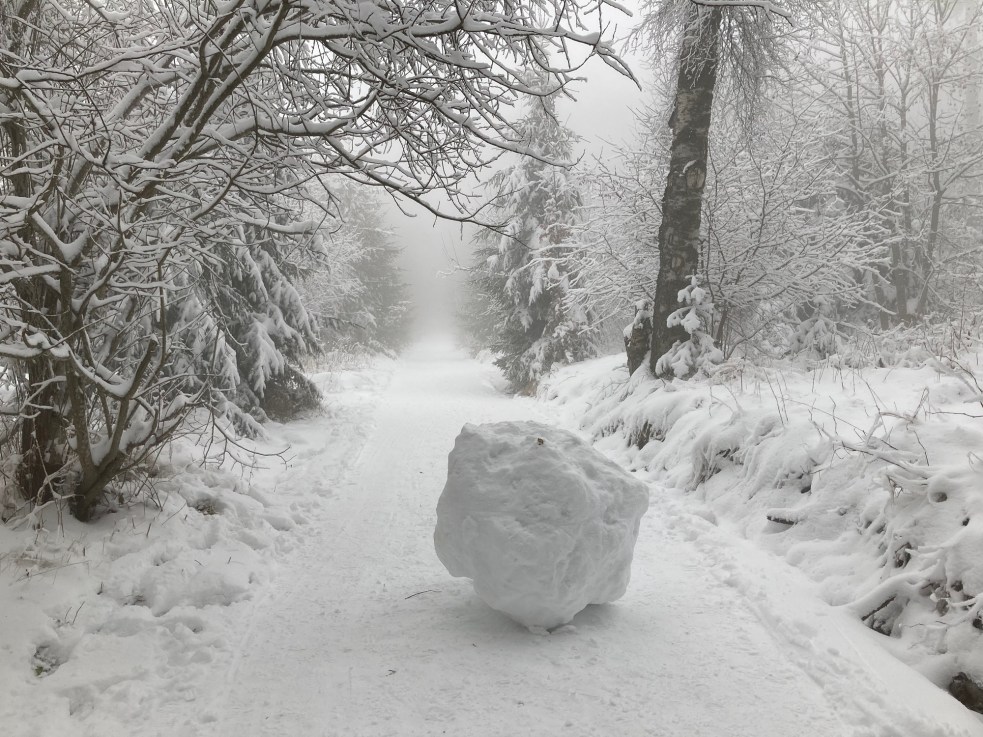
And then there are the examples that relate to the animal kingdom. Let us start with swan – a white bird, and white is a symbol of purity. Progress towards the ego, and you get swine – pigs in the mire, we have dirtied God’s image by rolling in the mud (just as the prodigal son does in Luke 15, a metaphor for dissolute living). When we come to our senses and realize that the things of this world will not satisfy us for long, we set out to purify ourselves once more, to return to our father, as the prodigal son does, which is not a return to the way things were before (swan), but a movement onwards, to something new: snow. So, we have:

swan-swine-snow

And finally, what is that most ancient mammal if not a whale that continues to patrol our oceans, despite our best efforts to wipe it out? Make the progression from A to I, and you have while, an indication of time. Time started after the Fall, this is when Adam and Eve became mortal, when they were expelled from paradise. Time will end for us individually when we die (the past tense of I) and for the human race when Christ comes again to judge the living and the dead. Now, count down from I to O, and in a while you become whole again. Whole is a remarkable word, and we will see more of it. So, we have:

whale-while-whole

All are examples of the progression made in the Greek alphabet, where we count down from the ego, which is represented in English by the letter I, and turn to God, the eternal symbol O.

Jonathan Dunne

Heart of Language 9/15

Next: Heart of Language 10/15

Back to: Contents

6. Heart

When we see and hear – that is, when we acquire spiritual vision – a seed is planted in the earth of our heart. This is why see and hear, with the addition of the phonetic pair d-t, give seed and heart. We need our eyes and ears to be opened.

Seed is also the past tense of see – or it would be, if see was a regular verb. And the past tense of hear would be heart.

This is because the past tense in English, which is written -ed, is pronounced d or t, depending on whether the previous sound is voiced or not. If the previous sound is voiced, for example b, then the pronunciation of -ed is d (mobbed); if, however, the previous sound is voiceless, for example p, then the pronunciation of -ed is t (stopped). It is only if the previous sound is d or t that the sounds have to be separated by a vowel sound and the pronunciation is id (decided).

An inordinate amount of importance is placed on the ability to see and hear in the Gospels. Christ is always crying out, “Let anyone with ears to hear listen!” (Mt 11:15, Mk 4:9). In Matthew 13:16, he tells the disciples, “Blessed are your eyes, for they see, and your ears, for they hear.” He is referring to spiritual vision, which unfortunately is not the kind of vision that is usually taught in schools, because in schools children are taught to label and count, to analyze, to think, to rely on reason, on effort (“work hard, and you’ll get good marks”), and this creates a certain distance between us and the things that surround us, leading to the idea that we can do something with them, such as deal, trade, buy and sell because they are somehow alien to us, external (we adopt the same attitude towards language).

It also encourages the idea that in order to achieve something in this life we must act (do something to something or someone else). If you teach a child to count up from 1 (never from 0), you are encouraging them to think in terms of profit and loss, quantity, what comes in and what goes out, you are encouraging them to trade in the things of this world, which is the whole basis of the dominant system, capitalism (counting up). You are not encouraging them to truly see the things of this world for what they are worth and to rejoice in them. This comes to us naturally, but in the hurly-burly of classrooms it is often extracted. A good example would be a friend of mine’s ability to draw. Before he attended school, he drew beautifully (several of his drawings were published in National Geographic Kids). Once he started attending school and went to art lessons, where he was taught the names of artists and encouraged to remember them, his drawing became analytical, predictable, uninspired. He had lost that innocency of vision that Christ wants us to reclaim because he began to analyze, to do the exercises that he was set, to put everything in boxes, to learn not in order to appreciate, but to pass exams (to achieve a certain mark).

This idea of effort being rewarded is very dangerous, because it leads to the notion that we must always be doing something, and that implies doing something to something, not just letting it be. I have a neighbour who is always cutting down trees and bushes. This morning, another bush had disappeared. I noticed its absence. He obviously feels the need to be busy, but I can’t quite understand why he doesn’t leave them alone. After all, trees provide food, warmth, oxygen, shade, and homes (somewhere to hide) for the sparrows and great tits that populate the local area.

And what do we see with? Our eyes (addition of y). What do we use to hear? The ear (addition of h). So, we have: eyes-see-seed and ear-hear-heart, with the addition of the phonetic pair d-t in the final word of each triplet. This is because in order for the spiritual seed to take root in the earth of our heart, and to effect a change, we must be able to see/hear the message. Otherwise, the words will fall on deaf ears. This is the message of the Parable of the Sower that precedes the passage in Matthew I quoted earlier.

In the first of the Parables of the Kingdom that follow this passage, the Parable of the Tares, there is one who sows good seed in the field of the world – Christ himself – and the enemy (the devil) who comes at night to sow weeds among the wheat. “The good seed are the children of the kingdom; the weeds are the children of the evil one” (Mt 13:38). Weed and wheat are, of course, connected (phonetic pair d-t, addition of h). They are planted in the same field until the time of the harvest, when an angel will come to glean – language here is predicting the future, it is telling us what will happen, just as, in the case of creation, it tells us how the world came into being.

And isn’t it interesting that, of the two, weed and wheat, it is only the second that has ears? It is also, ironically, only the second that leads to true wealth (addition of l) – which is not having more of something, but seeing the wonder in people and things, without the need to possess or exploit them.

Jonathan Dunne

Heart of Language 6/15

Next: Heart of Language 7/15

Back to: Contents

Word in Language (21): English Course (0)

In this and the next three articles I am going to look at the rules for making word connections. In this article we will look at connections between words that have the same letters, be they in the same order or in a different order. We have seen examples of these, how HUMAN is a combination of HU and MAN, for example, or LISTEN has the same letters as SILENT, but the letters have been rearranged. We have also seen contractions (I’LL-ILL, WE’LL-WELL). In this section I include words that sound the same (for example, EYE and I), also changes that involve the semi-vowels (i-j/y, u-w), the letter c (pronounced k or s) and the letters ph (pronounced f). Sometimes it is necessary to double a letter, as in the example BELIEVE-BELLY EVE, which we saw in the previous article.

I worked out these word connections simply by taking a pencil and writing down the words on a piece of paper, jumbling up the letters to see what I could find. When the words have the same letters in the same order, we need to divide them at some point to find a deeper meaning. Others are homophones (they sound the same, although they are spelt differently). We may change the letters if they are i, u, c and ph, as I mentioned above, or double a letter. You may like to have a go before looking at the connections I made, so here are the words we are going to look at that involve keeping the letters in the same order. See what you can find:

APART   PASSION

HEEL   SOLE   (homophones)

PHARISEE (f-ph)

And here are the words that involve the same letters, but in a different order. Again, see what connections you can find, bearing in mind the semi-vowels i-j/y, u-w, the correspondence c-k/s and f-ph and the doubling of a letter:

ANGEL   DOGMA   DUNE   HADES   MIRACLE   NOSTALGIA

CRIME   GUIDE   (i-j/y)

ANGER   BAA   BE   EARTH   GERM   POISED   SUMMER   (double letter)

Words contain meaning. This may or may not be the meaning that we give them. They have something to tell us about human life, about God, about the purpose of our existence on earth and our ultimate destination. They are encoded. Just as the body has DNA, so words have DNA. We need to put them under the microscope and to see what we can find. In this sense, language is like the human body or the environment. They reveal things on closer inspection, we discover wonders if only we pay attention. Unfortunately we spend much of our time thinking that words, like the human body, like the environment, have been put there for our use and we are far too busy to consider that they may have a meaning of their own, a message they wish to transmit, a testimony they wish to give. This is a sign of our spiritual blindness. We are born into this world physically blind, but we soon overcome this. Our spiritual blindness remains, however, and it is some time before it begins to go away. This usually coincides with a spiritual experience. We become aware of another level to existence. It isn’t just what we can see with our physical eyes, it isn’t just two- or three-dimensional. There is another level, one we hadn’t been aware of before, and this conditions our behaviour. We start to repent of our previous behaviour, when we took what was there for our own benefit and enjoyment, without a thought for the consequences. The other takes on a new importance, we understand that they are intrinsic to our salvation and deserving of our respect, they are not put there for our benefit or enjoyment, just as language, the body and the environment are not purely utilitarian things for me to exploit, for me to express my opinion, for me to get what I want. We are in a relationship, and it is that relationship with the other that will save us. Difficulties are inevitable, because the world doesn’t necessarily see things the same way we do. Some still believe we are here to make money, to make a profit, to make ourselves as comfortable as can be. For some, this existence is all there is, and their aim is to extract as much as possible. The philosophy ‘live for the day’ – carpe diem – can easily lead in this direction. But the world is a spiritual womb. We are here to learn, to grow spiritually, and this necessarily involves some suffering. We are to receive the good times joyfully, but to endure any difficulties that come our way patiently. This engenders a sense of humility. This planet wasn’t put here for my sole enjoyment and it doesn’t revolve around me, much as we may resent this. We are here to learn to love, to turn the EGO to GOD, to count down from LIVE/EVIL to LOVE, to fulfil our potential and become the person we are meant to be. The world is a spiritual nursery. And death is perhaps not the end – that is only our perspective – rather it is a second birth, a spiritual birth, when we are forced out of the spiritual womb we have been in for three score years and ten into new surroundings. Death, for me, real death, is separation from God, not the end of our physical existence on earth, which is a tunnel, an opening, a new beginning, just as the exit from our mother’s womb was.

So we may take ourselves APART, but we are still A PART. What I do influences others, and what others do influences me. This is surely obvious at the time of the Coronavirus, with which I started writing these articles. LOCAL is GLOBAL – literally, because the two words are connected by the alphabetical pair b-c, addition of g. PASSION leads to spiritual death – PASS I ON. If I indulge the passions, I will come to a spiritual dead-end and then I will have a choice: either I perform a U-turn (repentance) or I insist upon my actions (spiritual death).

Life is a pilgrimage. We are here to learn. This involves walking, placing our weight first on our HEEL and then forwards on to our SOLE. What is the outcome of this process? That we HEAL our SOUL. For this, we need help – the action of the Holy Spirit; participation in the sacraments of the Church, most notably confession and communion – we must be careful not to think we can achieve this on our own. This was the attitude of the PHARISEE: FAR I SEE. They believed more in themselves than in God, sought recognition, strict adherence to a set of rules, even if these rules were not life-giving.

But what are we to believe? The Church has held seven Ecumenical Councils to write a Creed, to decide what people must believe. This is important – to establish the tenets of faith (for example, that Christ has two natures, divine and human), as a way of averting heresy (the suggestion that Christ might be anything less than fully both, a man adopted by God or God who took on the appearance of being human). But the word DOGMA itself, if we read it in reverse, says AM GOD. A simple statement that reminds us of the name God revealed to Moses at the burning bush: I AM WHO I AM (Ex 3:14).

We are sensitive, sentient creatures. We have feelings. A slight breeze, and goose pimples arise on our flesh. We are naked. Look around and see where nature seems most naked, and you might come up with DUNE, the letters of which rearranged spell NUDE. Is there any part of nature that is so bare, so open to the wind?

In Greek mythology, HADES is the place where a SHADE goes. It is the place of spiritual death, of insubstantial beings who have insisted on the road of the passions. HADES is also connected to DEATH by a step in the alphabet (s-t). It is very close to EARTH (same vowels, phonetic pair d-t, alphabetical pair r-s). We must be careful. We can find ourselves in this state of spiritual death while still on earth. The important thing is how we react. And this is where a MIRACLE is performed. We look for signs and wonders. But we are surrounded by signs and wonders every day – our own existence, the existence of others, the world we inhabit, the breath of wind, the taste of food, a sudden realization, a moment of mutual recognition, the moment when a dog on a lead freezes, his body freezes, but his ears flap in the wind, young people in the stadium – a time capsule – play football against the backdrop of a mountain on which the observatory is a golf tee. How many moments are there like this in every day – the crunch of bread, the return of someone, sitting down on a sofa to watch a film that will transport us, the sip of hot tea, the sheer beauty of a newly opened rose? The true MIRACLE, for me, is when we RECLAIM ourselves, we defeat the enemy, we snatch ourselves back from the grip of sin, we present ourselves to our Creator, we dedicate ourselves to him. We don’t look back because, if we were to return to the GARDEN OF EDEN, we would only be in DANGER OF NEED again. Looking back is not the answer. This is why NOSTALGIA spells LOST AGAIN.

We have a GUIDE in Jesus Christ. He is our Saviour. He is our friend, the one who looks at me every morning, I look at him. But at the Last Judgement, when he comes again, he will be our JUDGE. These two words are connected (i-j). We mustn’t lose hope, however, because in the CRIME itself there is MERCY. All we have to do is repent of our sins and confess them to a priest. This is what we are here for, to make spiritual progress – not to make money, not to amass possessions, but to amass spiritual wealth, the virtues. ANGER won’t serve us, bearing a grudge against our enemy; if we are not careful, our ANGER will turn to GANGRENE (I have doubled the three middle letters). ANGER is also clearly connected to CANCER (phonetic pair g-k/c).

ANGER is also connected to ANGEL (there is righteous anger and it is possible to change, just as someone with a STAIN can become a SAINT). At the Second Coming, Christ will send out each ANGEL to GLEAN the field, to gather in the weeds and the wheat (we read about this in the Parable of the Weeds in Matthew 13). WEED and WHEAT are connected (phonetic pair d-t, addition of h), but it is interesting that only wheat has ears. This is why Christ ends the explanation of this parable with the words, ‘Let anyone with ears listen.’

We must hope to be counted among the sheep (Mt 25:32-3). What sound does a sheep make? BAA. And what other word involves these letters? ABBA. When we are sheep in the sense that Christ speaks about them, then we form part of the Father’s flock (abba is the Aramaic word for ‘father’). But it is always possible to make a mistake, to veer off in the wrong direction. If we add the letter that represents the ego in English, I, to ‘baa’, we get ‘Baal’, the name of a false god. Even here, though, even when we make a mistake, it is possible to find help if we acknowledge our need – as in the CRIME, there is MERCY, as when instead of calling upon God, AM, we say I’M, but can always add an initial h, a small puff of wind, and say HIM, so with BAAL, if we apply the phonetic pair b-p and add the letter h again, we can make the change to ALPHA and begin again.

AM-I’M-HIM. BAA-BAAL-ALPHA. CRIME-MERCY. The world is our chance to offer repentance, to fall down and get to our feet, every day if necessary, so long as our wish is to improve, to acquire the virtues, to learn to love not just our neighbour, but our enemy as ourself. Truly to love. Without a hint of lust, of self-interest, of what is in it for me. Is it so difficult? ‘All the world’s a stage,’ wrote Shakespeare in his play As You Like It. Well, if we double the letters, we will see the EARTH is a THEATRE, thereby confirming Shakespeare’s words. We are on the stage for a while, in the womb of the theatre (don’t forget the world was created by separating the waters from the waters, Gen 1:6, it is a kind of womb), but at some point the lights will go up and we will have to leave.

This is why BE in reverse reads EBB. Like the tide. Like our breathing. It is part of life. Things come and go. We must beware of those that would do us harm, especially at this time of the Coronavirus, when a GERM would MERGE with us. Spiritually speaking, we must try to avoid these germs, to wash them off with the water of renewal.

It is like when we watch television. An EPISODE is left POISED to keep our interest.

It is like when, after nature has had the chance to REWIND during WINTER (phonetic pair d-t), we RESUME in SUMMER.

Language would teach us. It is full of information. We just have to have EYES to SEE, an EAR to HEAR, so that a SEED can be planted in the EARTH of our HEART. It’s not difficult. Not really. Every day has its moments of beauty.

In the next article, we will look at word connections made by changing the vowels and the consonants – the water and flesh of language – according to phonetics, to where they are pronounced in the mouth.

Jonathan Dunne, http://www.stonesofithaca.com