Yarlovo – Golemiya Rid Peak – Yarlovo

Starting Coordinates: 42.46882, 23.27801

Distance: 13.2 km

Elevation Gain: 405 m

Time: 4½ hours

Difficulty: moderate-hard

Transport: by car, or by bus no. 69 just past Zheleznitsa (this still leaves a significant distance)


Yarlovo is the other most distant village you can reach on the south side of Vitosha, together with Chuypetlovo, the difference being that you come at them from different directions. To reach Chuypetlovo, you go west around the mountain. To reach Yarlovo, you go east, via Bistritsa and Zheleznitsa. The two villages are actually in adjoining valleys – Chuypetlovo in the Struma valley, Yarlovo in the Palakaria valley – so visiting both villages is like putting your arms around the mountain from both sides, a fitting way to bring this book to a conclusion.

Yarlovo is again about fifty kilometres from central Sofia, an hour’s drive. You pass through Bistritsa, Zheleznitsa, the villa zone known as Yarema, until you reach Kovachevtsi. From Bistritsa to Kovachevtsi is 22 kilometres. Shortly after entering Kovachevtsi, there is a turning on the right for Yarlovo, 5 km. The furthest you can get with public transport is bus no. 69, which takes you just past Zheleznitsa, but that still leaves a significant distance to Yarlovo (about 17 km).

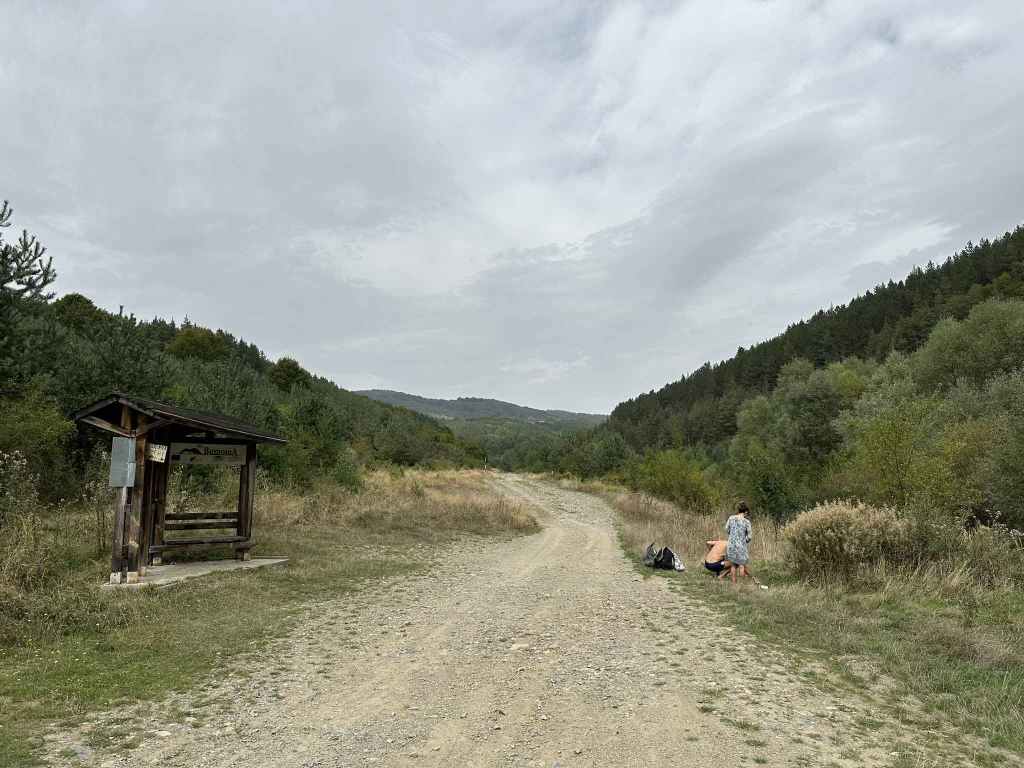
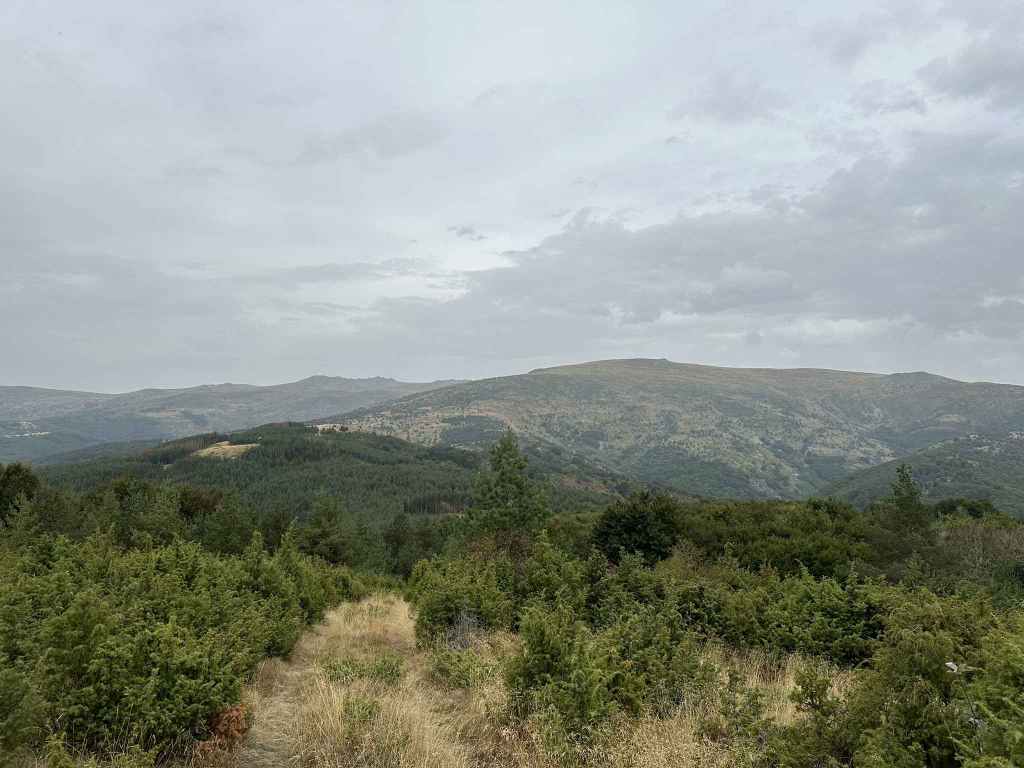
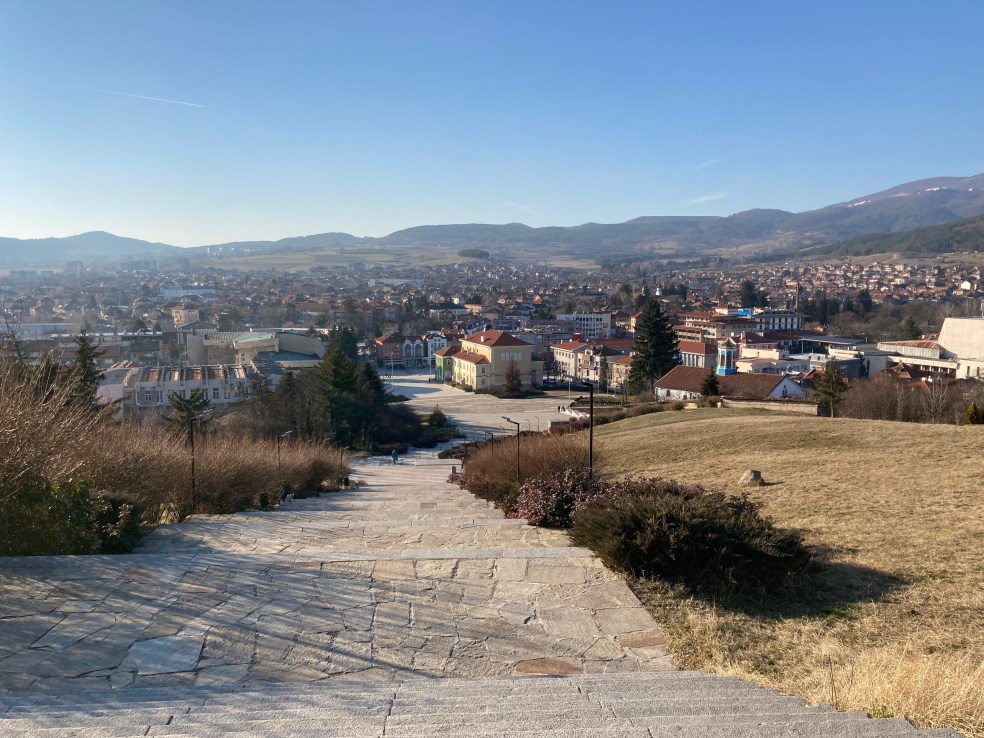
On entering Yarlovo, the road veers to the right, goes past a playground on the right and then heads left into the main square, where there is a Church of St Nedelya, the town hall, a post office and various amenities. Park here. This walk will take you along the course of the Palakaria, up onto the ridge between Yarlovo and Chuypetlovo to the peak Golemiya Rid (with wonderful views north to Cherni Vrah and south to Rila) and back around to Yarlovo. So you leave the main square in the north-west corner and return via the south-west corner.

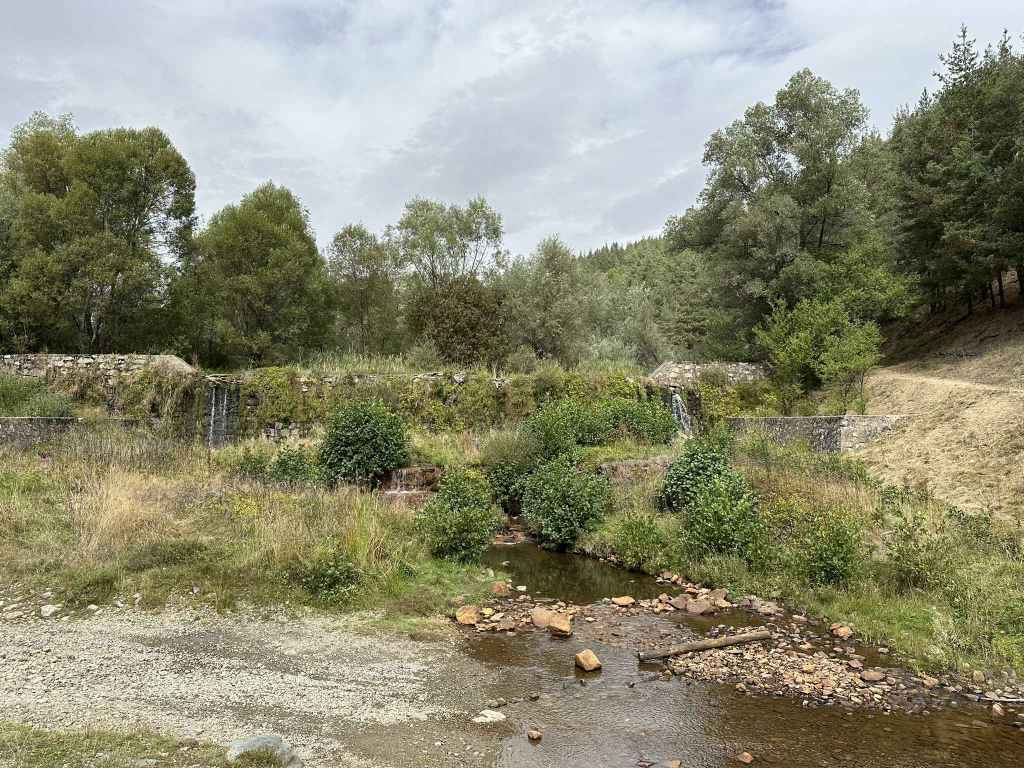
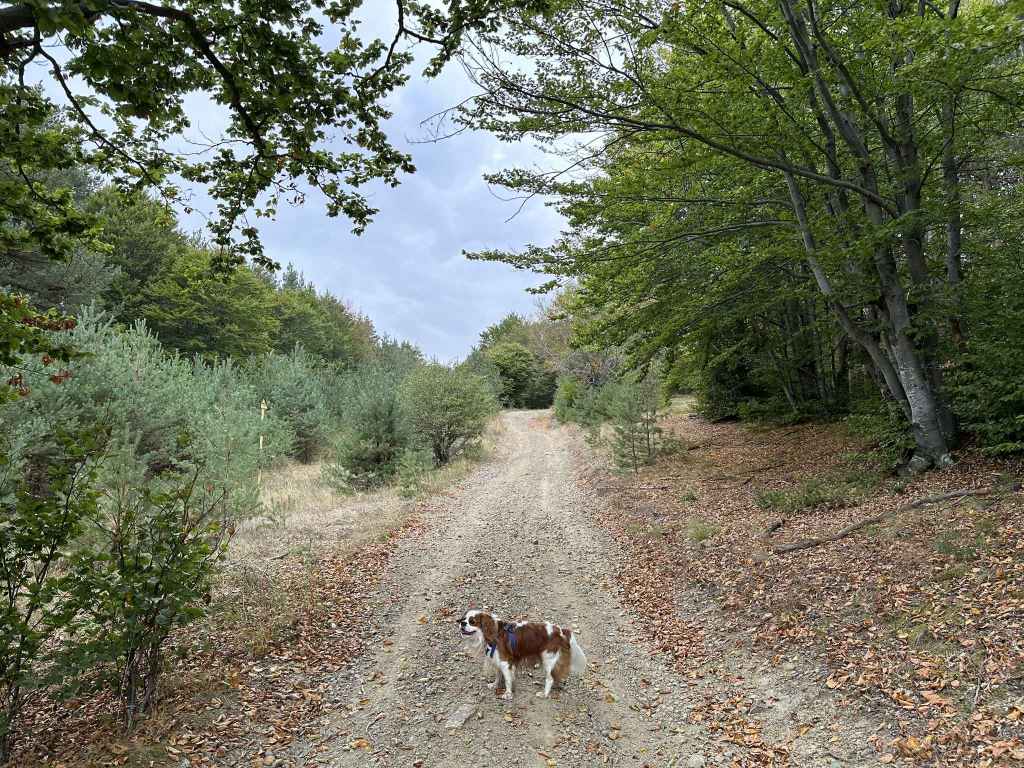
Take the street that leaves the square in the north-west corner (to the west of the church). It is signposted for Smilyo shelter, Chuypetlovo village and Cherni Vrah via Golemiya Rid. The river Palakaria is flowing on your left. You will pass two bridges going over the river on your left, but just keep going on this street. In half an hour, after the tarmac ends and the road turns into a dirt track, it crosses the river, where there is a pretty waterfall. On the other side of the river, the track begins to climb and turns right (left will take you back into Yarlovo). In fifteen minutes, you will cross a small tributary of the Palakaria, and immediately the path divides. Right will take you along the course of the river. You want to go left, up the mountain. Now stay on this path (with the black and yellow posts), ignore the turning on the left that appears immediately. The path divides and then comes back together (it doesn’t matter which branch you take) and in little more than ten minutes it emerges into the open.

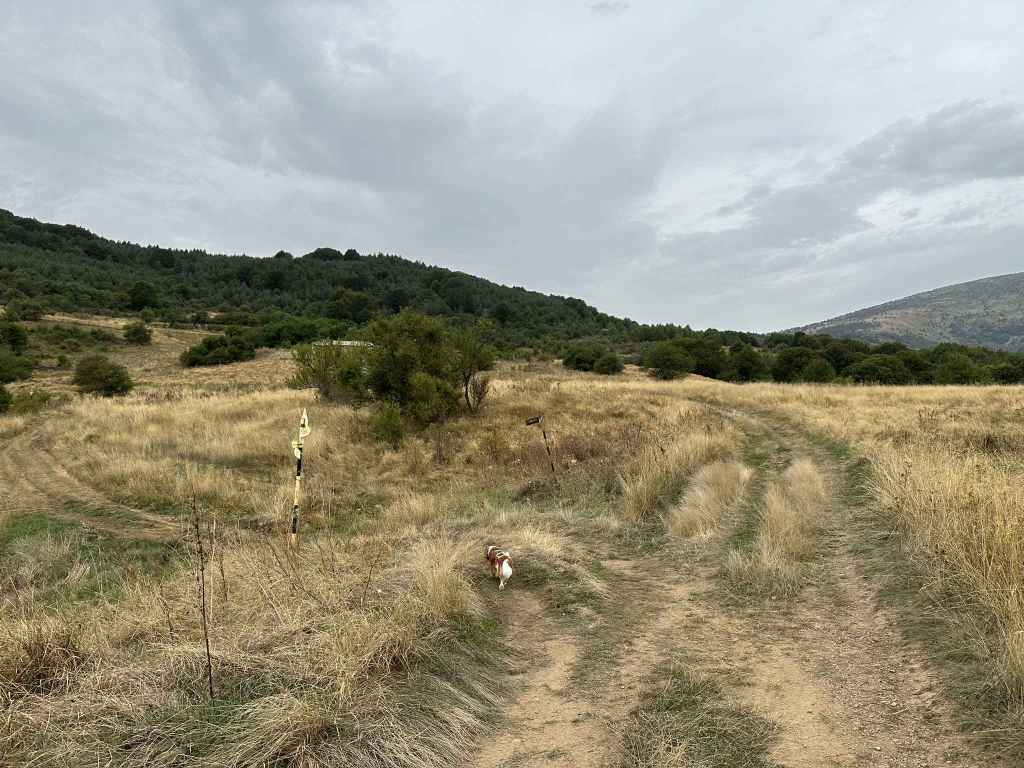
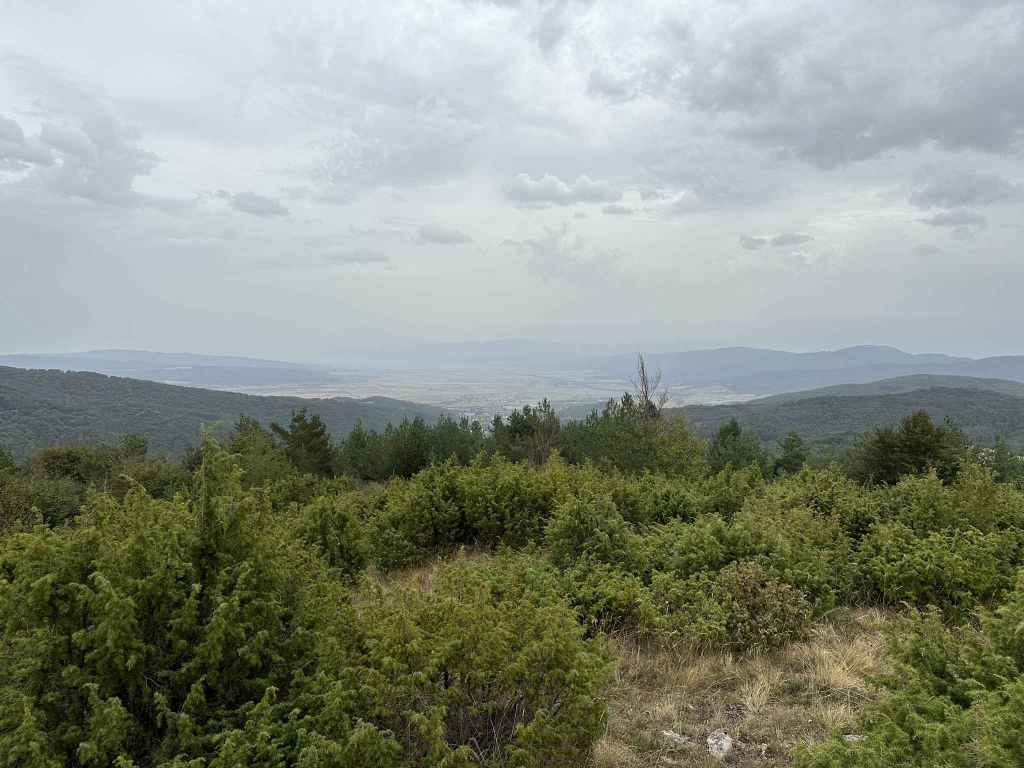
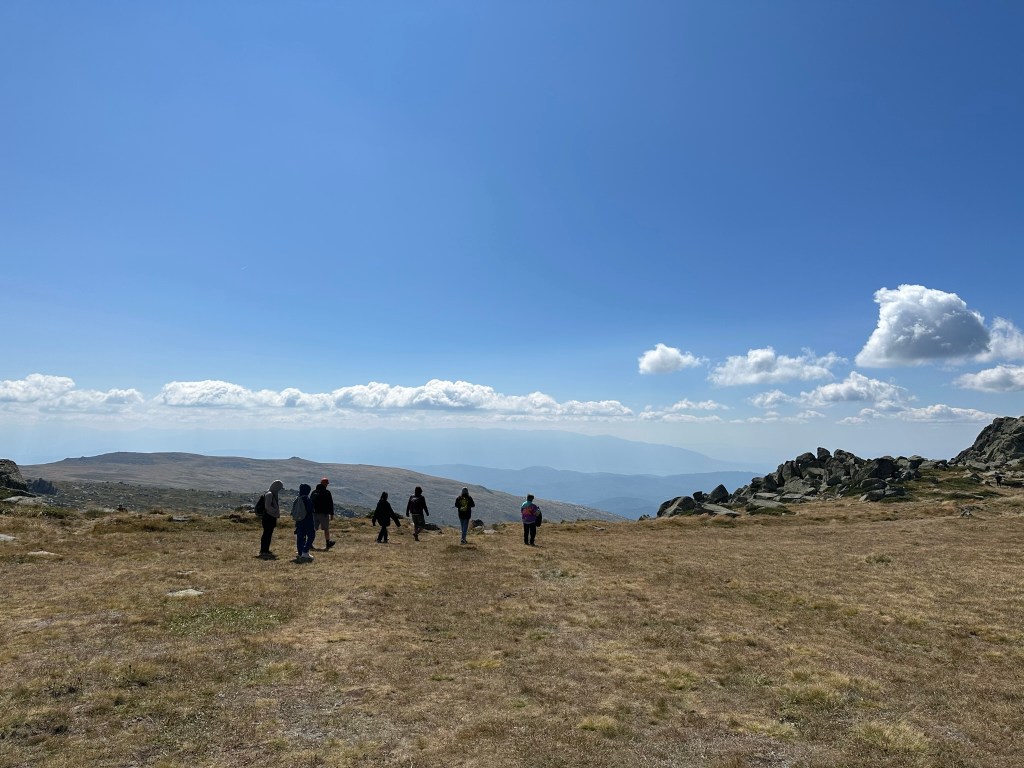
Another ten minutes, and you will reach post number 158. A path on the left will take you to Smilyo, Chuypetlovo and Bosnek. Go right here, in the direction of Cherni Vrah. You will pass a farm outbuilding on the left and then a small house. Follow this path for twenty minutes. It then divides. The right branch will continue taking you in the direction of Cherni Vrah, the summit, but we are going to go left here, in the direction of Golemiya Rid peak. 200 metres after this left turning, there is a path through the grass on the left. In ten minutes (500 metres), this path will take you to the peak, which is a good place to stop for rest and refreshment. Halfway there, a path diverges on the left – ignore it, and in no time at all you will be at the peak. North of here is Cherni Vrah. To the right of Cherni Vrah is Yarlovski Kupen, the main peak at the head of the Palakaria valley. North-west is the village of Chuypetlovo, which featured in our previous walk. And south-east is Yarlovo and the mysterious peaks of Rila, the highest point in the Balkans, in the distance.

Once you have had time to enjoy the views, return to the path you were on and continue left. In about twenty minutes, you will reach a clear crossroads with a picnic area on the right. The left branch will take you to post number 158 and the farm outbuilding, from where you can return directly to Yarlovo. The right branch takes you down to the road just before Chuypetlovo. Keep straight, in the direction of Klisura village. After a hundred metres, ignore the turnings on the right and stay on the path you are on. In half an hour, it divides (the right branch goes to a “cheshma” or fountain). Keep left here, and in five minutes you will come to a T-junction. The right branch goes to Klisura. You want to head left, back to Yarlovo three kilometres away. The road is now tarmacked.

When you reach the first houses in Yarlovo, there is a dirt track on the right, which soon becomes tarmacked as it enters the village, running alongside the river Palakaria on your left. After ten minutes (800 metres), cross the bridge on your left and in five minutes you will enter the main square from the south-west.

Please note: it is easily possible to shorten this walk in two ways. The first is to take the left turning at post 158 and to walk in the direction of Chuypetlovo, not Cherni Vrah. This will omit the peak Golemiya Rid. When you get to the crossroads, take the left turning for Klisura village and continue as per the description. Alternatively, having climbed the peak, when you reach the crossroads, instead of continuing in the direction of Klisura village, turn left here for Yarlovo. You will return to post 158, where you can turn right and descend into the village the way you climbed up. Both options will reduce the walk by several kilometres.

A map of the walk in relation to the whole mountain, with the outskirts of Sofia visible in the top right-hand corner:

Aleko – Cherni Vrah – Goli Vrah – Aleko

Starting Coordinates: 42.5822, 23.2922

Distance: 9.0 km

Elevation Gain: 470 m

Time: 3¾ hours

Difficulty: hard

Transport: by car, by gondola lift, or by bus no. 66 to the last stop


Aleko is named after the Bulgarian writer Aleko Konstantinov, creator of the fictional character Bay Ganyo, who encouraged tourism in Bulgaria. It is one of the most popular destinations on Vitosha – because it takes you within striking distance (3.2 km) of the summit, because it boasts several ski slopes, because it is at the top of the gondola lift from Simeonovo, and because it is about as high as you can get on the mountain with a normal vehicle. It is the first place I visited as a tourist, before I started walking on the mountain as a hiker.

There are three ways to reach Aleko. By car, you take the road that climbs the mountain from Dragalevtsi and continue to where the road ends, a distance of just over 15 kilometres. By public transport, you take bus no. 66 and continue to the last stop, opposite a hotel called Moreni, and then walk the final 700 metres before coming to the end of the road, after passing a large moraine field on your right. Or there is a gondola lift that climbs the mountain from Simeonovo, though this lift normally only works at weekends.

Once at Aleko, you have a choice of walking to the summit, or you can take a chair lift (run by the same company that runs the Simeonovo gondola lift). This chair lift used to depart directly opposite Aleko hut and climb the peak in front of you, Malak Rezen, but it is no longer operative, so you must now take the path that heads east in the direction of Bistritsa village and, on reaching the ski slope Vitoshko Lale (where there is a chair lift), take a path on your right that climbs to the middle station. This lift also only works at weekends, but it is relatively inexpensive. It is just under a kilometre from Aleko hut to the lift.

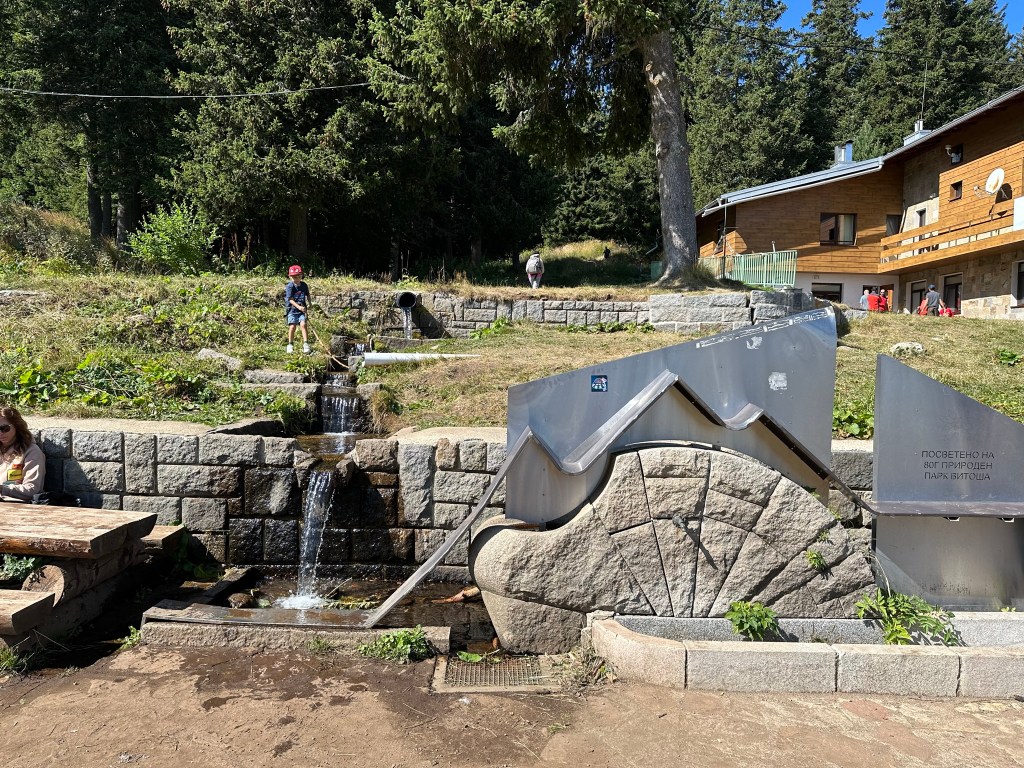
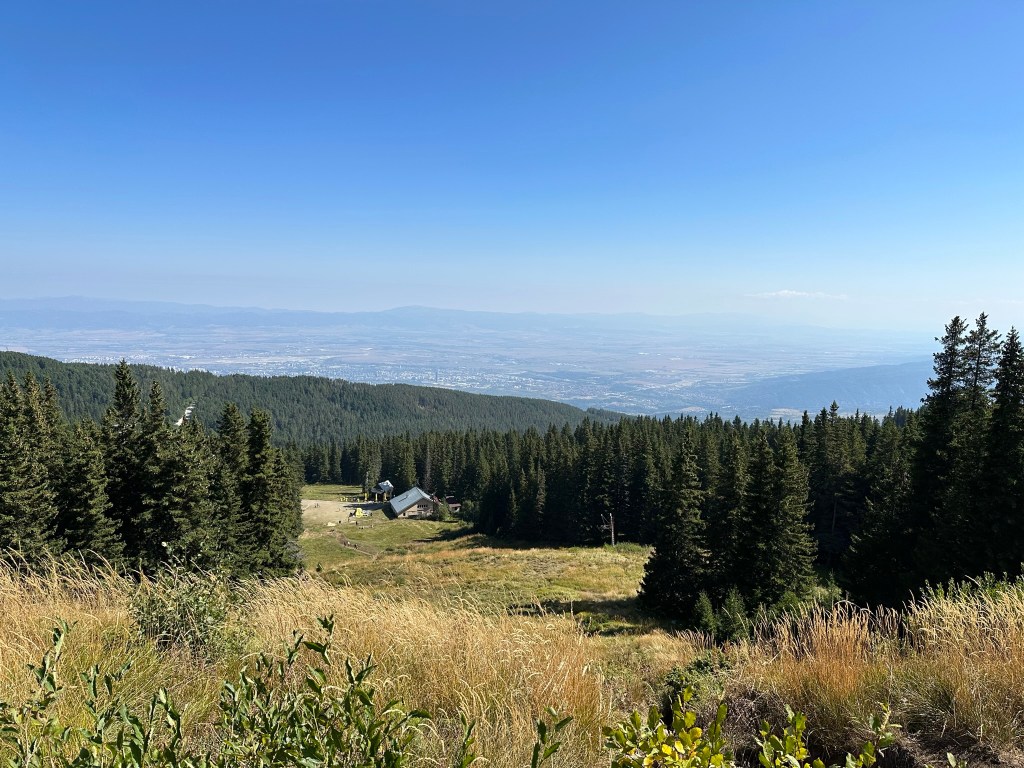
To walk to the summit, look for the fountain on the south side of Aleko hut. To the left of this fountain, there is a path that climbs the mountain. This is the path you want. It skirts the disused chair lift on your left, with Malak Rezen peak also on your left. You have a choice of choosing a more direct route, or zigzagging slightly (following the red markers), which makes the ascent easier. From Aleko hut to where the path joins the slip road from Goli Vrah is an elevation gain of 260 metres and takes approximately forty minutes. The views back to Sofia, of Malak Rezen peak to the south, Ushite and the peat reserve to the north (see the walk Ushite), are wonderful and well worth the effort.

When you get to the top, you join the slip road coming from Goli Vrah. Many people choose to access the summit by means of this slip road, which is a dirt track and leaves the main road from Dragalevtsi 900 metres before the road ends at Aleko (200 metres before the last bus stop), taking a more circuitous route. When you join the slip road, turn left. Follow the road for 450 metres until you reach a black and yellow post with the number 39 on it. Here, the road continues to the radar station on your left, while a path leads directly to the summit in front of you. It takes half an hour on this path to reach the summit, where there is a hut with a bunch of antennae on top of it. You can see the radar station (a white golf ball) on your left and the valuable peat reserve on your right.

When you reach the hut at the summit, there is a large bell inside an iron structure. It was the tradition, when I first came here, to ring the bell, but even if that is no longer possible, you can still touch the bell with your wedding ring (if you have one) and it will issue a small sound in recognition of your achievement. After all, it’s not every day you make it to the summit of a mountain. The weather can be windy up here, so it’s good to pack something warm. The hut serves food. Beyond the hut is a large grassy area and stunning views of the other side. You can see Rila mountain in the distance on a clear day. You may want to linger here for a while, enjoying the views. It’s also worth walking south-east for half an hour, in the direction of Skoparnika peak. There are unusual rock formations which look suspiciously like Picasso paintings.

When you’ve had enough, follow the black and yellow posts back down towards the slip road, rejoin the slip road for 450 metres, and then you can either descend directly towards Aleko the way you came up (at post 60), or you can continue on the slip road, a longer but easier route which will take you alongside the peat reserve all the way back to the main road, where you will have to turn right in order to complete the last few hundred metres. The route via Goli Vrah is about twice as long as the more direct route to Aleko.

This is a hard walk – it’s not so easy to climb a summit – but the views at the top in all directions are stunning. This is also where the magnificent Struma River has its source (this river flows into the Aegean in northern Greece, next to the ancient settlement of Amphipolis; if you drive to Greece on the motorway from Sofia, you follow the course of this mythical river). Please note: Struma River begins on Vitosha (not on Rila or Pirin, as might be expected). It is not the only river to do this.

The following map shows where we parked the car (the green circle). We then walked south to Aleko hut, took a detour to see the chair lift on Vitoshko Lake, returned to the hut, zigzagged up the mountain to Cherni Vrah; on our return, we decided to take the slip road back to Goli Vrah, where we rejoined the main road, turned right and walked back to the car. Please bear in mind that Aleko can be busy at weekends.

Panagyurishte

The road winds through the forest.

We are unsure about it at first.

Will it be passable? Potholed?

Where does it begin?

It begins, as all things do,

at a crossroads,

which is to say

it has no beginning.

It comes out of nowhere,

leads somewhere,

but it doesn’t then end

– it is we who leave it.

The road continues through the trees.

Their shadows lie across the road

like corrugated iron,

a cattle grid,

protesters.

They resemble the bars of a prison,

but they are just that

– shadows of trees

that from time to time

morph into potholes.

I steer carefully

to avoid sudden disappointment,

ranging from third to fourth

to neutral.

At one stage a golden leaf

has an unexpected burst of enthusiasm

and jangles (like your bracelets)

across the road,

reminding me of destiny.

Are we just Hardy’s playthings?

I have a different view.

Nothing begins or ends with us

(like the road).

Things pass through us,

or we pass through them

(like the forest).

What counts is how we respond

(with love or hatred).

It is our response

that makes us human.

We stop for lunch.

The sun lights up a patch of ground.

To the south,

Rila stands majestic.

In the north,

the Old Mountain belies his years

and blushes.

Tenderness abounds.

Jonathan Dunne, 17 February 2023

Gallery

Frescoes

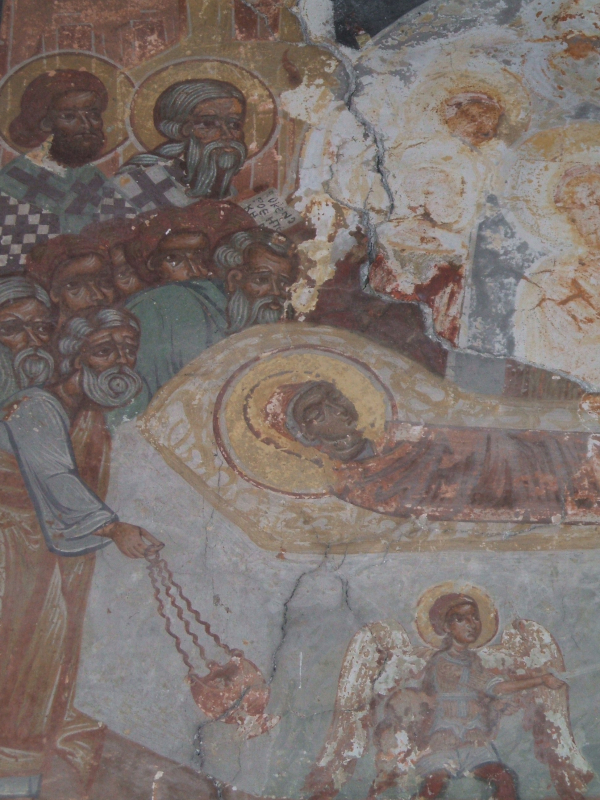
There are three major monasteries in Bulgaria: Rila in the south-west (a World Heritage site), Bachkovo in the foothills of the Rhodope Mountains to the south, and Troyan in the Balkan Mountains in central Bulgaria.

But aside from these three major sites, there are many monasteries dotted about Bulgaria, in particular around the capital, Sofia, and many of these are inactive or abandoned. The monasteries around Sofia make up what is known as ‘the Little Holy Mountain’, a reference to the Holy Mountain, Mount Athos in Greece, famous for its monasticism.

You can be in Sofia and not realize that there is a different experience awaiting you only twenty minutes by car from the capital. Unfortunately, many people don’t get this opportunity to travel further afield or don’t know about these places. When you leave Sofia, you enter a different world, one of beautiful nature and one of great spirituality. We do not realize that nature has its own language and it takes time to begin to decipher it.

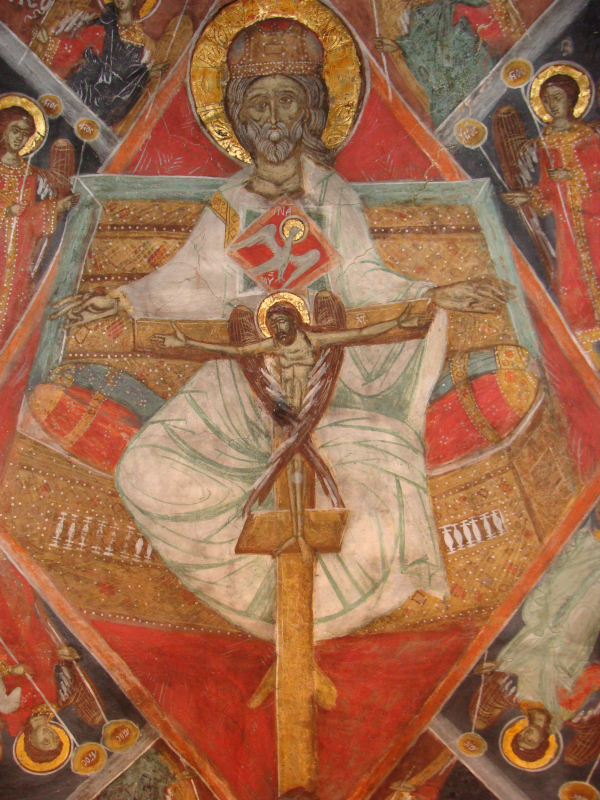
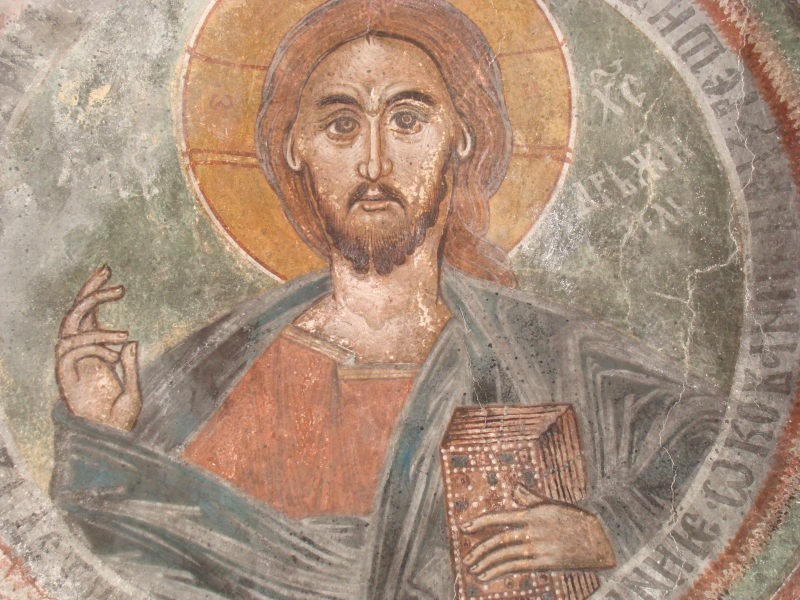
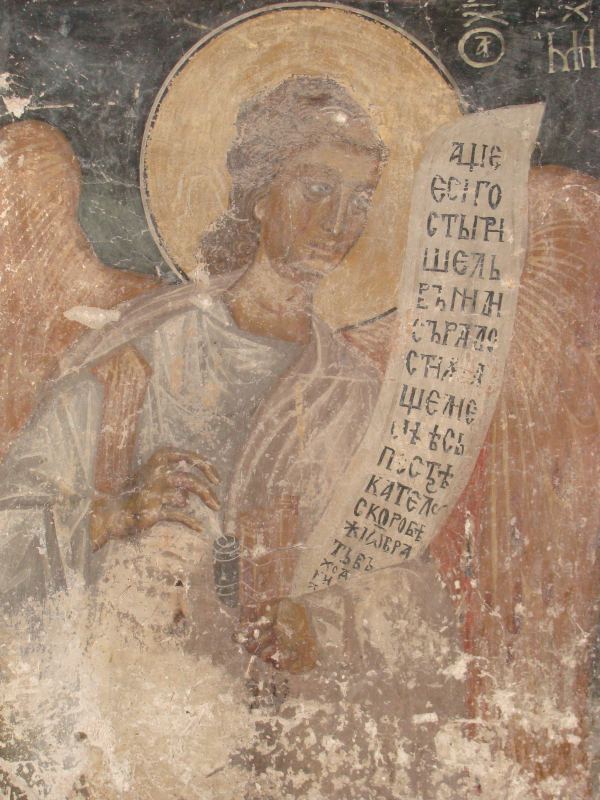
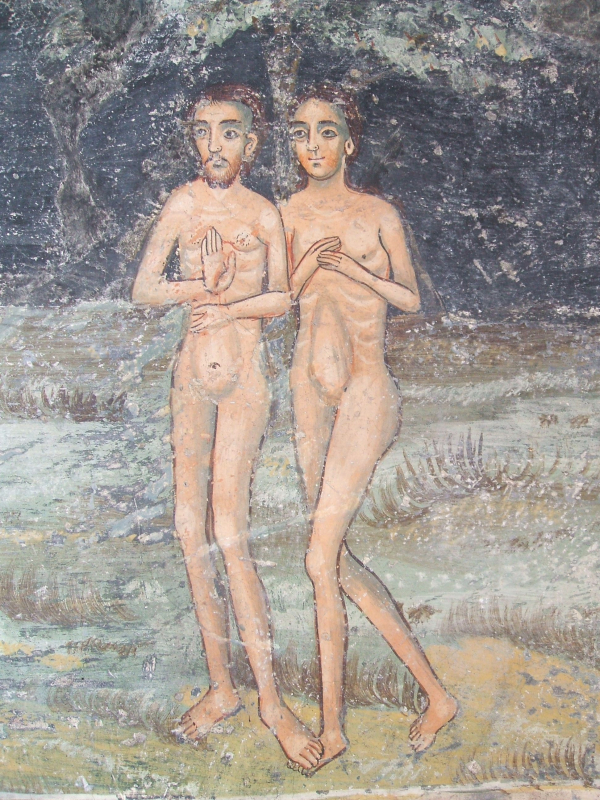
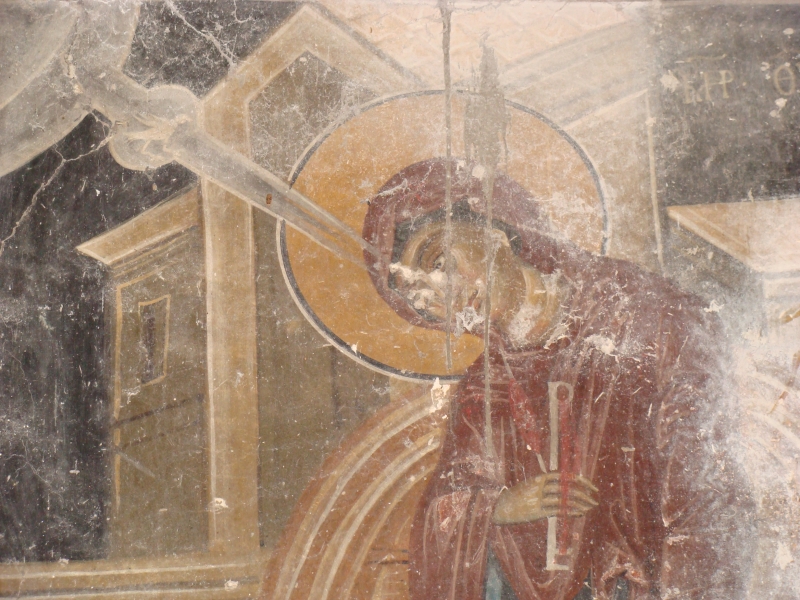
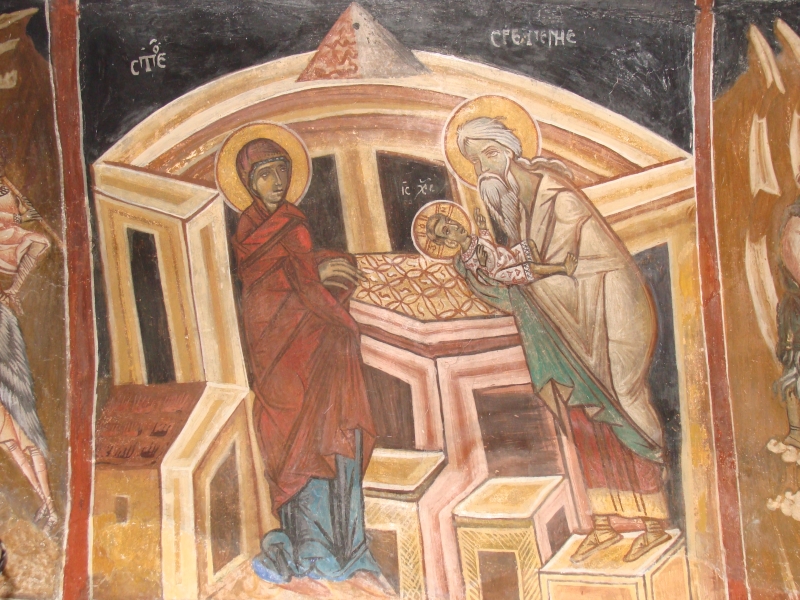
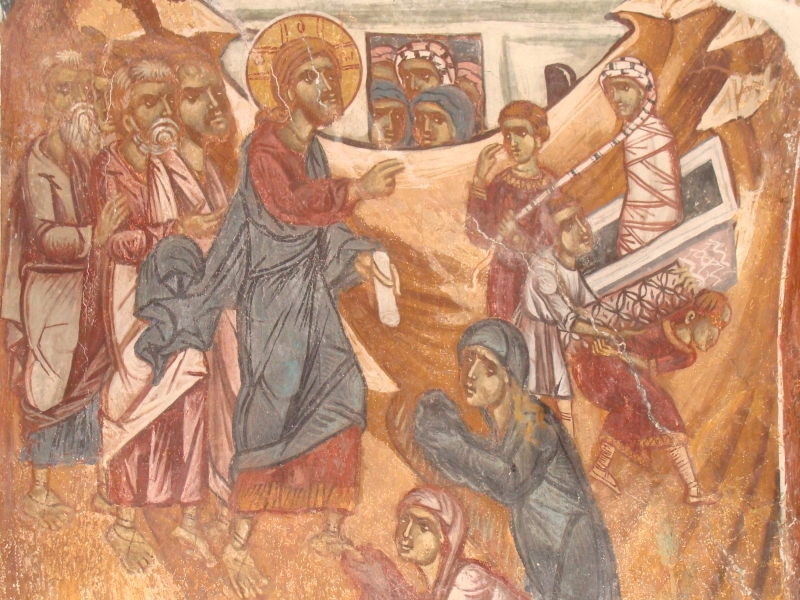
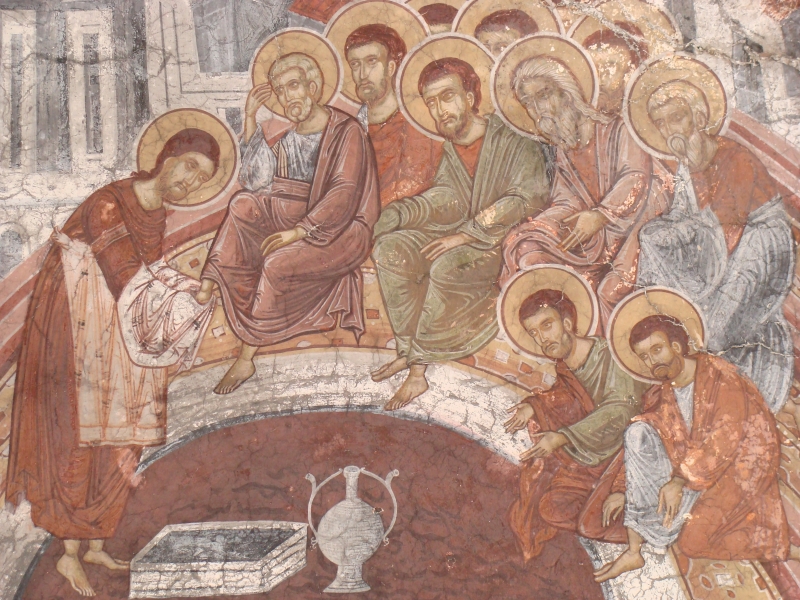
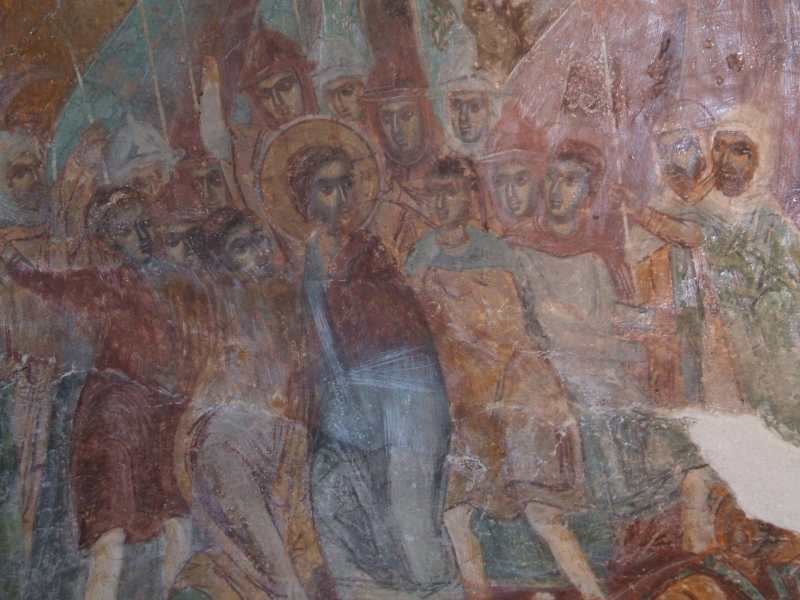
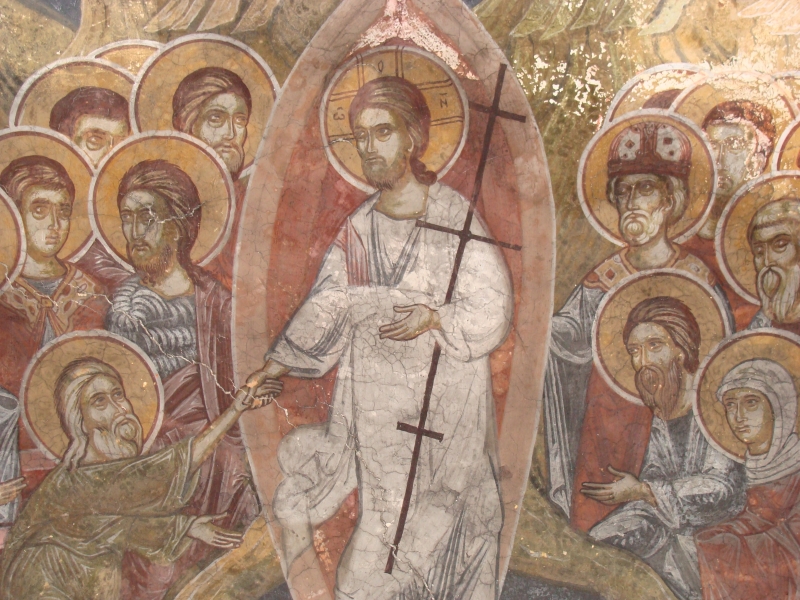
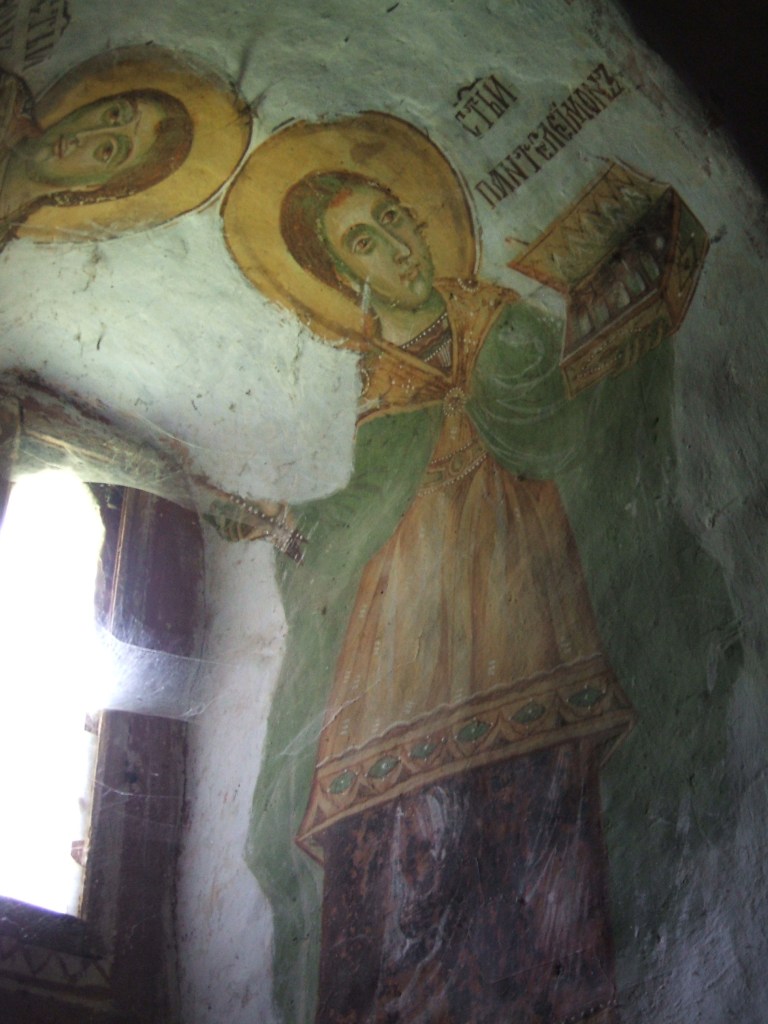
The Bulgarian poet Tsvetanka Elenkova and I visited 140 monasteries from our home in Sofia during the period 2006-2012. The fruit of this pilgrimage was a series of ten essays by Tsvetanka contained in a book published in Bulgarian as Bulgarian Frescoes: Feast of the Root (Omophor, 2013), accompanied by more than a hundred of my photographs. These essays cover different feasts, from the Nativity of Christ to his Resurrection and Ascension. We have made a small selection of the best images to give people an idea of the riches hidden away in monasteries in Bulgaria that are often abandoned and can be difficult to get to.

The best example is Seslavtsi, a district of Sofia 12 km north-east of the capital. The frescoes here are breathtaking. They were painted by a famous iconographer, Pimen of Zograph, a monk from the Bulgarian monastery of Zograph on Mount Athos who was called by St George in a dream to return to his homeland and to build and paint churches, which he did at the start of the seventeenth century, four hundred years ago. The church containing these frescoes was used for target practice during Communism and is next to a uranium mine. The quality of the frescoes is so good that attempts have been made to cut them out of the wall and take them. The frescoes have not been restored, which gives them a lifelike quality. Once frescoes are restored, they lose something of their spontaneity and acquire a sheen.

Other monasteries containing high-quality frescoes in the environs of Sofia are Alino, a village on the south side of Mount Vitosha, the mountain that overlooks Sofia from the south; Eleshnitsa, a village 25 km north-east of Sofia; and Iliyantsi, a district of Sofia in the north.

Further afield, we find the church of Berende, a village 50 km north-west of Sofia in the direction of Serbia, overlooking a disused railway and with wonderful autumnal colours. Not far away from Berende is the village of Malo Malovo, a very difficult monastery to find. Our first attempt was unsuccessful. We were with our year-old baby and unexpectedly came across some young lads hanging out in the mountain. We caught the glint of metal, beat a hasty retreat and returned a week later, this time without our child, successfully locating the monastery, which was hidden away behind an elevation, perhaps deliberately if one considers that a lot of these monasteries were built during the Ottoman occupation of Bulgaria in the fourteenth-nineteenth centuries, when churches were not supposed to exceed the height of a man on horseback and so had to be dug into the ground.

To the north-east of Sofia, still in west Bulgaria, we find Strupets and Karlukovo. To the west of Sofia lies Bilintsi, on the road to Tran, which has a very attractive gorge. Here, we came across a monk who had taken it upon himself to paint over the old frescoes and who kindly offered us tea in the hovel he was living in (which had a large hole in the ground). Fortunately, his work of ‘restoration’ was incomplete and we were able to photograph some of the original frescoes.

South of Sofia, near the motorway to Greece, is Boboshevo, another excellent monastery for frescoes. And then in central Bulgaria, we have Arbanasi, a hill with old churches next to the medieval capital Veliko Tarnovo. One of these churches is the Church of the Nativity, an example of a building that is sunk into the ground, with sumptuous frescoes inside. A little to the north of Veliko Tarnovo, overlooking the river Yantra, with Holy Trinity Monastery on the other side, is Preobrazhenie (Transfiguration) Monastery, which has a wonderful Wheel of Life fresco on the outside.

These are only some of the monasteries we visited, but they are the ones with the most important images. Our aim in presenting these images is to show the high quality, the naivety (we must become like children to enter the kingdom of heaven), the deep spirituality of Bulgarian frescoes. In the West, our attention is drawn to the likes of Michelangelo and the Sistine Chapel, considered a high example of religious art. Some of these monasteries – Seslavtsi, in particular – can quite rightly be included in the same canon of European religious art.

An English edition of the book Bulgarian Frescoes: Feast of the Root is forthcoming.

Jonathan Dunne

(In the slideshow above, captions are by Tsvetanka Elenkova, photographs and translation are by Jonathan Dunne.)

Gallery

Crosses

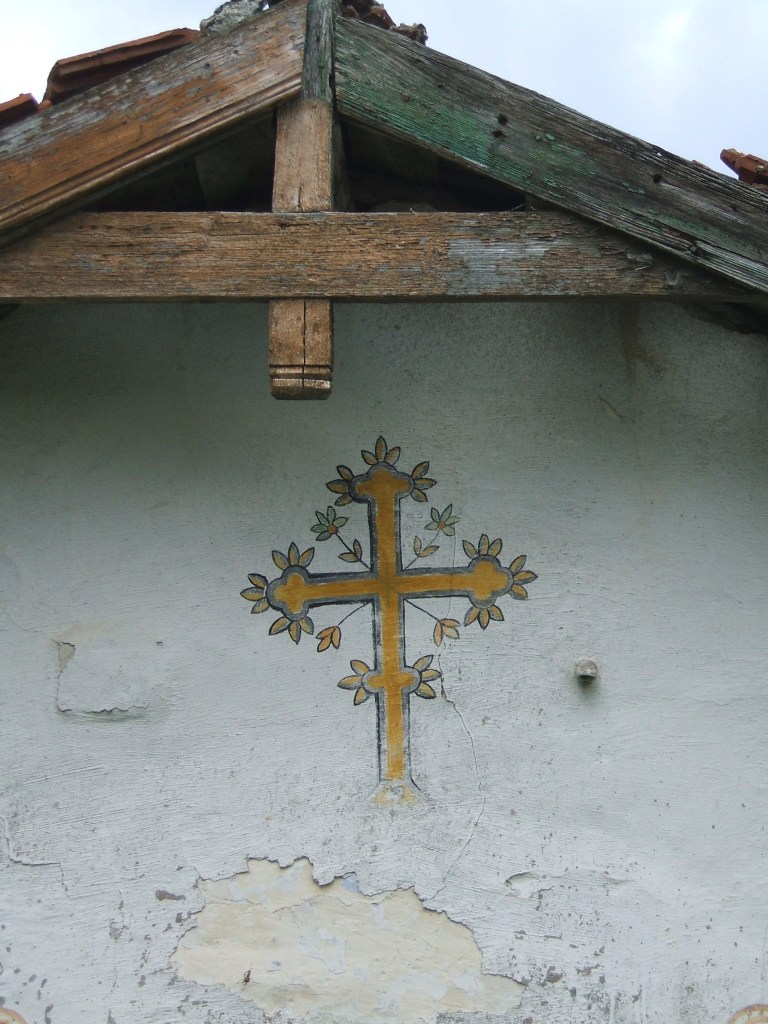
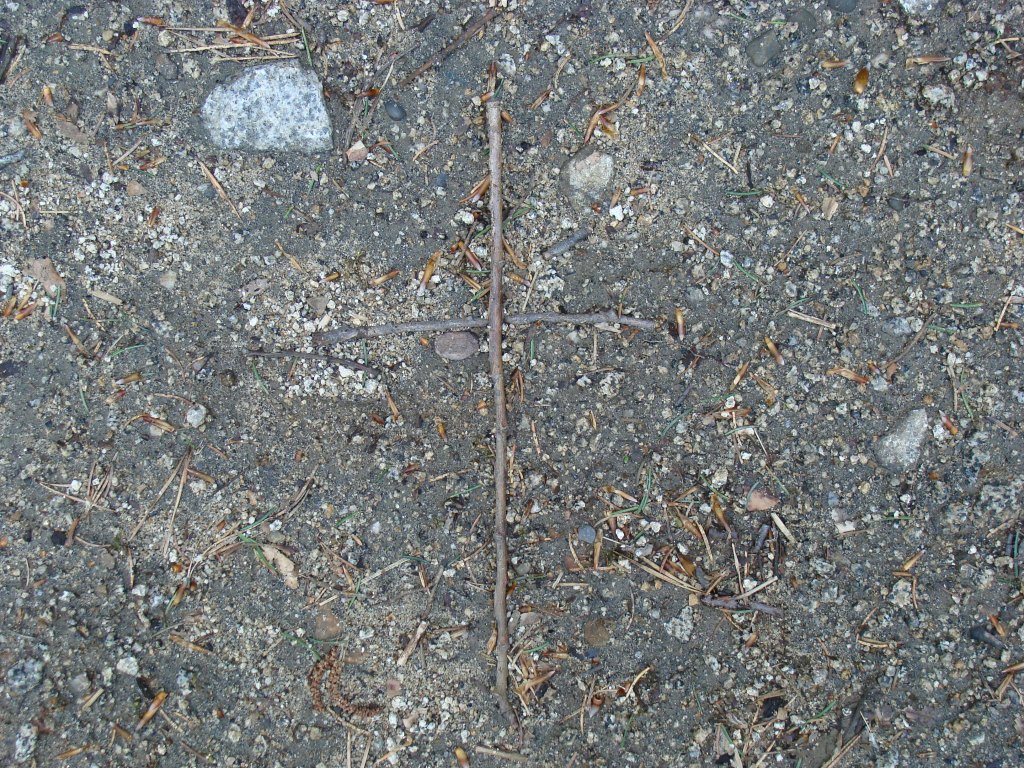
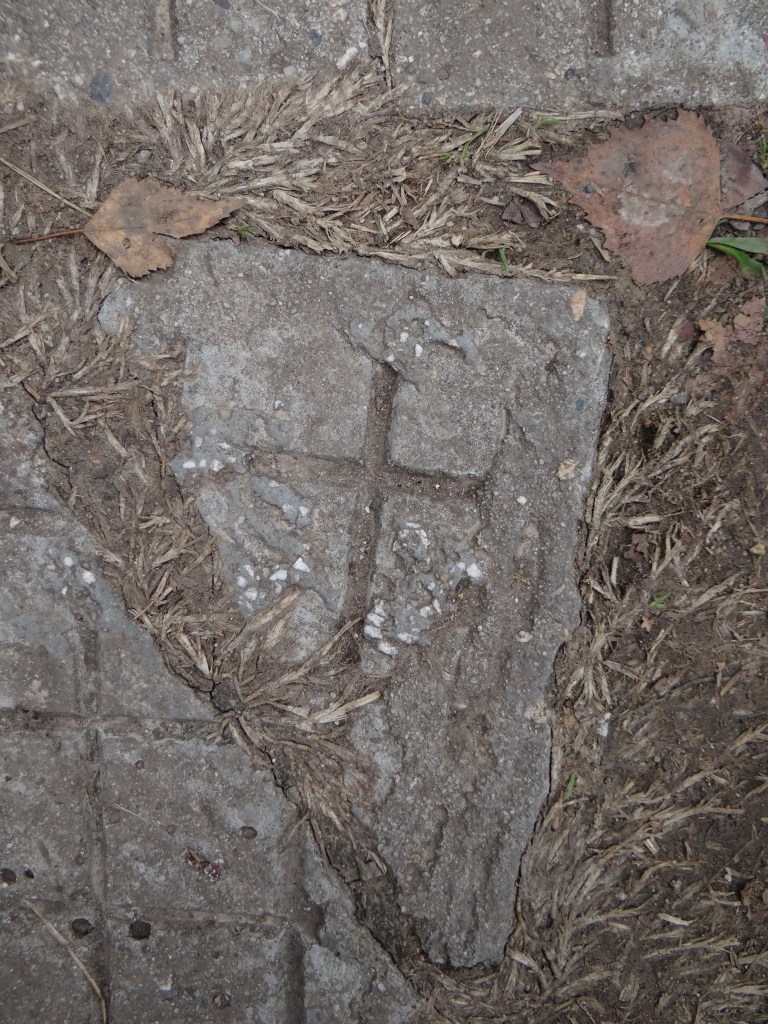
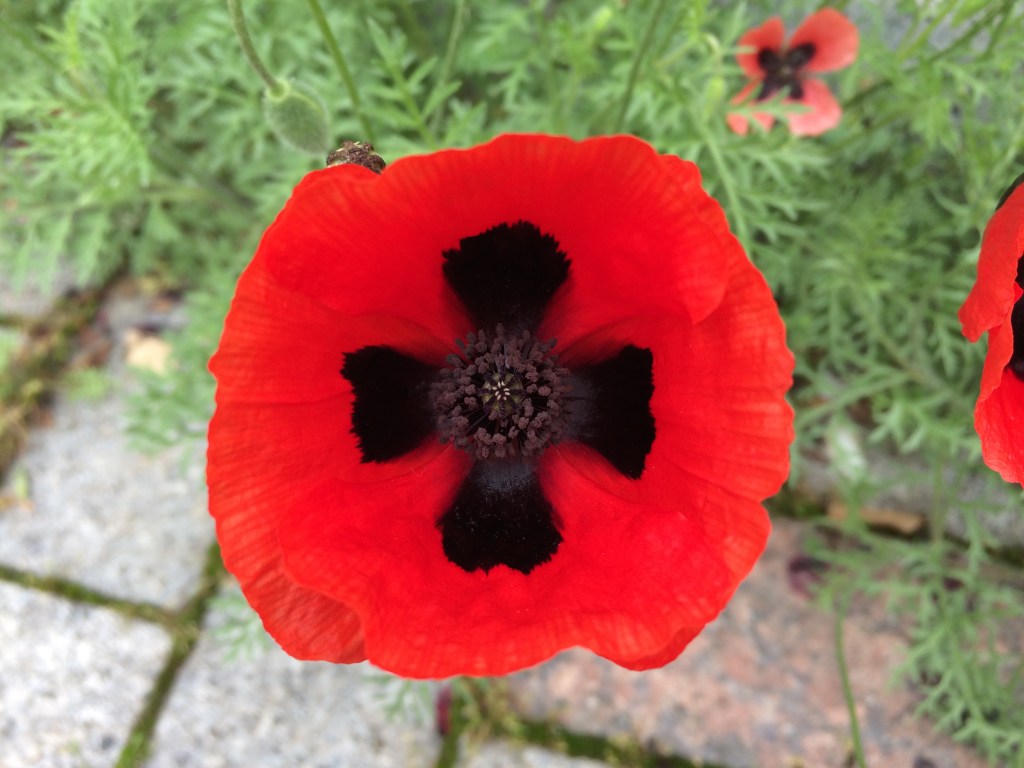
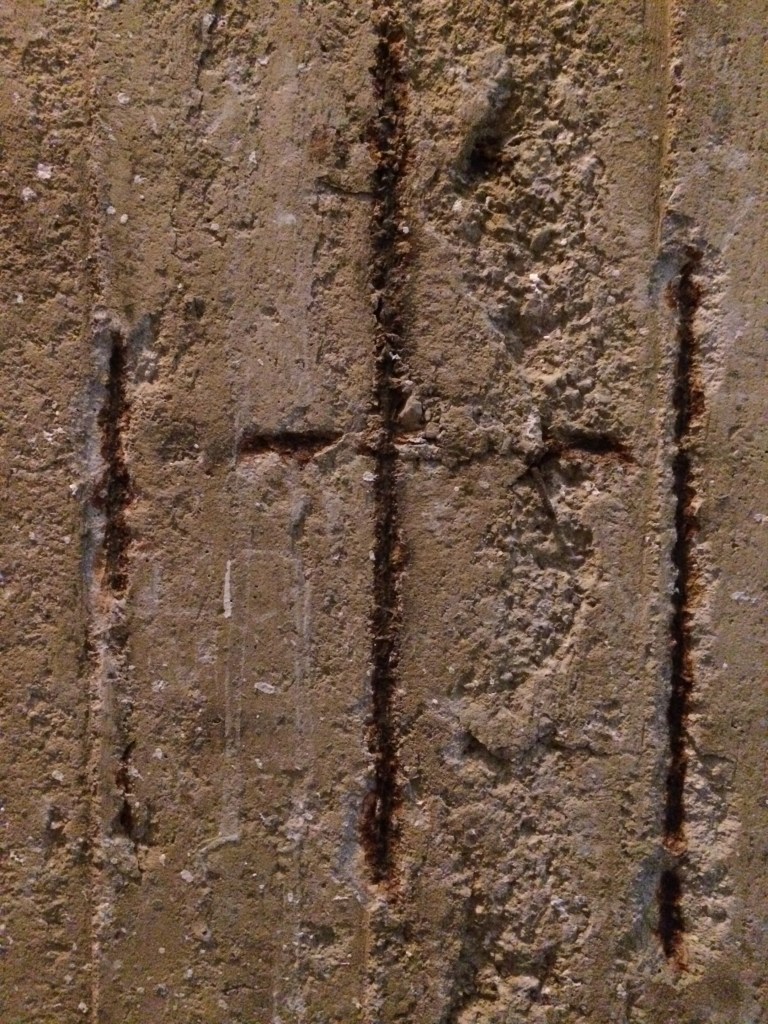
The Cross is a universal symbol. It is to be found everywhere, even in the constellations. It is in effect two intersecting lines, people interlacing arms in order to gee someone up – that is, a Cross provides support, it is a foundation, unlike a single line (a wall, a tower), which can easily be broken. A Cross was used in Roman times as a shameful means of putting someone to death. I imagine it is agonizing. The person on the Cross is at their most vulnerable, all parts exposed, arms outstretched. There is nowhere to hide. For God made man, it is the ultimate act of giving, nothing held back. For us, it is the denial of the ego, of our selfish impulses, because the Cross represents the ego (I) with a line drawn through it: †. It also represents, however, a plus-sign: +. This is what Christ meant by his seemingly paradoxical statement: “Those who find their life will lose it, and those who lose their life for my sake will find it” (Matthew 10:39). Jesus tells us to “deny ourselves, take up our Cross and follow him” (Matthew 16:24). We curb our passions, don’t give in to anger or lust, don’t try to avoid suffering. We endure, albeit only for a moment, and find our sight has been cleansed, our spiritual eye (I) has been opened (O). We count down, from 1 to 0. The Cross is a doorway, a signal of intent. Push a little, and it opens. Reveals the light. Like a child’s fist.

These are Crosses I have come across in my everyday life, in Bulgaria and other countries, on holiday or while performing an errand. I hope these photographs will serve to remind us of the presence of God in our daily lives.

Jonathan Dunne