Dyavolsko Praskalo

As for the previous waterfall, Vidimsko Praskalo, Dyavolsko Praskalo is accessed from the town of Apriltsi, directly north of the highest point of the Balkan Mountain, Botev Peak (2376 m). This walk will not take you to the bottom of the waterfall itself, but to a cave called Vodnite Dupki (‘Waterholes’) and to Pleven Hut, the departure point for those wishing to scale Botev Peak. It does, however, offer views of the waterfall from a distance, like the ecopath to Vidimsko Praskalo, leading through some of the most beautiful scenery in this area, with its UNESCO-protected beech forests, which makes it well worth doing. But it has an elevation gain of 636 metres over a distance of ten kilometres, which involves some steep climbs. It should only be attempted in good weather conditions.

Passing through Apriltsi on the III-607 road, in between the districts of Zla Reka and Novo Selo, take the turning marked ‘kv. Vidima 5’. This turning is next to a bridge over the River Vidima, a river whose source is the waterfall and which features very much in this walk. The road you are on takes you through the centre of Vidima and in 8.5 kilometres arrives at a hydroelectric power station. A turning on the left, directly before the power station, is the start of the ecopath to Vidimsko Praskalo. Continue past the power station on your left. The road becomes quite narrow. In 4.1 kilometres, you reach a car park on your left, with the start of the walk on your right, marked ‘Pleven Hut’. The road continues for a bit, crosses the River Vidima and ends at a second car park, where there is an aerial lift used for transporting goods to the hut.

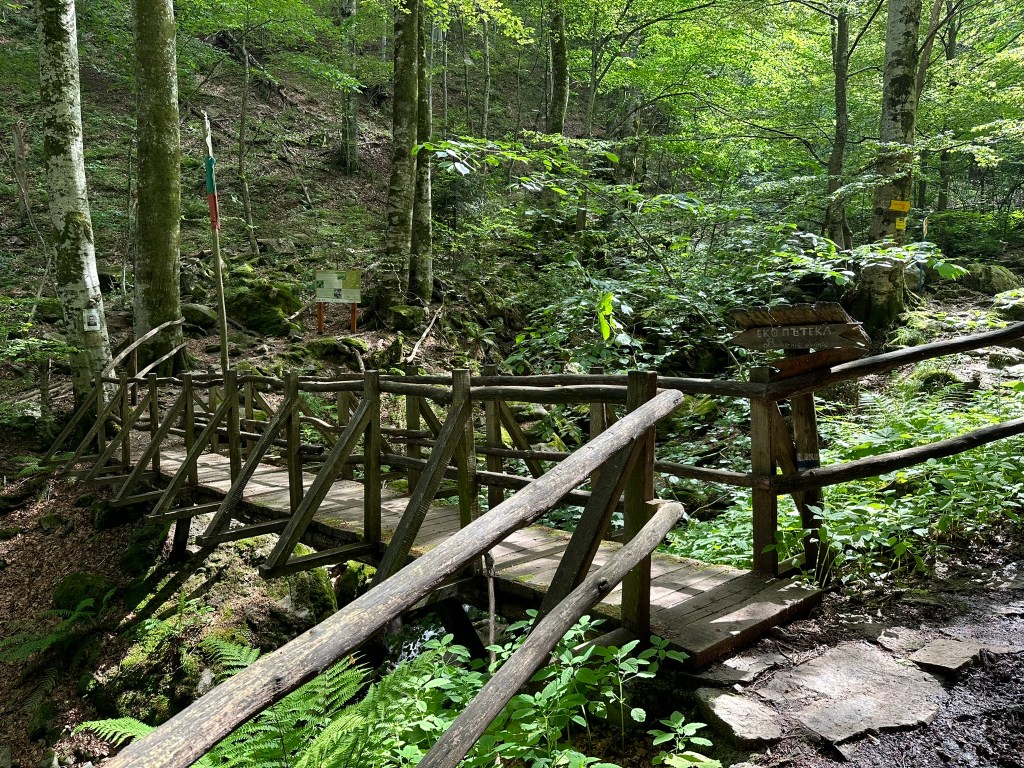
Having parked the car, you are now ready to start the walk. Take the path that is marked for ‘Pleven Hut’. The River Vidima is on your left. In 440 metres, a path diverges on the right. This is the summer route to Pleven Hut and is the route you will come back on. Continue for another 110 metres, and there is a wooden bridge over the Vidima. A winter route to Pleven Hut continues straight, but we want the route to Vodnite Dupki, or Waterholes, cave, which involves crossing the bridge and then walking uphill through beech forest. The climb becomes quite stiff. At one point, the path doubles back on itself, heading north. It then continues south and, as it does so, you catch glimpses of the waterfall, Dyavolsko Praskalo, through the trees.

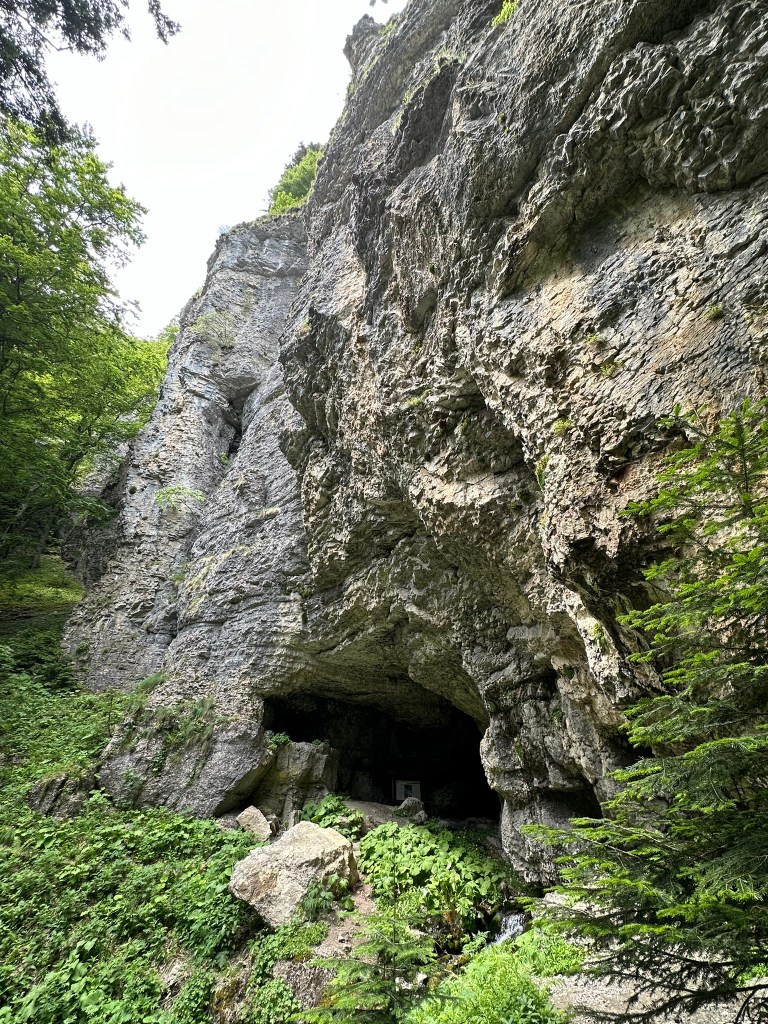
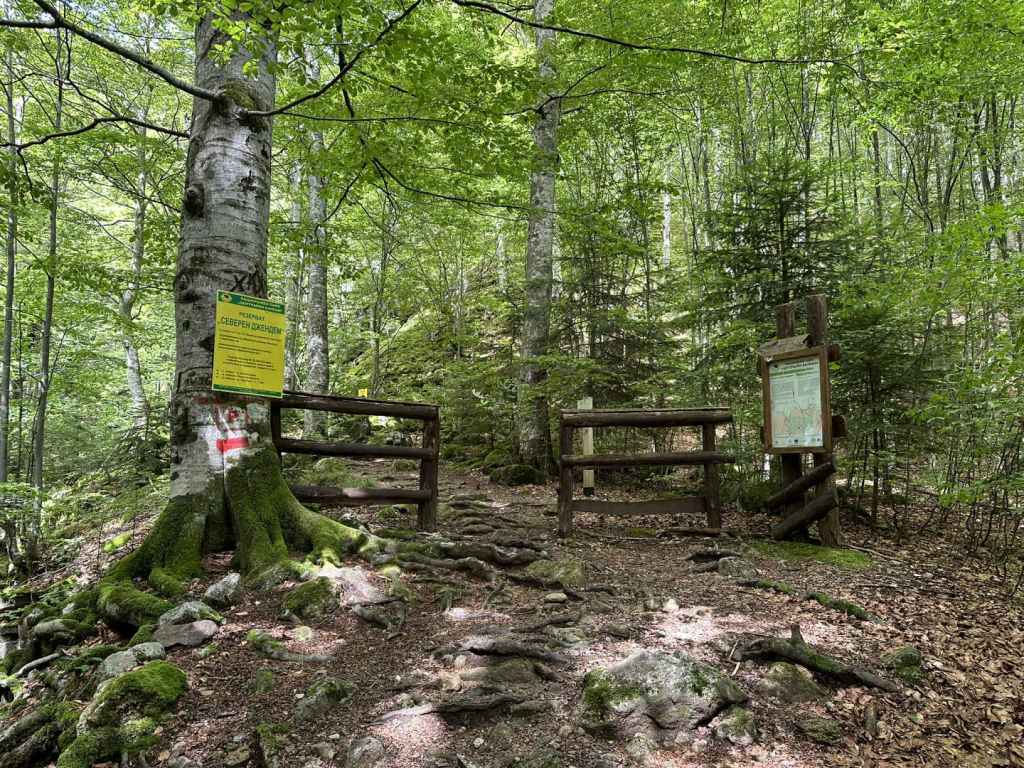
1.7 kilometres after the bridge, you come to a T-junction. The path that goes straight ahead is marked for Pleven Hut and Botev Peak. You want to go left here, to Vodnite Dupki. The path descends in order to cross a stream (soon to become the River Vidima). It climbs again on the other side and, in 300 metres, you can see Pleven Hut across the valley. The path enters the Severen Dzhendem Reserve and descends steeply, going past a moraine field on the right. 500 metres after the sign for the Severen Dzhendem Reserve, it arrives at Vodnite Dupki. As in Krushuna, a stream flows from the cave, accompanied here by cold blasts of air.

The waterfall is a short distance south of the cave. However, because this is a reserve, you are only permitted to go as far as the cave. The path after the cave is noticeably worse, even non-existent, skirting the rocks before entering the valley where the waterfall is situated and the River Vidima has its beginnings. It is best to turn back here. When you reach the T-junction where you turned left earlier for the cave, now follow directions for Pleven Hut. Unmarked paths diverge left and right, but you should look for the yellow signs to the hut. The path again descends before crossing a stream, another tributary of the Vidima. It then climbs on the other side, continuing through beech forest. 1.3 kilometres after the T-junction, you will come to a series of memorial plaques on your left, celebrating the lives of mountaineers who have walked on this mountain. You are now very close to the hut. The path, which until now has been under the cover of the forest, emerges into an open grassy area. There is a shelter for farm animals ahead of you. The grassy slope climbs steeply on your left, in the direction of Botev Peak, and is probably good for skiing in winter. The hut is to your right, behind three other buildings. You’re supposed to go straight and then turn right, with the buildings on your right. You will then reach the entrance to the hut. When I got there, they were listening to very loud, martial Russian music.

What is amazing about the hut is the view from the balcony outside the restaurant. It faces Botev Peak. You can glimpse the wetness of the waterfall to the right of the peak. Vidimsko Praskalo is hidden to the left. This view is unforgettable. I drank copious amounts of tea and exclaimed from time to time. The man running the hut had spent time in Bromley. No wonder he preferred to move back here!

When you have taken your fill, take the path that descends directly from the hut, with green markers and a wooden railing. It is signposted for the locality Mazaneto, which is where you parked the car. The path descends for 1.4 kilometres before rejoining the path you were on earlier, just below the bridge. Turn left here, and in a short while you will be back at the beginning.

The return trip from Pleven Hut to Botev Peak takes about 8-9 hours. It passes the top of Dyavolsko Praskalo, again offering views of the waterfall, but for this you would need to sleep on the mountain.
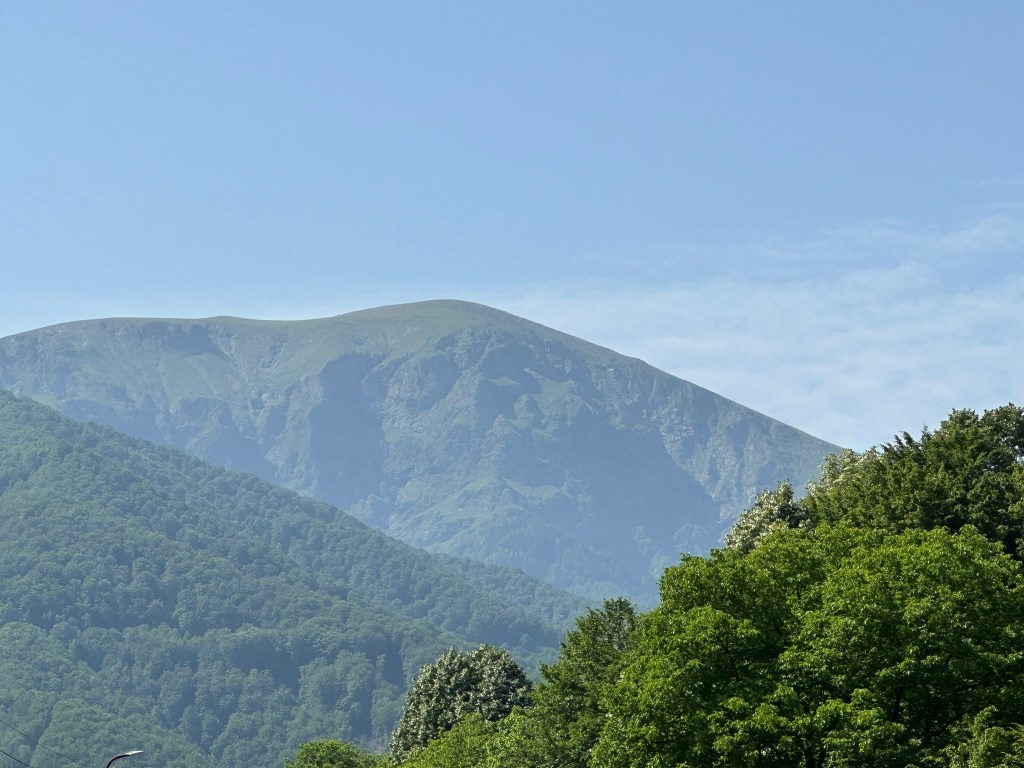
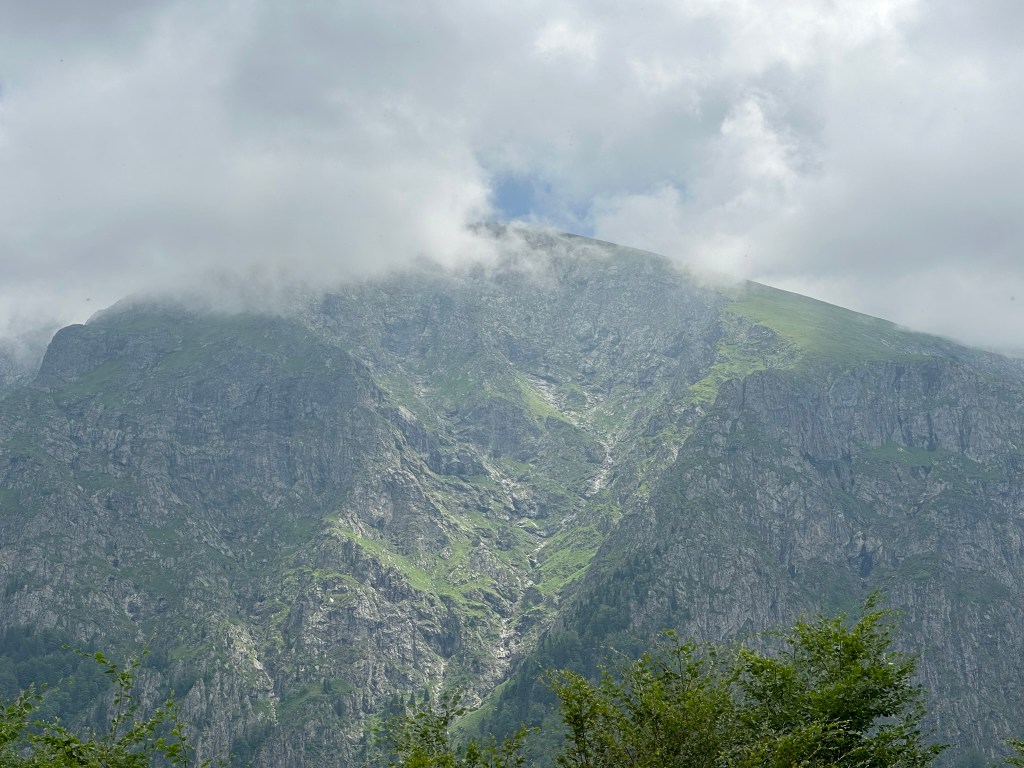
Botev Peak from the road through Vidima.
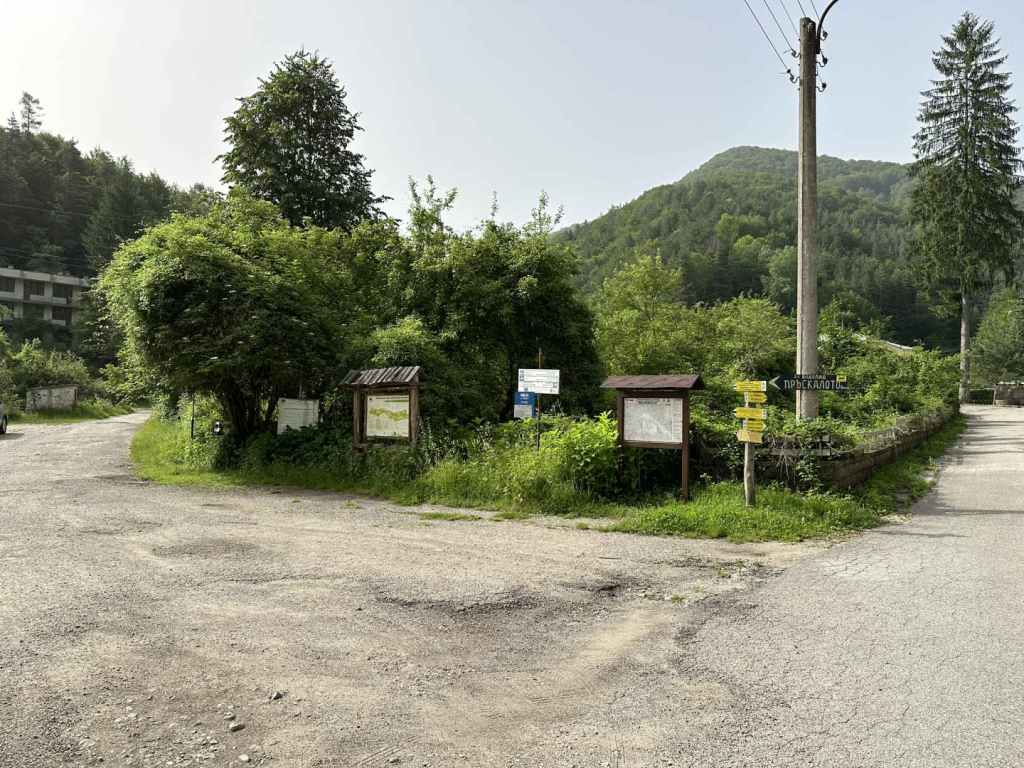
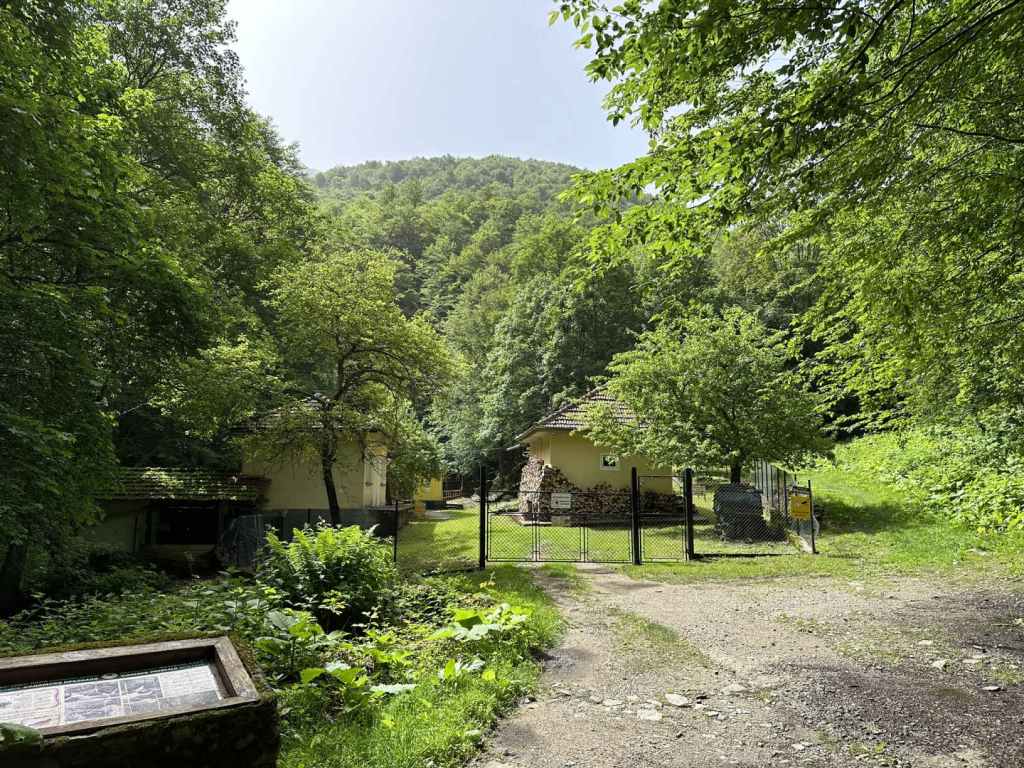
The start of the walk, marked ‘Pleven Hut’.
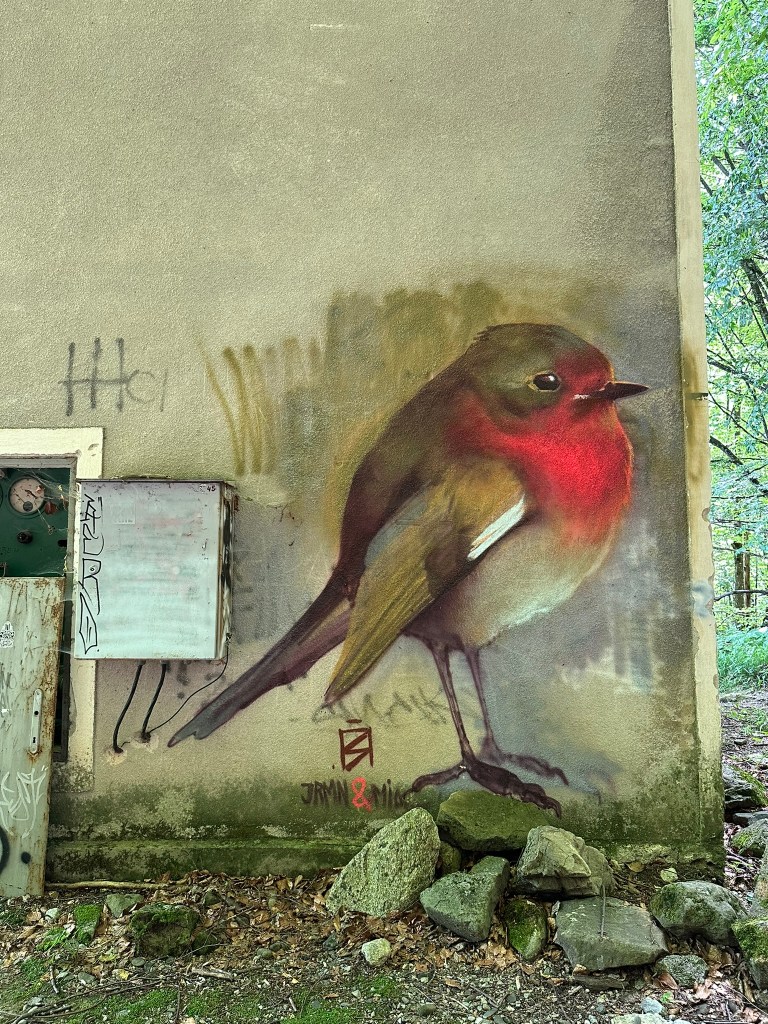
A robin next to the path.
The bridge over the River Vidima. Follow the sign for Vodnite Dupki.
The T-junction – Vodnite Dupki is left, Pleven Hut straight ahead.
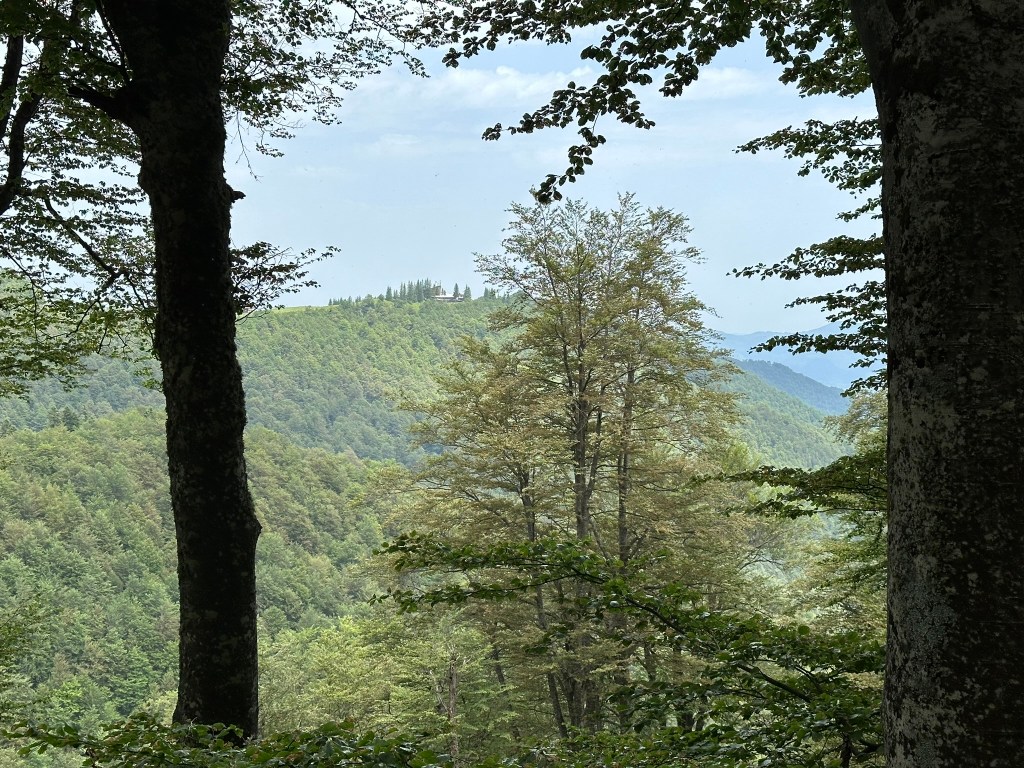
Pleven Hut through the trees.
Vodnite Dupki, or Waterholes Cave.
The view from the cave.
The valley with the waterfall.
Pleven Hut.
Botev Peak from Pleven Hut.
Tea with a view.
The path back to Mazaneto, where you parked the car.
The River Vidima as it passes through Debnevo.

Vidimsko Praskalo

This is a walk into the heart of the Balkan. It takes you to within sight of one of the tallest waterfalls in Bulgaria (most of which are in this region, on the north and south sides of the Balkan Mountain), Vidimsko Praskalo. Praskalo is the Bulgarian word for ‘spray’, ‘sprinkler’, it’s just another word for ‘waterfall’. Vidimsko refers to the nearby village of Vidima. There used to be four villages in this area: Novo Selo in the centre, Zla Reka to the west, Ostrets to the east, and Vidima to the south. In 1976, they decided to club together and form a town, Apriltsi, which was named after the April Uprising of a hundred years earlier, in which the village of Novo Selo lost 142 of its citizens to Ottoman units, who massacred the locals, causing uproar in the West. Bulgaria would become free of Ottoman rule two years later.

A bird could fly from one praskalo to another in a matter of minutes ­– clustered around Botev Peak there are several, Raysko Praskalo being the highest. But we are mere mortals and must use our feet. There is an ecopath that takes you, five kilometres along a track, and the final kilometre along a path, to a viewing area, from where you can view the waterfall in the distance. Believe me, it is magical, even at a distance. The waterfall is located within a part of the Central Balkan National Park known as Severen Dzhendem, and you’re not just allowed to walk freely. This is one of the routes you are allowed to do.

Make your way to Apriltsi. The town is traversed by the III-607 road. Between Zla Reka and Novo Selo (where the centre is), there is a turning marked ‘kv. Vidima 5’. Take this turning, which heads due south, offering impressive views of the Balkan. Continue on this road for 8.5 kilometres, passing through the centre of Vidima and out the other side. Just before reaching a hydroelectric power station, there is a small turning on the left with lots of signs pointing to the waterfall and the ecopath. It’s impossible to miss. Park your car here.

Now you are on foot. The road immediately crosses the River Vidima and turns right, past the power station on your right. The power station is located between the Rivers Vidima and Praskalska (‘of the waterfall’). You are now next to the River Praskalska and are going to follow it all the way to your destination.

The track you are on, wide enough for a car, crosses the river a couple of times, it even crosses a couple of tributaries and goes past some buildings linked to the water supply, but you are never going to leave it until, after five kilometres, you reach the entrance to the Severen Dzhendem Reserve. Most of the time, the river will be on your right. Sometimes the track will toy with you and make as if to climb away from the river, but it soon returns. Just stay on it, ignoring the turnings to Mecho Chakalo and Turski Rat (obviously one of the people involved in 1876) on your left. In 3.7 kilometres, you will come to a fountain on the left, with a picnic hut on the right. Another kilometre, and you will reach the buildings linked to the water supply, where it is forbidden to go too close to the river (there is another fountain here, and a viewing platform over the river). Stay on the track.

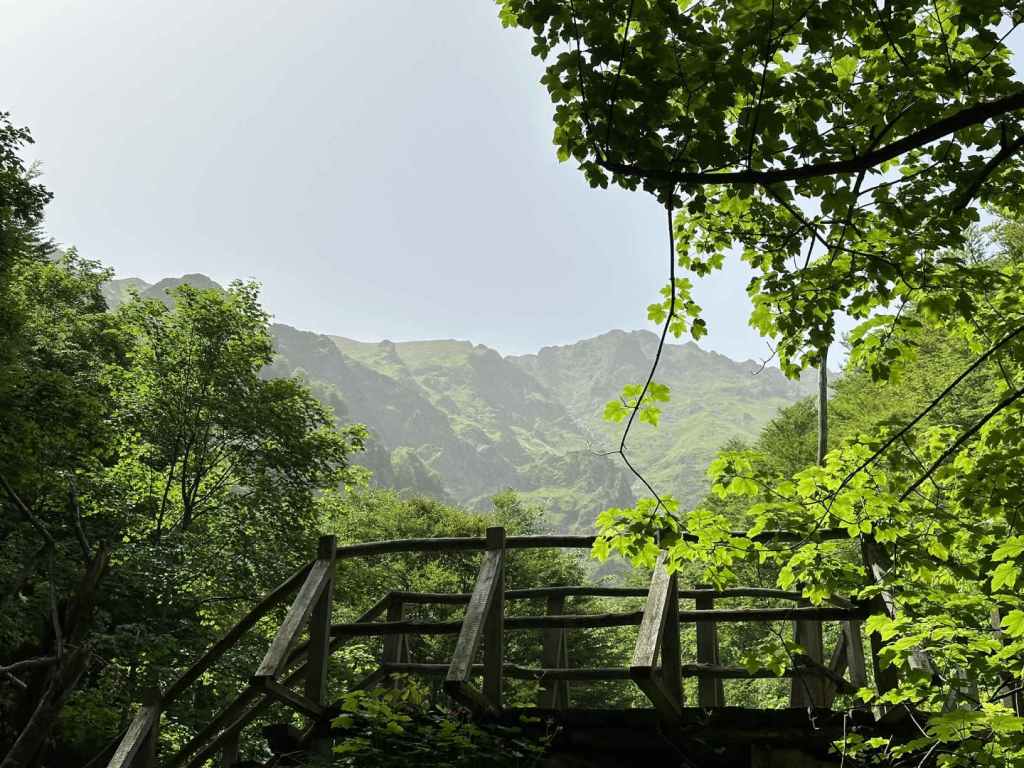
This track that has offered so much finally ends after five kilometres, and you enter the Severen Dzhendem Reserve, where there are beech forests protected by UNESCO. It now becomes a path. You have one more kilometre to go (twenty minutes). You will cross four wooden bridges. Then you will come to a fifth, higher wooden bridge, and suddenly notice the peaks of the mountain up ahead. It’s a startling view. Cross this bridge, and you will come to a small area with wooden benches, where you can sit, rest and admire the waterfall in the distance. It’s incredibly picturesque.

It is not permitted to continue towards the waterfall and, without a guide, it would be difficult to achieve. But it is enough. It’s not always necessary to reach the end, and it’s also good to allow wild animals a little peace and quiet from us. It took me two hours to reach the viewing area from the power station, and 1½ hours to come back. But I have to say I stayed quite a long time, viewing the waterfall (like a destiny) in the distance, and was reluctant to leave.

The River Vidima as it passes through Apriltsi. It goes on to join the Rositsa in Sevlievo, which itself joins the Yantra (the river that goes through Veliko Tarnovo) before becoming part of the Danube.
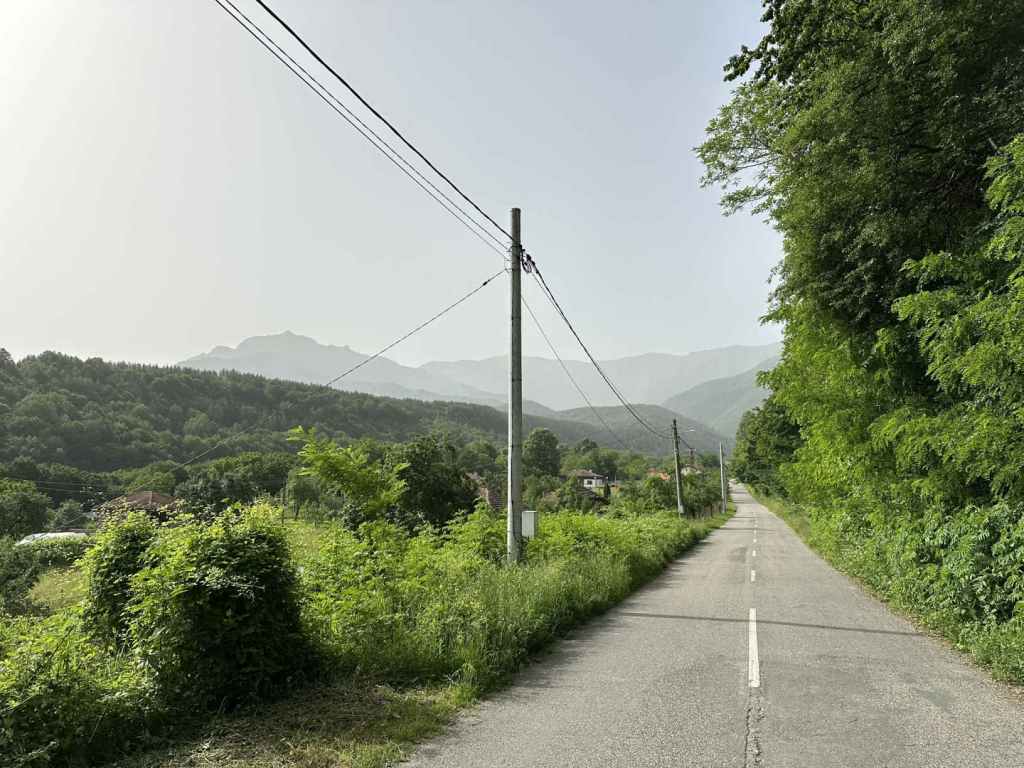
The road due south that passes through Vidima and leads to the Balkan.
The turning on the left for the ecopath to Vidimsko Praskalo. The road on the right continues to Pleven Hut.
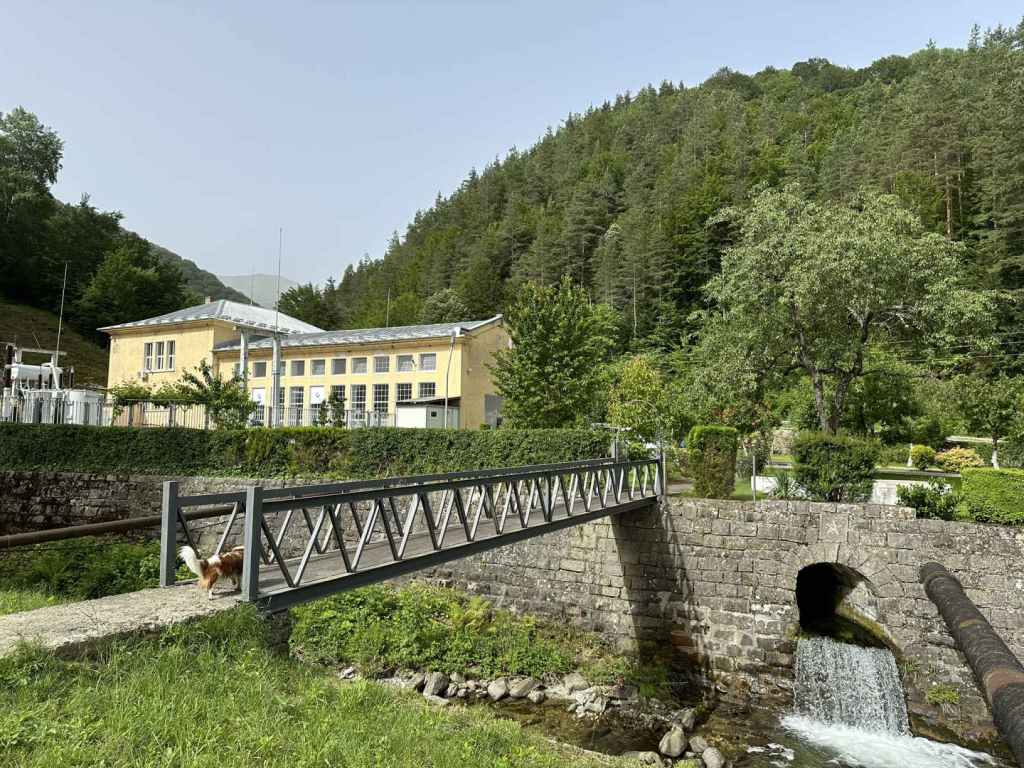
The hydroelectric power station on the right.
The track following the course of the River Praskalska.
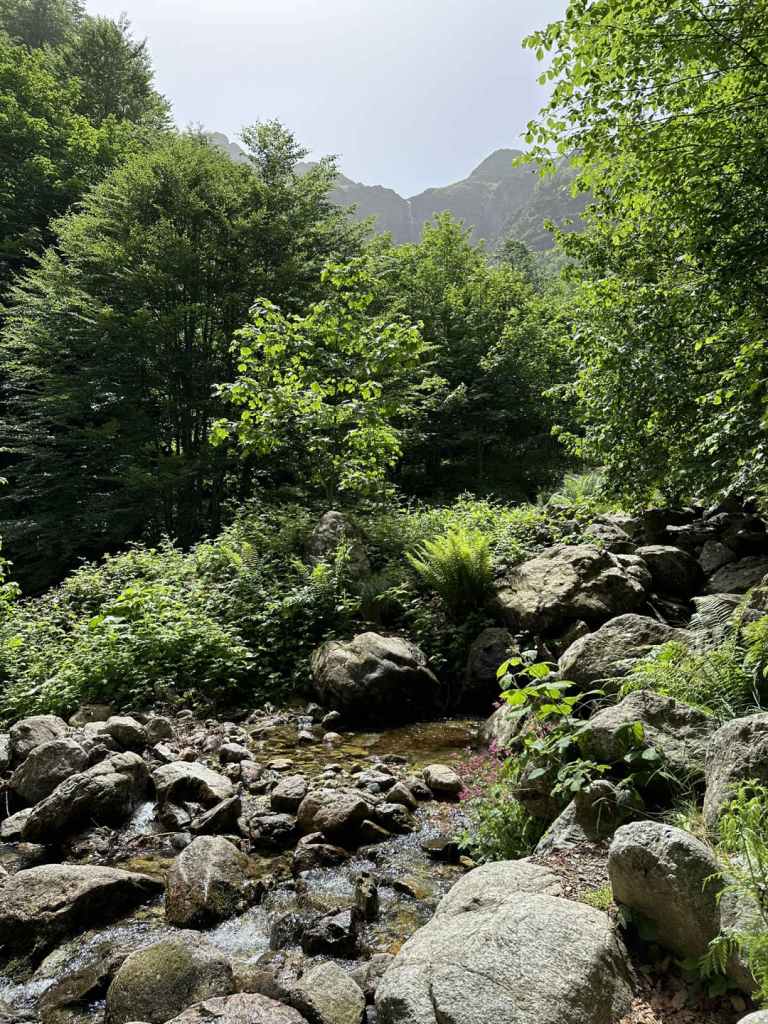
The river through the trees.
The track higher up.
The buildings linked to the water supply.
The entrance to the Severen Dzhendem Reserve, where the track ends and becomes a path.
The first of the wooden bridges.
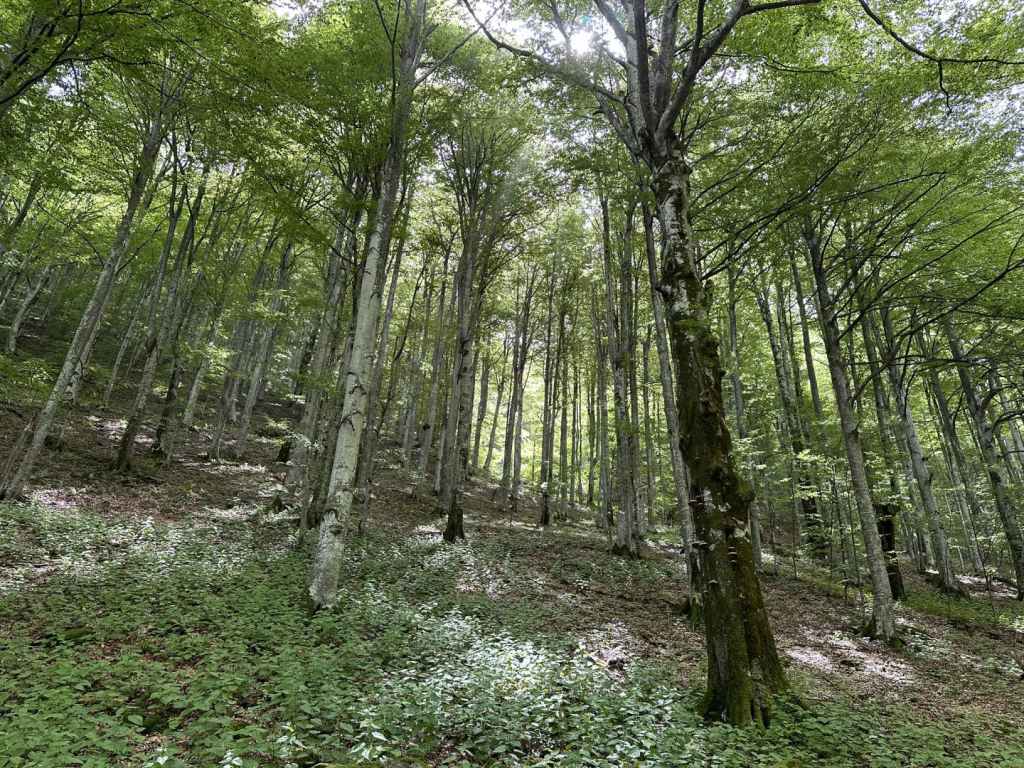
The UNESCO-protected beech forest.
The fifth wooden bridge with views of the ridge.
The small viewing area.
The river with the waterfall behind.
A close-up of the waterfall.
Gallery

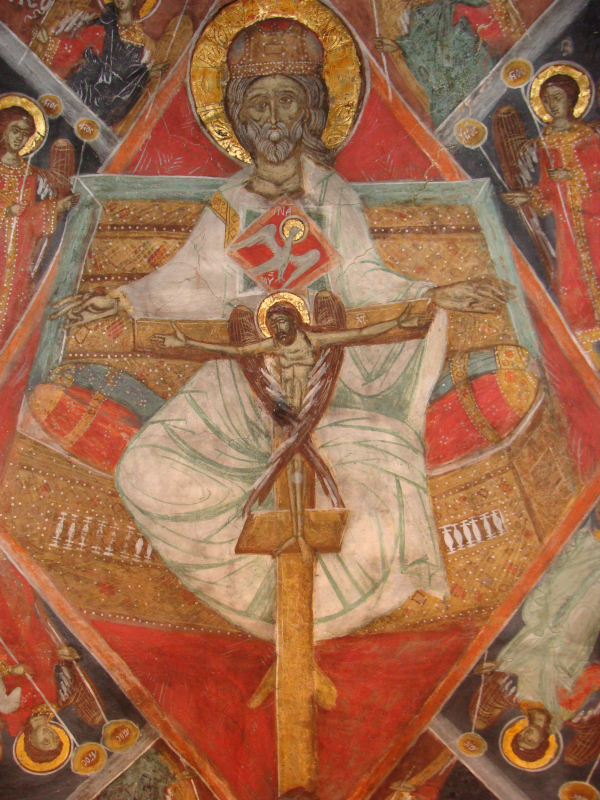
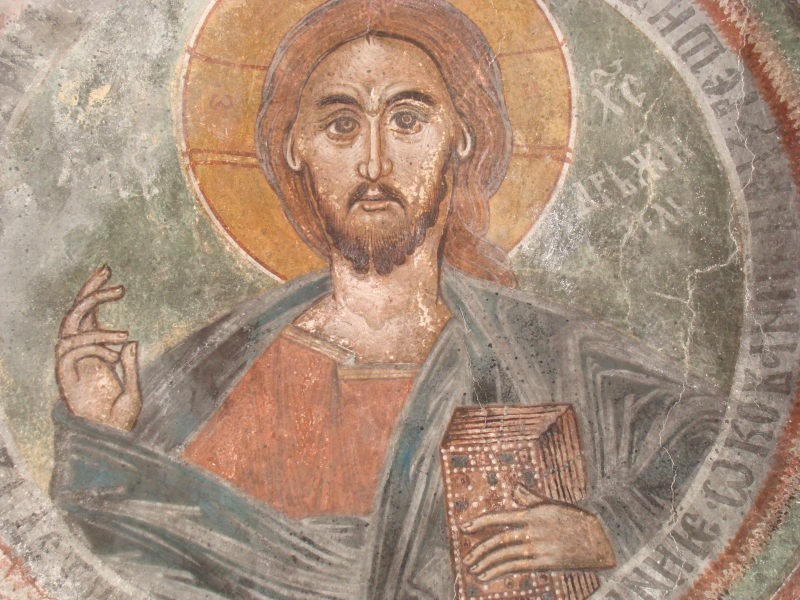
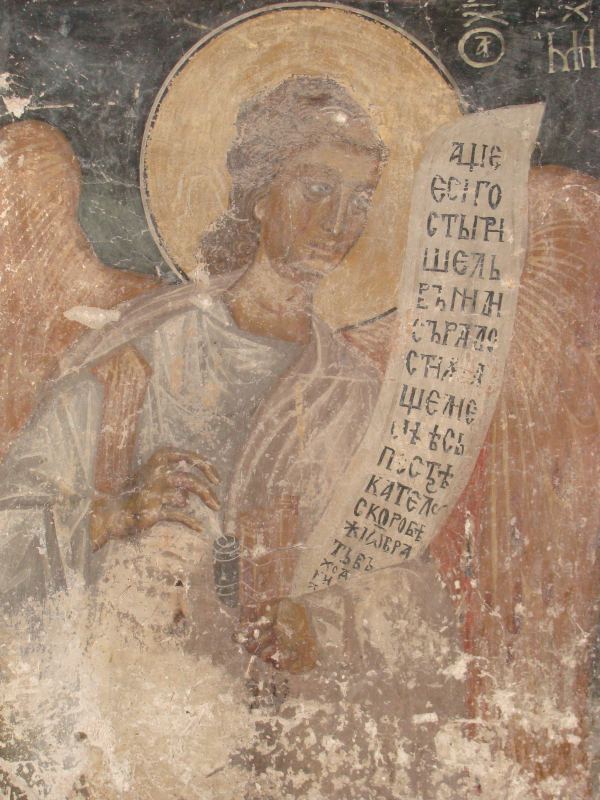
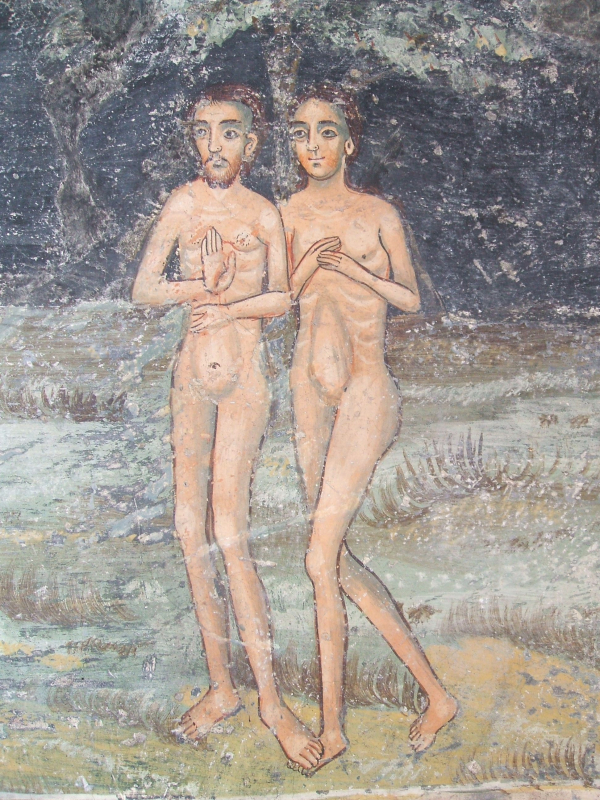
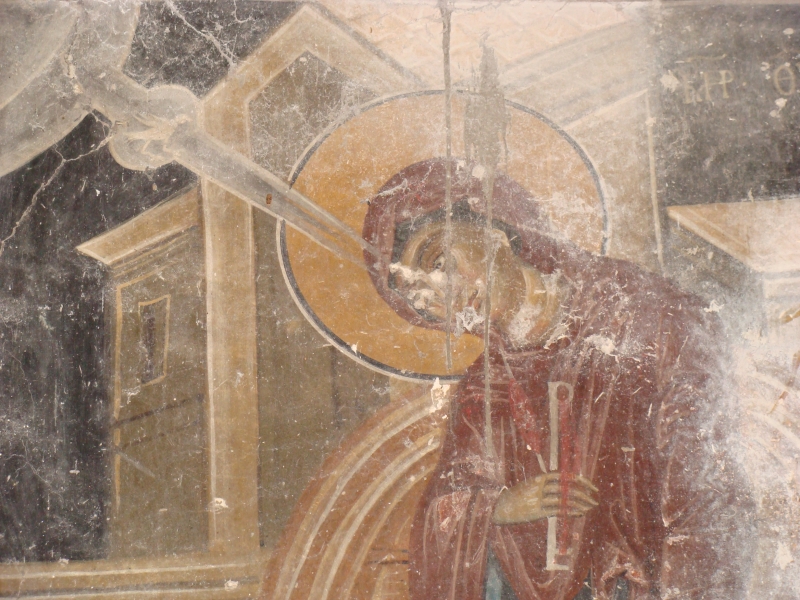
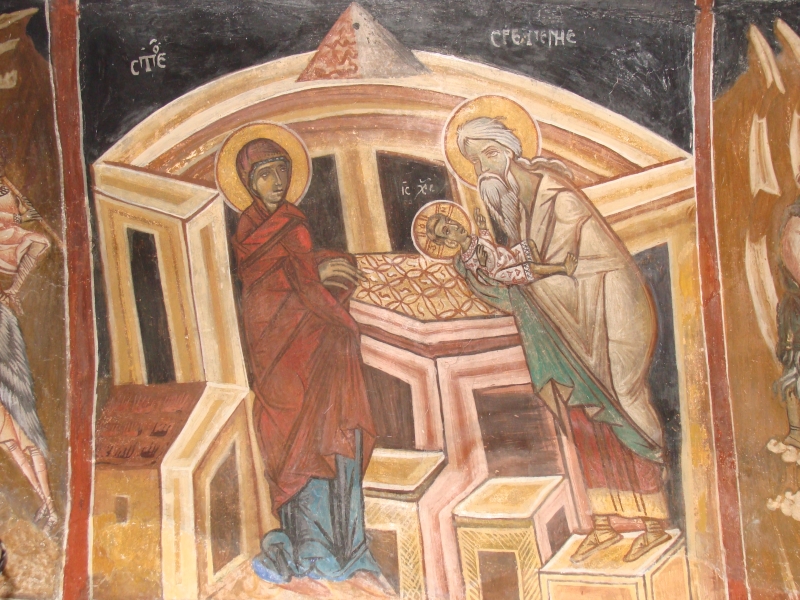
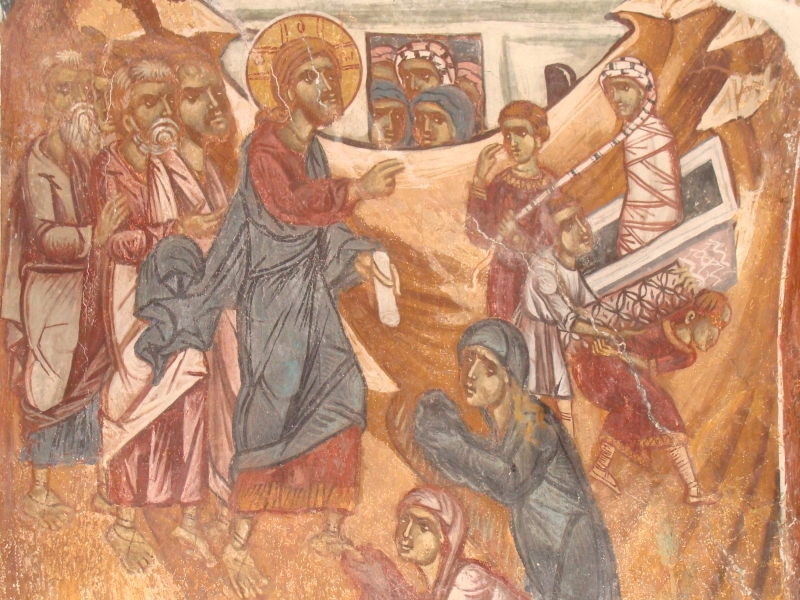
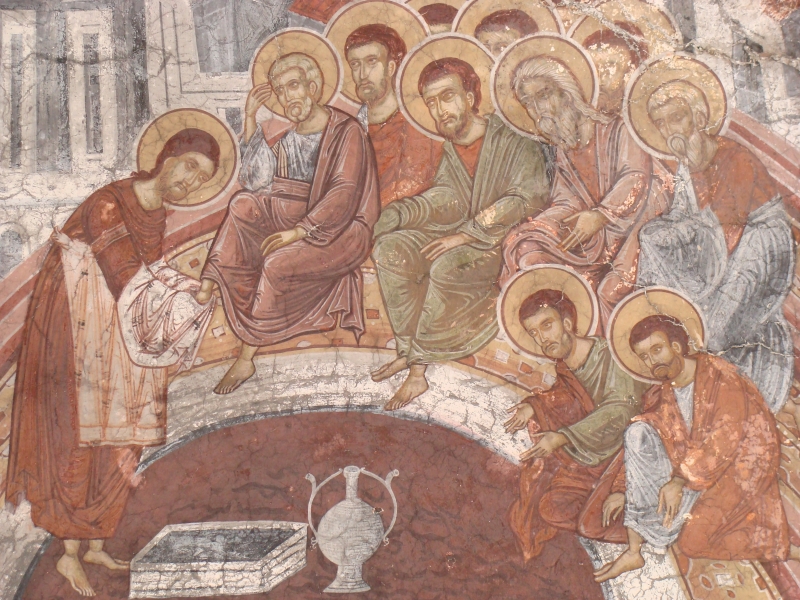
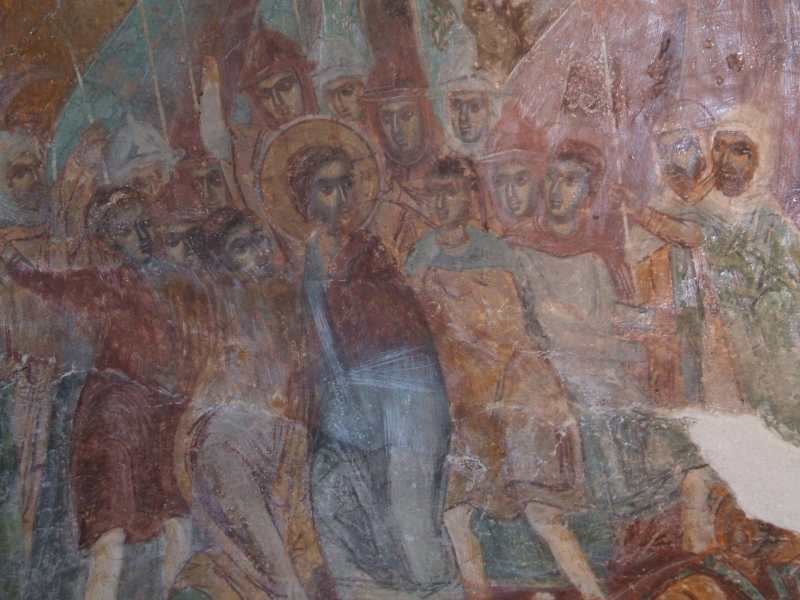
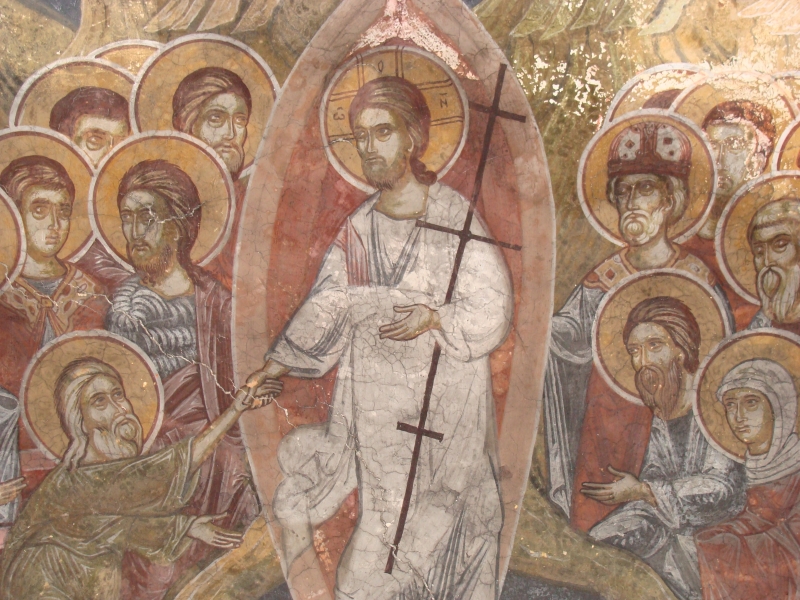
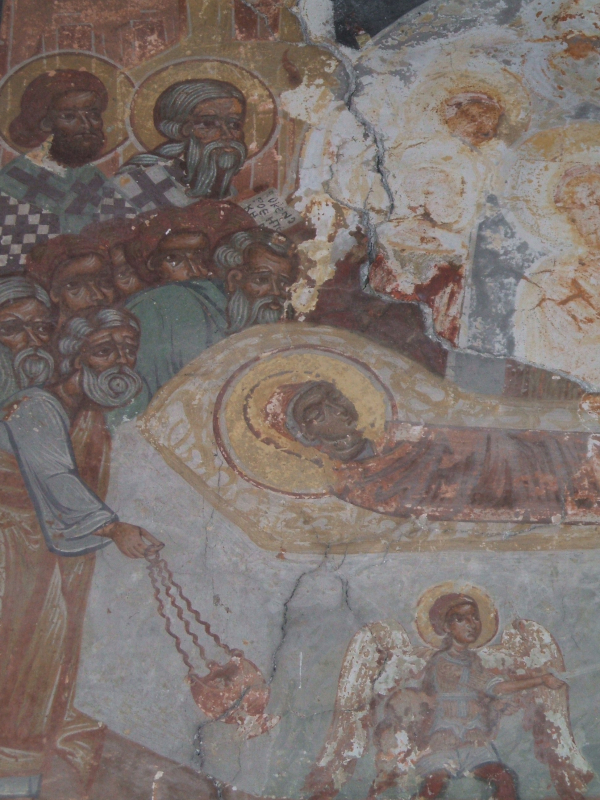
Frescoes

There are three major monasteries in Bulgaria: Rila in the south-west (a World Heritage site), Bachkovo in the foothills of the Rhodope Mountains to the south, and Troyan in the Balkan Mountains in central Bulgaria.

But aside from these three major sites, there are many monasteries dotted about Bulgaria, in particular around the capital, Sofia, and many of these are inactive or abandoned. The monasteries around Sofia make up what is known as ‘the Little Holy Mountain’, a reference to the Holy Mountain, Mount Athos in Greece, famous for its monasticism.

You can be in Sofia and not realize that there is a different experience awaiting you only twenty minutes by car from the capital. Unfortunately, many people don’t get this opportunity to travel further afield or don’t know about these places. When you leave Sofia, you enter a different world, one of beautiful nature and one of great spirituality. We do not realize that nature has its own language and it takes time to begin to decipher it.

The Bulgarian poet Tsvetanka Elenkova and I visited 140 monasteries from our home in Sofia during the period 2006-2012. The fruit of this pilgrimage was a series of ten essays by Tsvetanka contained in a book published in Bulgarian as Bulgarian Frescoes: Feast of the Root (Omophor, 2013), accompanied by more than a hundred of my photographs. These essays cover different feasts, from the Nativity of Christ to his Resurrection and Ascension. We have made a small selection of the best images to give people an idea of the riches hidden away in monasteries in Bulgaria that are often abandoned and can be difficult to get to.

The best example is Seslavtsi, a district of Sofia 12 km north-east of the capital. The frescoes here are breathtaking. They were painted by a famous iconographer, Pimen of Zograph, a monk from the Bulgarian monastery of Zograph on Mount Athos who was called by St George in a dream to return to his homeland and to build and paint churches, which he did at the start of the seventeenth century, four hundred years ago. The church containing these frescoes was used for target practice during Communism and is next to a uranium mine. The quality of the frescoes is so good that attempts have been made to cut them out of the wall and take them. The frescoes have not been restored, which gives them a lifelike quality. Once frescoes are restored, they lose something of their spontaneity and acquire a sheen.

Other monasteries containing high-quality frescoes in the environs of Sofia are Alino, a village on the south side of Mount Vitosha, the mountain that overlooks Sofia from the south; Eleshnitsa, a village 25 km north-east of Sofia; and Iliyantsi, a district of Sofia in the north.

Further afield, we find the church of Berende, a village 50 km north-west of Sofia in the direction of Serbia, overlooking a disused railway and with wonderful autumnal colours. Not far away from Berende is the village of Malo Malovo, a very difficult monastery to find. Our first attempt was unsuccessful. We were with our year-old baby and unexpectedly came across some young lads hanging out in the mountain. We caught the glint of metal, beat a hasty retreat and returned a week later, this time without our child, successfully locating the monastery, which was hidden away behind an elevation, perhaps deliberately if one considers that a lot of these monasteries were built during the Ottoman occupation of Bulgaria in the fourteenth-nineteenth centuries, when churches were not supposed to exceed the height of a man on horseback and so had to be dug into the ground.
To the north-east of Sofia, still in west Bulgaria, we find Strupets and Karlukovo. To the west of Sofia lies Bilintsi, on the road to Tran, which has a very attractive gorge. Here, we came across a monk who had taken it upon himself to paint over the old frescoes and who kindly offered us tea in the hovel he was living in (which had a large hole in the ground). Fortunately, his work of ‘restoration’ was incomplete and we were able to photograph some of the original frescoes.

South of Sofia, near the motorway to Greece, is Boboshevo, another excellent monastery for frescoes. And then in central Bulgaria, we have Arbanasi, a hill with old churches next to the medieval capital Veliko Tarnovo. One of these churches is the Church of the Nativity, an example of a building that is sunk into the ground, with sumptuous frescoes inside. A little to the north of Veliko Tarnovo, overlooking the river Yantra, with Holy Trinity Monastery on the other side, is Preobrazhenie (Transfiguration) Monastery, which has a wonderful Wheel of Life fresco on the outside.

These are only some of the monasteries we visited, but they are the ones with the most important images. Our aim in presenting these images is to show the high quality, the naivety (we must become like children to enter the kingdom of heaven), the deep spirituality of Bulgarian frescoes. In the West, our attention is drawn to the likes of Michelangelo and the Sistine Chapel, considered a high example of religious art. Some of these monasteries – Seslavtsi, in particular – can quite rightly be included in the same canon of European religious art.

An English edition of the book Bulgarian Frescoes: Feast of the Root is forthcoming.

Jonathan Dunne

(In the slideshow above, captions are by Tsvetanka Elenkova, photographs and translation are by Jonathan Dunne.)