Apfelsaft

for my father

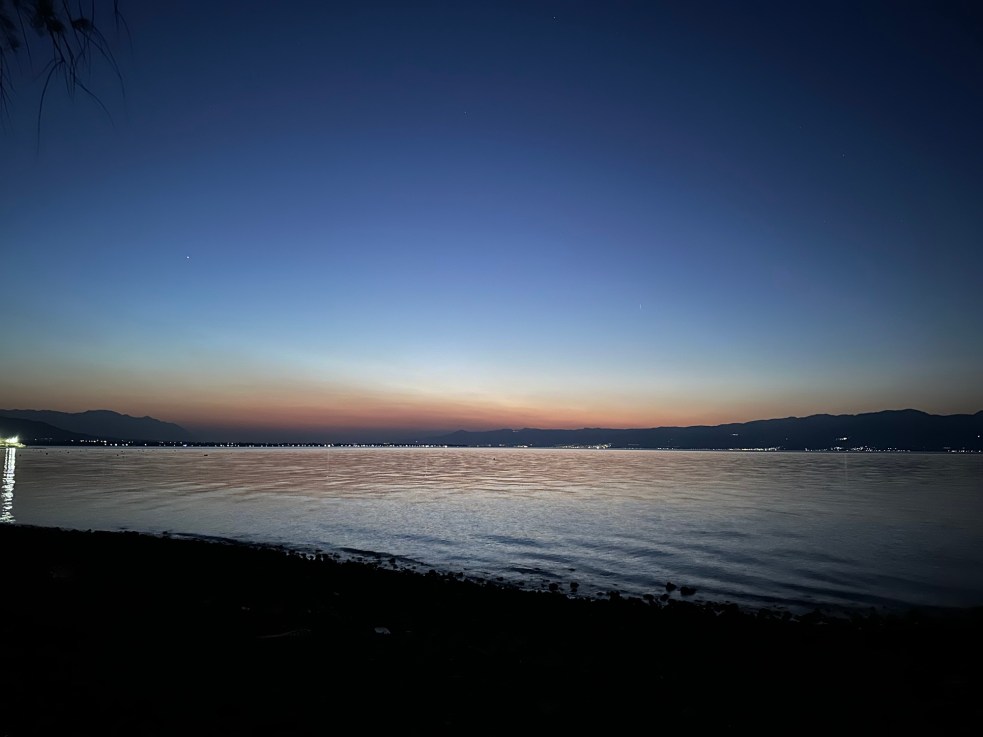
The sun set in the glass.

Did you know what was coming

when you crouched under the stairs

and listened to the bombs

drop on London?

Did you know what was coming

when your guardian travelled down

to see you

in the grand surroundings of Christ’s Hospital,

Vaughan Williams’s shock of white hair

in the chapel,

and shuffled off

in the growing darkness

to catch the last train home?

This was love,

wasn’t it?

Did you know what was coming

when you stuck it out

to become an officer

and were put in charge

of men older,

more savvy,

than you were?

Is this when your appreciation

of Bach

began?

Did you know what was coming

when you shared a bedsit

with your mother

and became determined

to better yourself

by listening to all of Beethoven’s symphonies

from the library?

Or when Eddie

took you to the terraces

at Brentford

(“make way,

he’s only a littl’un”)?

Did you know what was coming

when you measured up

to my grandfather

and married Mum

(early colour photos

of us pottering in the garden,

you look dashing in them)?

Clearway Promotions,

Claygate Dramatic Society,

Cancer Research Campaign

– you built yourself up.

You drove us

in the dark

to foreign countries

where they spoke funny languages,

you put us in tents

a stone’s throw from the water

(we would need those stones

to weigh down the corners

when the storm came along).

You took your responsibility

very seriously

and instilled it in us.

You could be bloody-minded

– I wouldn’t have wanted

to cross you –

you grew in stature

and yourself became a Samaritan

to those in need.

You were widely respected,

you were somebody,

an ugly sister, Bob Cratchit,

you had a sense of humour,

and that twinkle never quite

left you.

You liked in the early evening

to stand by the drinks

– yours was a G and T,

Mum’s was a sherry –

and while smoking a Silk Cut

to tell me what was going

through your mind.

It helped you to lay it out,

you were not one to leave things

to chance.

And so,

when we sat on the terrace

overlooking the Black Forest,

you poured sunlight

into my glass.

It was something new,

something I hadn’t tasted before,

and this gave you a great satisfaction.

I don’t know what we talked about,

you probably reminisced about your time

in Germany,

the dunes of Sylt,

but I have glimpsed that sunlight

ever since:

on the ghats of Varanasi,

on a starlit night in the Sinai,

sitting with Bedouins,

in Piornedo,

on a Sunday with a hangover,

on the rocks of Lakatnik.

I will keep it with me

for when the stormclouds gather,

it will be the stones that weigh down

the corners of the tent I inhabit.

And I give you a drop of the golden liquid

for your onward journey.

You have realized now

that the demons are insubstantial,

their only weapon fear

of what doesn’t exist,

and the easiest way

to unravel a knot

is to slice it.

You are breath and water,

creation itself,

the sound God made in the beginning.

You can sing to your heart’s content,

join in the chorus,

as when you sang an aria

from the Messiah

to the doctor

with a sheet over your lips,

except that now you are voice itself,

running water,

a ribbon that God laid

on the earth

to give us life.

Jonathan Dunne

Sofia, 24 December 2025
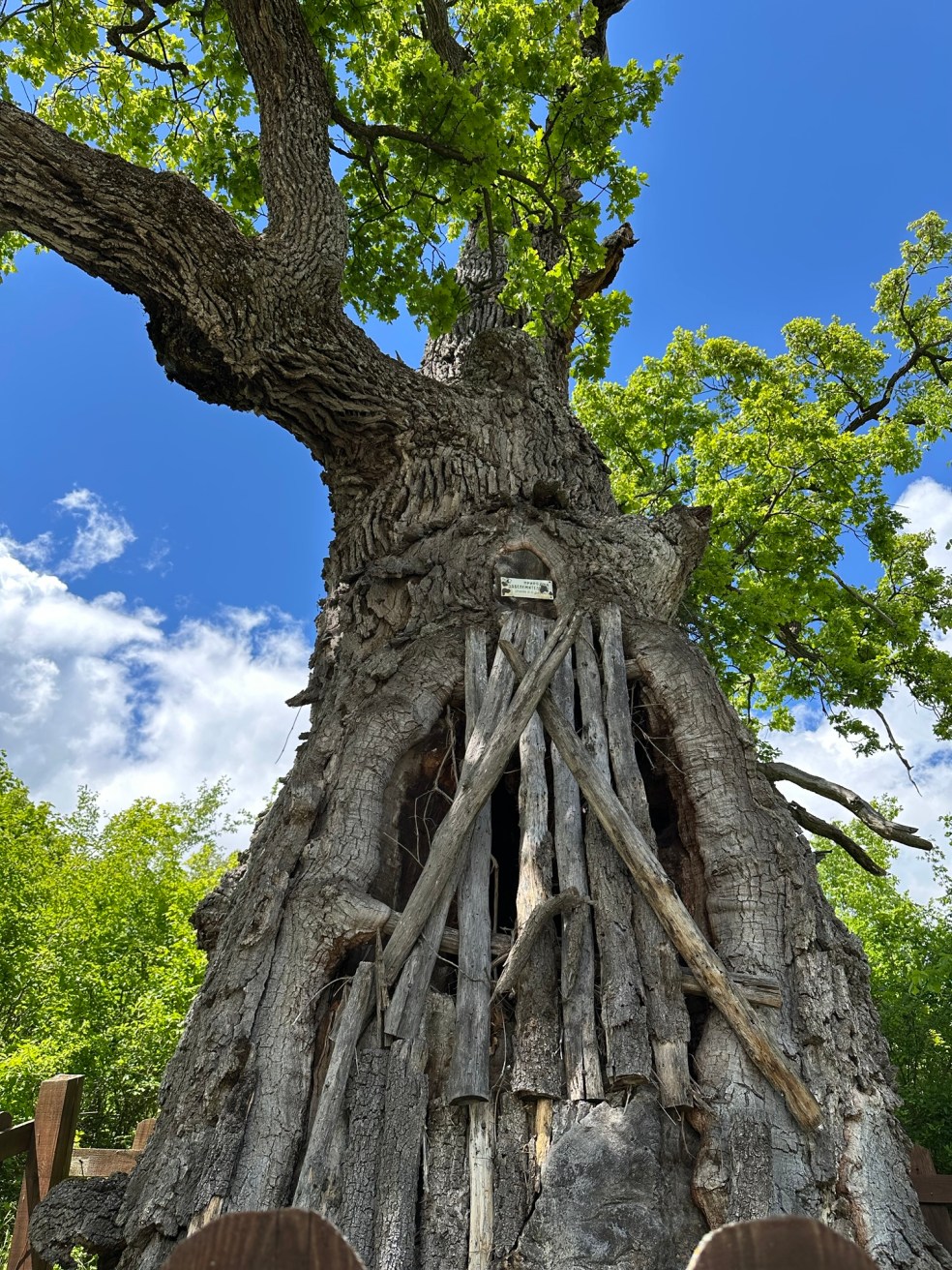
Deor

One of my favourite Old English poems, and my first translation from Old English! The translation is accompanied by a photo of a six-hundred-year-old downy oak at the entrance to Bosnek village, on the south side of Mt Vitosha in Bulgaria, which has resisted the twists and turns of life.

DEOR

Weland himself among worms experienced misery,

The single-minded nobleman endured hardships,

Had for himself as companions sorrow and longing,

Winter-cold pain, often found woe,

After Niðhad laid fetters on him,

Supple sinew-bonds on the better man.

That passed, so may this.

To Beadohild was not her brothers’ death

In mind so grievous as her own thing,

That she had readily perceived

That she was pregnant, could never

With courage have considered how that should be.

That passed, so may this.

We have heard that Mæðhild’s lamentations

Were endless, Geat’s wife,

That sorrowful love deprived her of all sleep.

That passed, so may this.

Theodric had for thirty winters

The Mærings’ burgh; that was known to many.

That passed, so may this.

We have heard about Ermanaric’s

Wolfish thought; he had widely the people

Of the Gothic kingdom; that was a grim king.

Many a warrior sat bound by sorrows,

Woe in expectation, wished constantly

That his kingdom would be overcome.

That passed, so may this.

Sits a sorrowful person, deprived of joy,

Grows dark in mind, it seems to him

His share of hardships may be endless.

He may then consider that throughout the world

The wise Lord turns constantly,

On many nobles bestows honour,

Certain fame, on others a share of woes.

As for myself, I should like to say this:

I was for a time the Heodenings’ bard,

Dear to my lord; Deor was my name.

I had for many winters a profitable position,

A loyal master, until Heorrenda now,

A song-skilled man, received the right to lands

The protector of nobles had previously afforded me.

That passed, so may this.

An Old English poem of consolation found in the tenth-century Exeter Book, translated by Jonathan Dunne. It is possible to view the manuscript of the Exeter Book online. The poem is on folios 100r and 100v. I first read the poem with the help of my tutor at City Lit, Stephen Pollington.

Presopta Place

I am not in a hurry

I am not going anywhere

I am being

as the Celts would say

The rocks smile at me

as they have done

for some time now

I cannot be sure

they are where I left them

They might have moved

an inch or two

a couple of miles

reassembled at first light

when shapes take form

struck a pose

usually smiling

They are old parchments

containing a language we do not speak

we haven’t bothered to learn

of light and shade

cracks and splodges

The universe is language being formed

We ourselves are words in the making

waiting to be pronounced

our definition fixed for the dictionary

what we will be

breath water and flesh

the sound of creation

a hum

lips crashing together

like waves mid-ocean

or mountain goats

as matter

­– flesh, the consonants –

comes into being

the oceans and rivers are vowels

and air God’s breath

the letter h

the beginning of language

We are waiting to be expelled

from this cavernous mouth

that is space

spoken

Black holes are nothing more than throats

and stars are light-bearing larvae

grubs clinging to the palate

As God opens his mouth

(he hasn’t spoken yet

– speech is the general resurrection

the waves that never meet

finally landing on the shore)

space expands

winds rage across the cosmos

carrying particles

– up and off

at and into –

smoke

I am a word

perhaps to form part of a sentence

with you

together we will give meaning

or diverge

like paths in the forest

– Golden Bridges, White Birches –

only to meet

further down the page

or in another chapter

I am breath (h)

vowels (saliva)

flesh (substance)

I am lost

in the Magic Forest

sun-dappled and quiet

waiting to be remembered

Memory is not something that has happened

It is something waiting to happen

the only way

we can be translated

into another reality

is to leave behind

the form we have taken

to all intents and purposes

to disappear

to cover the Translator’s hiatus

until he remembers us

and names us

(a template no longer)

The two conditions for translation

are faith and memory

to leave behind our form

to cease to exist

so we can be expressed

once more

A word dies and is reborn

In that transition

the Translator’s memory

(our speck of faith)

is all.

Jonathan Dunne

Presopta Place (Mount Vitosha), August 2024

Symphony

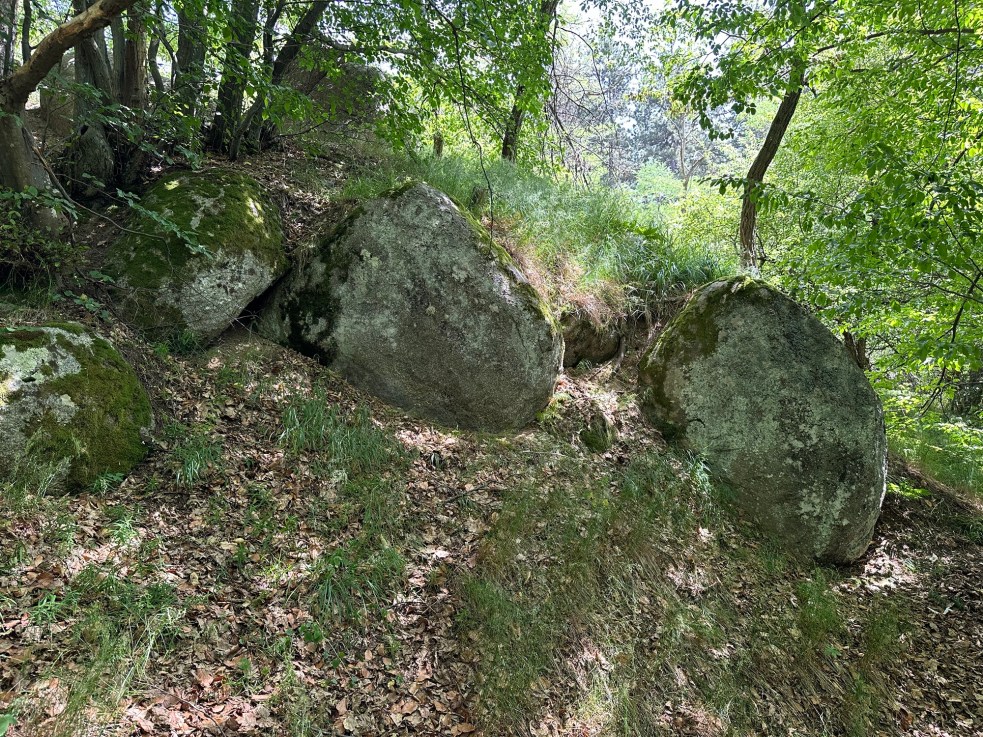
Boulders

dumped by an irresistible force

a primeval behemoth

that has since disappeared

(like T. Rex)

Bones strewn across a field

remnants of an ancient battle

Covered in lichen and moss

Frozen in time

seemingly still

almost impossible to budge

Round, triangular, jagged

Old letters

(there are only so many directions

calligraphy can take)

The man who steals

should be made to transport one

a couple of inches

and then asked

if he wants to steal

again

Only the hermit

knows how to lift one

with his little finger

And the gnats

that bounce on the wind

as if it was solid ground

or gravity had gone out of fashion

In places

they support a bench

or a bridge

and then they submit

gracefully

Then it is we

who put the weight

on them

They sometimes

form part of a path

or allow themselves

to be spray-painted

I have seen them

as the base for a cross

by a river

But most of the time

they are a canvas

for the sun’s fluctuating mood

a mappa mundi

a projector screen

on which faces like clouds

witness the passing of centuries

Like us

they sleep

and then all you can see

are the almond-shaped

indentations

of their closed eyes

and the narrow

moustaches

of their upturned mouths

When we sleep

our senses are momentarily

suspended

we cease to see and speak

(to pass judgement)

we become

the base for a cross

a stepping stone

dappled light

our own memory

Blanched stone

An expression

for others to interpret

We are defined

(we define ourselves)

We are spoken

(we do not speak ourselves)

We take our place

in the dictionary

the richest lexicographical

resource

in the history of the universe

Verb, noun, adjective

What we did

what we did it to

what it was like

A chosen few

are prepositions

otherwise language

cannot position itself

At the end of it all

we will sing a chorus

in which matter

is black ink

light the parchment

and only those who loved

will be able

to hear it

Jonathan Dunne

Ostritsa-Selimitsa, Pentecost 2024

Kamena Vourla

In the distance

is the last

broken shard

home

The tallest

mountain of all

so faint

it almost merges

with the sky

People are not

aware

it’s coming

They swim

in the sea

drink coffee

think of supper

and things

that might have been

revisit their youth

the lessons learned

and not wanted again

You must become

a man

before you can become

a god-man

Christ in reverse

You must know

what it is to hurt

and be hurt

even when it is

undeserved

You stand in the morning

and turn

from the sun’s path

to where the sun

is pointing

That is your ascent

You are not alone

You might even find yourself

in company

like the parrots

in Porphyrios’s cage

nestling up to each other

their necks shaped

for this

Loss is hard

means sleeping with a stranger

the old shape

has gone

been stripped of its punctuation

it is no longer

surrounded by words

it is now a thought

waiting to be spoken

The old text is useless

it can only be recycled

or observed

The smell has gone

the adoration

the string of syllables

proffered

like bubbles in the ocean

The breath has returned

It is being held now

by the Alchemist himself

whose memory has no limit

who only ever ascribes

good intentions

to the languages he has learned

Language is our vehicle

our rocket to the stars

which are full stops

glowing

in the darkness

of our hearts

Sunday, 5 pm

PreviousNextContents

The Alchemist – icon of Christ in Athens Metropolitan Cathedral, dating from the late 1800s.

Aegina

We sit

on white slabs of stone

There are fewer of us

now

The seagulls

horizontal apostrophes

find this funny

or at least

they guffaw momentarily

it’s not easy

keeping punctuation afloat

airborne

and at the same time

keeping up with the boat

Loss

is a small chair

in the church

meant for a child

but the adults use them

Actually

they are quite comfortable

it’s nice

being closer to the floor

the perspective is different

The saint’s eyes

follow you

wherever you go

whatever you may

have thought you were

he knows

Hours of standing in church

that willingness to be there

to stay upright

even when the ship

lurches

That act of resolution

is all we are

is everything

The time passes

seems not to exist

I have experienced this

before

Ten minutes is

two hours

two hours

a gesture

kneeling on the floor

helping someone

unhook their chain

their cross

their anchor

A cross

is all that anchors you

to this world

I look up

The passengers are

even fewer

more whiteness

confronts my eyes

People are black words

time a blank page

waiting to be filled

Saturday, 10.15 am

PreviousNextContents

St Nectarios of Aegina

Piraeus

There is a sign

A man is running

towards some steps

that go down

An arrow

emanating from his chest

points him (you and me)

in that direction

though he is too big

for the stairs

which reach

up to his left arm

he rather looks

as if

he will collide

with the back of them

If he were to stand

on the stairs

where would they take him?

In a downward direction

Back to land

There is no suggestion

that the man

should climb up

to the blue sky

with nothing to hold

onto

The boat is silent

(apart from that hum)

it doesn’t take part

in the people’s conversations

shrieks screams

loud guffaws

or the dog’s bark

It is level with the horizon

the container ships

huts on stilts

for men who fish

on a lungful of air

more shards

the mirror here

in a better condition

almost complete

the force behind it

pushing it to meet

what will come

Friday, 4.15 pm

PreviousNextContents

Prokopi

Religion

is the combination

of time and eternity

movement and stillness

We are on board a ship

Even the chairs are slanted

(or is it the floor

that is slanted

and the chairs

that follow suit?)

We are a tray of buttons

of different colours

shapes and sizes

We lift the lid

and take them out

for a time

watch how they glint

in the early sunlight

As on a ferryboat

I am still

it is the boat that moves

but when we touch land

the roles are reversed

it is I who move

the boat is still

Religion

is the combination

of time and eternity

movement and stillness

Sometimes I am there

sometimes my mind wanders

my eye flies in the rafters

enters the folds of clothes

burns in the candlelight

like a piece of fluff

stray cotton

I grow smaller

and am glad

of the change

glad of the company

the gold mask

turned towards me

the skin charred

the teeth white

and sharp

I cling to the back of the chair

in front of me

and watch

the sea pass

Friday, 11 am

PreviousNextContents

Glyfa

The boat is like

an electrical wire

It hums

There is a wire also

on the horizon

a fuzzy white line

that marks the place

where sea meets land

or nothingness

Those broken shards again

some so old

they’ve almost become sky

What is comforting

in this passage

between two points?

The hum

with its regular crescendo

(the boat’s heartbeat)

knowing you are in the hands

of something bigger

which will still be here

tomorrow

plying the same route

the movement

and stillness

all in one

the dots of light

that reflect off the surface

like static

the cast-iron shadows

so well defined

the shadow of the thing

is clearer

easier to see

than reality

but I wouldn’t try

to hold on

The being on the way

in between brackets

that place in language

away from grand statements

where life is best lived

Thursday, 2 pm

PreviousNextContents