
This is a walk into the heart of the Balkan. It takes you to within sight of one of the tallest waterfalls in Bulgaria (most of which are in this region, on the north and south sides of the Balkan Mountain), Vidimsko Praskalo. Praskalo is the Bulgarian word for ‘spray’, ‘sprinkler’, it’s just another word for ‘waterfall’. Vidimsko refers to the nearby village of Vidima. There used to be four villages in this area: Novo Selo in the centre, Zla Reka to the west, Ostrets to the east, and Vidima to the south. In 1976, they decided to club together and form a town, Apriltsi, which was named after the April Uprising of a hundred years earlier, in which the village of Novo Selo lost 142 of its citizens to Ottoman units, who massacred the locals, causing uproar in the West. Bulgaria would become free of Ottoman rule two years later.
A bird could fly from one praskalo to another in a matter of minutes – clustered around Botev Peak there are several, Raysko Praskalo being the highest. But we are mere mortals and must use our feet. There is an ecopath that takes you, five kilometres along a track, and the final kilometre along a path, to a viewing area, from where you can view the waterfall in the distance. Believe me, it is magical, even at a distance. The waterfall is located within a part of the Central Balkan National Park known as Severen Dzhendem, and you’re not just allowed to walk freely. This is one of the routes you are allowed to do.
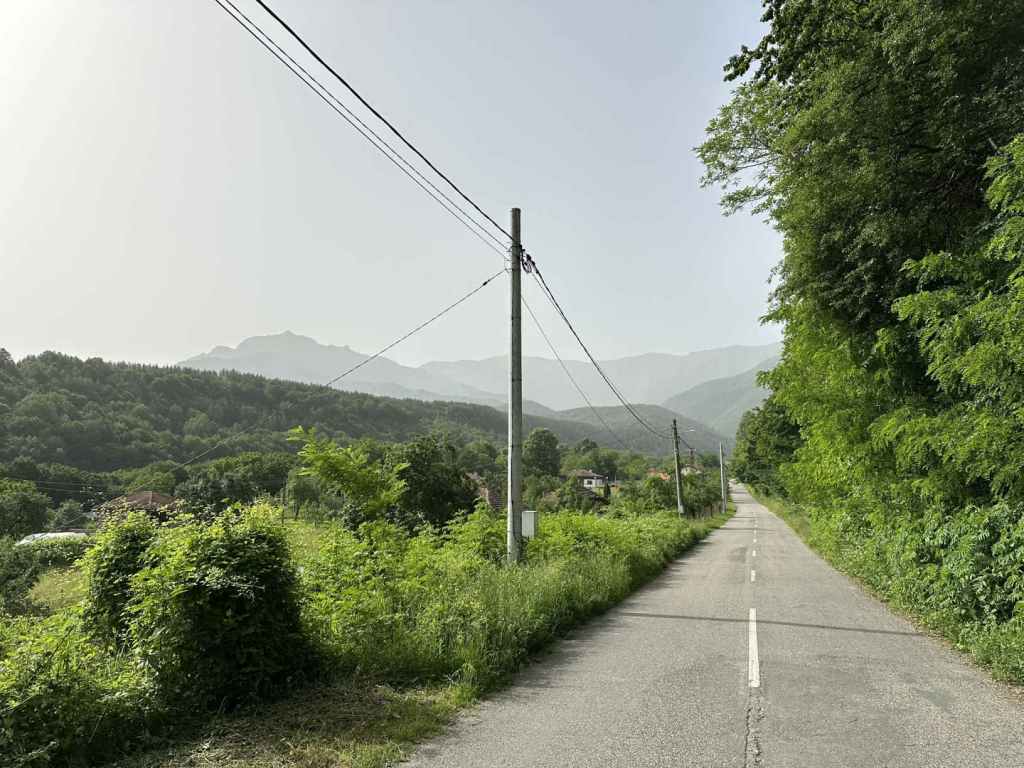
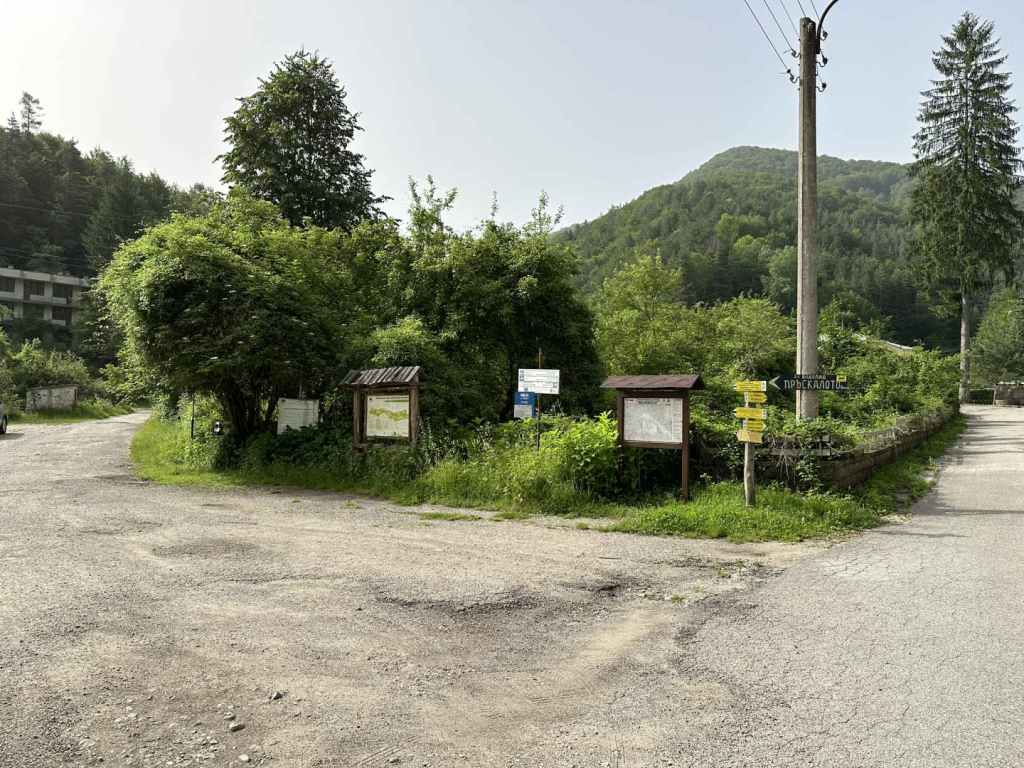
Make your way to Apriltsi. The town is traversed by the III-607 road. Between Zla Reka and Novo Selo (where the centre is), there is a turning marked ‘kv. Vidima 5’. Take this turning, which heads due south, offering impressive views of the Balkan. Continue on this road for 8.5 kilometres, passing through the centre of Vidima and out the other side. Just before reaching a hydroelectric power station, there is a small turning on the left with lots of signs pointing to the waterfall and the ecopath. It’s impossible to miss. Park your car here.
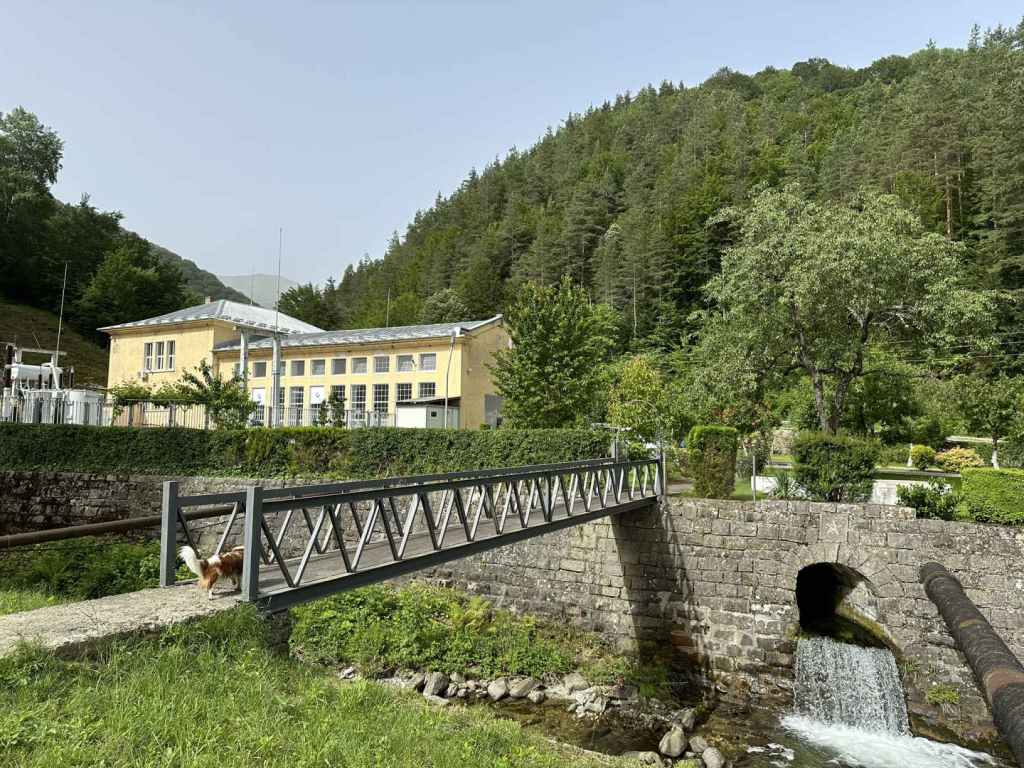
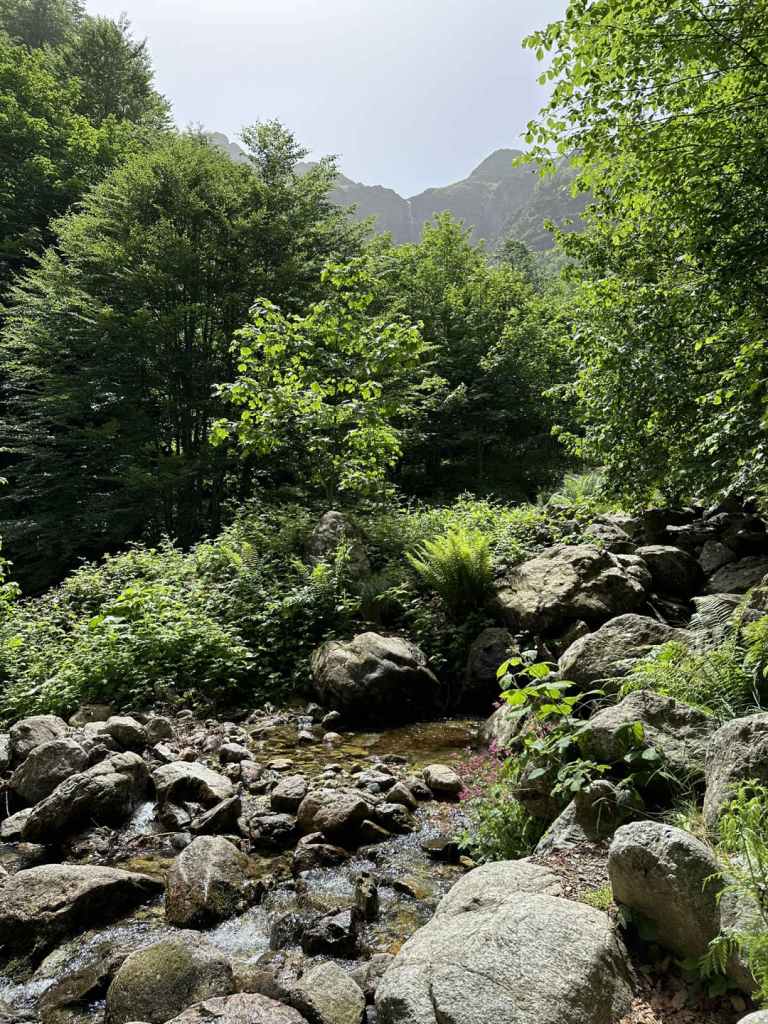
Now you are on foot. The road immediately crosses the River Vidima and turns right, past the power station on your right. The power station is located between the Rivers Vidima and Praskalska (‘of the waterfall’). You are now next to the River Praskalska and are going to follow it all the way to your destination.
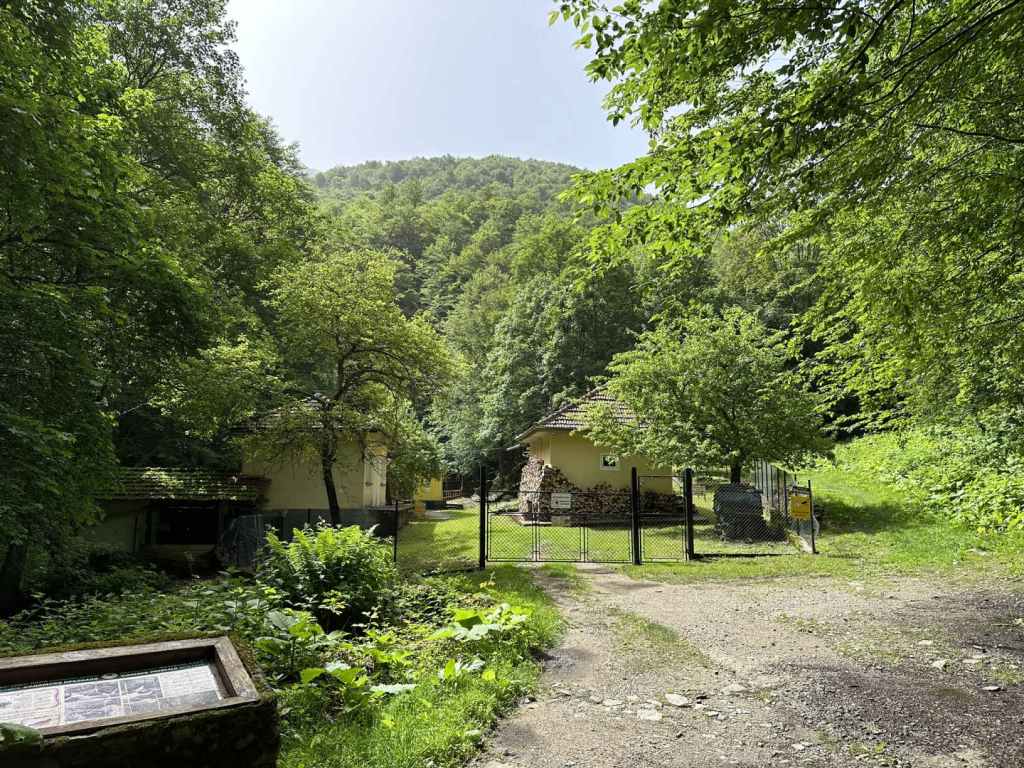
The track you are on, wide enough for a car, crosses the river a couple of times, it even crosses a couple of tributaries and goes past some buildings linked to the water supply, but you are never going to leave it until, after five kilometres, you reach the entrance to the Severen Dzhendem Reserve. Most of the time, the river will be on your right. Sometimes the track will toy with you and make as if to climb away from the river, but it soon returns. Just stay on it, ignoring the turnings to Mecho Chakalo and Turski Rat (obviously one of the people involved in 1876) on your left. In 3.7 kilometres, you will come to a fountain on the left, with a picnic hut on the right. Another kilometre, and you will reach the buildings linked to the water supply, where it is forbidden to go too close to the river (there is another fountain here, and a viewing platform over the river). Stay on the track.
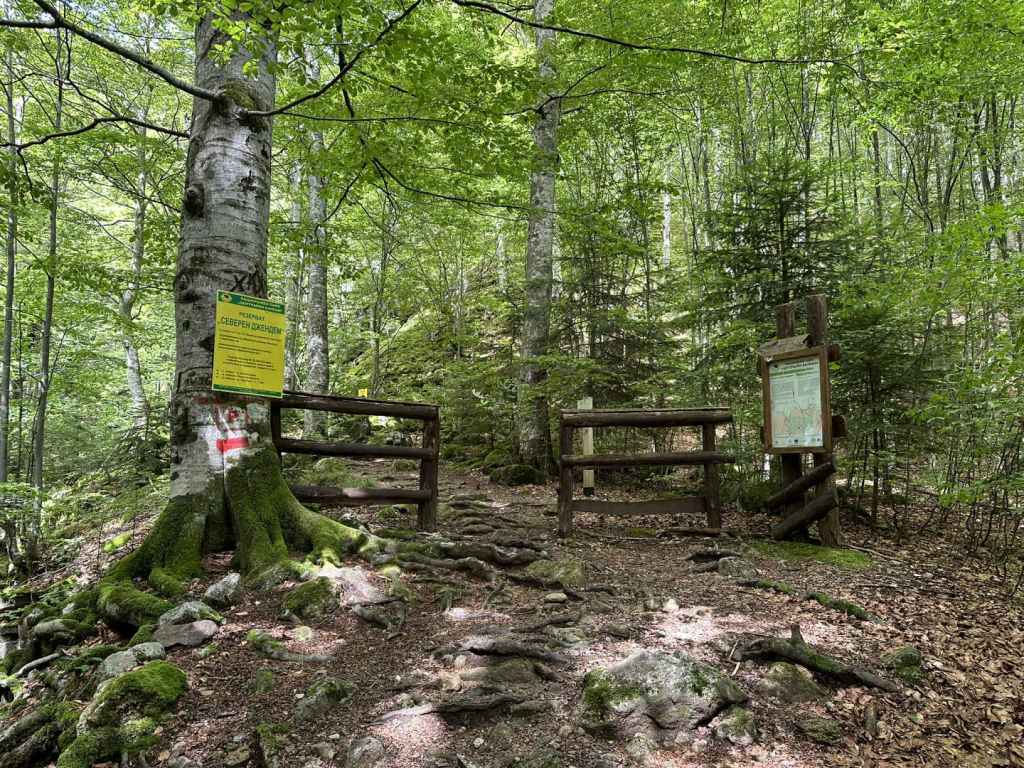
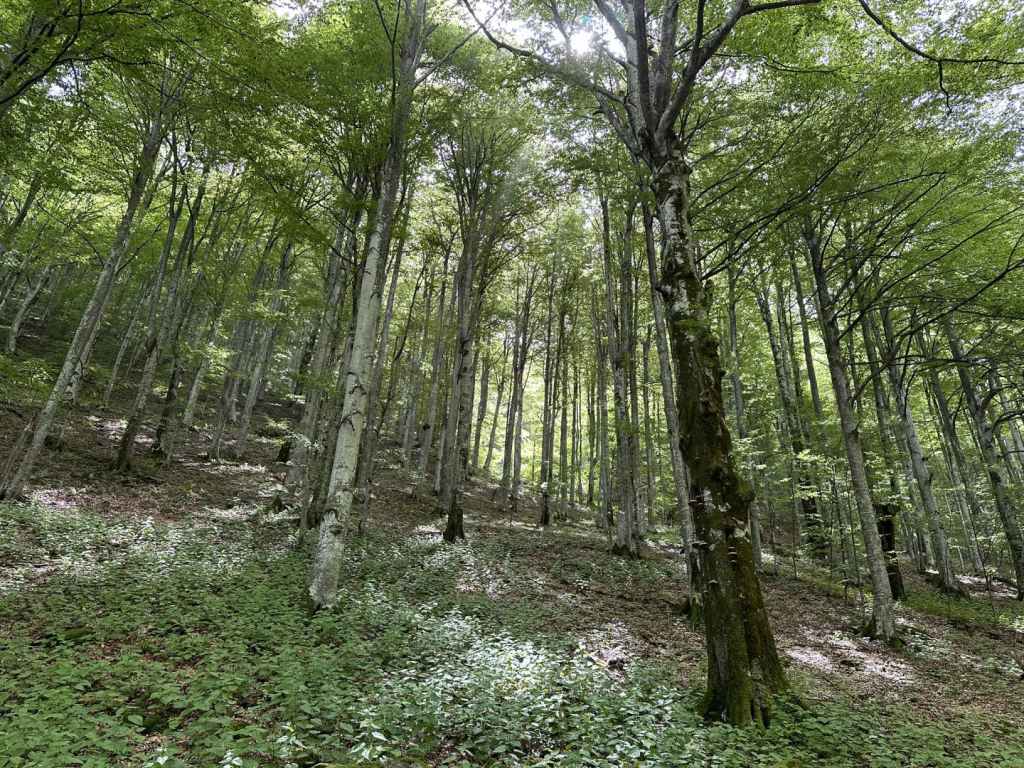
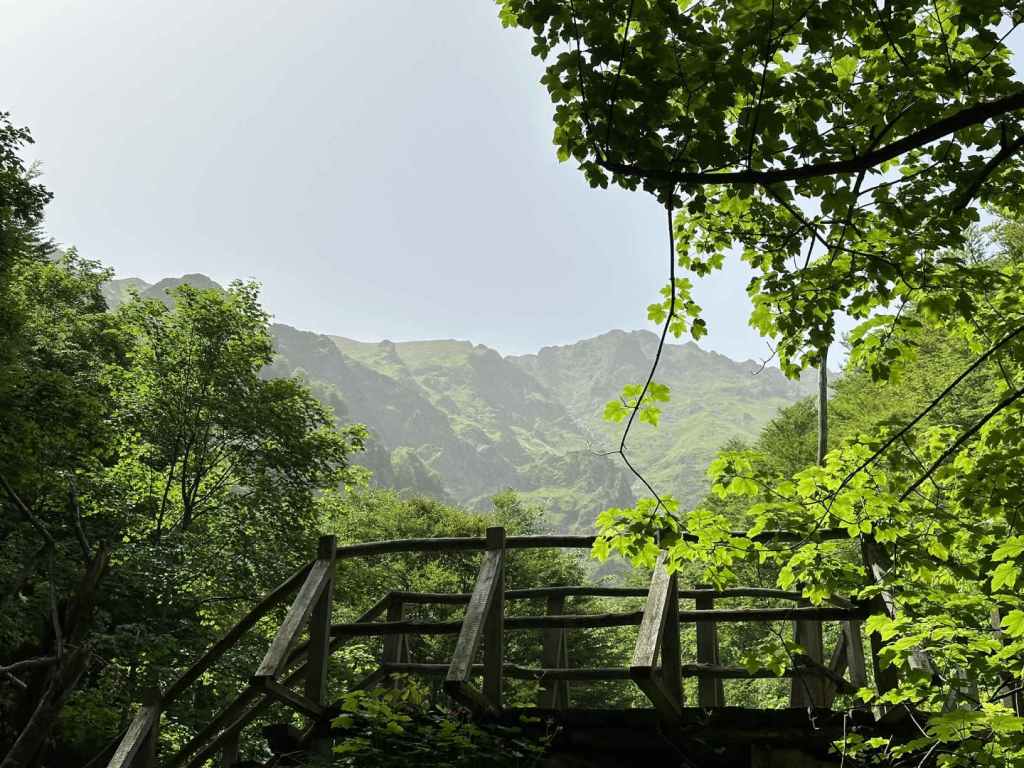
This track that has offered so much finally ends after five kilometres, and you enter the Severen Dzhendem Reserve, where there are beech forests protected by UNESCO. It now becomes a path. You have one more kilometre to go (twenty minutes). You will cross four wooden bridges. Then you will come to a fifth, higher wooden bridge, and suddenly notice the peaks of the mountain up ahead. It’s a startling view. Cross this bridge, and you will come to a small area with wooden benches, where you can sit, rest and admire the waterfall in the distance. It’s incredibly picturesque.
It is not permitted to continue towards the waterfall and, without a guide, it would be difficult to achieve. But it is enough. It’s not always necessary to reach the end, and it’s also good to allow wild animals a little peace and quiet from us. It took me two hours to reach the viewing area from the power station, and 1½ hours to come back. But I have to say I stayed quite a long time, viewing the waterfall (like a destiny) in the distance, and was reluctant to leave.






 Stones Of Ithaca