Krushuna

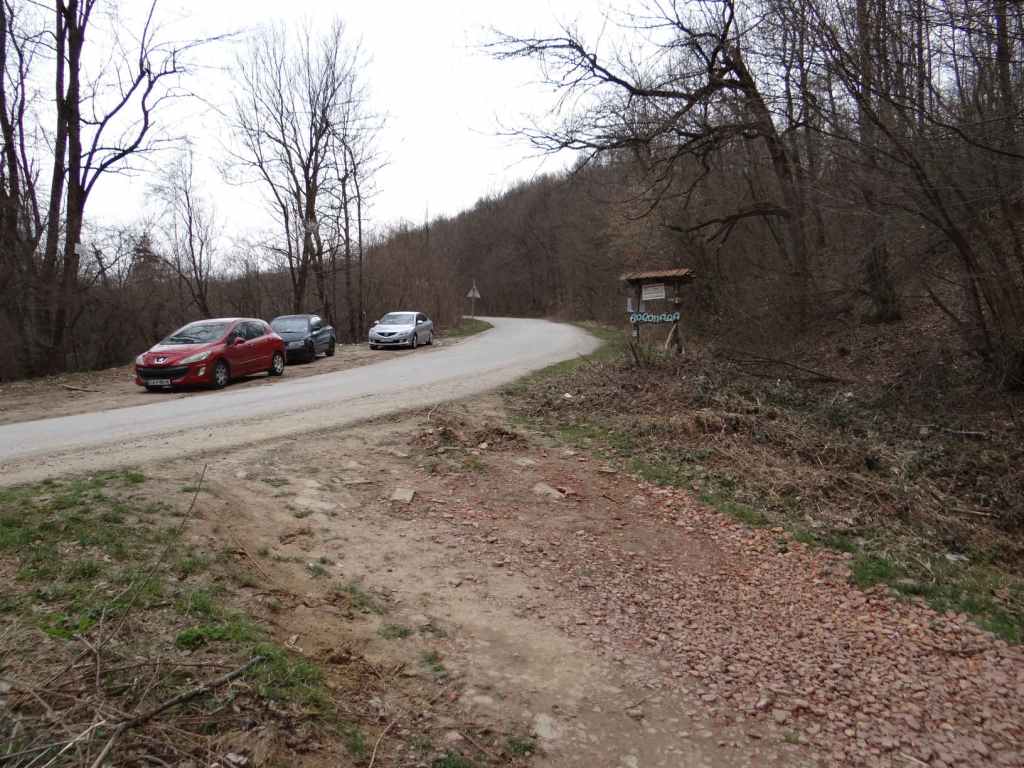
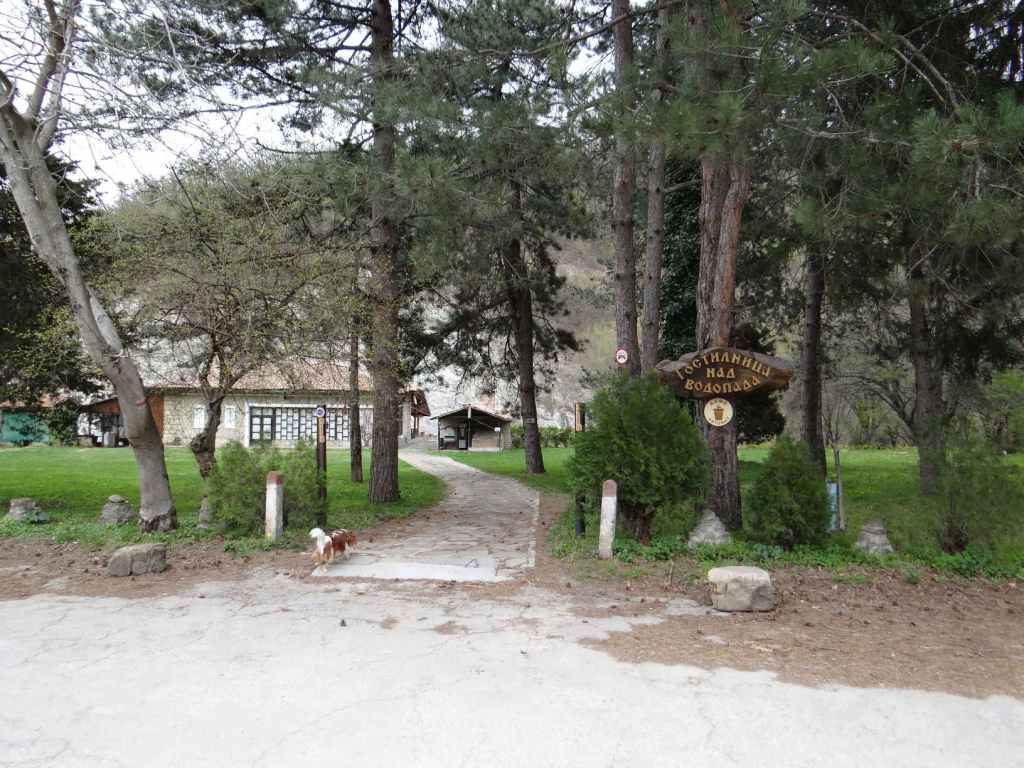
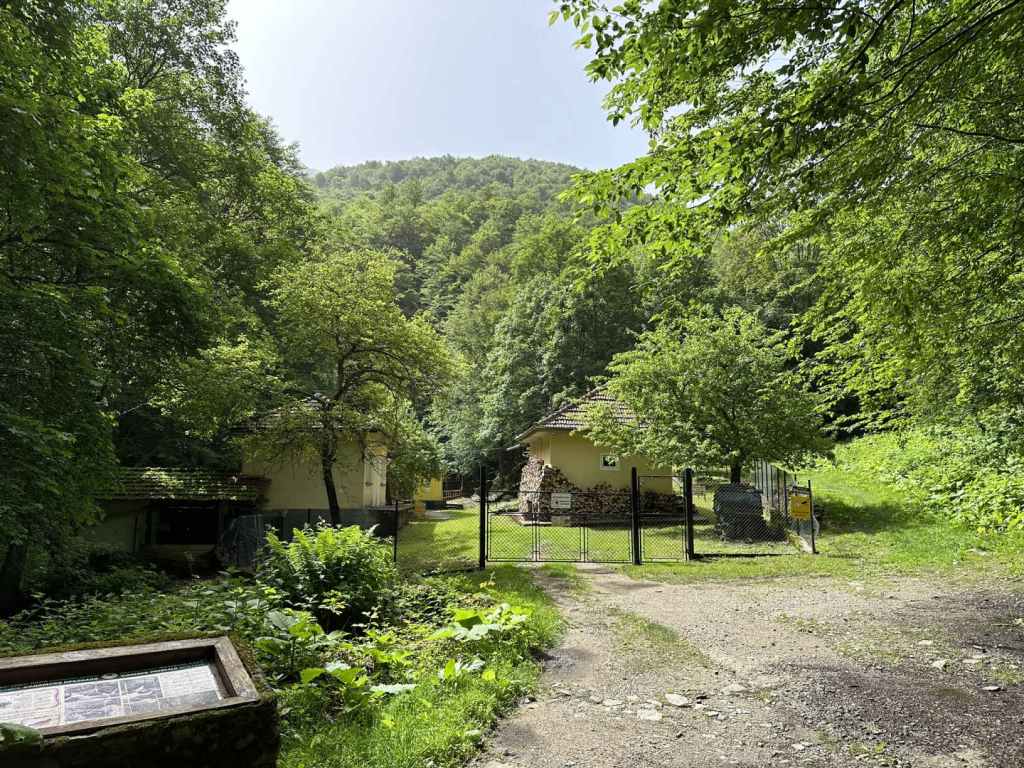
Krushuna can be reached from Sofia, via Lovech, but it’s a long drive there and back in one day. I stayed in Troyan; the other obvious starting point is Veliko Tarnovo. The village is reached from the III-301 road between Lovech and Levski. Depending on the direction you are coming from, you will turn off this road in Aleksandrovo (from Lovech) or Letnitsa (from Levski). The point is that Krushuna is not on the main road and you must leave the III-301, but once you’ve done that, it’s not far. The entrance to Krushuna Waterfalls is 400 metres south of the main square in Krushuna, it’s very easy to find, and there is plenty of parking. When I first went some years ago, it was forest, and you had to find your own way, but now it is a park, Maarata Park, with stalls, restaurants, even a hotel. The waterfall has been tamed, turned into a tourist attraction.

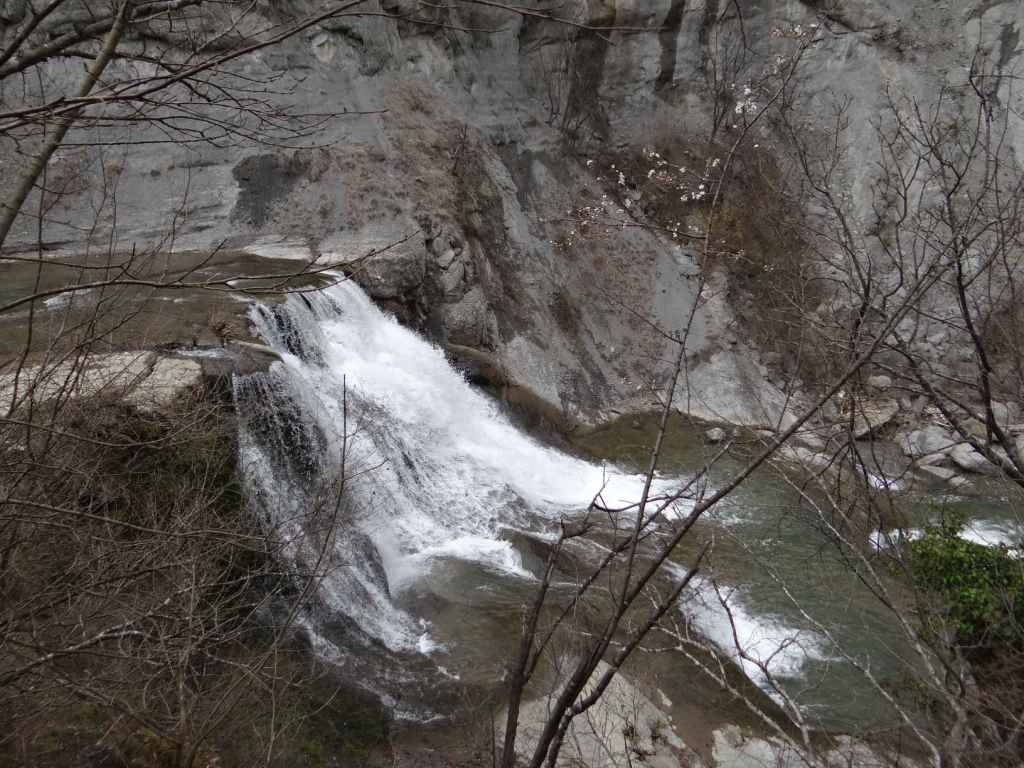
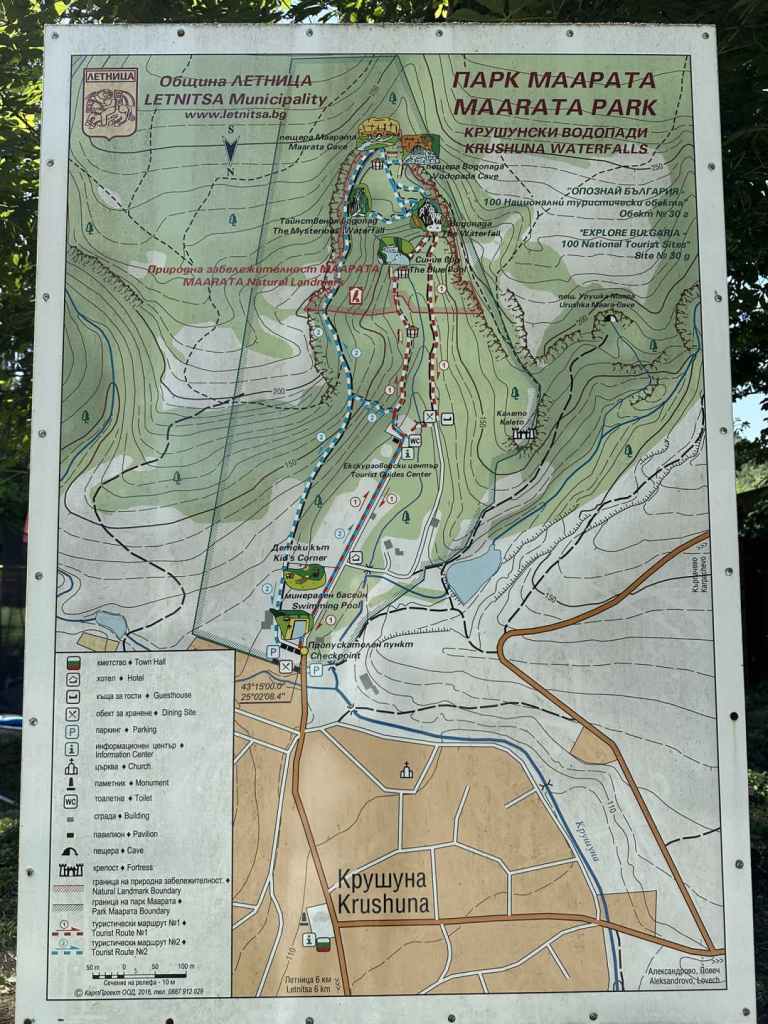
But it is still one of the most beautiful, and best known, waterfalls in Bulgaria. It’s just not wilderness anymore. You must pay a small fee to enter and to park your car (though you could just park in the village), so have some cash with you. Once inside the enclosure, there is a long straight avenue ahead of you, which goes past a hotel on the right, and then a church and a tourist guide centre, for 450 metres. At the end, on the left, is an information board with two routes that you can do, a red route and a blue one.

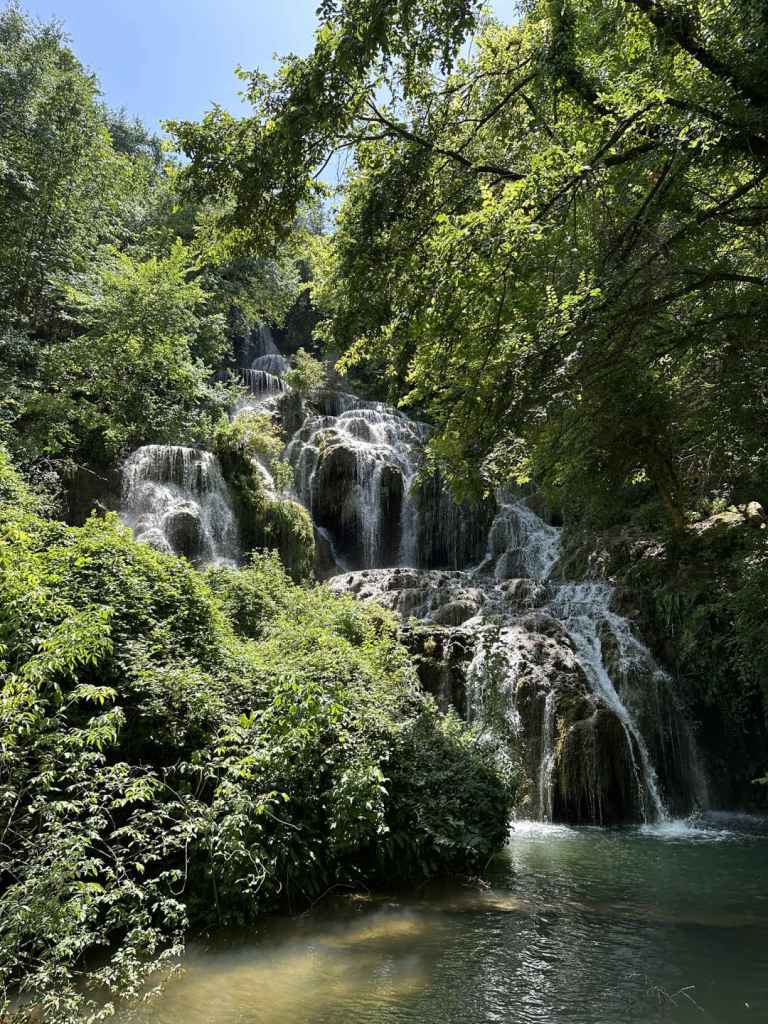
The red route is 800 metres long and takes no more than half an hour. It takes you to the Blue Pool and the main waterfall. Go left at the information board and then right. The path runs along the River Krushuna, sparklingly blue. This no doubt has something to do with the caves up above, where the water comes from. In 300 metres, you reach the Blue Pool, a very pretty sight. There are then some steps up to the main waterfall, as if you are entering the stage at a theatre. There is a viewing platform, from where you can admire the main waterfall, a succession of small falls that combine to impress the visitor. From here, make your way back on the other side of the river. When you reach a guesthouse on the left, go down the steps on your right, past a restaurant and over a bridge, and you will be back where you started.

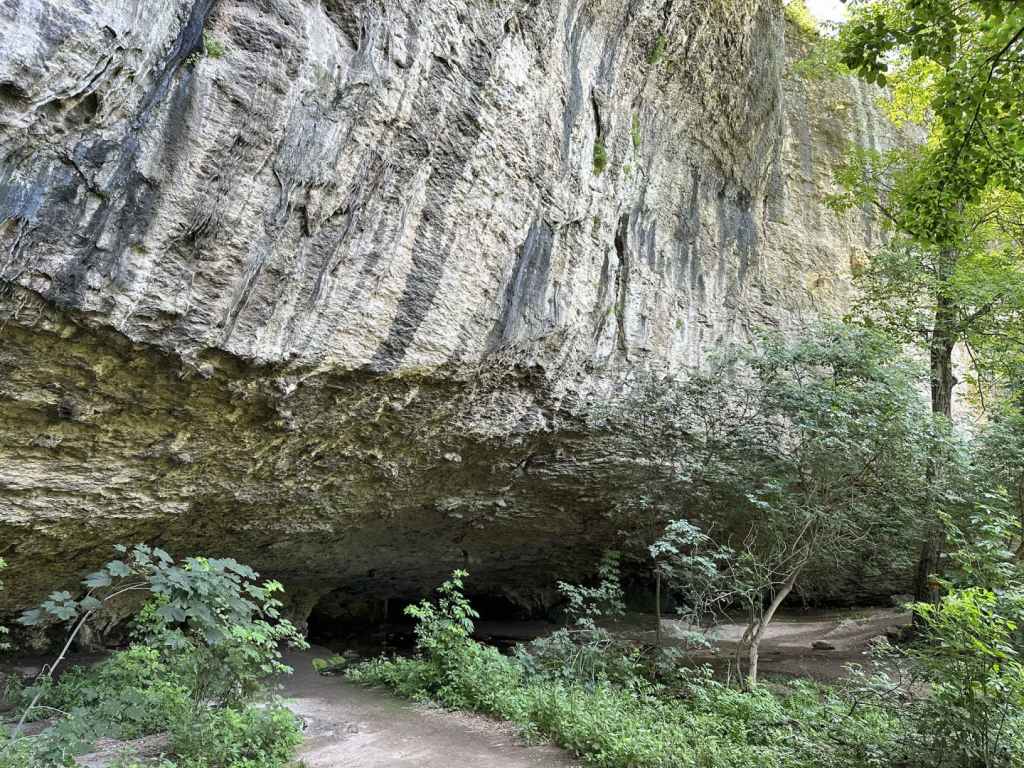
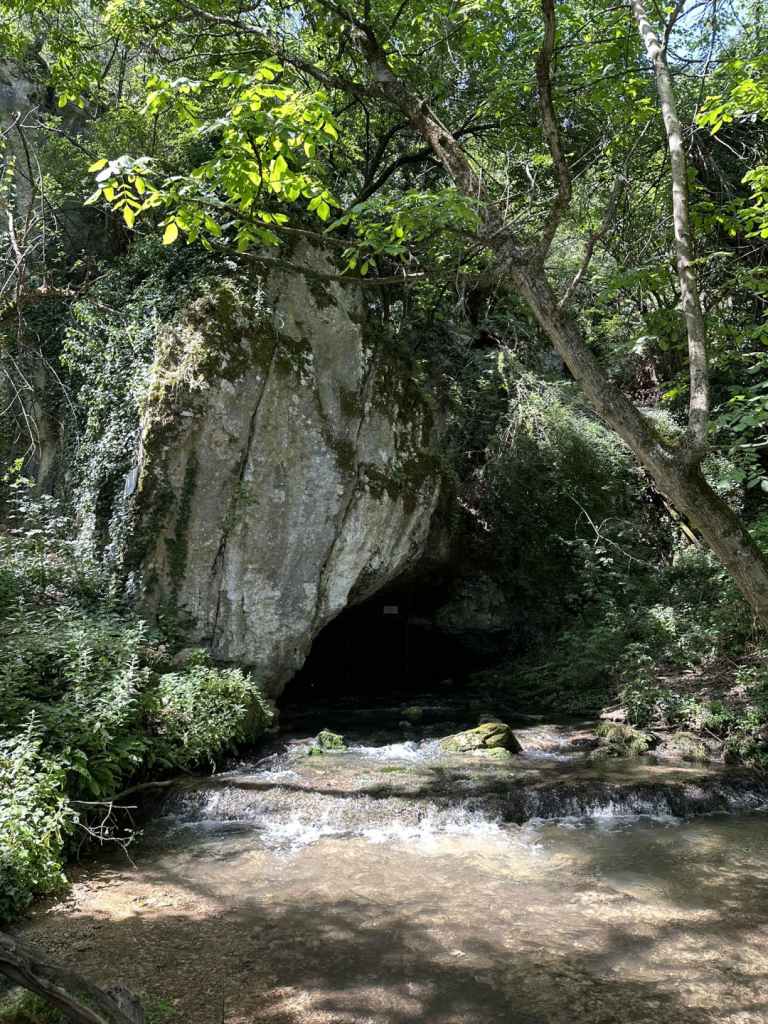
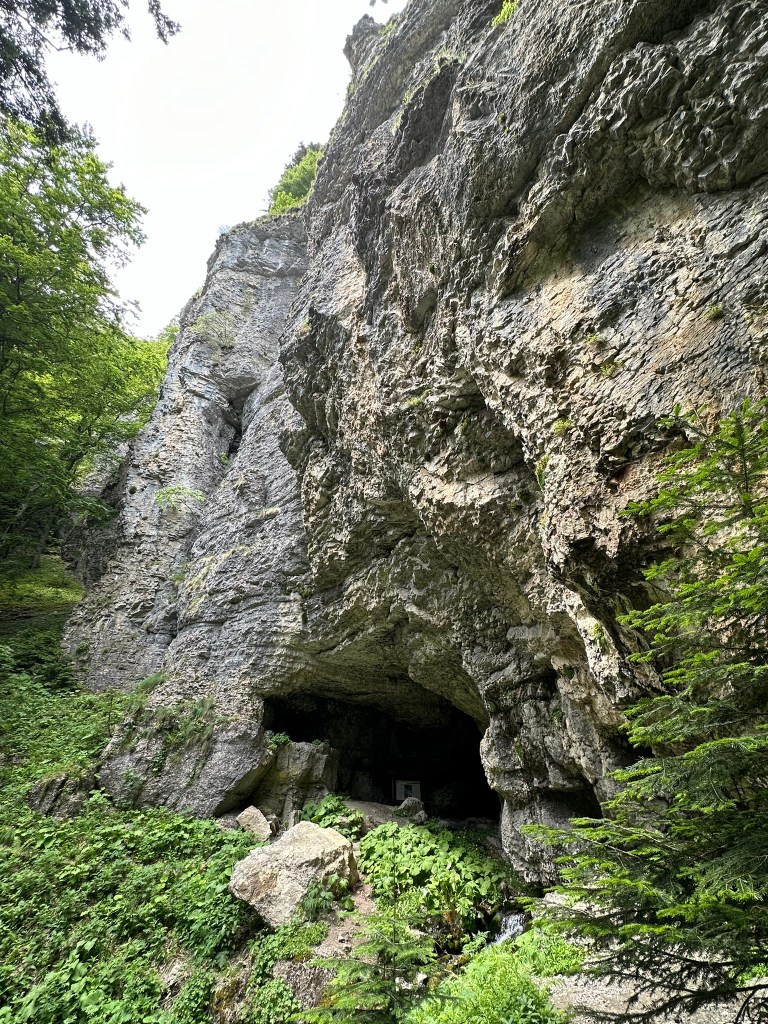
The blue route is longer and takes you above the main waterfall. It is 1.9 kilometres and takes about an hour. Go left at the information board, but this time ascend the steps on your left, which climb steeply for a hundred metres. At the top, turn right. After 300 metres, you have the option to climb the rocks on your left for a ‘panoramic view’ of the rocks and the plain that stretches as far as the eye can see. You don’t have to do this. In another 200 metres, you reach Maarata Cave on your left. Water emerges from tunnels in the rock. Let us call this river 1. You cross a small wooden bridge, and the path goes right. After 50 metres, there is a sign for the Waterfall Cave, which seems to point straight ahead, but no, it is immediately on your left. Water also emerges from this cave, much bluer this time. Let us call this river 2.

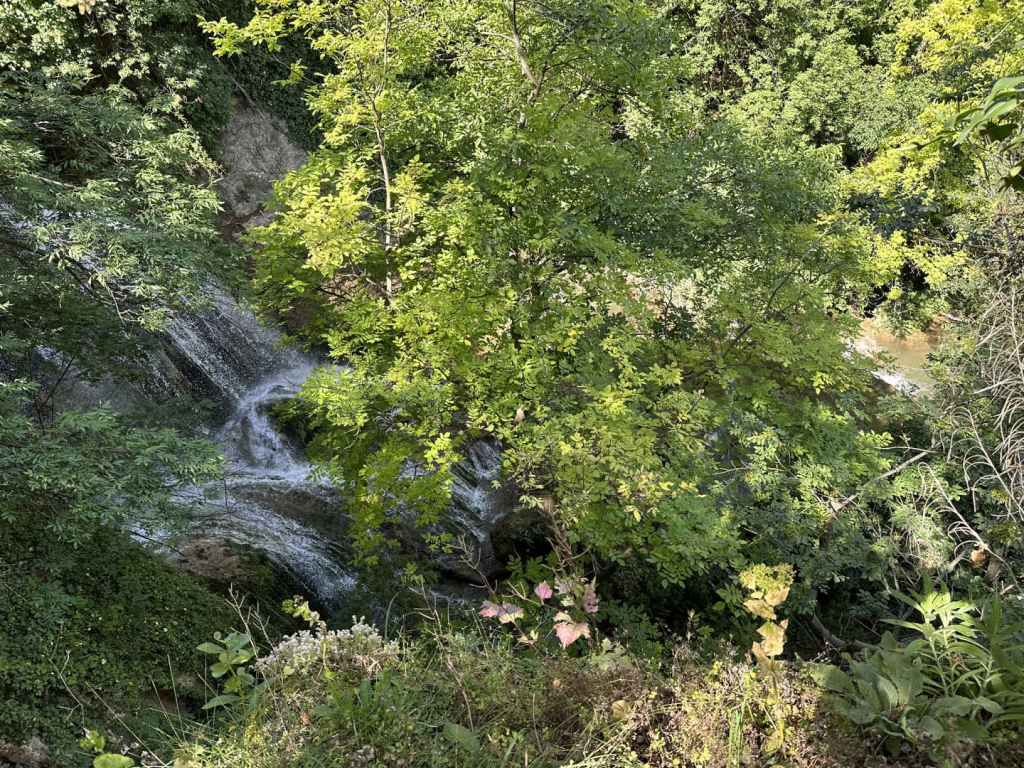
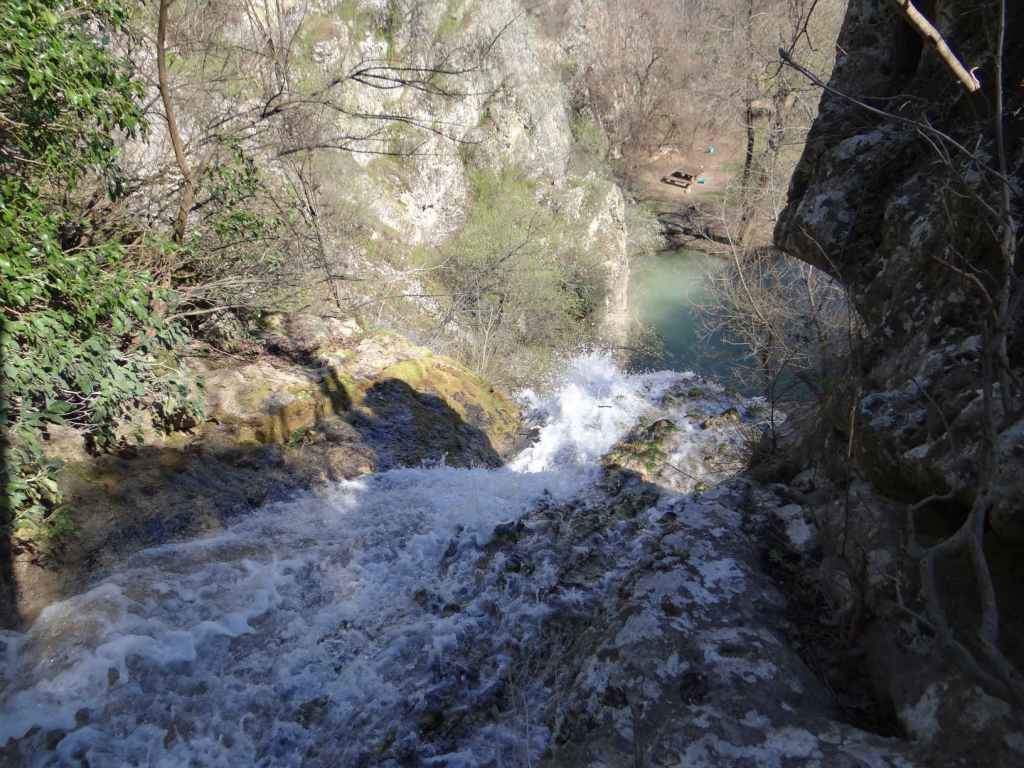
Go back to the path. In 20 metres, there is a path on the left you will come back on. Keep going past two benches and take the path on the right. This will take you to the Mysterious Waterfall, an epithet that could be applied to all waterfalls. In 20 metres, you reach a green railing. The path descends on the right for 50 metres. The railing then goes left, but you turn right here, and in 70 metres you will reach the Mysterious Waterfall, a result of river 1 (the water from Maarata Cave). It looks like a large nose covered in moss. Return to the railing and climb back up, but this time keep going straight, alongside the railing, for 30 metres, which will bring you to the top of the main waterfall, a result of river 2 (the water from the Waterfall Cave). Be very careful here, because there is a large drop.

Now go back to the path you came on, turn right, and the path will bring you in a loop back to where you stopped for the Waterfall Cave earlier. Go back to the wooden bridge by Maarata Cave and return the way you came. When you reach the top of the steps that go down to the information board where you started, there is the option to continue straight. This will take you back to the entrance, swimming pool and shops, by a different route.

I was nostalgic for the earlier wilderness. I found it strange to visit a place where there was the odd stray dog, I was given receipts (in nature?), I was addressed in Spanish and English. But then I thought the park makes it much easier for groups of schoolchildren to go there, I imagine locals might walk there on a Sunday afternoon, and I enjoyed my double espresso by the river. The waterfall has been tamed, but it is still extraordinarily beautiful.

Krushuna is only 50 kilometres from Vishovgrad, via Pavlikeni and Levski, and could be combined with a visit to this other waterfall unless you decide to combine it with Emen.
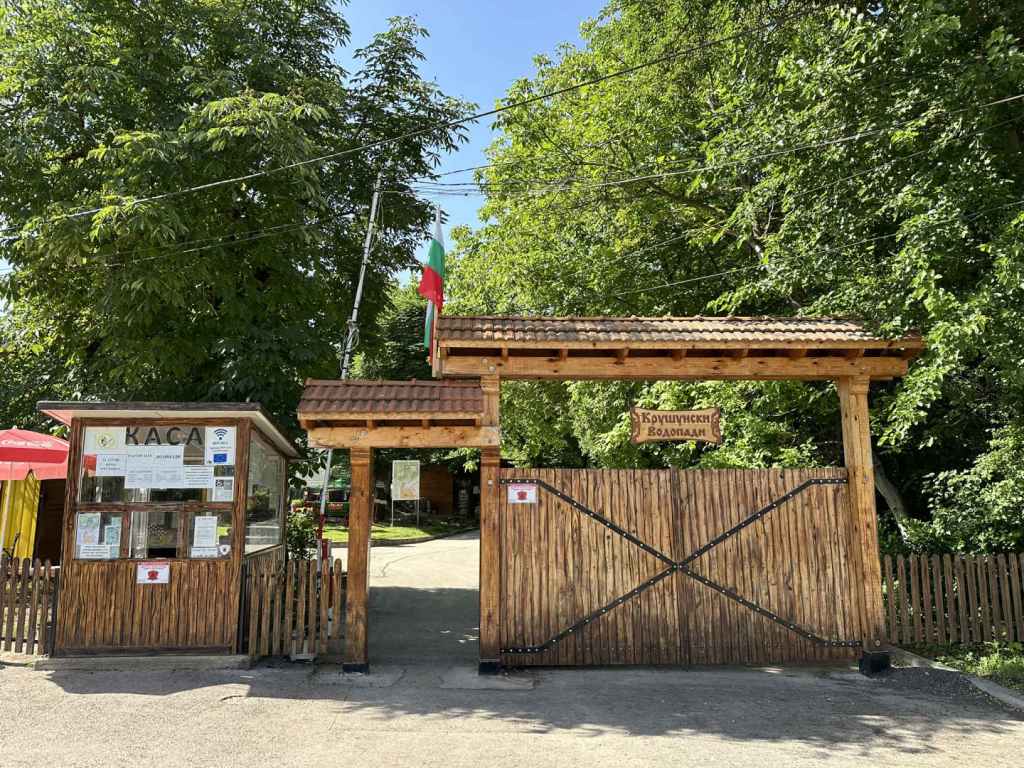
The entrance to the waterfall enclosure, Maarata Park, just south of the main square in Krushuna.
The map detailing the two routes, which for the first 450 metres are the same.
The long straight avenue.
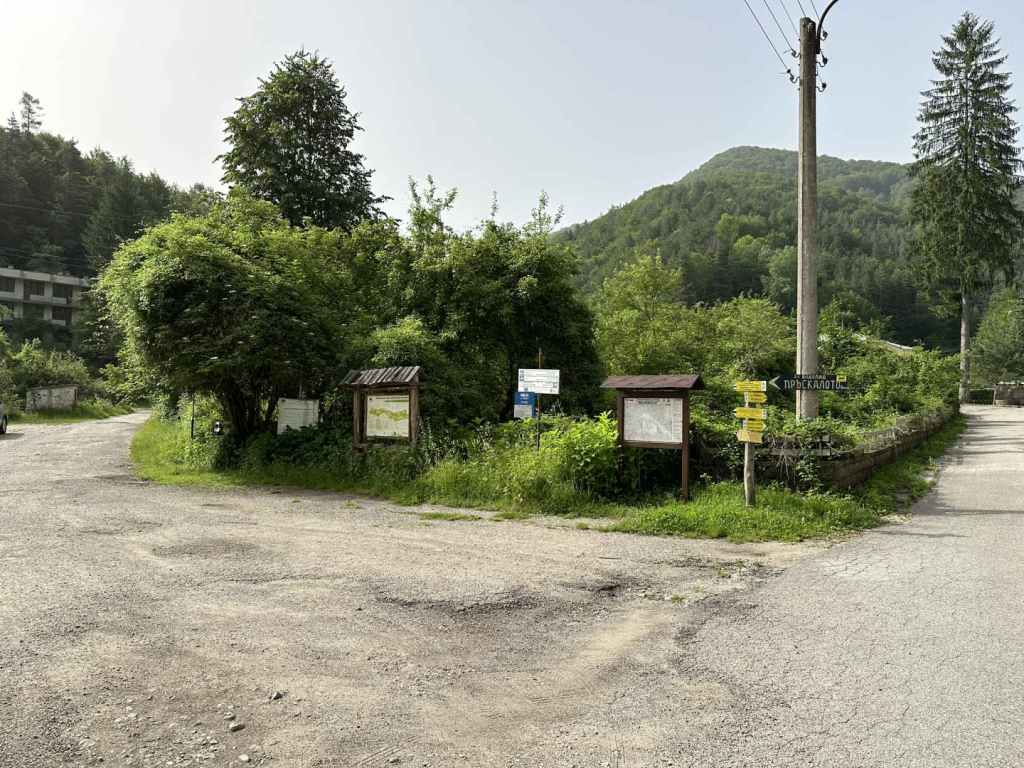
The information board at the end of the avenue, where the two routes diverge.
The Blue Pool.
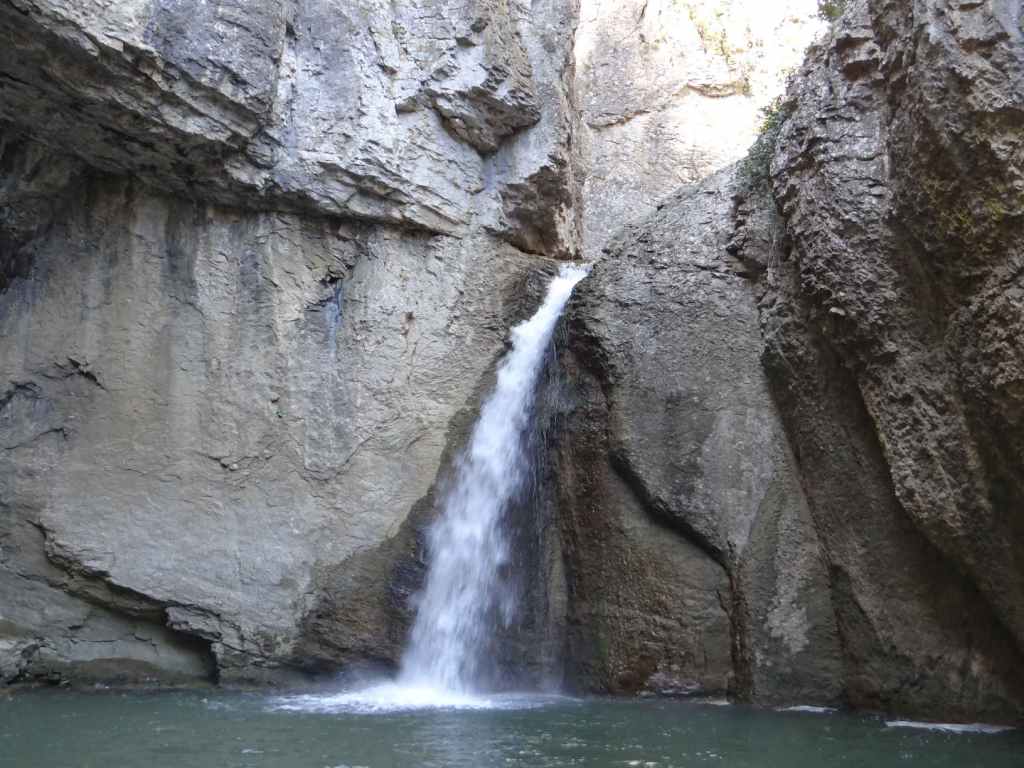
Krushuna Waterfall.
The ‘panoramic view’.
Maarata Cave.
The Waterfall Cave.
The Mysterious Waterfall.
The top of the main waterfall.

Dyavolsko Praskalo

As for the previous waterfall, Vidimsko Praskalo, Dyavolsko Praskalo is accessed from the town of Apriltsi, directly north of the highest point of the Balkan Mountain, Botev Peak (2376 m). This walk will not take you to the bottom of the waterfall itself, but to a cave called Vodnite Dupki (‘Waterholes’) and to Pleven Hut, the departure point for those wishing to scale Botev Peak. It does, however, offer views of the waterfall from a distance, like the ecopath to Vidimsko Praskalo, leading through some of the most beautiful scenery in this area, with its UNESCO-protected beech forests, which makes it well worth doing. But it has an elevation gain of 636 metres over a distance of ten kilometres, which involves some steep climbs. It should only be attempted in good weather conditions.

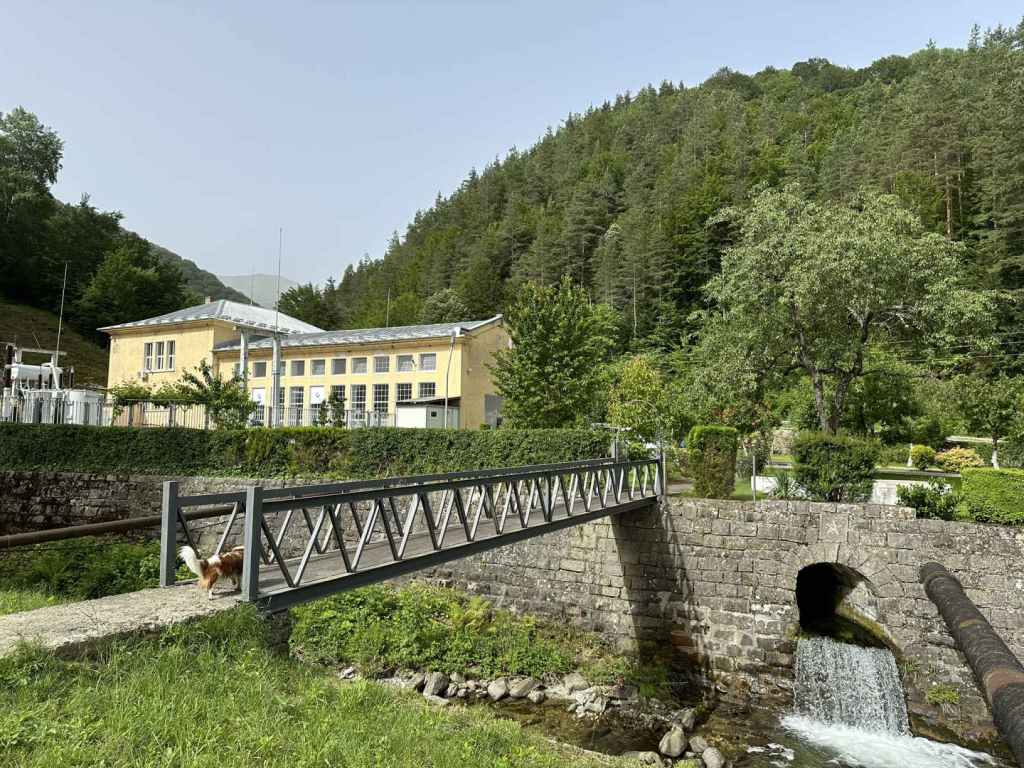
Passing through Apriltsi on the III-607 road, in between the districts of Zla Reka and Novo Selo, take the turning marked ‘kv. Vidima 5’. This turning is next to a bridge over the River Vidima, a river whose source is the waterfall and which features very much in this walk. The road you are on takes you through the centre of Vidima and in 8.5 kilometres arrives at a hydroelectric power station. A turning on the left, directly before the power station, is the start of the ecopath to Vidimsko Praskalo. Continue past the power station on your left. The road becomes quite narrow. In 4.1 kilometres, you reach a car park on your left, with the start of the walk on your right, marked ‘Pleven Hut’. The road continues for a bit, crosses the River Vidima and ends at a second car park, where there is an aerial lift used for transporting goods to the hut.

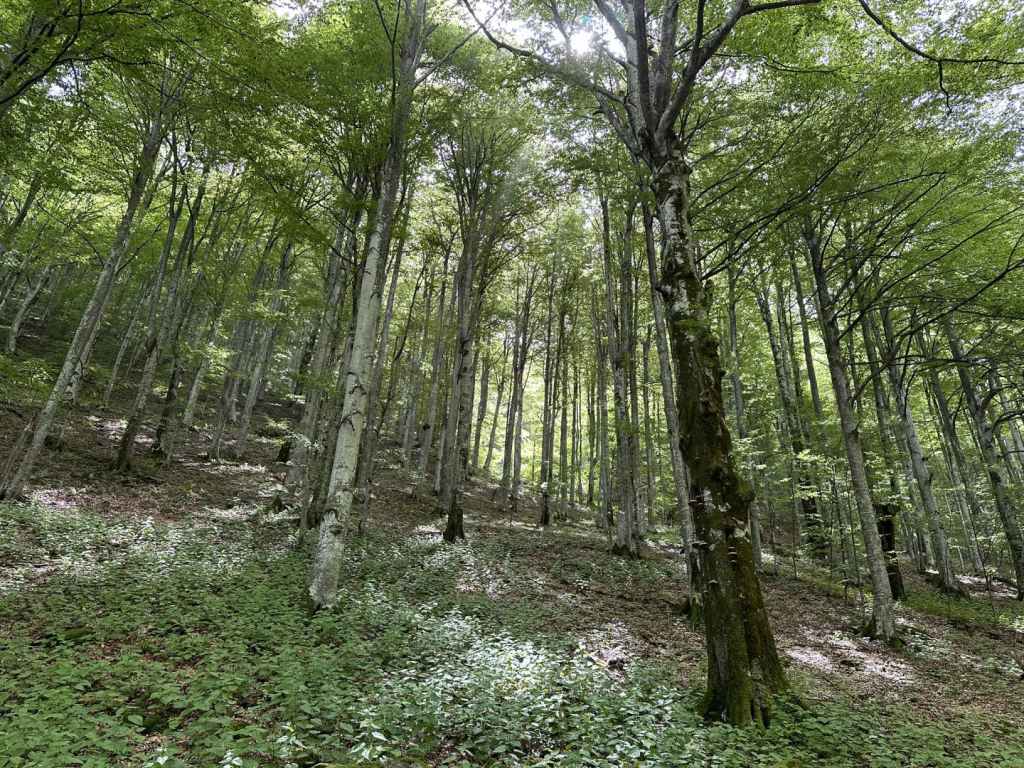
Having parked the car, you are now ready to start the walk. Take the path that is marked for ‘Pleven Hut’. The River Vidima is on your left. In 440 metres, a path diverges on the right. This is the summer route to Pleven Hut and is the route you will come back on. Continue for another 110 metres, and there is a wooden bridge over the Vidima. A winter route to Pleven Hut continues straight, but we want the route to Vodnite Dupki, or Waterholes, cave, which involves crossing the bridge and then walking uphill through beech forest. The climb becomes quite stiff. At one point, the path doubles back on itself, heading north. It then continues south and, as it does so, you catch glimpses of the waterfall, Dyavolsko Praskalo, through the trees.

1.7 kilometres after the bridge, you come to a T-junction. The path that goes straight ahead is marked for Pleven Hut and Botev Peak. You want to go left here, to Vodnite Dupki. The path descends in order to cross a stream (soon to become the River Vidima). It climbs again on the other side and, in 300 metres, you can see Pleven Hut across the valley. The path enters the Severen Dzhendem Reserve and descends steeply, going past a moraine field on the right. 500 metres after the sign for the Severen Dzhendem Reserve, it arrives at Vodnite Dupki. As in Krushuna, a stream flows from the cave, accompanied here by cold blasts of air.

The waterfall is a short distance south of the cave. However, because this is a reserve, you are only permitted to go as far as the cave. The path after the cave is noticeably worse, even non-existent, skirting the rocks before entering the valley where the waterfall is situated and the River Vidima has its beginnings. It is best to turn back here. When you reach the T-junction where you turned left earlier for the cave, now follow directions for Pleven Hut. Unmarked paths diverge left and right, but you should look for the yellow signs to the hut. The path again descends before crossing a stream, another tributary of the Vidima. It then climbs on the other side, continuing through beech forest. 1.3 kilometres after the T-junction, you will come to a series of memorial plaques on your left, celebrating the lives of mountaineers who have walked on this mountain. You are now very close to the hut. The path, which until now has been under the cover of the forest, emerges into an open grassy area. There is a shelter for farm animals ahead of you. The grassy slope climbs steeply on your left, in the direction of Botev Peak, and is probably good for skiing in winter. The hut is to your right, behind three other buildings. You’re supposed to go straight and then turn right, with the buildings on your right. You will then reach the entrance to the hut. When I got there, they were listening to very loud, martial Russian music.

What is amazing about the hut is the view from the balcony outside the restaurant. It faces Botev Peak. You can glimpse the wetness of the waterfall to the right of the peak. Vidimsko Praskalo is hidden to the left. This view is unforgettable. I drank copious amounts of tea and exclaimed from time to time. The man running the hut had spent time in Bromley. No wonder he preferred to move back here!

When you have taken your fill, take the path that descends directly from the hut, with green markers and a wooden railing. It is signposted for the locality Mazaneto, which is where you parked the car. The path descends for 1.4 kilometres before rejoining the path you were on earlier, just below the bridge. Turn left here, and in a short while you will be back at the beginning.

The return trip from Pleven Hut to Botev Peak takes about 8-9 hours. It passes the top of Dyavolsko Praskalo, again offering views of the waterfall, but for this you would need to sleep on the mountain.

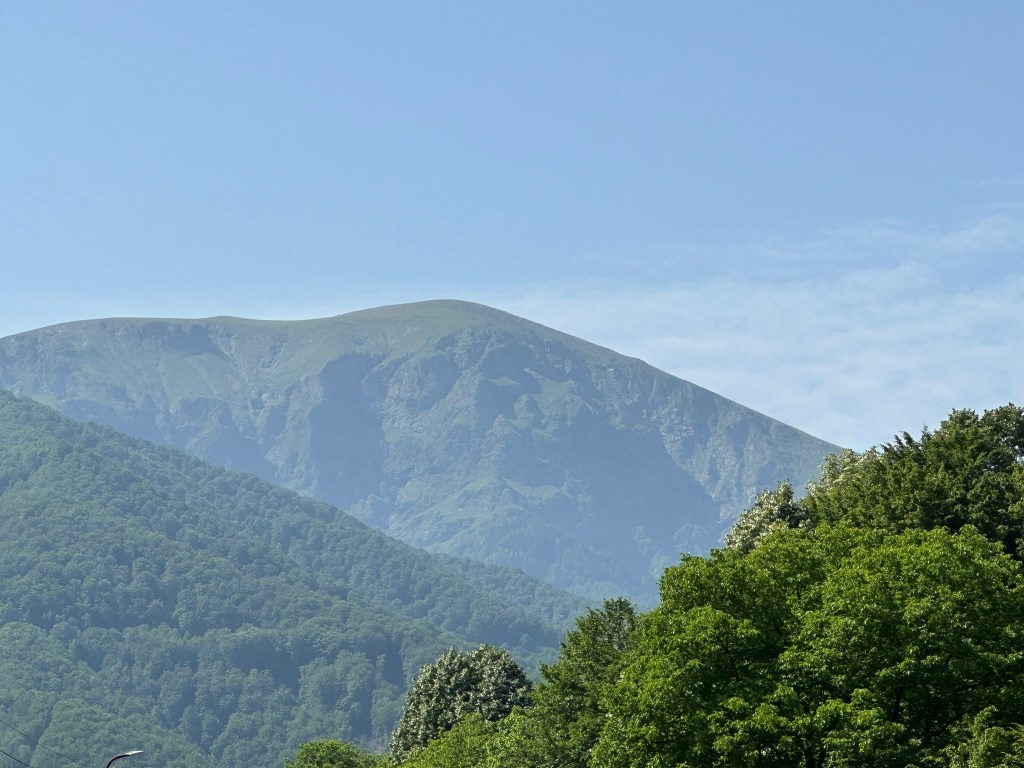
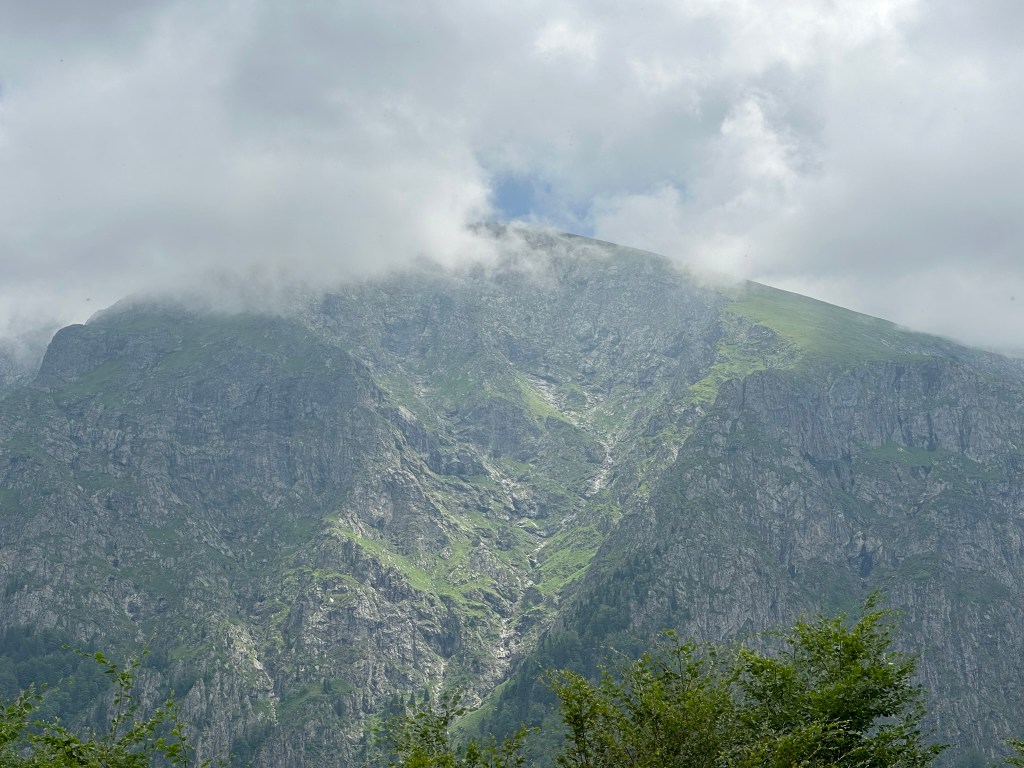
Botev Peak from the road through Vidima.
The start of the walk, marked ‘Pleven Hut’.
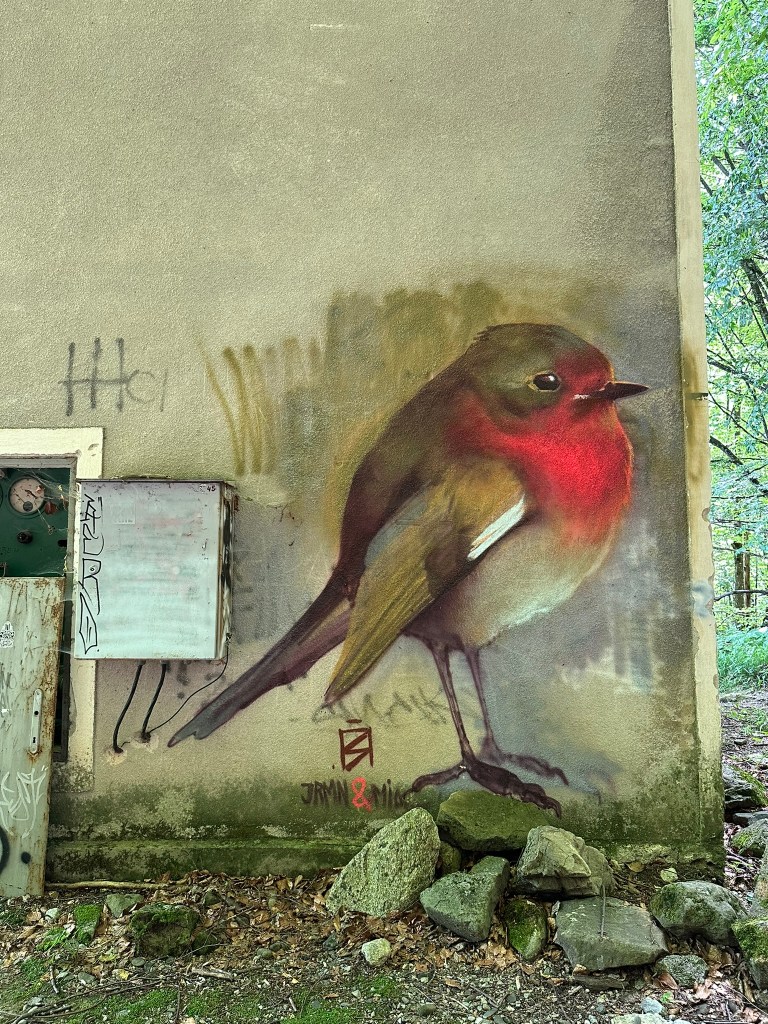
A robin next to the path.
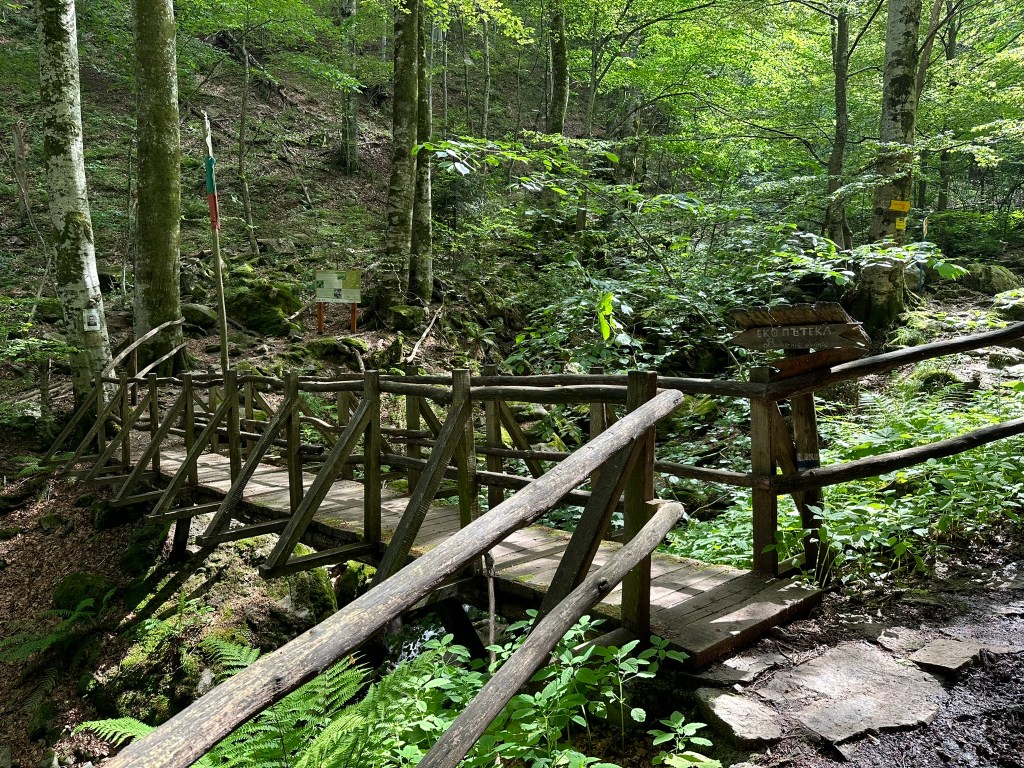
The bridge over the River Vidima. Follow the sign for Vodnite Dupki.
The T-junction – Vodnite Dupki is left, Pleven Hut straight ahead.
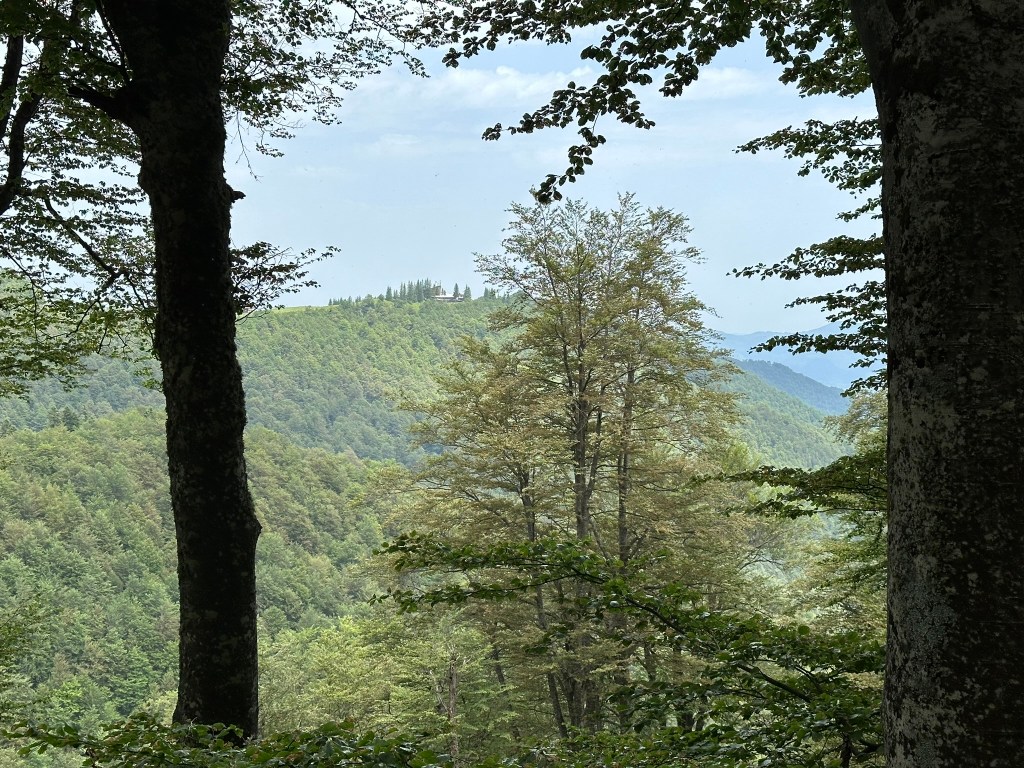
Pleven Hut through the trees.
Vodnite Dupki, or Waterholes Cave.
The view from the cave.
The valley with the waterfall.
Pleven Hut.
Botev Peak from Pleven Hut.
Tea with a view.
The path back to Mazaneto, where you parked the car.
The River Vidima as it passes through Debnevo.

Vidimsko Praskalo

This is a walk into the heart of the Balkan. It takes you to within sight of one of the tallest waterfalls in Bulgaria (most of which are in this region, on the north and south sides of the Balkan Mountain), Vidimsko Praskalo. Praskalo is the Bulgarian word for ‘spray’, ‘sprinkler’, it’s just another word for ‘waterfall’. Vidimsko refers to the nearby village of Vidima. There used to be four villages in this area: Novo Selo in the centre, Zla Reka to the west, Ostrets to the east, and Vidima to the south. In 1976, they decided to club together and form a town, Apriltsi, which was named after the April Uprising of a hundred years earlier, in which the village of Novo Selo lost 142 of its citizens to Ottoman units, who massacred the locals, causing uproar in the West. Bulgaria would become free of Ottoman rule two years later.

A bird could fly from one praskalo to another in a matter of minutes ­– clustered around Botev Peak there are several, Raysko Praskalo being the highest. But we are mere mortals and must use our feet. There is an ecopath that takes you, five kilometres along a track, and the final kilometre along a path, to a viewing area, from where you can view the waterfall in the distance. Believe me, it is magical, even at a distance. The waterfall is located within a part of the Central Balkan National Park known as Severen Dzhendem, and you’re not just allowed to walk freely. This is one of the routes you are allowed to do.

Make your way to Apriltsi. The town is traversed by the III-607 road. Between Zla Reka and Novo Selo (where the centre is), there is a turning marked ‘kv. Vidima 5’. Take this turning, which heads due south, offering impressive views of the Balkan. Continue on this road for 8.5 kilometres, passing through the centre of Vidima and out the other side. Just before reaching a hydroelectric power station, there is a small turning on the left with lots of signs pointing to the waterfall and the ecopath. It’s impossible to miss. Park your car here.

Now you are on foot. The road immediately crosses the River Vidima and turns right, past the power station on your right. The power station is located between the Rivers Vidima and Praskalska (‘of the waterfall’). You are now next to the River Praskalska and are going to follow it all the way to your destination.

The track you are on, wide enough for a car, crosses the river a couple of times, it even crosses a couple of tributaries and goes past some buildings linked to the water supply, but you are never going to leave it until, after five kilometres, you reach the entrance to the Severen Dzhendem Reserve. Most of the time, the river will be on your right. Sometimes the track will toy with you and make as if to climb away from the river, but it soon returns. Just stay on it, ignoring the turnings to Mecho Chakalo and Turski Rat (obviously one of the people involved in 1876) on your left. In 3.7 kilometres, you will come to a fountain on the left, with a picnic hut on the right. Another kilometre, and you will reach the buildings linked to the water supply, where it is forbidden to go too close to the river (there is another fountain here, and a viewing platform over the river). Stay on the track.

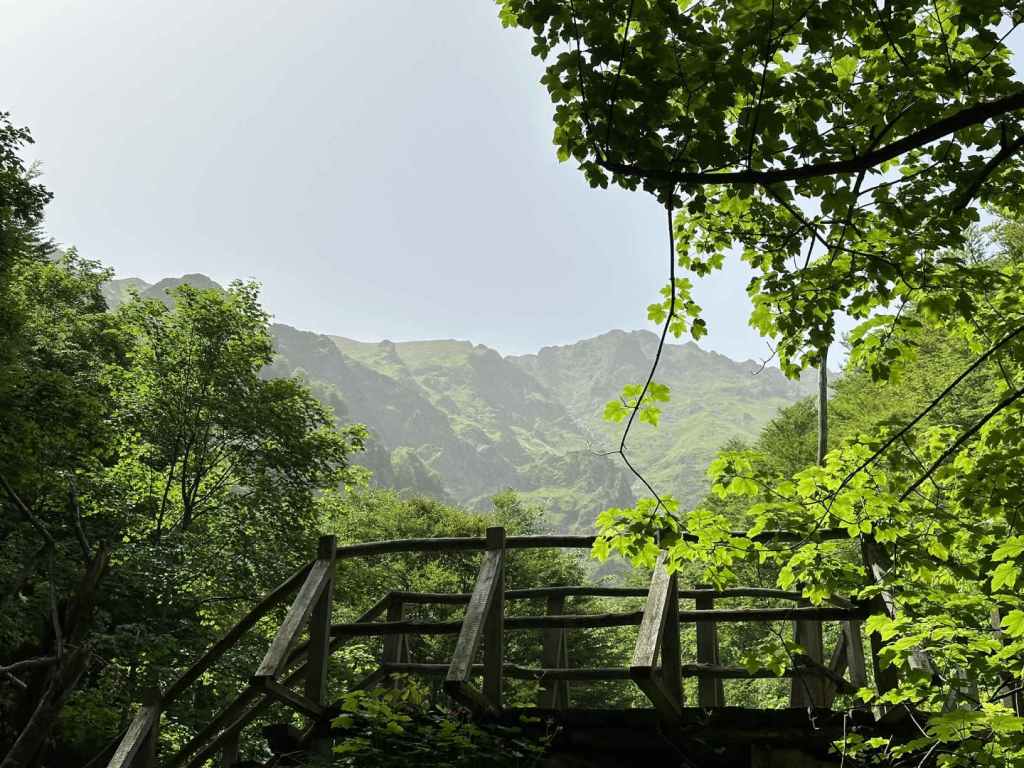
This track that has offered so much finally ends after five kilometres, and you enter the Severen Dzhendem Reserve, where there are beech forests protected by UNESCO. It now becomes a path. You have one more kilometre to go (twenty minutes). You will cross four wooden bridges. Then you will come to a fifth, higher wooden bridge, and suddenly notice the peaks of the mountain up ahead. It’s a startling view. Cross this bridge, and you will come to a small area with wooden benches, where you can sit, rest and admire the waterfall in the distance. It’s incredibly picturesque.

It is not permitted to continue towards the waterfall and, without a guide, it would be difficult to achieve. But it is enough. It’s not always necessary to reach the end, and it’s also good to allow wild animals a little peace and quiet from us. It took me two hours to reach the viewing area from the power station, and 1½ hours to come back. But I have to say I stayed quite a long time, viewing the waterfall (like a destiny) in the distance, and was reluctant to leave.

The River Vidima as it passes through Apriltsi. It goes on to join the Rositsa in Sevlievo, which itself joins the Yantra (the river that goes through Veliko Tarnovo) before becoming part of the Danube.
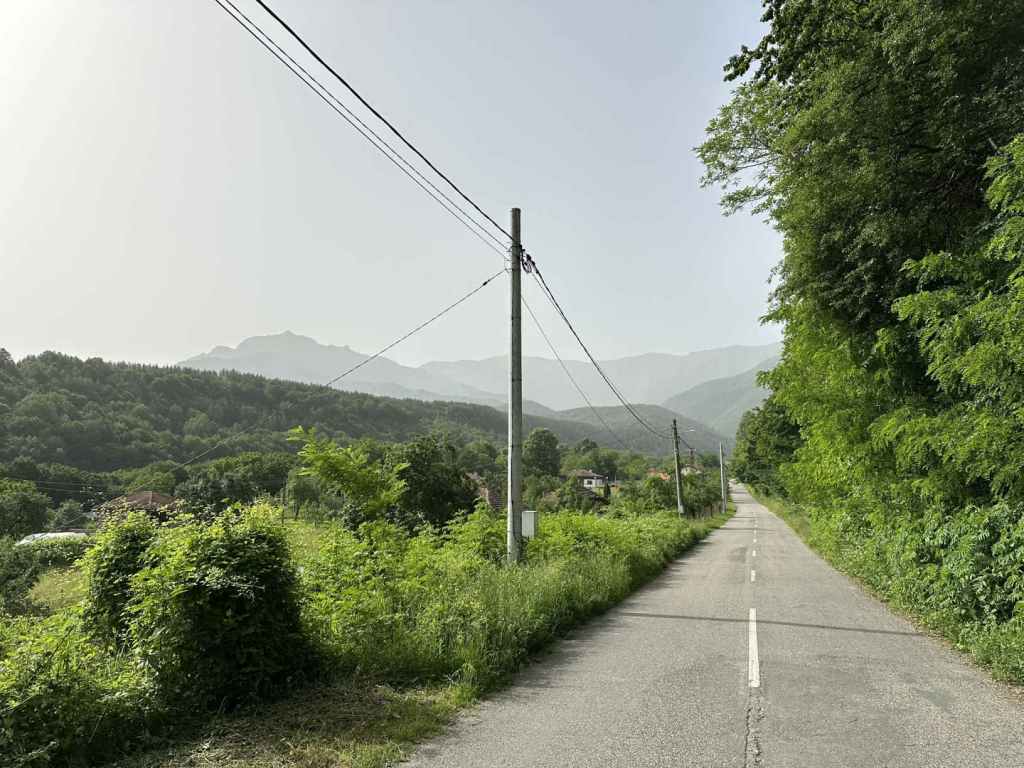
The road due south that passes through Vidima and leads to the Balkan.
The turning on the left for the ecopath to Vidimsko Praskalo. The road on the right continues to Pleven Hut.
The hydroelectric power station on the right.
The track following the course of the River Praskalska.
The river through the trees.
The track higher up.
The buildings linked to the water supply.
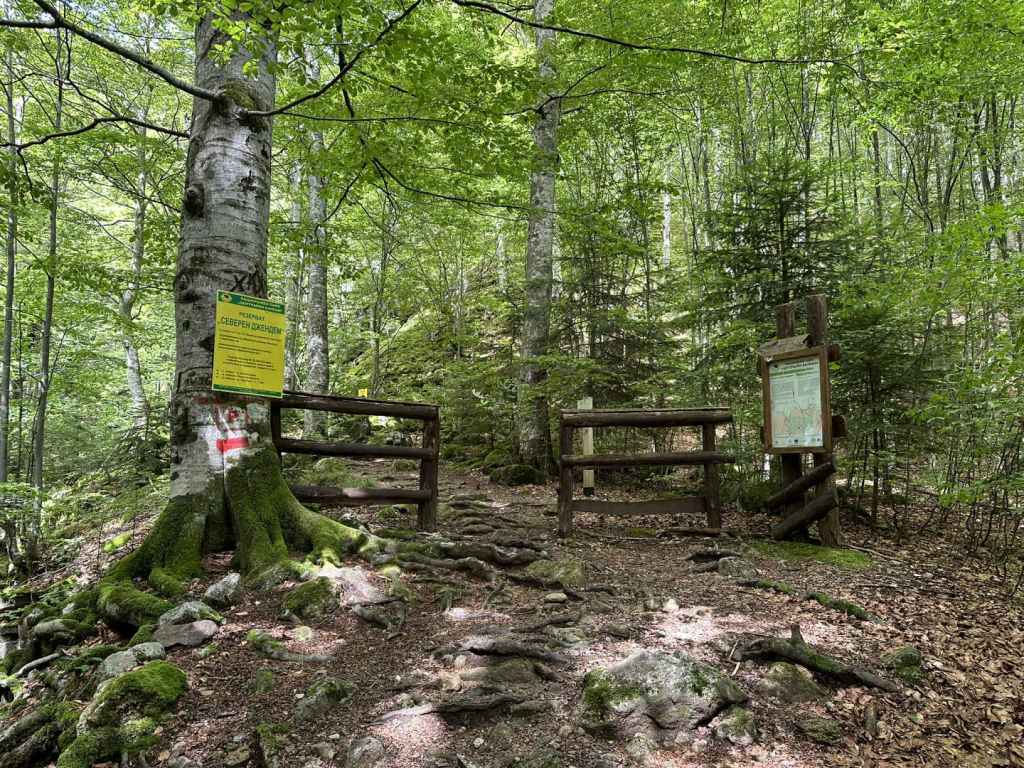
The entrance to the Severen Dzhendem Reserve, where the track ends and becomes a path.
The first of the wooden bridges.
The UNESCO-protected beech forest.
The fifth wooden bridge with views of the ridge.
The small viewing area.
The river with the waterfall behind.
A close-up of the waterfall.

Vishovgrad

The third waterfall in terms of distance north-west of Veliko Tarnovo is Vishovgrad (‘Zarapovo’). Hotnitsa (because of the turquoise waters) and Emen (because of the canyon that precedes the waterfall) may take the fame, but do not underestimate the charms of this waterfall 3 km east of Vishovgrad, on the road between this village and the village of Emen. This waterfall can be visited on the same day as Emen since Emen is only 4 km further east.

To get there, follow the instructions for getting to the village of Emen. Once you arrive in the main square in Emen, continue for another 200 m, until you reach a crossroads. The road to Vishovgrad is on the right. After 400 m, you will see the dirt track leading to the start of the ecopath to Emen Waterfall on the right. Stay on the main road. After another 3 km, you will pass a factory on your right, and 600 m later, where there is a bend in the road, you will see two white signs on the right, with a dirt track leading into the forest. This is Zarapovo. You can park the car on the verge. The ‘ecopath’ (any path in nature seems to be termed thus) heads to the right and in only five minutes takes you to the waterfall.

The path divides. The left fork takes you through some trees to the bottom of the waterfall. The right fork takes you round the rock and over a wooden bridge to the top of the waterfall. The area below the waterfall is ideal for rest and relaxation. There are even several smaller falls further downstream.

These three waterfalls are all worth a visit – Hotnitsa because of its turquoise waters and the ‘ecopath’ up the gorge; Emen because of the canyon; and Vishovgrad because of its charm. I found Vishovgrad the most restful. Even though there were lots of people about (on a Saturday), everybody was very friendly!

If you’re travelling to or from Sofia, there is no need to go via Emen and Veliko Tarnovo. Travelling east on the E772, 14 km after Sevlievo, there is a turning on the left for Dobromirka (4 km) and Pavlikeni/Suhindol (25 km). Take this turning, ignore the signs for Suhindol, follow the signs for Pavlikeni. Vishovgrad is situated 11 km before Pavlikeni. Turn right here, at the main square of the village, and in 3 km you will reach the waterfall.

The ecopath from the road to the waterfall is so short you can see the end, where the tree is.
At the end, you are standing on a rock above the river. Down below is the wooden bridge that takes you to the top of the waterfall.
On your left is the path through some trees to the bottom of the waterfall.
The waterfall, which seems to me to resemble a seated figure.
Vishovgrad Waterfall.
A smaller fall further downstream – looking back up to the main waterfall.
A view of the wooden bridge from the other side of the river, and the rock where you arrive after you leave your car.

Kapinovo-Ruhovtsi

There are two waterfalls south-east of Veliko Tarnovo, near the villages of Kapinovo and Ruhovtsi. They can be visited together.

Ruhovtsi is a village 5 km east of the town of Elena. The waterfall is named ‘Hristovski’ after a nearby settlement. Drive from Veliko Tarnovo along the E772 in the direction of Varna. After 10 km, turn right for Elena (33 km). Drive past Elena and continue for another 4 km until you reach the turning on the right for Ruhovtsi (1 km). When you reach the main square of the village, turn right and continue for 1.8 km. Just after crossing a river, you will see a sign for the waterfall on your right and an open space to park your car on the left. Follow the dirt track that leaves the road on your right for about 15 minutes. The dirt track veers left through the forest and then leads directly to the waterfall. This waterfall is attractive because of the width of its cascade.

To visit Kapinovo Waterfall, you need to go not to the village of Kapinovo, but to Kapinovo Monastery. The waterfall is in the grounds of the monastery. Drive back past Elena in the direction of the E772. 15 km after Elena, you will reach the village of Mindya. Turn left for Kapinovo. Drive straight through Kapinovo (ignore the sign for Kapinovo Monastery on your left, just before the main square, the road is not fit for normal vehicles), continue through the villages of Tserova Koria and Pchelishte, and then turn left at the sign for Velchevo (7 km). Drive straight through Velchevo and continue for another 6 km to Kapinovo Monastery. The grounds of the monastery have been turned into a campsite. On entering the monastery grounds, you will be able to park the car at a small roundabout. The waterfall is over on your left, by the rocks. There is a guesthouse overlooking the waterfall. The path to the waterfall descends to the right of the guesthouse.

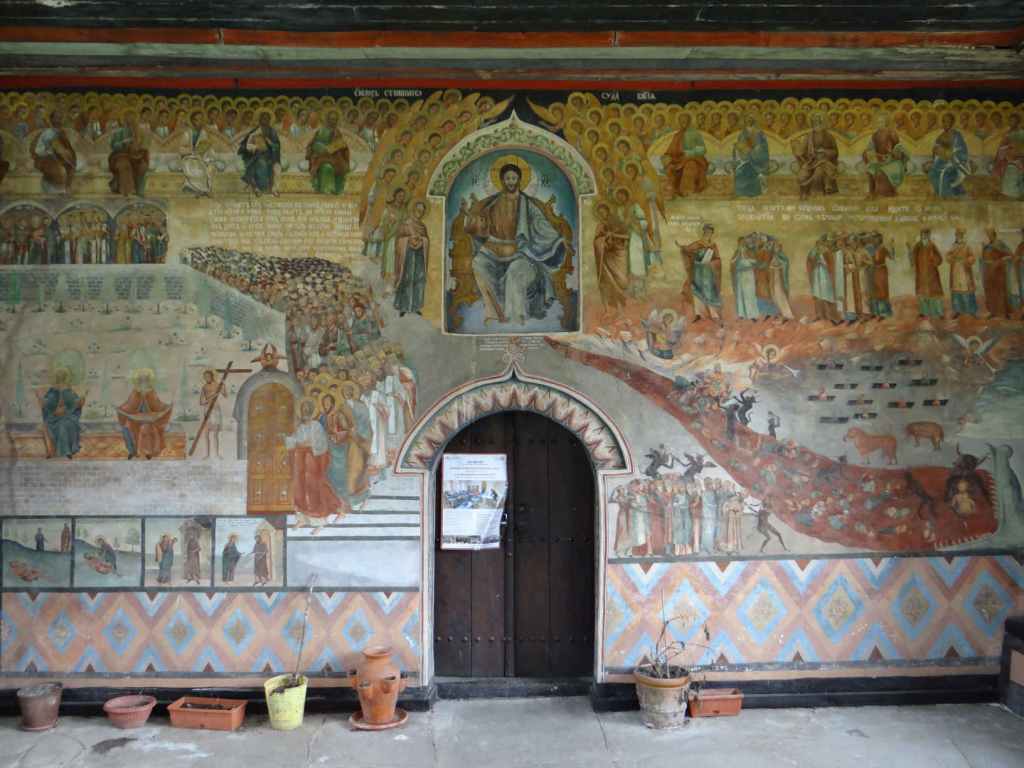
Don’t forget to visit the church of Kapinovo Monastery, which is dedicated to St Nicholas and has an impressive fresco of ‘The Last Judgement’ on its façade. The church is a short distance from the waterfall and can be reached by following a subsidiary road.

Of course, it is possible to visit Kapinovo Waterfall without going to Elena and Ruhovtsi. In which case, all you need to do is to take the E85 south of Veliko Tarnovo in the direction of Debelets, Dryanovo and Gabrovo. After only 1 km, there will be a turning on your left for Prisovo, Kapinovo and Mindya. Take this turning. Drive through Prisovo and then turn right at the sign for Velchevo (7 km). Drive through Velchevo and continue to Kapinovo Monastery.

These waterfalls are not as impressive as the waterfalls north-west of Veliko Tarnovo – Hotnitsa, Emen and Vishovgrad – but they are still beautiful and worth a visit. There are numerous other monasteries in or near the surrounding villages of Kilifarevo, Prisovo, Plakovo (this monastery is just before Kapinovo Monastery), Merdanya, Maryan… Just remember while some monasteries are located in the village, most are some distance away – at the end of the road…

Mural in Elena.
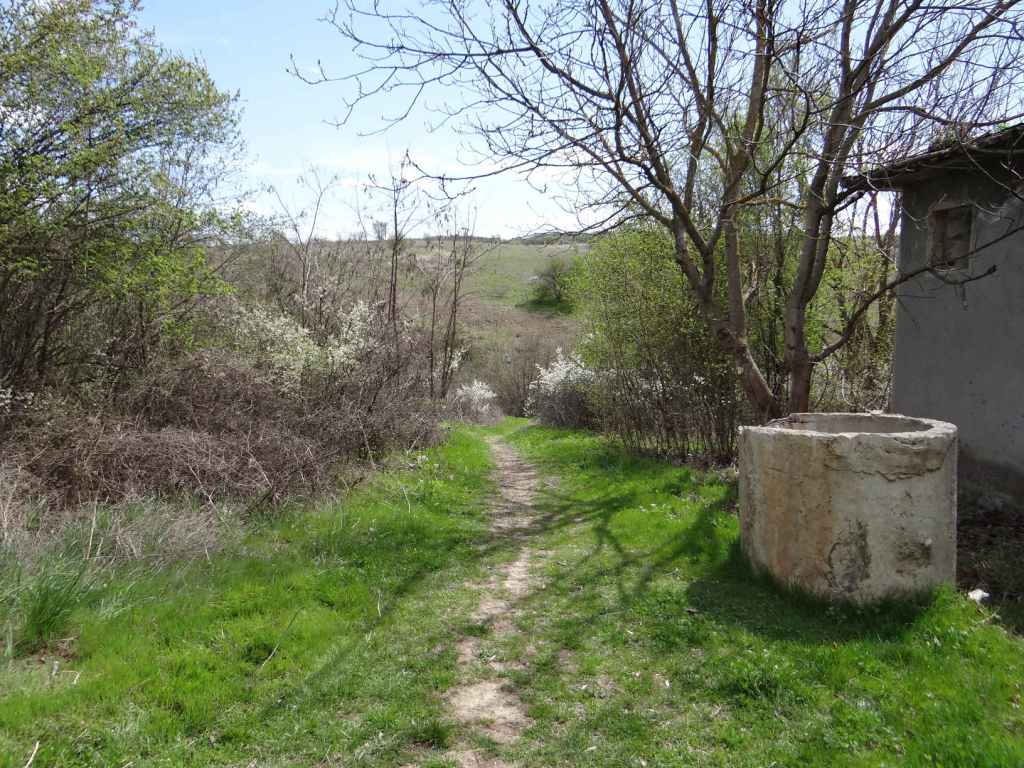
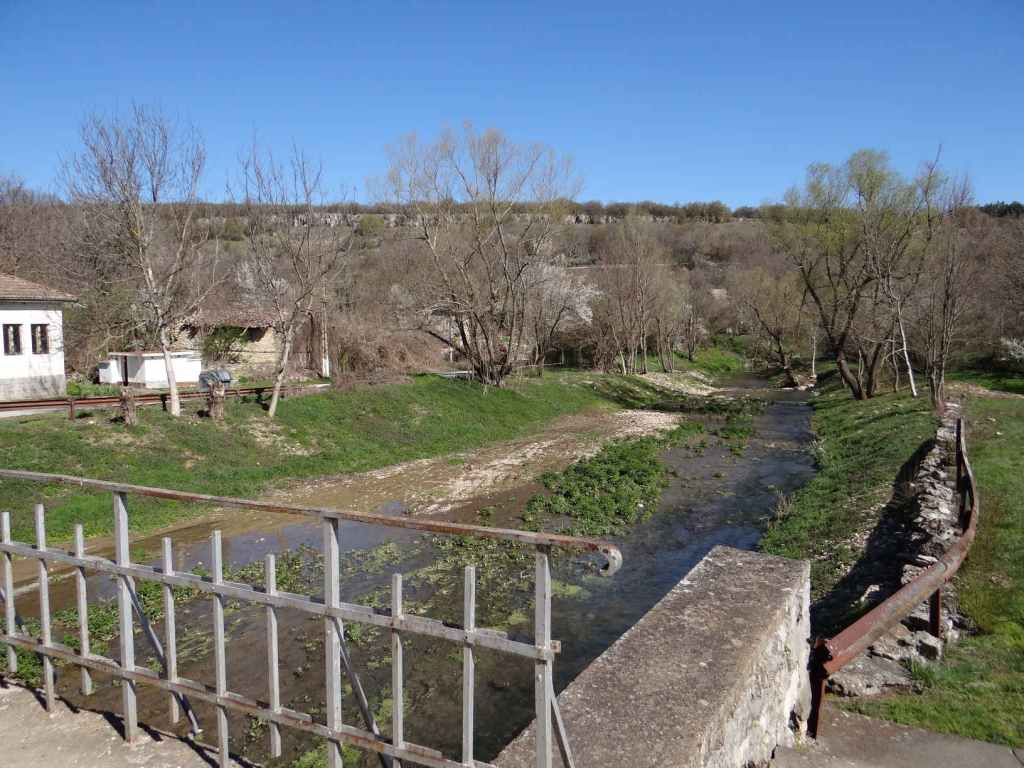
The dirt track leaving the road for Ruhovtsi Waterfall.
The dirt track as it passes through the forest.
April blossom!
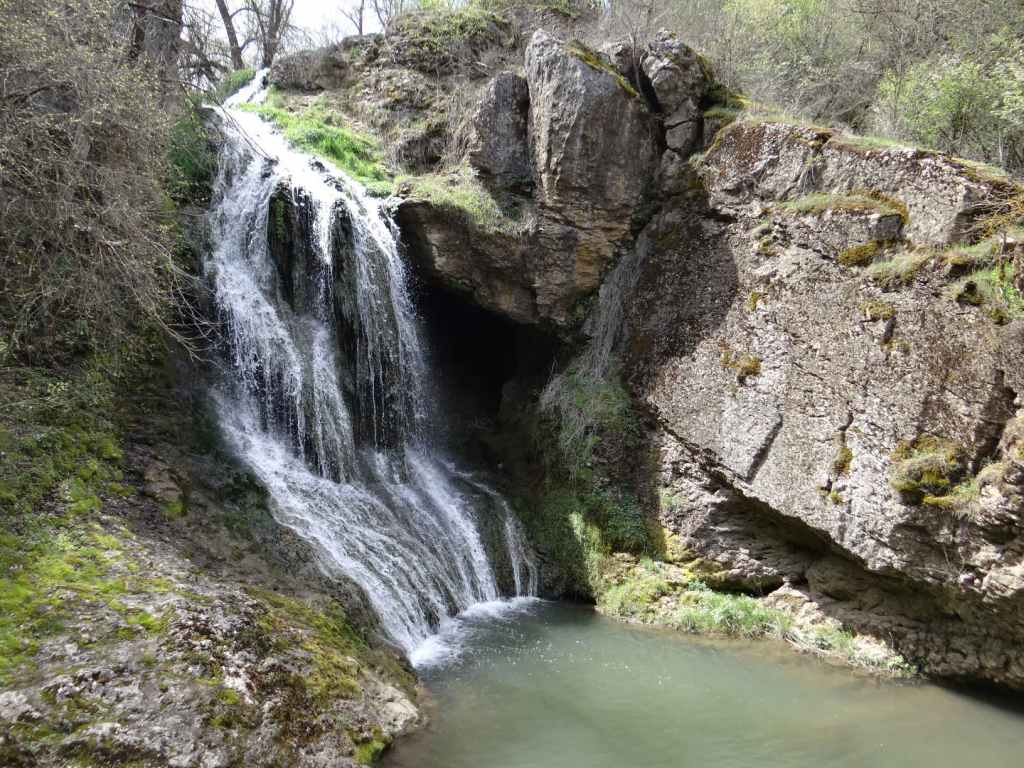
Ruhovtsi (‘Hristovski’) Waterfall.
Close-up of Ruhovtsi Waterfall.
The waterfall from the side.
The path to Kapinovo Waterfall in the monastery grounds (campsite). The path leads right of a guesthouse.
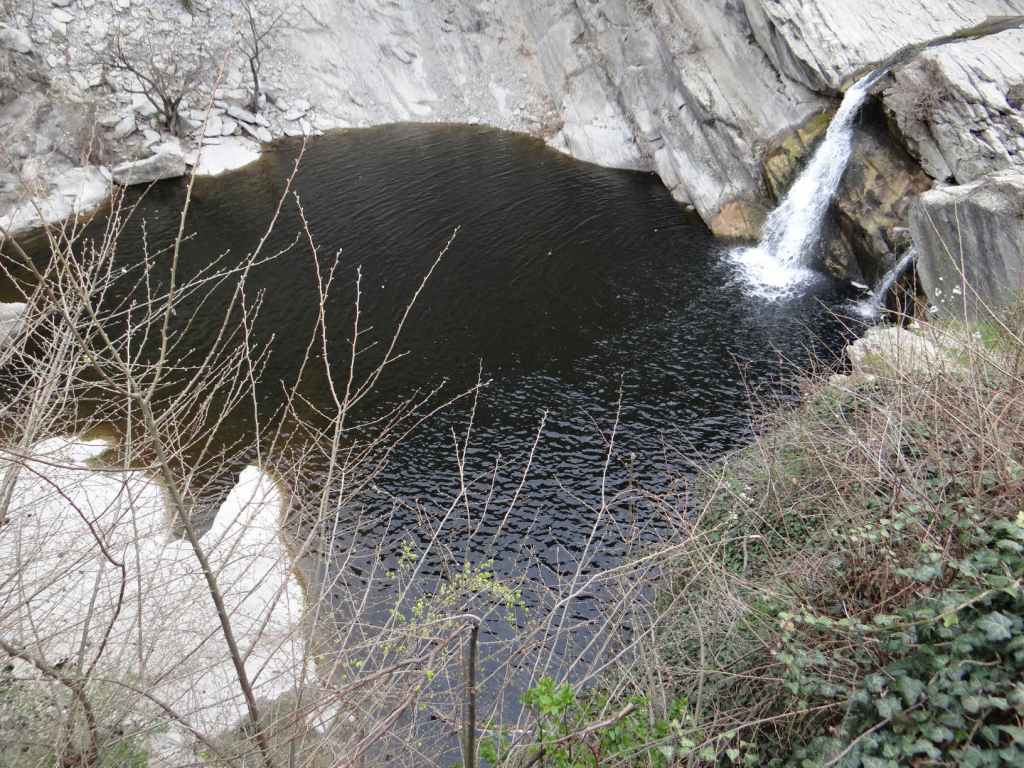
Kapinovo Waterfall from above.
Kapinovo Waterfall.
Close-up – the rock resembles a dog lapping water!
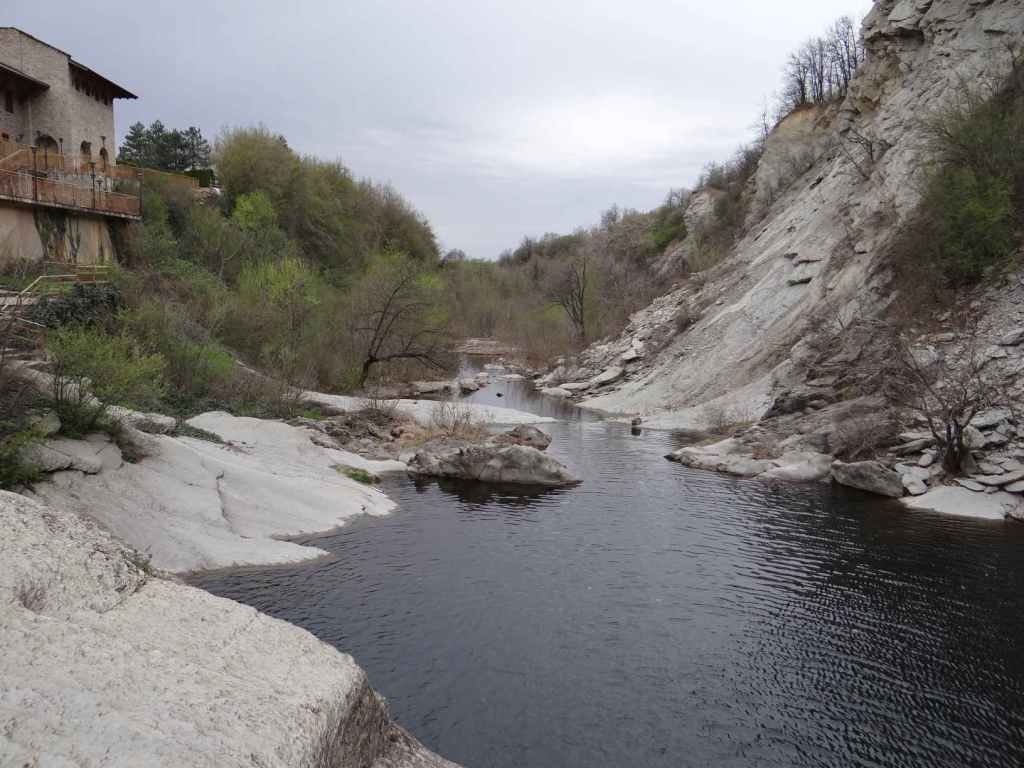
The peaceful view downstream.
The fresco ‘The Last Judgement’ in Kapinovo Monastery.

Emen

Emen is the second of three waterfalls that lie north-west of the medieval capital Veliko Tarnovo – Hotnitsa, Emen and Vishovgrad. What sets Emen apart is the canyon with the river Negovanka at its bottom. Just before the Negovanka forms a large reservoir, there is a ten-metre waterfall called ‘Momin Skok’, meaning ‘Maiden Jump’ – as with Ovchartsi Waterfall in Rila, this refers to the legend of young girls jumping to their death in order not to be forcibly converted to Islam during the Ottoman occupation of Bulgaria (14th-19th centuries).

To get there from Veliko Tarnovo, take the main road to Sofia (E772) and after 20 km turn right for the village of Balvan. Follow the road to the centre of this village and then turn right for Emen (8 km). Be careful because there is a sign for Emen in Balvan that has been turned back to front and seems to indicate that you should go straight ahead when the road veers left. This is not the case. The road veers left and after a short while you reach the centre of the village.

Here you turn right and after 8 km arrive in Emen. The road takes you over a bridge on the river Negovanka and immediately you arrive at a small square opposite the town hall where you can park the car. There is also drinking water. A smaller road leads to the right, following the left bank of the river. The road becomes a dirt track and then a path. After fifteen minutes, you reach a wooden suspension bridge over the river, but you stay on the left bank. The path climbs up to another dirt track, which then leads on your right to the beginning of the ecopath, where there is a cave. The cave is 3 km long and is home to various species of bat. In communist times, it was used as an arms depot for a military base located directly above it.

The ecopath is said to have been the first in Bulgaria and was created in 1992, shortly after the fall of communism. I think the initial idea was to follow the course of the river at the bottom of the gorge, but the wooden bridges crisscrossing the river have long since succumbed to the elements, which is a shame, and now the ‘ecopath’ actually runs along the top of the canyon on the left. From the beginning of the ecopath, where the cave is, to the waterfall is about forty minutes. The path takes you up to the top of the canyon and then winds along the edge, in amongst trees. After about thirty minutes, the path divides, but it doesn’t matter which branch you take – one continues among the trees, the other skirts the precipice. The path then descends to the left (this is clearly marked by blue arrows) to rejoin the river at the bottom. Turn right, and you will arrive at the waterfall in five minutes. You can hear the waterfall from the top of the gorge.

It is possible to drive to the start of the ecopath. Continue past the main square in Emen and after about 200 m you will reach a crossroads. Turn right, and just as you are leaving Emen, a dirt track forks off to the right, leading to the ecopath. Continue along this road, without taking the dirt track on your right, and in a short while you will reach the waterfall of Vishovgrad, ‘Zarapovo’. Both waterfalls can easily be visited on the same day since they are only a short distance apart.

The Negovanka River as it passes through Emen.
The wooden suspension bridge in Emen.
The path on the left bank of the river joins the dirt track leading to the start of the ecopath.
The start of the ecopath – steps leading up to the cave, the 17th longest in Bulgaria at just over 3 km.
The start of the ecopath, after the cave.
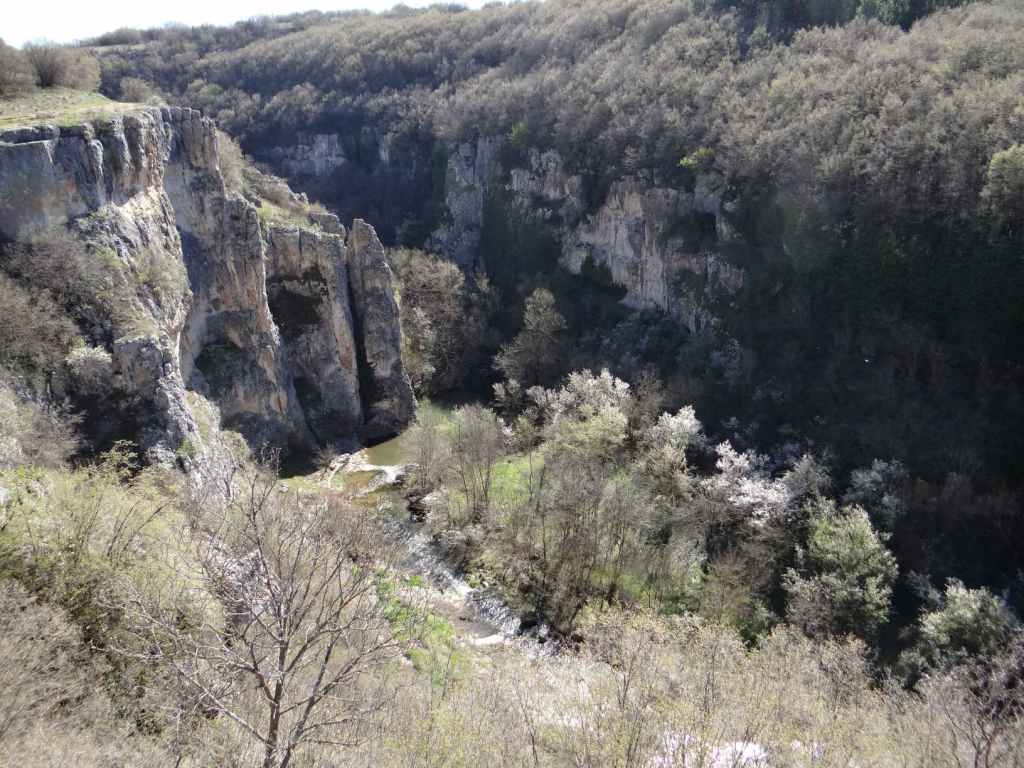
Having immediately climbed to the top of the canyon, view of the canyon itself.
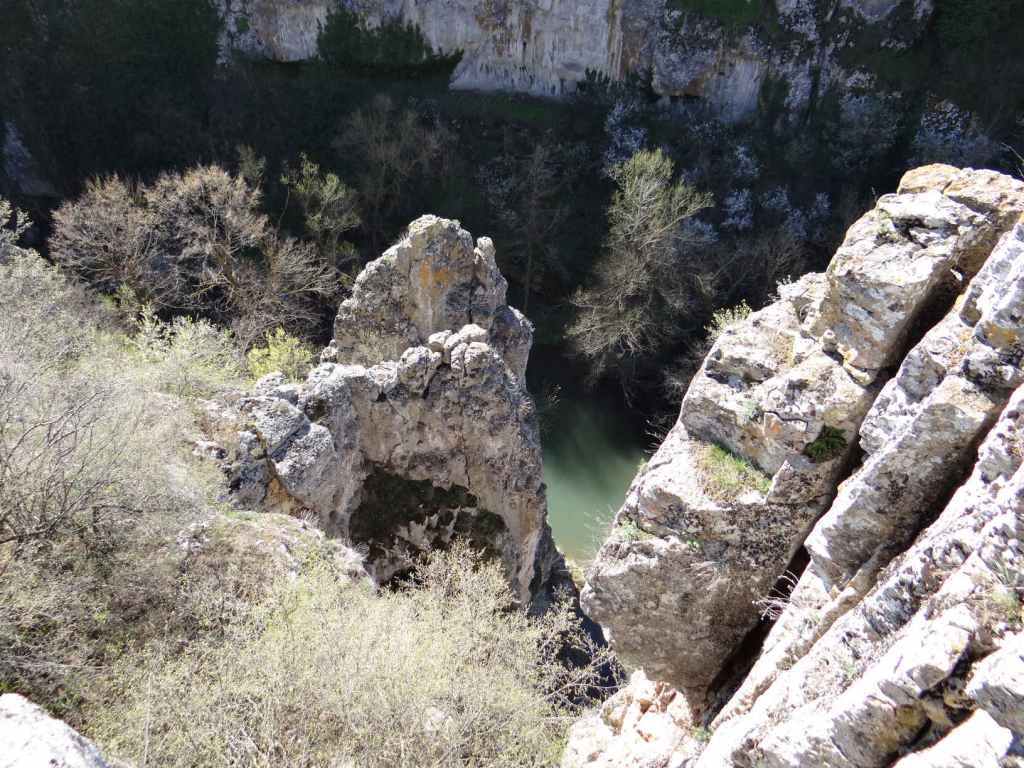
Cragged rocks.
View up the canyon.
The path divides – either branch will lead to the waterfall.
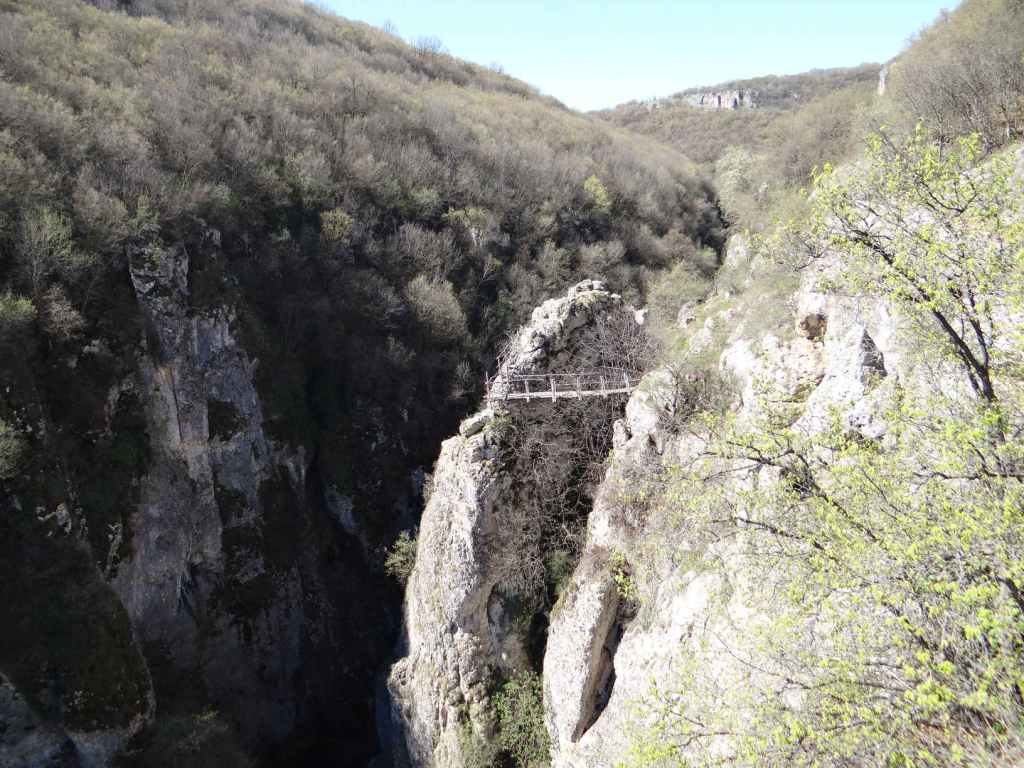
The remnants of the ecopath clinging on for dear life!
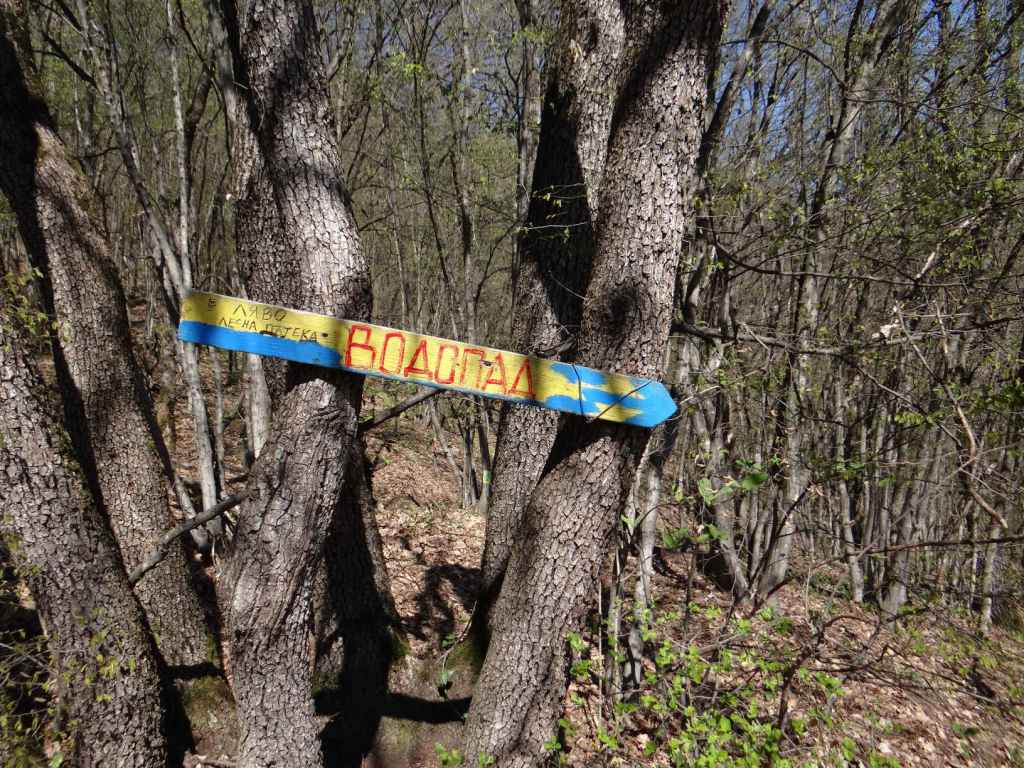
A blue sign indicates the beginning of the descent from the top of the gorge to the waterfall below.
Emen Waterfall.
Close-up of the waterfall.
Panoramic view of the waterfall.
If you decide to drive to the start of the ecopath, you need to take the dirt track on the right. Continue along the asphalt road, and you will soon reach Vishovgrad Waterfall.

Hotnitsa

There are three waterfalls north-west of Veliko Tarnovo – near the villages of Hotnitsa, Emen and Vishovgrad. Hotnitsa (‘Kaya Bunar’) is the closest. The journey takes about forty minutes, and on the way back you have the chance to visit one of the most beautiful monasteries in Bulgaria, Preobrazhenski (‘Transfiguration’) Monastery.

The waterfall is where you park the car and is undoubtedly one of the most magical and mystical waterfalls we have visited. To get there from Veliko Tarnovo, follow the brown signs for Preobrazhenski Monastery and for the ancient Roman town Nicopolis ad Istrum. These signs will take you north of Veliko Tarnovo, from where you join the E85 and head in the direction of Samovodene. This main arterial road that joins the towns of Haskovo in the south and Ruse in the north passes along the gorge formed by the river Yantra. After a short while, you will pass the turning for Preobrazhenski Monastery on your left. Keep going straight. In Samovodene, the road divides – the right fork is signposted for Ruse, the left for Resen. You take the left fork and, about a kilometre after leaving Samovodene, take the turning left signposted for the villages of Hotnitsa (5 km) and Pavlikeni.
When you arrive in the centre of Hotnitsa, the waterfall is clearly signposted on your left. The distance from the centre of Hotnitsa to the waterfall is 3 km, and it is clearly signposted all the way. The road ends at the waterfall, where you can park the car. This astonishing waterfall is on your left. The colour of the water is turquoise blue because of the karst spring and limestone rocks.

There is an ecopath (1.5 km) that takes you up the left-hand side of the waterfall, a little up the gorge above the main waterfall and back along the top of the gorge on the right. This ecopath is not for the faint-hearted! I did it carrying our dog, but there are places where you have to climb or descend steep wooden ladders and clamber over the rocks. There are several wooden bridges that take you from side to side of the river Bohot. You can literally stand at the top of the main waterfall. There are smaller waterfalls further upstream. Once you have reached the top of the gorge on the right, the path descends slowly back to the café at the bottom.

On your return to Veliko Tarnovo, don’t miss the chance to visit Preobrazhenski Monastery, which overlooks the Yantra gorge and offers views back to Veliko Tarnovo. The church was built by noted Bulgarian National Revival architect Kolyu Ficheto and painted by another nineteenth-century Bulgarian artist, Zahari Zograf (who also painted Rila and Troyan Monasteries). It has some of the most beautiful frescoes in Bulgaria, including the famous fresco ‘The Circle of Life’ on the outside of the building. Behind the church is a very large rock that missed the church by inches and has been left there to remind us of God’s providence! On the opposite side of the gorge can be seen another important monastery, the Patriarchal Monastery of the Holy Trinity.

The road from the village of Hotnitsa ends at the waterfall.
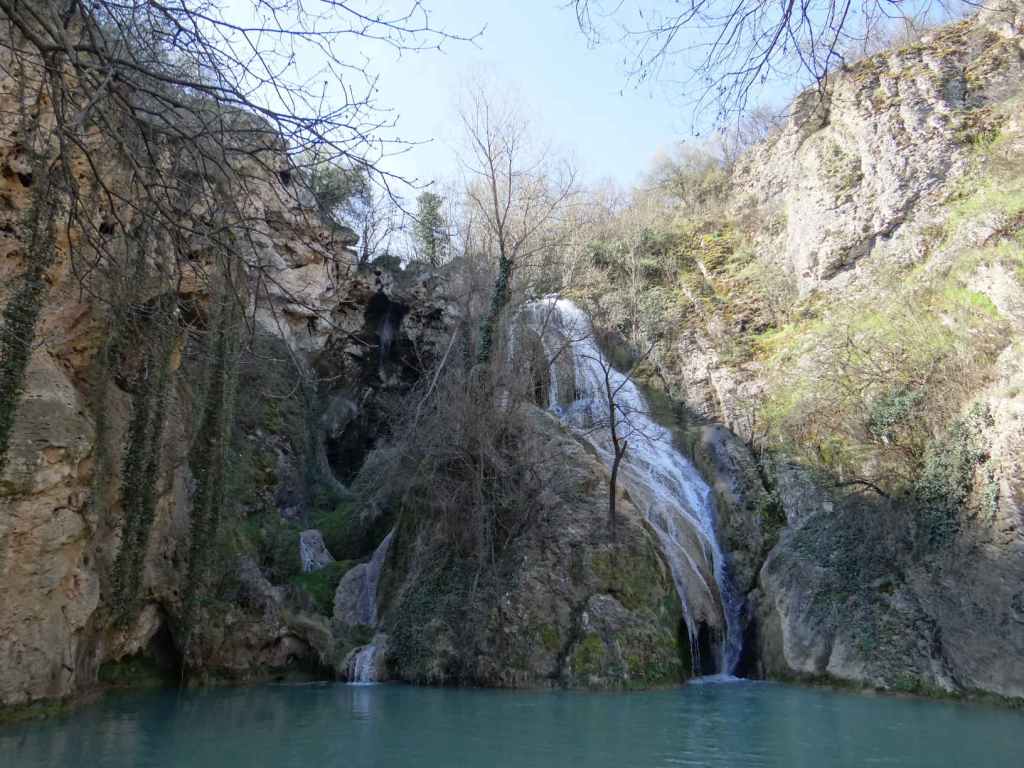
An overview of Hotnitsa Waterfall.
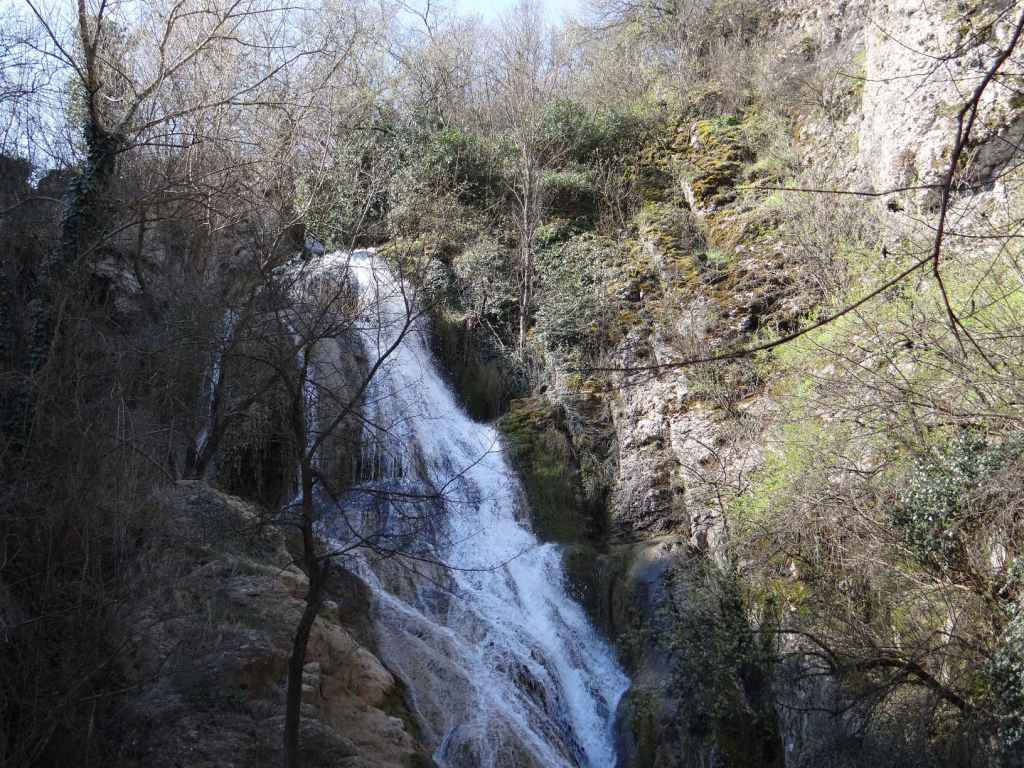
The upper part of the waterfall.
A view from the side.
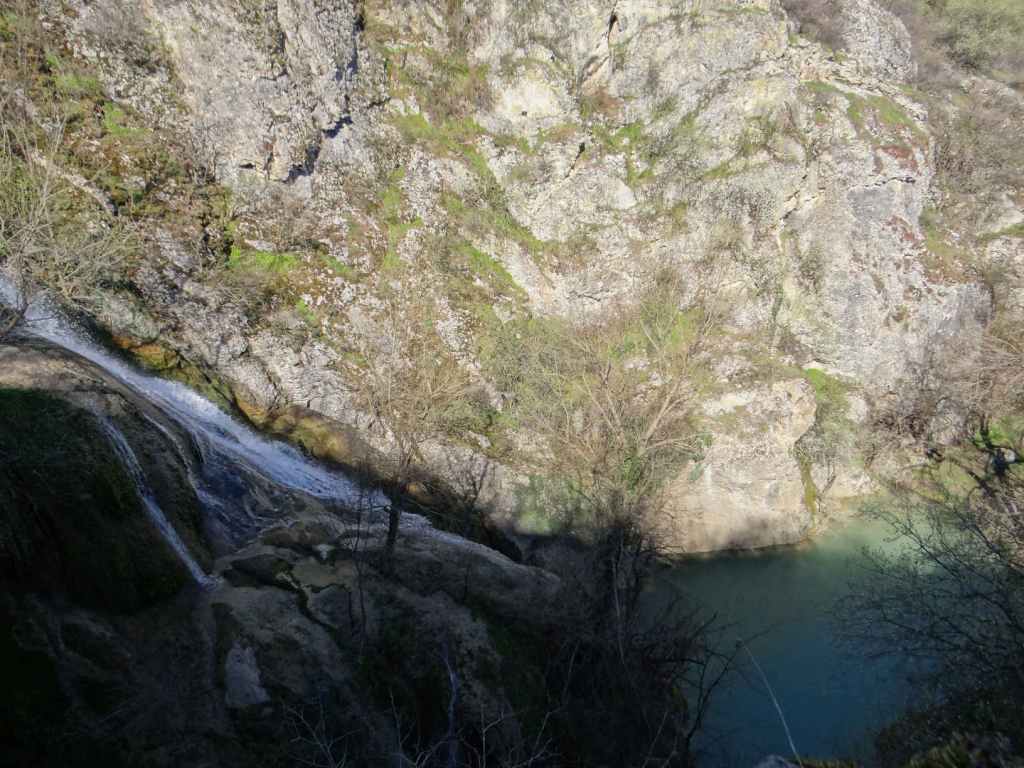
A view from the ecopath above – note the turquoise blue water!
The ecopath (no, it’s not a dungeon!).
A view back to the pool below the waterfall.
Standing at the top of the waterfall – be careful!
A smaller waterfall further upstream.
One of the wooden bridges crossing the river Bohot.
One of the steep wooden ladders.
The sun captured in the river.
A view from the top of the gorge back to the car park.
The fresco ‘The Circle of Life’ at Transfiguration Monastery.
View from Transfiguration Monastery to Veliko Tarnovo – note the plateau on the left, above the gorge, where the village of Arbanasi with its famous churches is situated.