Sapareva Banya

Further east towards Samokov, but also on the north side of Rila Mountain, is Rilska Skakavitsa – ‘Rila Waterfall’ – the highest waterfall in Rila at 70 metres. It is situated south of the spa town of Sapareva Banya, very near the famous Seven Rila Lakes, which are further south (the closest lake to the waterfall is the fifth lake, the ‘Kidney’). I have visited this waterfall at different times of year – in thick snow during March, when there were very few people about except snowboarders, and surrounded by lush vegetation in July. They make for very different experiences!

To visit this waterfall, you must take the A3 motorway that connects Sofia and the border with Greece at Kulata. You are going to go as far as Dupnitsa, a distance of 60 kilometres. To reach Dupnitsa, you must leave the motorway six kilometres before the town and follow the old national road into the town itself, past a series of car dealers. 600 metres after entering Dupnitsa, just before the OMV petrol station, turn right (it is signposted for Sapareva Banya). At the bottom, go left under the national road and over a railway. After 300 metres, turn left at the traffic lights (signposted for Samokov and Sapareva Banya), and follow this road along the north side of Rila Mountain.

After 11 kilometres, there is a turning for Sapareva Banya on the right. You will need to go through the town and continue to the resort of Panichishte. After entering the town, go right at the roundabout and follow this road, which then veers left. At the stop sign, take the road diagonally opposite and continue uphill. At another stop sign, turn left. You are now on the road to Panichishte, which is ten kilometres from Sapareva Banya. On entering Panichishte, ignore the hotel signposts pointing left. Continue on the same road, and you will pass a tourist information centre on the left. Keep going for another 3.8 kilometres, until you reach a turning on the right that goes uphill to a place called Zeleni Preslap. You need to park the car here and continue on foot.

The walk is 11.5 kilometres, there and back, and in the snow in March it took us five hours. Factoring in the driving, that meant a day trip from Sofia of nine hours. The elevation gain is 475 metres, and there is quite a steep climb between Zeleni Preslap and Skakavitsa Hut, as you go through the forest, but the waterfall is eerily magical and well worth the effort. Just the fact you are a short distance from the Seven Rila Lakes is enthralling.

After 850 metres, you reach the rest house at Zeleni Preslap. Keep the rest house on your right and take the path that heads due south, to the left of some information boards. Continue on this path, with trees on either side, for 1.5 kilometres, then take the path on the right, signposted for Skakavitsa Hut and Kabul Peak. This path climbs gently at first, then more steeply. After two kilometres, a path on the right diverges to Kabul Peak. Keep left, and in 150 metres you will reach Skakavitsa Hut. The hut is open for refreshments in the summer, but not in March, when the ground is covered in thick snow and the only creatures we came across were a crestfallen guard dog and a large, standing wooden bear. The path to the waterfall is another 1.5 kilometres further south and takes about 40 minutes (in the snow). There are wonderful views of the waterfall and surrounding cliff faces as you approach.

The road from Panichishte continues to Pionerska Hut, where there is a controversial lift that makes it much easier for daytrippers to access the Lakes. Purists, and I’m inclined to agree with them, would say you should do the walk on foot, but no doubt the lift serves a purpose. The name of the mountain, Rila, comes from a Thracian word meaning ‘watery’. You will notice this when you are on the mountain – you often seem to be stepping in water. The Galician word for ‘kidney’ is ril – it seems to me that Rila, the main water divide separating the Black Sea and the Aegean Sea drainage systems, functions as Bulgaria’s kidney, and indeed the waterfall resembles a kidney, as does the glacial lake nearest to it.
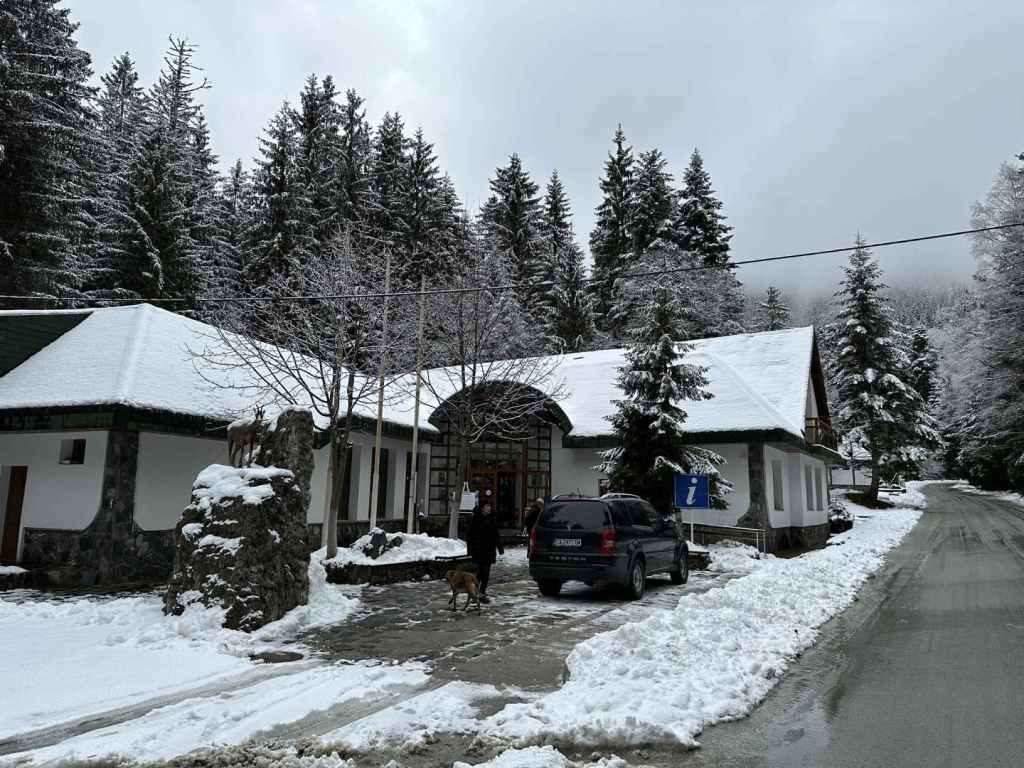
The tourist information centre in Panichishte. Continue for another 3.8 kilometres, until you reach the turning for Zeleni Preslap.
The turning for Zeleni Preslap. The signposts are rather confusing, but there is one for Skakavitsa Hut.
The rest house at Zeleni Preslap.
After passing the rest house on your right, take the path between the trees heading due south.
After 1.5 kilometres, a path on the right, signposted for Skakavitsa Hut and Kabul Peak, climbs through the forest.
The path in the forest.
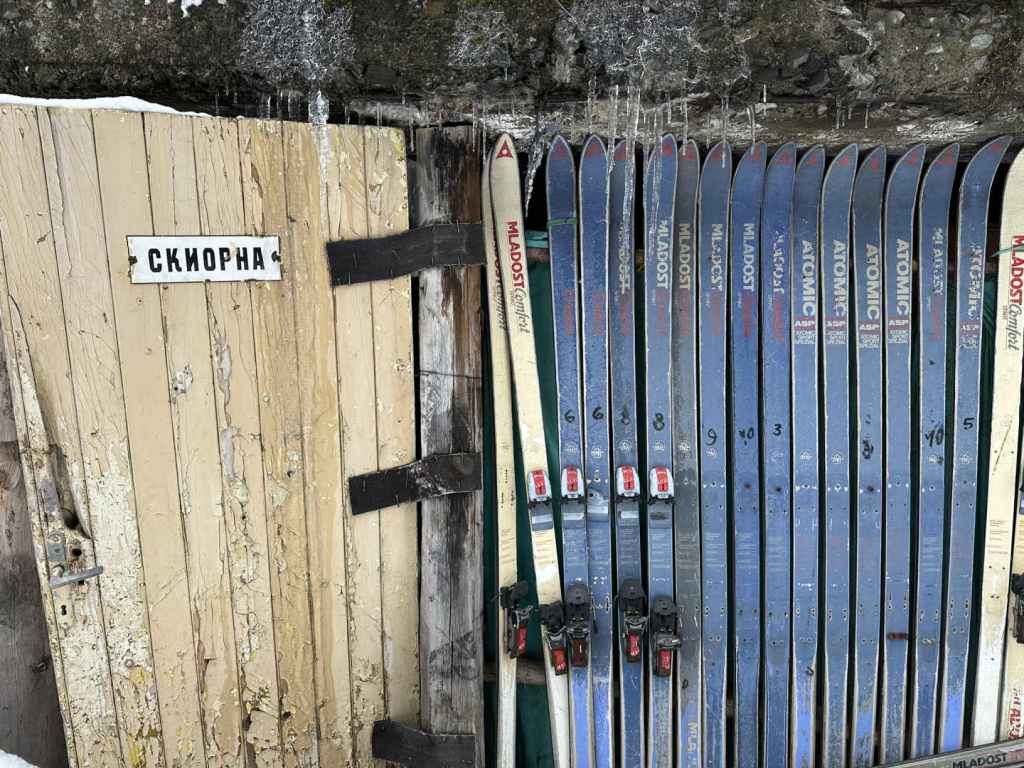
Skis at Skakavitsa Hut.
Skakavitsa Hut.
The waterfall is forty minutes further south.
As you approach the waterfall, it is visible on the far left (the dark patch shaped like a kidney!).
Rilska Skakavitsa.
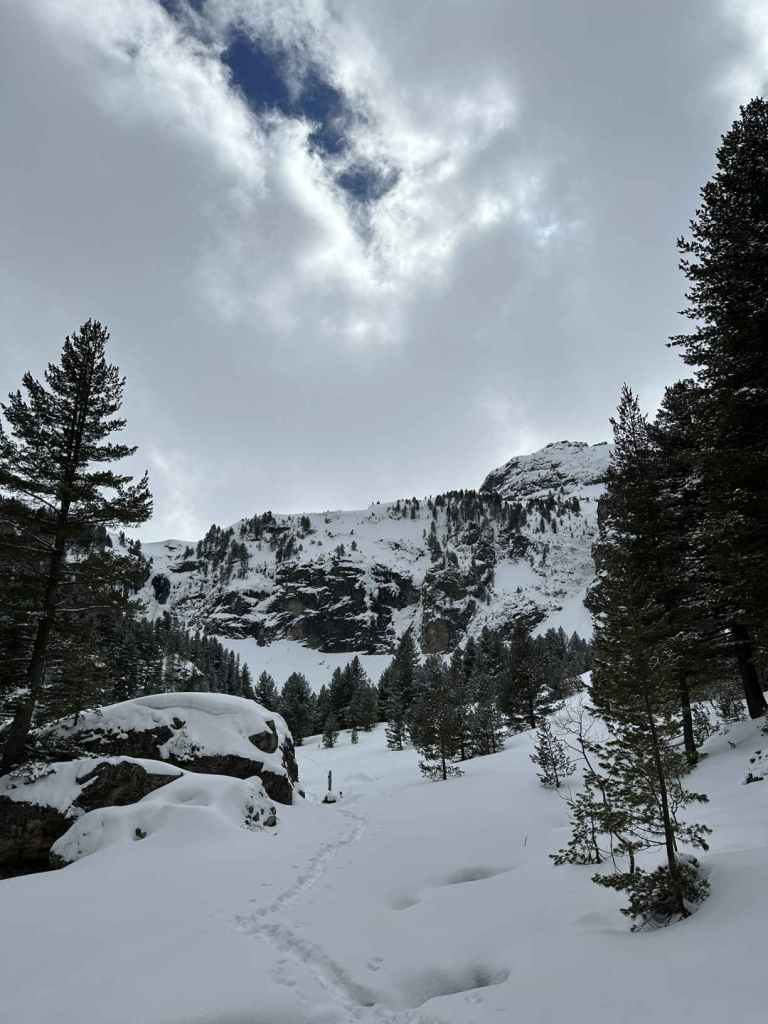
The descent from 1972 m., in the snow.
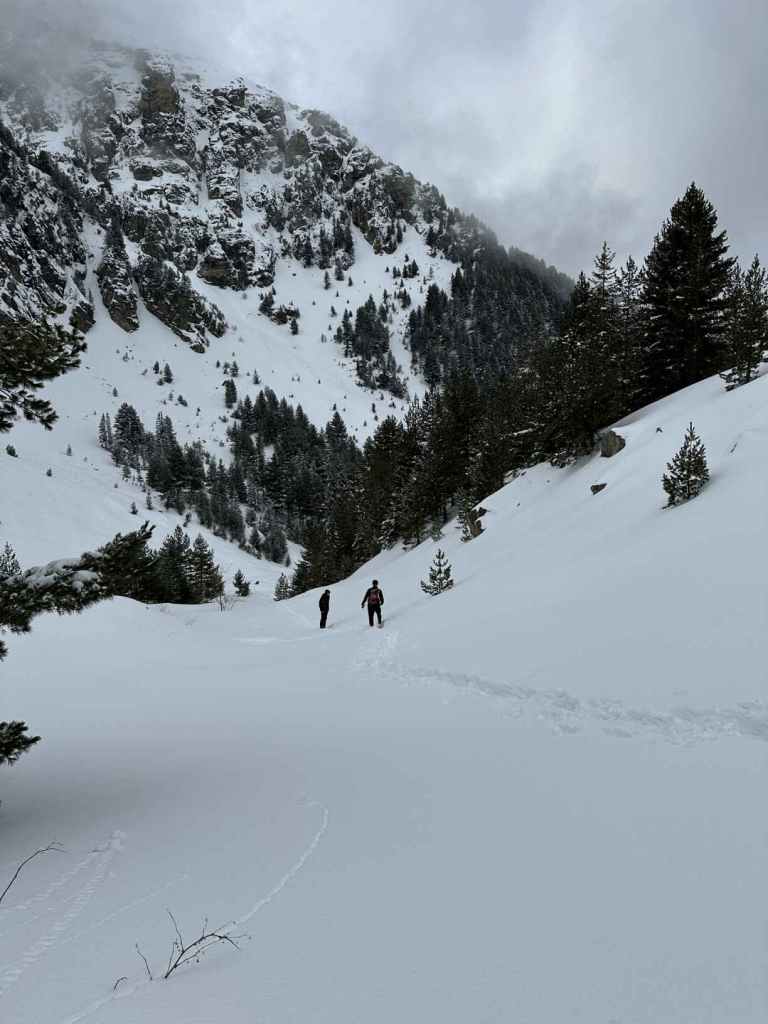
The walk to the waterfall, with the Seven Rila Lakes further south.

Ovchartsi

Undoubtedly one of the most beautiful waterfalls in Bulgaria, Ovchartsi Waterfall is named after a Bulgarian maiden, Goritsa, who lived in the local village and was betrothed to a shepherd called Yovitsa. This was during the time of Turkish slavery, Ottoman rule in Bulgaria during the fourteenth-nineteenth centuries. The Turkish overlord or bey was struck by Goritsa’s beauty (it must have been a slightly terrifying time to be beautiful) and ordered his servants to fetch her for him. Goritsa took to the hills, in search of Yovitsa, who was watching his flocks, but the servants reached her before she could get to him, so she threw herself off the cliff. Ever since then, the waterfall (39 metres) and the river have borne her name.

The waterfall is above the village of Ovchartsi on the northern slopes of Rila Mountain. To get there from Sofia is about an hour and a quarter by car. You take the motorway to Greece (Kulata) and leave the motorway at the signs for Dupnitsa. You actually leave the motorway seven kilometres before Dupnitsa and follow the old road into Dupnitsa, past a succession of second-hand car dealers. On entering Dupnitsa, you take a right just before the OMV petrol station, signposted Sapareva Banya. You then follow this road, ignore a left turn that is signposted Plovdiv and Samokov and continue to the next set of lights, where you turn left for Sapareva Banya and Panichishte. If you take the road for Plovdiv and Samokov, you will have a very picturesque ride alongside the northern slopes of Rila, but you will not be able to reach the villages that nestle on these slopes. This is why you continue to the next set of lights and turn left here. This road takes you through the villages of Samoranovo and Resilovo to Ovchartsi.

In Ovchartsi, head to the central square, where there is a town hall and a children’s playground. Turn right on the near side of the square and go straight up the steep road in front of you, which bears right at the top, leading to a fountain and a place to park. From here, continue on foot. There is an ecopath to the waterfall, and it only takes about fifteen minutes to get there. Admire the view. When we went in February, there was a lot of ice, which made the path very slippery and people were having difficulty going up and down (with the inevitable laughter).

You can also make your way down to the river below the waterfall, but to do this you have to leave the path and climb down a slightly steep slope. Heading upstream, you will come to the lower part of the waterfall, with a wonderful view of the rocks above and trees silhouetted against the light.

Between Resilovo and Ovchartsi is the Resilovo Convent of the Holy Protection. It is a short drive from the road. The nature is beautiful, and the church has stunning frescoes. You can light a candle for your loved ones and enjoy the view back to Sofia!

The road into Dupnitsa, flanked by second-hand car dealers. Rila Mountain is right in front of you.
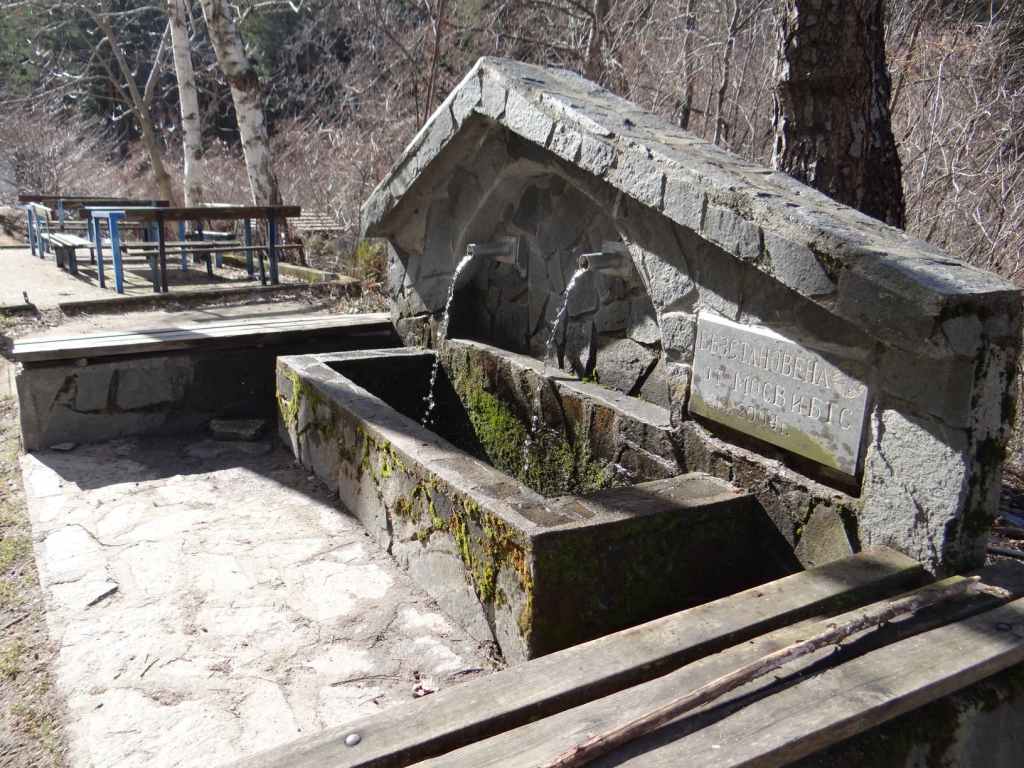
The fountain where you can park the car.
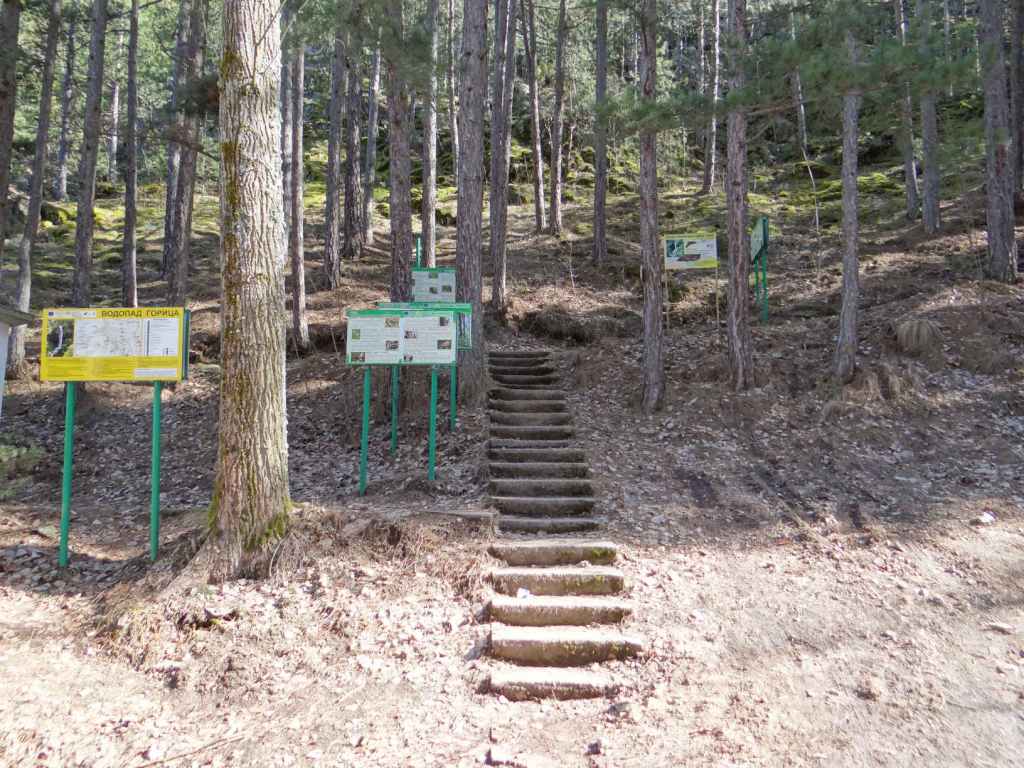
The steps at the start of the ecopath, with information boards in Bulgarian and English.
A peak in the distance.
A second, longer flight of steps.
With a wooden bridge at the top, leading to the waterfall.
Ovchartsi Waterfall.
The upper waterfall.
A sign with the story of Goritsa (Goritza).
The lower waterfall, seen from above. From here, the rock resembles the head of a young woman.
Beautiful February cloud formations.
The ice rink!
The river below the waterfall.
The lower waterfall. The rock now resembles the head of an old woman.
Directly above the rock, note the figure in white against a black background that seems to be jumping, thus confirming the legend.
The whole waterfall, seen from below.
Ovchartsi Town Hall (which has pictures of the waterfall).
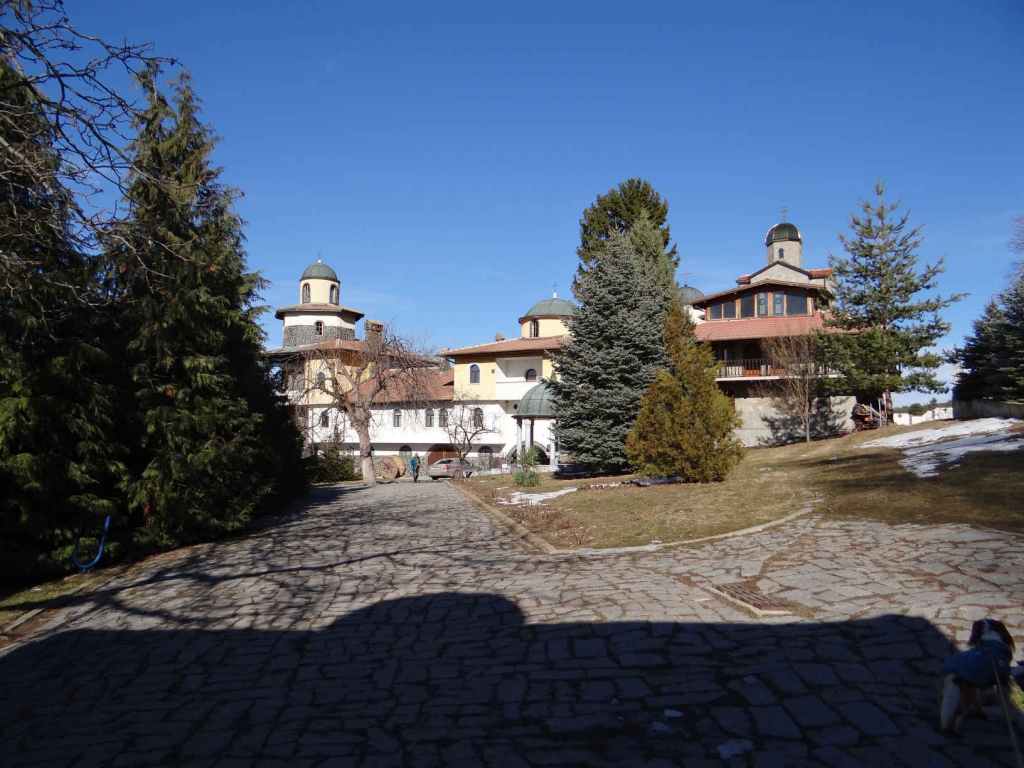
Resilovo Convent of the Holy Protection.