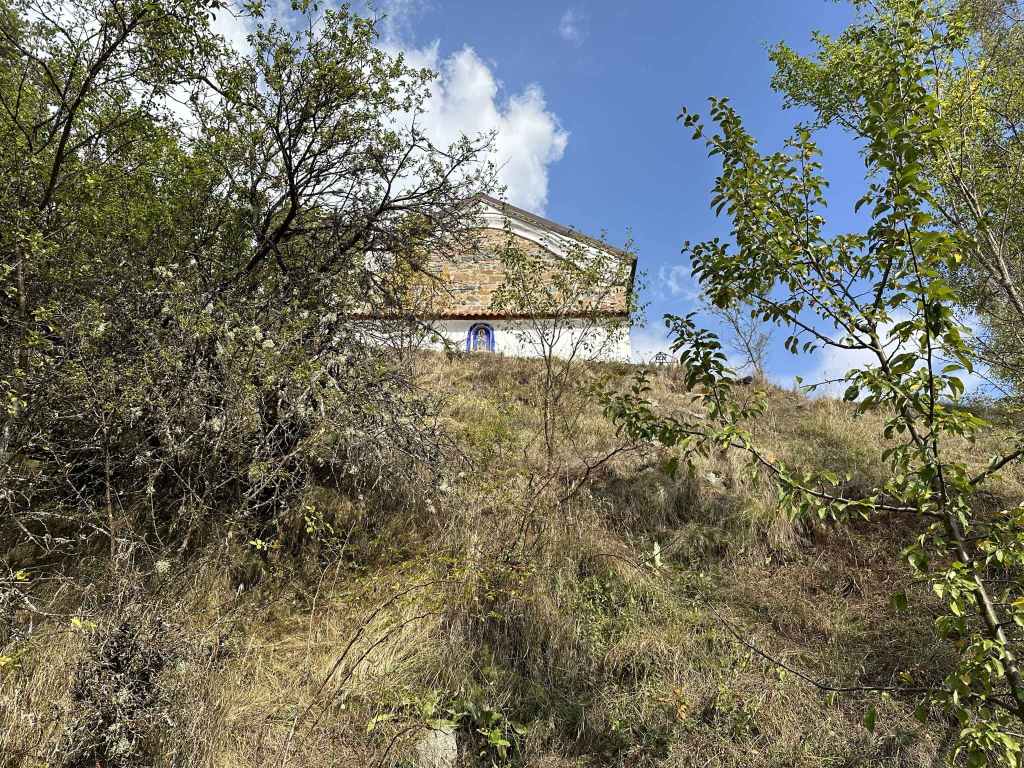
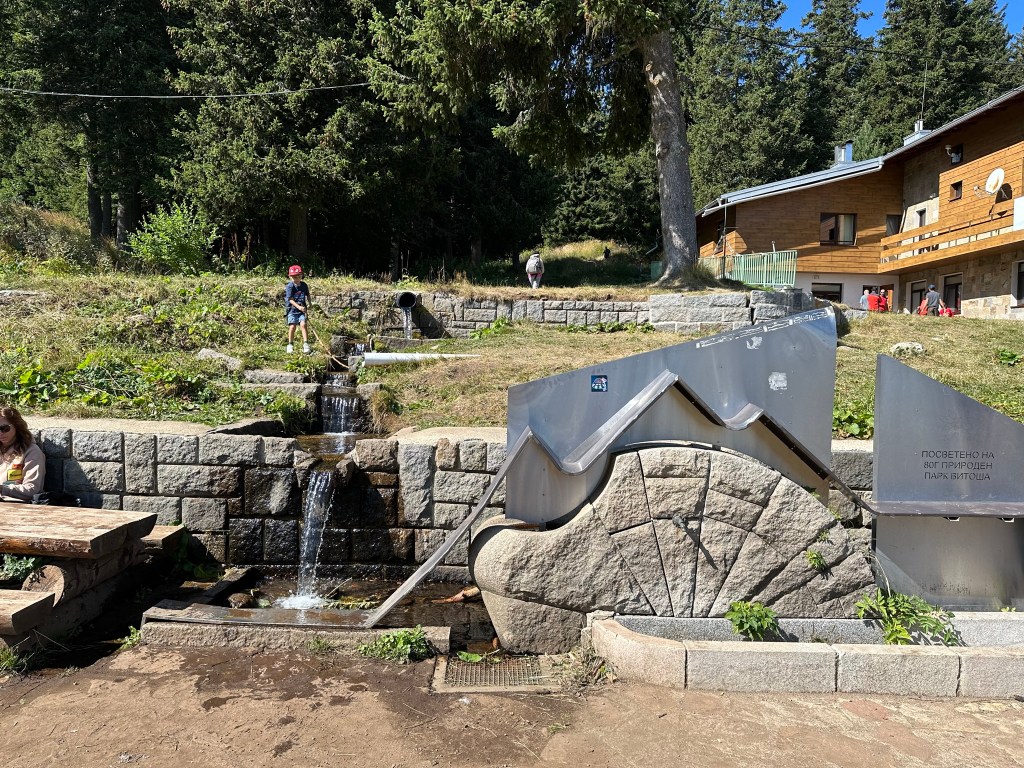
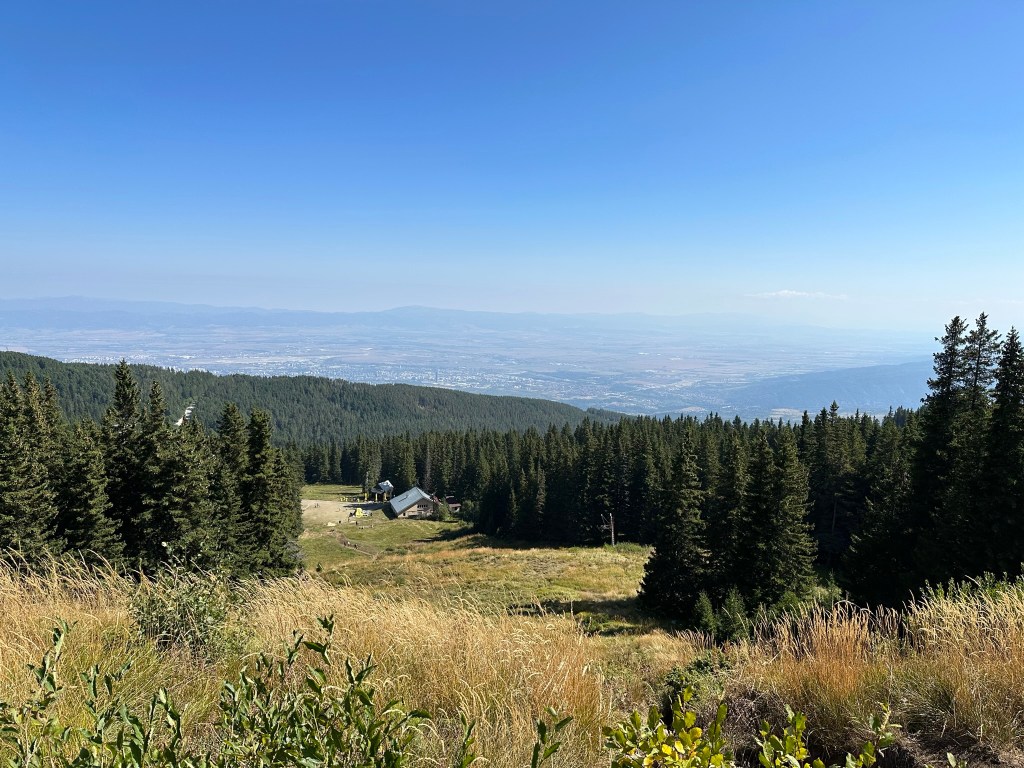
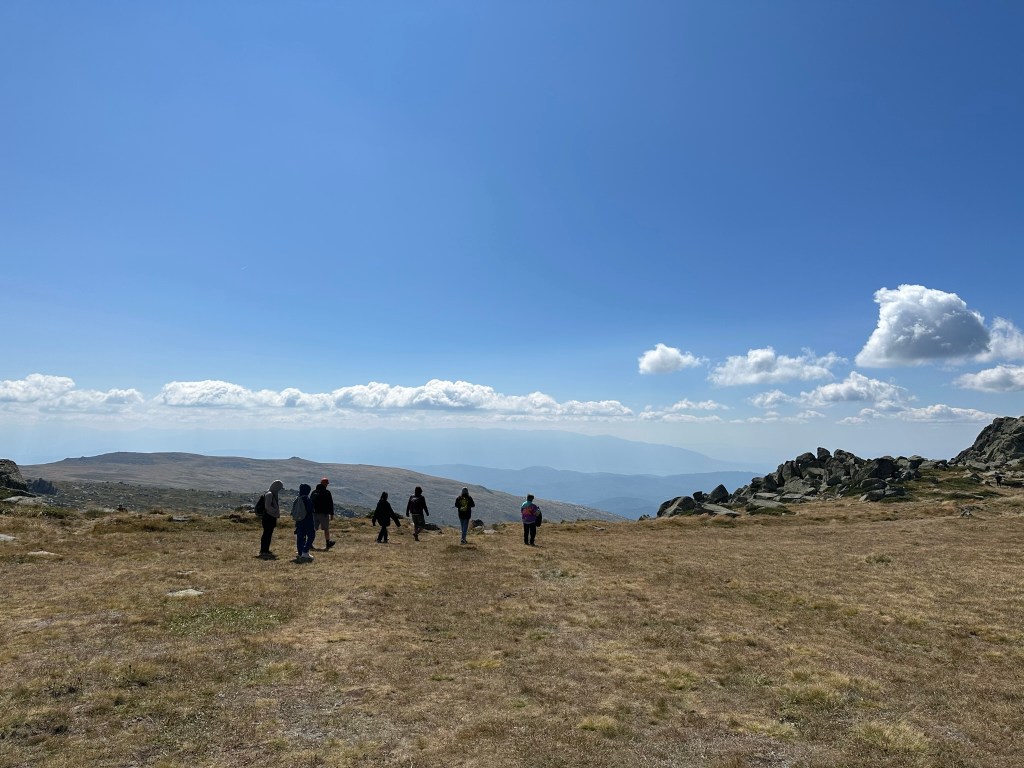
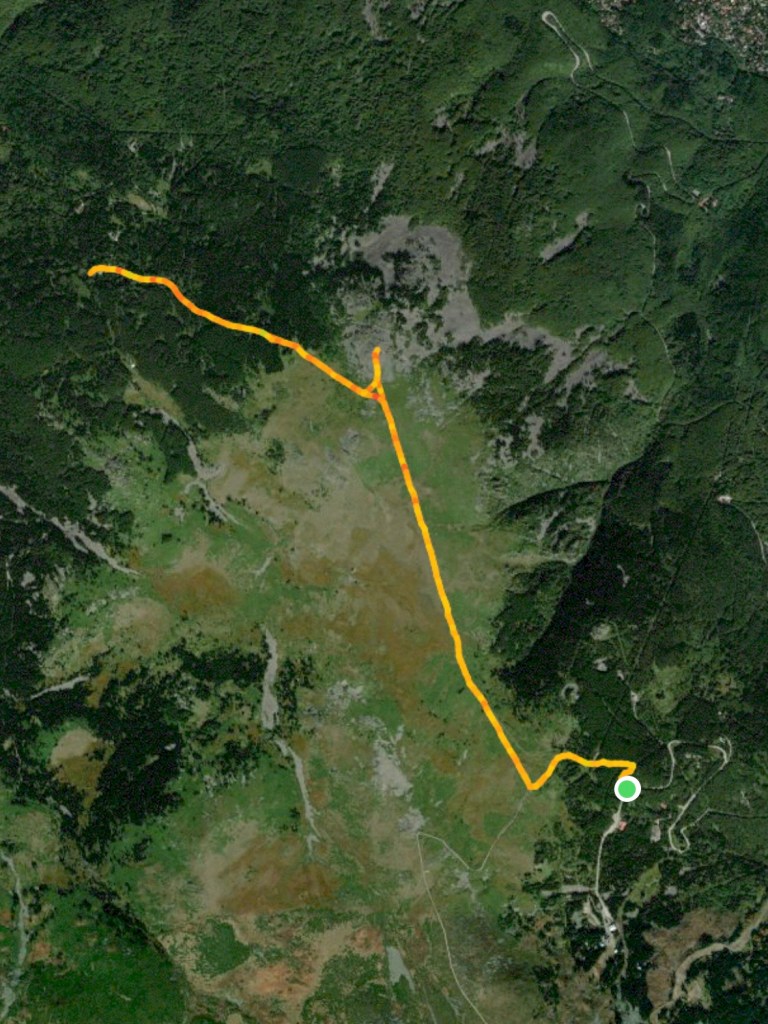
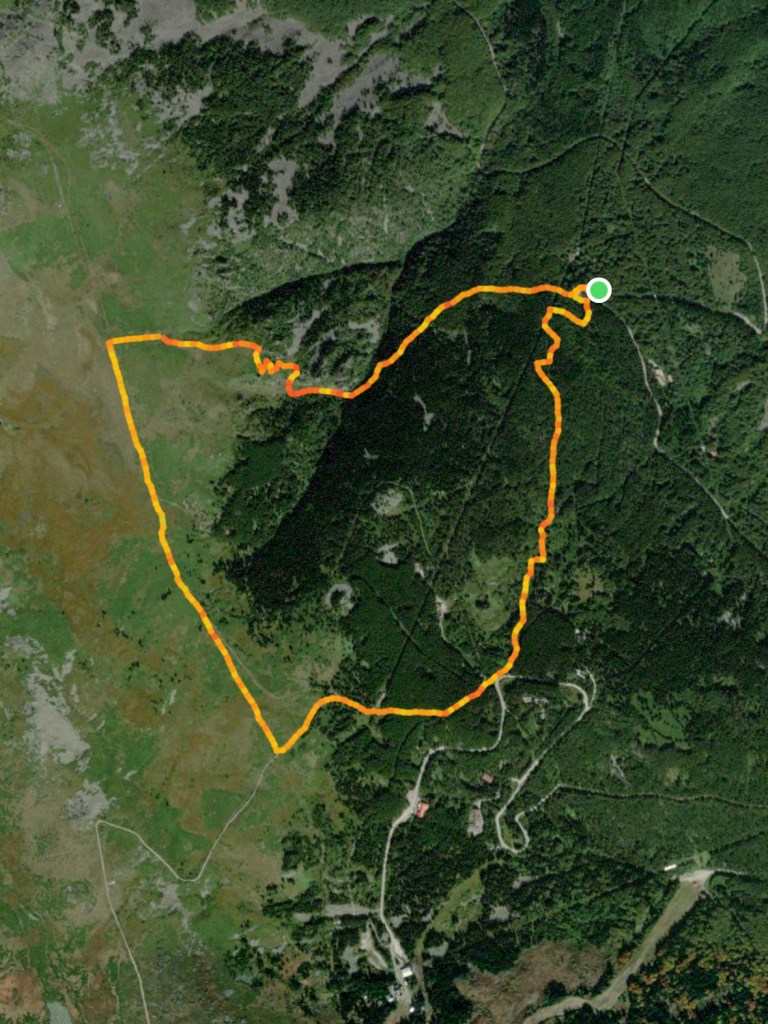
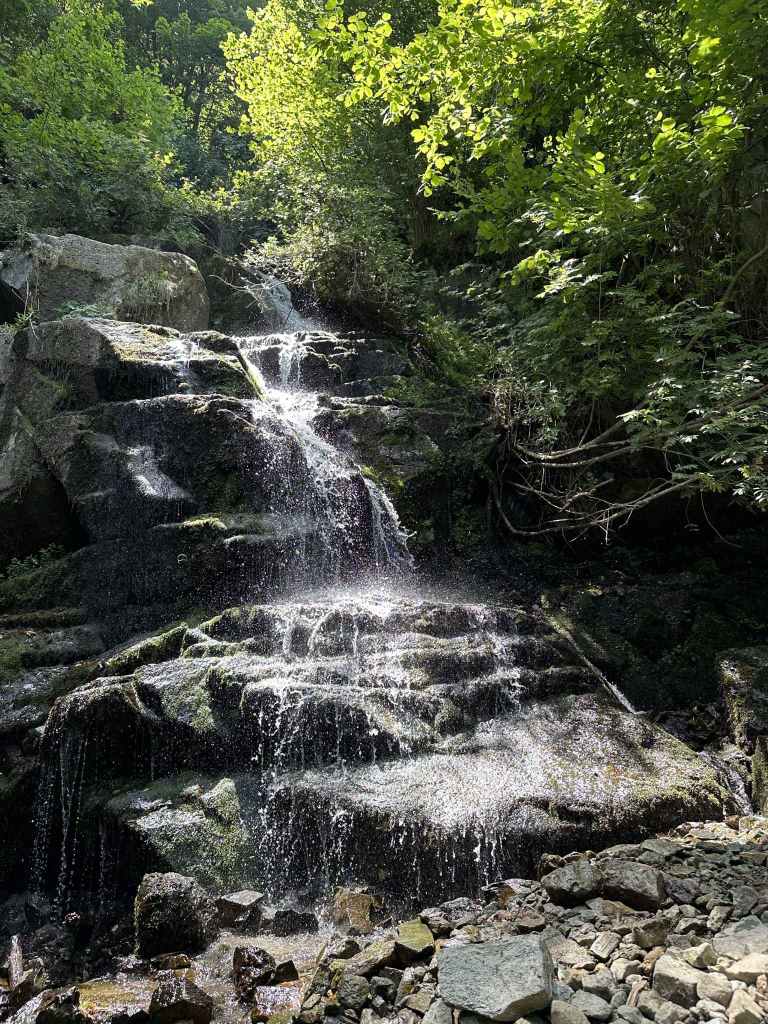
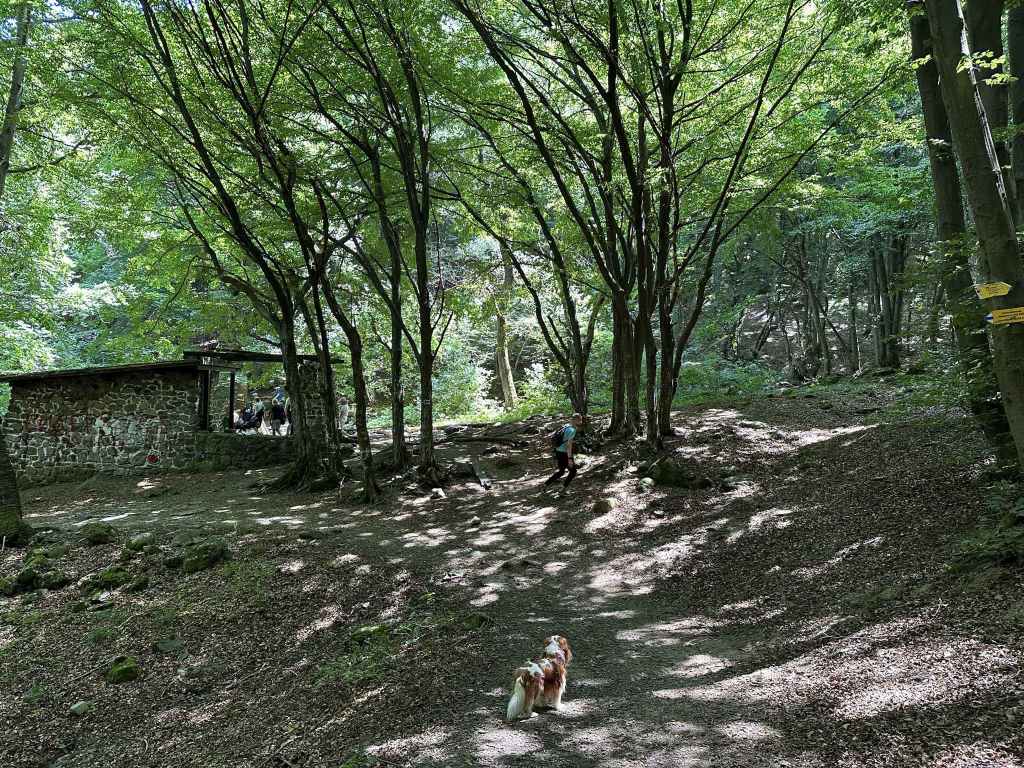
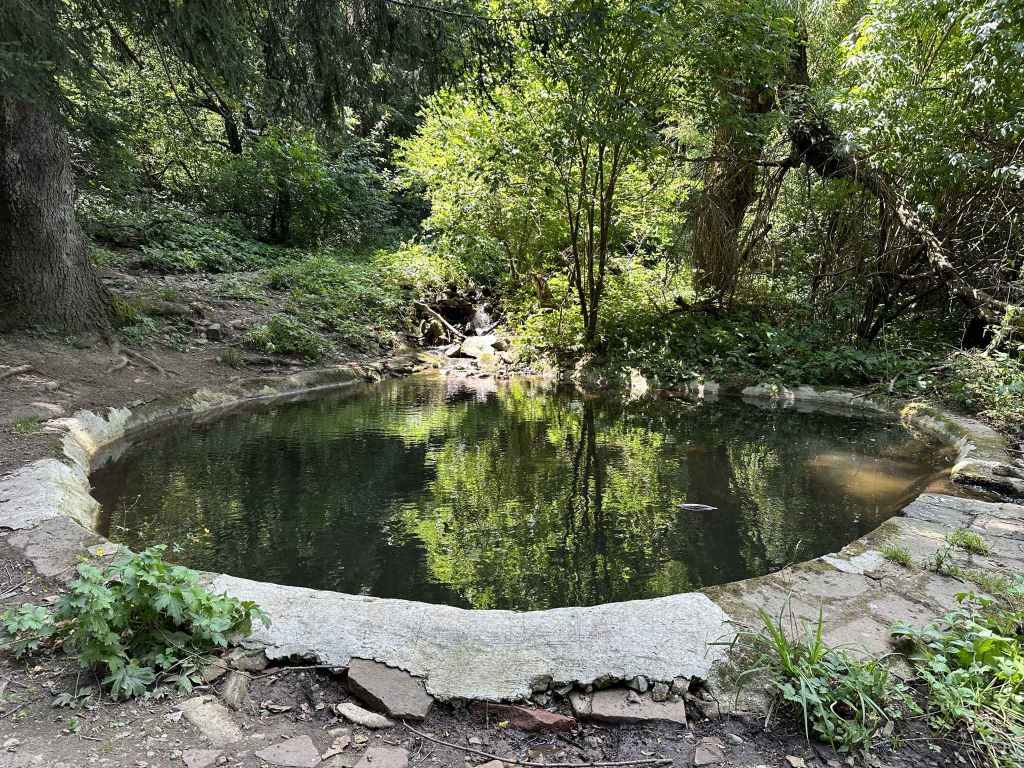
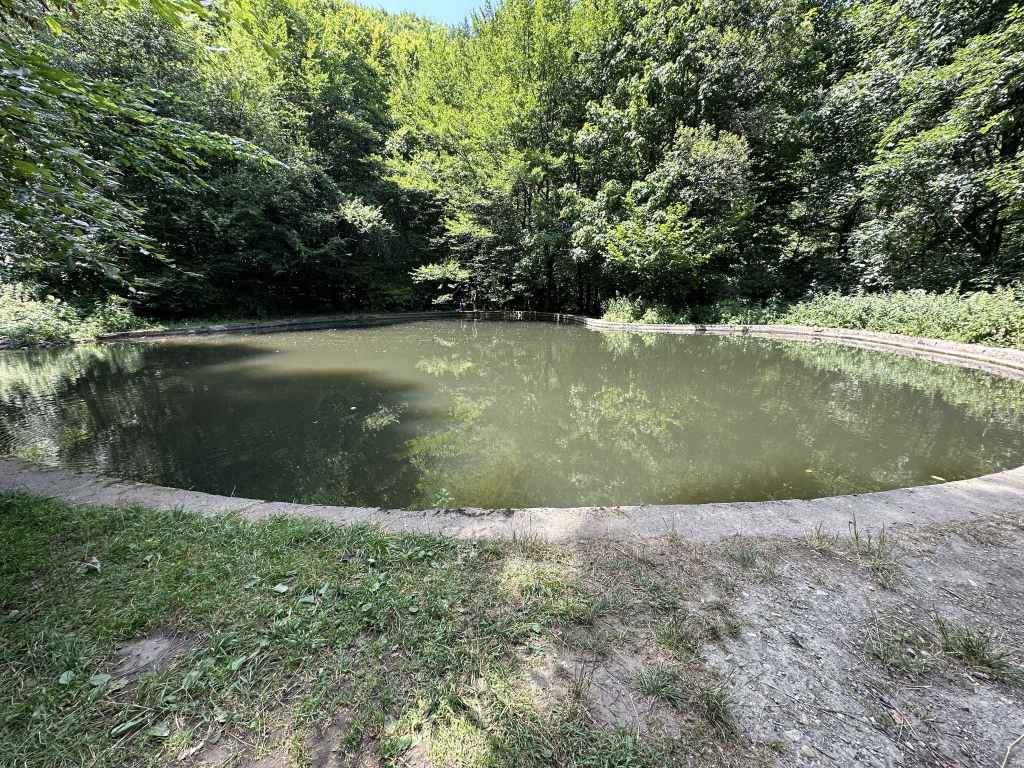
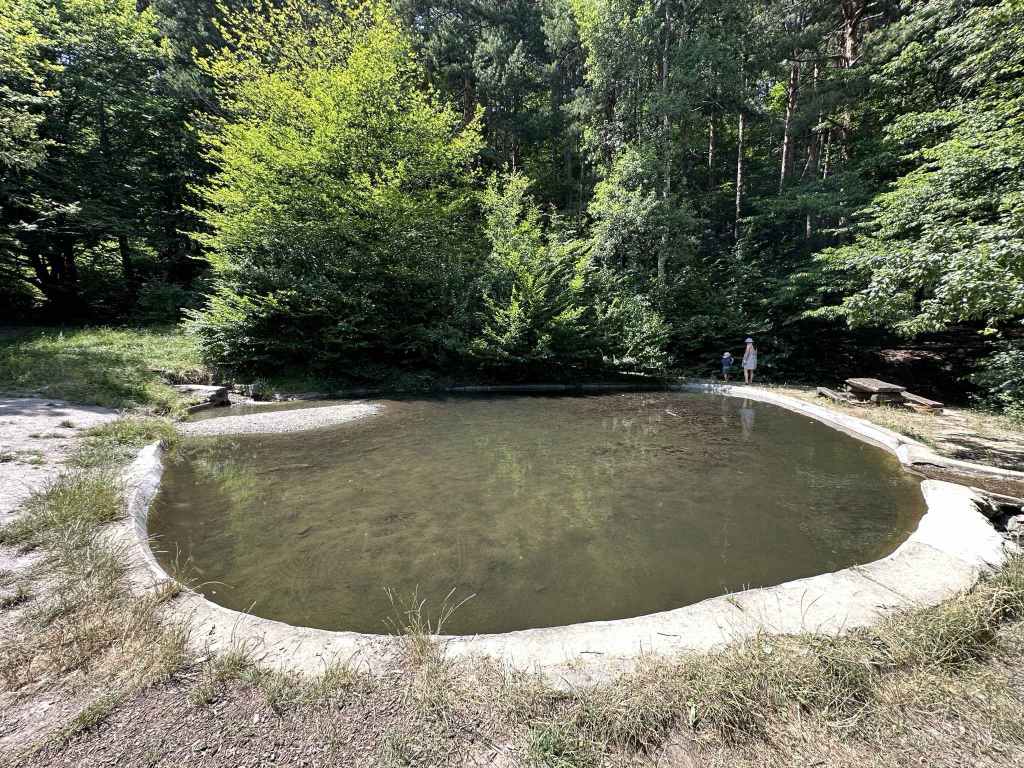
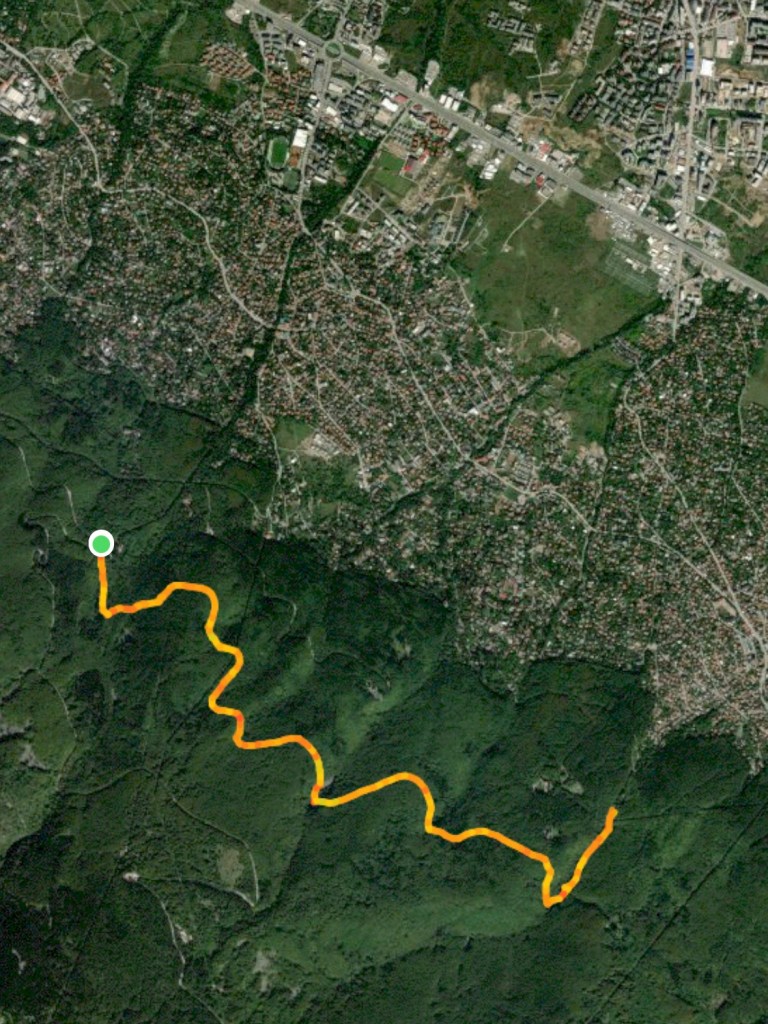
Bay Krastyo – Goli Vrah – Kominite – Bay Krastyo

Starting Coordinates: 42.60455, 23.30066

Distance: 7.7 km

Elevation Gain: 450 m

Time: 3½ hours

Difficulty: moderate-hard

Transport: by car, or by bus no. 66 to the stop for Bay Krastyo


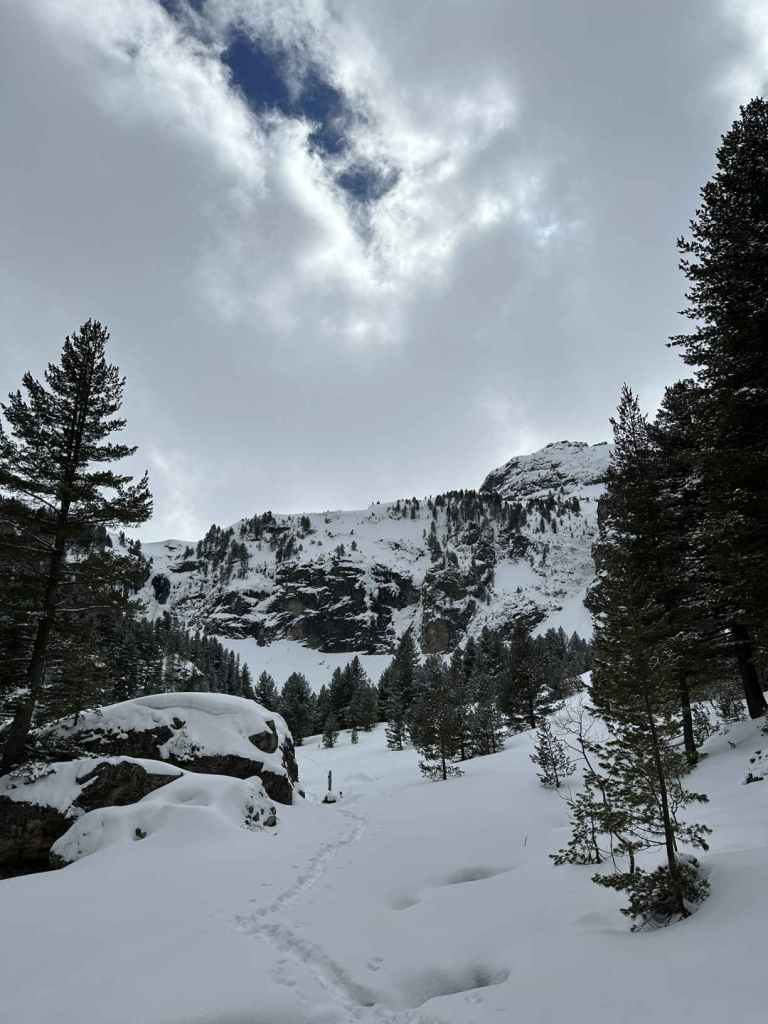
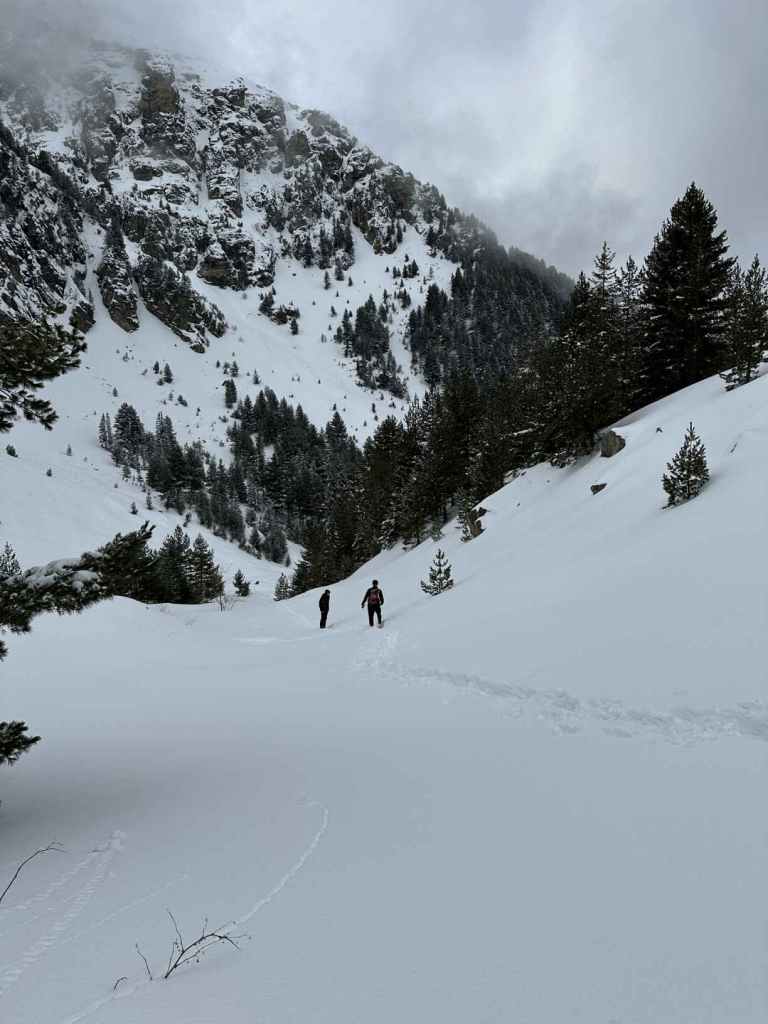
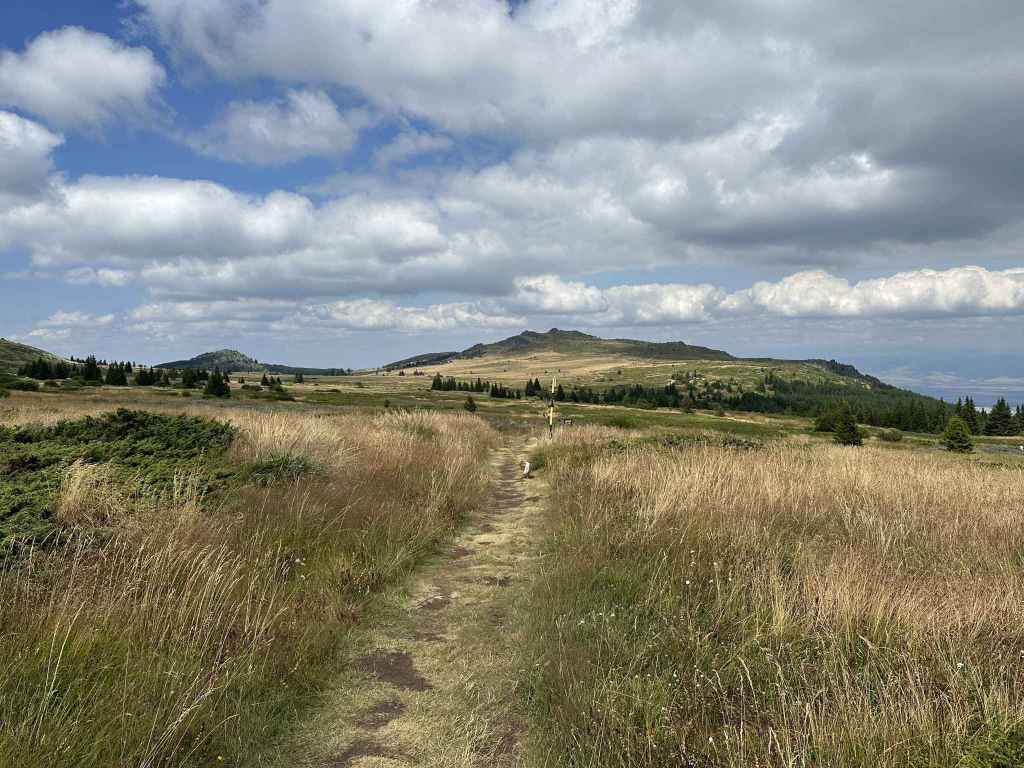
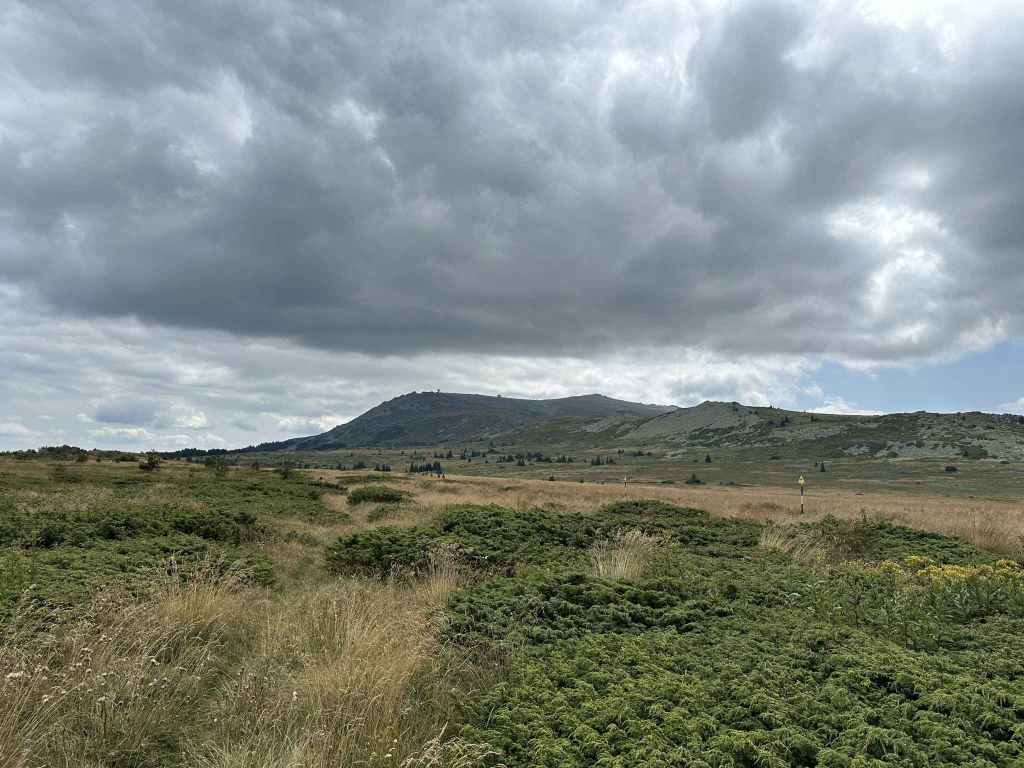
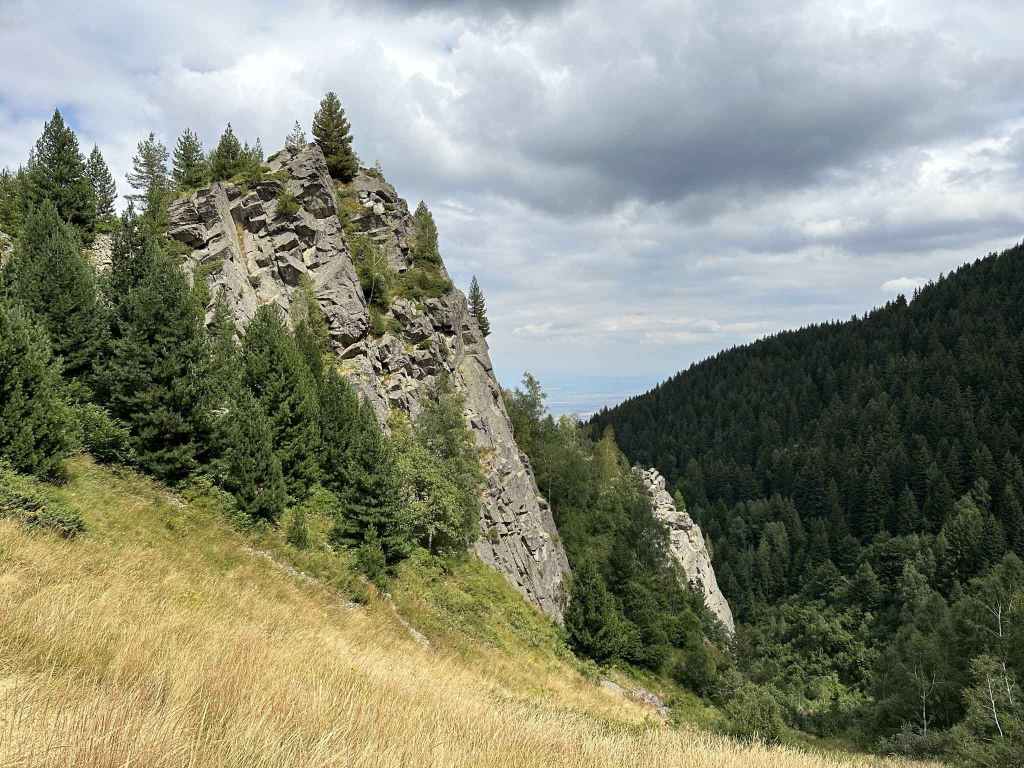
This is one of the higher routes on Vitosha, taking you to the peat reserve between Goli Vrah, the top of the Dragalevtsi chair lift, and Ushite, meaning “The Ears”, which is the part of the mountain most easily seen from Sofia. It is good to do it in reasonably fair weather. I have marked it “moderate-hard” because of the steep descent past the rock climbing area known as Kominite (“The Chimneys”), but the distance is comparable with other walks.

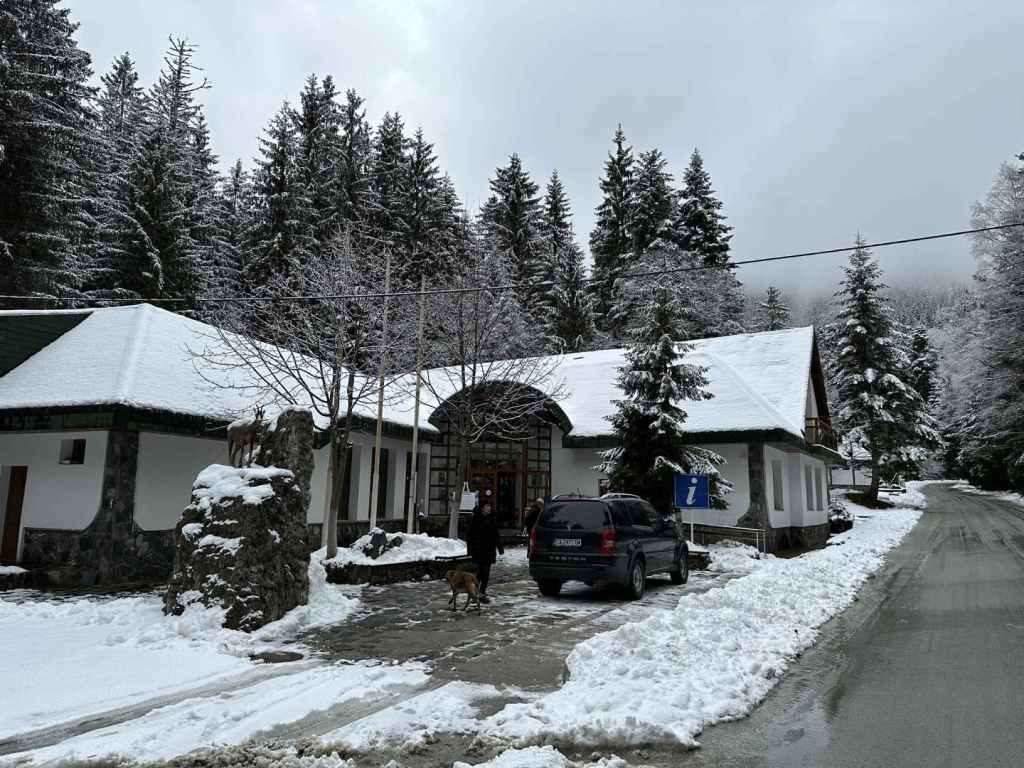
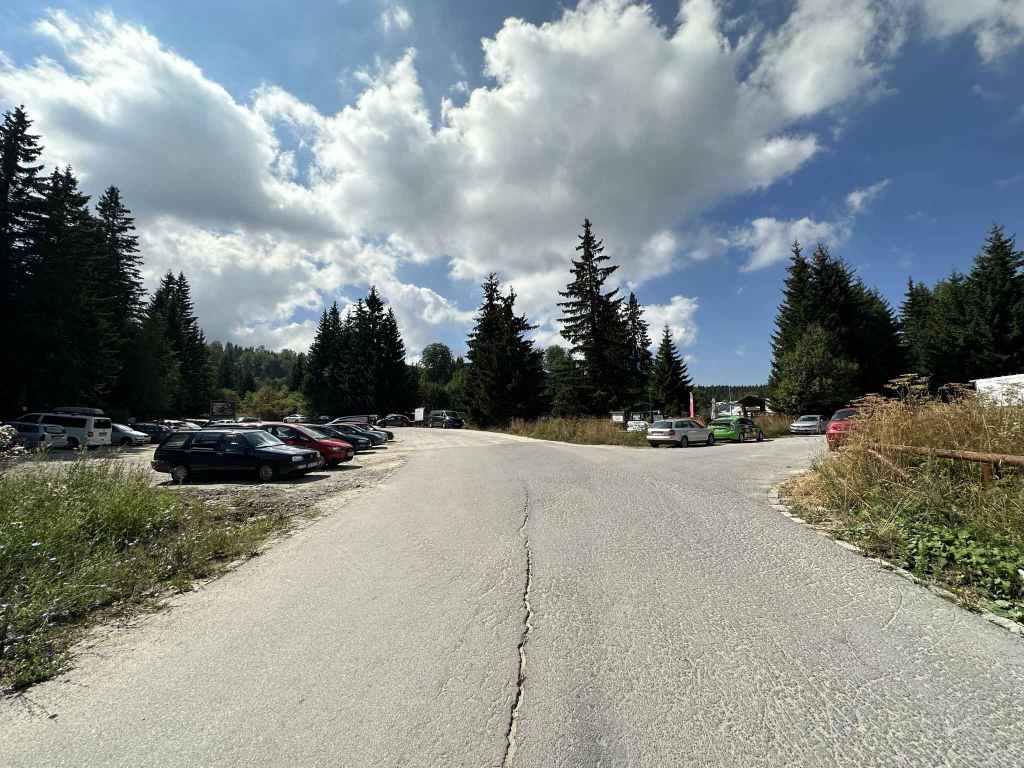
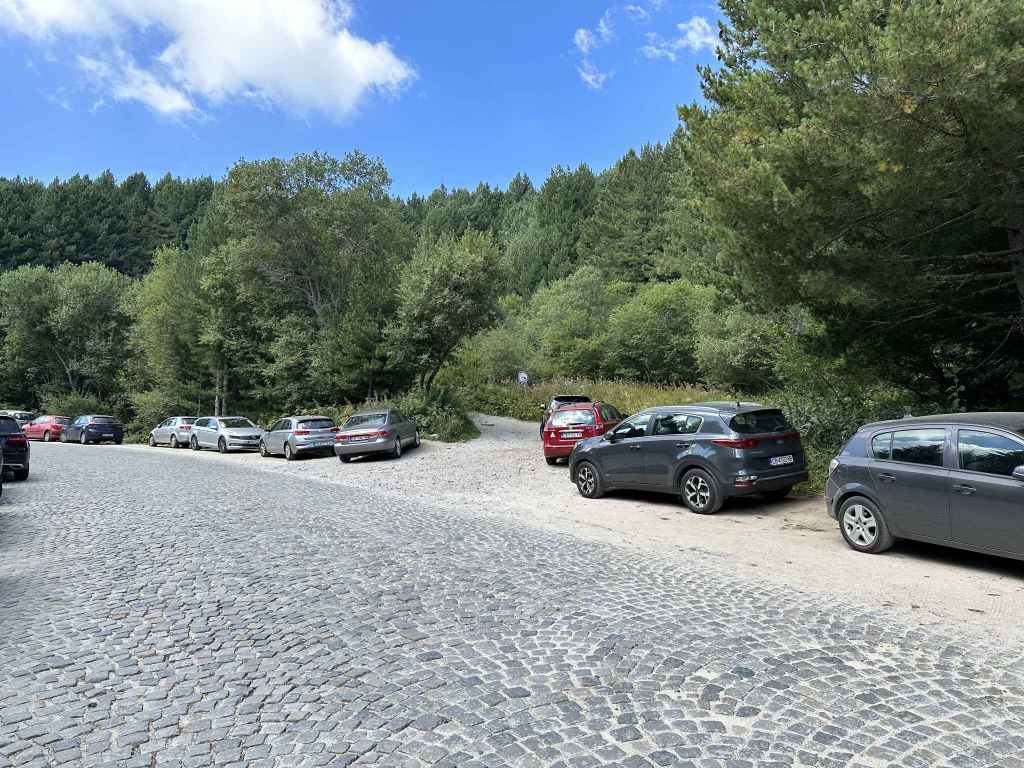
The starting point is the same as for the walk from Bay Krastyo to Kikish. You take the road that goes up the mountain from Dragalevtsi or bus no. 66. From the cobbled square of Dragalevtsi, you take the road in the far corner and carry on driving up the mountain for 9 km, ignoring the turning on the left for “Vodenitsata” restaurant. Stop at the slip road for Bay Krastyo, the middle station on the currently defunct Dragalevtsi chair lift, or get off at the penultimate stop of the 66 bus route.

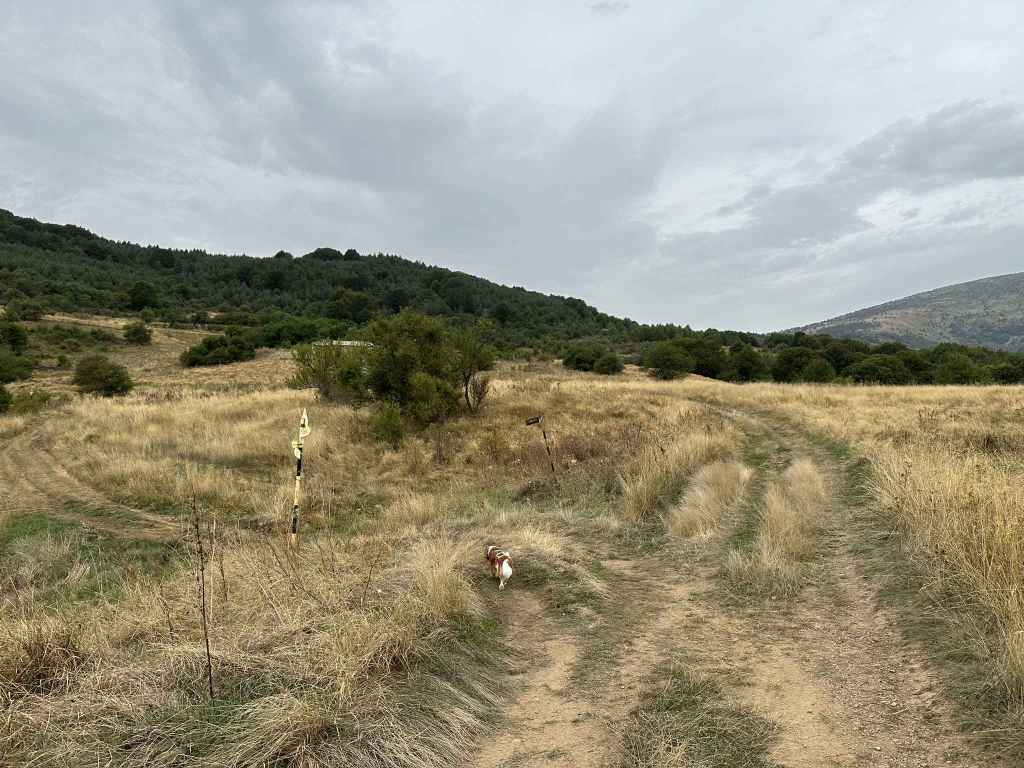
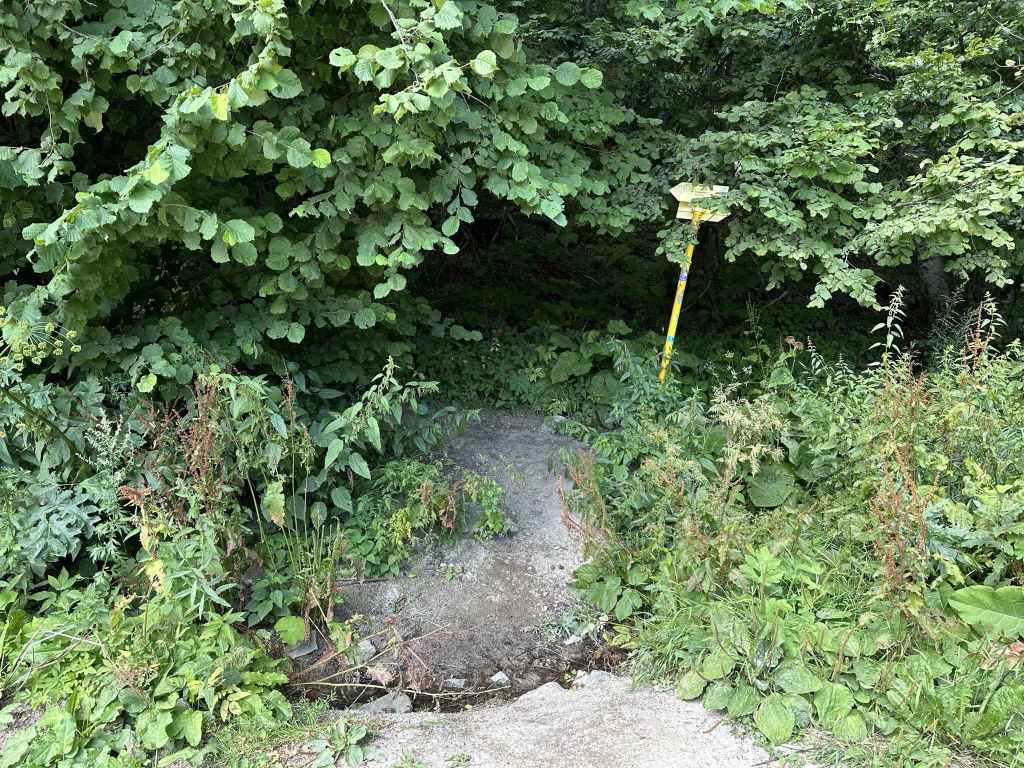
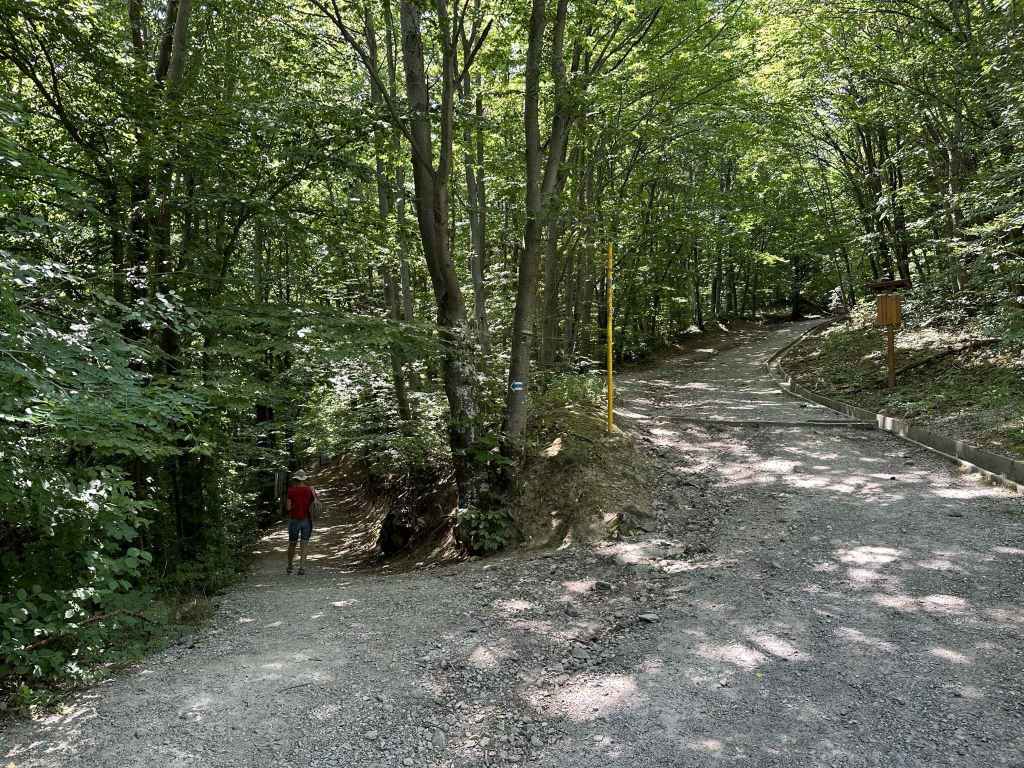
Instead of walking down the slip road towards the station, however, you need to continue up the main road. After 80 metres, you will see a path signposted for Kominite. This is the path you will come back on. Continue around the corner for another 80 metres, and  you will come to a second path on your right, the E4, signposted for Aleko and Cherni Vrah. This is the path you want, which begins on the other side of a hut inside the bend of the road with large heaps of what looks like cement.

This path will take you to the top of the chair lift, Goli Vrah. It is a little confusing to begin with because on the left there is a bike trail. Some steps have been built with logs. It’s a good idea to follow these steps, and at the top turn right to continue up the mountain. In ten minutes, you will pass under the chair lift, but then the path will double back on itself, forming a zigzag and taking you back under the chair lift. It does this a second time. On returning under the chair lift for a second time, continue straight. Then, confusingly, the path again zigzags twice, not as far as the chair lift this time (the chair lift should end up on your right), before finally deciding to climb the mountain and leave the chair lift behind. If you are in any doubt, simply follow the red and black markers.

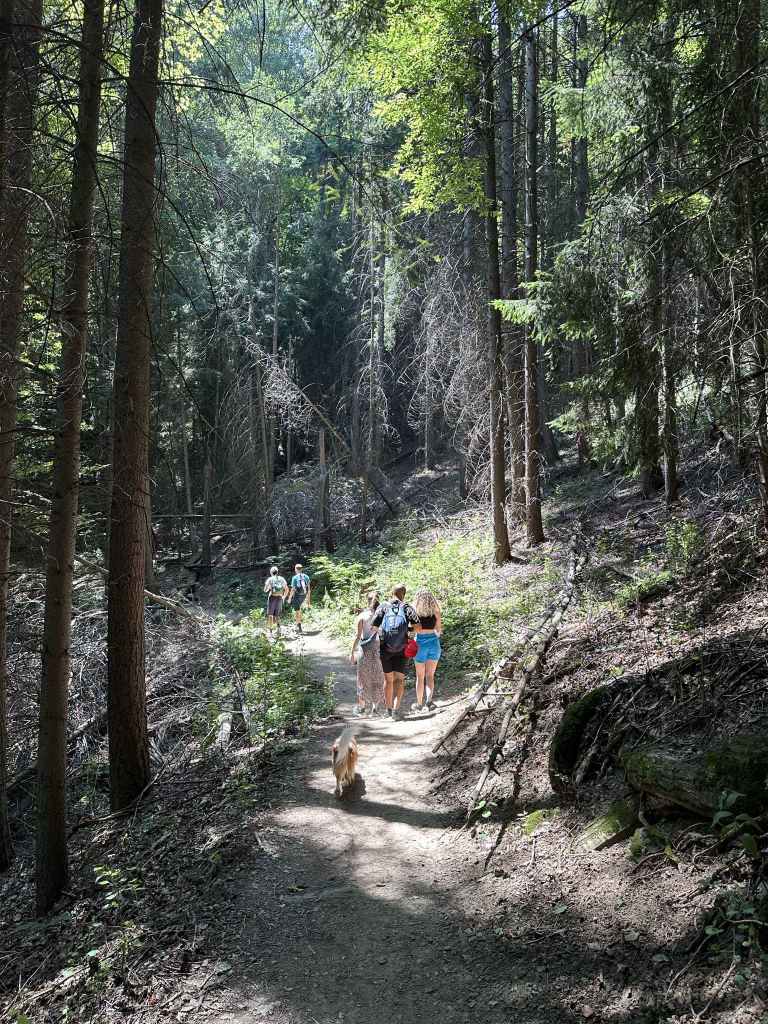
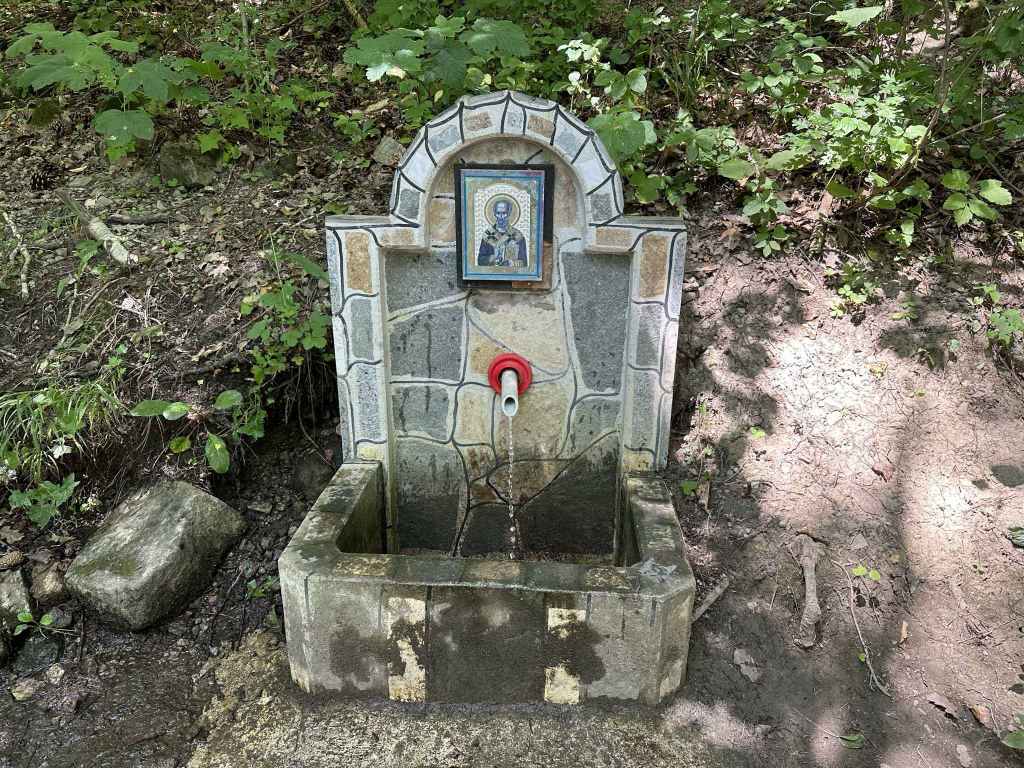
After fifteen minutes, you will see the bike trail on your left, which crosses the path you are on. Continue straight. The path gradually narrows and becomes wet. Logs have been placed where the ground is wettest and there is running water. In another five minutes, you will come to a fountain on your right. In another twenty minutes, you will pass a generator behind a wire fence on your left and become aware of the main road behind it. The path crosses a slip road, climbs some steps, and then crosses a second slip road (going to Salzitsa hut). Continue straight, ignoring the main road on your left and the slip road on your right. A stiff climb brings you in ten minutes to a third slip road. You want to join this slip road, which goes from the main road behind you all the way to the top of the mountain (the main road does not go to the summit of the mountain, it stops short, at Aleko).

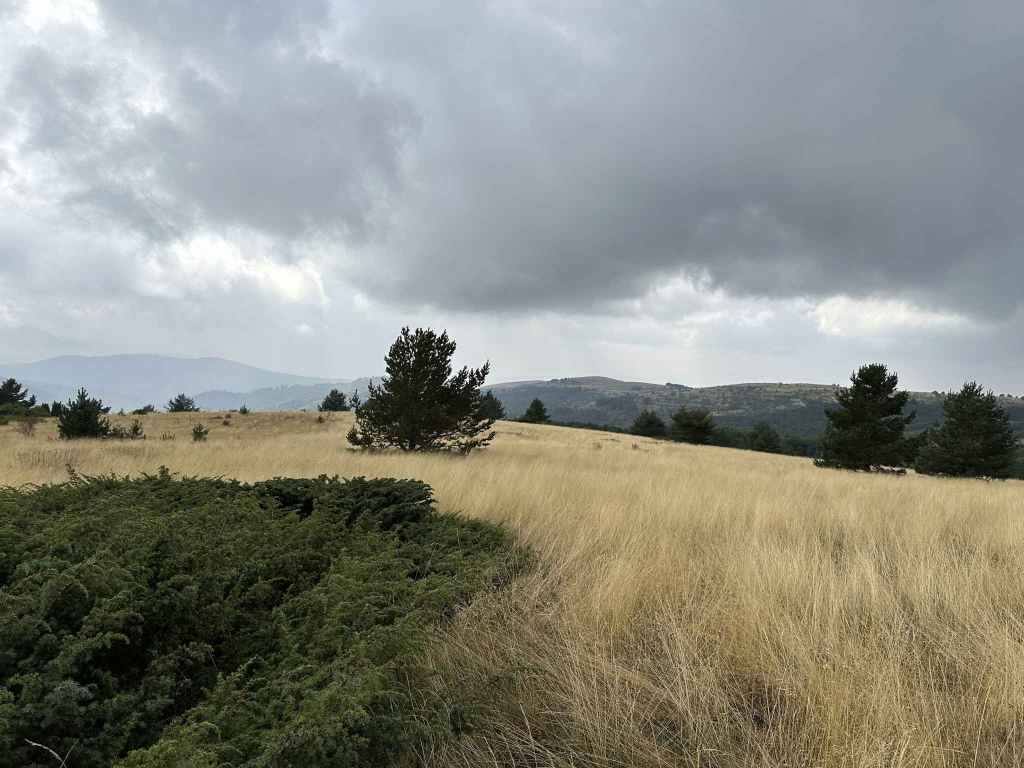
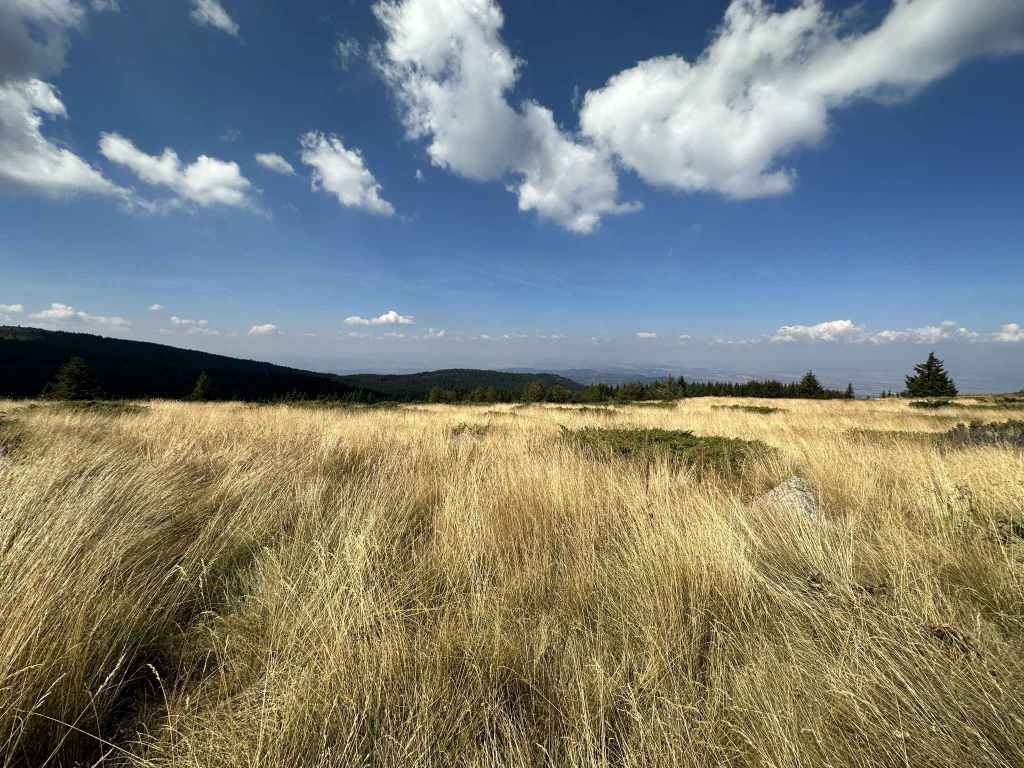
Turn right along this slip road and in five minutes you will pass the top of the Dragalevtsi chair lift, Goli Vrah, on your right. Continue along the slip road, and in another five minutes take the turning right signposted for the shelter (“zaslon”) Ushite. This turning is very clearly marked by black and yellow posts, starting with the number 30. You are now in a very precious part of the mountain, the peat reserve, designated as such in 1935 and covering an area of 783 hectares. You will immediately notice that you have a spring in your step. Walking suddenly becomes easy because of the ground you are stepping on. Follow this path in the direction of Ushite directly in front of you, with Chernata Skala, “Black Rock”, to the left of it.

After ten minutes (post number 50), a path doubles back to Goli Vrah on your right. Keep going straight. Another ten minutes (post number 64), and a path diverges on the right. Keep going straight until after another ten minutes you get to post number 89. Here take the turning on your right, signposted for the Kominite Climbing Area and Kikish. Were you to continue in the direction of Ushite, the path would eventually take you to Bor mountain hut, which features in the walks Planinets and Zlatni Mostove. See the walk Ushite.

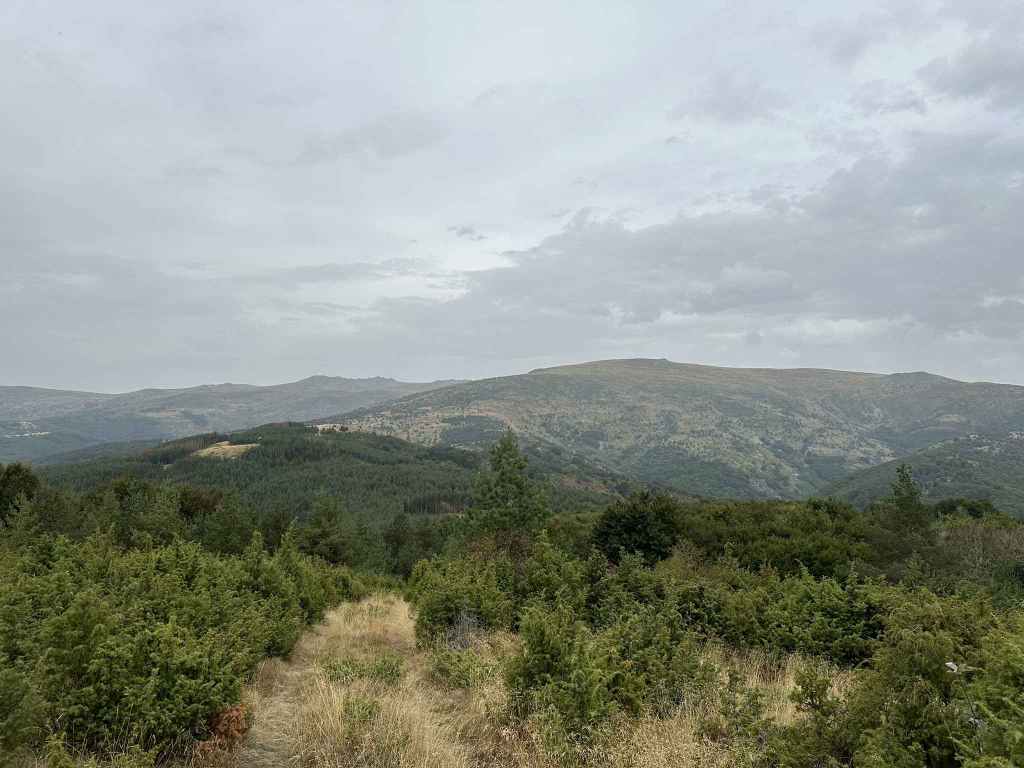
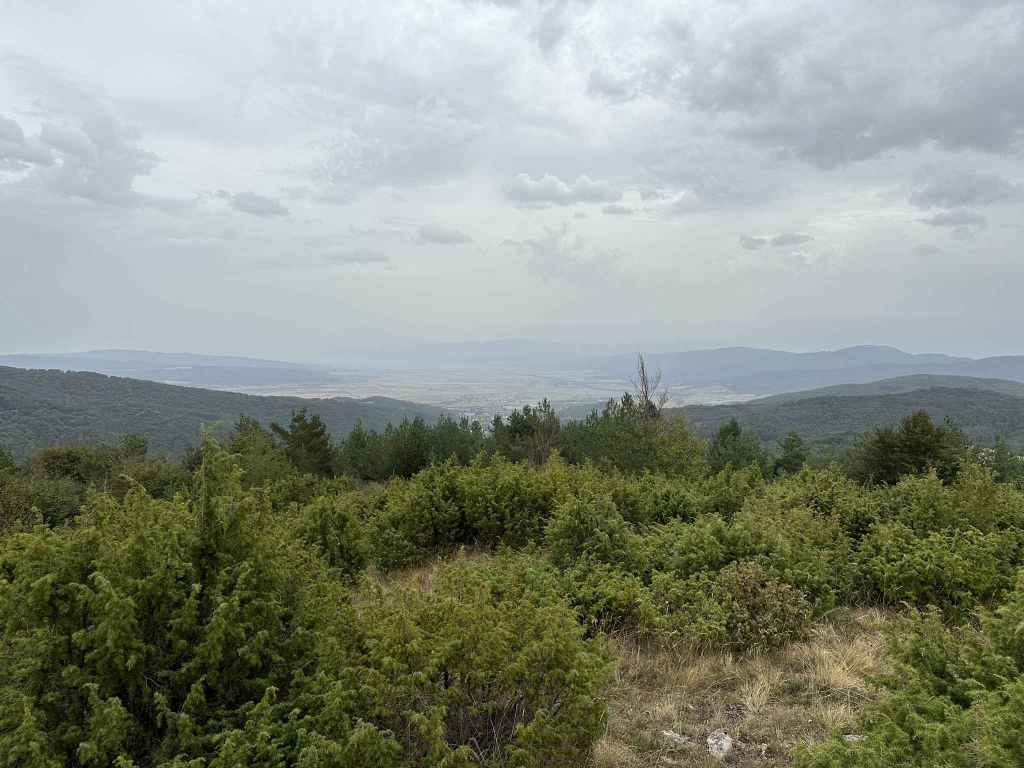
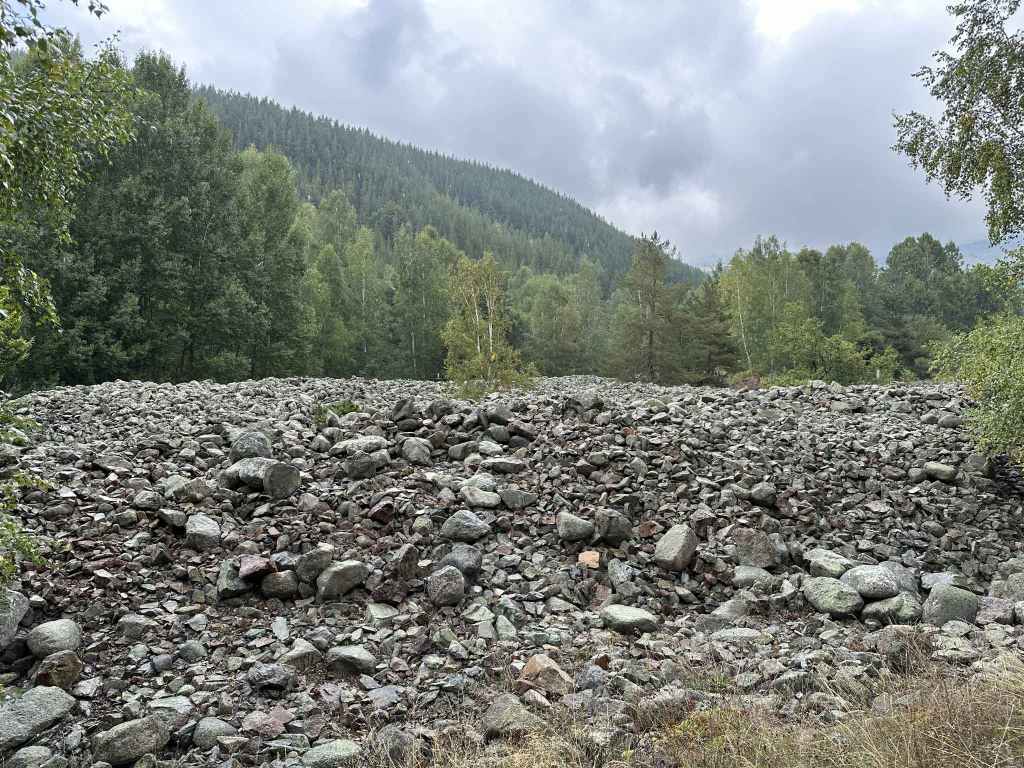
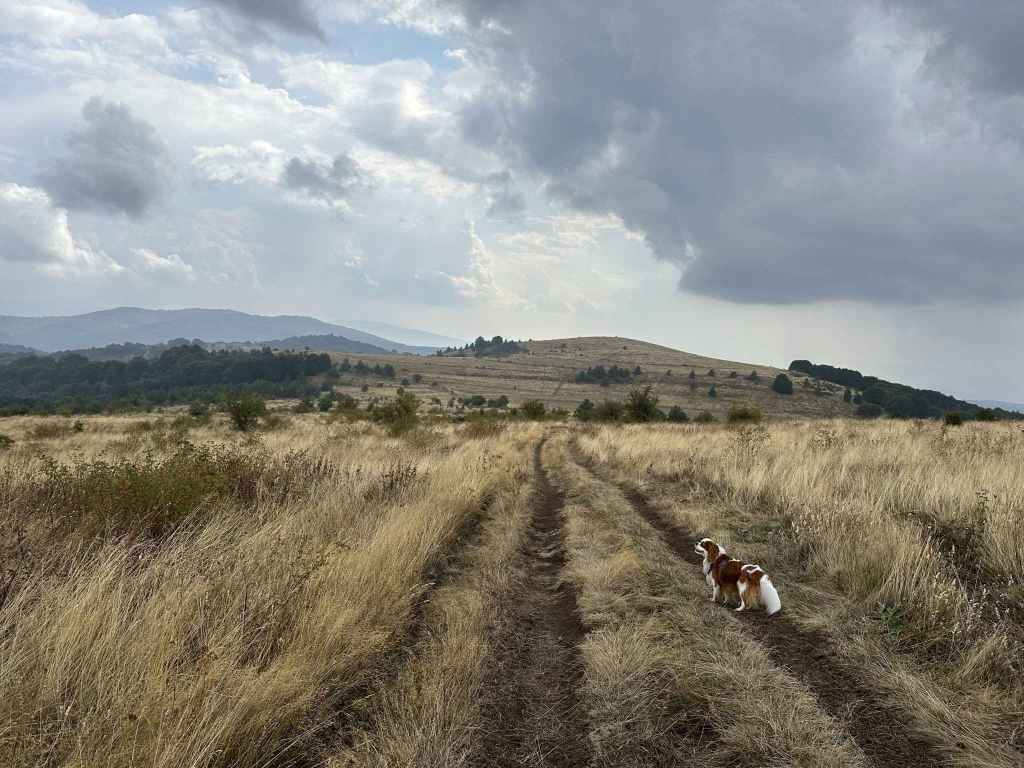
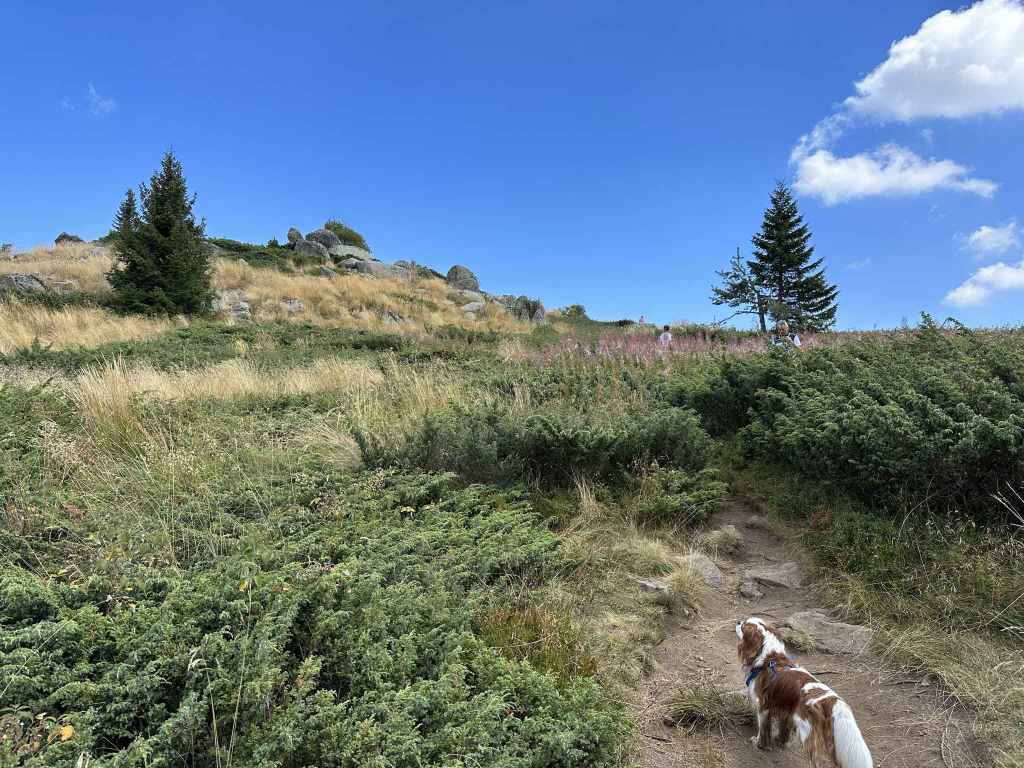
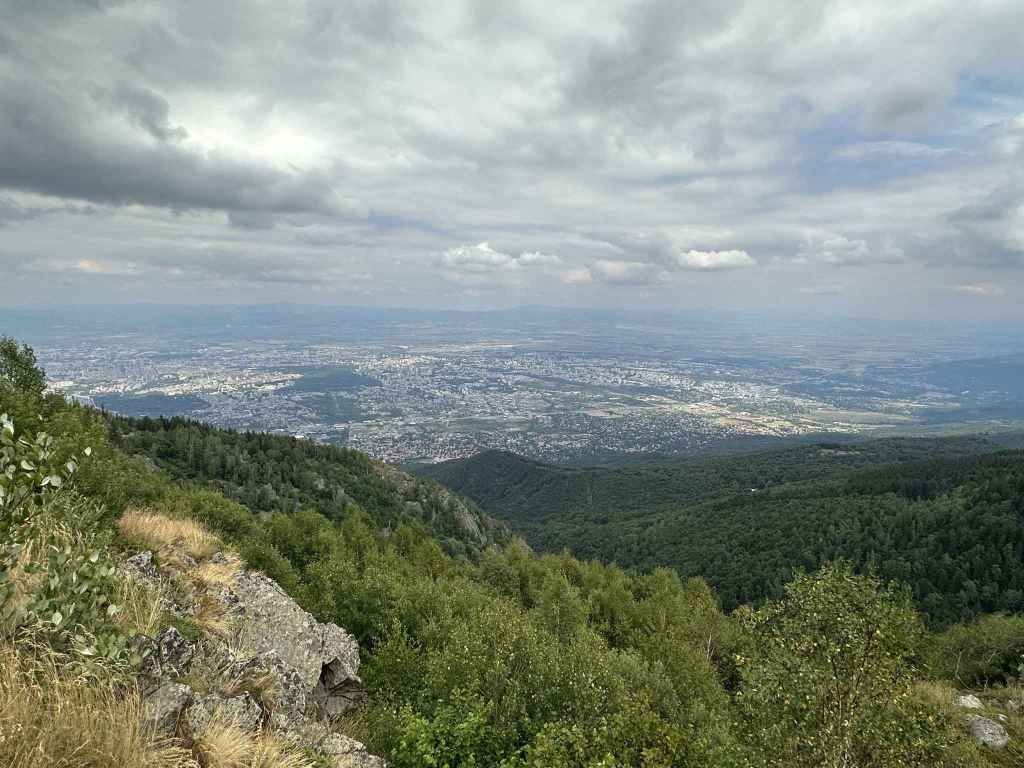
As you start along the turning on the right, look back the way you came and you will get a wonderful view of the summit, Cherni Vrah, on the right with the radar station (aka a golf ball) in the middle. Continue along this path. You are now heading in an easterly direction. After five minutes, there is a convenient picnic area on your right, where you can sit and admire the view towards Bistritsa and Pancharevo, with the mountains behind. Sometimes there are hang-gliders. Now the path begins to descend, with excellent views of Sofia to the north-east. After five minutes, a path heads left to Kikish. Keep right. The path becomes quite overgrown. In another fifteen minutes, you will reach Kominite, the rocks in front of you. The path veers right here (to avoid the rocks). The path then divides, but both branches lead in the same direction (the left branch is steeper, the right branch more roundabout). They will both take you past the climbing area on your left. This part of the walk can be tiring, you need to watch your step as the descent is quite steep. In twenty minutes, you will reach Dragalevtsi River. This river features in two other walks, Bay Krastyo and Simeonovo Lakes, but you are now higher upstream. Cross the river and follow the path across a small moraine field and back under the chair lift. In twenty-five minutes, you will be back at the main road where you started.

We have often done this walk in reverse, going from the main road (Bay Krastyo) only as far as Kominite and climbing the rocks there to have lunch. It’s not ideal for small children or pets, since the rocks are steep, but it’s a wonderful place to have a picnic. Shortly after crossing the river, at the bottom of the rock faces where people can be seen climbing, you leave the path you are on, walk along the bottom of the rock faces, and continue for another ten minutes. You pass a small shelter and come to a secluded area with large rocks you can sit on. It’s safe so long as you stay away from the edge.

Dragalevtsi Monastery – Aleko Waterfall – Simeonovo Lakes – Dragalevtsi Monastery

Starting Coordinates: 42.61953, 23.29827

Distance: 10.4 km

Elevation Gain: 320 m

Time: 4 hours

Difficulty: Moderate

Transport: by car, or by bus no. 66 to the stop for Dragalevtsi Monastery


Two walks start from the car park which is above and behind Dragalevtsi Monastery – the walk to Boyana Lake, and this walk to Simeonovo Lakes. They both follow the low-altitude circular trail that goes around the mountain at more or less the same elevation – that is, without climbing or descending the mountain a great deal. But while Boyana Lake really is a lake, Simeonovo Lakes are not what I would call lakes. They are man-made ponds (we even spotted fish in one of them), but they are still very attractive and a popular picnic spot above the district of Simeonovo.

To reach the car park above/behind Dragalevtsi Monastery, you must access the mountain via Dragalevtsi. If you are travelling by bus no. 66, you will get out at the stop for Dragalevtsi Monastery. By car, leave the central square, drive up the cobbled road in the far corner, ignore the turning left to the “Vodenitsata” restaurant after 1.5 km and continue straight for another 3 km. Here is the bus stop for Dragalevtsi Monastery, and on your left, partially hidden by the trees, is a car park with the monastery behind it. Park here.

Go the southern corner of the car park and take the path that goes up the mountain, but only for 50 metres. Immediately join the path going left. This is the low-altitude circular trail. The monastery is again on your left, and the road is now behind you. This path will take you all the way to Simeonovo Lakes. It will be crisscrossed by other paths going up and down the mountain, by bike trails, by leafy hollows, by dry riverbeds, but don’t be led astray. If you have started climbing or descending more than usual, then you have gone the wrong way. Just stay on the path for 5¼ kilometres. It will take you across Dragalevtsi River, under a disused chair lift, through beautiful beech forest, past a rocky outcrop with a wonderful view of Sofia, past a waterfall, and then deliver you to a picturesque spot with tables in the shade. What more could you possibly ask for?

But, like life, just when you think things are going smoothly, a problem arises. The path divides after seven minutes. You didn’t want a choice, but you’ve been given one and are going to have to make it. Keep left (the path is signposted for Simeonovo and Bistritsa). Do not start to climb! The path on the right, signposted for Momina Skala and Kamen Del, may look level, but don’t be fooled – before you know it, you’ll be going up the mountain!

So keep left, and you will become aware of Dragalevtsi River, a river that features heavily in the walk Bay Krastyo-Kikish, on your left. In a couple of minutes, the path turns a corner, and you cross the river by means of two bridges and a walkway. Keep going on this path, ignoring any turnings on the left or on the right, and in another ten minutes you come to the disused Dragalevtsi chair lift (see the walk Bay Krastyo-Kikish). Keep going straight, and in another fifteen minutes you come to a most welcome fountain and bench. There is normally an icon of the Virgin Mary above the fountain, but this time it was St Nicholas. No matter. The water is very refreshing.

Keep going, ignore the dry riverbeds and bike trails crisscrossing the path, and in twenty minutes you will reach one of my favourite places on the mountain – a rocky outcrop I have been visiting for twenty years. Look left, and you will have a wonderful view of Sofia. You can sit on the rocks on either side of the path and have a rest.

But a surprise awaits you! In another 100 metres, continuing on the same path, is Aleko Waterfall, created by Skakavitsa River. This is one of two popular waterfalls on the mountain (the other is Boyana). You are now about halfway to Simeonovo Lakes and are perfectly entitled to decide you have come far enough and to turn around. Simeonovo Lakes is another 2.5 km from here (45 minutes), so it’s up to you.

If you wish to continue, you just keep going on the same low-altitude circular trail. You will come to a couple of benches – ignore the turnings left and right! Keep going straight (signposted for Bistritsa and Zheleznitsa), and half an hour after the waterfall you will come to an abandoned stone shelter which people use to light barbecues. Behind the shelter is the stream that forms the lakes. Go upstream (that is, turn right), and you will come to Buda, the destination of another walk. You want to go downstream (that is, turn left at the shelter) and follow the course of the stream. It will take you downhill to a total of four lakes. Wooden bridges crisscross the stream. It doesn’t matter which side you are on, as long as you are following the course of the stream. Having enjoyed the view and decided which lake you like best, simply climb back uphill to the stone shelter, turn right here, and take the low-altitude circular trail all the way back to Dragalevtsi Monastery and the car park.

Don’t underestimate the distance, though. This walk is more than ten kilometres, but can easily be shortened by turning back at the waterfall. Of course, Simeonovo Lakes can be approached more directly from Simeonovo itself (bus no. 67).

Dendrarium – Zlatni Mostove – Planinets – Dendrarium

Starting Coordinates: 42.63187, 23.22493

Distance: 7.0 km

Elevation Gain: 310 m

Time: 2¾ hours

Difficulty: Moderate

Transport: by car, or by bus no. 63 to Tihiya Kat


This is a beautiful walk up and down the mountain which has the advantage of being accessible even when there is heavy snow higher up the mountain. The starting point is not the Dendrarium itself, but a car park before the Dendrarium. Take the road that accesses the mountain via Boyana. This is Bulgaria Boulevard. You go under the ring road, drive through Boyana (with the centre of the village on your left) and continue straight up the mountain. As the houses give way to forest, the road begins to wind. You come to a motel called Tihiya Kat, the starting point for the walk to Vladaya River. 900 metres after this motel is a car park on the right of the road. This is where you need to start. If you are travelling by bus no. 63, you can get off at Tihiya Kat and walk the remaining distance or continue to the next stop (the Bear Museum) and walk back.

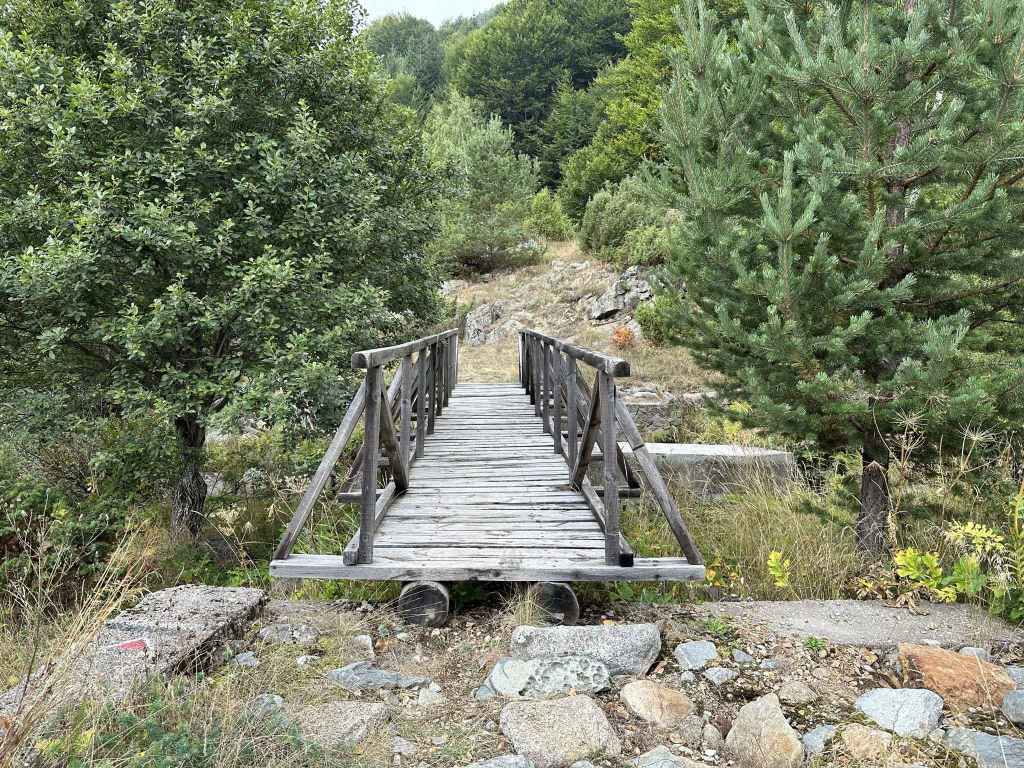
Immediately after the car park, the road does a 180-degree turn before continuing up the mountain. Leave the road behind. The car park is on your right. From here a path leads directly up the mountain in the direction of Zlatni Mostove. It begins with a little bridge, and then climbs steadily, but not onerously, for about an hour. The road (and bus) have the same destination, but take a much more roundabout way to get there.

As you climb the mountain, various paths go left in the direction of the Dendrarium, but you want to stay on the same path, which is signposted for Zlatni Mostove and Momina Skala. Soon you will notice a stream on your right. After about fifteen minutes, you cross a secondary road connecting the Dendrarium on your left with a mountain hut, Iglika, on your right, a popular place for picnics in the summer. Continue straight with the stream now on your left. Ten minutes later, the path veers abruptly right, then left, and the road appears in front of you.

Go directly over the road and continue on the path on the other side. In a few minutes, there is a picnic table on your right. Another five minutes, and you come to a sort of crossroads with Vladaya village (and a mountain hut, Belite Brezi) on the right and a path to Kopitoto and Planinets on the left. The path to Kopitoto and Planinets is the path you will come back on. For now, continue straight up the mountain. You pass some more picnic tables and a fountain on the left. In about twenty minutes, a path joins from the left and, immediately after that, you reach the road that connects Zlatni Mostove on your right with Momina Skala on your left. On the other side of the road is a large, open meadow called Beli Bryag. This is a popular picnic area in summer and a good place to stop for refreshment. There are stalls selling corn on the cob, jams and souvenirs. If you head in the direction of Zlatni Mostove, there are some restaurants.

Having paused for refreshment, continue with the meadow on your right. This brings you to a wooden barrier with the road to Momina Skala on your left, a path heading up the hill in front of you, and a path on the right. The path heading up the hill in front of you skirts the road. Take this path. You are now doing part of the walk from Planinets, but in reverse. After three minutes, a path on the left is signposted for Planinets. Take this path, cross the cobbled road and continue on the path diagonally opposite. This path is signposted for Kopitoto. After five minutes, there are some stone steps on the left. Go down these steps and join the path to Planinets. After ten minutes, a tree trunk blocks the path. Go under the tree trunk, and immediately there is a path on the left signposted for Belite Brezi. You have to make a 150-degree turn. Do not continue to Planinets, but take the path to Belite Brezi, a path less trodden which leads you through magical forest (I have taken this path when there was thick snow and got quite lost; I have also encountered people sitting by the side of the path, seemingly lost in meditation). After ten minutes, a path on the right is signposted for the Dendrarium, but do not take it. Keep straight. A bridge crosses a stream, and in another ten minutes you will be back at the crossroads you saw earlier. Turn right here and go straight down the mountain. Cross the main road, then the side road between the Dendrarium and Iglika, and in half an hour you will be back at the car park where you started.

Bay Krastyo – Kikish – Dragalevtsi Monastery – Bay Krastyo

Starting Coordinates: 42.60447, 23.30224

Distance: 7.3 km

Elevation Gain: 430 m

Time: 3¼ hours

Difficulty: Moderate

Transport: by car, or by bus no. 66 to the stop for Bay Krastyo


This is a truly wonderful walk that takes you to one of the biggest moraine fields on Vitosha and offers superb views of Sofia. It also throws in two wonderful glimpses of Dragalevtsi River. You must access the mountain via the village of Dragalevtsi. You leave the central square by the cobbled road in the far corner and drive up the mountain. After 1.5 km, ignore the turning on the left for the “Vodenitsata” restaurant. Continue straight. The road does a big curve and after another 3 km you come to the bus stop for Dragalevtsi Monastery, the starting point for two walks: Boyana Lake and Simeonovo Lakes. Continue uphill and after another 3 km you pass under the Dragalevtsi chair lift. In another 1.5 km, there is a slip road on the right that takes you to what was the midway station on the Dragalevtsi chair lift, Bay Krastyo. You can park under the trees here. This is also the penultimate stop on the 66 bus route.

Walk down the slip road on your right. You will pass a bike trail and a low building on the right, then a restaurant on the left. Immediately after the restaurant is the beginning of a path to Dragalevtsi Monastery on the right. You will come back on this path. But for now continue straight. In front of you is the midway station on the chair lift, now sadly disused. I still remember carrying my young child on this lift and jumping off at the station. It is such a shame that the lift no longer works.

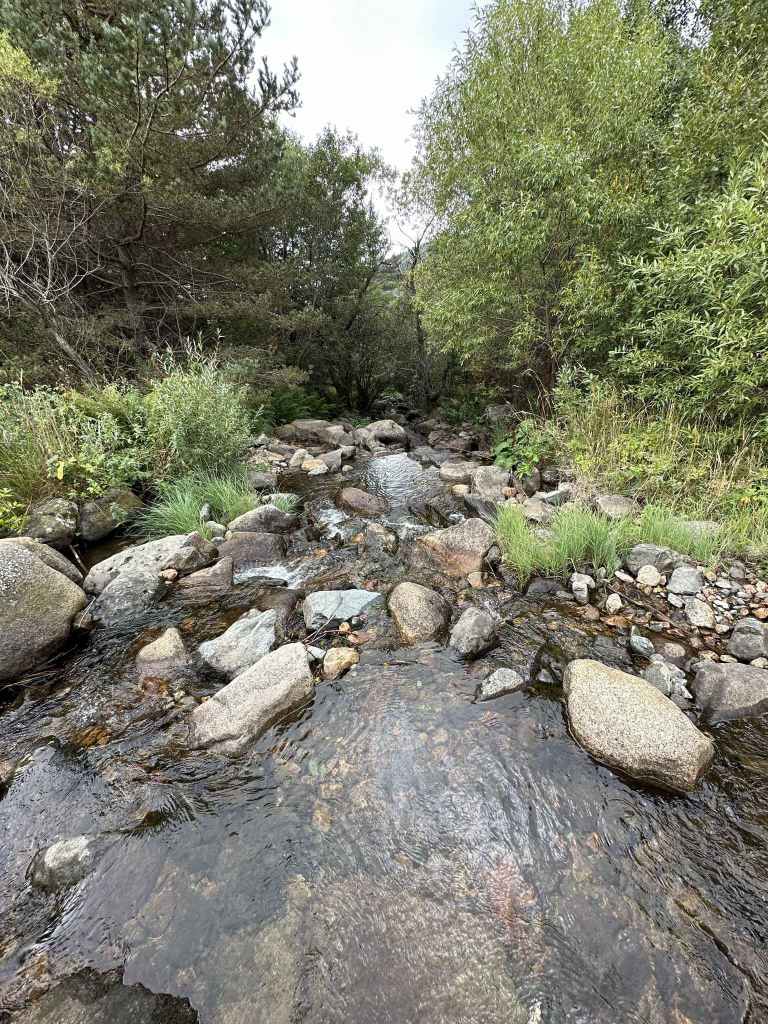
With the station in front of you, there are some steps on your left, a picnic table under a tree, and a sign for the E4 European long-distance path and Cherni Vrah. Climb the steps and take this path, with the station now on your right. It goes around the station, under the chair lift, and immediately enters forest. There is then a sign for Kikish and Kamen Del mountain huts, which you can visit on the walk Kopitoto. A path joins from the left. Keep going straight. When you reach some moraines (large glacial boulders) with a view of Sofia, the path veers left and in about ten minutes you reach a bridge over Dragalevtsi River, your first view of the river. You will see it again further down on the way back.

The advantage of this walk is that for the most part you are in forest, so the path is shaded and cool even on a hot summer’s day. In a couple of minutes, you reach the first moraine field, which continues for a few minutes. Walking across these fields is a little tiresome, especially for our four-legged friends. After the first moraine field, there is a lookout over Sofia on the right. Keep going and in another ten minutes you come to the big moraine field, which is in the open and offers wonderful views of Sofia. It takes several minutes to cross. This and Zlatni Mostove are the best places to see the moraines up close.

At the end of the moraine field, the path dives back into the forest and the shade once more. In three minutes, there is a path on your right signposted for Dragalevtsi Monastery. This is a more direct route, but we will continue to Kikish mountain hut, the furthest point on the walk Kopitoto, so that we can say we have covered the whole of the front of the mountain. The path begins to climb, in ten minutes it reaches a kind of summit, with a path on the left and right, and then it descends to the mountain hut, which is fifteen minutes after the earlier path to Dragalevtsi Monastery.

Kikish is a good place to rest and have some refreshment. There is a small pond and a stream, with chairs and tables. If you continue on the path you were on, you will repeat the second half of the walk Kopitoto, which is not necessary. So now you want to head east on a second path to Dragalevtsi Monastery that starts next to the stream, on the opposite side of the pond to the hut. It takes just over half an hour to reach Dragalevtsi Monastery from here. The path is a little steep in places, but again shaded. In 25 minutes, you will see the road on your right. Ignore this, continue down for another couple of minutes, cross the road in front of you, continue on the path on the other side, and in another five minutes you will come to a much wider path with Dragalevtsi Monastery on your left.

However, unless you want to visit the monastery, now turn right and go uphill. The path is very lovely because it is wide. In ten minutes, the first path to Dragalevtsi Monastery we ignored earlier joins this path from the right. Keep straight. In another ten minutes, you reach a second bridge over Dragalevtsi River. Five minutes after the bridge, you must leave the path and take a higher path on the right that is signposted for Bay Krastyo and Aleko. The two paths run parallel for a while, but then separate, as all paths do. Continue to climb, and in a couple of minutes you will be back at the chair lift with the road on your right.

You now have a fifteen-minute walk uphill to get back to the midway station, Bay Krastyo. Two or three paths all complete this ascent, intersecting and dividing as they go. It doesn’t really matter which path you take. At the chair lift, you can take the larger path uphill to the road. Then go right for fifty metres until you come to some steps on the left signposted for Bay Krastyo, Aleko and Cherni Vrah. Take this path, which goes uphill, then left, uphill, then left under the chair lift, uphill (the midway station now visible in front of you, the chair lift on your right) until it joins the slip road where we saw it earlier. At the slip road, turn left and in five minutes you will be back at the main road.

Kopitoto – Momina Skala – Kamen Del – Kikish – Kopitoto

Starting coordinates: 42.6356, 23.24779

Distance: 9.9 km

Elevation Gain: 330 m

Time: 3¼ hours

Difficulty: Moderate

Transport: by car, or by bus no. 63 to the Dendrarium


This was my first walk on Vitosha back in 2003, so it’s a very special walk for me. It takes you to the three mountain huts that overlook Sofia from the front of Vitosha: Esperanto, Kamen Del, and Kikish. There are huts further up or around the mountain, but these are the first I visited.

When you look at the mountain from Sofia, there are certain things you notice. One of them is the golf ball on top of the mountain, which is in fact a radar station on the second highest peak of Vitosha, Golyam Rezen. But unmissable in the west is the large TV tower (186 m) and, next to it, a hotel building, both named after the rocky outcrop they stand on: Kopitoto (“The Hoof”). This walk starts at the hotel. To get there by car, you take the road through Boyana (which is actually a continuation of the main thoroughfare heading south of the centre, Bulgaria Boulevard – after you pass under the ring road, this road affords excellent views of the tower and hotel) and continue until you reach the Dendrarium on your right. There is then a turning on your left, which ends at the hotel after 2.7 kilometres. If travelling by bus no. 63, you will have to get off at the Dendrarium and walk the rest of the way. After 1.3 kilometres, you will pass a turning on your right to Planinets, the start of another walk, and after another kilometre you will pass the TV tower on your left before reaching the hotel in another 400 metres.

What makes this walk so special is the sudden transition from the world of concrete (the hotel) to the world of nature. You are literally immersed. The path starts on the right of the hotel. It immediately divides, a branch on the left heading back down to Boyana. Ignore this branch and continue up some steps, past a marble bench, into a wonderful avenue of trees that lean towards each other in the canopy, forming what looks like the nave of a cathedral. Large boulders are strewn on the right, resembling strange creatures. After approximately ten minutes, a path diverges on your left to Boyana Waterfall. This is the path you will return on. Ignore it for now and continue straight in the direction of Cherni Vrah/Momina Skala. After ten minutes, you will come to a crossroads. You want to go left here, still in the direction of Cherni Vrah/Momina Skala, but I’m going to let you in on a secret. A few metres away is my favourite spot on the mountain, a magical place I walked past for many years without knowing it was there. To get there, you need to make a small detour: at the crossroads, turn right towards Karpuzov Valog. Continue for a couple of minutes past some trees on your left until you reach a picnic table out in the open. Leave the path and walk to the picnic table. From here, you have the most outstanding view of south-west Bulgaria. My wife and I watched the sunset here one New Year’s Eve. It is such a peaceful place for a moment of mindfulness.

Now go back to where you were – the crossroads – but this time go left in the direction of Cherni Vrah/Momina Skala. After about five minutes, you will hear Boyana River, the river that forms Boyana Waterfall further down, on your left. In another ten minutes, you will reach Momina Skala, a large, open field with tables and shelters, a restaurant and large antenna, which features in many of these walks. Skirt the lefthand side of the field, leaving it behind you, and descend to Momina Skala hut in the trees. The river is in front of you. There is a small bridge, which you need to cross.

A path on your right goes uphill to Cherni Vrah. It is possible to reach the last of the mountain huts on this walk, Kikish, more directly by taking this path and then a left fork that goes to Kikish via Sredets, but we are going to take the path on the left that goes downhill and is signposted for all three mountain huts and Boyana Waterfall. In five minutes, the path divides. Go right, again in the direction of the three huts. After five minutes, a path joins from the left. This is the path you will go back on, but keep going downhill and in five minutes you will reach the first of the huts, Esperanto. It is currently abandoned and a little overgrown. There is a swing attached to a tree.

Keep going on the same path and in ten minutes you will come to the second hut, Kamen Del. The view of Sofia from here is memorable. The hut itself is friendly and offers good food. It’s a perfect place to take some refreshment. I went one rainy day and was incredibly grateful for the free herb tea that was served with every meal. If you feel you have gone far enough, you can now turn around and head back in the direction of Kopitoto.

The last hut, Kikish, is another twenty minutes away on the same path. After ten minutes, the path from Momina Skala via Sredets joins from the right. In another five minutes, there is a small moraine river on your right, and soon the hut itself appears. The reason for going this far is to connect the dots – another walk from Bay Krastyo (Dragalevtsi) approaches Kikish from the other direction, so you will have covered most of the front of the mountain. It’s up to you. Continuing to Kikish will add another 45 minutes to your walk.

Leaving Kikish, return to Kamen Del and then Esperanto, but be careful you don’t take the path on the left that goes to Momina Skala via Sredets. Five minutes after you walk back past Esperanto, again avoid the path to Momina Skala on your left (the path you came on). In a few more minutes, another path on your left leads to Momina Skala, while a path on the right leads to Boyana Waterfall. Keep straight. You will soon cross Boyana River as it tumbles down towards the waterfall, little knowing (or perhaps knowing all too well) what lies in store for it.

Five minutes after the bridge, there is a grassy clearing and then a path, again signposted for Boyana Waterfall, on your right. It’s worth taking this path for just a hundred metres in order to admire the view of Sofia. Come back to the path you were on and follow it until it ends in another five minutes. This is the path you ignored when you left Kopitoto. Now turn right and in ten minutes you will be back at the hotel.

Zgorigrad

This is an astonishing walk, but it is not for the faint-hearted! To get to the bottom of the waterfall, known as ‘Borov Kamak’ (‘Pine Stone’), it is necessary to climb fourteen ladders, some of which are quite steep, and to cross from side to side of the river Varteshnitsa. We were with a small dog and had to carry him up and down the ladders. Also, in reviews online, a lot of people express their disappointment at the waterfall having no water. We went in the second half of June after heavy rains, and I can say that this was not the case! The waterfall was working at full capacity, and a couple of times, where there was no bridge, it was necessary to wade across the river.

That said, this is one of the most beautiful places I have been to in Bulgaria, and the waterfall is memorable. You get what you put in, I suppose. To reach the old mining village of Zgorigrad, you must first travel to Vratsa. Coming from Mezdra on the E79, you enter the town of Vratsa and keep going straight, following the signs for Ledenika Cave. After three kilometres, you pass the turning on the left for Vratsa Waterfall (directly after the hospital). After another kilometre, ignore the turning right that goes to the centre and follow the sign for Ledenika. In 300 metres, take the turning on the left to Ledenika and Zgorigrad. You leave Vratsa and go through the dramatic Vratsa Pass. After 2.2 kilometres, there is a sign for Ledenika at a distance of thirteen kilometres on the right, but you continue straight and enter Zgorigrad village. Keep going straight, pass through the centre (with the river Varteshnitsa on your right) and, as the road begins to loop, 2.2 kilometres after the centre of Zgorigrad, you come to the start of the ecopath that leads to the waterfall. Park your car on the grassy verge. The river is now on your left.

The walk to the waterfall takes about two hours. If you factor in another hour to visit the top of the waterfall, you will need to allow five hours to go and come back. The ecopath climbs the grassy verge and quickly enters forest. On your left is an old tailings pond, used to store waste material from the extraction of metal ore. This tailings pond caused a terrible flood (almost half a million cubic metres) in 1966, with significant loss of life in the nearby village. There is a short film about the disaster by Robart Nikolchev on YouTube. In about twenty minutes, you cross the first of several bridges taking you from side to side of the river. After the third bridge, we were tempted to go straight, but you must go right, uphill, following the course of the river. If you find yourself moving away from the river at any point, then you have gone wrong. Keep an eye on the red markers.

After the fourth bridge, the ladders start in earnest. There are eight ladders in the space of half an hour. After the fifth bridge, we again went slightly wrong and started moving away from the river. Follow the red markers and stay close to the river. Another three ladders, and then comes the fun part. You are required to cross to the lefthand side of the river, but there is no bridge, presumably because there isn’t normally so much water and it’s possible to hop from rock to rock. In our case, the river was roaring down, and this wasn’t possible! We tried taking off our shoes and socks, but the water was so cold we didn’t get very far! In the end, we just waded across. I carried our dog.

Another fifteen minutes, and you come to the bottom of the waterfall, which is 63 metres high. It’s a wonderful location. If you want to visit the top of the waterfall, you need again to cross the river without the help of a bridge. We again got soaked! But it was worth it. There is a picnic table under the eaves of the rocks on the righthand side of the river. You can stop here for lunch and admire the waterfall. We certainly did.

If you decide to continue the top, you must follow the path in front of you, which soon goes left. You must climb another four ladders to reach the top, but the view is amazing and the sensation of watching the river tumble over the edge is exhilarating. There is a place to stand, with a railing, but please be careful. The river before it cascades over the edge is much calmer. You can continue upstream. Having crossed a bridge, in about twenty minutes you will reach a mountain shelter and an open meadow. This is as far as we got.

Beware that descending the ladders is perhaps more difficult than going up (especially when you are responsible for a small creature!). We had heard that the walk to Vratsa Waterfall is quite steep, but found this walk to be more difficult, albeit more beautiful. ‘Borov Kamak’ easily ranks in my top five, along with waterfalls like Hristo Danovo and Polska Skakavitsa.

The ecopath starts 2.2 kilometres after the centre of Zgorigrad village.
It passes through forest, with the river Varteshnitsa on your left.
The first of several bridges.
Crossing back to the other side.
The ladders begin in earnest.
There is a wooden walkway with views towards Zgorigrad.
The ladders get steeper!
The river Varteshnitsa as it descends through the forest.
The first crossing without a bridge!
‘Borov Kamak’ Waterfall.
The picnic table on the righthand side of the waterfall.
The waterfall seen from the right.
The top of the waterfall.
The view from the top of the waterfall towards Zgorigrad.
The meadow further upstream.

On the Publication of My Book “Seven Brief Lessons on Language” in Bulgarian

Български текст по-долу

Language has a vertical aspect, a hidden meaning. We have not realized this aspect yet. We have not realized that you can walk into language. Be inside it. Language is architectural. Living and breathing, like the wind.

I approached the main universities in Bulgaria, offering to give a short course on this spiritual aspect of language. I was rejected because I do not have a doctorate, I am not one of them. This is despite the fact that I have worked with language on a daily basis for more than thirty years as a translator of literature.

Academics view language as horizontal, they study its evolution over time. That is, they look at man’s influence on language, man’s speech. Their focus is man-centred. The focus of my book is God-centred. I would like to give an example.

We do not know why we are here, what we are doing spinning on a planet in a corner of the universe or the multiverse. We do not know where we have come from or where we are going. So, in our blindness, we limit ourselves to laying claim, to drawing lines, and it is these lines that separate us. Lines around property, lines around products of the earth so that we can sell them, lines around countries. To cross a line, you must either pay or fight.

This is a terrible perversion of nature – our own and the world’s nature. Buying and selling instead of helping each other. Ownership. Instead of allowing that things pass through us (we are translators), we claim to be authors, to be the beginning and the end.

As far as I can see, there are three ways to escape the line that separates us. The first is to make reference to a third point, to include God in the conversation, and form a triangle, which resembles the capital letter A. The second is to draw a line through the line, to delete it, which while it makes a cross (†), also makes a plus-sign (+), the meaning of the Christian paradox of losing our life in order to find it. And the third is to treat the line as a number, 1, and to count down to zero, 0. To open the line, to breathe air into it.

Triangle, cross, circle. A+O. This means that when we turn away from the line as being too limiting, when we accept our own limits, necessarily we call on the name of God: A+O, Alpha and Omega.

And what is remarkable is that these three symbols can be found in the middle conjunction when it is written with capital letters: AND. A ’N’ O. The reverse of this conjunction is DNA. It is in our DNA to do this. To lose our life in order to find it.

We can see this progression from A to I to O in the Greek alphabet, which ends with the letter omega. That is, the Greek alphabet, which represents philosophy/theology, counts down, from I to O, from 1 to 0. The Latin alphabet used in the West, however, counts up, from I to Z, from 1 to 2. This is the mentality of making a profit, of endless production as an (ultimately futile) justification for our lives.

When we learn to open the line, to turn the letter I into O, to rotate it by ninety degrees, we realize that while LIVE spells EVIL in reverse – that possibility is always open to us – when we replace the letter I with the letter O, we get LOVE instead. That is, when we remove the ego, represented in English by the line, the letter I, and replace it with God, the eternal circle, we get LOVE. In a similar way, SIN becomes SON.

Language wishes to tell us something. But all too often we view language in the same way as the environment, as there to be exploited for our own profit, as a tool to get what we want. Language can teach us. After all, Christ is the Word. When we speak, as when we breathe or drink, we are, whether we like it or not, partaking in Him. That is what my book Seven Brief Lessons on Language sets out to demonstrate. It is the result of an experience of six to nine months when I had just arrived in Bulgaria and language fell apart in front of my eyes, allowing me to go inside it.
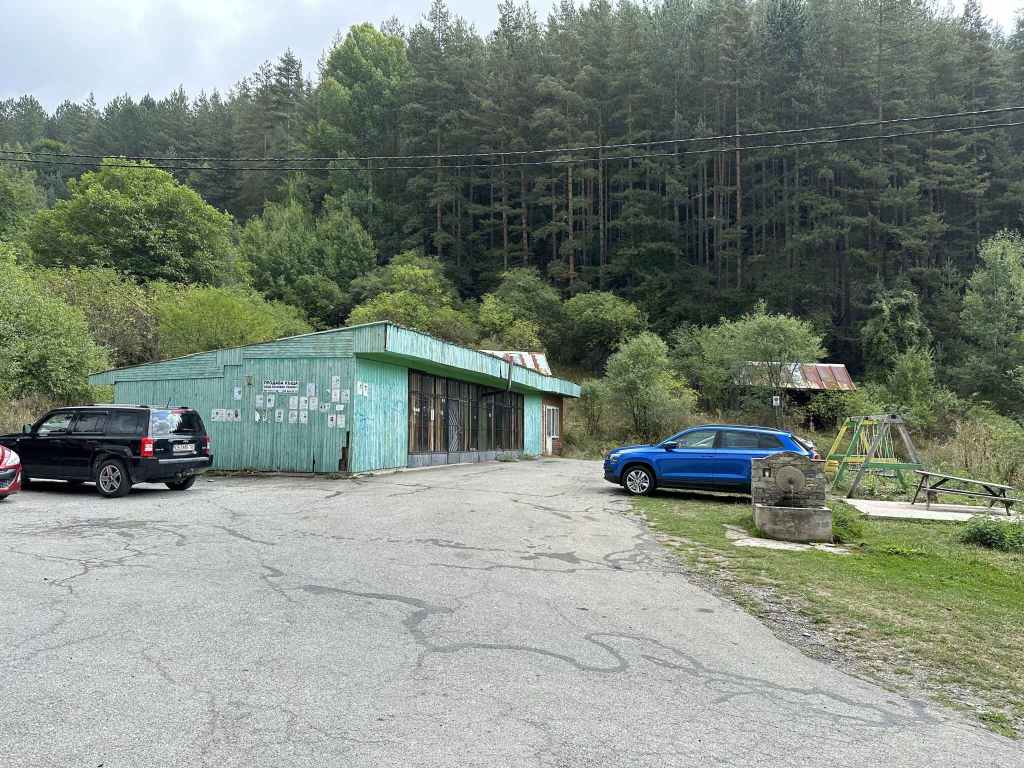
With thanks to the translator, Tsvetanka Elenkova, to the book’s referees, Tony Nikolov and Kalin Mikhaylov, the editors, Plamen Sivov, Iliana Alexandrova and Ralitsa Krasteva, and the designer, Bojidar Chemshirov.

Jonathan Dunne

Sofia, 25 May 2023

Езикът има вертикален аспект, скрит смисъл. Все още не сме осъзнали този аспект. Не сме разбрали, че можете да влезете в езика. Бъдете вътре в него. Езикът е архитектурен. Живеещ и дишащ, като вятъра.

Свързах се с основните университети в България, предлагайки да изнеса кратък курс по този духовен аспект на езика. Отказаха ме, защото нямам докторска степен, не съм от тях. Това е въпреки факта, че съм работил с език ежедневно повече от тридесет години като преводач на литература.

Учените разглеждат езика като хоризонтален, те изучават еволюцията му във времето. Тоест, те разглеждат влиянието на човека върху езика, човешката реч. Техният фокус е върху човека. Фокусът на моята книга е съсредоточен върху Бога. Бих искал да дам пример.

Не знаем защо сме тук, какво правим, въртейки се на планета в ъгъл на Вселената или мултивселената. Ние не знаем откъде сме дошли или накъде отиваме. И така, в нашата слепота, ние се ограничаваме до предявяване на претенции, до теглене на линии и тези линии са тези, които ни разделят. Линии около собственост, линии около продукти на земята, за да можем да ги продаваме, линии около държави. За да преминете линия, трябва или да платите, или да се биете.

Това е ужасно извращение на природата – нашата и световната. Купуваме и продаваме, вместо да си помагаме. Собственост. Вместо да позволим нещата да минават през нас (ние сме преводачи), ние претендираме, че сме автори, че сме началото и краят.

Доколкото виждам, има три начина да избягаме от линията, която ни разделя. Първото е да се направи препратка към трета точка, да се включи Бог в разговора и да се образува триъгълник, който прилича на главната буква А. Второто е да се начертае линия през линията, да се изтрие, което, докато прави кръст (†), също прави знак плюс (+), значението на християнския парадокс да изгубим живота си, за да го намерим. И третото е да третирате линията като число, 1, и да броите надолу до нула, 0. Да отворите линията, да вдъхнете въздух в нея.

Триъгълник, кръст, кръг. A+O. Това означава, че когато се отвърнем от линията като твърде ограничаваща, когато приемем собствените си граници, непременно призоваваме името на Бог: А+О, Алфа и Омега.

И което е забележително е, че тези три символа могат да бъдат намерени в средния съюз, когато се пише с главни букви: AND (И). A ’N’ O. Обратната страна на тази връзка е DNA (ДНК). В нашата ДНК е заложено да правим това. Да загубим живота си, за да го намерим.

Можем да видим тази прогресия от A към I към O в гръцката азбука, която завършва с буквата омега. Това означава, че гръцката азбука, която представлява философия/теология, брои надолу от I до O, от 1 до 0. Латинската азбука, използвана на Запад, обаче, брои нагоре от I до Z, от 1 до 2. Това е манталитетът за правене на печалба, за безкрайно производство като (в крайна сметка безполезно) оправдание за живота ни.

Когато се научим да отваряме реда, да превръщаме буквата I в O, да я завъртаме на деветдесет градуса, разбираме, че докато LIVE (ЖИВЕЯ) изписва EVIL (ЗЛО) наобратно – тази възможност винаги е отворена за нас – когато заменим буквата I с буквата О, вместо това получаваме LOVE (ЛЮБОВ). Тоест, когато премахнем егото, представено на английски с линията, буквата I, и го заменим с Бог, вечният кръг, получаваме LOVE (ЛЮБОВ). По подобен начин SIN (ГРЯХ) става SON (СИН).

Езикът иска да ни каже нещо. Но твърде често гледаме на езика по същия начин като на околната среда, като там, за да бъде експлоатиран за собствена печалба, като инструмент, за да получим това, което искаме. Езикът може да ни научи. Все пак Христос е Словото. Когато говорим, както когато дишаме или пием, ние, независимо дали ни харесва или не, участваме в Него. Това има за цел да демонстрира моята книга Седем кратки веседи за езика. Това е резултат от опит от шест до девет месеца, когато току-що бях пристигнал в България и езикът се разпадна пред очите ми, позволявайки ми да вляза в него.

С благодарност към преводачката Цветанка Еленкова, към рецензентите на книгата Тони Николов и Калин Михайлов, издателите Пламен Сивов, Илиана Александрова и Ралица Кръстева и дизайнера Божидар Чемширов.

Джонатан Дън

София, 25 май 2023 г.

Bistritsa – Samokovishteto – Bistritsa

Starting coordinates: 42.56902, 23.34232

Distance: 3.8 km

Elevation Gain: 130 m

Time: 2 hours

Difficulty: Moderate

Transport: by car, or by bus to Bistritsa Village


Bistritsa Village is on the east side of Vitosha and can best be reached from the ring road. The three main districts on the north side of Vitosha, from west to east, are Boyana, Dragalevtsi, and Simeonovo. If you continue on the ring road past Simeonovo in an easterly direction, you come to Sofia Ring Mall and Ikea. Just before these is the turning that takes you to the start of the only lift that is still working on Vitosha, the Simeonovo-Aleko gondola lift. Immediately after Ikea is a roundabout. Turn right here and the road will take you uphill to Bistritsa. The road reaches a summit, where there are turnings left to Pancharevo and right to Simeonovo, and then descends into Bistritsa proper. After crossing Bistritsa River, you are in the centre, an open grassy area. The following buses – 69, 70, 98, 314 – will drop you here, at the stop marked “Selo Bistritsa”.

The mountain is on your right. You have just crossed Bistritsa River, which tumbles down the mountainside and eventually flows into Lake Pancharevo to the east. There are two walks that begin from Bistritsa – one to a small waterfall; the other to the village of Zheleznitsa. They both have the same starting point. To reach this point, you need to take the first turning on the right after the bus stop. This is Stefan Stambolov Street. There is a ProMarket grocery store on the corner. You follow this street for 2.9 kilometres. 700 metres from the centre, it crosses the river. Keep going uphill. After another kilometre, the road veers left – ignore the dead-end street in front of you. Having crossed back over the river, it then leaves the houses behind. There is a small car park on the left. Where it enters Vitosha Nature Park, ignore the turning on the right and keep going uphill. After another 400 metres, you come to a second car park on the left. This is a good place to park. If there are no places, you can park further up on the verge. Continue to where the road ends in another 300 metres.
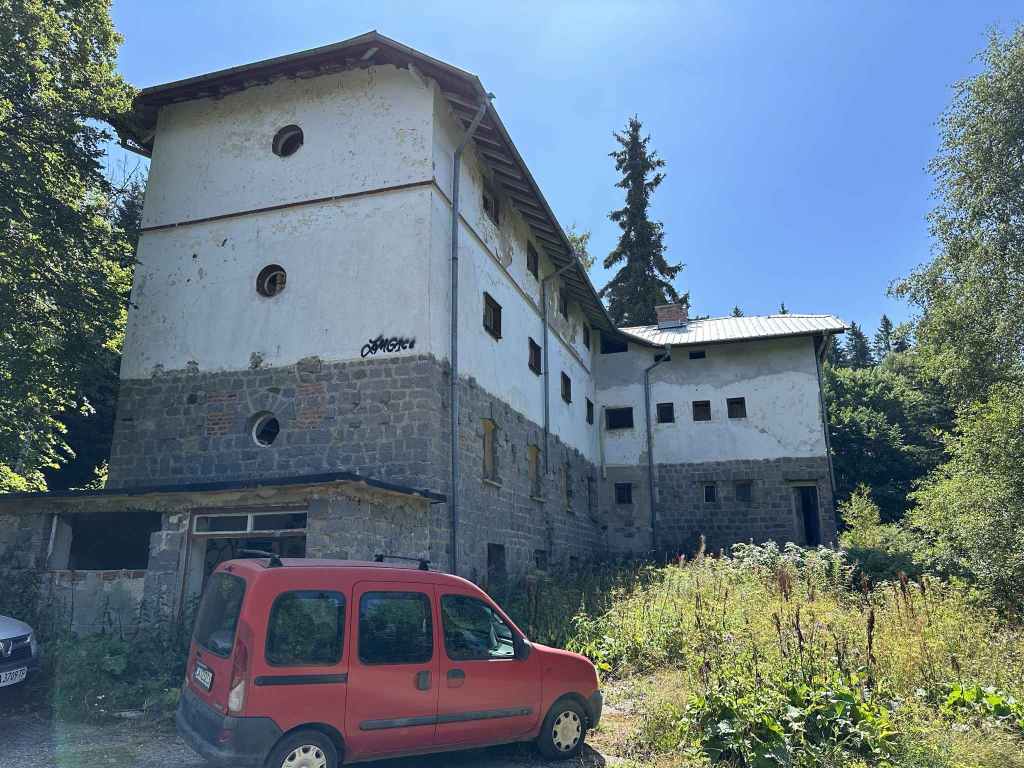
You are now ready to start your walk. There are two paths, both of which form part of the “low-altitude circular trail”. Going left will take you to Zheleznitsa Village, a lovely walk with wonderful views. The walk to Samokovishteto Waterfall is much shorter, little more than half an hour, but the waterfall is so picturesque it is well the effort.

Take the path on the right. You will soon pass a hut on the right. In ten minutes, the low-altitude trail is dissected by a path heading up and down the mountain. Continue straight (signposted Simeonovo Lakes), and you will come to Yanchovska River, a tributary of Bistritsa River, which it joins in Bistritsa Village. Go right, and the path takes you back down to Bistritsa. You want to go left, in the direction of Aleko Hut and Cherni Vrah. The path climbs steadily through forest. You become aware of Bistritsa River chuntering along on your right. Ignore any side paths or shortcuts and stay on the marked trail. In little more than twenty minutes, you will reach Samokovishteto Waterfall.

The first thing you see is the white line of the river. There is then a beautiful cascade of water where the river slides down a large flat surface, almost as if it was at an aqua park. On your left is a pool under the steady gaze of a boulder. On your right is a bridge over the river which takes you to a picnic area with a couple of tables and an open shelter. Sit in the shelter and look through the glassless window. It’s almost like watching TV.

It is a lovely place to stop and enjoy the nature. The flow of the water is captivating. This walk can easily be extended by continuing in the direction of Aleko Hut or by returning to the low-altitude trail and continuing towards Simeonovo Lakes, though neither of these destinations is very near. Otherwise, having taken your fill, simply retrace your steps to the top of Stefan Stambolov Street and head back into Bistritsa.

NOTE: Instead of taking the low-altitude trail and then turning left to head up the mountain, it is possible to reach Samokovishteto by taking the turning on the right when you enter Vitosha Nature Park, 2.2 kilometres from the centre. You then simply head uphill until you reach the waterfall, crossing the low-altitude trail at some point. This will shorten the walk from the centre of Bistritsa Village if you are on foot.

This map shows the walk in relation to the top of the mountain above (Aleko Hut on the right, the radar station on the left) and to Bistritsa Village below. You can also see the line of the Simeonovo-Aleko gondola lift.
A short film of Samokovishteto Waterfall on Bistritsa River.

Vratsa

Vratsa is a town north of Sofia, midway between Sofia and the river Danube. It is famous for its caves (in particular, Ledenika), waterfalls and rock formations. To the south-west of Vratsa is the Vrachanski Balkan Nature Park, established in 1989. This is where Vratsa Waterfall is situated, together with another waterfall, Borov Kamak, which can be accessed from the village of Zgorigrad. It is also where the Bulgarian revolutionary and poet Hristo Botev was killed in 1876, fighting against the Ottomans in an uprising that would be brutally crushed, but would sow the seeds for the liberation of Bulgaria from Ottoman rule two years later. Vratsa is also famous for the Rogozen Treasure, the largest haul of Thracian treasure ever found in Bulgaria, dating to the fourth century BC, part of which can be seen in the Regional Historical Museum.

Vratsa is connected to Sofia by railway (for train times, see the Bulgarian State Railways website: https://www.bdz.bg/en). To reach Vratsa from Sofia by car, take the A2 motorway, which connects Sofia with Varna on the Black Sea coast, north-east as far as Botevgrad and then head north-west on the E79 road to Vratsa via Mezdra. The journey takes about two hours. On entering Vratsa, keep going straight and in three kilometres, immediately after passing City Hospital on your left, there is a street, also on your left, called Belasitsa. You need to take this turning. This street continues for 800 metres and then abruptly ends next to an old people’s home, Zora. This is where the path to the waterfall begins (there are several places to park your car).

The walk from here to the bottom of the waterfall takes about an hour, but it is steep and slippery. It is not an easy path. Follow the path and, after a few minutes, there is a large gateway on your left with the words ‘Welcome to Vrachanski Karst’ written on it in Bulgarian. This is the name of the reserve, which forms part of the Vrachanski Balkan Nature Park. Do not be tempted to follow the track that climbs the hill directly in front of you, but go left, over the riverbed and under this gate. The riverbed will now be on your right. After five minutes, you will come to a shelter on your right, an ideal place to rest. The path starts to climb, and in another five or ten minutes you come to some benches and a fountain on your left. The path then crosses the riverbed, which was completely dry when we visited. You need now to follow the blue markers (they are sometimes red), ignoring a level path on the right and heading straight uphill. Bear in mind the elevation gain from the start of the walk to the waterfall is about 300 metres. If you stay on this path and observe the blue markers, you will reach the bottom of the waterfall in half an hour.

At 141 metres, Vratsa Waterfall, also known as ‘Vrachanska Skaklya’, is one of the highest in Bulgaria, but the flow of water is very little. There are some boulders at the bottom, and an enormous rock face. But where Vratsa Waterfall really stands out is with the views! I heartily recommend that you continue to the top of the waterfall, an elevation gain of another 200 metres, which takes about 45 minutes. As you face the waterfall, the path with the blue markers continues on your left (that is, it continues eastwards). Follow the path and, before reaching the top, you will pass a cave on your right, which you can investigate. Once you reach the top, the path heads right through some trees and then comes to a clearing. If you continue in the same direction, skirting the cliff face on your right, in five minutes you will come to the stream that feeds the waterfall. The views – of the waterfall and rock face as you climb; of Vratsa and Dabnika Reservoir in the distance – are spectacular and well worth the extra effort. The descent from the top of the waterfall to the start of the path took us about an hour.

All in all, you need to allow at least four hours for the hike itself. The climb to a large rock face, followed by a further climb to the top of the waterfall, is reminiscent of the visit to Bovska Skaklya north of Svoge, on the other side of the Vratsa Balkan, only this waterfall is higher.

The turning after the hospital, Belasitsa Street, ends next to an old people’s home. The path begins here. The waterfall is the dark patch on the rocks behind.
After a few minutes, turn left and pass through the gateway, which says ‘Welcome to Vrachanski Karst’.
A rock on the right.
A picnic shelter in ideal surroundings.
The path starts to climb.
After crossing the riverbed, the path becomes steep.
Vratsa Waterfall from below.
As we continue to the top, the views of the waterfall and Vratsa are wonderful!
A view of Vratsa from inside the cave.
At the top, the path heads through some trees.
And you come to a clearing.
In another five minutes, you reach the stream that forms the waterfall.
A view of Vratsa and Dabnika Reservoir from the top of the waterfall.