Harmony and Language

In the documentary film “Finding Harmony: A King’s Vision” being released on Friday, His Majesty King Charles III makes the point that we should be living as a part of nature, and not apart from it. We should not see nature as something out there to be exploited, rather we should see ourselves as being interconnected with the rest of nature and reliant on it for our well-being (both physical and emotional). In this short piece, I would like to suggest that language agrees with him.

Let us start by looking at where the idea of separation comes from. You can only see something, such as the environment, as being there to be exploited if you view it as being separate from yourself. If it is a part of you, you won’t want to exploit it. Separation comes from our ability to count. To count something, you must draw a line around it, otherwise you cannot count it. This is why we have uncountable and countable nouns. Uncountable nouns tend to be concepts, things that are too large or woolly for us to comprehend (to draw a line around). Countable nouns are things we can contain – in our imagination, or literally, in a bag or a bottle – and they are preceded by the indefinite article a or an. So, we might have rice and a bag of rice, or milk and a bottle of milk. The first is something that flows constantly, it seems to have no beginning or end; the second is contained (and note that it is the container, the bag or the bottle, that causes so many problems to our environment, it is our drawing a line around something in order to trade in it – in order to count it – that causes pollution).

God is uncountable. He is without limits. He is too large for us to comprehend. In the Creation, recounted in the opening two chapters of the Book of Genesis, what he did in effect was make himself countable. He made individual creatures and a planet for us to live on. Creation is the act of making the uncountable countable.

The name of God in Exodus 3:14 (the name he reveals to Moses at the burning bush) is AM. If we apply the phonetic pair m-n to AM, we get an. Language here – with a simple change brought about by applying a phonetic pair – is showing us how God made himself countable, because the indefinite article precedes countable nouns. Read these two words, AM and an, differently, and you get a man.

Man’s purpose was not to create. That is God’s job. We cannot create out of nothing, we can only give meaning to what already exists. We are not authors, we are translators, since nothing begins or ends with us, things pass through us (and we pass through them).

Read the word man in reverse and add a final e (very common in English), and you get name. This was man’s purpose: to name the creatures (Genesis 2:19). By naming them, he gave them meaning, he said amen to God’s will. All three words – name, mean, amen – have the same letters.

But we can go a different way. If I take a step in the alphabet, from m to l, and add the letter d, from man I get land. This is where man lives (hence the importance of nature). If I apply the phonetic pair d-t and add the letter p, from land I get plant, because this is what man must do in order to eat something, he is reliant on nature in order to survive. And if I add the letter e, I get planet. This is what the planet is for – for man to plant crops. God has given him a home.

But whereas God made us countable in order that we might have free will and make our own choices, we have taken this countability to mean that we can do with other people and things whatever we like. We have abused the relationship. We have put the ego first (not God). This is the relationship that we need to repair.

Exploitation is a result of countability (you cannot exploit something unless it is separate). So, we need to repair this breach, or at least to view it in a different light (as something to be respected, for example).

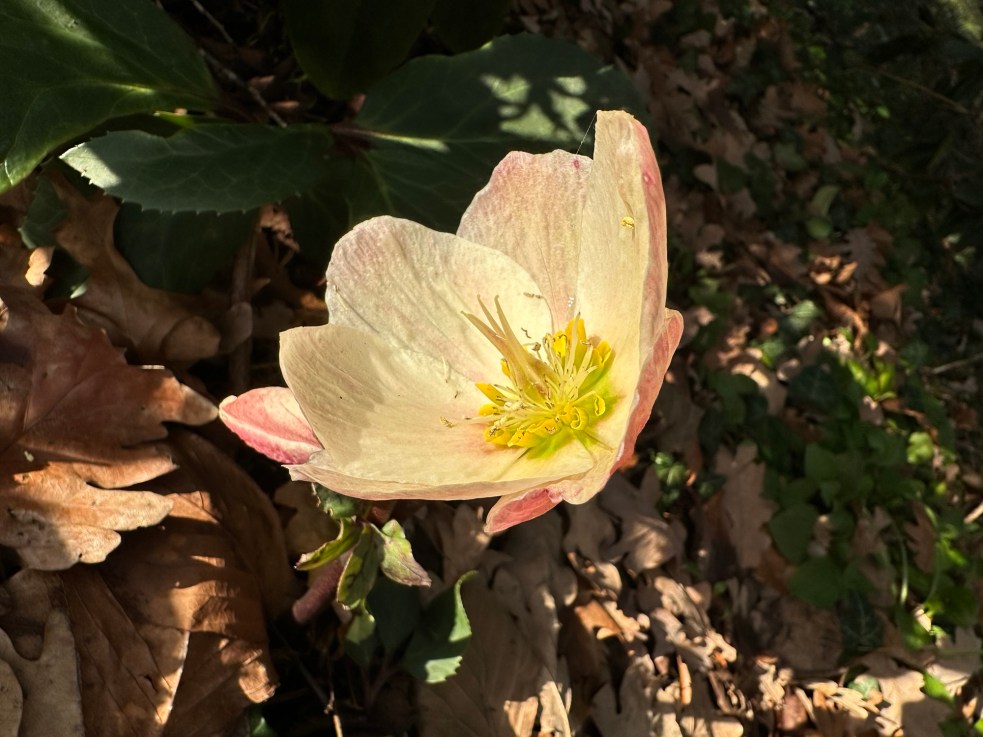
King Charles III explains how nature works in cycles; language also demonstrates this. We start with a seed. The first thing a seed does is sleep. I have rotated the letter d and added the straight line represented by the letter l. This is what we do in our lives when we are oblivious to our surroundings. That straight line represents the ego (it doesn’t matter whether it is written with a capital I or a lowercase l). Once it is in the ground, the seed dies (front vowels e-i). But it dies in order to bear fruit, to become something bigger (a tree). Nature is showing us the path to be taken by the ego – it must die to itself, to its selfish desires and fears, in order to grow in stature.

The seed puts out first a root and then a shoot. These words are connected (mid-vowels e-o, phonetic pair d-t, alphabetical pair r-s, addition of h). The root divides into two, while the shoot – which, as it appears above ground, looks remarkably like a tooth – becomes a tree and divides into three. The tree puts out branches (it doesn’t remain as a straight line), it grows leaves (to harness the power of the sun) and flowers (to attract insects), and the flowers give way to fruit. Fruit is just root with an f on it, and so we return to the beginning… Language is showing how nature is cyclical (in fact, the word return is in nature).

I think this is what His Majesty, with his attention to the importance of the environment, is encouraging us to do – to return to nature. Not to see ourselves as being cut off from it, but as a part of it, reliant on it not only for our physical needs, but also for our peace of soul. It’s like a neighbour – if you are at odds with your neighbour, how can you live peacefully?

The environment attends to our physical needs (without it, we will not be able to eat and we will die). It is beautiful to look at and it gives us peace. But this is not its ultimate purpose. I believe that nature, the environment, is an example out there for what should be happening in us. We also need to bear fruit, not just nature. We also need to die to our selfish impulses for the greater good, just as a seed does when it sprouts in the ground.

In the Gospel of Matthew, chapter 13, there are two parables that teach us about this. One is the Parable of the Sower. This also is a metaphor out there for something that should be happening in here. A sower goes out to sow. Depending on the ground’s receptivity, the seed takes root or it doesn’t. This is really about our ability to hear the word of the kingdom and, having heard it, to bear fruit in God’s name.

If the earth is a metaphor out there for what should be happening in here, then what is our earth? The answer is very simple. Take the last letter of earth and tack it on the front. You have heart. The heart is the earth where the seed of God’s word has to take root and bear fruit. That is the message – of Jesus in the Gospels, but also of nature.

We have to be able to see and hear in order to bear fruit in God’s name – Jesus places great emphasis on our ability to see and hear – and for this we need to learn humility. The humility to admit that our sight has been imperfect, which ironically is what then enables us to see.

I mentioned the phonetic pair d-t earlier. Add this pair to see and hear. What two words do you get? Seed and heart. Language is telling us that when we see and hear the message of the kingdom, a seed is planted in the earth of our heart and we are enabled, through the intervention of the Holy Spirit, to bear fruit. Nature is a lesson out there for what should be happening in here. When we become spiritually healthy, then we will treat the environment as it deserves.

And just in case we were in any doubt, Jesus provides another example: the Parable of the Tares (again, in Matthew 13). Someone sows good seed – the wheat, the children of the kingdom – but an enemy comes in the night and sows weeds – evildoers. The slaves of the householder ask whether they should remove the weeds, but the householder says to wait until the harvest (the end of time), in case they uproot the wheat as well.

Weed and wheat are connected (phonetic pair d-t, addition of h). They look alike, just as people in society look alike and we cannot always be sure of their intentions. But there is one fundamental difference. There is something that wheat has that a weed doesn’t, and that is ears. Wheat is able to listen.

Nature is an example out there for what should be happening inside us. The seed is the word of the kingdom – to love the Lord your God, to love your neighbour – and that seed should be sown in our heart, just as a physical seed is sown in a field. When this happens, we learn how misguided we have been, we learn humility, and we redirect our priorities towards the kingdom (this is the meaning of repentance, metanoia in Greek). We also bear fruit, just as a tree does. And once we can see, the rest of creation rejoices. It recognizes us for the first time. We establish a relationship that is one of love and care, which is King Charles’s message in his film “Finding Harmony: A King’s Vision”.

Jonathan Dunne
http://www.stonesofithaca.com

6. Heart

When we see and hear – that is, when we acquire spiritual vision – a seed is planted in the earth of our heart. This is why see and hear, with the addition of the phonetic pair d-t, give seed and heart. We need our eyes and ears to be opened.

Seed is also the past tense of see – or it would be, if see was a regular verb. And the past tense of hear would be heart.

This is because the past tense in English, which is written -ed, is pronounced d or t, depending on whether the previous sound is voiced or not. If the previous sound is voiced, for example b, then the pronunciation of -ed is d (mobbed); if, however, the previous sound is voiceless, for example p, then the pronunciation of -ed is t (stopped). It is only if the previous sound is d or t that the sounds have to be separated by a vowel sound and the pronunciation is id (decided).

An inordinate amount of importance is placed on the ability to see and hear in the Gospels. Christ is always crying out, “Let anyone with ears to hear listen!” (Mt 11:15, Mk 4:9). In Matthew 13:16, he tells the disciples, “Blessed are your eyes, for they see, and your ears, for they hear.” He is referring to spiritual vision, which unfortunately is not the kind of vision that is usually taught in schools, because in schools children are taught to label and count, to analyze, to think, to rely on reason, on effort (“work hard, and you’ll get good marks”), and this creates a certain distance between us and the things that surround us, leading to the idea that we can do something with them, such as deal, trade, buy and sell because they are somehow alien to us, external (we adopt the same attitude towards language).

It also encourages the idea that in order to achieve something in this life we must act (do something to something or someone else). If you teach a child to count up from 1 (never from 0), you are encouraging them to think in terms of profit and loss, quantity, what comes in and what goes out, you are encouraging them to trade in the things of this world, which is the whole basis of the dominant system, capitalism (counting up). You are not encouraging them to truly see the things of this world for what they are worth and to rejoice in them. This comes to us naturally, but in the hurly-burly of classrooms it is often extracted. A good example would be a friend of mine’s ability to draw. Before he attended school, he drew beautifully (several of his drawings were published in National Geographic Kids). Once he started attending school and went to art lessons, where he was taught the names of artists and encouraged to remember them, his drawing became analytical, predictable, uninspired. He had lost that innocency of vision that Christ wants us to reclaim because he began to analyze, to do the exercises that he was set, to put everything in boxes, to learn not in order to appreciate, but to pass exams (to achieve a certain mark).

This idea of effort being rewarded is very dangerous, because it leads to the notion that we must always be doing something, and that implies doing something to something, not just letting it be. I have a neighbour who is always cutting down trees and bushes. This morning, another bush had disappeared. I noticed its absence. He obviously feels the need to be busy, but I can’t quite understand why he doesn’t leave them alone. After all, trees provide food, warmth, oxygen, shade, and homes (somewhere to hide) for the sparrows and great tits that populate the local area.

And what do we see with? Our eyes (addition of y). What do we use to hear? The ear (addition of h). So, we have: eyes-see-seed and ear-hear-heart, with the addition of the phonetic pair d-t in the final word of each triplet. This is because in order for the spiritual seed to take root in the earth of our heart, and to effect a change, we must be able to see/hear the message. Otherwise, the words will fall on deaf ears. This is the message of the Parable of the Sower that precedes the passage in Matthew I quoted earlier.

In the first of the Parables of the Kingdom that follow this passage, the Parable of the Tares, there is one who sows good seed in the field of the world – Christ himself – and the enemy (the devil) who comes at night to sow weeds among the wheat. “The good seed are the children of the kingdom; the weeds are the children of the evil one” (Mt 13:38). Weed and wheat are, of course, connected (phonetic pair d-t, addition of h). They are planted in the same field until the time of the harvest, when an angel will come to glean – language here is predicting the future, it is telling us what will happen, just as, in the case of creation, it tells us how the world came into being.

And isn’t it interesting that, of the two, weed and wheat, it is only the second that has ears? It is also, ironically, only the second that leads to true wealth (addition of l) – which is not having more of something, but seeing the wonder in people and things, without the need to possess or exploit them.

Jonathan Dunne

Heart of Language 6/15

Next: Heart of Language 7/15

Back to: Contents

4. Earth

Our bodies mimic the physical environment – our heart is the earth, our soul the soil, where spiritual seeds can be planted.

Father also contains earth. And heart.

In Genesis 1:9-13, we read that the earth was created on day three, together with the sea, seed and tree (words with which it is connected).

We have seen that the vowels emerge from the throat, where language originates, in a different order from that in the alphabet. The back vowels are u and o, the central vowel is a, and the front vowels are e and i; u and i are close vowels, o and e are mid vowels, while a is an open vowel (this is why a doctor asks you to pronounce this vowel when she wants to look down your throat, because it is the most open vowel there is). So the vowels as they proceed from the throat form an inverted pyramid, according to where in the mouth they are produced:

u                                             i

o                      e

a

Now, vowels are fluid. I have already explained that they equate to water (water forms in the mouth when you hold one for long enough). This is why a vowel can be said to flow (phonetic pair f-v, addition of e). Languages like Arabic and Hebrew don’t even write them down, they only list the consonants. This means it is fairly easy to change a vowel in a word connection, especially if they are pronounced next to each other, such as a and e.

If we maintain the digraph th, then we can see that earth in reverse gives three, the day on which it was created. It also happens to be the third planet in order of increasing distance from the sun. And, in Christian theology, it was created by the Trinity (God in three persons) – the Father (the origin of breath, from whom the Holy Spirit proceeds), the Son (Christ the Word, begotten of the Father) and the Holy Spirit (breath or wind, pneuma in Greek, the basis of all speech). So we can understand why the number three might be so important for earth.

While a seed is planted in the earth in order for it to grow, a spiritual seed has to be planted in another kind of earth – our heart. This is why the two words are connected. It is not enough for us to hear a spiritual message, we have to take the message on board, to let it into our hearts, where the seed of an idea can grow and bear fruit.

We might then remember the layer of something that surrounds the earth like a shell or a circumference: soil. We cannot place the seed on a rock or among thorns if we want it to grow. We must place it in the soil.

Again, when it is a question of a spiritual seed, there is another kind of soil where we must plant it – our soul. This is where the spiritual seed will bear fruit.

So, earth-heart, soil-soul (containing the close vowels, u and i).

Language is drawing a comparison between the physical environment and our own bodies, in which the heart takes precedence (and where the soul is perhaps a layer around it, as soil is a layer around the earth).

Jonathan Dunne

Heart of Language 4/15

Next: Heart of Language 5/15

Back to: Contents

I and Me

The line divides. The line is a wall or a tower. It defines. We use it to mark the borders between countries. To cross the line, you need permission, although nature will cross the line at will. This is a human invention. We use it to indicate private property and enact laws that will punish anyone who trespasses the line without permission. We use it in a sense to make ourselves out to be authors, as if the land, the products of the land, somehow belonged to us. We have misunderstood our role as translators. Our role is to take what is there and to transform it, hopefully for the better, to make it useful (to ourselves and others). But we cannot do anything without the earth and its gifts, as we cannot cook without ingredients. We are recipients.

But we do not like this idea, because it takes away our sense of control. We like to pretend that things begin with us, when they don’t, they pass through us. We cling to the line, because without the line there is a hole, we feel empty.

The ego in English is a line: I. And so is the number 1. We count up from 1 when we do business. We teach our children to do the same. We forget to count from 0. Once you start counting from 1, there is no end, there is no knowing where you will get to, so it produces a sense of uncertainty, not control. We feel the need to produce things (despite the obvious harm to the environment), to make a profit. We put ourselves in control, in the driver’s seat. We make ourselves the subject: I think, I do, I decide. But this is an illusion, or at least it doesn’t last.

A verb has a subject and an object. The subject carries out the action of the verb, the subject is in the driver’s seat (where we want to be). The object is acted on, the object is the recipient of the action. As we grow in the spiritual life (as we grow older), we begin to realize that perhaps our role is more to receive than to do. We receive help, we receive healing, we learn (we receive knowledge). We embrace that hole we avoided earlier, the circle (0), and find it actually makes us whole. Where is the difference between “hole” and “whole”? It is in the letter “w” at the beginning of the second word.

Language, like nature, wishes to tell us something. It is full of spiritual knowledge waiting to be seen, deciphered, harvested. A tree when it begins life is like the ego: a straight line (I). But it does not remain a straight line, otherwise it will be fruitless. So it branches out. It blossoms. And bears fruit. The tree is a lesson in what we have to do with the line, the ego, in our lives. It is an ego turning to God. The line (1) acquires branches and becomes 3 (think of a child’s drawing). This is why “tree” is in “three” (the only difference is breath, the letter “h”), because if it doesn’t branch out, it is not a tree, it is just a stick.

Nature and language wish to tell us something, but we are completely blind to this aspect. We think of nature and language as a tool to be used to our advantage (in short, to make money). But we are not here to make money, we are here to grow spiritually, so that we can prepare ourselves for the life to come. We are here to gain experience. Experience teaches us, it makes us more humble, it make us realize that not everything depends on us.

“I” is a subject. But God does not want us to remain as a straight line (we will not be able to bear fruit if we do). What is the object of “I”? If “I” is the nominative, then what is the accusative, the one who is acted upon, the one who receives? It is “me”.

I-ME. This is the same process undergone earlier by the tree. If we turn these words into numbers, we will see that “I” closely resembles 1, a straight line, but “ME” (written with capital letters) closely resembles two 3s (all I have to do is rotate the letters). When we cede control, when we accept that control was never really with us, when we allow ourselves to be acted upon, when we embrace the hole, the uncertainty, that is at the centre of human existence, then the process of spiritual growth can begin. Then we open ourselves to healing.

We become like the tree. We branch out.

This can be seen in other ways, too. What word sounds like “I”? “Eye”. An eye when it is closed is a straight line. What happens when we open our eyes? The eye becomes a circle. We count down. I-O. This process of opening the line is what God requires of us. We open our eyes and begin to see (“see” is in “eyes”). We open our ears and begin to hear (“ear” is in “hear”).

And it can be seen in language. Take the word “live”. In reverse, this word gives “evil”. That is what happens when we distort the purpose of human life and act selfishly. But if we count down and replace the “I” with “O”, we get “love”. It is the same with “sin” and “son”. Again, the line has been breached, we have accepted that not everything is under our control and have made ourselves receptive to healing (note that this takes an act of will on our part, it is not the response of an automaton, we have free will).

Now, in language, the consonants, the flesh of language, are divided into phonetic pairs according to where and how they are produced in the mouth. One such pair is “d-t”. These two consonants are produced in the same way, with the tongue against the front of the roof of the mouth. The only difference is that “d” is produced with voice, while “t” is voiceless. So they are a phonetic pair.

And what happens when we add this phonetic pair to “see” and “hear”, the result of opening our eyes and ears? We get “seed” and “heart”. So a seed is planted in the earth of our heart, in the soil of our soul.

On this Good Friday in the Orthodox calendar, when Christ himself counted down (I-O) by going to the Cross, I would like to suggest that while we think of language and nature as being at our service (which they are, but not to be exploited), their real purpose is to teach us. They are not tools to make money, they are tools for learning. We become like the tree and branch out (1-3). Away from the line that divides us. Or we count down (I-O). Proof of this can be seen in the landscape that surrounds us, in the language we use every day and in the Christian understanding of the Trinity (3 in One).

Jonathan Dunne, http://www.stonesofithaca.com

Video

Theological English (13): Believe

In this fourteenth video on “Theological English”, Jonathan Dunne looks at the importance of the word “believe” in the Christian Gospel. The word “believe” crops up again and again in the Gospel – this is what God requires of us: to believe in him, to believe in his name, in order to receive – the power to become children of God, eternal life, salvation, healing. When we believe, all things become possible. The video focuses on John 7:38 and the verse from Scripture: “Out of the believer’s heart shall flow rivers of living water.” Once again, language is not only used to convey the message – it is the message.

To access all the videos in this course, use the drop-down menu “Theological English (Video Course)” above. The videos can be watched on Vimeo and YouTube.

Gallery

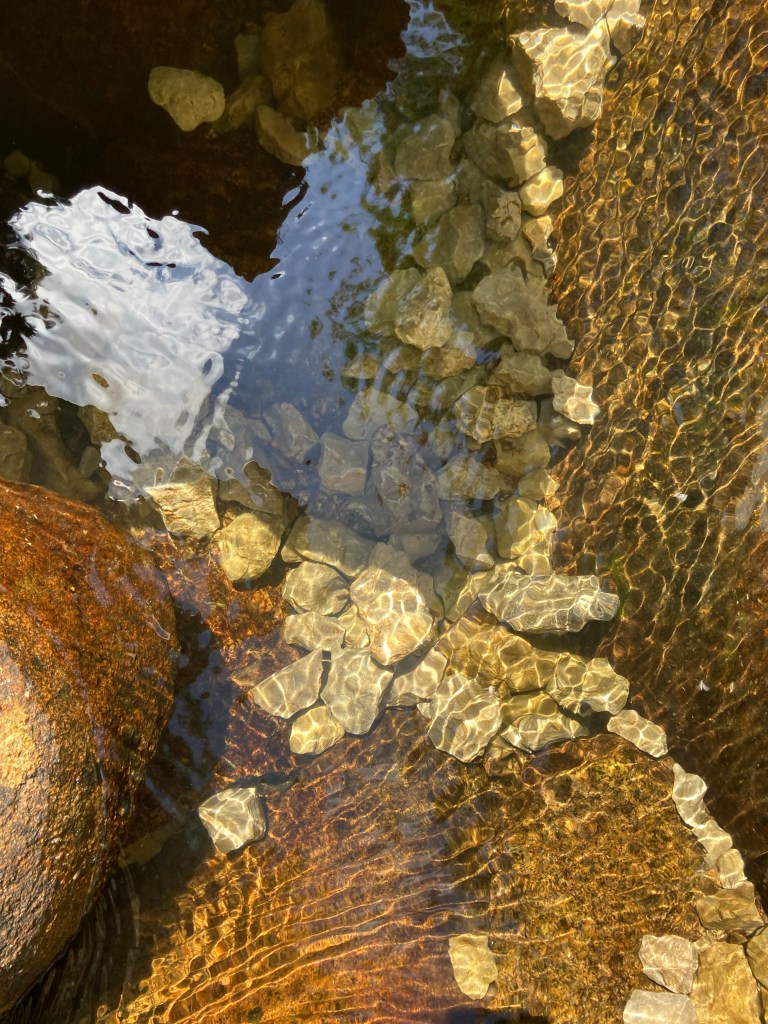
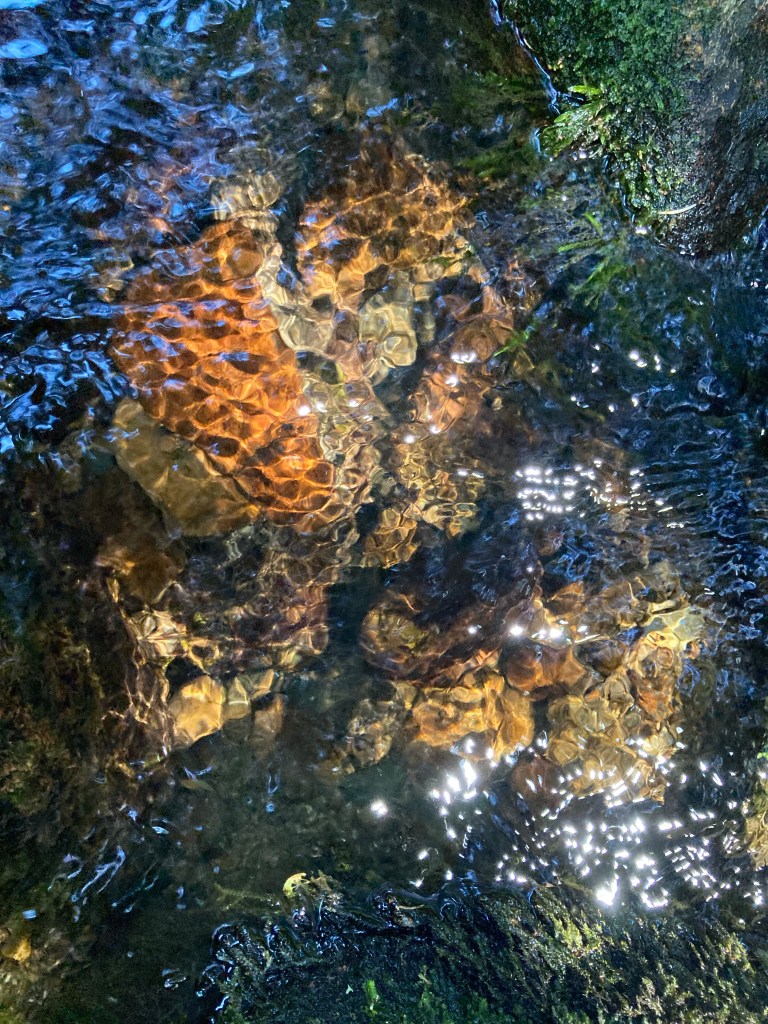
Water

It is remarkable that water has four of the same letters as earth. And where would the earth be without water? Earth has the same letters as heart. Without water, our heart would shrivel up.

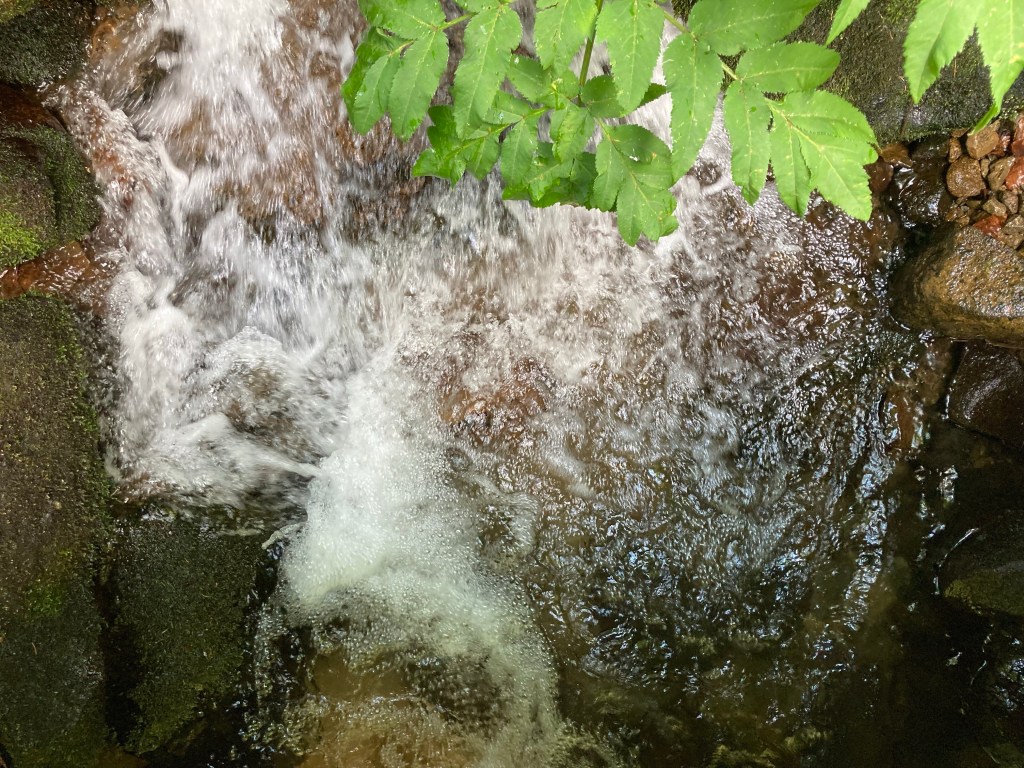
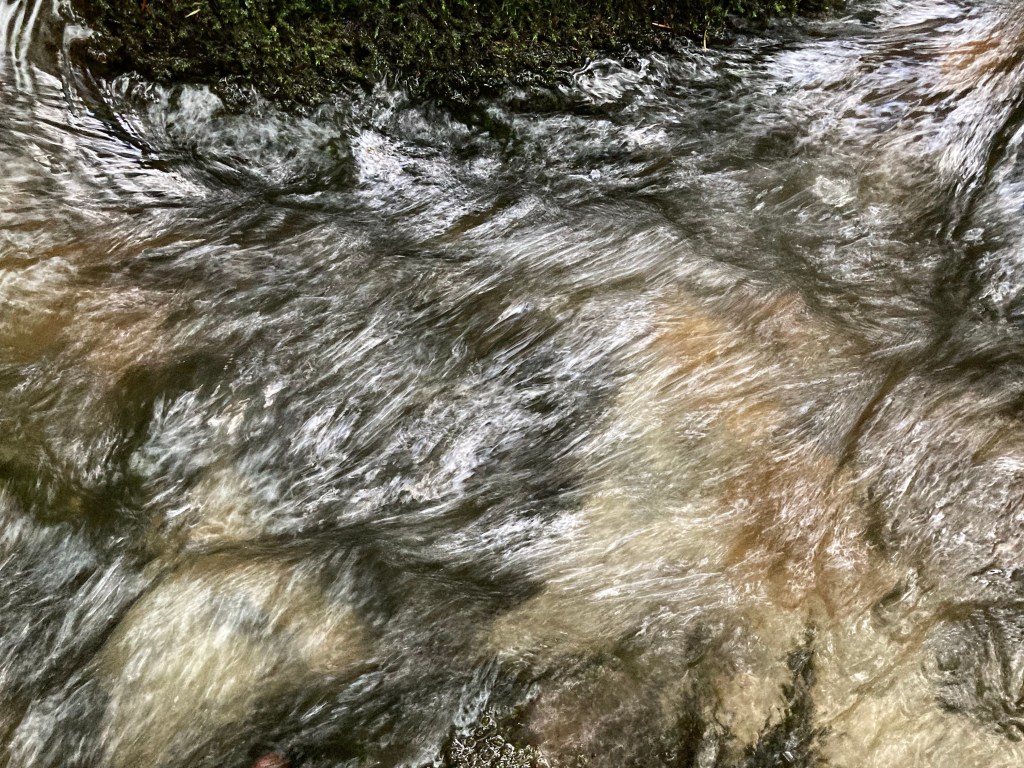
What amazes me is the way it flows constantly. Even in the night, when I am not there. During the week. All the time until my next visit, it flows.

Sometimes it is blue, like the sky. Sometimes it is reddish brown, like a brick. Sometimes it takes on the colour of my shadow.

It is whatever is thrown at it. But sometimes it becomes a blur – too fast for my eyes to distinguish.

In the night, it is black – unless there is a moon, I imagine.

Water always finds a way – even if it has to go underground. Or fly through the air.

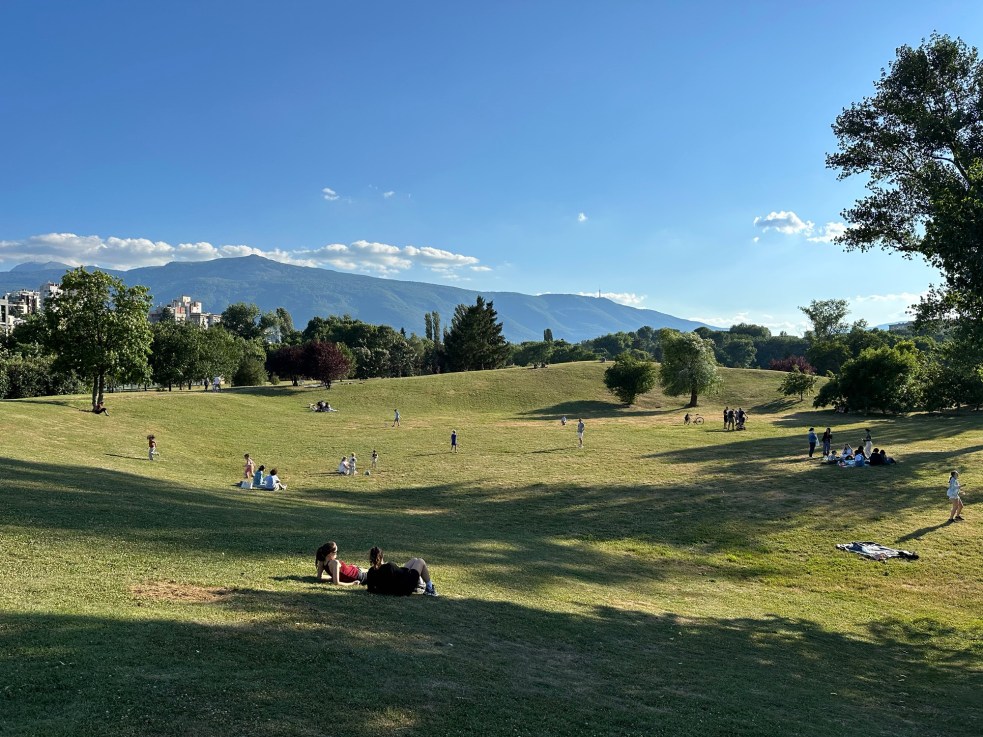
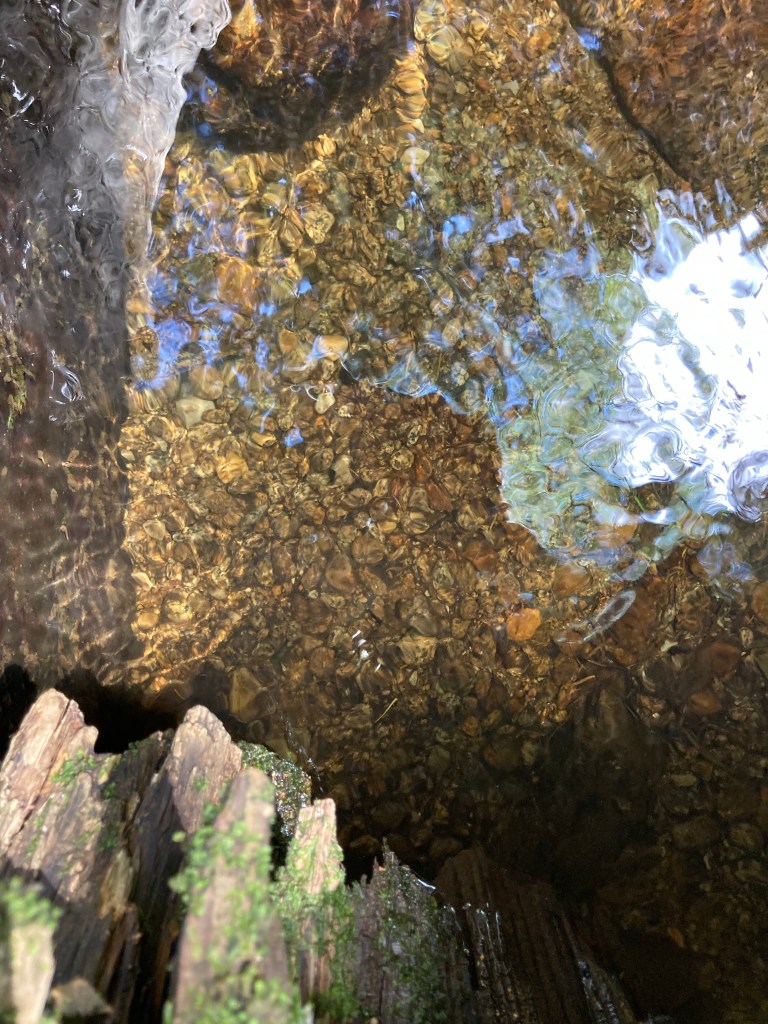
On Vitosha, I have seen it so calm it resembled a mirror. But I have also seen it rage after a storm. Then it is no longer transparent, it seems to boil.

We step on the land; without water, we would sink, as in a desert. Too much water, and we swim.

Water lies on a bed of gravel. And rests its head on rock pillows. It rises up from the rock. It slips through gaps. It causes us to build bridges – that is a good thing.

When it enters the air, it is smashed into smithereens.

Later, in the sea, it evaporates to fall on my head. Then I walk through a sauna. The water is so prevalent it climbs up my legs. I have sat in the car as it beat down with unusual ferocity. Still I got out.

I like it when it’s the mountain and me. Today I walked through the hordes, as if I came from another planet. Another age.

Water is most beautiful on the mountain. It is like a curtain. Or a seam. The mountain shudders. Sends the water tumbling. It resists – for now.

I know a secret place where I sit and watch it gleam.

27 August 2022

Text and photographs by Jonathan Dunne, photograph selection by Tsvetanka Elenkova.

Vitosha is the mountain that lies just south of Sofia, the Bulgarian capital.