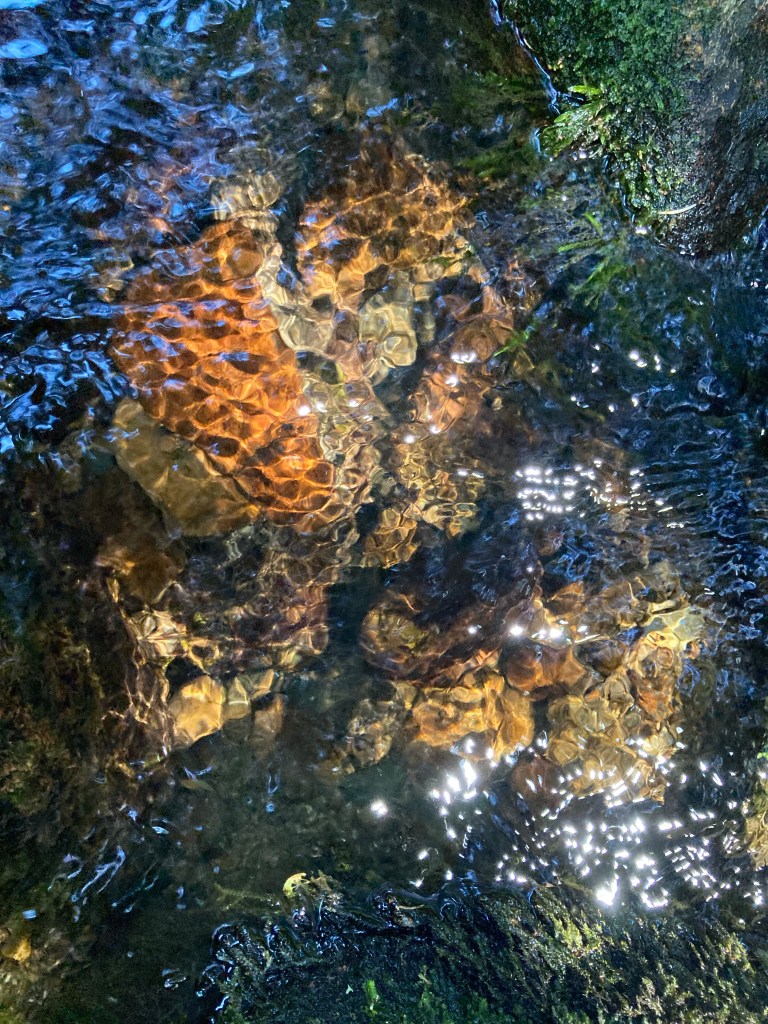
Baptism of Christ

Readings: Isaiah 43:1-7; Psalm 29; Acts 8:14-17; Luke 3:15-17, 21-22

We all speak. That is, we produce sounds with our mouths. After the service, we will gather around the coffee machine and do this. We will discuss the week’s events and thrash out the finer details of this sermon. We will express opinions and hopes and desires. We will enquire after friends. And we will leave, having shared fellowship.

How strange it would be if we all gathered in the entrance hall and didn’t say anything! If we stood in each other’s company with our mouths closed. We might raise our eyebrows or wiggle our ears, but no further communication would be permitted. Eventually someone would snort or yawn, and the spell would be broken. We would laugh and launch into a discussion.

We worship a God, Jesus Christ, whom we call the Word. This is how John the Evangelist refers to him at the start of his Gospel: “In the beginning was the Word, and the Word was with God, and the Word was God.” And we read in chapter 1 of the Book of Genesis that the world was spoken into being. Each paragraph begins, “And God said.” “Let there be light.” “Let there be a dome in the midst of the waters.” “Let the dry land appear.” Etc.

And yet we pay very little attention to speech. This is unusual since I would say that Christianity is a religion of the Word and its ritual is based on the action of speaking. The first thing we do when we speak is breathe out. It is impossible – I think! – to speak as you are breathing in. So, the first element of speech is BREATH. Breath is represented in the alphabet by my favourite letter, the letter “h”.

Then we add voice to our breath and produce the vowel sounds. Think of a baby. A baby is a student of phonetics. It opens its mouth (hopefully not at three in the morning) and adds voice to its breath, producing vowel sounds that may range from an “oo!” to a long, drawn-out “ah!”. But it will generally not produce consonants because consonants involve blocking the flow of air with the lips or tongue and this is more difficult.

A vowel sound is what the doctor asks you to make when they want to examine your throat: “ah!” “A” is the most open vowel there is, so it involves opening your mouth to its greatest extent. It is what we do when we sing. The longer you hold a vowel sound, the more saliva will collect in your mouth, and you will have to swallow. This is because vowels are like water. It is as if a river was flowing through the canyon of our mouths. So, the second element of speech is WATER.

When we obstruct the flow of air with the lips or the tongue, we produce the consonants. Perhaps the easiest consonant to pronounce is the letter “m”. This involves pressing the lips together. “M”. And this is often the first consonant a baby will produce, when it says, “Mama”.

Since the consonants are produced by blocking the flow of air with our lips or tongue, we might say that the third element of speech is FLESH. So, we have BREATH (the letter “h”), WATER (the vowels), and FLESH (the consonants). The three elements of speech, which we practise unknowingly, as when we change gears in a car.

This is how I would analyze the action of speaking: breath, water, and flesh. In chapter 2 of the Book of Genesis, there is a second creation account, which involves the creation of man. In verses 6-7, it reads as follows:

A stream would rise from the earth, and water the whole face of the ground – then the Lord God formed man from the dust of the ground, and breathed into his nostrils the breath of life; and the man became a living being.

Gen 2:6-7 (NRSV)

Most of us, I suspect, would regard speech as the agent of creation as a kind of metaphor, but I think this is exactly what happened. Nowhere in the first two chapters of Genesis does it say that God made the world with his hands, like a potter fashioning clay. It says that he spoke. All through the first two chapters, we read that God said. And the three elements of speech – breath, water, and flesh – are clearly present here: God “breathed into his nostrils the breath of life”, “a stream would rise from the earth, and water the whole face of the ground”, God “formed man from the dust of the ground”. We read later in Genesis 3:19, “You are dust, and to dust you shall return.” This refers to our material body.

We find the same emphasis on the power of speech in Psalm 29: “The voice of the Lord is powerful… The voice of the Lord breaks the cedars… The voice of the Lord strikes with flashes of lightning… The voice of the Lord twists the oaks and strips the forests bare…” That’s pretty impressive – to do all of that only with words. It doesn’t say that God did these things with his hands, and this is a constant in Christian texts and prayers.

We are not able to produce matter with our mouths, but with our words we can have a material effect on our surroundings. We can make someone happy by saying something nice to them. We can make someone cry by saying something hurtful. We can order someone to be killed. Or we can issue a pardon. Our words can be recorded and can influence future generations or even the course of history.

After the creation of man, man – the Hebrew word is “Adam” – is given a task. He is not asked to make the creatures – that is God’s undertaking. He is asked to name them. To apply a word to that particular creature. This occurs in Genesis 2:19-20. Most of us are not in the habit of adding words to the dictionary, of coming up with a name for a horse or a squirrel. But we do name our children, and names are important. They may not fix a child’s destiny, but they do, to some extent, determine their character. There is a Bulgarian name, Milen, which comes from the Bulgarian word for “kind”, mil, and I have noticed that many people called Milen are kind in person. It is as if they live up to their name.

A child is named at their baptism. The priest takes a bundle of flesh and douses their head with water three times, invoking the Holy Spirit. But hang on a minute! Aren’t those the three elements of speech – breath (the Holy Spirit), water (the water of the font), and flesh (the tiny baby)?

In effect, in the sacrament of Holy Baptism, a child is being made into a word of God – not the Word (that is Christ), but they are being called to be Christ-like, to reject the devil.

And what happens in the sacrament of Holy Communion? The priest takes the bread, the fruit of the earth, and the wine, which is a liquid like water, and consecrates them by the invocation of the Holy Spirit. Again, the three elements of breath, water, and flesh are present. We find all three elements in bread, which is made from a dough of flour and water and has air in it.

And what about the first creation account in Genesis, where we read that the waters were separated from the waters and the sky was created, then the waters under the sky were gathered together into one place and the dry land appeared. Aren’t these again the three elements of speech – breath (the sky), water, and flesh (the dry land)?

I would suggest that speech is central to an understanding of the world around us and our place in it. It can effect change, it can bring people to their senses. It can give meaning, as when we take our child and name him or her.

When we are baptized, as Jesus was by John the Baptist in the River Jordan, we have a choice. We can choose what kind of people we want to be. We can decide on the words we will use, on the actions we will take, whether to tell the truth or lie, whether to help others or steal.

We are a word of God. We can choose to be wheat or chaff. We can choose whether to please God or to turn away from him. According to our life, so our definition will be. And this is why we need to cling to the name of Jesus, to think only of him, so that in our earthly pilgrimage we become as much like him as possible. We are made in God’s image, now we must become like him.

Come, Lord Jesus! Amen.

Jonathan Dunne, www.stonesofithaca.com

Photo caption: Letters make good staging posts. Saints Cyril and Methodius, the brothers from Thessaloniki who wrote the Cyrillic alphabet, outside the National Library in Sofia, Bulgaria.
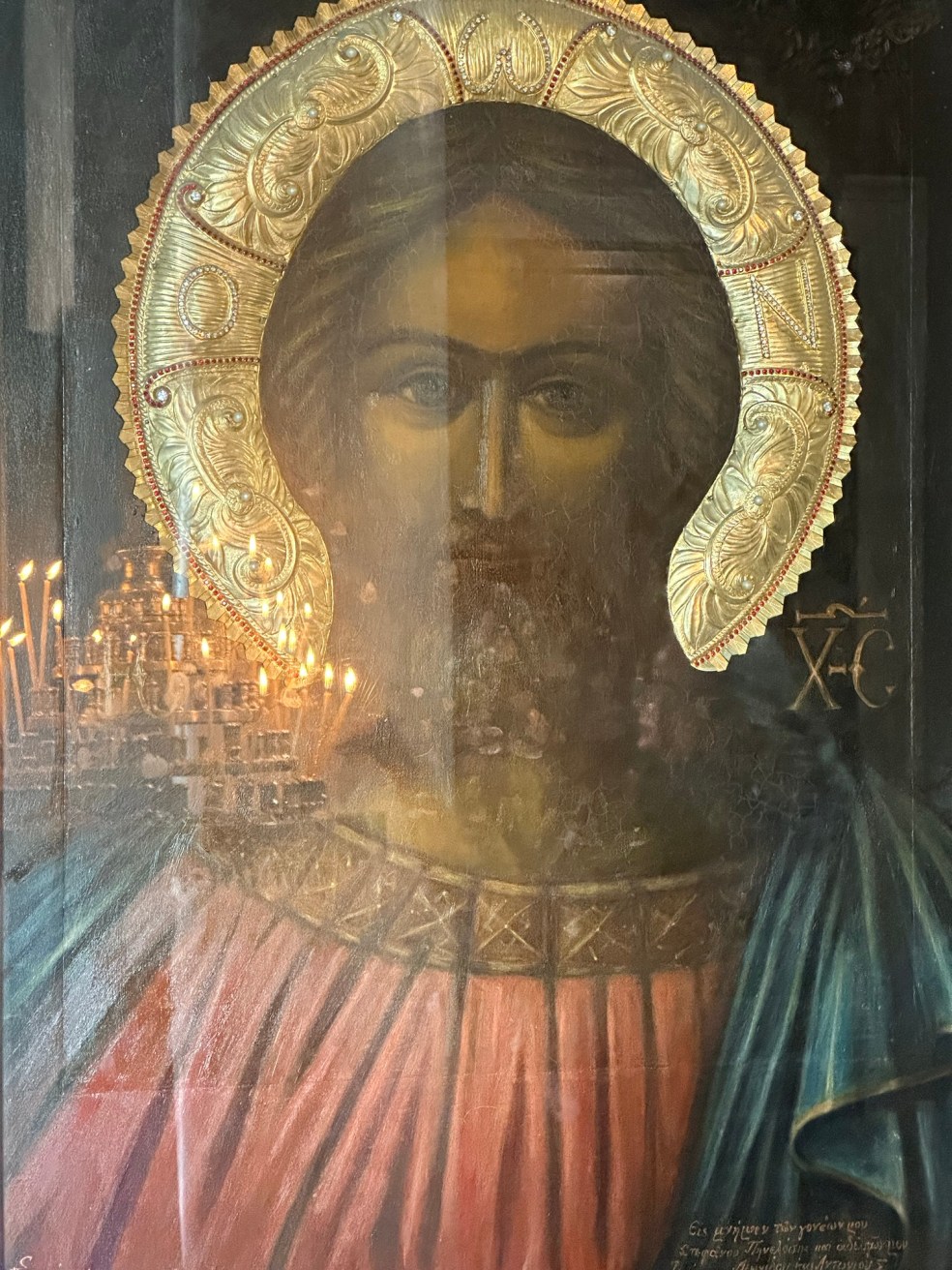
13. O WN

Language is thought made manifest. We are words in a dictionary, responsible for and dependent on others. Christ entered his creation, came through the eye of the needle, in order that we might have the courage and confidence to go in the other direction.

We have now seen a correlation between Christ and the environment we live in, but this should not surprise us if we accept that Christ is the Word and the world was spoken into being.

Christ is the Word. It says in the Christian Creed that all things were made by him, they were spoken into being. So physical matter would seem to be the result of language.

When we speak, we make things manifest in a similar way – our thoughts, our observations, our wishes. So we also turn something that did not exist into physical matter. We are using fragments of the Word to do this, as if the Word had been divided among us (like pieces of bread, or shards of a mirror). But the idea is the same – we make things manifest by using language.

So I would say that we speak Christ. Since there is a striking connection between the words son and sun (they are homophones, they sound the same), I would suggest that we see by him. After all, in John 8:12, he calls himself “the light of the world”. Perhaps this can be understood literally (just as the story of creation in the Book of Genesis is literally a description of speech, or the concept of the Trinity is literally three in ONE).

We speak him, we see by him. We also breathe him if we accept that Christ is the Second Person of the Trinity, O2, the chemical formula for oxygen. When we combine this symbol in reverse with the letter for breath, h, to refer to the Holy Spirit, we get H2O, the chemical formula for water. So we also drink him.

It would seem that our life is completely dependent on Christ, whether or not we believe in him. Enter an Orthodox church and you will most likely see an icon of Christ Pantocrator (“Ruler of All”). In this image, Christ is shown with the beams of the Cross behind him (only three are visible), and in these beams are written the letters O WN.

O WN is Greek for “the being”, which is the translation of the name that God reveals to Moses at the burning bush in Exodus 3:14: I AM. Again, we find here confirmation of the Trinity, because O WN is almost identical to ONE, it’s just that one of the letters has been rotated.

O WN also spells three words in English: own, won and now. Christ claims us as his own; the victory is his, he has won; he is here with us now (the meaning of the name Emmanuel).

I have seen this name written O WH. In Cyrillic, the letter H is pronounced N, and indeed the two letters are very similar (only the crossbar has become slanted). There is also a rough breathing in the original Greek, ὁ ὤν, the reverse apostrophe, which equates to the letter h in English.

If we write the name in this way, then we will see that it spells the words who and how, the result of making the progression AIO from what (A, the letter of creation: “What is this creature?”, “What shall I call it?”) through why (I, the letter of the Fall, an expression of distrust, of disobedience: “Why should I do this?”, “Why should I believe you?”).

Who and how are the questions that we should be asking. What is factual. Why is self-centred. We think that the purpose of life is to amass things and then to share them out, because we were taught at school to count up from 1, to do sums, multiplications and divisions. But actually the answer we are seeking is a person.

Christ gives us the answer to both question words when he says, “I am the way, and the truth, and the life” (Jn 14:6). I am and way are connected if we turn the m upside down and replace the vowel i with its semi-vowel equivalent, y. Both words contain the progression AIW (omega written as w).

We have also seen how when we flee the ego, the I, when we refuse to heed its selfish demands, we automatically create three symbols: A+O, the name of God Alpha and Omega. This can be written A ’N’ O and is found in the conjunction and, the reverse of which is DNA (it is in our DNA to do this). If we write this same progression with the Greek letter for omega, w, we get ANW, which with the w turned upside down gives man. So this denial of the ego, of our innate selfishness, is in the word that describes us (and woman is the same, only it has O3 at the beginning).

The automatic result of turning away from the ego, I, is to say the name of God Alpha and Omega: A+O. By turning away from the ego, we call on him. This is why God and ego are only a step apart in the alphabet (d-e). And him is just I’m with a little breath (h) before it.

This is what makes us human, a combination of hu (Sanskrit for “invoke the gods” and the root of our word “God”) and man – physical beings with the divine spark in them, the potential to become gods by grace if we attend to our true nature, which is not to grab whatever we see out there and to claim it as our own, making a mockery of the divine in us, but to see ourselves as part of the whole, a word in the dictionary, responsible for and dependent on the other. This most ancient way of calling on God – hu – sounds exactly the same as who, the letters we find in Christ’s icon, emphasizing what it is we should be asking.

In the Old Testament, there are two other names of God, apart from I AM. They are YHWH, the Hebrew Tetragrammaton (Yahweh), and El.

YHWH is extremely close to the question word why. So, if we make the progression from I to O, as we did with live-love, sin-son and Christ-cross, opening the line (opening our spiritual Is) to form not a barrier, a wall, but a tunnel that we can walk through, like the proverbial camel through the eye of the needle, just as why gives who, so the name of God in the Old Testament, YHWH, gives O WH, the letters found in Christ’s icon.

And if we place the other name of God from the Old Testament, El, in front of O WH, the two names together spell WHOLE in reverse (keeping the digraph wh together, as we did with earth-three).

This combination YHWH-O WH (why-who) and El-O WH (whole) goes a long way to confirming Christ as the fulfilment of the Old Testament law and prophets. This is why I would say that language is not only Trinitarian (three in ONE), but also Christological.

All physical appearances of God in the Old Testament are said to be by the Logos – that is, Christ – but we are not allowed to touch him. In the New Testament, when he walks among his disciples, eats with them and washes their feet, God himself has entered his creation. He has slipped through the hole – I become O – but in the other direction, so that we will have the courage and confidence to go the other way. This is an extraordinary act of condescension, of coming down to our level, and it was only possible because one of his creatures – namely Mary – acted as a conduit. How else in bodily form do you enter the creation that you have made, if not through one of your creatures?

Jonathan Dunne

Heart of Language 13/15

Next: Heart of Language 14/15

Back to: Contents

5. Seed

The life cycle is reflected in language; all the words connected with creation, fertility, reproduction, have aer (air) in them, the same aer that forms the basis of speech.

In order to grow and bear fruit, a seed must be planted in the earth. Yes, but how is this process reflected in language?

A seed must be planted in the ground in order to bear fruit. It must be buried. That is, it must disintegrate (not remain whole) in order to give rise to new life. This is surely a metaphor for our own resurrection.

So, a seed dies, and that is why the two words are connected in reverse if we interchange the front vowels e and i. We cannot bring forth new life except by being put in the ground (our ego, that is). We become dead to our selfish demands. And out of that deadness comes a new, unrestricted potential.

Alternatively, we can add the letter l to seed and get sleep (by rotating the letters d and p). Seeds have been known to sleep in the ground for hundreds of years before sprouting and giving forth new life. In the ancient world, early Christians referred to burial sites not as “graves”, but as “resting places”, because the people buried there were not dead, but asleep.

The seed dies and puts forth first a root and then a shoot. Do you see how these words are connected – seed with root (phonetic pair d-t, step in the alphabet r-s), root with shoot (step in the alphabet r-s, addition of h)?

A shoot appears above ground (reminding us of the seed’s existence), and as it does so, it closely resembles a tooth (step in the alphabet s-t) emerging from the gum. Language is often graphic like this.

As the root divides into two (too, addition of r), so the shoot divides into three and becomes a tree (addition of h). It cannot become a tree except by dividing, by putting out branches, as cells divide in the human body. This division, paradoxically, leads to increase.

One is three, as in the case of the Holy Trinity. The tree harnesses the power of the sun (Son) through each leaf (phonetic pair l-r, pair of letters that look alike f-t). It produces a flower, which wilts, giving way to a fruit (froot) with the seed in it. And the whole process begins anew.

So, we have: seed (dies/sleep)-root (two)-shoot (tooth)-tree (three)-leaf-fruit (root), all perfectly reproduced by language.

It is the earth that enables this, and perhaps it is time we notice the presence of air (written aer in Latin and Greek) in so many words that have to do with creation, fertility, reproduction: aer-earth-water-breath, bread, breast (all three sources of nourishment that share the same first four letters with the phonetic pair d-t, addition of h/s)-create-father.

They all have aer in them, just as language is impossible without breath (we add voice to our breath to form the vowels; we obstruct our breath, with or without voice, to form the consonants). This again provides a link between the physical world (we cannot live without breathing) and language (aer is in many words connected with creation).

And by taking a step in the alphabet, r-s, as we did with God-ego (d-e) and father-gather (f-g), we find aer in sea (imagine a sea without aer in it, it would be dead).

This brings us back to the account of creation in the Book of Genesis. On day three, the earth was created (spoken into being), together with the sea, plants yielding seed and the fruit tree.

All reflected in the words we speak.

Jonathan Dunne

Heart of Language 5/15

Next: Heart of Language 6/15

Back to: Contents

3. Human

The elements of speech – breath, water and flesh – are the same elements that are present in the act of creation in the Book of Genesis. The world was spoken into being, which means that we, and the world around us, are a form of language.

Language is made up of three elements: breath, water and flesh.

The first element is breath. Breath forms the basis of all speech. Without breath, you are dead. Breath is represented by the letter h, a letter that is dropped in colloquial speech and silent in some languages, but for me the most important letter in the alphabet:

h   (breath)

The second element is water. This is when we add voice to our breath and form the vowels. Hold a vowel sound for long enough, and water will collect in your mouth. The vowels are listed in the alphabet in the following order: a-e-i-o-u. But this is misleading because the vowel sounds are formed, from the back of the mouth (where language originates), in a different order:

u-o-a-e-i   (water)

Since breath on its own doesn’t make a word (it only expresses exasperation), the first word that the human apparatus is capable of producing is the combination of breath, h, and the first vowel sound to emerge from the throat, u: hu. You might think this is unremarkable, but, as we have seen, hu is Sanskrit for “invoke the gods” and the root of our word God.

So the first utterance we can make by our very nature is to call on God, just as when we move away from the ego and produce the symbols A+O, we say another name of God, Alpha and Omega. While the science of etymology stipulates that human derives from the Latin word for “man”, homo, I would suggest that really it is a combination of hu and man. We are spiritual beings.

The third element of language is flesh. We obstruct the passage of breath with our lips or tongue (our flesh) and produce the consonants, which can be voiced or voiceless. The consonants are divided into phonetic pairs according to where they are produced in the mouth. There are seven simple pairs:

b-p   d-t   f-v   g-k   l-r   m-n   s-z   (flesh)

We see all these elements – breath, water and flesh – in chapters 1 and 2 of the Book of Genesis. Take, for example, Genesis 1:1-2:

In the beginning when God created the heavens and the earth, the earth was a formless void and darkness covered the face of the deep, while a wind from God swept over the face of the waters.

I would suggest that this passage in Genesis is really a description of speech. Or the creation of man in Genesis 2:6-7:

But a stream would rise from the earth, and water the whole face of the ground – then the Lord God formed man from the dust of the ground, and breathed into his nostrils the breath of life; and the man became a living being.

Again, all three elements of language are present, which would suggest that the world was literally spoken into being. This would explain the proximity between space and speak (the letter c, a redundant letter in English, can be pronounced k or s), and also the presence in world of word and lord (the reiterative verse “And God said”).

What is also remarkable is the word these three elements have in common: father. We have seen the phonetic pair f-v, but v is also connected to b and w (think of languages such as modern Greek, Spanish, Latin and German), so through the intermediary of v, I can make the connection f-b/w.

In this way, we see that breath and father have the same letters, water is in father with the addition of h, and flesh is in father with the addition of a (phonetic pair l-r, step in the alphabet s-t).

Father contains speech.

Jonathan Dunne

Heart of Language 3/15

Next: Heart of Language 4/15

Back to: Contents

Gallery

Water

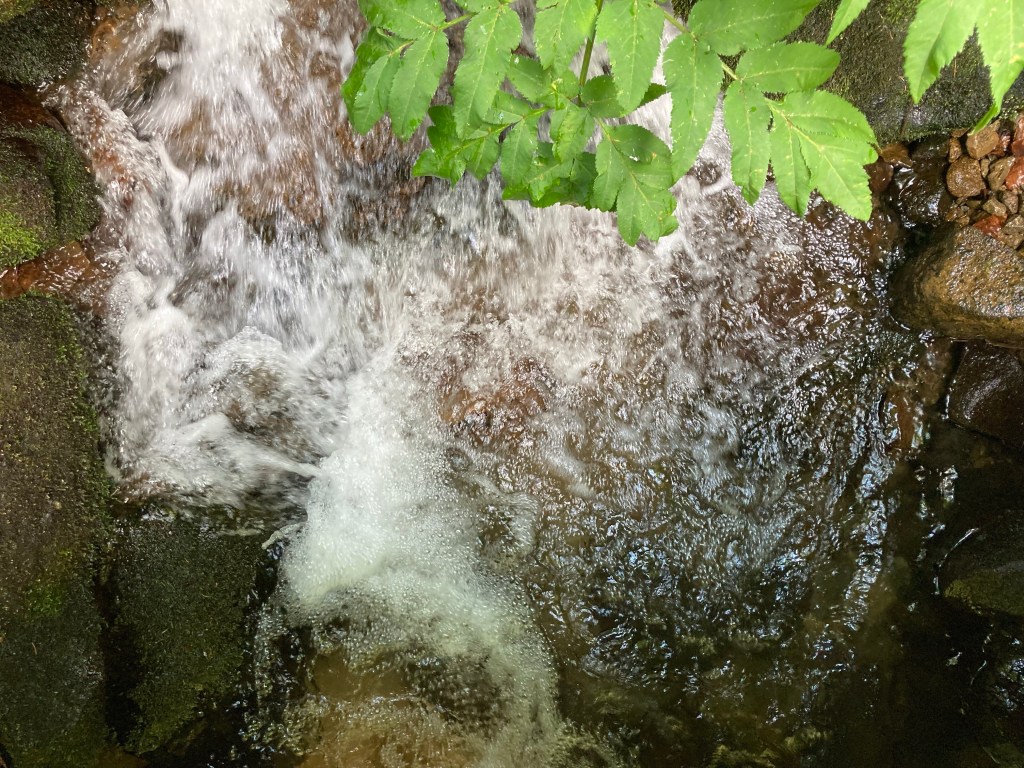
It is remarkable that water has four of the same letters as earth. And where would the earth be without water? Earth has the same letters as heart. Without water, our heart would shrivel up.

What amazes me is the way it flows constantly. Even in the night, when I am not there. During the week. All the time until my next visit, it flows.

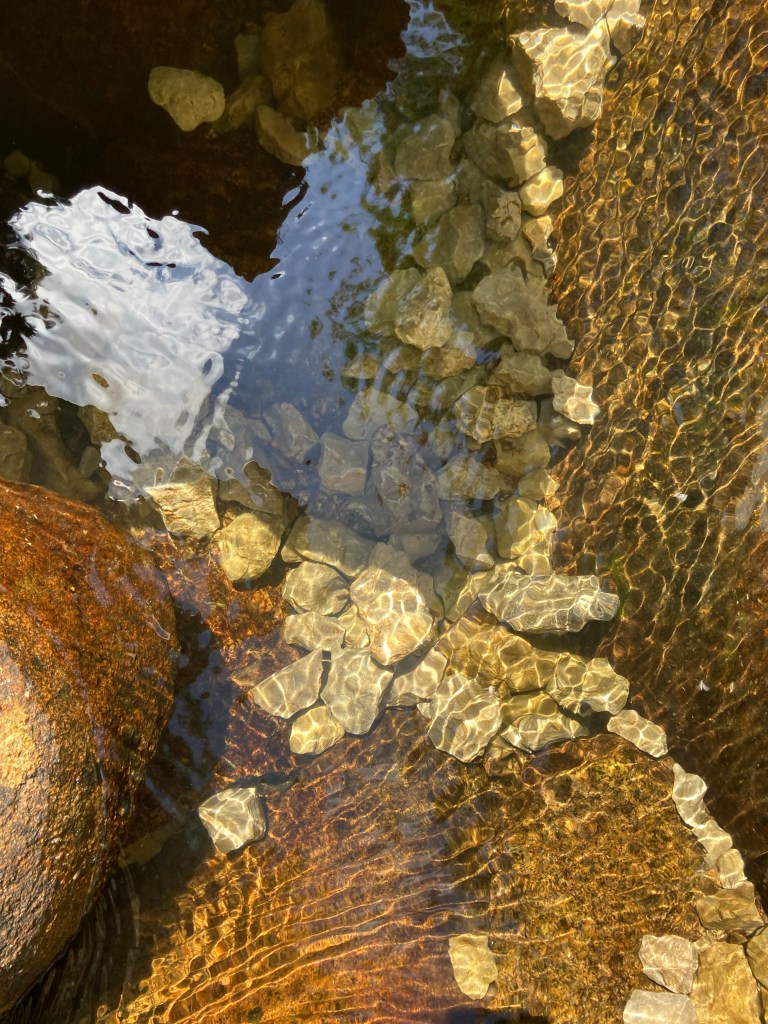
Sometimes it is blue, like the sky. Sometimes it is reddish brown, like a brick. Sometimes it takes on the colour of my shadow.

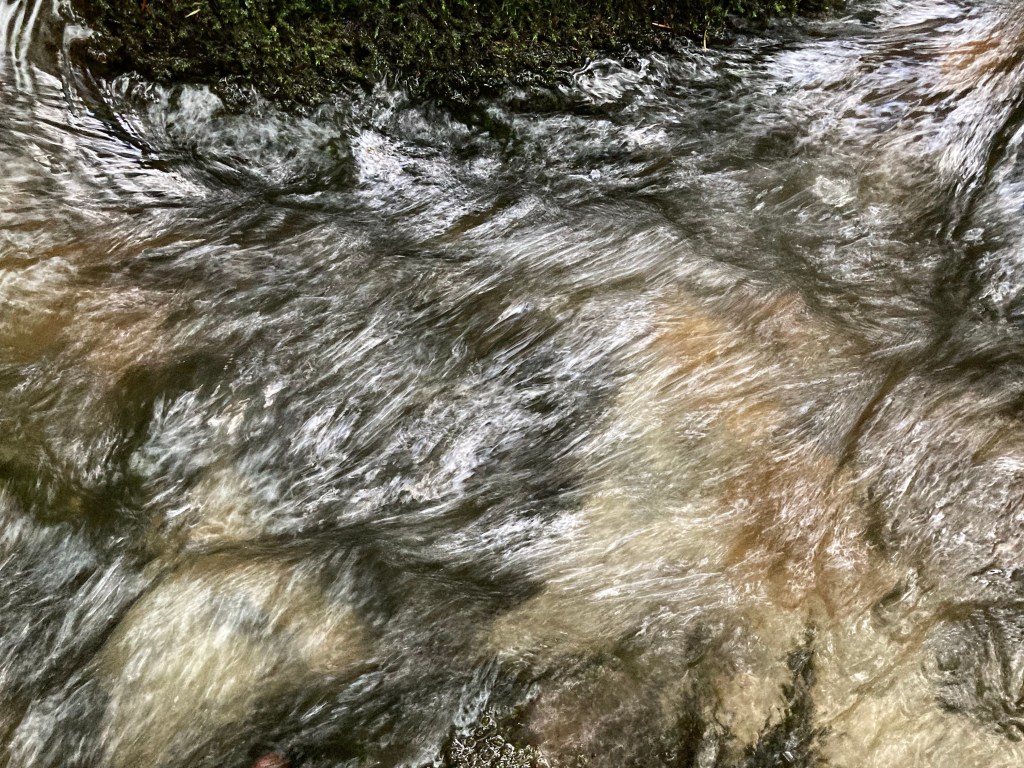
It is whatever is thrown at it. But sometimes it becomes a blur – too fast for my eyes to distinguish.

In the night, it is black – unless there is a moon, I imagine.

Water always finds a way – even if it has to go underground. Or fly through the air.

On Vitosha, I have seen it so calm it resembled a mirror. But I have also seen it rage after a storm. Then it is no longer transparent, it seems to boil.

We step on the land; without water, we would sink, as in a desert. Too much water, and we swim.

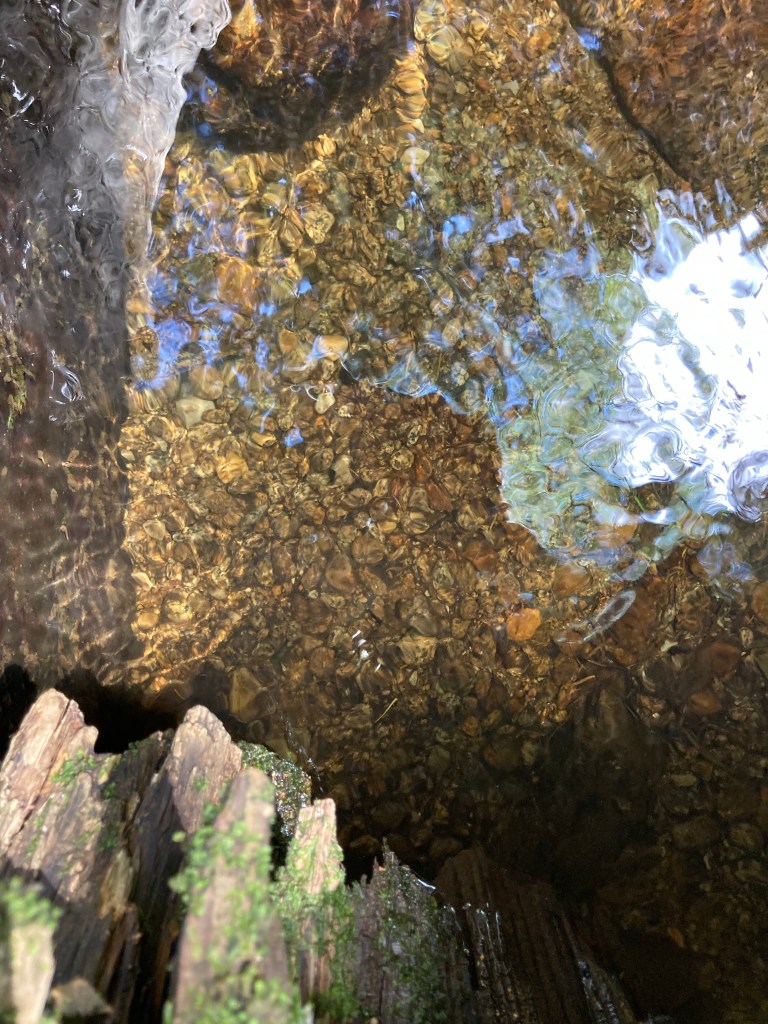
Water lies on a bed of gravel. And rests its head on rock pillows. It rises up from the rock. It slips through gaps. It causes us to build bridges – that is a good thing.

When it enters the air, it is smashed into smithereens.

Later, in the sea, it evaporates to fall on my head. Then I walk through a sauna. The water is so prevalent it climbs up my legs. I have sat in the car as it beat down with unusual ferocity. Still I got out.

I like it when it’s the mountain and me. Today I walked through the hordes, as if I came from another planet. Another age.

Water is most beautiful on the mountain. It is like a curtain. Or a seam. The mountain shudders. Sends the water tumbling. It resists – for now.

I know a secret place where I sit and watch it gleam.

27 August 2022

Text and photographs by Jonathan Dunne, photograph selection by Tsvetanka Elenkova.

Vitosha is the mountain that lies just south of Sofia, the Bulgarian capital.

Theological English (3): The Alphabet

In this fourth video on “Theological English”, Jonathan Dunne looks at the twenty-six letters that make up the Latin alphabet as it is used in English – h, five vowels, three semi-vowels, fourteen consonants, and three “redundant” letters (c, q and x) – and sees how these letters are used to represent the three elements of speech which are also the three elements of creation: breath, water, and flesh.

To access all the videos in this course, use the drop-down menu “Theological English (Video Course)” above. The videos can be watched on Vimeo and YouTube.

Video

Theological English (2): The Holy Trinity

In this third video on “Theological English”, Jonathan Dunne looks at another Christian paradox, the concept of the Holy Trinity – God as “three in one”. How is it possible for God to be three and one? Surely he is one or the other. The answer can be found in language.

To access all the videos in this course, use the drop-down menu “Theological English (Video Course)” above. The videos can be watched on Vimeo and YouTube.

Word in Language (11): Father (1)

So now we are diving down into the depths of language and discovering that language has a lot to tell us about the meaning of human life and about the world we live in. We are here to count down from the ego, I, to God, O, as we saw in words like LIVE and LOVE, SIN and SON, CHRIST and CROSS. Christ himself, who is God and has no need to count down, came down to earth so that he could show us how to do this. He came down and was incarnate in order to translate for us the meaning of life. He did this by means of parables, writing for the spiritually blind.


But we have also seen that the world is a spiritual womb in which the body of the Church is being formed until the end of time. Just as we have physical and spiritual blindness, so we have a physical and spiritual birth. Sadly, many of us in this life focus solely on the physical side of things, to the detriment of our spiritual growth. We must open not only our physical eyes, but also our spiritual eyes. This is why ‘I’ and ‘eye’ sound the same. Because an open I is O.


God does not let us dive for too long. We must come back to the surface for air. And just as God separated the waters from the waters in order to create the dome of the sky (Gen 1:6-8), so we see that air is extremely important to us. We started this series of articles by talking about the Coronavirus, which has currently got us practising social distancing, something that was foreign to our way of thinking just a few months ago and is now ‘the new normal’. Viruses make it difficult for us to breathe, they precisely attack our air supply, as if we were divers in the water and our air supply was getting low or the connection with the bottle was faulty. We cannot gulp air as we would like to, and we realize how tenuous our connection to life really is.


The ancients spelled ‘air’ like this: ‘aer’. This is how it is written in Latin and Greek, and I find this extraordinarily significant. Imagine yourself on the surface of the sea, this line in creation where so many creatures live, criss-crossing the line in their search for food or to escape predators. A gentle breeze is ruffling the surface of the water, creating an effect like a desert, like pimpled flesh or a crinkled crisp. Our breathing is shallow, barely noticeable, just enough. We are on the line between two frighteningly different elements. And yet for nine months in our mother’s womb the element of water was normal to us and we breathed.


We have already seen how oxygen is present in water, so they cannot be altogether so different. Indeed, if we apply the alphabetical pair r-s, we will see that AER in reverse reads SEA. Just a step in the alphabet, that line we were talking about, a murmur in the ear (oh, EAR is obviously connected as well).


And we may notice that AER is in WATER if we take away the w and the t, thus confirming what we said about oxygen being in water.


AER is also in BREATH, another of the elements of speech/creation, but where does it come from, this element that we breathe? Where does the wind arise? Where is it when we wait in the heat of the day and it seems to have disappeared? Only the other day, I stood in my room and a cold current of air came in through the window, just like the current you sometimes get in Greek seas (off the west coast of Corfu), chilling your feet, providing welcome refreshment.


I can only assume that air, breath, comes from the Father, who breathed into the newly created human being the breath of life. Isn’t he the source of life, the source of all creation? Wasn’t it the Father who separated the waters from the waters in Genesis chapter 1? Hang on a moment, though, at the beginning of that chapter I remember there was a wind that swept over the face of the waters. Can that wind somehow be connected to the Holy Spirit? On the day of Pentecost, didn’t the Holy Spirit descend ‘like the rush of a violent wind’ (Acts 2:2)? Didn’t Christ himself breathe the Holy Spirit on his disciples (Jn 20:22), not because the Spirit proceeds from him, but because they are both part of the Holy Trinity and their lives are intertwined? WIND contains the numbers 0, 1, 2, 3 – a reflection of the Holy Trinity, which can also be found in words like GOD, WOOD and ONE.


But AER is in other words as well, for example FEAR. When fear assails us, we find it difficult to breathe, our breathing becomes rapid, we hyperventilate. What is fear? Well, it can be unfounded when it relates to our predictions for the future. In fact, I would say it generally is unfounded. And yet it can have a profound effect on our behaviour and make us RAGE (alphabetical pair f-g). Another kind of FEAR is SAFE (alphabetical pair r-s), the fear that makes us cling to our Father, what Metropolitan Athanasios of Limassol describes as awe, love and reverence in our hearts.


And what is it that pumps the air, the oxygen, around our bodies? The organ called the HEART. AER is there also. If our heart stops, so does our air supply, just like divers in the water (though there is AER in WATER as well). We saw that HEART is connected with EARTH, and I would say that AER is the main characteristic that we associate with the earth – the ability to breathe.


We are beginning to see that AER is a crucial component of language. It is in SEA and WATER, it is in BREATH (which as the letter h is also in water or its chemical formula H2O), it is in FEAR and HEART (see how these two words are connected – isn’t this where we feel fear most keenly, when it strikes dread into our hearts?).


But interestingly enough we cannot only live by breathing. We must also eat: BREAD. When we are babies, we are reliant on our mother’s milk, which fills our bellies and provides us with protection: BREAST. BREATH-BREAD-BREAST. All three words contain AER and are sources of nourishment. How curious that they should be so similar!


BREAD is connected to WATER by the phonetic pair d-t and the ‘eighth’ phonetic pair, b-v-w, which we talked about at the end of the previous article.


And ‘breath’, if we apply the physical pair b-d, gives ‘thread’. Breath is like a thread, the thread that the Fates are waiting to snip. It is air – isn’t it? – that provides the continuum to our lives. We are alive inasmuch as we are breathing. This is why we can see that ‘breath’ is connected to ‘birth’ if I use the front vowels (a-e-i), but also to ‘death’ if I use the physical pair b-d and remove the r.


Breath is the thread that links birth and death. All this information is contained in language.


I open my mouth. Breath emerges from my mouth. God knows where it has come from. If I add voice, I can speak. I can imitate the Father in the act of creation (CREATE also contains AER). After all, I am made in his image and likeness (Gen 1:26).


There is the Father again, the source of all things, who begat the Son, who gives rise to the Spirit, who created us human beings and all that we can see (and cannot see).


He emerges from the shadows ‘at the time of the evening breeze’. There is AER in him as well. AER is in FATHER, just as BREATH is, EARTH and HEART, FEAR (FAITH) and WATER.


Air carries water; air is in water. We associate air with the letter h, but also with oxygen (O2). Perhaps that dividing line is thinner than we thought. Certainly creatures like gannets and flying fish think so.


Jonathan Dunne, http://www.stonesofithaca.com