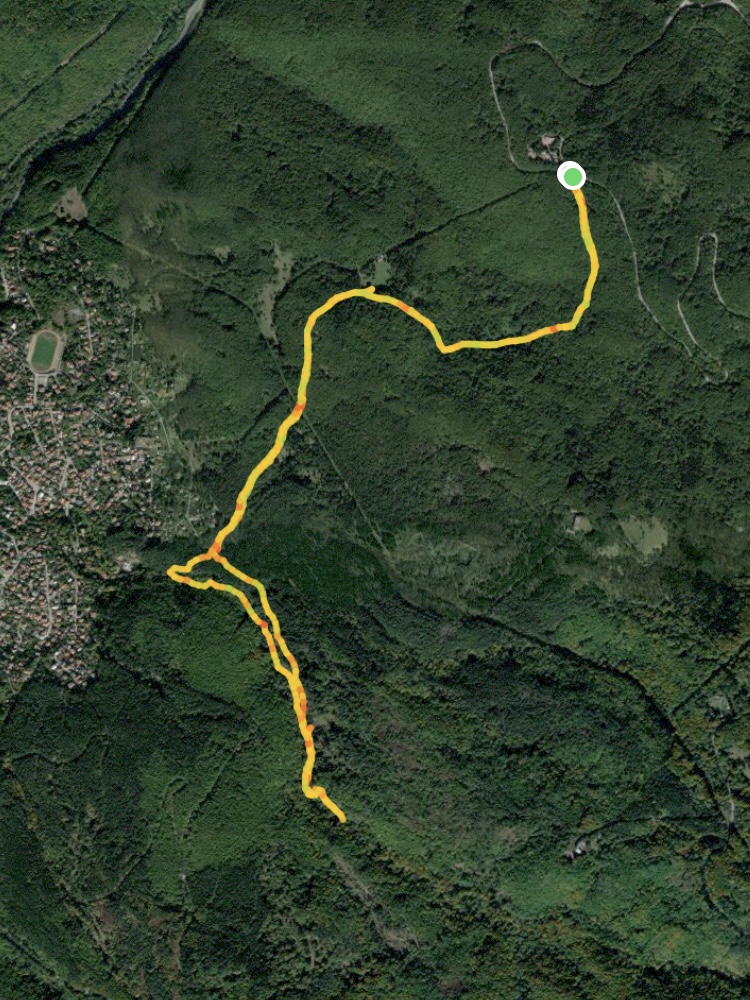
Dendrarium – Zlatni Mostove – Planinets – Dendrarium

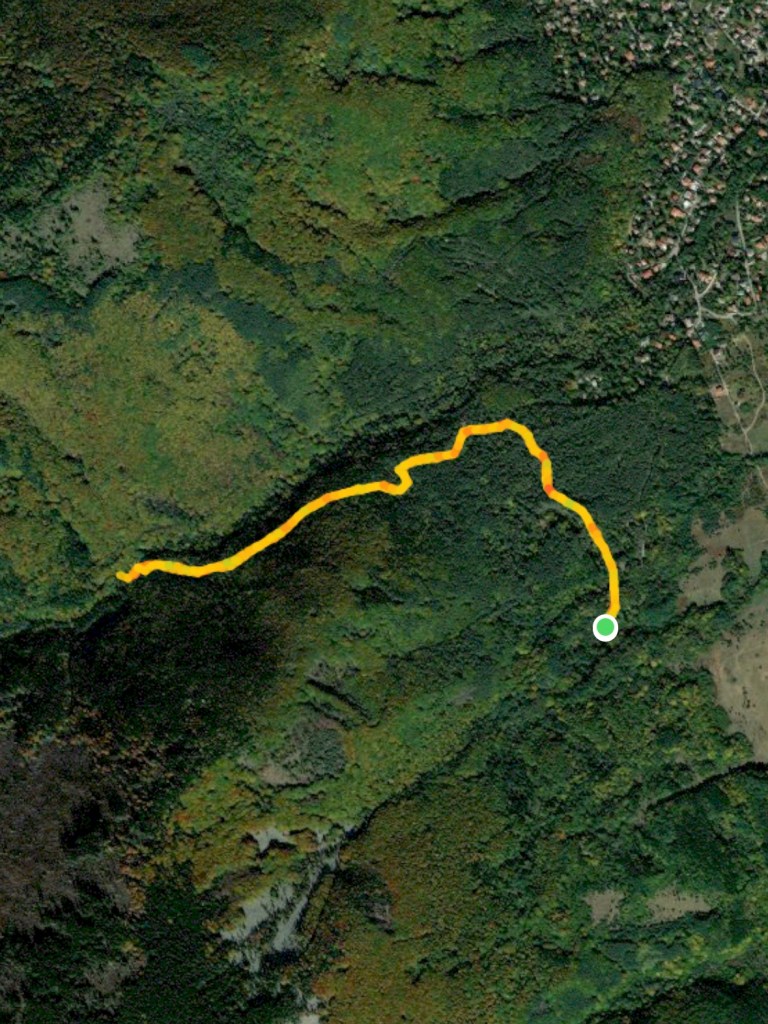
Starting Coordinates: 42.63187, 23.22493

Distance: 7.0 km

Elevation Gain: 310 m

Time: 2¾ hours

Difficulty: Moderate

Transport: by car, or by bus no. 63 to Tihiya Kat
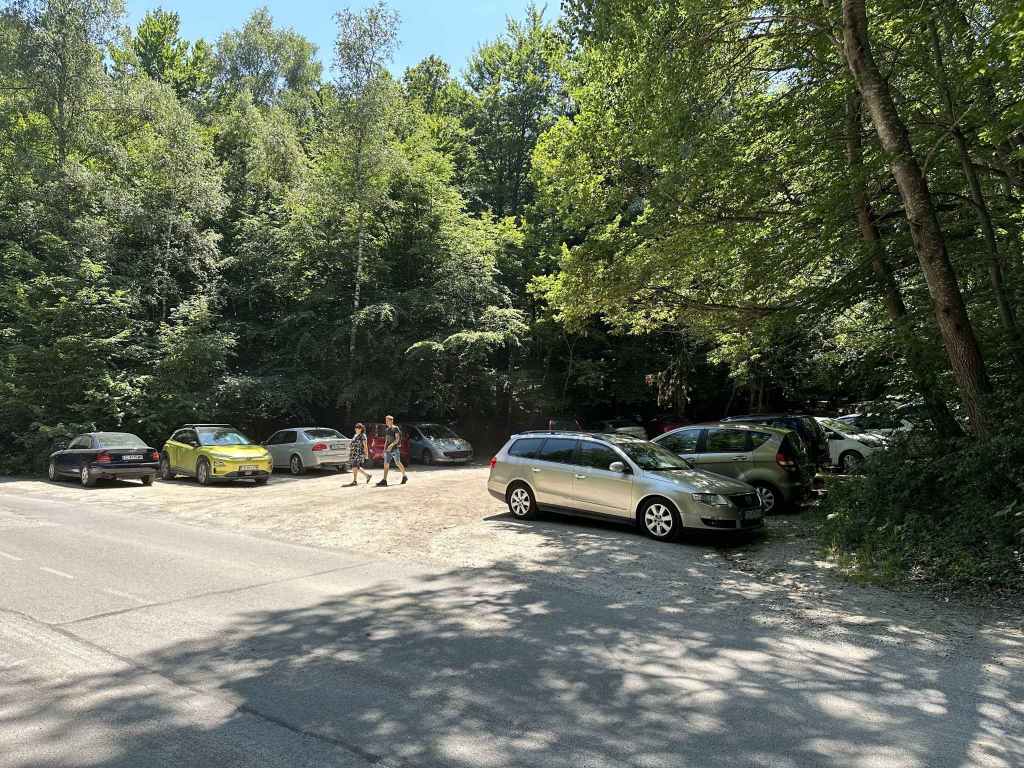

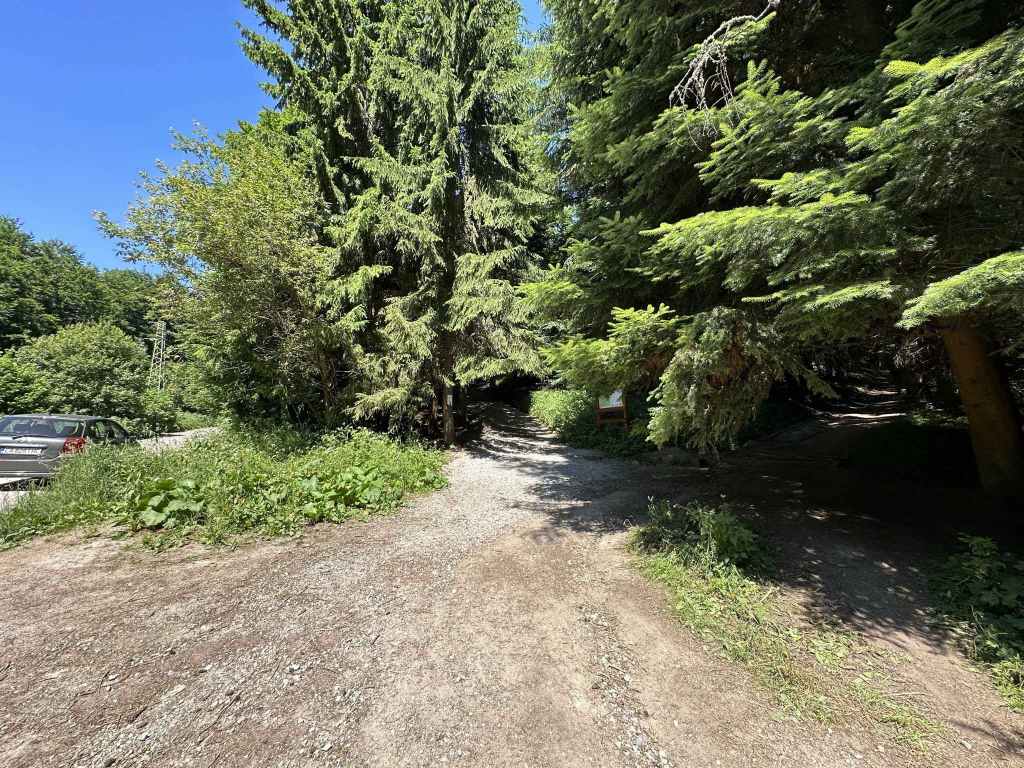
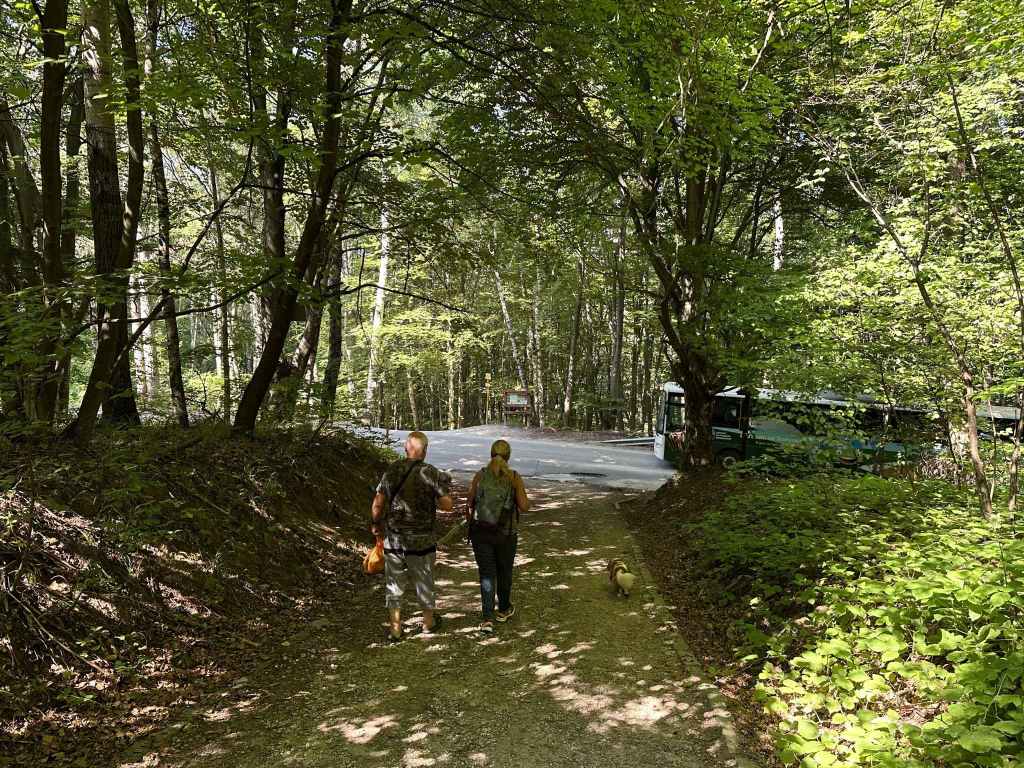
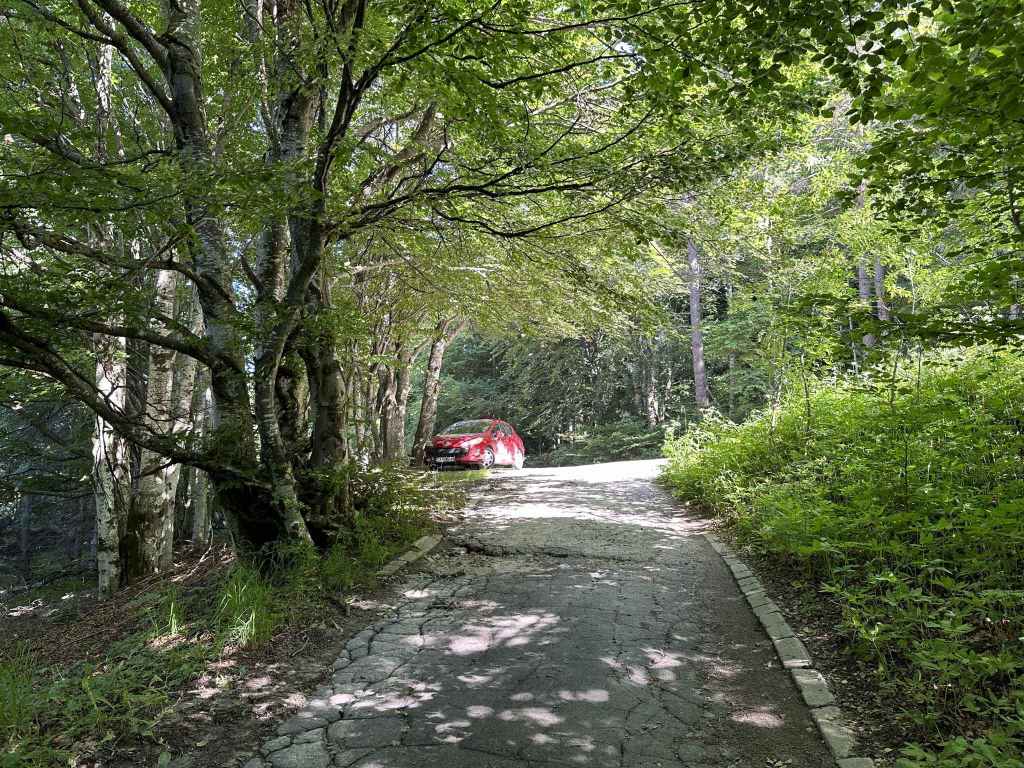
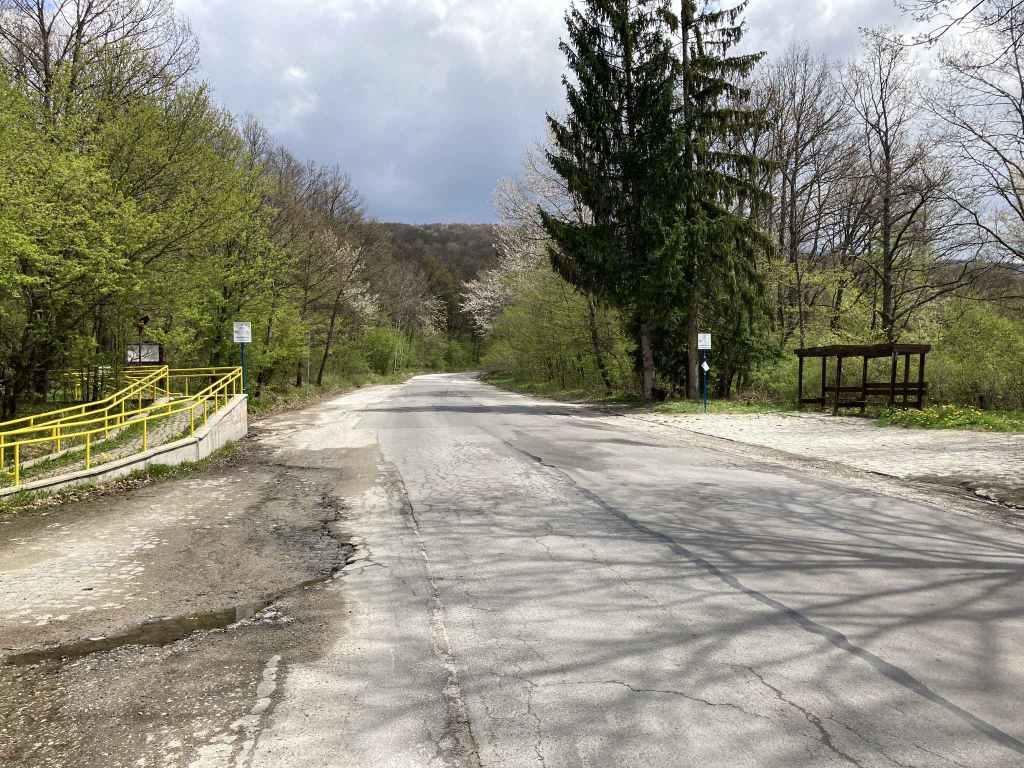
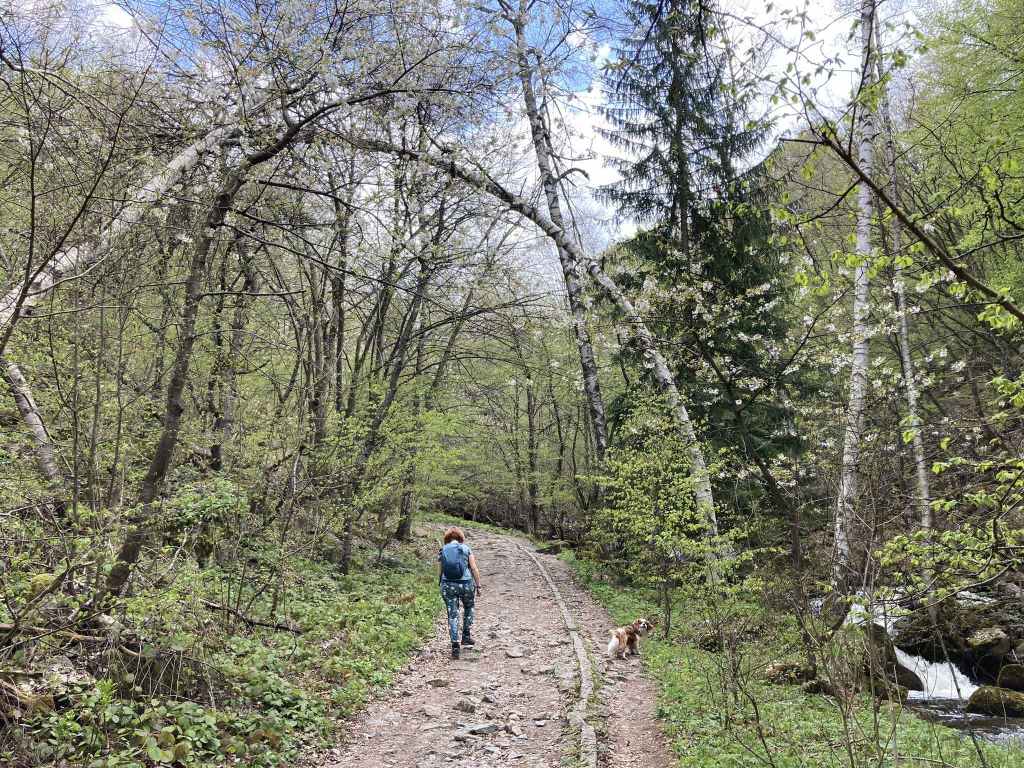
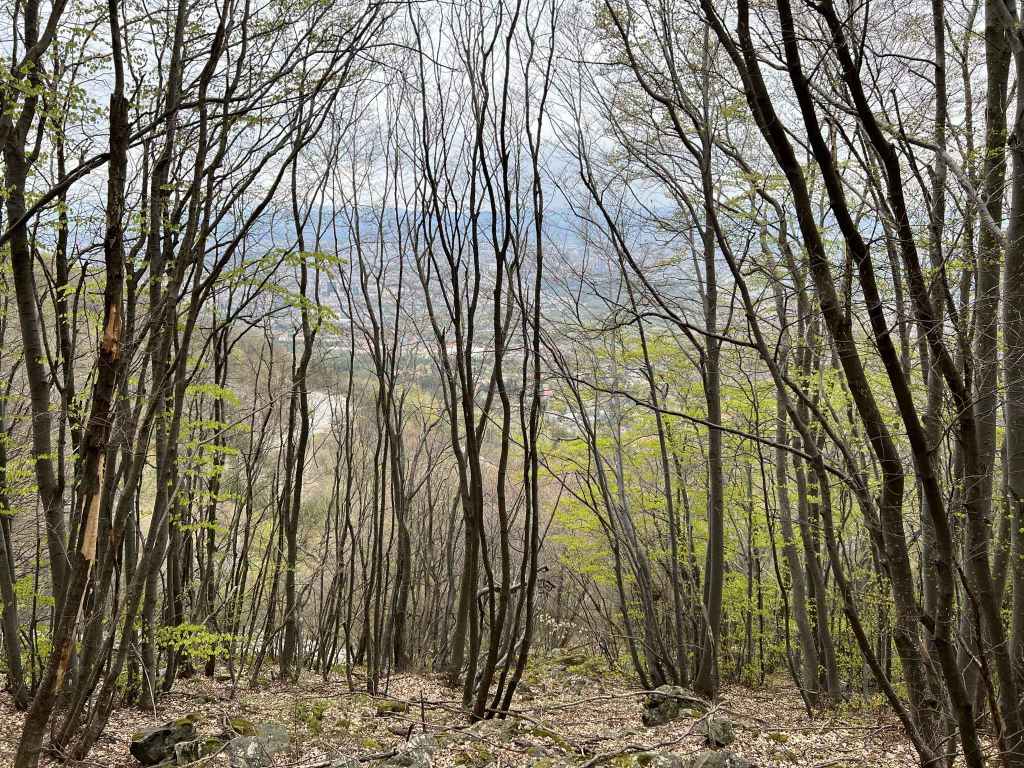
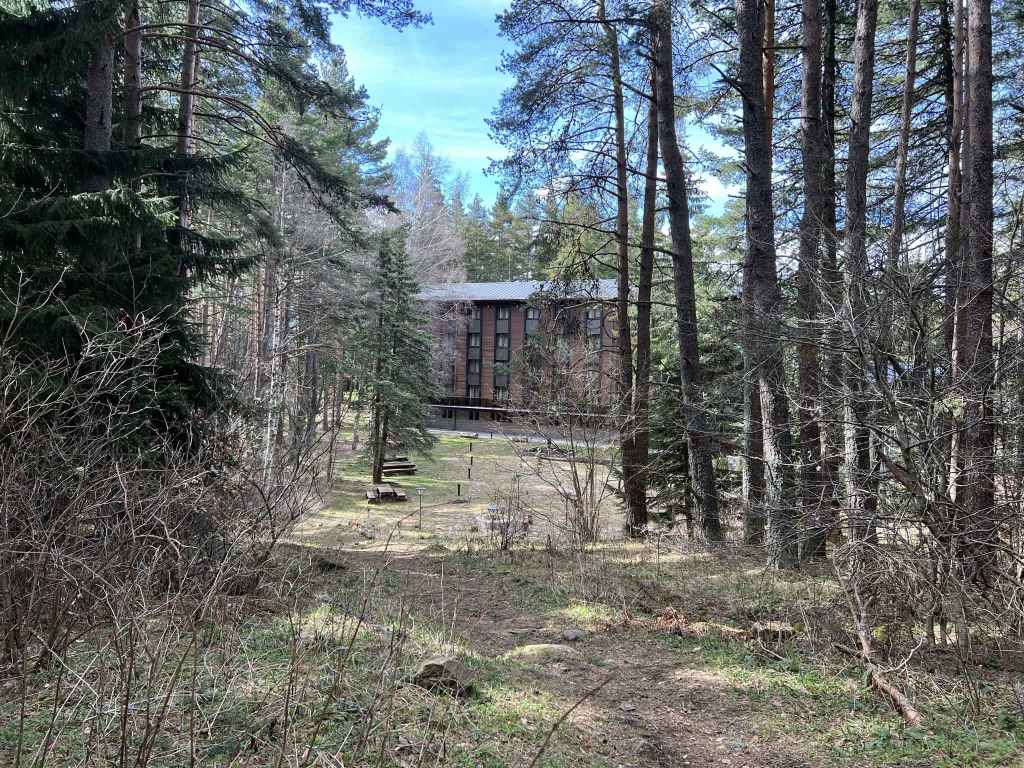
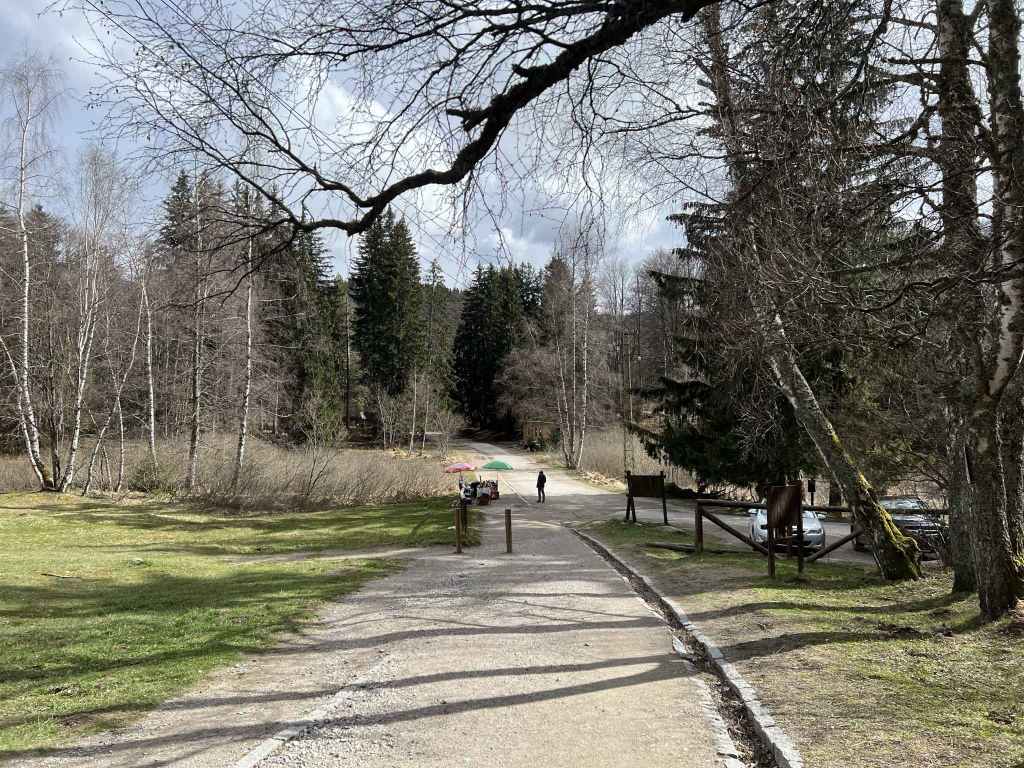
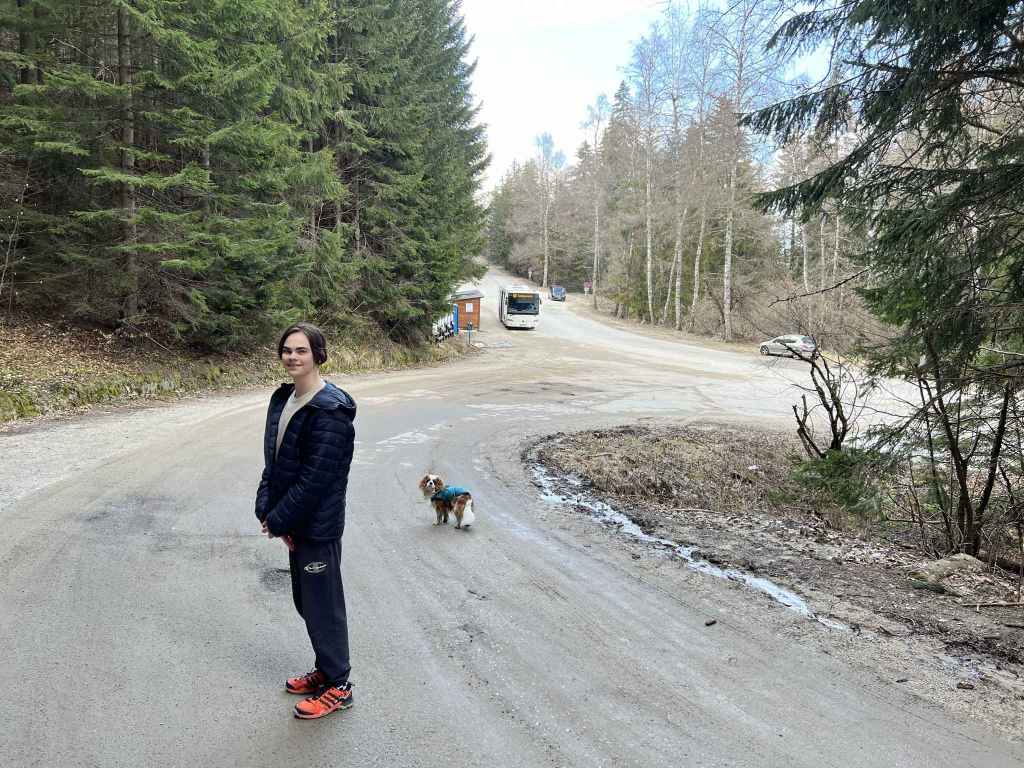
This is a beautiful walk up and down the mountain which has the advantage of being accessible even when there is heavy snow higher up the mountain. The starting point is not the Dendrarium itself, but a car park before the Dendrarium. Take the road that accesses the mountain via Boyana. This is Bulgaria Boulevard. You go under the ring road, drive through Boyana (with the centre of the village on your left) and continue straight up the mountain. As the houses give way to forest, the road begins to wind. You come to a motel called Tihiya Kat, the starting point for the walk to Vladaya River. 900 metres after this motel is a car park on the right of the road. This is where you need to start. If you are travelling by bus no. 63, you can get off at Tihiya Kat and walk the remaining distance or continue to the next stop (the Bear Museum) and walk back.

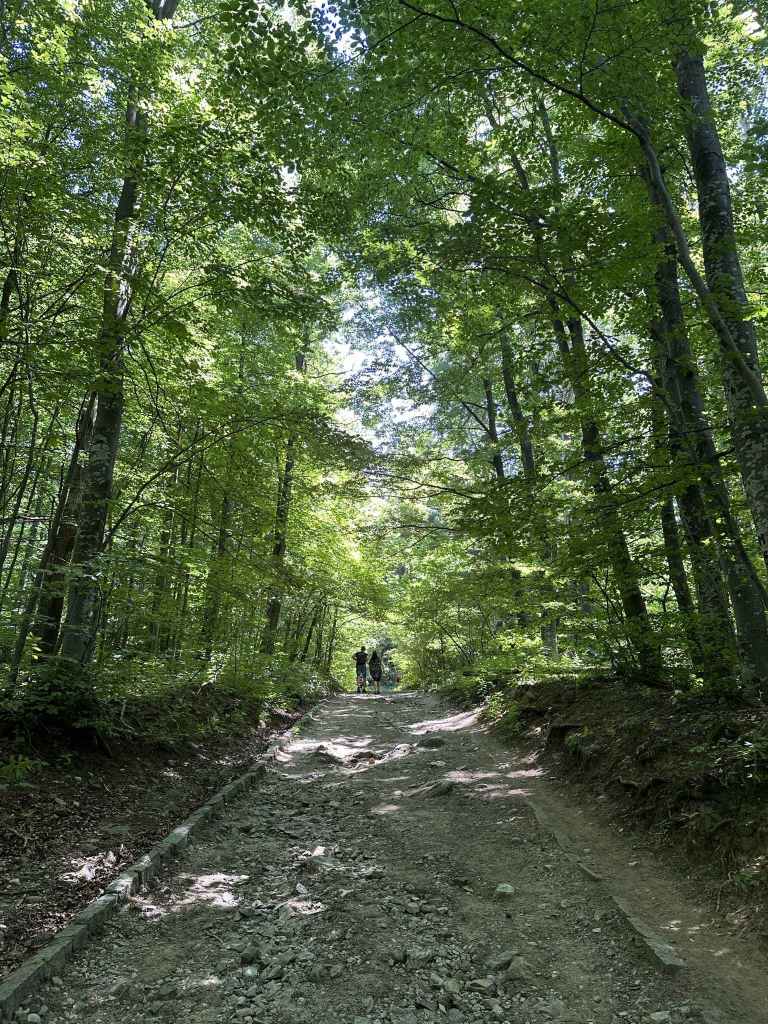
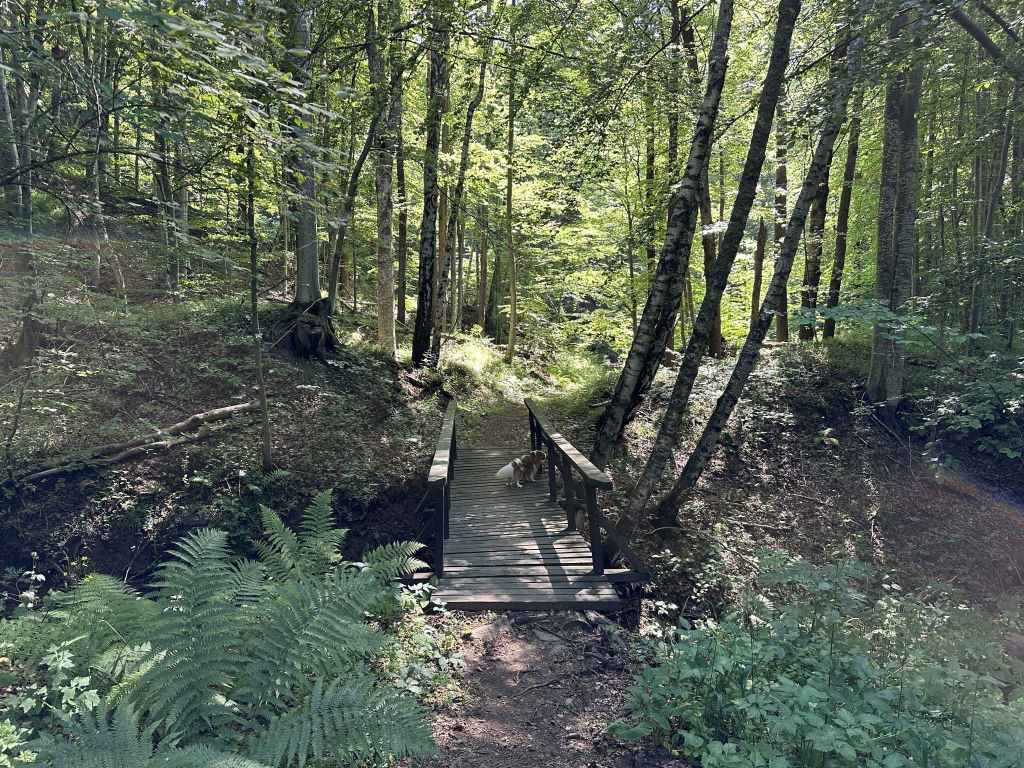
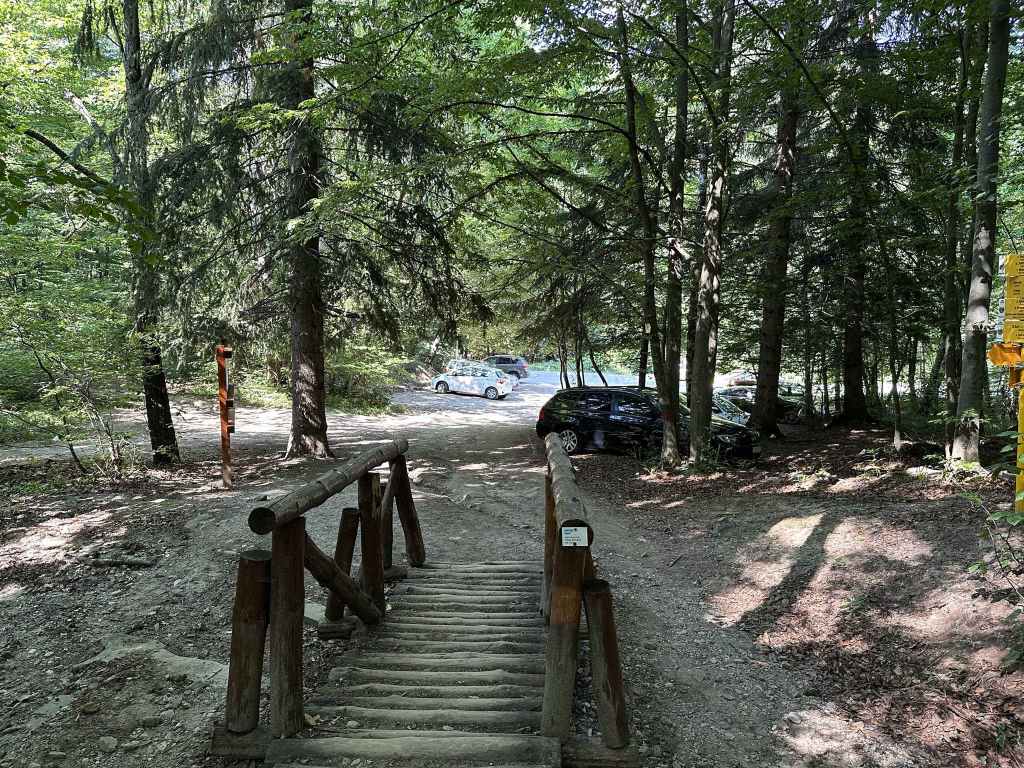
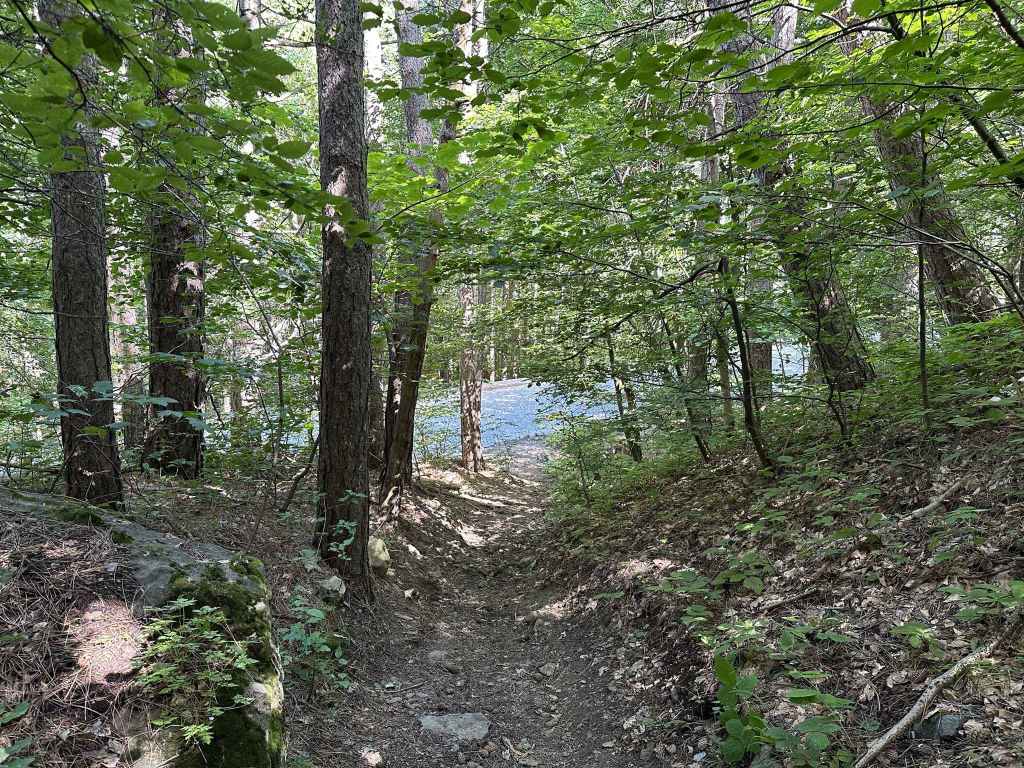
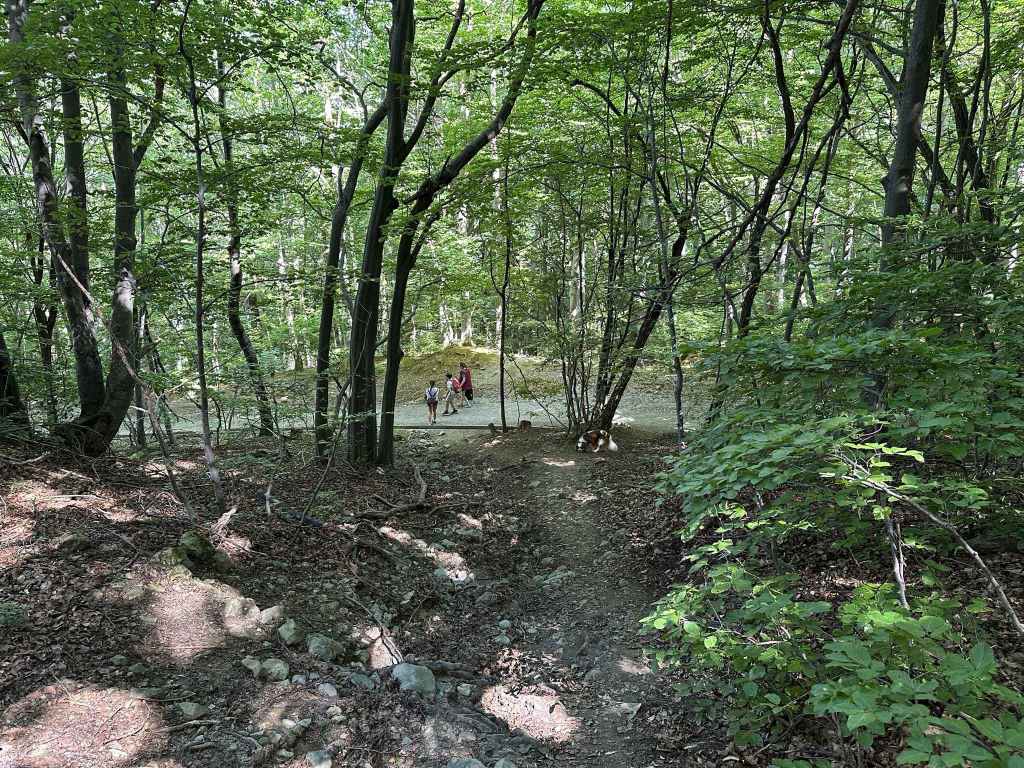
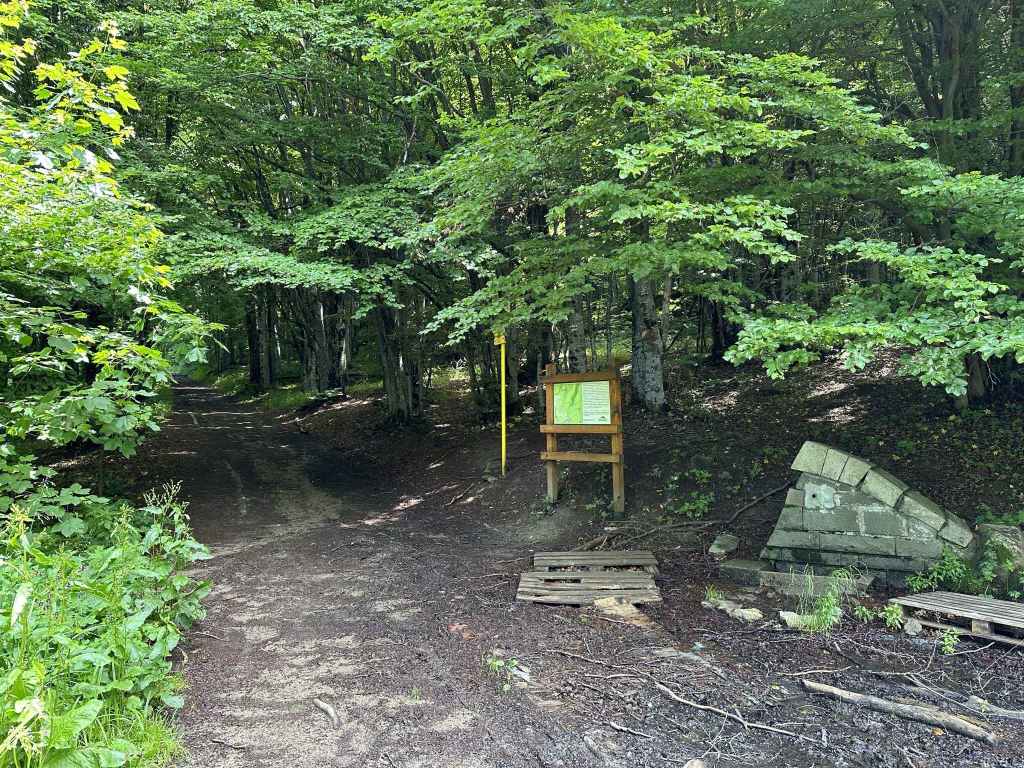
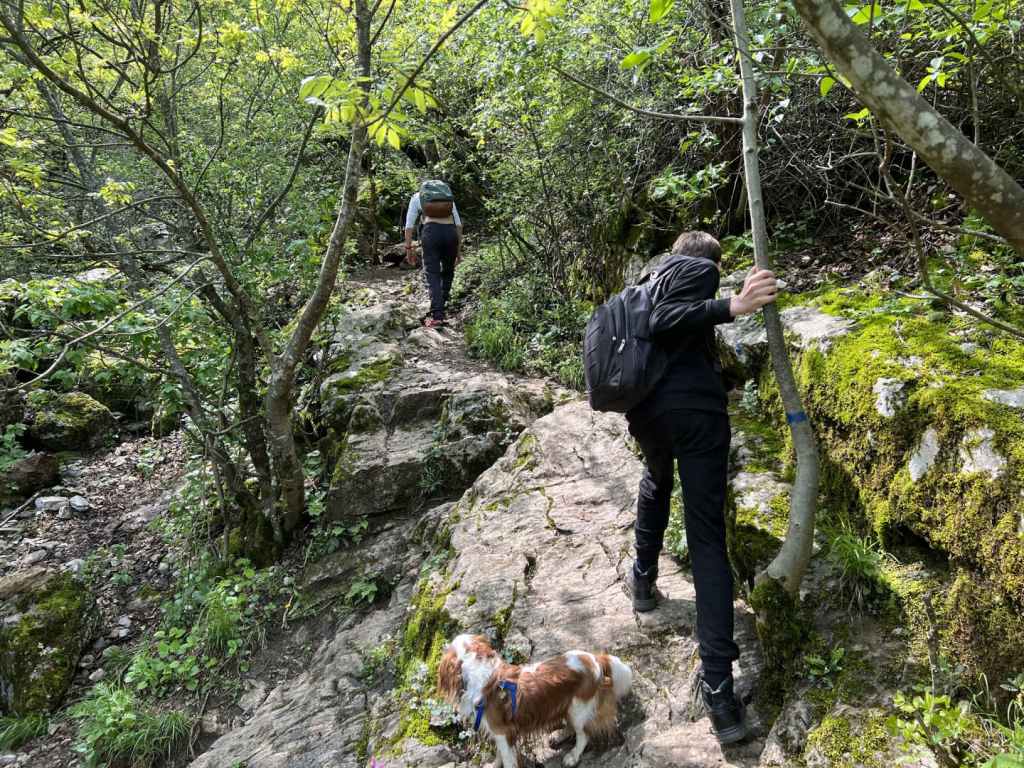
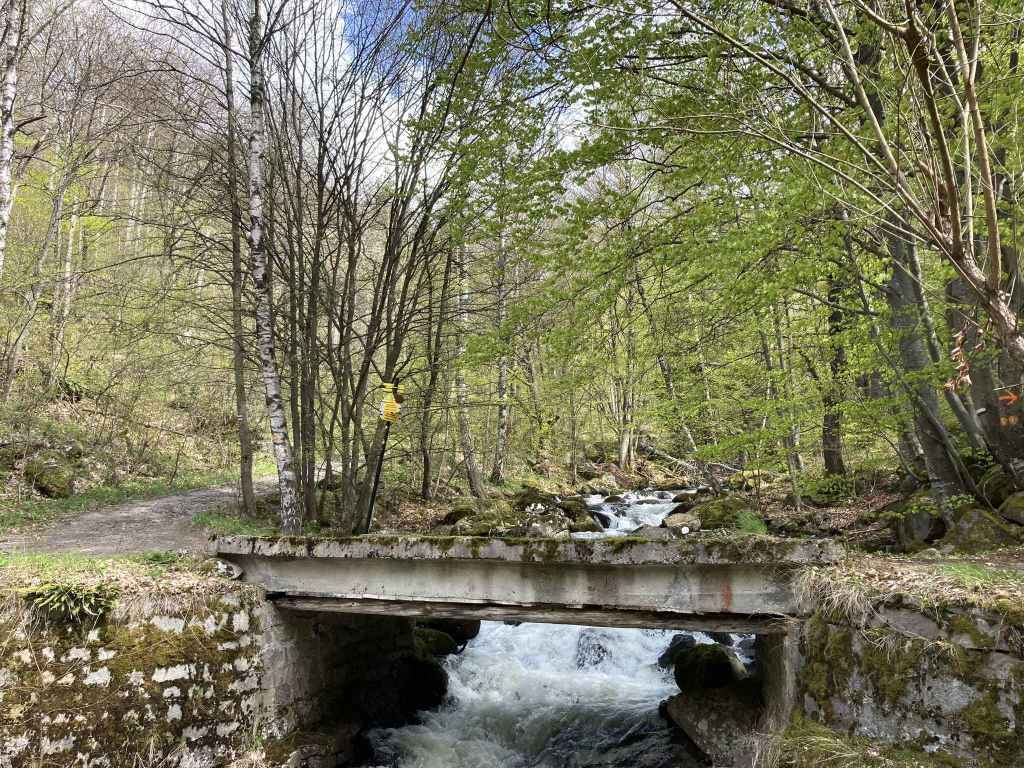
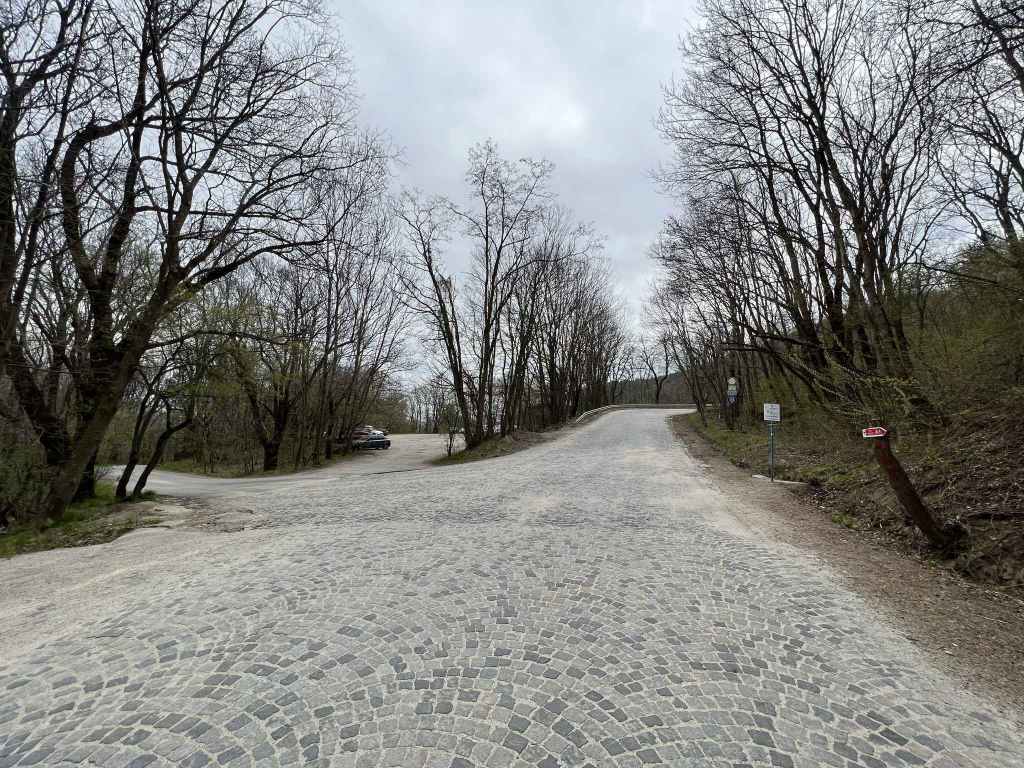
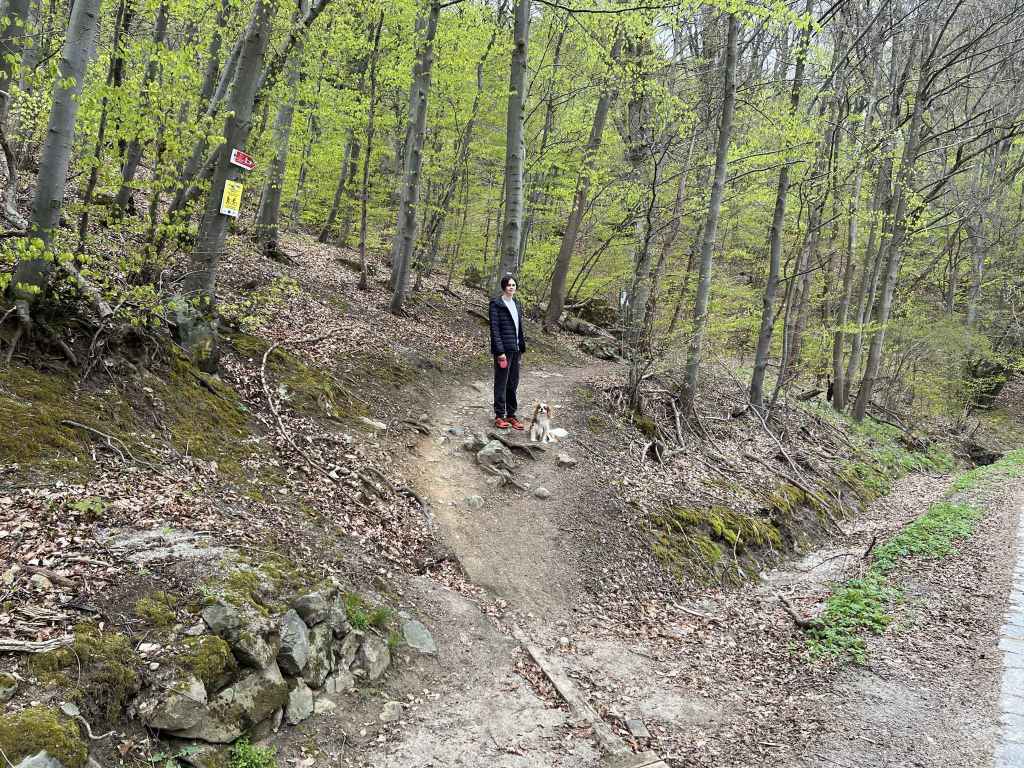
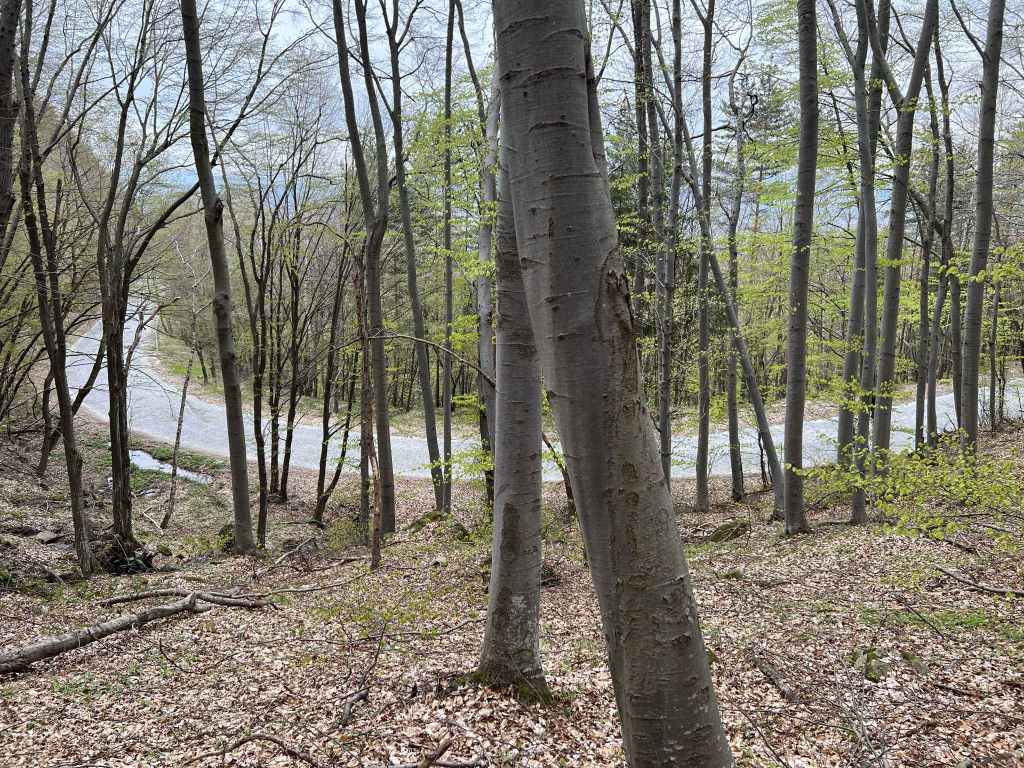
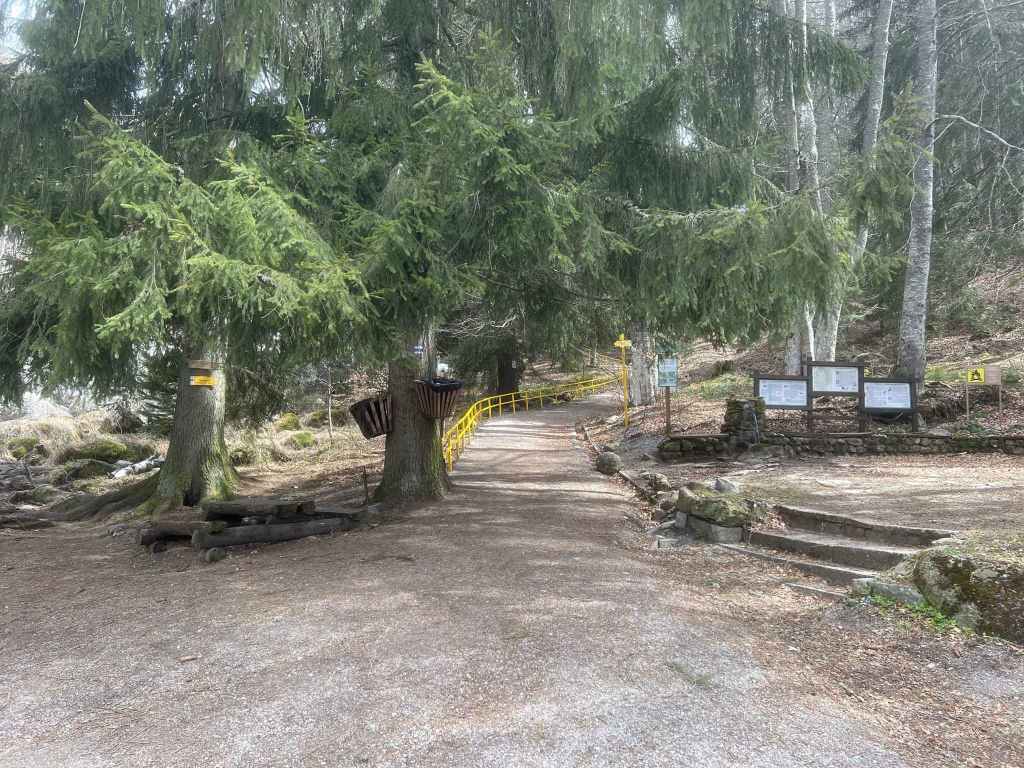
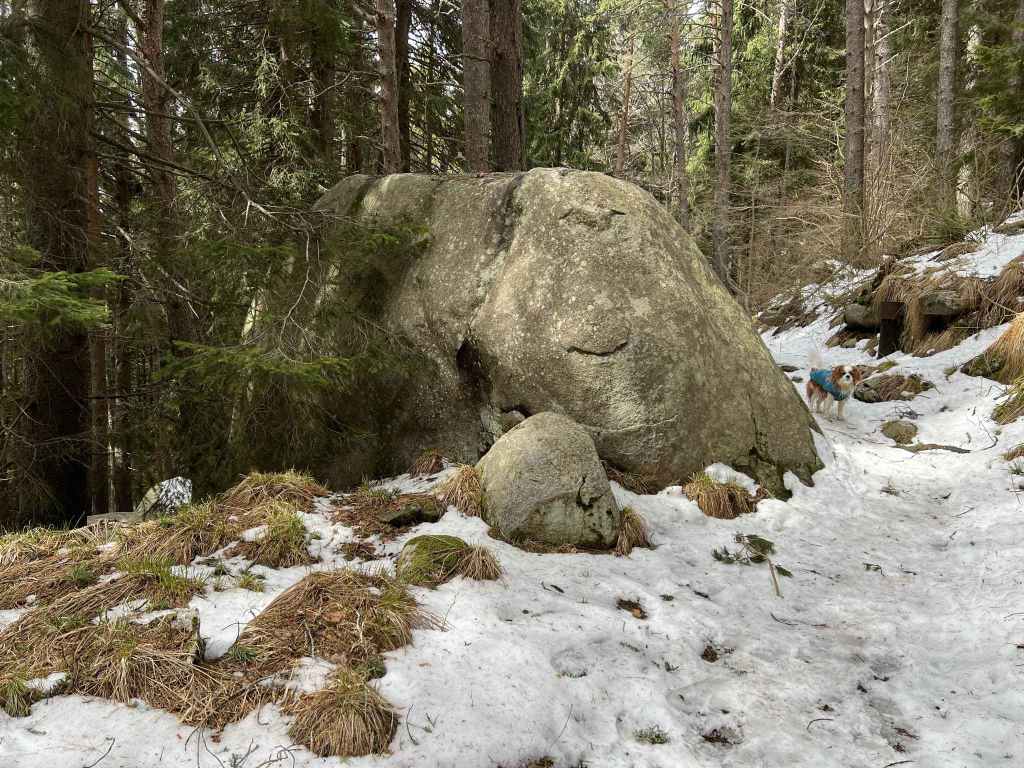
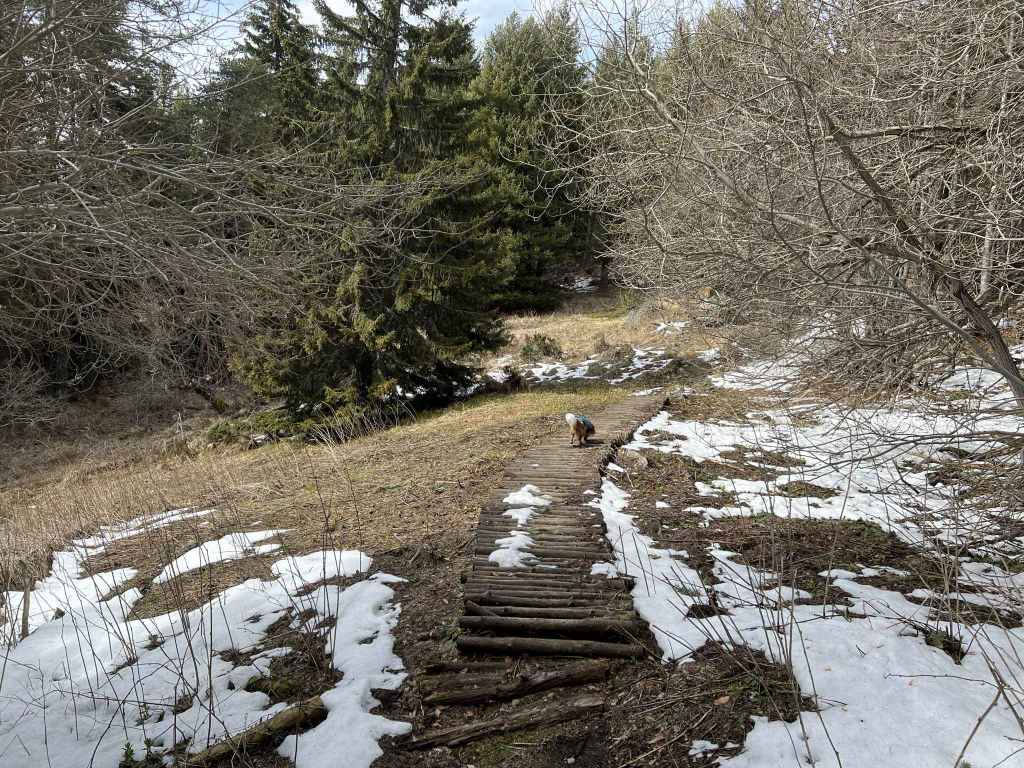
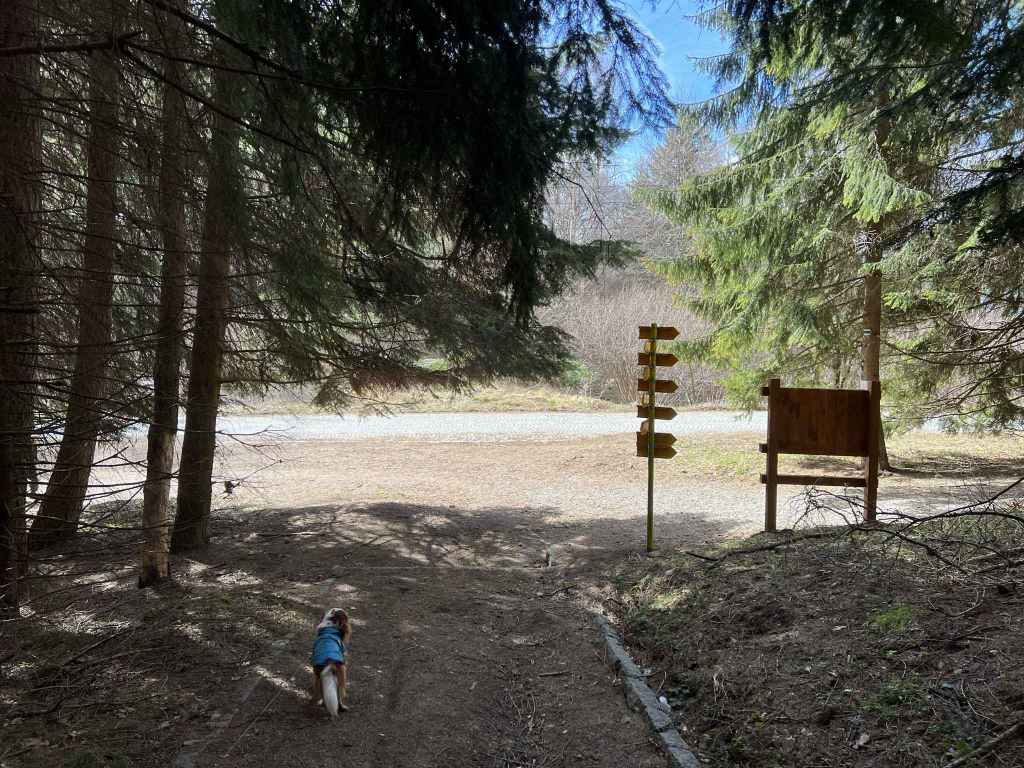
Immediately after the car park, the road does a 180-degree turn before continuing up the mountain. Leave the road behind. The car park is on your right. From here a path leads directly up the mountain in the direction of Zlatni Mostove. It begins with a little bridge, and then climbs steadily, but not onerously, for about an hour. The road (and bus) have the same destination, but take a much more roundabout way to get there.

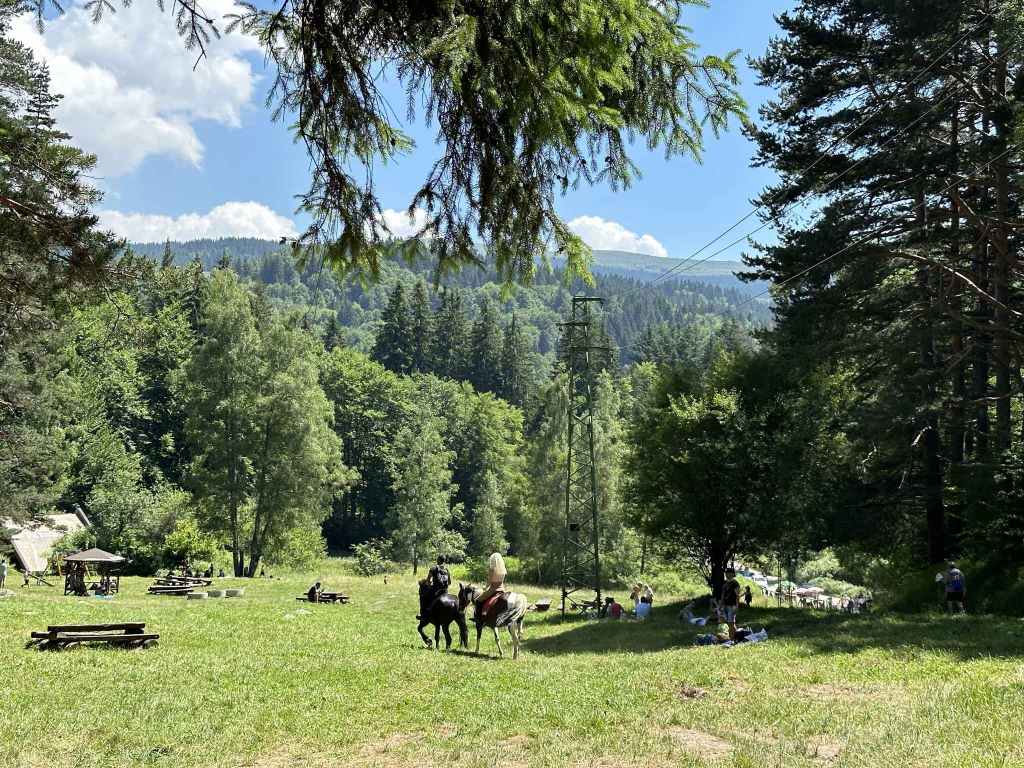
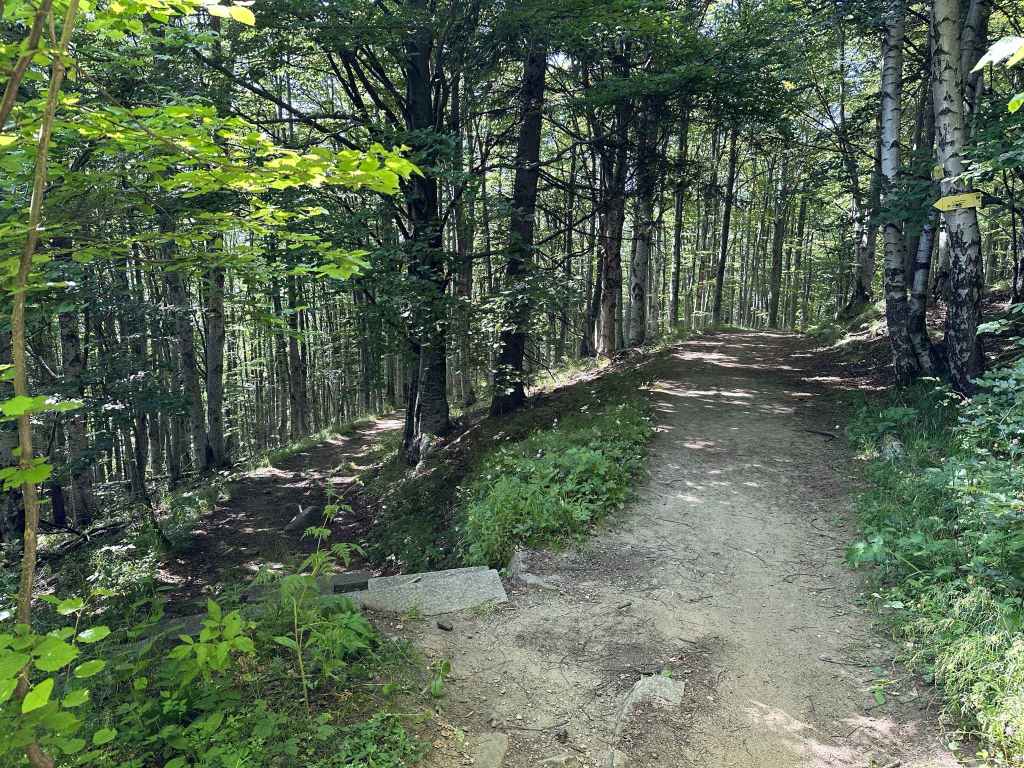
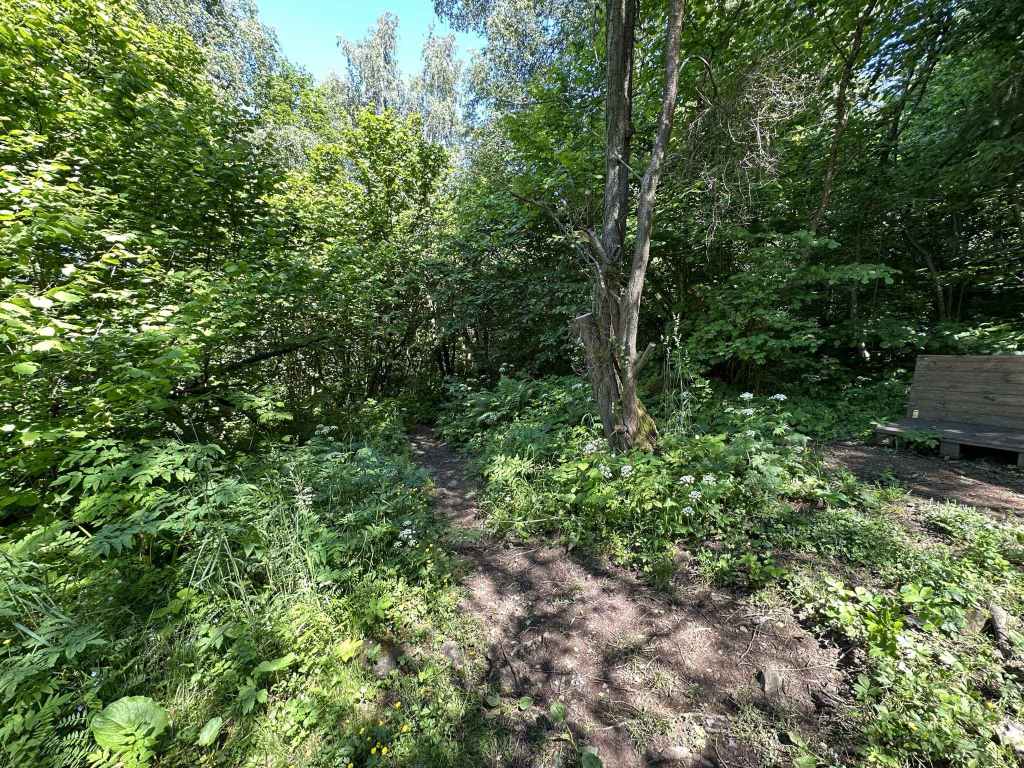
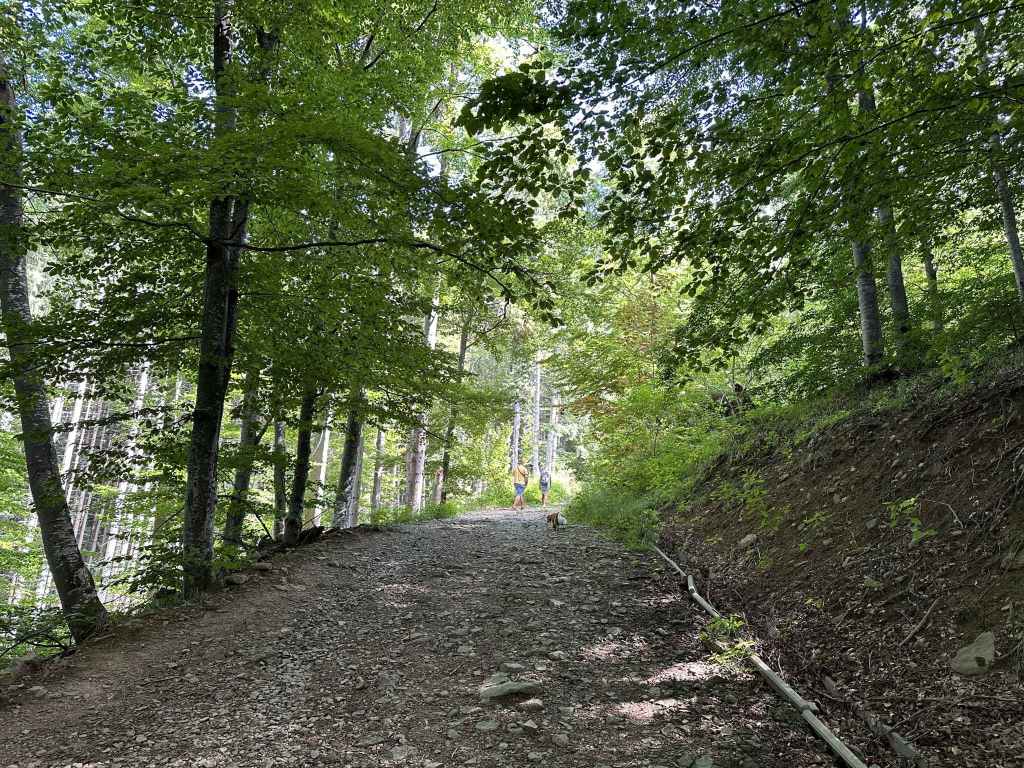
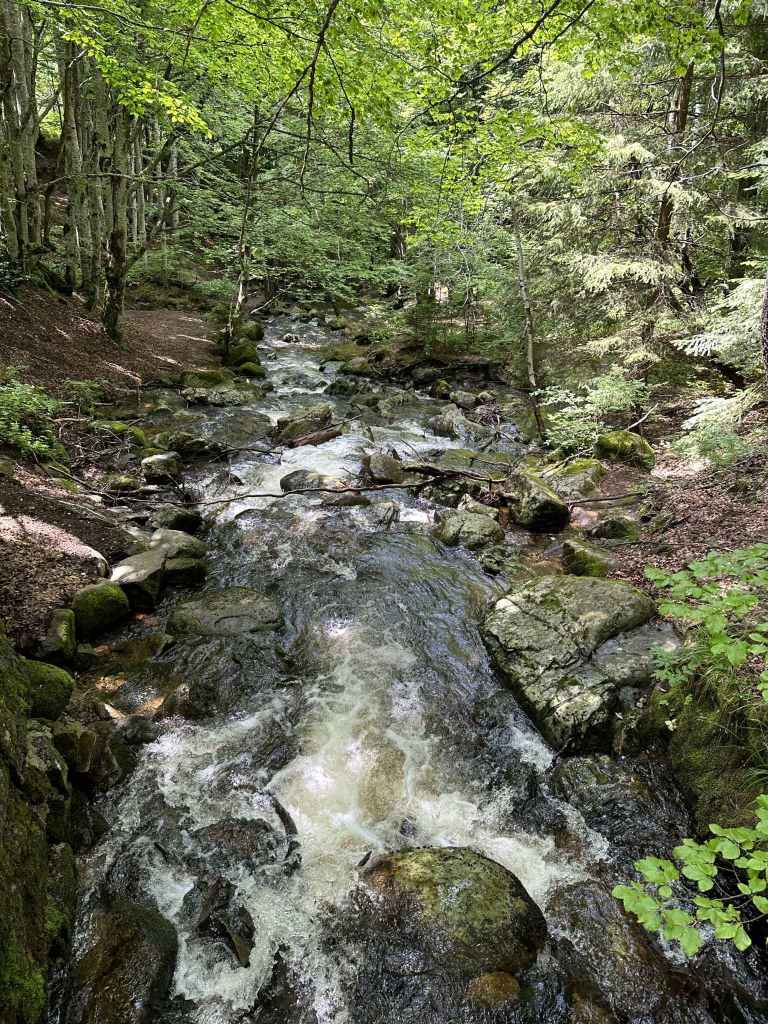
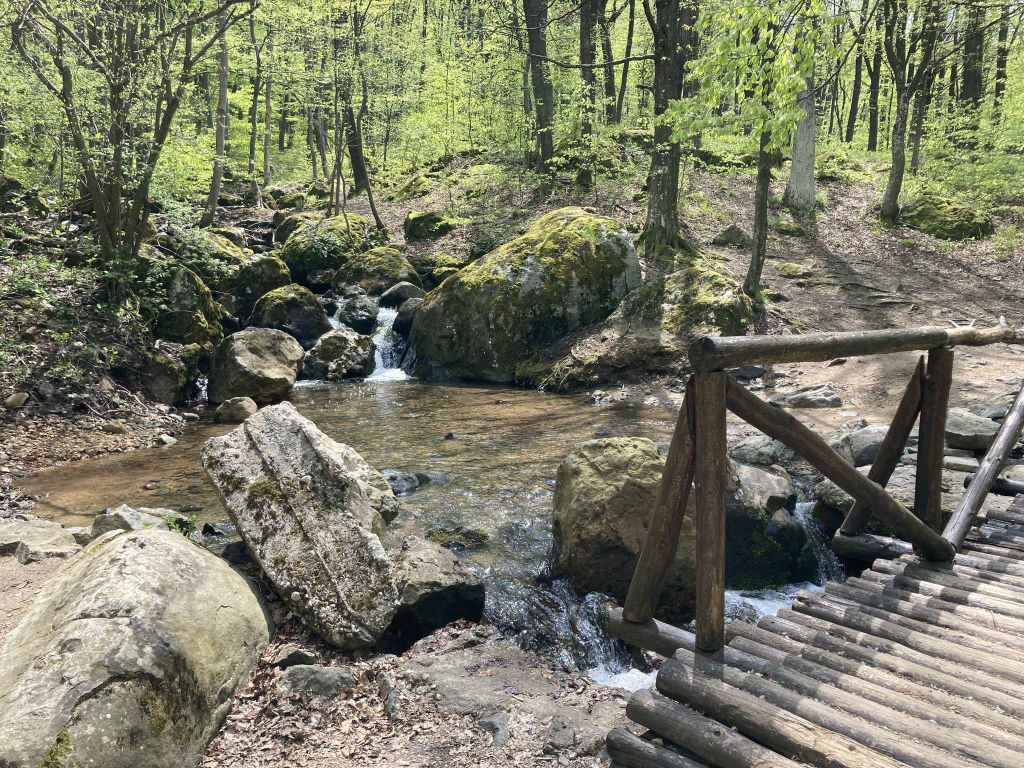
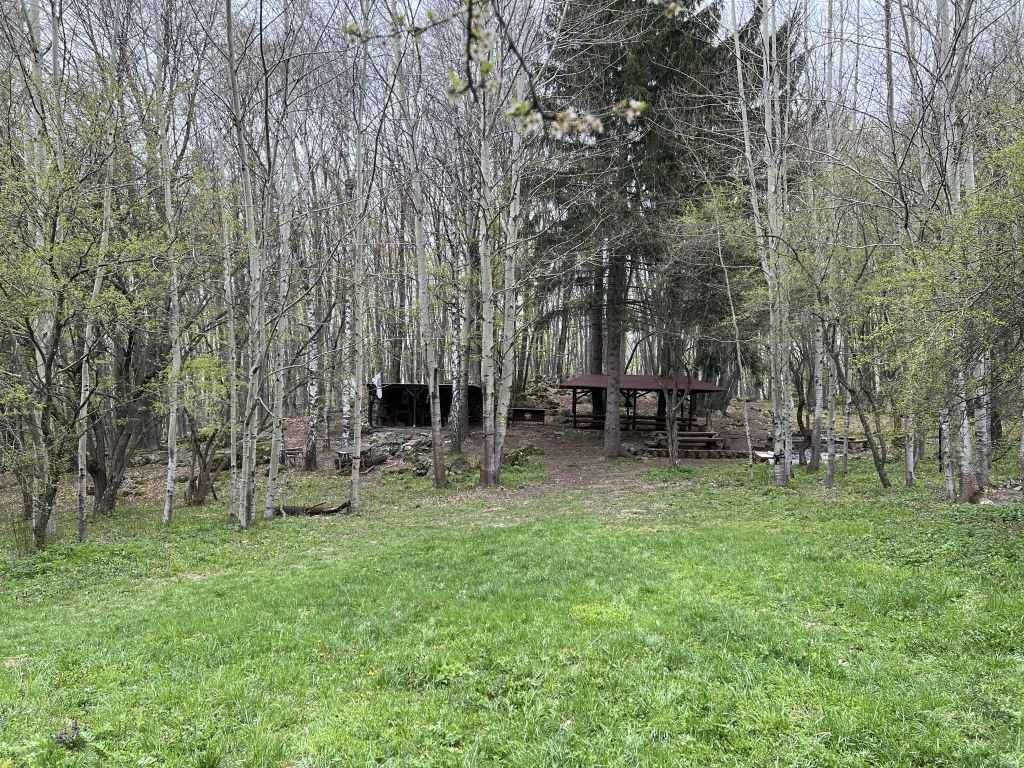
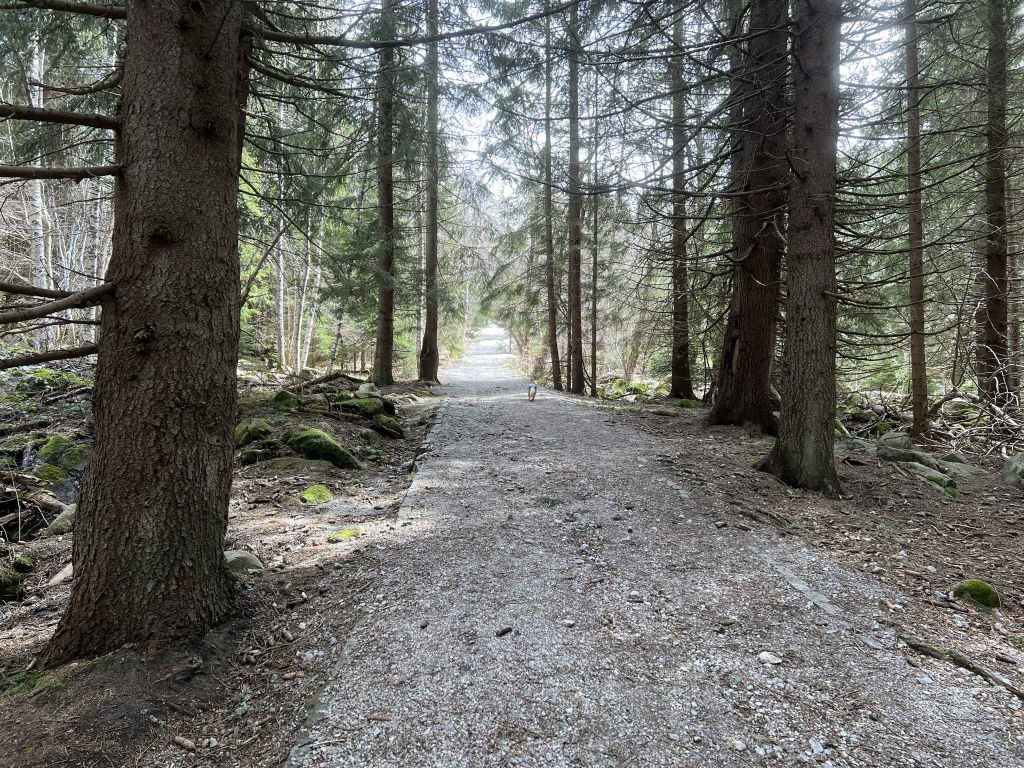
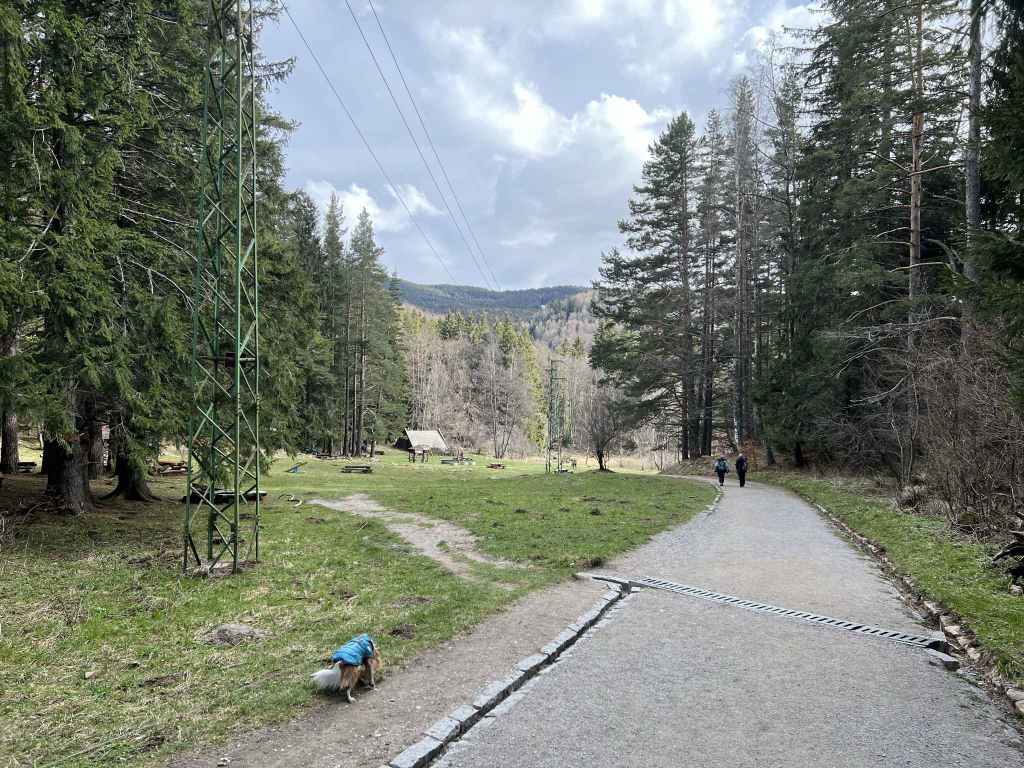
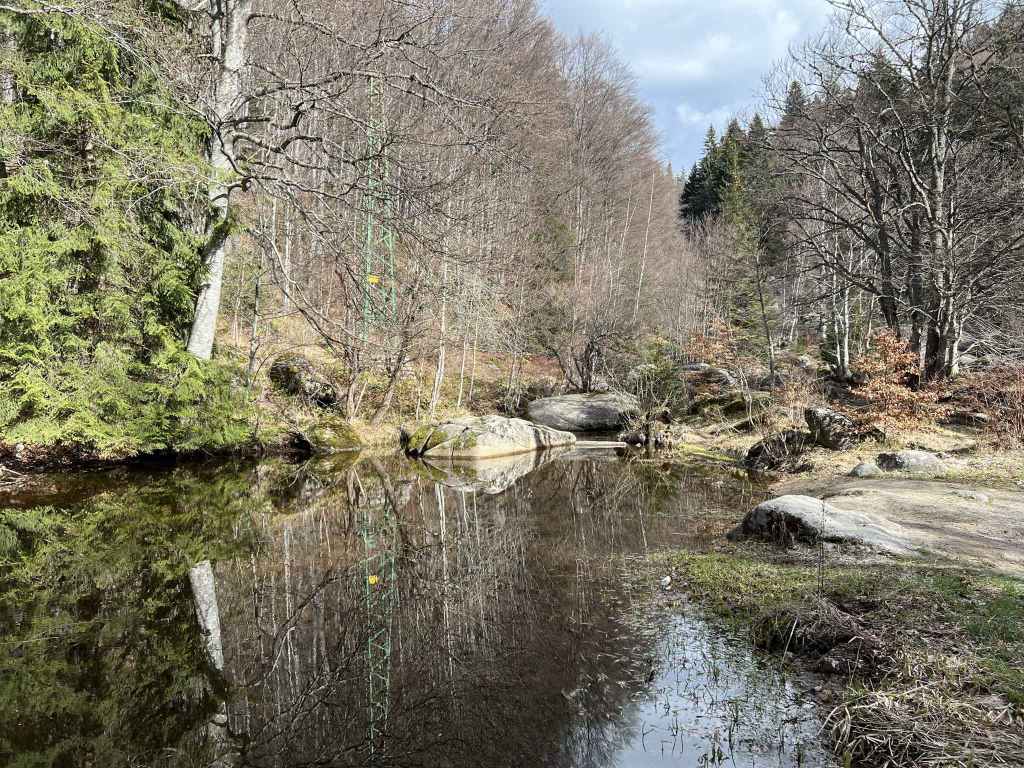
As you climb the mountain, various paths go left in the direction of the Dendrarium, but you want to stay on the same path, which is signposted for Zlatni Mostove and Momina Skala. Soon you will notice a stream on your right. After about fifteen minutes, you cross a secondary road connecting the Dendrarium on your left with a mountain hut, Iglika, on your right, a popular place for picnics in the summer. Continue straight with the stream now on your left. Ten minutes later, the path veers abruptly right, then left, and the road appears in front of you.

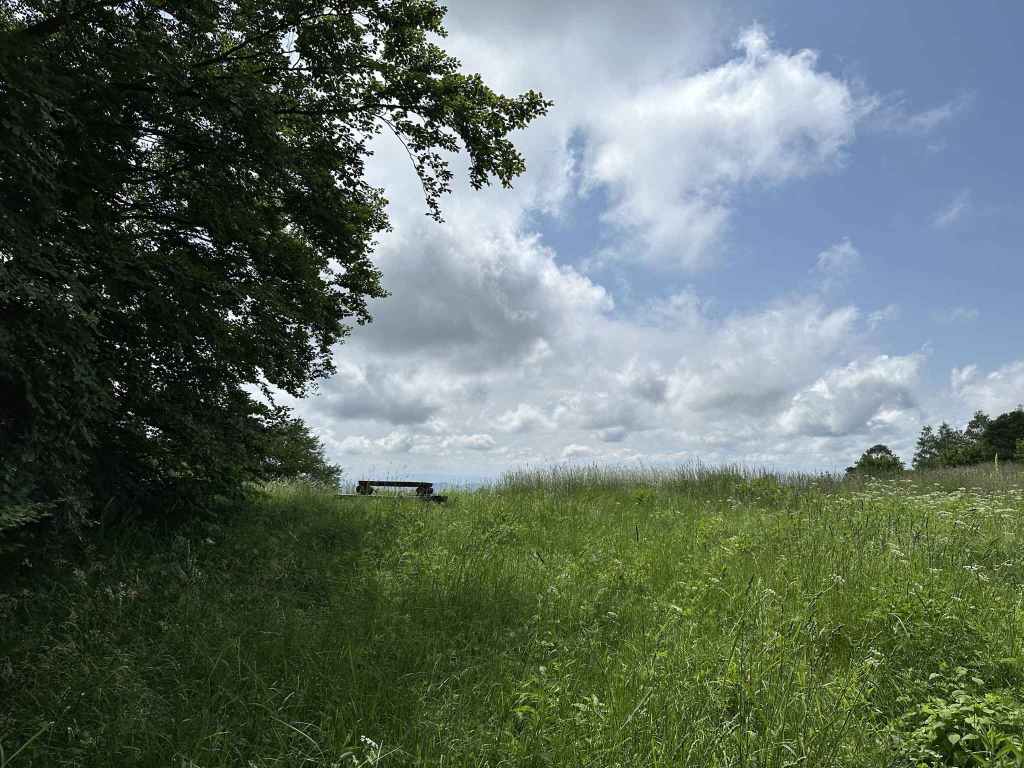
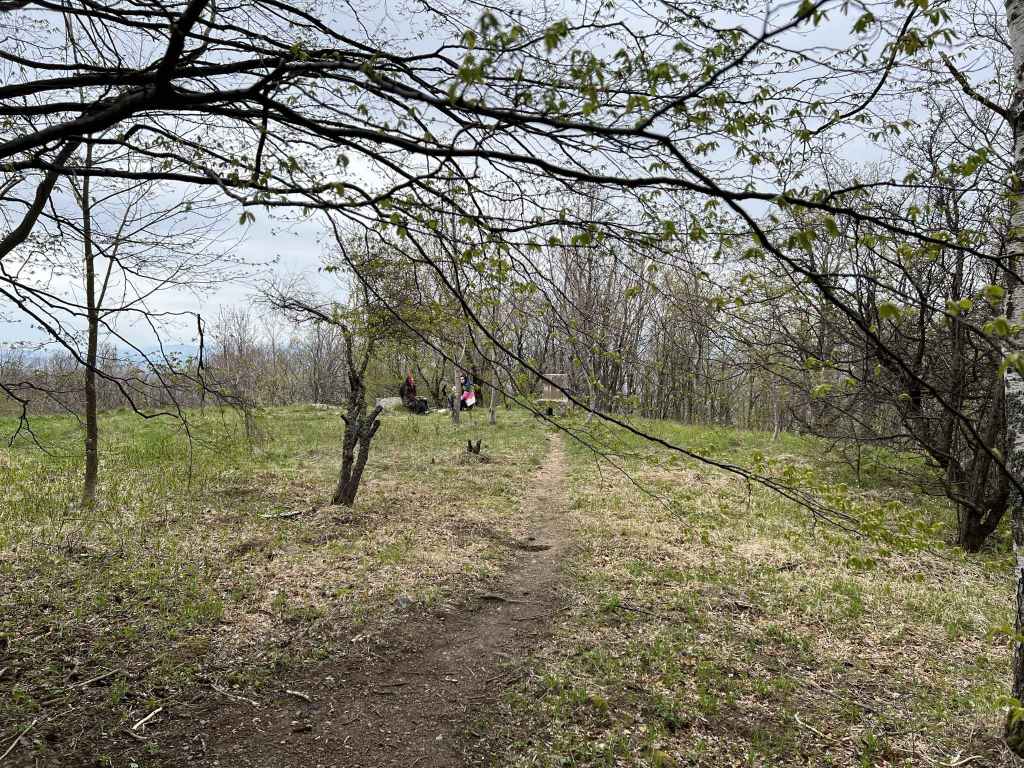
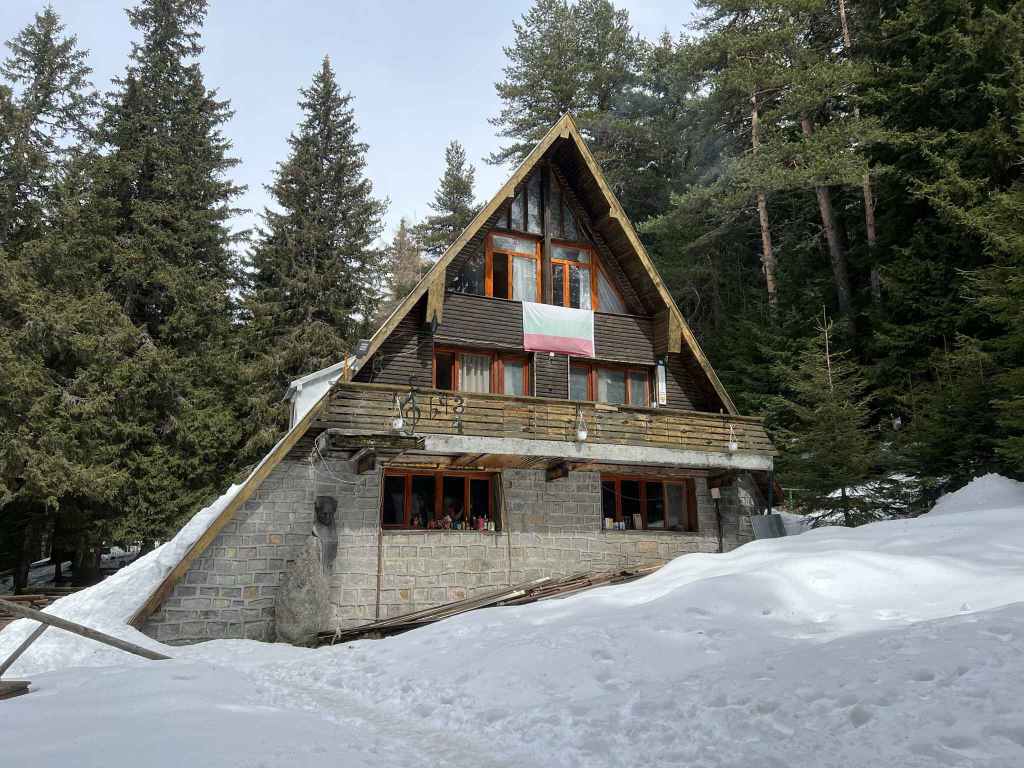
Go directly over the road and continue on the path on the other side. In a few minutes, there is a picnic table on your right. Another five minutes, and you come to a sort of crossroads with Vladaya village (and a mountain hut, Belite Brezi) on the right and a path to Kopitoto and Planinets on the left. The path to Kopitoto and Planinets is the path you will come back on. For now, continue straight up the mountain. You pass some more picnic tables and a fountain on the left. In about twenty minutes, a path joins from the left and, immediately after that, you reach the road that connects Zlatni Mostove on your right with Momina Skala on your left. On the other side of the road is a large, open meadow called Beli Bryag. This is a popular picnic area in summer and a good place to stop for refreshment. There are stalls selling corn on the cob, jams and souvenirs. If you head in the direction of Zlatni Mostove, there are some restaurants.

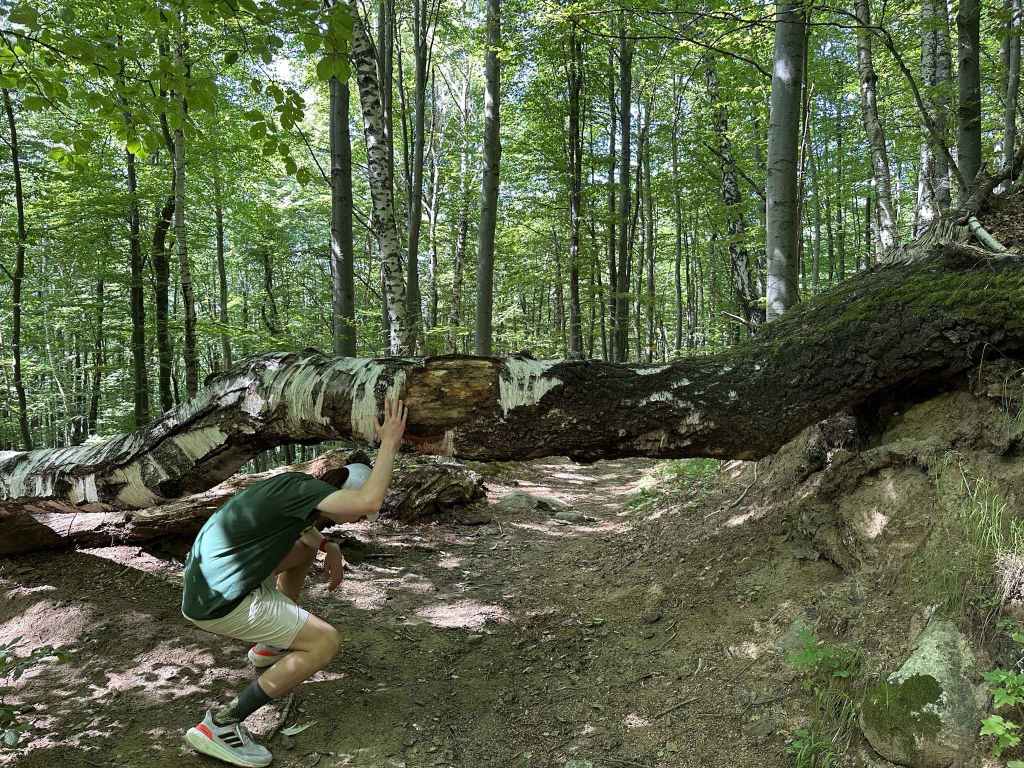
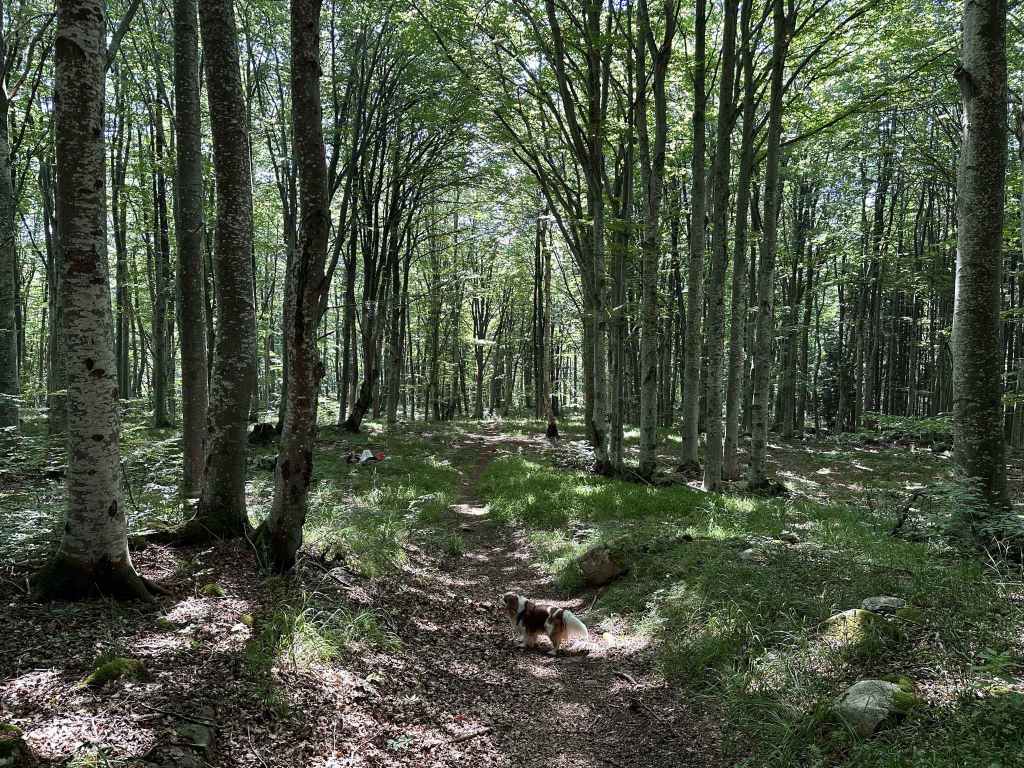
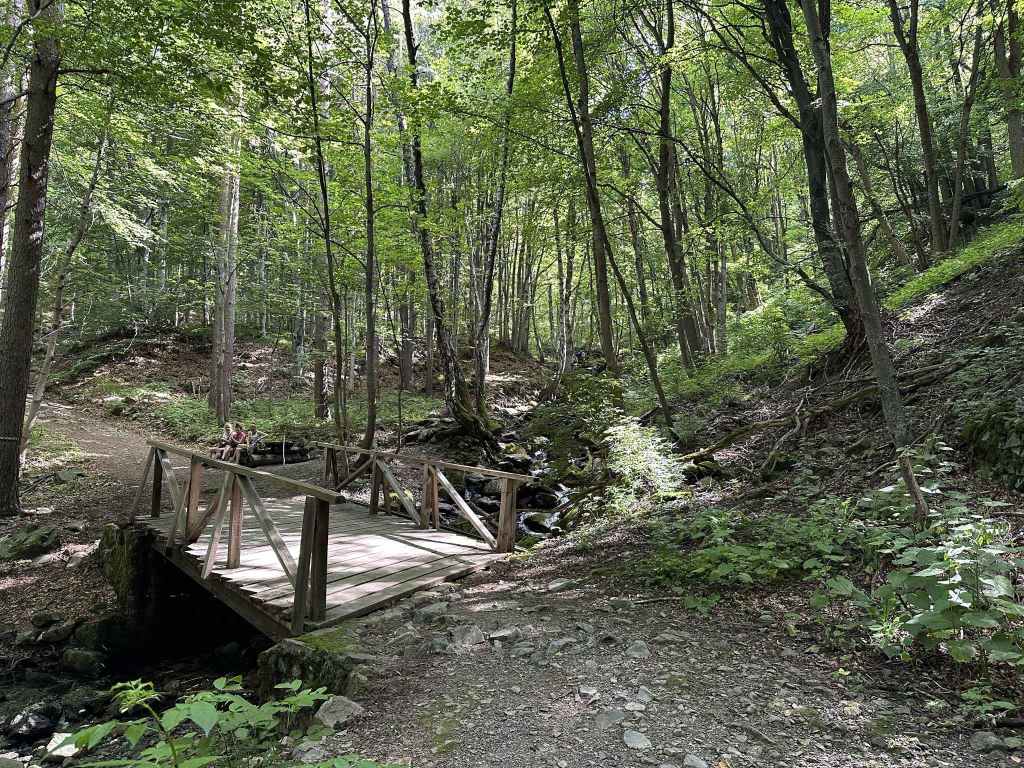
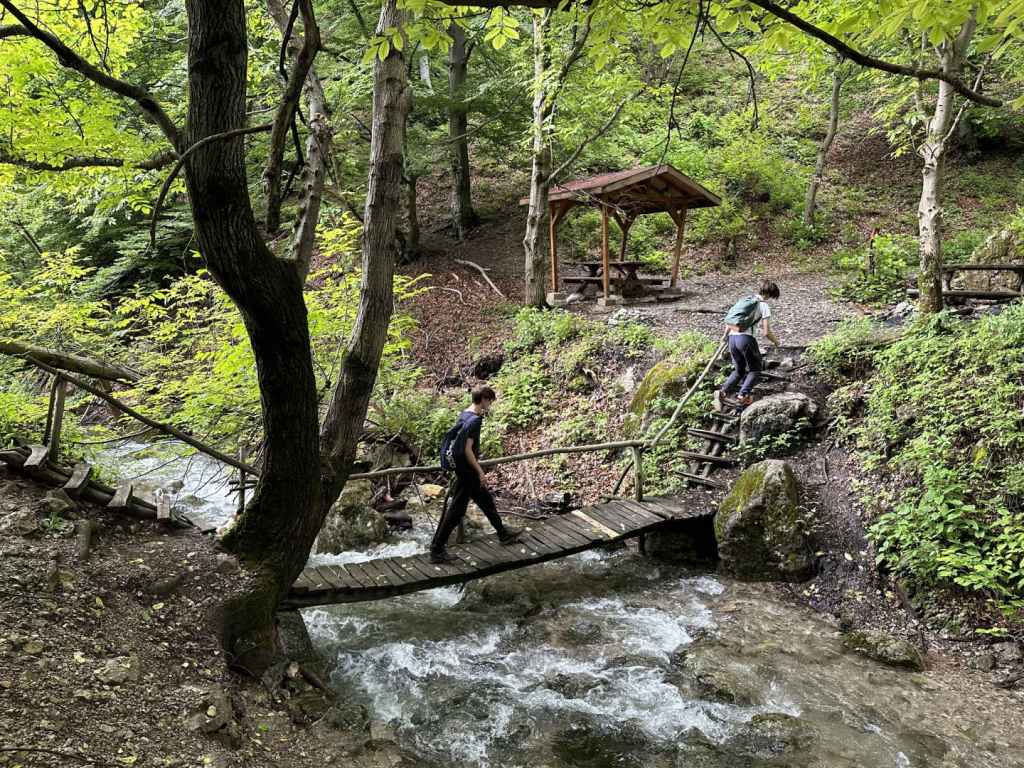
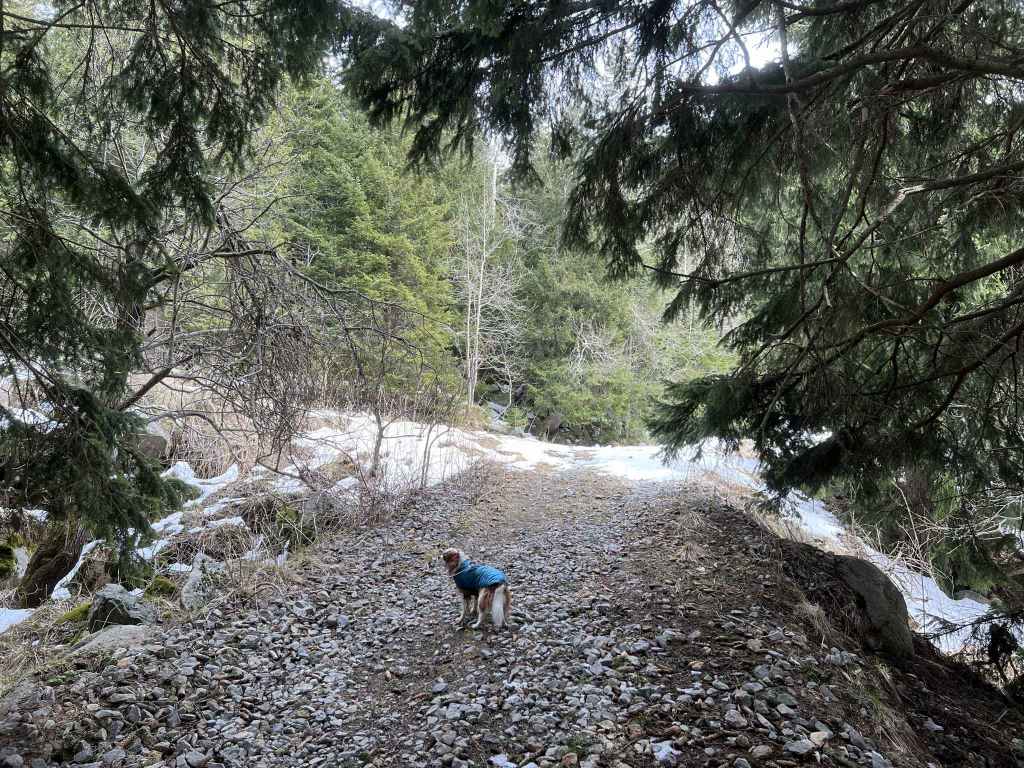
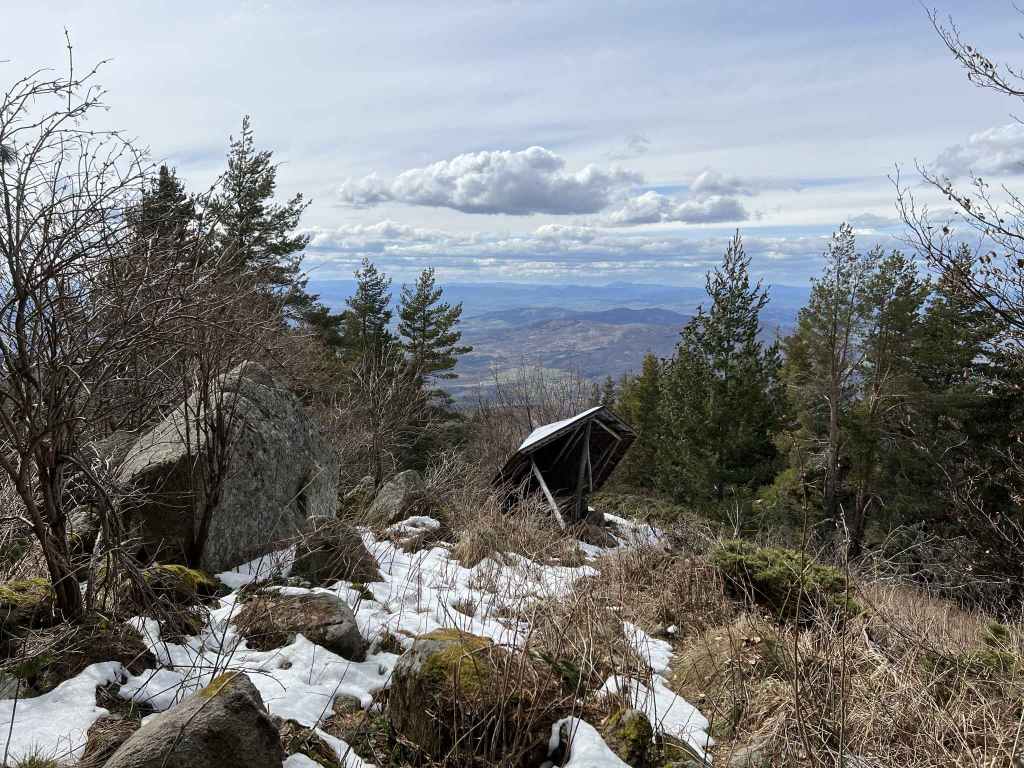
Having paused for refreshment, continue with the meadow on your right. This brings you to a wooden barrier with the road to Momina Skala on your left, a path heading up the hill in front of you, and a path on the right. The path heading up the hill in front of you skirts the road. Take this path. You are now doing part of the walk from Planinets, but in reverse. After three minutes, a path on the left is signposted for Planinets. Take this path, cross the cobbled road and continue on the path diagonally opposite. This path is signposted for Kopitoto. After five minutes, there are some stone steps on the left. Go down these steps and join the path to Planinets. After ten minutes, a tree trunk blocks the path. Go under the tree trunk, and immediately there is a path on the left signposted for Belite Brezi. You have to make a 150-degree turn. Do not continue to Planinets, but take the path to Belite Brezi, a path less trodden which leads you through magical forest (I have taken this path when there was thick snow and got quite lost; I have also encountered people sitting by the side of the path, seemingly lost in meditation). After ten minutes, a path on the right is signposted for the Dendrarium, but do not take it. Keep straight. A bridge crosses a stream, and in another ten minutes you will be back at the crossroads you saw earlier. Turn right here and go straight down the mountain. Cross the main road, then the side road between the Dendrarium and Iglika, and in half an hour you will be back at the car park where you started.

Bay Krastyo – Kikish – Dragalevtsi Monastery – Bay Krastyo

Starting Coordinates: 42.60447, 23.30224

Distance: 7.3 km

Elevation Gain: 430 m

Time: 3¼ hours

Difficulty: Moderate

Transport: by car, or by bus no. 66 to the stop for Bay Krastyo


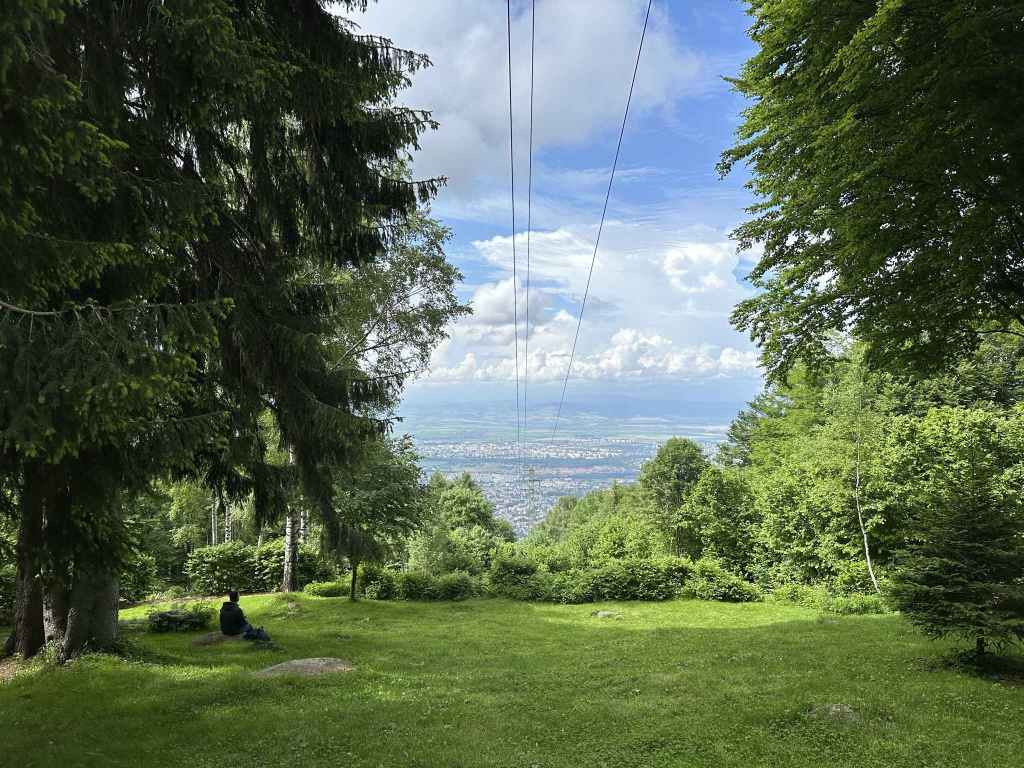
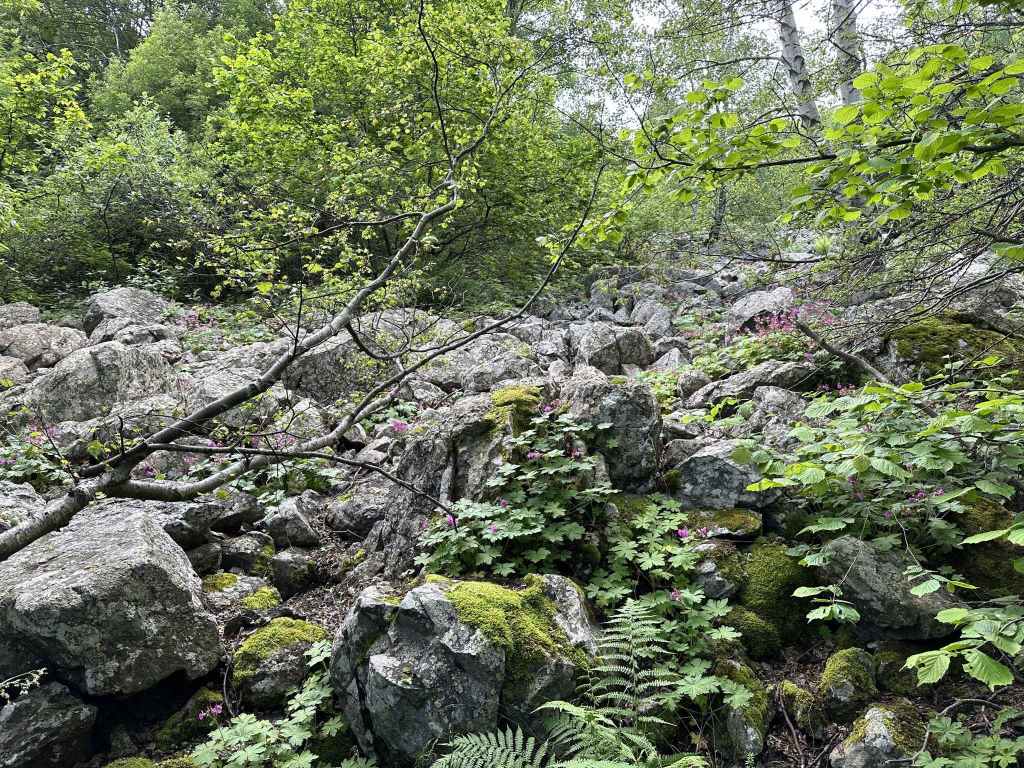
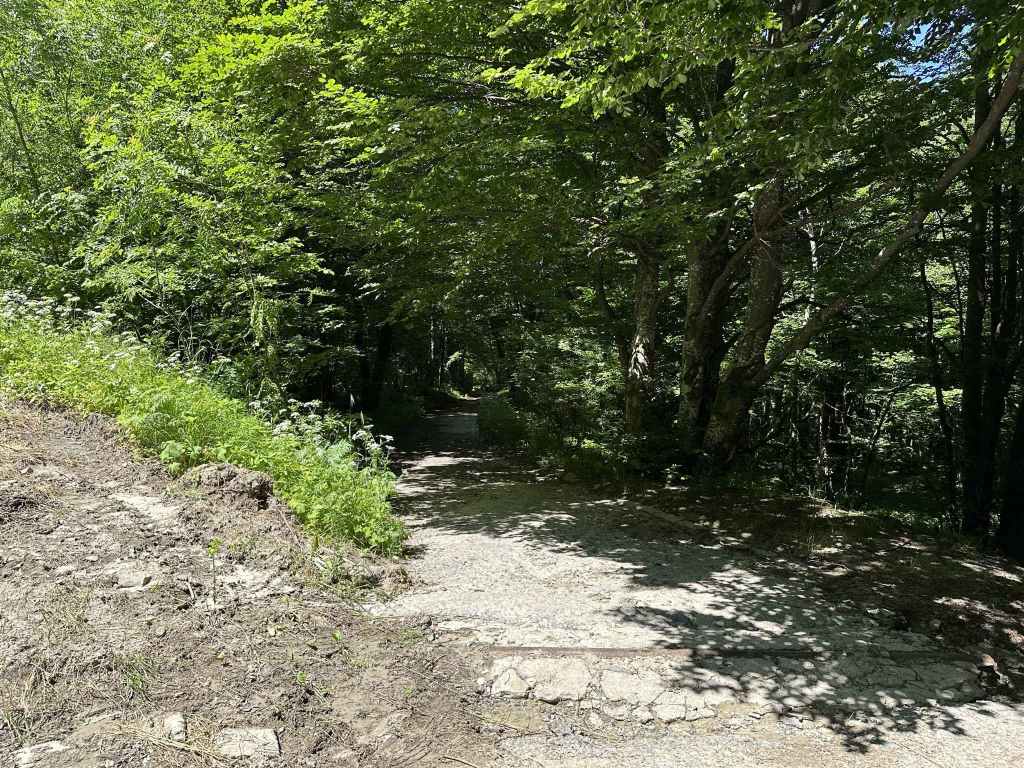
This is a truly wonderful walk that takes you to one of the biggest moraine fields on Vitosha and offers superb views of Sofia. It also throws in two wonderful glimpses of Dragalevtsi River. You must access the mountain via the village of Dragalevtsi. You leave the central square by the cobbled road in the far corner and drive up the mountain. After 1.5 km, ignore the turning on the left for the “Vodenitsata” restaurant. Continue straight. The road does a big curve and after another 3 km you come to the bus stop for Dragalevtsi Monastery, the starting point for two walks: Boyana Lake and Simeonovo Lakes. Continue uphill and after another 3 km you pass under the Dragalevtsi chair lift. In another 1.5 km, there is a slip road on the right that takes you to what was the midway station on the Dragalevtsi chair lift, Bay Krastyo. You can park under the trees here. This is also the penultimate stop on the 66 bus route.

Walk down the slip road on your right. You will pass a bike trail and a low building on the right, then a restaurant on the left. Immediately after the restaurant is the beginning of a path to Dragalevtsi Monastery on the right. You will come back on this path. But for now continue straight. In front of you is the midway station on the chair lift, now sadly disused. I still remember carrying my young child on this lift and jumping off at the station. It is such a shame that the lift no longer works.

With the station in front of you, there are some steps on your left, a picnic table under a tree, and a sign for the E4 European long-distance path and Cherni Vrah. Climb the steps and take this path, with the station now on your right. It goes around the station, under the chair lift, and immediately enters forest. There is then a sign for Kikish and Kamen Del mountain huts, which you can visit on the walk Kopitoto. A path joins from the left. Keep going straight. When you reach some moraines (large glacial boulders) with a view of Sofia, the path veers left and in about ten minutes you reach a bridge over Dragalevtsi River, your first view of the river. You will see it again further down on the way back.

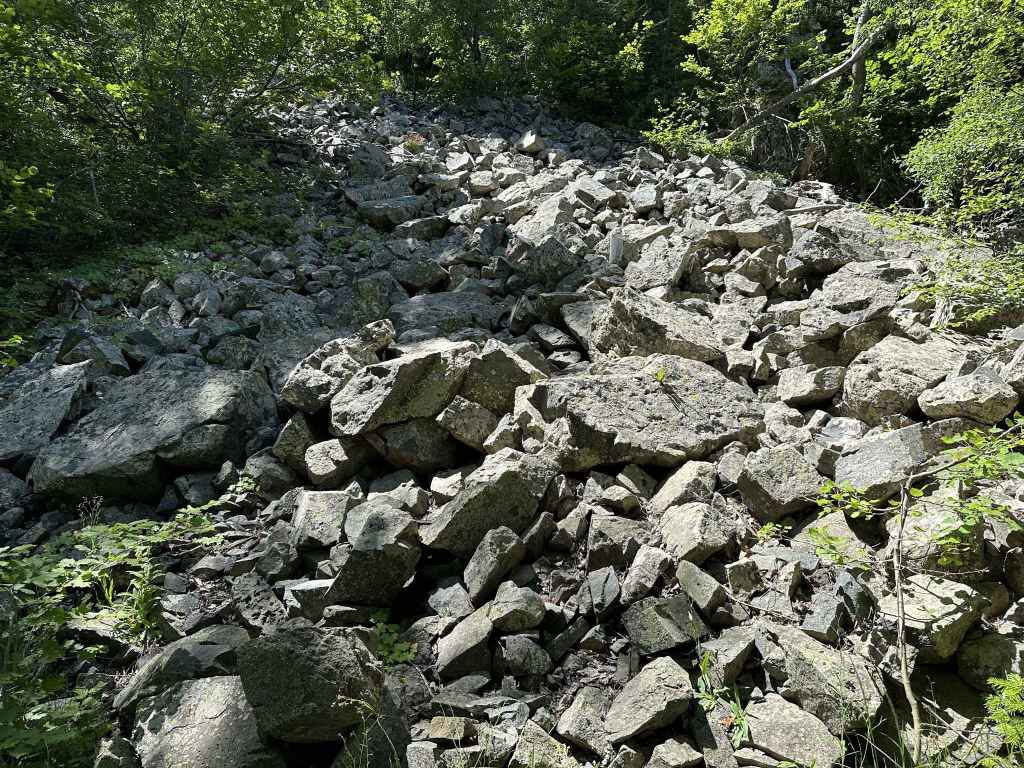
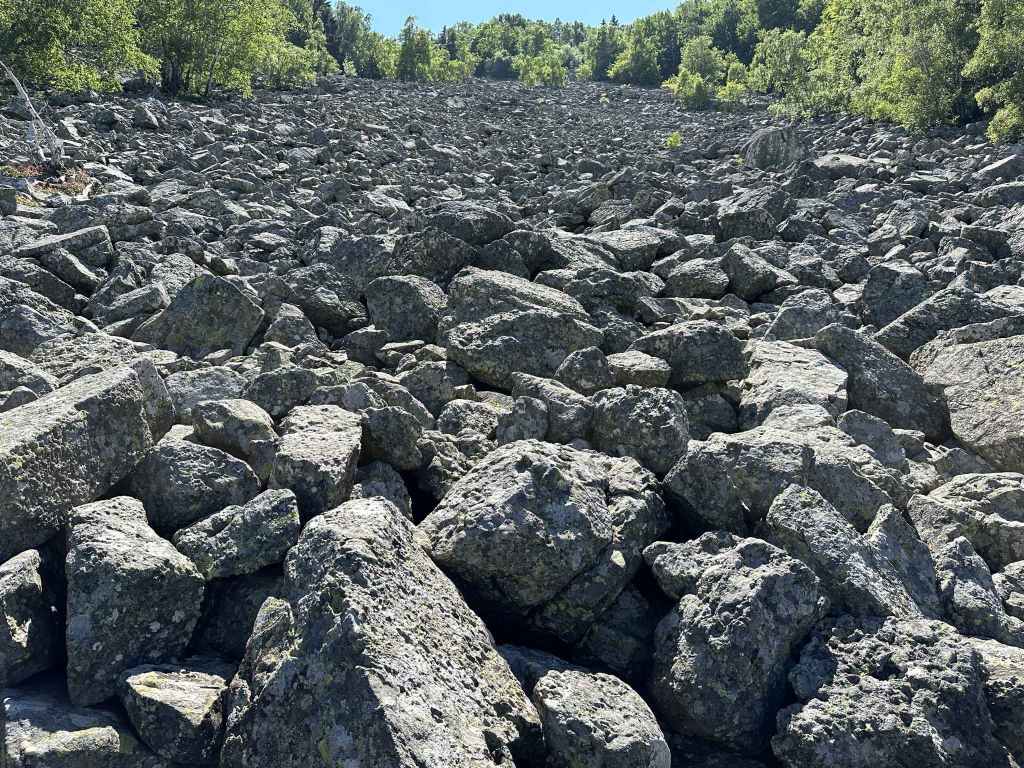
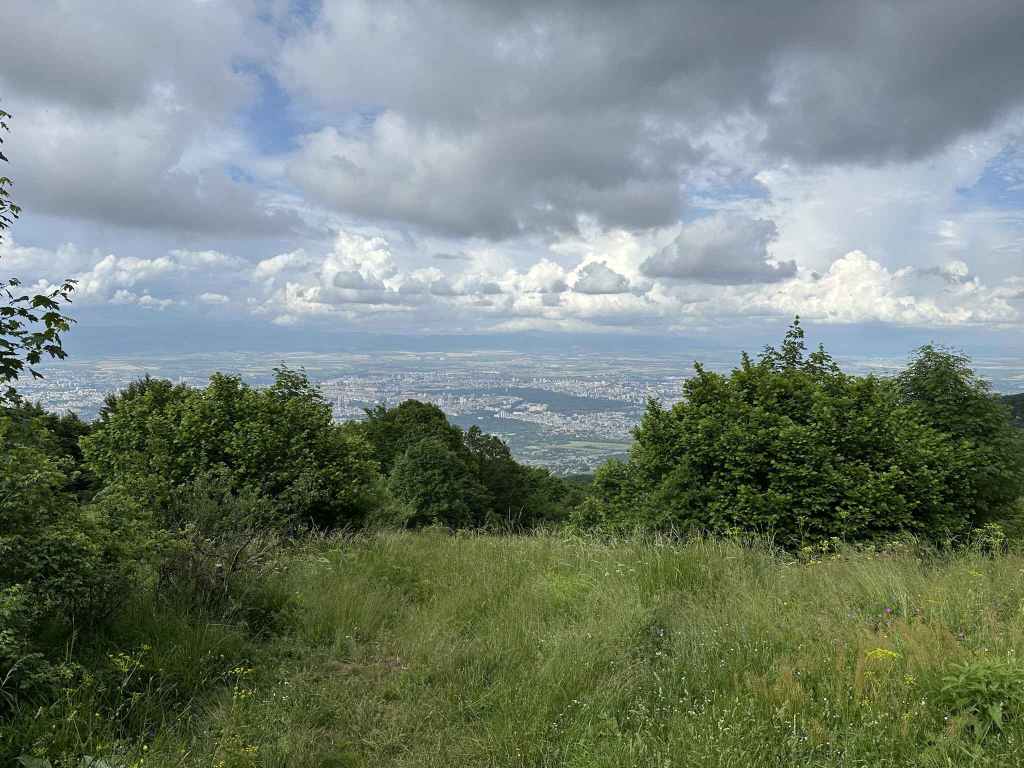
The advantage of this walk is that for the most part you are in forest, so the path is shaded and cool even on a hot summer’s day. In a couple of minutes, you reach the first moraine field, which continues for a few minutes. Walking across these fields is a little tiresome, especially for our four-legged friends. After the first moraine field, there is a lookout over Sofia on the right. Keep going and in another ten minutes you come to the big moraine field, which is in the open and offers wonderful views of Sofia. It takes several minutes to cross. This and Zlatni Mostove are the best places to see the moraines up close.

At the end of the moraine field, the path dives back into the forest and the shade once more. In three minutes, there is a path on your right signposted for Dragalevtsi Monastery. This is a more direct route, but we will continue to Kikish mountain hut, the furthest point on the walk Kopitoto, so that we can say we have covered the whole of the front of the mountain. The path begins to climb, in ten minutes it reaches a kind of summit, with a path on the left and right, and then it descends to the mountain hut, which is fifteen minutes after the earlier path to Dragalevtsi Monastery.

Kikish is a good place to rest and have some refreshment. There is a small pond and a stream, with chairs and tables. If you continue on the path you were on, you will repeat the second half of the walk Kopitoto, which is not necessary. So now you want to head east on a second path to Dragalevtsi Monastery that starts next to the stream, on the opposite side of the pond to the hut. It takes just over half an hour to reach Dragalevtsi Monastery from here. The path is a little steep in places, but again shaded. In 25 minutes, you will see the road on your right. Ignore this, continue down for another couple of minutes, cross the road in front of you, continue on the path on the other side, and in another five minutes you will come to a much wider path with Dragalevtsi Monastery on your left.

However, unless you want to visit the monastery, now turn right and go uphill. The path is very lovely because it is wide. In ten minutes, the first path to Dragalevtsi Monastery we ignored earlier joins this path from the right. Keep straight. In another ten minutes, you reach a second bridge over Dragalevtsi River. Five minutes after the bridge, you must leave the path and take a higher path on the right that is signposted for Bay Krastyo and Aleko. The two paths run parallel for a while, but then separate, as all paths do. Continue to climb, and in a couple of minutes you will be back at the chair lift with the road on your right.

You now have a fifteen-minute walk uphill to get back to the midway station, Bay Krastyo. Two or three paths all complete this ascent, intersecting and dividing as they go. It doesn’t really matter which path you take. At the chair lift, you can take the larger path uphill to the road. Then go right for fifty metres until you come to some steps on the left signposted for Bay Krastyo, Aleko and Cherni Vrah. Take this path, which goes uphill, then left, uphill, then left under the chair lift, uphill (the midway station now visible in front of you, the chair lift on your right) until it joins the slip road where we saw it earlier. At the slip road, turn left and in five minutes you will be back at the main road.

Kopitoto – Momina Skala – Kamen Del – Kikish – Kopitoto

Starting coordinates: 42.6356, 23.24779

Distance: 9.9 km

Elevation Gain: 330 m

Time: 3¼ hours

Difficulty: Moderate

Transport: by car, or by bus no. 63 to the Dendrarium


This was my first walk on Vitosha back in 2003, so it’s a very special walk for me. It takes you to the three mountain huts that overlook Sofia from the front of Vitosha: Esperanto, Kamen Del, and Kikish. There are huts further up or around the mountain, but these are the first I visited.

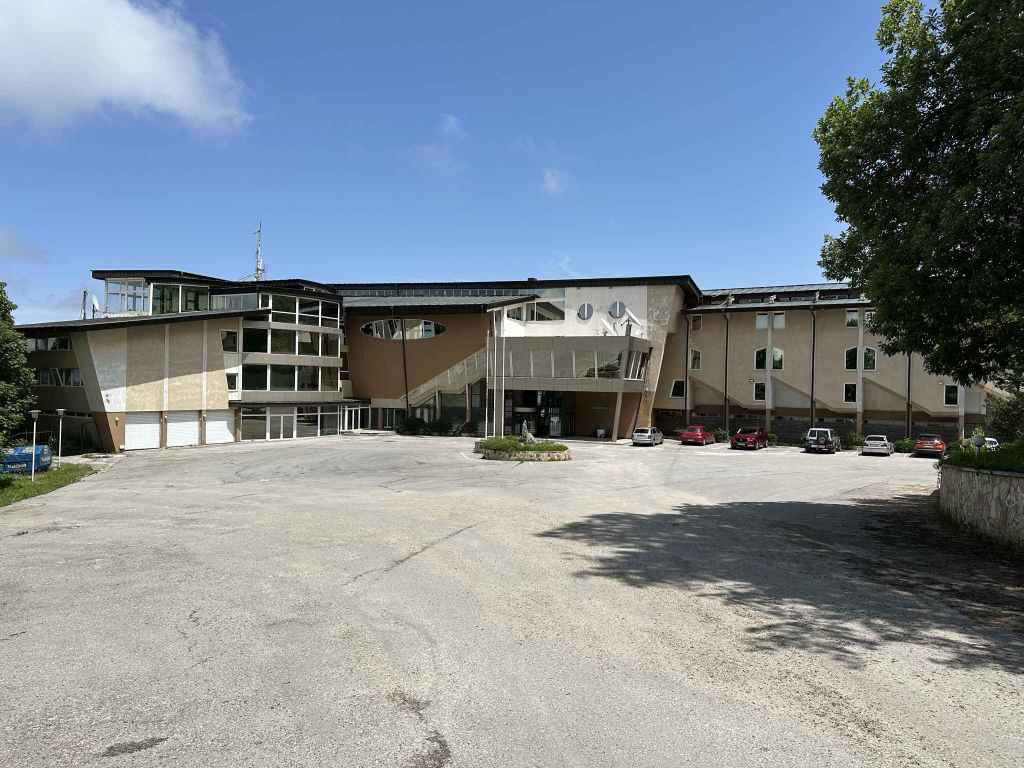
When you look at the mountain from Sofia, there are certain things you notice. One of them is the golf ball on top of the mountain, which is in fact a radar station on the second highest peak of Vitosha, Golyam Rezen. But unmissable in the west is the large TV tower (186 m) and, next to it, a hotel building, both named after the rocky outcrop they stand on: Kopitoto (“The Hoof”). This walk starts at the hotel. To get there by car, you take the road through Boyana (which is actually a continuation of the main thoroughfare heading south of the centre, Bulgaria Boulevard – after you pass under the ring road, this road affords excellent views of the tower and hotel) and continue until you reach the Dendrarium on your right. There is then a turning on your left, which ends at the hotel after 2.7 kilometres. If travelling by bus no. 63, you will have to get off at the Dendrarium and walk the rest of the way. After 1.3 kilometres, you will pass a turning on your right to Planinets, the start of another walk, and after another kilometre you will pass the TV tower on your left before reaching the hotel in another 400 metres.

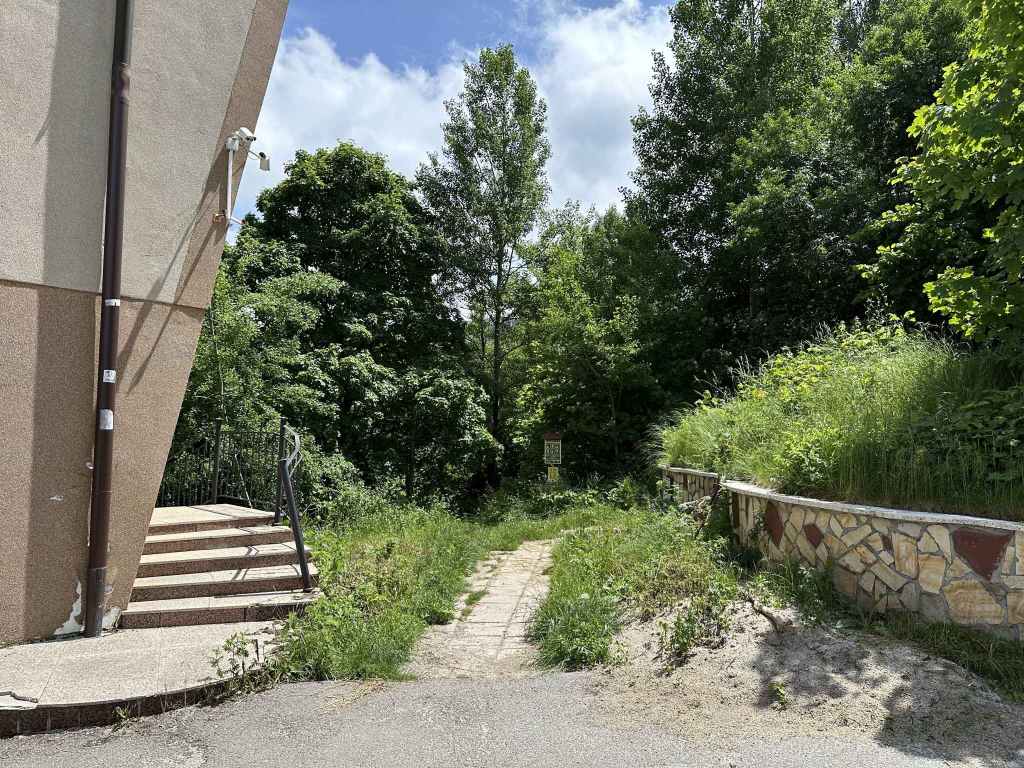
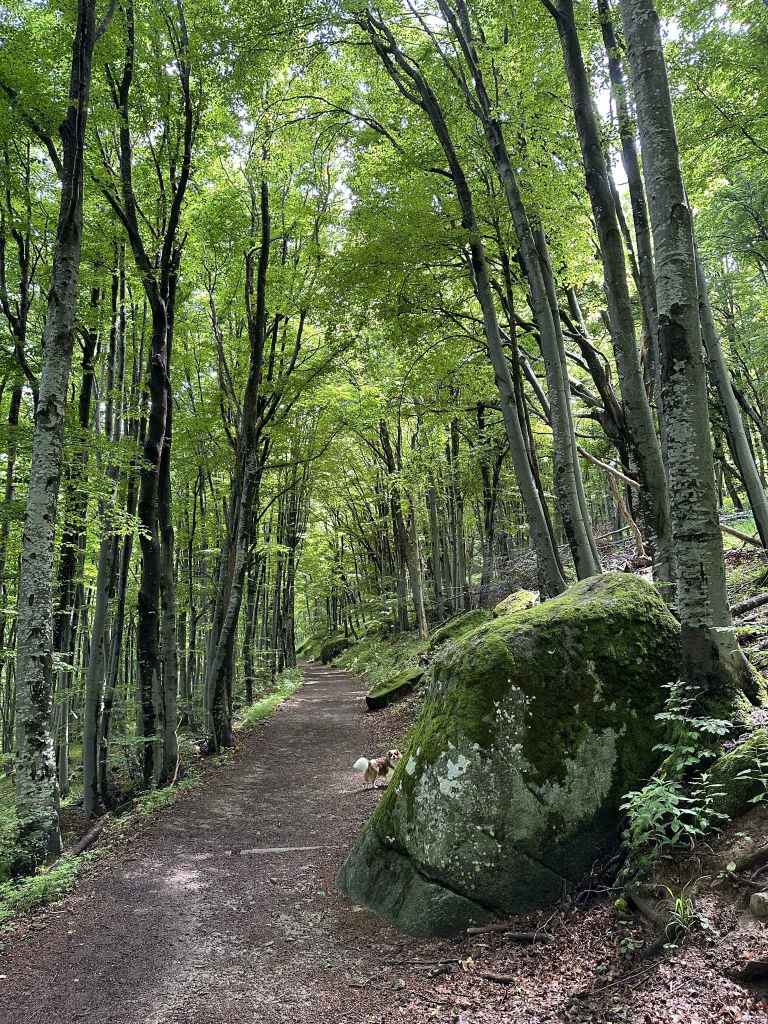
What makes this walk so special is the sudden transition from the world of concrete (the hotel) to the world of nature. You are literally immersed. The path starts on the right of the hotel. It immediately divides, a branch on the left heading back down to Boyana. Ignore this branch and continue up some steps, past a marble bench, into a wonderful avenue of trees that lean towards each other in the canopy, forming what looks like the nave of a cathedral. Large boulders are strewn on the right, resembling strange creatures. After approximately ten minutes, a path diverges on your left to Boyana Waterfall. This is the path you will return on. Ignore it for now and continue straight in the direction of Cherni Vrah/Momina Skala. After ten minutes, you will come to a crossroads. You want to go left here, still in the direction of Cherni Vrah/Momina Skala, but I’m going to let you in on a secret. A few metres away is my favourite spot on the mountain, a magical place I walked past for many years without knowing it was there. To get there, you need to make a small detour: at the crossroads, turn right towards Karpuzov Valog. Continue for a couple of minutes past some trees on your left until you reach a picnic table out in the open. Leave the path and walk to the picnic table. From here, you have the most outstanding view of south-west Bulgaria. My wife and I watched the sunset here one New Year’s Eve. It is such a peaceful place for a moment of mindfulness.

Now go back to where you were – the crossroads – but this time go left in the direction of Cherni Vrah/Momina Skala. After about five minutes, you will hear Boyana River, the river that forms Boyana Waterfall further down, on your left. In another ten minutes, you will reach Momina Skala, a large, open field with tables and shelters, a restaurant and large antenna, which features in many of these walks. Skirt the lefthand side of the field, leaving it behind you, and descend to Momina Skala hut in the trees. The river is in front of you. There is a small bridge, which you need to cross.

A path on your right goes uphill to Cherni Vrah. It is possible to reach the last of the mountain huts on this walk, Kikish, more directly by taking this path and then a left fork that goes to Kikish via Sredets, but we are going to take the path on the left that goes downhill and is signposted for all three mountain huts and Boyana Waterfall. In five minutes, the path divides. Go right, again in the direction of the three huts. After five minutes, a path joins from the left. This is the path you will go back on, but keep going downhill and in five minutes you will reach the first of the huts, Esperanto. It is currently abandoned and a little overgrown. There is a swing attached to a tree.

Keep going on the same path and in ten minutes you will come to the second hut, Kamen Del. The view of Sofia from here is memorable. The hut itself is friendly and offers good food. It’s a perfect place to take some refreshment. I went one rainy day and was incredibly grateful for the free herb tea that was served with every meal. If you feel you have gone far enough, you can now turn around and head back in the direction of Kopitoto.

The last hut, Kikish, is another twenty minutes away on the same path. After ten minutes, the path from Momina Skala via Sredets joins from the right. In another five minutes, there is a small moraine river on your right, and soon the hut itself appears. The reason for going this far is to connect the dots – another walk from Bay Krastyo (Dragalevtsi) approaches Kikish from the other direction, so you will have covered most of the front of the mountain. It’s up to you. Continuing to Kikish will add another 45 minutes to your walk.

Leaving Kikish, return to Kamen Del and then Esperanto, but be careful you don’t take the path on the left that goes to Momina Skala via Sredets. Five minutes after you walk back past Esperanto, again avoid the path to Momina Skala on your left (the path you came on). In a few more minutes, another path on your left leads to Momina Skala, while a path on the right leads to Boyana Waterfall. Keep straight. You will soon cross Boyana River as it tumbles down towards the waterfall, little knowing (or perhaps knowing all too well) what lies in store for it.

Five minutes after the bridge, there is a grassy clearing and then a path, again signposted for Boyana Waterfall, on your right. It’s worth taking this path for just a hundred metres in order to admire the view of Sofia. Come back to the path you were on and follow it until it ends in another five minutes. This is the path you ignored when you left Kopitoto. Now turn right and in ten minutes you will be back at the hotel.

Zgorigrad

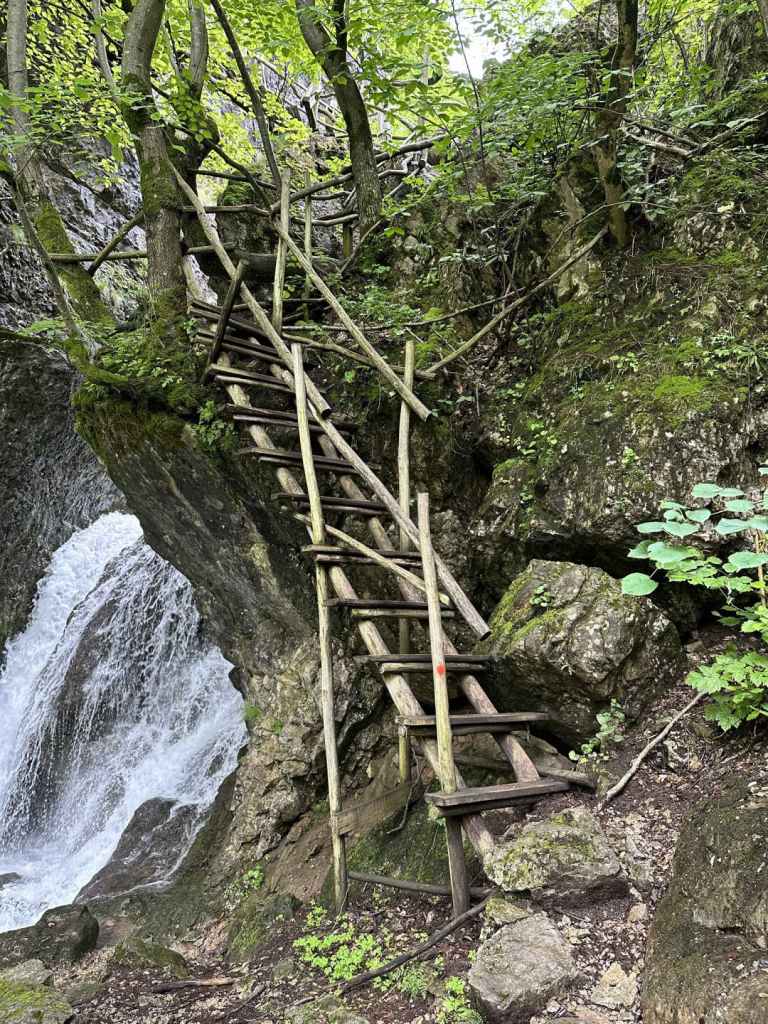
This is an astonishing walk, but it is not for the faint-hearted! To get to the bottom of the waterfall, known as ‘Borov Kamak’ (‘Pine Stone’), it is necessary to climb fourteen ladders, some of which are quite steep, and to cross from side to side of the river Varteshnitsa. We were with a small dog and had to carry him up and down the ladders. Also, in reviews online, a lot of people express their disappointment at the waterfall having no water. We went in the second half of June after heavy rains, and I can say that this was not the case! The waterfall was working at full capacity, and a couple of times, where there was no bridge, it was necessary to wade across the river.

That said, this is one of the most beautiful places I have been to in Bulgaria, and the waterfall is memorable. You get what you put in, I suppose. To reach the old mining village of Zgorigrad, you must first travel to Vratsa. Coming from Mezdra on the E79, you enter the town of Vratsa and keep going straight, following the signs for Ledenika Cave. After three kilometres, you pass the turning on the left for Vratsa Waterfall (directly after the hospital). After another kilometre, ignore the turning right that goes to the centre and follow the sign for Ledenika. In 300 metres, take the turning on the left to Ledenika and Zgorigrad. You leave Vratsa and go through the dramatic Vratsa Pass. After 2.2 kilometres, there is a sign for Ledenika at a distance of thirteen kilometres on the right, but you continue straight and enter Zgorigrad village. Keep going straight, pass through the centre (with the river Varteshnitsa on your right) and, as the road begins to loop, 2.2 kilometres after the centre of Zgorigrad, you come to the start of the ecopath that leads to the waterfall. Park your car on the grassy verge. The river is now on your left.

The walk to the waterfall takes about two hours. If you factor in another hour to visit the top of the waterfall, you will need to allow five hours to go and come back. The ecopath climbs the grassy verge and quickly enters forest. On your left is an old tailings pond, used to store waste material from the extraction of metal ore. This tailings pond caused a terrible flood (almost half a million cubic metres) in 1966, with significant loss of life in the nearby village. There is a short film about the disaster by Robart Nikolchev on YouTube. In about twenty minutes, you cross the first of several bridges taking you from side to side of the river. After the third bridge, we were tempted to go straight, but you must go right, uphill, following the course of the river. If you find yourself moving away from the river at any point, then you have gone wrong. Keep an eye on the red markers.

After the fourth bridge, the ladders start in earnest. There are eight ladders in the space of half an hour. After the fifth bridge, we again went slightly wrong and started moving away from the river. Follow the red markers and stay close to the river. Another three ladders, and then comes the fun part. You are required to cross to the lefthand side of the river, but there is no bridge, presumably because there isn’t normally so much water and it’s possible to hop from rock to rock. In our case, the river was roaring down, and this wasn’t possible! We tried taking off our shoes and socks, but the water was so cold we didn’t get very far! In the end, we just waded across. I carried our dog.

Another fifteen minutes, and you come to the bottom of the waterfall, which is 63 metres high. It’s a wonderful location. If you want to visit the top of the waterfall, you need again to cross the river without the help of a bridge. We again got soaked! But it was worth it. There is a picnic table under the eaves of the rocks on the righthand side of the river. You can stop here for lunch and admire the waterfall. We certainly did.

If you decide to continue the top, you must follow the path in front of you, which soon goes left. You must climb another four ladders to reach the top, but the view is amazing and the sensation of watching the river tumble over the edge is exhilarating. There is a place to stand, with a railing, but please be careful. The river before it cascades over the edge is much calmer. You can continue upstream. Having crossed a bridge, in about twenty minutes you will reach a mountain shelter and an open meadow. This is as far as we got.

Beware that descending the ladders is perhaps more difficult than going up (especially when you are responsible for a small creature!). We had heard that the walk to Vratsa Waterfall is quite steep, but found this walk to be more difficult, albeit more beautiful. ‘Borov Kamak’ easily ranks in my top five, along with waterfalls like Hristo Danovo and Polska Skakavitsa.

The ecopath starts 2.2 kilometres after the centre of Zgorigrad village.
It passes through forest, with the river Varteshnitsa on your left.
The first of several bridges.
Crossing back to the other side.
The ladders begin in earnest.
There is a wooden walkway with views towards Zgorigrad.
The ladders get steeper!
The river Varteshnitsa as it descends through the forest.
The first crossing without a bridge!
‘Borov Kamak’ Waterfall.
The picnic table on the righthand side of the waterfall.
The waterfall seen from the right.
The top of the waterfall.
The view from the top of the waterfall towards Zgorigrad.
The meadow further upstream.

Bistritsa – Samokovishteto – Bistritsa

Starting coordinates: 42.56902, 23.34232

Distance: 3.8 km

Elevation Gain: 130 m

Time: 2 hours

Difficulty: Moderate

Transport: by car, or by bus to Bistritsa Village


Bistritsa Village is on the east side of Vitosha and can best be reached from the ring road. The three main districts on the north side of Vitosha, from west to east, are Boyana, Dragalevtsi, and Simeonovo. If you continue on the ring road past Simeonovo in an easterly direction, you come to Sofia Ring Mall and Ikea. Just before these is the turning that takes you to the start of the only lift that is still working on Vitosha, the Simeonovo-Aleko gondola lift. Immediately after Ikea is a roundabout. Turn right here and the road will take you uphill to Bistritsa. The road reaches a summit, where there are turnings left to Pancharevo and right to Simeonovo, and then descends into Bistritsa proper. After crossing Bistritsa River, you are in the centre, an open grassy area. The following buses – 69, 70, 98, 314 – will drop you here, at the stop marked “Selo Bistritsa”.

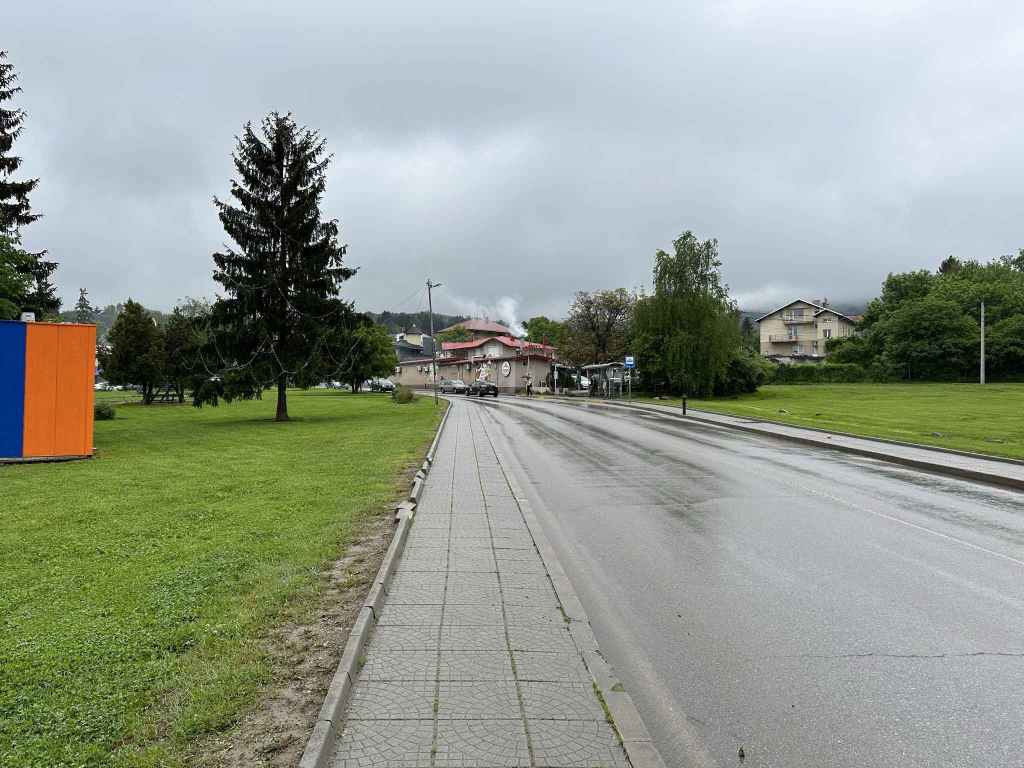
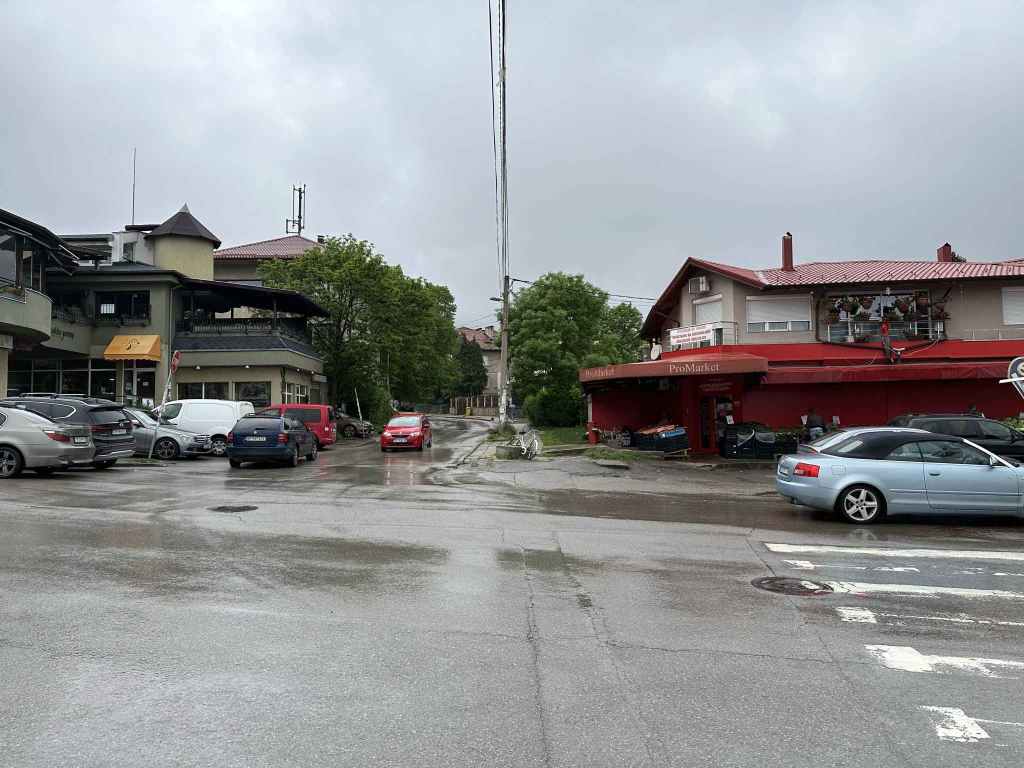
The mountain is on your right. You have just crossed Bistritsa River, which tumbles down the mountainside and eventually flows into Lake Pancharevo to the east. There are two walks that begin from Bistritsa – one to a small waterfall; the other to the village of Zheleznitsa. They both have the same starting point. To reach this point, you need to take the first turning on the right after the bus stop. This is Stefan Stambolov Street. There is a ProMarket grocery store on the corner. You follow this street for 2.9 kilometres. 700 metres from the centre, it crosses the river. Keep going uphill. After another kilometre, the road veers left – ignore the dead-end street in front of you. Having crossed back over the river, it then leaves the houses behind. There is a small car park on the left. Where it enters Vitosha Nature Park, ignore the turning on the right and keep going uphill. After another 400 metres, you come to a second car park on the left. This is a good place to park. If there are no places, you can park further up on the verge. Continue to where the road ends in another 300 metres.

You are now ready to start your walk. There are two paths, both of which form part of the “low-altitude circular trail”. Going left will take you to Zheleznitsa Village, a lovely walk with wonderful views. The walk to Samokovishteto Waterfall is much shorter, little more than half an hour, but the waterfall is so picturesque it is well the effort.

Take the path on the right. You will soon pass a hut on the right. In ten minutes, the low-altitude trail is dissected by a path heading up and down the mountain. Continue straight (signposted Simeonovo Lakes), and you will come to Yanchovska River, a tributary of Bistritsa River, which it joins in Bistritsa Village. Go right, and the path takes you back down to Bistritsa. You want to go left, in the direction of Aleko Hut and Cherni Vrah. The path climbs steadily through forest. You become aware of Bistritsa River chuntering along on your right. Ignore any side paths or shortcuts and stay on the marked trail. In little more than twenty minutes, you will reach Samokovishteto Waterfall.

The first thing you see is the white line of the river. There is then a beautiful cascade of water where the river slides down a large flat surface, almost as if it was at an aqua park. On your left is a pool under the steady gaze of a boulder. On your right is a bridge over the river which takes you to a picnic area with a couple of tables and an open shelter. Sit in the shelter and look through the glassless window. It’s almost like watching TV.

It is a lovely place to stop and enjoy the nature. The flow of the water is captivating. This walk can easily be extended by continuing in the direction of Aleko Hut or by returning to the low-altitude trail and continuing towards Simeonovo Lakes, though neither of these destinations is very near. Otherwise, having taken your fill, simply retrace your steps to the top of Stefan Stambolov Street and head back into Bistritsa.

NOTE: Instead of taking the low-altitude trail and then turning left to head up the mountain, it is possible to reach Samokovishteto by taking the turning on the right when you enter Vitosha Nature Park, 2.2 kilometres from the centre. You then simply head uphill until you reach the waterfall, crossing the low-altitude trail at some point. This will shorten the walk from the centre of Bistritsa Village if you are on foot.

This map shows the walk in relation to the top of the mountain above (Aleko Hut on the right, the radar station on the left) and to Bistritsa Village below. You can also see the line of the Simeonovo-Aleko gondola lift.
A short film of Samokovishteto Waterfall on Bistritsa River.

Vratsa

Vratsa is a town north of Sofia, midway between Sofia and the river Danube. It is famous for its caves (in particular, Ledenika), waterfalls and rock formations. To the south-west of Vratsa is the Vrachanski Balkan Nature Park, established in 1989. This is where Vratsa Waterfall is situated, together with another waterfall, Borov Kamak, which can be accessed from the village of Zgorigrad. It is also where the Bulgarian revolutionary and poet Hristo Botev was killed in 1876, fighting against the Ottomans in an uprising that would be brutally crushed, but would sow the seeds for the liberation of Bulgaria from Ottoman rule two years later. Vratsa is also famous for the Rogozen Treasure, the largest haul of Thracian treasure ever found in Bulgaria, dating to the fourth century BC, part of which can be seen in the Regional Historical Museum.

Vratsa is connected to Sofia by railway (for train times, see the Bulgarian State Railways website: https://www.bdz.bg/en). To reach Vratsa from Sofia by car, take the A2 motorway, which connects Sofia with Varna on the Black Sea coast, north-east as far as Botevgrad and then head north-west on the E79 road to Vratsa via Mezdra. The journey takes about two hours. On entering Vratsa, keep going straight and in three kilometres, immediately after passing City Hospital on your left, there is a street, also on your left, called Belasitsa. You need to take this turning. This street continues for 800 metres and then abruptly ends next to an old people’s home, Zora. This is where the path to the waterfall begins (there are several places to park your car).

The walk from here to the bottom of the waterfall takes about an hour, but it is steep and slippery. It is not an easy path. Follow the path and, after a few minutes, there is a large gateway on your left with the words ‘Welcome to Vrachanski Karst’ written on it in Bulgarian. This is the name of the reserve, which forms part of the Vrachanski Balkan Nature Park. Do not be tempted to follow the track that climbs the hill directly in front of you, but go left, over the riverbed and under this gate. The riverbed will now be on your right. After five minutes, you will come to a shelter on your right, an ideal place to rest. The path starts to climb, and in another five or ten minutes you come to some benches and a fountain on your left. The path then crosses the riverbed, which was completely dry when we visited. You need now to follow the blue markers (they are sometimes red), ignoring a level path on the right and heading straight uphill. Bear in mind the elevation gain from the start of the walk to the waterfall is about 300 metres. If you stay on this path and observe the blue markers, you will reach the bottom of the waterfall in half an hour.

At 141 metres, Vratsa Waterfall, also known as ‘Vrachanska Skaklya’, is one of the highest in Bulgaria, but the flow of water is very little. There are some boulders at the bottom, and an enormous rock face. But where Vratsa Waterfall really stands out is with the views! I heartily recommend that you continue to the top of the waterfall, an elevation gain of another 200 metres, which takes about 45 minutes. As you face the waterfall, the path with the blue markers continues on your left (that is, it continues eastwards). Follow the path and, before reaching the top, you will pass a cave on your right, which you can investigate. Once you reach the top, the path heads right through some trees and then comes to a clearing. If you continue in the same direction, skirting the cliff face on your right, in five minutes you will come to the stream that feeds the waterfall. The views – of the waterfall and rock face as you climb; of Vratsa and Dabnika Reservoir in the distance – are spectacular and well worth the extra effort. The descent from the top of the waterfall to the start of the path took us about an hour.

All in all, you need to allow at least four hours for the hike itself. The climb to a large rock face, followed by a further climb to the top of the waterfall, is reminiscent of the visit to Bovska Skaklya north of Svoge, on the other side of the Vratsa Balkan, only this waterfall is higher.

The turning after the hospital, Belasitsa Street, ends next to an old people’s home. The path begins here. The waterfall is the dark patch on the rocks behind.
After a few minutes, turn left and pass through the gateway, which says ‘Welcome to Vrachanski Karst’.
A rock on the right.
A picnic shelter in ideal surroundings.
The path starts to climb.
After crossing the riverbed, the path becomes steep.
Vratsa Waterfall from below.
As we continue to the top, the views of the waterfall and Vratsa are wonderful!
A view of Vratsa from inside the cave.
At the top, the path heads through some trees.
And you come to a clearing.
In another five minutes, you reach the stream that forms the waterfall.
A view of Vratsa and Dabnika Reservoir from the top of the waterfall.

Tihiya Kat – Vladaya – Tihiya Kat

Starting coordinates: 42.63811, 23.21968

Distance: 7.6 km

Elevation Gain: 330 m

Time: 3 hours

Difficulty: Moderate

Transport: by car, or by bus no. 63 to Tihiya Kat


This is one of the loveliest walks on Vitosha and it has the advantage of being a good walk to do even when the weather is bad because it’s lower down the mountain. You take the car or bus on the road that climbs the mountain from Boyana Village and stop at a motel-restaurant called Tihiya Kat. The motel is on your left. The walk starts at the bus stop on your right.

A path descends straight into forest and takes you to the next village around the mountain, Vladaya. After about five minutes, you reach a bridge over a stream. A few minutes later, there is a hut on your right where people light fires. After another ten minutes, you come to some farm buildings in a field on the right where there are sometimes horses. In fact, this path is part of a “low-altitude circular trail” that goes all the way around the mountain and is shared by walkers, cyclists and horse riders. In another ten minutes, there is a path on the left before a pylon, followed by another path on the left after the pylon. There are some tables here where you can rest. Continue on the shared trail, and soon the village of Vladaya will become visible through the trees on your right. After five minutes, a path joins from the left. The path you are on begins to veer to the right to enter the village, but you want to go straight ahead (signposted for Marchaevo and Kladnitsa), not into the village.

In a couple of minutes, you come to a clearing. A path on the left leads up to Planinets, a mountain hut which is the start of another walk. A path on the right leads down to the village. You want the second path on the left (signposted for Zlatni Mostove, Kumata and Cherni Vrah). This second path is, in fact, a continuation of the low-altitude circular trail. There is a small path in front of you which leads down to Vladaya River. You will come back on this path.

So take the second path on the left. You can now hear Vladaya River on your right and later you will be able to glimpse it through the trees. The path is crossed by several small streams on their way to the river. It then starts to climb. After fifteen minutes, you reach an abandoned house on the right. Immediately on the left is a plaque in memory of someone who died. This is followed by some high rocks on the left with a grassy area where people light fires. The route continues uphill, but note the path behind you, on your right. This is the path you will take on coming back down the mountain.

Continue uphill. You pass the top of the rocks on your left, but carry straight on. You are now following the course of the river. At one point, the path veers away from the river to the left, but it soon curls back again, and in a few more minutes you reach a bridge over the river. The path continues uphill in the direction of Zlatni Mostove (the start of another walk), or you can go over the bridge in the direction of the villages of Marchaevo, Rudartsi and Kladnitsa.

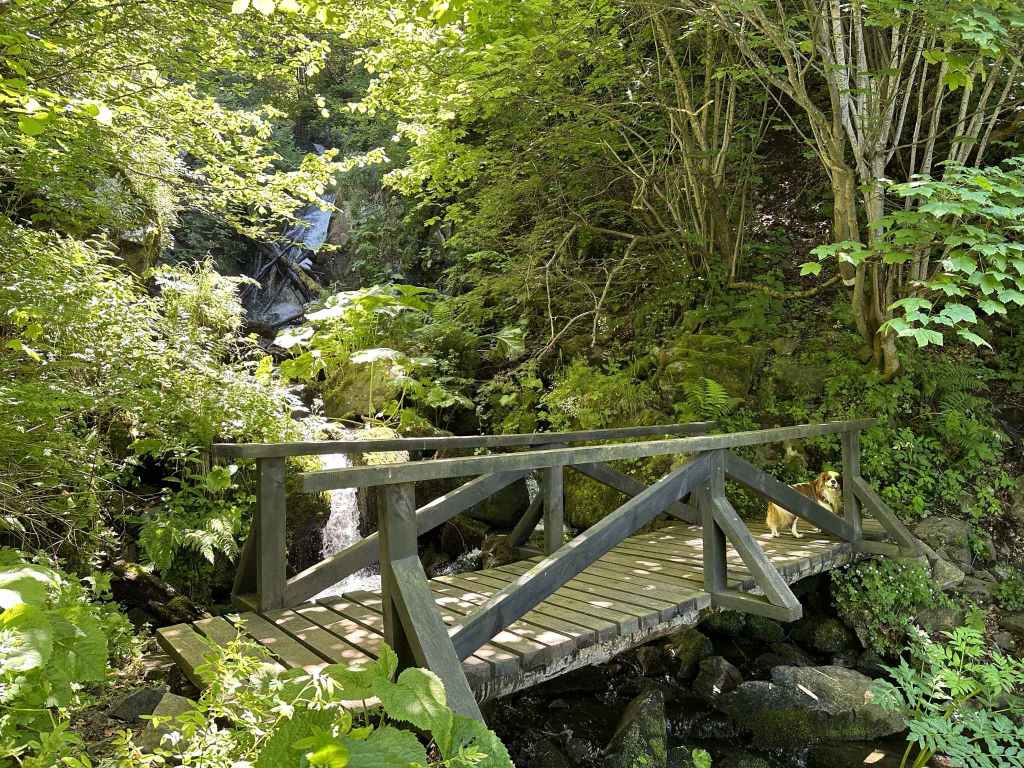
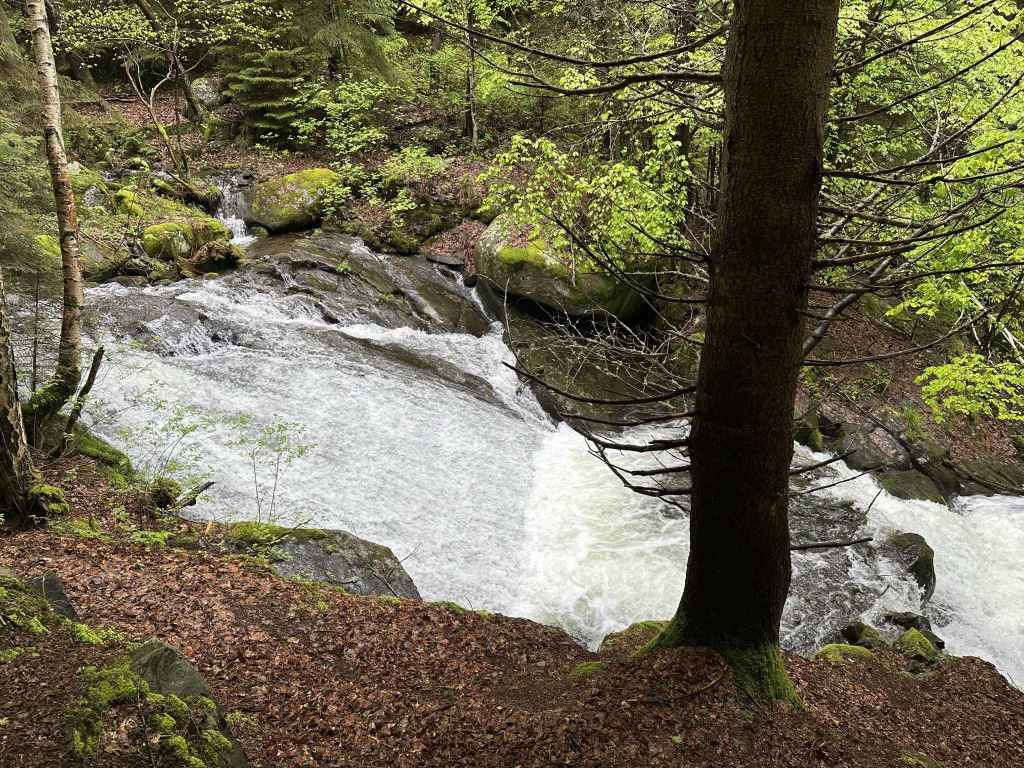
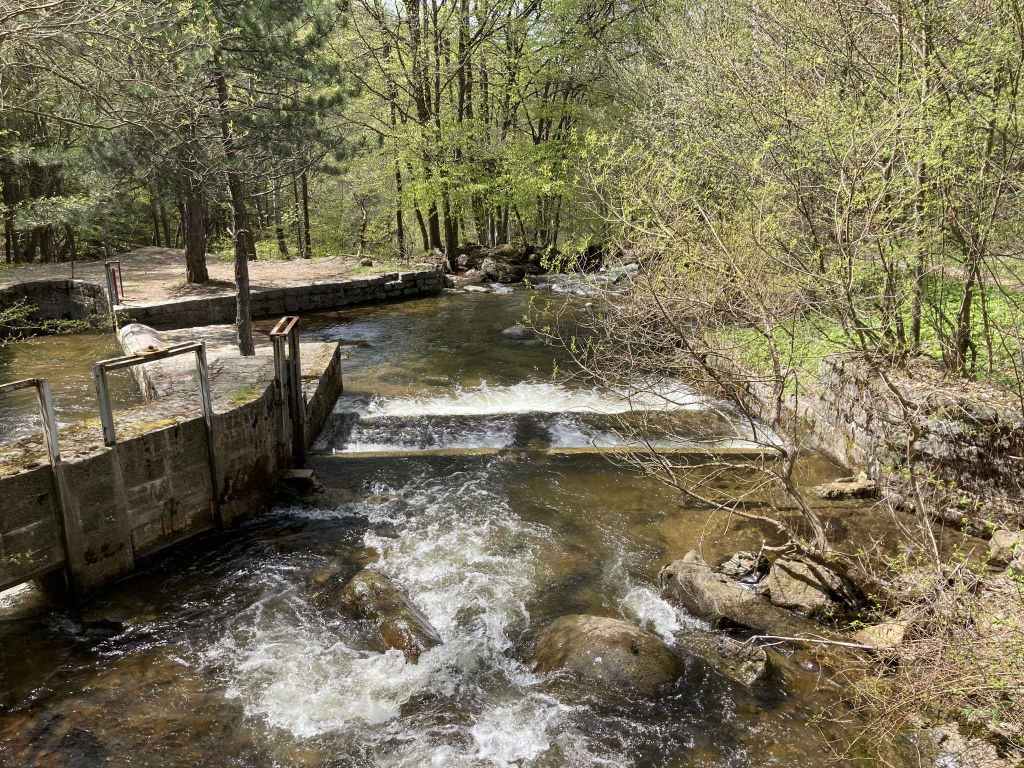
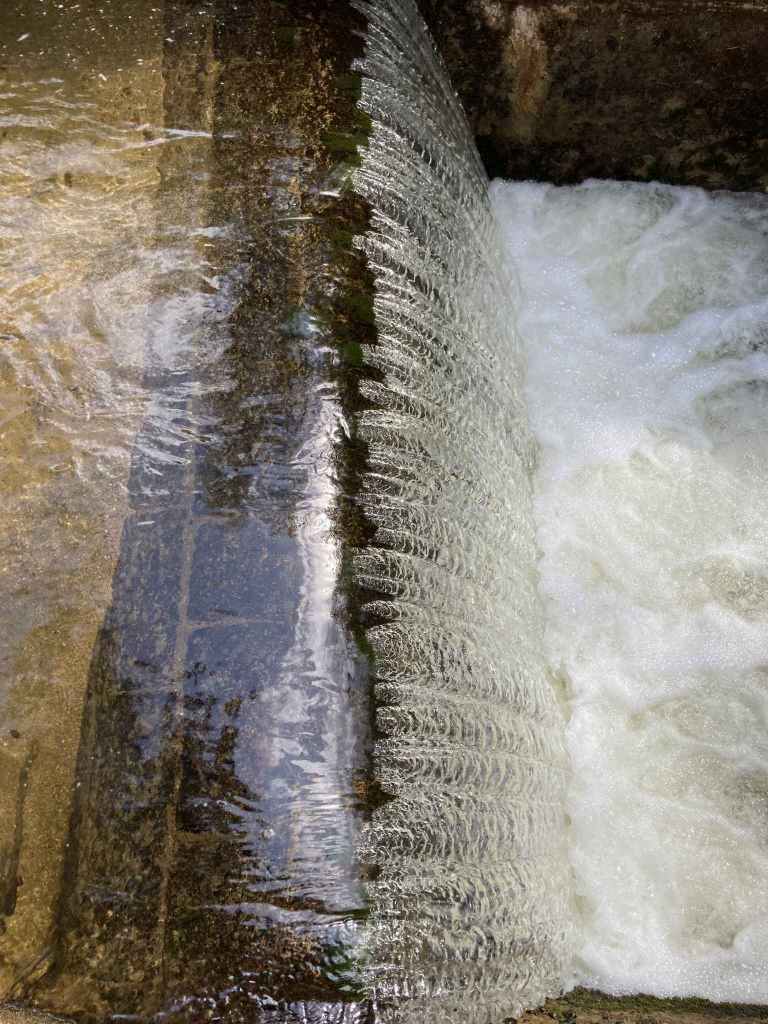
But we will pause at this beautiful spot in order to take a rest and admire the river. The water tumbles under the bridge. There is then a shallow area, with a sluice on the far side. The light on the water makes for a very attractive sight. In fact, this is one of my favourite spots on the mountain.

Having taken your fill, you now retrace your steps back down the mountain, unless you have the whole day in front of you and fancy continuing to Zlatni Mostove or Marchaevo. When after about five minutes you reach the rocks further down, remember to take the path on your left that follows the course of the river. You will divert a little from the route, but you will rejoin it later on. The views of the river are wonderful, especially in winter, when the water level is high. After five minutes, you reach a bridge across the river. Cross to the other side and continue downhill past a small bench and shelter until you reach a second bridge that takes you back to the other side of the river. If you continue downhill on the same side of the river, you will come to the village of Vladaya.

Cross this second bridge and take the path on your left that climbs uphill. After five minutes, another path joins from the right. You then come to the same clearing you were in earlier. Now the route back to Tihiya Kat is the same. You simply keep going straight on the same level (going left will take you down to the village, right further up the mountain) and in about forty minutes you should be back where you started.
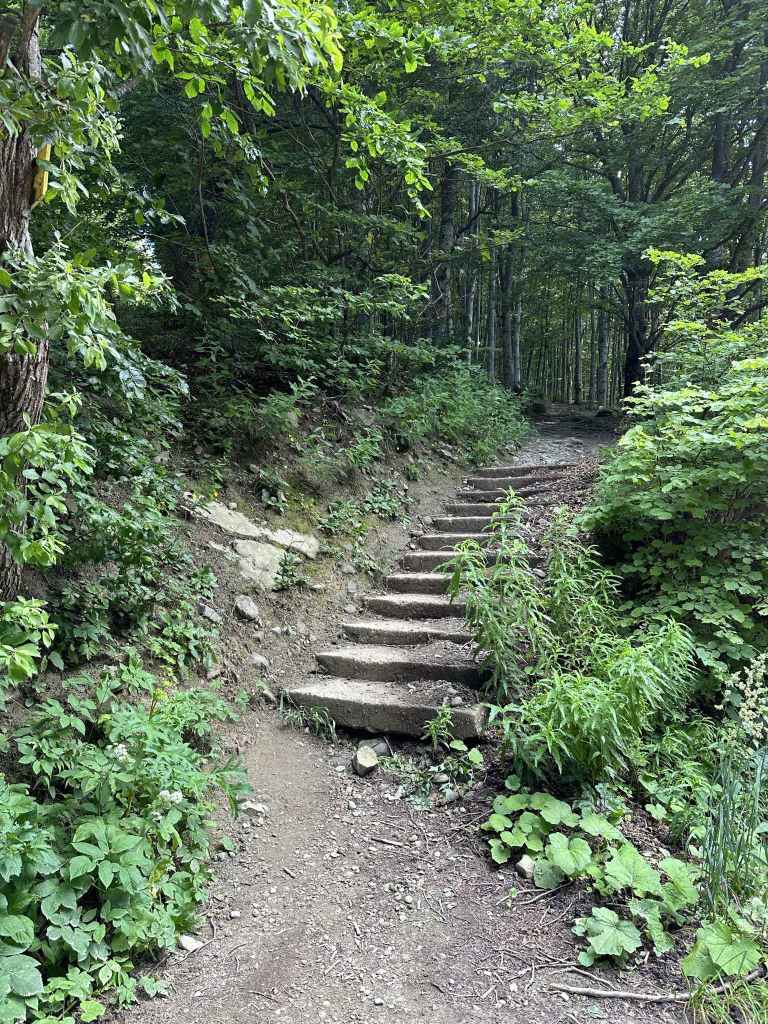
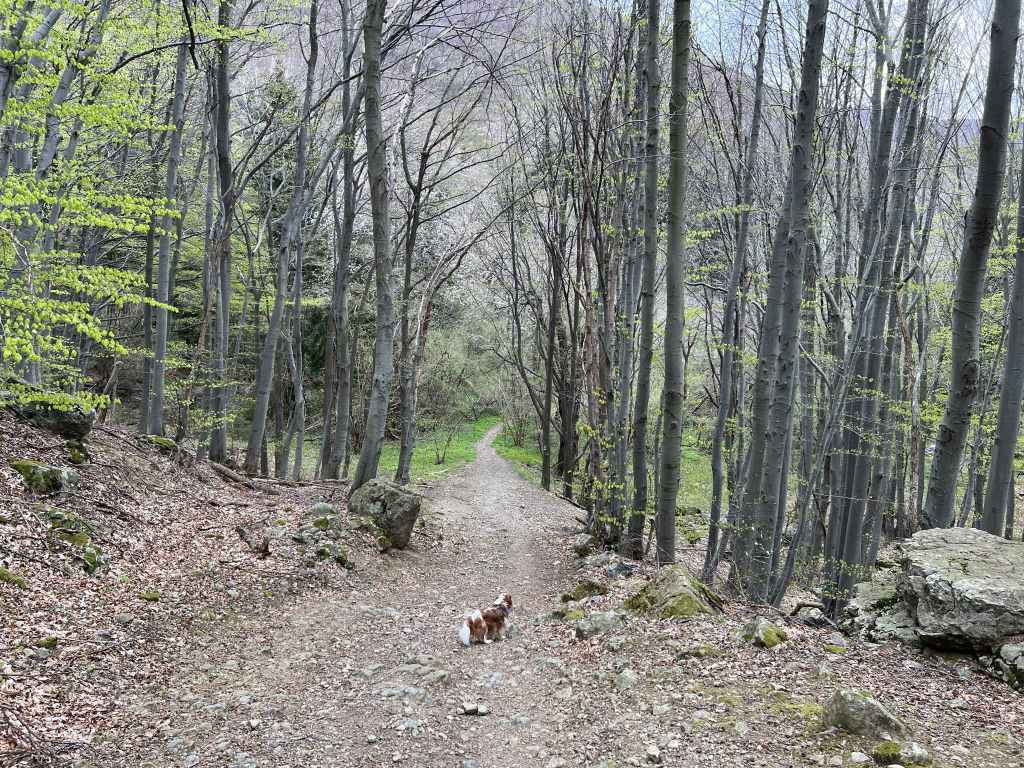
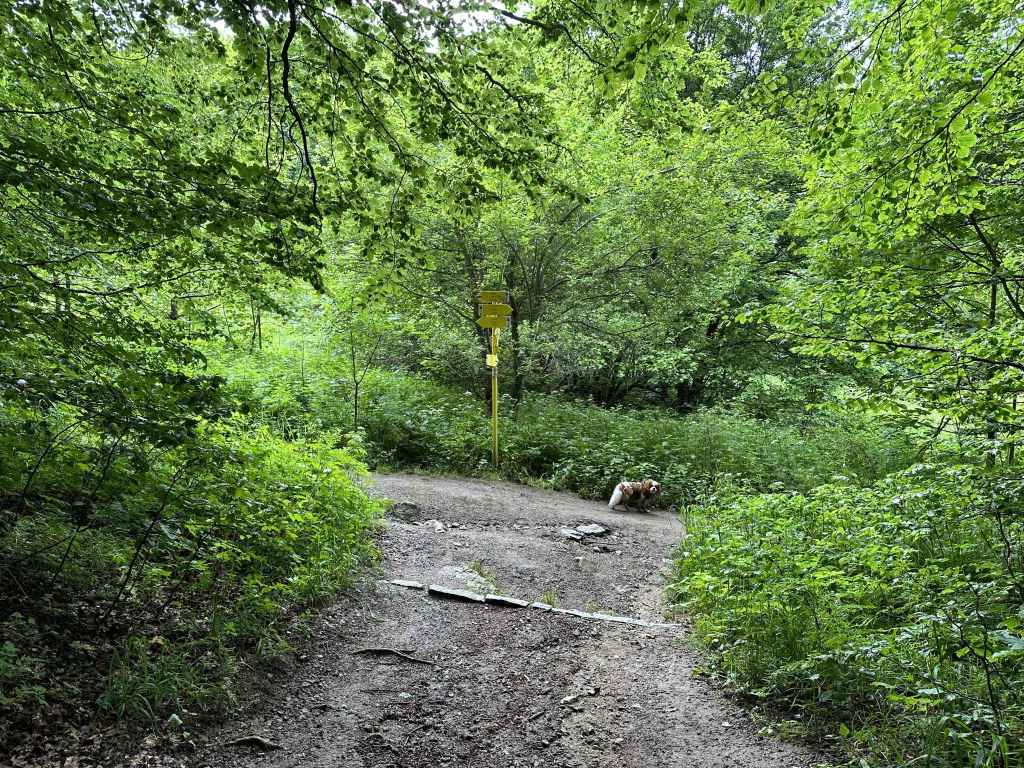
This is a wonderful walk, one of my favourite walks on Vitosha. But a word of caution. I have a small dog and I have often come across big dogs in the vicinity of Vladaya or next to the river. There are also horses from time to time. So you might want to keep an eye on your little friend if you have one.

This is a film I took of Vladaya River in December after some heavy rain. It is an exhilarating river to be next to!

Dragalevtsi Monastery – Boyana Lake – Dragalevtsi Monastery

Starting coordinates: 42.6197196, 23.2976008

Distance: 7.3 km

Elevation Gain: 165 m

Time: 2½ hours

Difficulty: Moderate

Transport: by car, or by bus no. 66 to the stop for Dragalevtsi Monastery


This is the first of several walks for which you need to access the mountain via the district/village of Dragalevtsi, south of Sofia. The walk follows the path that links Boyana and Dragalevtsi. It is fairly flat and, were it not for the distance (7.3 km), I would classify it as easy.

Dragalevtsi is famous for the fourteenth-century Dragalevtsi Monastery of the Dormition of the Mother of God, which can be reached by a cobbled road from the central square. As you are going up this cobbled road, there is a turning on the left marked “Vodenitsata”, a traditional Bulgarian restaurant next to the start of the Dragalevtsi chair lift (no longer running). If you take this turning, you come to a roundabout, where you turn right, and in a short while you come to the monastery gates. Keep on this side road, and you come to a large car park behind the monastery.

If you continue on the cobbled road and do not take the turning to “Vodenitsata”, the road does a big loop and in three kilometres you reach the same car park from the other direction. Park the car here, or alternatively get off bus no. 66 at the stop “for Dragalevtsi Monastery” (the third to last stop on this route, an optional stop, you must inform the driver you want to get off). The monastery is on the other side of the car park, behind the trees. The bus will continue up the mountain in the direction of Aleko, where there is a ski slope and from where you can set out for the summit, Cherni Vrah.

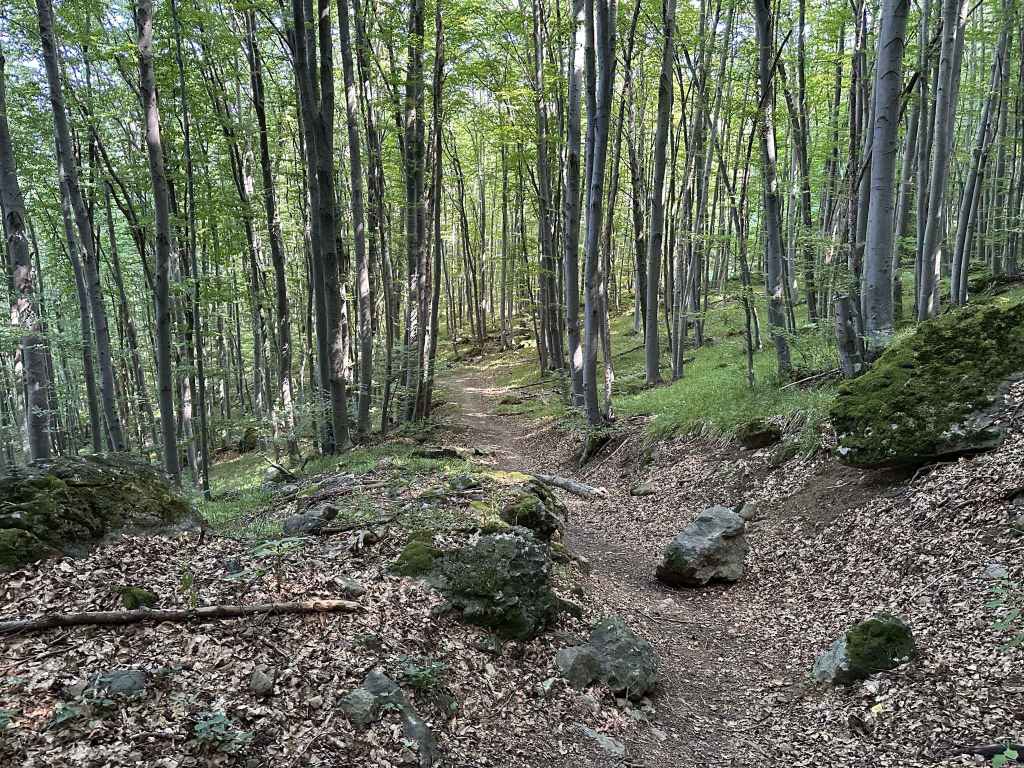
The path to Boyana Lake is a shared trail (for walkers and cyclists) marked “Boyana” which leaves the road almost next to the bus stop. It climbs a little, passes a large and interesting boulder, and then continues in a north-westerly direction more or less on the same level all the way to Boyana Lake (3.5 km away). You pass through beautiful beech forest and cross several moraine rivers (moraines are large glacial boulders and form a common feature of Vitosha). At the first moraine river, after fifteen minutes, there is a fountain on the right. In another fifteen minutes, you come to the third moraine river, from where there is a wonderful view of Sofia. In another fifteen minutes, there is an open grassy area on the right with a stone plinth and an excellent view further west towards Kopitoto (“the Hoof”, where there is a hotel next to the TV tower, both visible from Sofia). It is an ideal spot for a picnic.

At this point, the path begins to descend gently towards the lake. You pass another grassy area on the right, where there are two shelters used for barbecues, and in twenty minutes you reach the lake on your left. From here, the path continues north towards Boyana Village. Another path heads west from the lake in the direction of Boyana Waterfall. You can walk all around the lake. In May, it is full of croaking frogs! If you have a dog, I advise not letting your dog drink the water, since it is pretty stagnant.

Once you’ve enjoyed admiring the lake from different angles, you simply head back up the path you came on and retrace your steps to the cobbled road with the bus stop and the car park. This should take less than an hour.

This walk will easily fit into an afternoon. If you are feeling keen, you can easily combine it with a walk from the same starting point (Dragalevtsi Monastery car park/bus stop), but going in the opposite direction, eastwards towards Aleko Waterfall and Simeonovo Lakes. Both walks skirt the mountain at more or less the same elevation (1000 m). This walk is described in a separate text.

Zlatni Mostove – Planinarska Pesen – Bor – Septemvri – Zlatni Mostove

Starting coordinates: 42.6097479, 23.2361762

Distance: 7.8 km

Elevation Gain: 360 m

Time: 3¼ hours

Difficulty: Moderate

Transport: by car, or by bus no. 63 to Zlatni Mostove


This is a classic Vitosha walk which has as its starting and end point an important location on the mountain: Zlatni Mostove (“Golden Bridges” in Bulgarian). Zlatni Mostove is memorable because of the river of moraines, large boulders, that tumbles down the mountainside and also because of the beautiful open meadow a little to the north, Beli Bryag. It is also where bus no. 63 turns around and goes back down the mountain, so there is no need to worry about where to get off!

You again go through the district/village of Boyana and continue up the mountain, going past the Dendrarium on your right and the turning to Kopitoto on your left, until you get to an open area on the road with a large bus stop. This is Zlatni Mostove. It is fourteen kilometres from the ring road that goes around Sofia. Park the car somewhere nearby. The main road continues up the mountain and soon becomes cobbled, but for Zlatni Mostove itself you want to take a side road on your left. Continue up this road for three minutes and, as the road veers to the left, with the river of moraines on your left, you will see two paths departing from the road. One heads to Artistite and Selimitsa, it sort of doubles back. The path you want is the left of the two, signposted for Planinarska Pesen and Kumata. You climb some steps with the moraine river on your left. After fifteen minutes, you come to a stream (actually, two streams with small bridges over both of them). A short distance after the streams, the path divides. Continue left.
The path now heads straight up the mountain for about twenty-five minutes. Towards the top, you come to an intersection. If you continue up the mountain, you will cross the main road and the path will take you to Kumata. If you go right, you will come to Ofeliite. But you want to go left. Follow this path for about ten minutes. It doubles back and climbs to the main road. At the main road, go left (the smaller road opposite leads to Kumata). You will come to three mountain huts located close together: Boeritsa on your left; ahead of you, then on your right, Borova Gora; and finally Planinarska Pesen, which means “Mountain Song” and fittingly has a few metal notes affixed to the wall. Just before this last hut, there is a path descending on your left, signposted for Zlatni Mostove and Bor. Take this path.

The path descends abruptly and then levels out with some wonderful views in a westerly direction. It winds through the forest, past large rocks, across minor streams. After about twenty minutes, the path begins to descend. It is signposted for Septemvri. But a new path begins on the right, signposted for Bor and Momina Skala. You want to go right in order to maintain your elevation, not to go down the mountain yet.

You continue along this new path, again with wonderful views in a westerly direction, for about thirty minutes. There are some wooden walkways where the ground is wet. After thirty minutes, you come to a clearing. This is the same clearing that features in the walk from Planinets. Directly ahead of you is Boyana River and Bor mountain hut, but when you reach the far side of the clearing, there is a path that doubles back on your left. It is signposted for Septemvri and Zlatni Mostove. Take this path and follow it all the way down the mountain. Again, there are some wooden walkways where the ground is wet. After twenty minutes on this path, there is a turning right to Septemvri. You can ignore this. In a few more minutes, you reach an intersection with the hotel Elitsa on your right. The path coming down the mountain on your left is the path you joined at Planinarska Pesen, but then left in order to join a new path on the right. None of this matters. You continue straight and in less than ten minutes you come to the road that connects Zlatni Mostove and Momina Skala.

At the road, turn left and take the path that goes past an open meadow called Beli Bryag. The view here always reminds me of Switzerland, I don’t know why. It is a lovely open area with benches where people like to picnic and have barbecues in summer. The path skirts the meadow and rejoins the road further down. At the road, continue left and follow the road for ten minutes. It will lead you directly back to the main road with the no. 63 bus stop.

This route up, across and down the mountain, which affords some wonderful views and has the added attraction of the moraines or large boulders, is shaped like an upside-down triangle. You go up one side, across the top and back down the other side until you return to the same point. The route can be shortened by following the path to Septemvri and turning left at the bottom (with Elitsa hotel in front of you). This new path will take you to the road, with the meadow, Beli Bryag, on your left.

No visitor can consider themselves acquainted with the mountain until they have come to Zlatni Mostove. On the final stretch, between the meadow and the bus stop, there are several stalls selling corn and jam and a couple of restaurants where you can get bean soup or meatballs (kyufteta).