Rafael Dieste, “From the Imp’s Archives”

I started translating Galician literature in 1993, three years after graduating from Oxford in Classics. I have since translated 69 Galician books by a total of 33 writers, as well as three anthologies. But I had three masters. The first was Rosalía de Castro, the first author I translated professionally (meaning I was paid). I was asked by the Secretariat for Language Policy in 1993 to translate the opening section of her book New Leaves, “Vaguedás”. I was then hired by the Ramón Piñeiro Centre to translate both her major works of Galician poetry, Galician Songs and New Leaves, between 1994 and 1996, which I did, continuing (unpaid) until 1997. When friends in Lugo used to ask where I was, the answer would often be, “Ah, he’s with Rosalía.” This translation is where I cut my teeth. It was never published, but it did enable me to be the editor of Canadian writer Erín Moure’s translation of the same two books for my publishing house, Small Stations Press, in 2013 and 2016. I am still influenced by Rosalía’s metres in my writing today.

My second master was Rafael Dieste. I felt a strong affinity to this writer, his elegant style and cavernous asides. His book of short stories From the Imp’s Archives is the only book I have translated more than once. In fact I have translated it four times. I played the role of the author in a production put on by my friend and teacher Camilo F. Valdehorras with the theatre group AUGATEBA in Barcelona in 1995. I entered the auditorium in Barcelona University dressed as an English gentleman, with a newspaper under my arm, reciting (in Galician) the story “The Light in Silence”. I still remember the silence that hung in the air when I finished. We even recorded “The Knight’s Drama” for radio – I played the role of the White Knight, a dreamer.

My third master was Manuel Rivas. The translation of his novel The Carpenter’s Pencil was my first contract with a publishing house in London, The Harvill Press (I received a letter in the post asking me to translate it from the unfailingly polite editor, Euan Cameron). I would go on to translate nine titles by Manuel Rivas, six for The Harvill Press (which became Harvill Secker and then Penguin Random House). These included six novels, two collections of short stories and one book of poetry. The one that required the greatest stamina was Books Burn Badly. I had to maintain the tension, to live with the book, for ten months. This is why I always say it’s harder translating fiction than poetry, because you have to keep the tension going for that much longer (a poem is normally over in a matter of pages; the English-language edition of Books Burn Badly is 560 pages). I have a soft spot for The Potato Eaters, but the one I would take to a desert island is the last I translated, The Low Voices, an autobiographical novel that is incredibly moving.

These are my three masters, the ones I learnt most from. Well, now my (fourth) translation of eight of the twenty stories in From the Imp’s Archives has seen the light for the first time as part of the project “Seara”, housed and funded by the Consello da Cultura Galega, described as “an open project for an international community of readers” and aimed, like my publishing house, at making Galician literature more widely available. This project is the brainchild of that great lover of all things Galician Kathleen March.

It is amazing how often I catch myself hearing echoes of Dieste’s stories in everyday speech or in my thoughts. A turn of phrase, a strange situation, a jolt that brings you back to reality or transports you far away… These are eight of my favourite stories by one of my top five writers. The stories are magical, funny, and they do not fade with time.

The eight stories can be read here in both Galician and English. A complete edition of the book, with the definitive 1973 Galician text and my English translation, accompanied by illustrations from both the 1962 and the 1973 editions (by Xohán Ledo and Luis Seoane), is now available from Small Stations Press.

15. Atom

Christ became human so that he might translate for us the meaning of life through parables (Braille, writing for the spiritually blind), but also so that he might translate us when we die. The process of translation, when a word in one language disappears in the translator’s mind in order to reappear in another language, can be likened to death, when someone disappears and is spoken into the language of eternity.

Christ became man in order to show us the road to salvation. He entered his own creation through one of his creatures, Mary. He came to translate for us the meaning of life, because we were at a loss and it needed explaining. He did this by means of parables. We have seen examples. Parable is connected to Braille through the phonetic pair b-p – it is writing for the spiritually blind, for those whose spiritual eyes have not been opened.

But I believe that there is another reason for God to become human, to enter his creation. God is the Author, the source of all that is. We are not the Author, much as we would like to be, because we cannot create out of nothing. We need what already exists, and our purpose is to take this and to turn it into something better, to translate it, just as the translator of a text takes a text written in one language and converts it into another through an unseen, and highly spiritual, process that takes place in the person’s mind as they are translating.

When we are translating a text, there is a point, once we have understood the original (read it, looked up any words we do not know, consulted with the writer or an expert in their work, all the horizontal work of preparation), when the original disappears, it evaporates, the words dissipate, the letters fade away, and out of the translator’s mind, through their fingers as they type on the keyboard, appear new words, words written in another language.

That momentary disappearance, that disembodiment, can be likened to the process of human death. We also seem to disappear, our bodies are put in the ground, and we are no longer seen. We also evanesce, cease to be discernible by the five senses. But in whose mind are we?

I think that Christ became man not only to translate for us the meaning of life by means of parables and his example, but also literally so that he could translate us at our death. An author is the source. A translator acts as a conduit, just as the Virgin Mary did when she acquiesced to bear Jesus in her womb. By becoming human, Christ became the Translator.

We are a text being written. Everything we do in this life takes us in a certain direction. And when we reach the end of our lives, we will be spoken, having been taken up into the mind of the Translator. We will be freed of the constraints of time, and we will enter eternity, the white page on which words are written.

This is why eternal gives two connections. For the first, we must take a step in the alphabet, e-f, and use two pairs of letters that look alike, i-l and n-h (one is an extension of the other). In this way, eternal gives father and I:

eternal = father + I

I think this is because, once we have been spoken, we will have left the speaker’s mouth and be able to see him.

It also spells I am free (phonetic pair m-n, pairs of letters that look alike, i-l and f-t):

eternal = I am free

We will be free of corruption, of the bondage to sin, free to express ourselves without fear (free – the fine line between fear of God and the fire of purification, if we allow fluidity to the vowels; the good news is that it lasts for ever, f-v).

Language contains hidden meaning. The whole of human existence is contained within it. We haven’t realized this. We treat language like an external object, a tool. We use words to bash people on the heads and also to caress them. But we haven’t realized that we ourselves are language, words in the making, spoken into being – breath, water and flesh; h, vowels and consonants – just as we read in the first two chapters of Genesis.

Language tells us the road that we must follow. Christ is very clear about this when he says to his disciples, “If any want to become my followers, let them deny themselves and take up their cross and follow me” (Mt 16:24). This is the way to eternal life, but it passes through denying the ego, drawing a line through the I, which forms a cross, †, but also a plus-sign, + (the meaning of losing our life in order to find it).

We have seen the three ways of moving away from the line by forming a triangle, the letter A, by deleting the I, +, and by treating the line as a number and counting down to O: A+O. These three symbols spell the name of God Alpha and Omega. As soon as we turn our backs on the ego, we turn to God. They are also found in the middle conjunction, and, if we write it with capital letters: AND (A ’N’ O). The reverse of and is DNA – it is in our DNA to do this, to move away from the line, to follow the progression of the Greek alphabet, AIO or AIW.

And when we draw a line through the ego, when we make the sign of the cross (a cross is a deleted I), something extraordinary happens. The progression of the Greek alphabet, with the ego deleted, spells A+O/W (depending on which letter we use to depict omega, a long o or w).

We effect a change at molecular level – the “living water” Christ was talking about, a change of heart, literally, at a level we cannot normally see – because this progression is contained in the word atom, traditionally the smallest particle of matter.

There is a clear connection between language and the environment: seed-root-tree-fruit. A tree that branches out is like a flowering ego, it is no longer a straight line. There is a clear connection between language and the history of the world, from the creation in the Book of Genesis to the Last Judgement, when angels will come to glean the field. And just as we plant a seed outside (as the Samaritan woman fetches water from the well in a bucket), so we must hear the Word of God and plant a seed in our heart.

The one will feed our stomach. The other will give us wings, and change our perception for ever.

Jonathan Dunne

Heart of Language 15/15

Back to: Contents

See also: Theological English (video course); Word in Language (series of articles)

Presopta Place

I am not in a hurry

I am not going anywhere

I am being

as the Celts would say

The rocks smile at me

as they have done

for some time now

I cannot be sure

they are where I left them

They might have moved

an inch or two

a couple of miles

reassembled at first light

when shapes take form

struck a pose

usually smiling

They are old parchments

containing a language we do not speak

we haven’t bothered to learn

of light and shade

cracks and splodges

The universe is language being formed

We ourselves are words in the making

waiting to be pronounced

our definition fixed for the dictionary

what we will be

breath water and flesh

the sound of creation

a hum

lips crashing together

like waves mid-ocean

or mountain goats

as matter

­– flesh, the consonants –

comes into being

the oceans and rivers are vowels

and air God’s breath

the letter h

the beginning of language

We are waiting to be expelled

from this cavernous mouth

that is space

spoken

Black holes are nothing more than throats

and stars are light-bearing larvae

grubs clinging to the palate

As God opens his mouth

(he hasn’t spoken yet

– speech is the general resurrection

the waves that never meet

finally landing on the shore)

space expands

winds rage across the cosmos

carrying particles

– up and off

at and into –

smoke

I am a word

perhaps to form part of a sentence

with you

together we will give meaning

or diverge

like paths in the forest

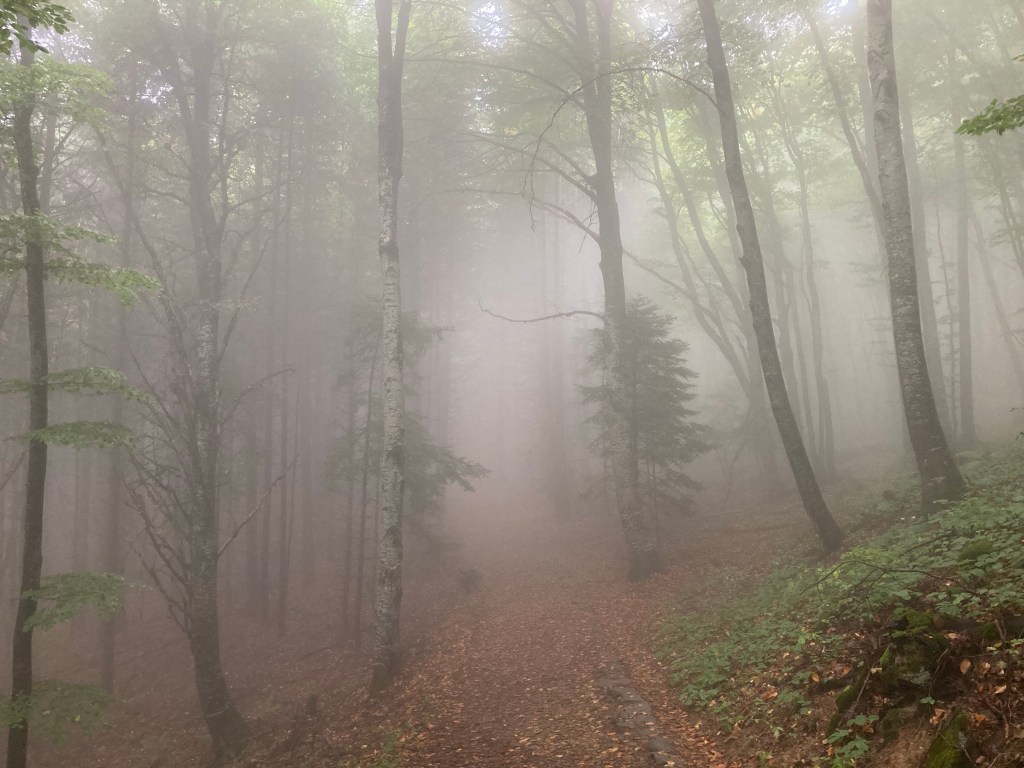
– Golden Bridges, White Birches –

only to meet

further down the page

or in another chapter

I am breath (h)

vowels (saliva)

flesh (substance)

I am lost

in the Magic Forest

sun-dappled and quiet

waiting to be remembered

Memory is not something that has happened

It is something waiting to happen

the only way

we can be translated

into another reality

is to leave behind

the form we have taken

to all intents and purposes

to disappear

to cover the Translator’s hiatus

until he remembers us

and names us

(a template no longer)

The two conditions for translation

are faith and memory

to leave behind our form

to cease to exist

so we can be expressed

once more

A word dies and is reborn

In that transition

the Translator’s memory

(our speck of faith)

is all.

Jonathan Dunne

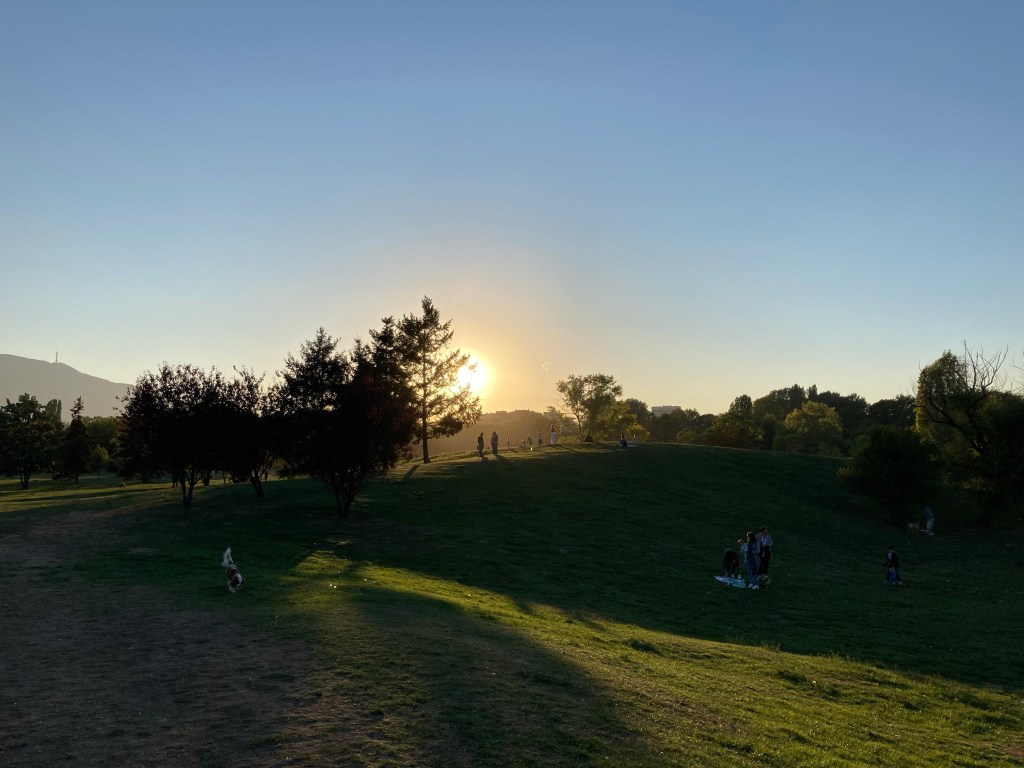
Presopta Place (Mount Vitosha), August 2024

Elenkova Reviewed

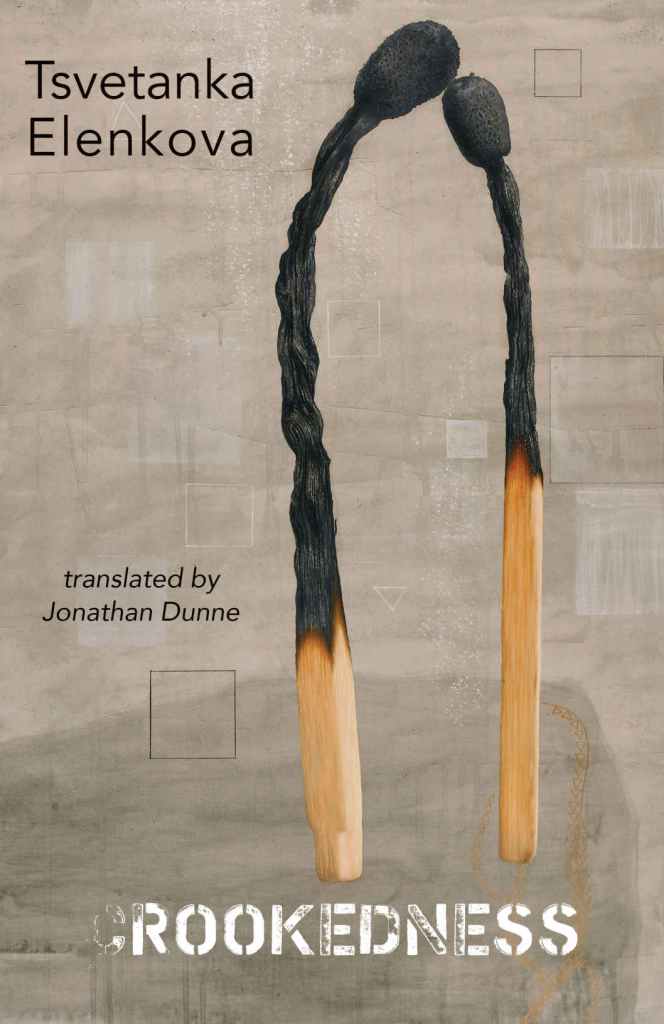
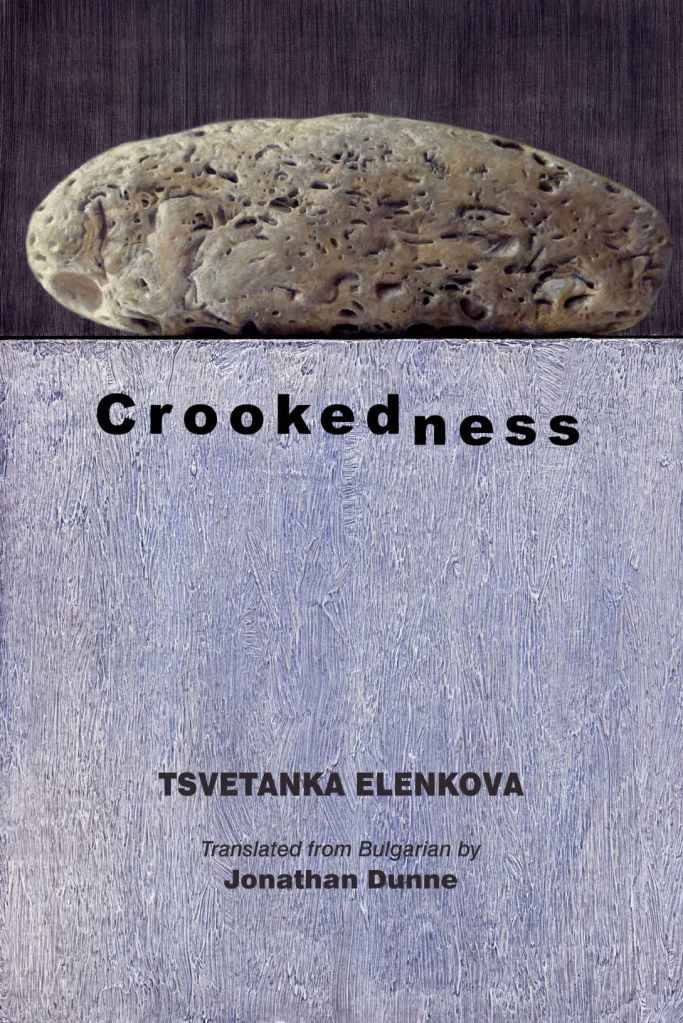
A collection that got slightly lost when it was published by Tebot Bach in 2013, Crookedness by Tsvetanka Elenkova, was happily recovered by Tony Frazer at Shearsman Books in 2019, in a smaller, more manageable edition. This is the second collection by Tsvetanka Elenkova, a poet on a European scale, that I have translated and is soon to be followed by Magnification Forty, which received a PEN Translates award.

It is so rare for a book of foreign poetry to be translated into English, and so little attention is paid to them, that one should be grateful when such a book of quality is reviewed in a magazine of the stature of The Poetry Review, the mouthpiece of the UK Poetry Society. I only just found out that Crookedness received such attention from the Singaporean poet Theophilus Kwek (wonderful name!). Well, I have never had my translation described as “clean, almost earnest” before. Here is the part of the review that deals with Elenkova’s book:

Two other recent translations deal with quieter forms of disappearance and loss. Unlike Zurita, whose canvas is the oceans and seas, Bulgarian poet Tsvetanka Elenkova chooses to dwell on the fine print of the physical world: the echo from a conch, or the wind heard “through the open throat” of a bottle. These images, from her opening poem (‘Pain’), give tender shape to what is otherwise hollow or invisible: “a single slight hiss / as of a punctured bicycle tyre”, or “pain from the emptied body”. She returns in later poems to chart the psychological experience of pain; the death of a friend, for instance, is compared with sitting “under the crown of a broad-leaved tree / which is an upturned conifer […] to watch the coming storm” (‘Hourglass’). The precision of Elenkova’s images shines through (and even transcends) the clean, almost earnest diction of Jonathan Dunne’s translation.

In a new introduction, Fiona Sampson describes Elenkova as a mystic of our times, her “lucid” observations bringing to light “a poetic world […] of religious mystery, mortality, love and desire”. Though Crookedness borrows liberally from tradition, the poet is quick to disclaim immediate parallels with Orthodox iconography: “Your body has nothing in common / with the cross”, she writes (and adds – “or Leonardo / or the sun god”, for good measure). What is at work here is not the stained-glass imagery of the church, but something plainer and still more sensuous: “an interweaving (of the ankles) / an open / eight / a curve (of the wrists)” (‘This Is It’). Such earthy and abundant beauty carries with it always the hard edge of impermanence, unless, of course, it is transformed into poetry. As one of the briefest poems in the collection’s second segment (‘Pansies after Rain’) puts it, “reflection is capture” (emphasis mine).

Crookedness actually contains one of my favourite poems by Elenkova (together with ‘The Time We Are Together’ from The Seventh Gesture, my absolute favourite, and ‘The Train’, which appeared in an issue of The Massachusetts Review and in their special sixtieth-anniversary issue And There Will Be Singing). It’s the poem that opens the book, ‘Pain’:

PAIN

When you hold a bottle and hear the wind
through the open throat
when you put a conch to your ear
the echo pain from the emptied body
and when a single slight hiss
as of a punctured bicycle tyre
finally fills the empty space
like a newborn’s wail
Take it carefully in your arms
and give it or don’t to its mother
but take it carefully
it’s so fragile all cartilage
Give it water or leave it on the shelf
by your head
Video

Theological English (0): The Line

In this first video on “Theological English”, Jonathan Dunne looks at the line, which represents the ego in English (I) and the number 1. Countable nouns are nouns that can have a line drawn around them – a book, a car, a tree. They are accompanied by the indefinite article, a/an. When God made man, he in effect made a countable noun – he drew a line around us and gave us free will. We do the same with products of the earth – we draw a line around them in the form of packaging – but we do this not to give things free will, but to trade in them, to sell them to each other. We appropriate for ourselves the role of author (things begin with us), when in fact we are translators (things pass through us).

To access all the videos in this course, use the drop-down menu “Theological English (Video Course)” above. The videos can be watched on Vimeo and YouTube.

Ukraine

I don’t think we’re particularly interested in the other person’s viewpoint. We like to listen to our own voice, to something that is familiar. If we had a real interest in the other person’s viewpoint, we would be avid readers of foreign literature in translation, but we’re not. Translated titles are supposed to make up only 3% of new publications in the U.S., according to the blog Three Percent. Attention paid to foreign titles in mainstream media is scarce. And translators put themselves at great risk in order to devote themselves to crossing that line between one culture and another.

It is an irony because the translator, who believes in intercultural understanding, is more or less forced to live on the land that separates cultures, in no man’s land. The translator is no man. They don’t exist. They don’t receive a salary, paid holidays, a pension. If they are paid (and there is often an expectation that they won’t be), they are often paid after the project is complete, begging the question, “How do they live while they are working?”

We prefer to hear our own voice and to believe that we are right. After all, what’s the alternative? The idea of believing that we are not right would so undermine us that we reject it out of hand. It cannot be. It is impossible. For us to hold on to our sanity, we have to be right.

There is now a crisis between Ukraine and Russia, a crisis that has been a long time in the making. Conflicts arise when people (because I don’t think anybody else does this) draw lines. When you draw a line, implying that you are an author, that something starts or ends with you (a false premise, we are translators, things pass through us), then you rely on two words to maintain the status quo (as you have established it): LAW and WAR. It is curious that these two words are obviously connected by the phonetic pair (pair of consonants pronounced in the same part of the mouth) l-r. The trouble is people don’t know their phonetic pairs, so they don’t see this.

I could give more examples. The reverse of LIVE is EVIL, one path open to us in this life – to do evil. But if we take the ego, “I” in English, and remove it from LIVE (that is, if we count down from “I” to “O”, from 1 to 0), we get LOVE, the other path open to us in this life. Live: evil-love. I study these connections in my book Seven Brief Lessons on Language.

The line that is the ego in English (I) is the same line that separates countries, properties, rich and poor, whatever social divide you care to think about. And where there is a line, there is conflict. Which is why the translator works so hard to engage with the other (OTHER, by the way, is connected to LOVE and THEOS), to cross that line, even though they know they cannot make a living.

I wrote an article at the time of the outbreak of the Covid pandemic about the connection between where the pandemic is said to have started, WUHAN, and the word HUMAN (turn the w upside down and rearrange the letters). Also, between COVID and VOICE (rearrange the letters and take a step in the alphabet, d-e). Human voice. Was Covid, a terrible disease causing pain and suffering in the world, meant somehow to bring us to our senses, to make us pay more attention to the vulnerable, to make us work together in the face of a common enemy? I don’t know, but the connections are there.

Now, this morning, looking at the word UKRAINE on my phone, I suddenly realized there was a very clear connection. It involves the similarity between a capital I and a lower case l. It can then be seen that UKRAINE with the letters rearranged spells NUCLEAR (c and k have the same pronunciation).

There is meaning in words, even though we don’t usually (choose to) see it. There is meaning in words, but, like all things spiritual, it is slightly hidden: a step in the alphabet (d-e), a phonetic pair (l-r), pairs of letters that are similar (i-l, m-w)… You just have to turn a corner.

Why is it that the word NUCLEAR can be found in UKRAINE? Is this a reference to the Chernobyl disaster in 1986 that affected not just Ukraine, but other countries as well? I certainly wouldn’t want to think that the current crisis between Ukraine and Russia could lead to nuclear war. Such an outcome would be unthinkable.

Another clear connection with UKRAINE relates to another phonetic pair: g-k. If we apply the phonetic pair g-k to the word UKRAINE, we will see that in the middle of the country is GRAIN. Two dangers have been highlighted during the conflict in Ukraine: the danger of damage to nuclear plants, and the danger to world food supplies if grain is not exported. It is interesting that both these words are found in the name of the country. And if we take away GRAIN, we are left with two letters: U-E, which could be a reference to the European Union (EU).

We need to consider the other. We need to hear the human voice, the voice of the other. And that involves not judging people on the basis of our own criteria and actually trying to get to know them, to understand their motives. That hasn’t happened very much between Ukraine, Russia and the West. Perhaps now would be a good time to start. To see what we have in common instead of spitting at each other over the fence. And to hire a translator who will enable us to hear what the other is saying.

Jonathan Dunne, http://www.stonesofithaca.com

Ownership

We have been placed on this earth, we’re not really sure how, except to say that we emerged from our mother’s womb after a gestation period of nine months. When we emerged, having survived in water, we took a breath of fresh air and thus became suitable for the environment we now inhabit. Once we had breathed in, we could breathe out and we joined all the other creatures in translating the environment around us.

It is important that we understand this concept of translating the environment around us. We generally look down on translation. It is second best to the original. It contains mistakes and isn’t as good as reading the original text. The translator’s name is hidden, eclipsed. When we need a translator, that person is essential, but we soon forget about them afterwards. Perhaps because the translator takes control away from us, we cannot access the original language ourselves and so we must rely on the other.

But translation goes further than this. The person who sits down and writes the original text is also translating – translating their experiences, the stories they have heard, the knowledge they have acquired, the words they have learned, their understanding of conversations. And they translate all of that on to a piece of paper. The way they write it one day will not be the same if they write it on another day, so the text is susceptible to their mood on that day and the environment around them (any disturbances). Creativity is a fragile thing.

And while they are doing this, they are translating the air by breathing, translating the food they had for breakfast that morning, translating (making sense of) any conversations they may overhear. Everything in this world is translation because nothing begins or ends with us.

The same might be said of our thoughts. Do they truly originate with us? Or are they placed in our minds to see what we will make of them, how we will react? I believe that the only thing that is ours, strictly speaking, is our reaction, how we choose to react – whether we choose in a given moment to show love or hatred. This also is translation because our reaction, our choice of words or deeds, is like choosing the words with which to represent a text in another language. Again, it will not be exactly the same on one day as the next.

Air passes through us. Food passes through us. Even life passes through us – the life we receive from our parents and pass on to our children, precisely because we are not the authors of life. Even trade, the desire to make money, involves things passing through our hands. They do not begin with us, we do not come up with the raw materials, more often than not it is the earth that does that. We change them in some way (a process that normally involves packaging) and pass them on, fixing a price as we do so.

But we would prefer to think of ourselves as authors. We lay claim. We say this piece of land, this object, this product is mine – because I paid for it, because I got here first. Once we draw the line and say something is mine, we open ourselves to conflict, because it is a false assumption. We don’t own the land we live on, someone else made it, and it wasn’t us. We don’t own what the earth produces, we certainly didn’t invent the seed that gave rise to the crop.

If you fail to recognize the other, then what the world contains, even other people, are fair game, you might think, a potential source of profit. But this is a corrupted way of thinking. We should use what is placed at our disposal for the good of others, not to make a profit.

This claiming ownership is really making ourselves out to be the source of what is around us, and only God can do that, the same God who appeared to Moses at the burning bush in Exodus, chapter 3, and sent him to free the Israelites from bondage to the Egyptians. When Moses asks, naturally enough, on whose authority he is to do this, who he is to say has sent him, God replies, ‘I AM WHO I AM.’ This is the name of the one who sent you.

In Greek, this phrase is translated ‘ἐγώ εἰμι ὁ ὤν’, literally ‘I am the being’, and the last part of this phrase – ‘ὁ ὤν’, ‘the being’ – is included in icons of Christ Pantocrator, since in Orthodox tradition it is the pre-incarnate Christ who appears in the Old Testament. The letters are written in capitals: O WN.

Not only do these three letters spell three words in English – own, won and now – not only do they spell a number if we rotate one of the letters – ONE – they make clear, as all of language does, who the author is, who is the one that can lay claim to ownership. The rest of us are just passing through.

Jonathan Dunne, http://www.stonesofithaca.com

The Fall

For centuries now, the Church has been taking a dim view of the Fall, the moment in human history when Adam and Eve, the first man and his helpmate, created from one of his ribs, were expelled from the Garden of Eden for eating of the fruit of the tree of the knowledge of good and evil. It’s never quite clear what was so bad about eating of this fruit, only that God had forbidden it (although presumably he knew perfectly well what was going to happen, how the two partners would be tempted by the serpent – nothing bad will happen to you, it certainly looks tasty – and would eat anyway).

I say the moment in human history, although it could be said to be the moment that began human history, when the clock started ticking, because up until then the two partners enjoyed eternal life, whereas now, once expelled from Paradise, they would be subject to death and corruption. I always think we still enjoy eternal life, we are eternal still, it’s just that eternity is hidden behind time and we must pass through a gate to get there. But it doesn’t take away the fact our soul (and our body at the general resurrection) are already eternal. We die in order that I be.

Why does the Church take such a dim view of this moment? Yes, as human beings, we are subject to the passions. We get angry, we do unkind things, we are arrogant, lustful, greedy. We treat others as objects. We want things for ourselves, to acquire worldly wealth (I say worldly, because there is clearly no way we can take it with us when we die), property. We aspire to a comfortable life, everything just so, everything in its place, no demands on our attention, except to enjoy ourselves.

And yet it never quite works out like that. Things go wrong. There are provocations, lines that need to be crossed. The car or the dishwasher breaks down and has to be repaired. We get ill. Things are not perfect. They are not perfect in order to teach us a little humility.

But it could be said that the very quality that got us expelled from Paradise – our rebelliousness – is often what keeps us going, the refusal to give up, the insistence on our hopes and dreams, our resistance in the face of life’s disappointments. Rebelliousness isn’t entirely a bad quality.

I am a little tired of the Church’s interpretation of the Fall, to be honest. I would like to give another interpretation, which I go into in greater detail here. The Fall represents sexual knowledge, the serpent is the man’s penis and the apple is the woman’s breast. Adam and Eve acquired carnal knowledge (at the man’s instigation, note), and for this reason they had to be expelled from the Garden of Eden (whose letters rearranged spell danger of need). Because once you become sexually mature, the process of dying begins. In ‘The Consequences of Man’s Fall’, Metropolitan John Zizioulas puts it like this: ‘In beings with organs – especially mammals – the ageing cycle begins from the moment that the organism reaches the point of reproductive maturity.’

I don’t think God was being cruel. He wanted us to be co-creators, but we are not like him, we cannot create ex nihilo (out of nothing), we are translators, we use what already exists and make something out of it. We are not authors. Only God is this. So when we create another being, we cannot just mould a body out of clay and insert the breath of life into it. We are not the originators of life, as God is.

What we can do, however, is give of ourselves (as Adam did in the creation of Eve, when a rib was taken from him). And in this way we can have children. The difference is it is not a clone army, like in Star Wars, they are our very own children, with their own personalities and identities. And we can only have children with another person, we cannot produce children on our own.

The alternative would be a heaven containing only two people, Adam and Eve, or as many as God created from our ribs, without our conscious, active participation.

God gave us the opportunity to knowingly come together and fill the Church ourselves, one generation after another. That is exactly what we are doing. Filling the Church, giving life in the only way we can, through translation. The Fall – so long as it is followed by repentance, an acceptance of our need – may not turn out to be such a bad thing.

Jonathan Dunne, http://www.stonesofithaca.com

Word in Language (8): Economy

In our modern society, we tend to think of ourselves as highly civilized because we can travel large distances by plane, we have made medical advances – the discovery of penicillin, non-invasive surgery – or we can access information on the Internet, but all these advances are technological, they have nothing to do with the morality of society. In fact, I would question whether we are highly civilized at all. Our modern Western society, the one that has been most successful in spreading its model, is based on two concepts: democracy and economy. Neither of these has to do with what I would consider the two criteria for civilization: love for God, love for neighbour. The first asserts the individual’s claim to property; the second asserts the individual’s right to money (even at the expense of his fellow man or the environment); and both are in direct opposition to the Church, because the Church is not democratic, it is hierarchical, and it is not based on the concept of economy (though ‘economy’ has another sense in the context of the Church, the Eastern Church in particular, which is to bend the rules according to the individual’s needs). The Church is just about the only ‘shop’ you will find where you will receive your ‘goods’ for free – namely, the sacraments of confession and communion, the greatest gifts of them all, because these will lead you into eternal life. The Church does not charge for these, and it is the only place I know not to do so. So our modern society and the model of the Church (love for God, love for your neighbour) are in stark opposition.


The word ‘economy’ itself means the law or management of the household – domestic matters. This is very telling because it focuses on the self (‘domestic’) instead of on the foreign (the other). In fact, the aim of countries in our international community is precisely to defend their own interests. That is the remit of diplomats the world over. What would the world be like if countries set out at the first to defend the other’s interests, if diplomats bent over backwards to improve the lot of foreigners – wouldn’t that change the world enormously?


Unfortunately, this ethos of individual success is drummed into our children from an early age at school, where education is cerebral and success is gauged by exam results, and where, as I have mentioned, we teach our children to start counting from 1, the number that relates to the human ego, I, instead of from 0, the figure that relates to God and would place us on a surer footing.


I would go so far as to say that, for me, the word ‘economy’ is the law of the ego, and we can see the connection in the phonetic pair g-k (the c in ‘economy’ is pronounced k). It is remarkable that in all these years, after all these generations, we have gone no further than to lay claim to what is freely given to us – the products of the earth – to package them (to dress them up) and then to sell them. This is the extent of our moral advancement – not love for God, not love for our neighbour, which is something we may do in our free time. The main occupation of man is to make money, but we should beware because language has something to say about this.


First of all, ECONOMY, apart from being the law of the ego, can be read MONEY & CO. if we jumble the letters. And what about the word MONEY? Well, if we change one mid vowel for another, we will see that MONEY is connected to ENEMY, but more telling perhaps is when we read the word in reverse, using the physical pair (pair of letters that look alike) v-y. Then we get the word VENOM. VENOM is MONEY in reverse, with one small change, and certainly it is a cause of great conflict, great suffering – not just the fear that everyone endures at having to have enough to get by, but also the conflicts that arise in the battles to lay claim to territory so that we can make more of it. Where does this need to lay claim to what has been freely given to us – the land and its products – come from? It comes from the Fall and the placing of the ego before God, the self before the other (who is God). But we are deluding ourselves because in this life everything, from food and air to life itself and meaning, passes through us, in a two-way process whereby we effect a change on the things that pass through us and they effect a change on us. So we are translators, not authors, because things do not begin with us, they do not proceed from us, we are not the source of anything, we are – or we ought to be – simply vehicles of God’s love.


LOVE, as you would expect, is a major word in language. It is connected to OTHER by the phonetic pair l-r, the alphabetical pair t-v, addition of h, and OTHER is connected to the Greek word for ‘God’, THEOS, by the alphabetical pair r-s, so we have:


LOVE – OTHER – THEOS


which is the message of the Christian Gospel: love the Lord your God, love your neighbour as yourself. This should come as no surprise because Christ is the Word, so it is normal that language should confirm what he is saying.


But LOVE is also connected to MONEY by the succession of letters in the alphabet l-m-n and the physical pair we saw earlier, v-y. LOVE is in MONEY, and that is why Christ warned us that we cannot love God and mammon, it is one or the other. Love for money is the individual’s wish to keep his money for himself, not to use it for the benefit of others, and I think that banks worldwide will attest to this inclination.


Of course, for someone to be rich, someone else has to be poor. Sometimes it seems there is always someone willing and able to lighten your load (the desert fathers, hermits in Egypt in the fourth century, when coming back to their cells and finding robbers with camels unburdening them of their belongings, would rush to help them, there is even the story of one monk who, on seeing that the robbers had left behind a stick, went running after them in order to hand it over – a different understanding of our place in the world).


If we apply the phonetic pair b-p, we will see that the reverse of ROB is POOR. Meanwhile, the reverse of SELL is LESS, perhaps because we have somehow gone against the commandment of God to love him and to love our neighbour by using our neighbour to make a profit. If our concern was placed always and only on the other, we would feel no need to attach a value to our own exertions, and this would indeed represent a step forward in terms of civilization. But we continue to pay attention to PROFITS instead of listening to those Old Testament figures the PROPHETS, marginalized figures, a bit like translators, who tried to bring people to their senses. We are not here to make a profit out of anybody, we are not here to treat people as a potential market for our product, we are here to do good. Money is an illusion of the devil, as the connection MONEY-VENOM indicates.


And note that it is the packaging of the products we sell that then causes untold damage to the planet and the creatures that inhabit it, especially plastic. We take what was freely given to us – we might have adapted it, turned it into something else, translated it in our own way, but the basic ingredients will have come from the earth because we cannot magic anything into existence – and instead of allowing the tap to flow, as the earth does, we turn it on and off to create supply and demand, we package it, we take what is an incessant stream (uncountable) and make countable nouns, individual items that can be processed at the checkout. Often these items are wrapped in plastic, the result of our definition, and it is this plastic causing damage to the world. PLASTIC contains the word CAPITAL.


The other thing we sell (or claim to own, which is the same thing) is PROPERTY and again, if we apply the phonetic pair b-p (remembering that there is also a strong connection between b and v in language), we will see that PROPERTY contains POVERTY. When we amass property – which doesn’t really belong to us and never will, because we are not responsible for the land or its materials, they were made by someone else and given to us to steward – instead of giving and receiving meaning, which should be the norm in human relationships, we find that we give and receive poverty (those who cannot afford a property, those who are burdened with mortgages or high rents, our own spiritual poverty).


This is an important concept. This is why it is so important to recognize that we are translators, not authors, and things pass through us, they do not belong to us (except for our love for one another). If we accept that things do not truly belong to us, they are only entrusted to us for safekeeping, we will loosen our grip, tension will decrease, we will have a better chance of giving and receiving love. After all, it is well known that suffering is caused by the inability or unwillingness to respond to the other’s love. That is the definition of hell. Heaven is to participate in the other’s love, which is why there are three persons in the Trinity, so that the love can be inclusive.


God brought us into the world to translate. He made the creatures and brought them to us to name (to translate). But we have taken the creatures, the products of the land, the plants and trees, and gone to MARKET. That is the extent of our civilization. We have got no further than this. I would say that we ought to be ashamed. All these years, and nothing much has changed. If anything, it has got worse, because it is now possible to make a lot of money almost without coming into contact with the products themselves. The richest people work with their heads, not with their hands, moving products around, sometimes without even seeing them.


And what word is connected to MARKET? CREMATE. We are burning our bridges, we are burning what unites us, creating societies that war with one another and argue amongst themselves. Let go of the so-called right to property, the foundation stone of our system of democracy, and the need to fight goes away. After all, we are not here forever, we are only passing through, which begs the question whether our wish to assert our claim to property is not in fact a wish to evade our own mortality, to somehow make ourselves out to be permanent.


The only place where I find a different model being practised is the Church: the doors are open, entrance is free, the focus is on God and our neighbour. True life, therefore, for me is in the Church, the body of Christ. This is why I prefer concepts like aristocracy (I believe in virtue), monarchy (Christ is my king) and hierarchy (I believe in spiritual growth) to democracy, because to say that power rests with people is to make ourselves out to be authors, and that is a false premise.


By turning to God and placing him at the centre of our existence, the MARKET loses its appeal, the word CREMATE begins to sag in the middle, the edifice topples, the two sides being held apart by an abyss fold together, and we are left with CREATE. Our nature is divinized – though not through any merit of our own, but through participation in God’s energies, which occurs by grace and is therefore a free gift.


GRACE, as far from the economy as you could wish to go, because it is freely given, is connected to another word in English, which symbolizes the tripersonality of God. That word is SHARE (the c in ‘grace’ is pronounced s, g-h is an alphabetical pair). We participate in the shared love of the Trinity, and all competition, all profit at the expense of the other, is seen for what it is: a perversion of our true purpose, which is to give and receive love, to be in relationship.


Postscript: Another story from the desert fathers. Two brothers wanted to live in love. They achieved this, each carrying out the will of the other, until the devil appeared to one as a dove and to the other as a raven, causing them to see things differently and to argue. They fell to blows and were parted until they realized that what was driving them apart was a distorted vision of the same thing – what separates us is not the thing itself, but our perception of it. Arguments arise from different perceptions of the same thing. This story is told by Abba Nicetas in The Sayings of the Desert Fathers, trans. Benedicta Ward, Cistercian Publications, 1984, p. 157.


Jonathan Dunne, http://www.stonesofithaca.com