Sergiyev Posad, of course, is where all this is heading, a town seventy kilometres to the north-east of Moscow and my only excursion outside the capital city. For the hour-long journey, we catch a train from the Yaroslavsky terminal. My son is disappointed that it won’t be one of the newer trains, he says trains to the north-east are the last to be modernized, but it looks fine to me. We will pass through Mytishchi, which my son jokes every visitor to Moscow must go to because a friend of his lives there. We record a short video in which I say what a nice city it is. I see greenery, snaking rivers, houses instead of blocks, lots of tin huts with chimneys poking out of them. I imagine what the scene would look like if it was covered in snow. It’s not as lush as Bulgaria, the climate here is more severe, and the trees are several weeks behind Sofia.
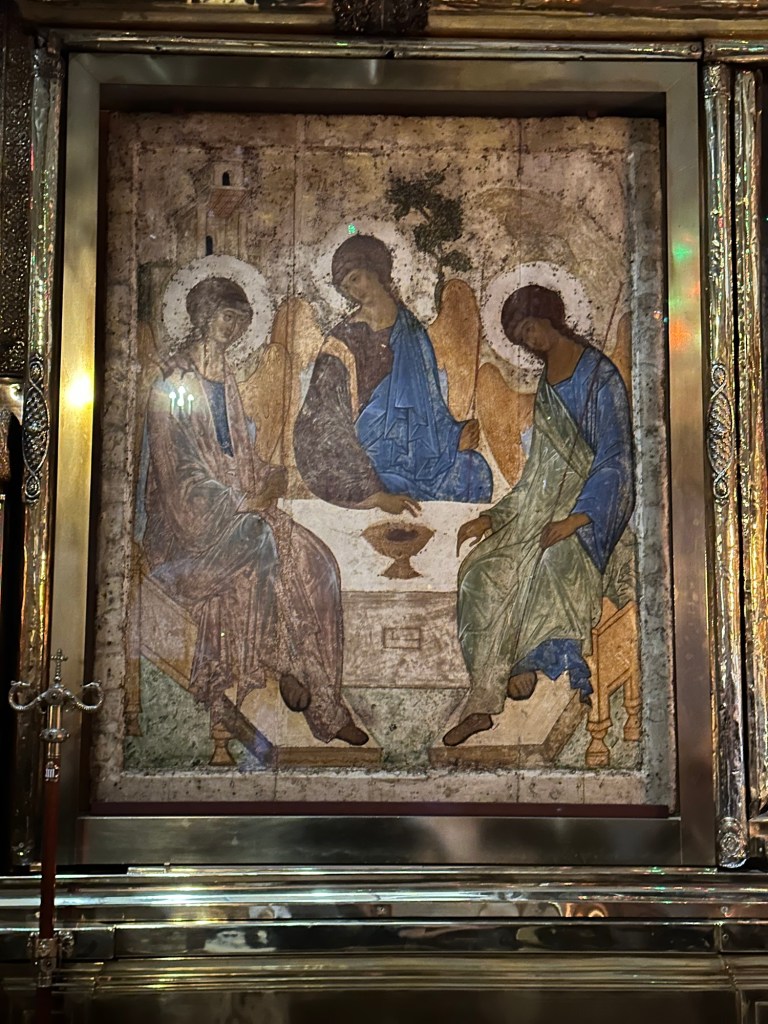
Sergiyev Posad is where the Trinity Lavra of St Sergius is located, Russian Orthodoxy’s spiritual centre. I have wanted to go there for a long time. Not only does it contain the relics of Russia’s most important saint, St Sergius of Radonezh, who lived in the fourteenth century, but the same church that contains his relics houses probably the most famous icon in the world, the Trinity by Andrei Rublev. Russia is famous for three icons: the Trinity; the Vladimir icon of the Mother and Child, which I have seen in the main cathedral in Moscow (at a distance, behind bulletproof glass), a twelfth-century icon sent by the Patriarch of Constantinople to the Grand Prince Yuri Dolgorukiy of Kiev which is said to have protected Moscow from an invasion by Timur in 1395; and the Kazan icon of the Mother and Child, the original of which was lost in 1904 (the robbers were interested in the frame, not the icon itself!), so there are only copies, of which I venerated one on the Kolomenskoye estate, in the church associated with Tsar Alexei Mikhailovich, father of Peter the Great, next to the avenue of lime trees and opposite the former site of his wooden palace.
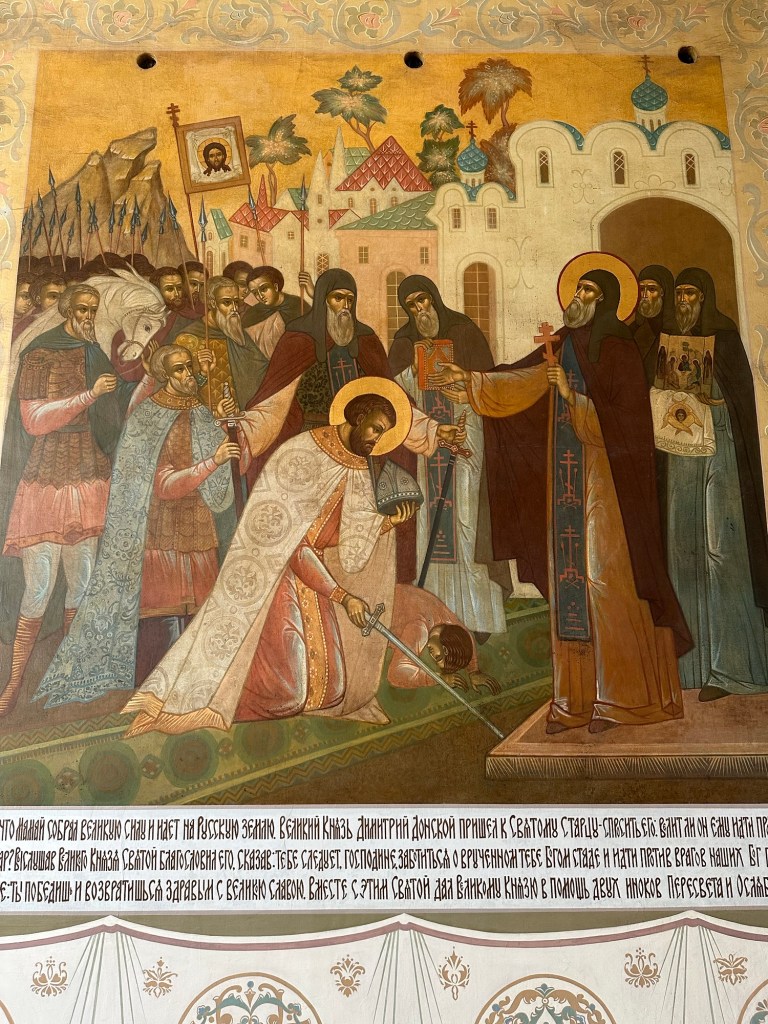
When we arrive in Sergiyev Posad, we walk along the platform and cross the tracks to exit through a barrier. I can glimpse a gold dome in the distance. The town reminds me of a settlement in the Wild West with a main street and not much else. The buildings are ugly, but this is not the point of our visit. We head right, and then left, emerging onto a patch of grass with the Konchura River flowing through it, which offers an attractive view of our destination. My son again takes me a different way, past a memorial of military glory, which really holds little interest for me, until at last I find myself in front of the monastery gate. It is a Sunday, and there is a constant trickle of pilgrims, but nothing overwhelming. I pause for photos in front of the entrance. As we enter, we pass frescoes of St Sergius greeting a flock of doves – his future disciples – and blessing Prince Dmitry Donskoy before he meets the Tatar army at the Battle of Kulikovo, two pivotal moments in the saint’s life, which represent his spiritual authority and legacy.
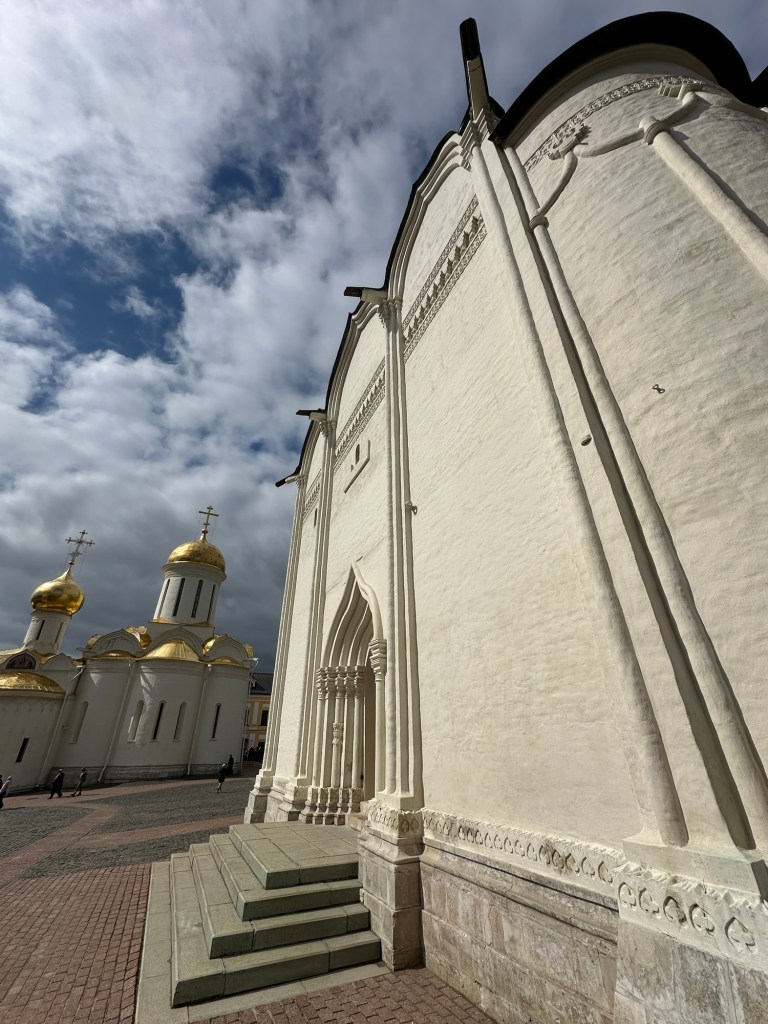
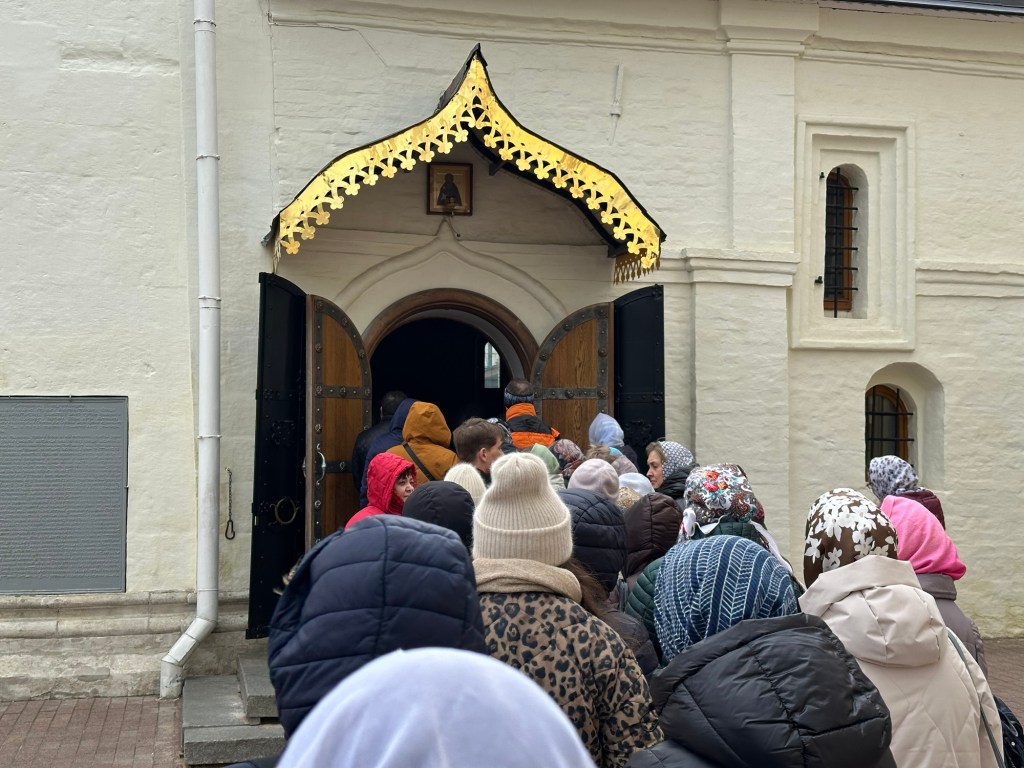
Inside the enclosure proper, we pass the Dormition Cathedral on the right. There is the grave of an elder, which is recent (beneath wood, not stone) and covered in flowers, attracting the attention of numerous pilgrims, some of whom must have known him when he was alive. We then pass the Church of the Holy Spirit, its white walls blazing for a moment in the light of the sun, which emerges briefly from the clouds, and join the queue outside the Trinity Cathedral to venerate the saint’s relics. The wind is biting, but I do not mind this. Actually I like the fact of waiting. It gives you time to reflect and creates a bond with the people around you. A woman comes out and asks us to queue next to the church wall, not out into the square. We are given books of prayers in Russian to the saint. As often in Russian churches, we will enter the church from the side. I have found entrances in Moscow confusing – you’re never quite sure where they are, and when you do find them, you’re never quite sure which part of the building you are in.
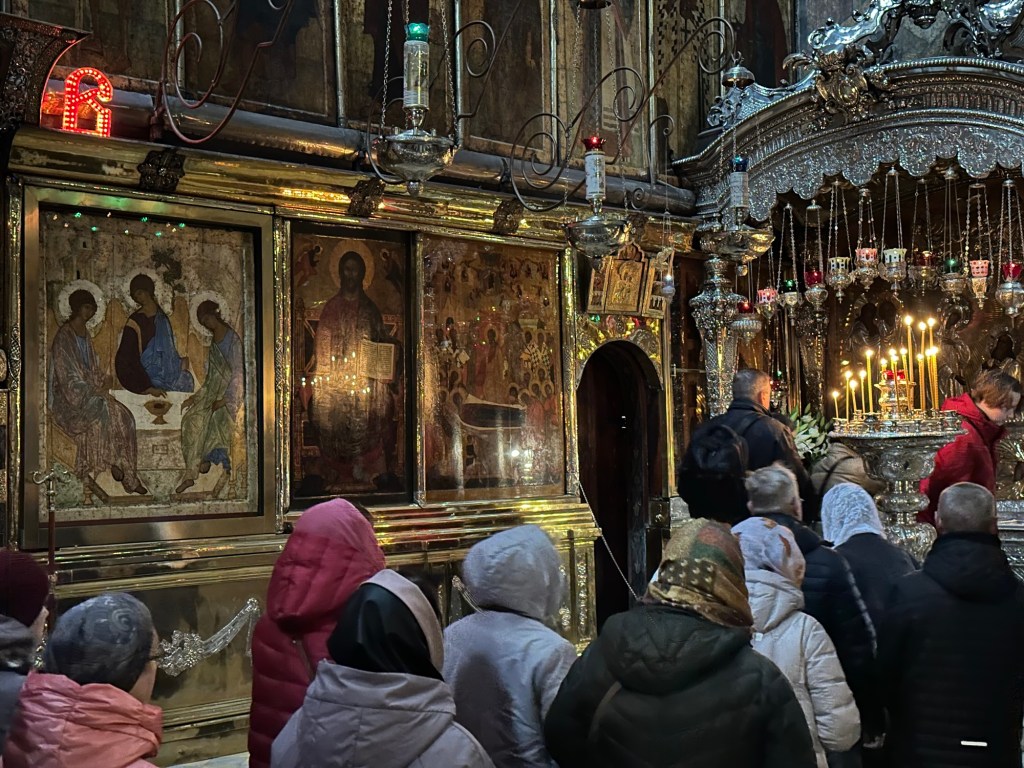
Here, however, on entering the church, we find ourselves in the narthex, candles flaring, those for the living on brass stands that are higher than those for the departed, the metal gleaming where it has been oiled to prevent the wax from sticking. Women busily scrub away, keeping the surfaces clean. The nave is on our left. We turn the corner and, as if entering Noah’s ark, are lined up so that we approach the relics two by two. I’m just glad my son is next to me, and not with someone else. I gaze around, searching for the icon of the Trinity, which I imagine will be in the centre of the church, not on the iconostasis itself, but I am wrong. There is one Trinity to the left of the holy doors, next to the Mother, but I do not think it is this one. To the right of the holy doors, where Christ would normally be… Yes, this is it. I feel certain that this is it, and I sneak a photograph of the image. I know that photography is not permitted, but I also know that Russians love their mobile phones. It is time to turn my attention to the relics, which are in a silver shrine against the wall, to the far right of the iconostasis. A man beckons people forwards, helps them bow, and then urges them on. Orthodoxy is all about movement. People make the sign of the cross. A choir sings – a moleben, perhaps, or an akathist to the saint. The most common words in an Orthodox service are a plea for mercy: “Lord, have mercy.” I am carried forwards, as if on a wave. I see the opening. The face is covered, unlike in Greek churches, where the face is often visible. I bow down and kiss the glass, touch it with my forehead, and kiss it again. I have waited so long for this moment. Already I am descending the steps, back to the nave proper. I do not remember having ascended them. I join the huddle of the choir, turn back in the direction of the relics, I need more time, and begin to pray. And then something very strange happens.
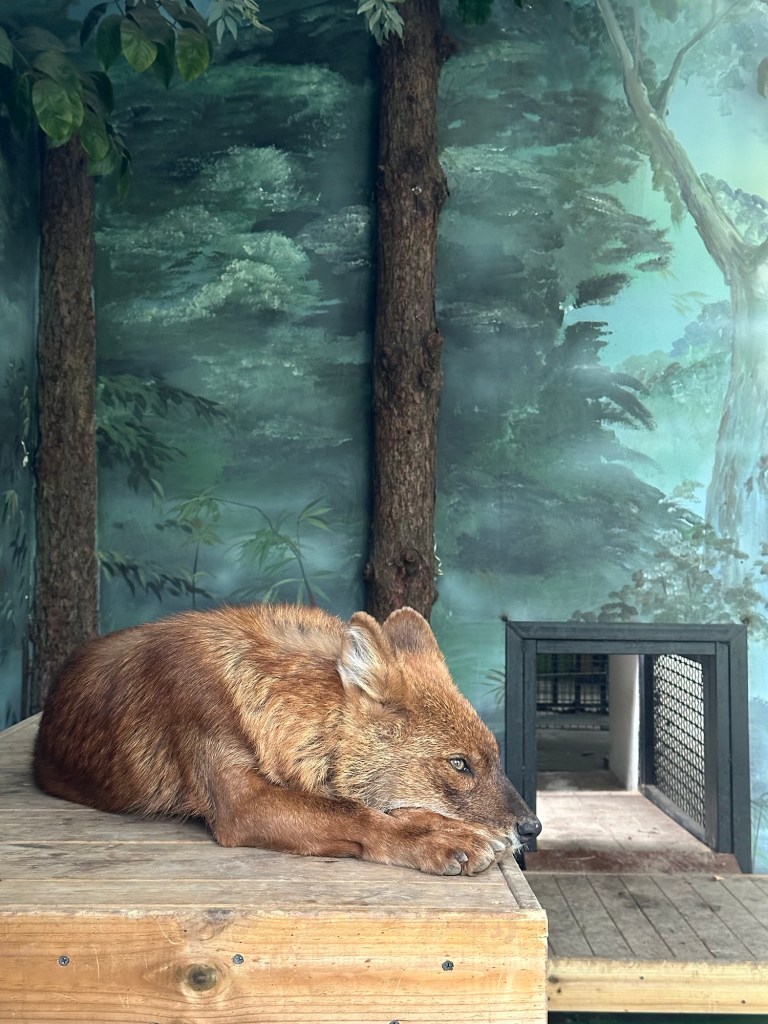
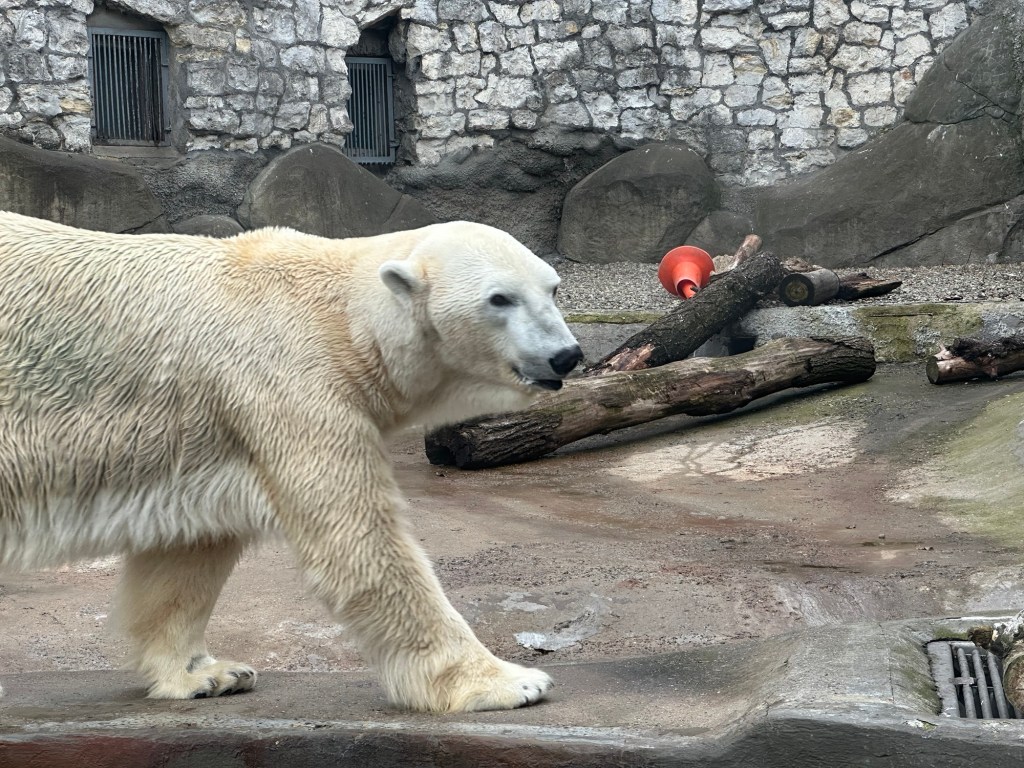
It is as if a channel opens up. I have never experienced anything like this before. It is as if the saint himself is listening. I pray in silence, but feel as if my words are magnified in heaven, are reaching right to God’s throne through the saint’s intervention. I stutter out my prayers, my meagre requests. It is as if I have been asking to see someone important in order to let my thoughts be known, and now I have been given the opportunity, I feel rather flustered. Whereas our words normally form a thread, which may or may not reach its destination, my words now are a thoroughfare, a broad boulevard, a royal road. A link has been enabled between me and heaven, and the one who has done this is lying a few feet in front of me. I know it cannot go on forever and must come to an end. What it would be to enjoy such discourse on a permanent basis! Faith is the enlarging of things. Faith is sight and hearing. So often in this world we feel undervalued, overlooked, when, like the animals in Moscow Zoo, all we want is to be acknowledged – not to engage in trade, not to engage in trickery or deceit, but to be ourselves, fully open. We spend so much time immersed in conflict, but when we meet our own fragility, our own breathlessness, I do not think we have the strength to wish anyone ill. When facing the firing squad in One Hundred Years of Solitude, Arcadio realizes how much he really loved the people he hated most. In death, in fragility, there is no room for hostility.
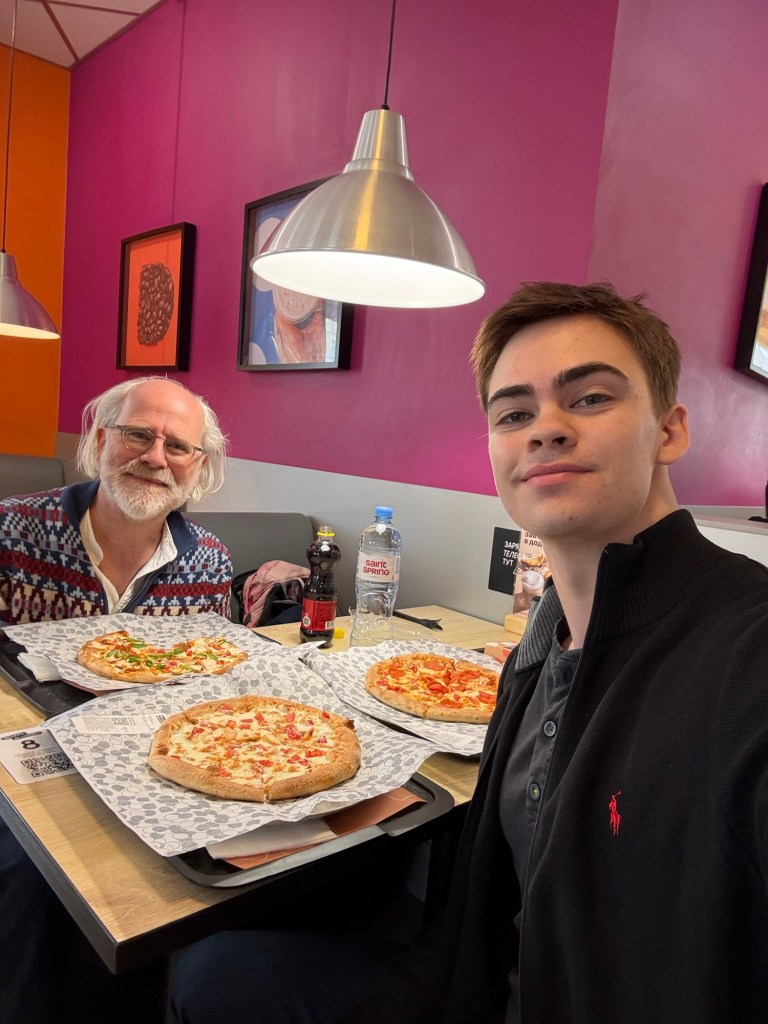
We leave the church and head back to the frontier town. We eat a pizza in Dodo’s. I cannot stop smiling. This is the perfect conclusion to my visit, and I experience enormous gratitude. Orthodoxy is about endurance, something I think people in the West do not understand. You endure, despite the hardships, the obvious persecution. It is not about convenience. It is about being pushed to the limit, to the edge of time itself, and peering over into the chasm of eternity. A saint who has been dead for 650 years opens up the gate to heaven for me. I feel more alive than I have for ages. And I smile, because my son is opposite me. I am not alone. My life has meaning.
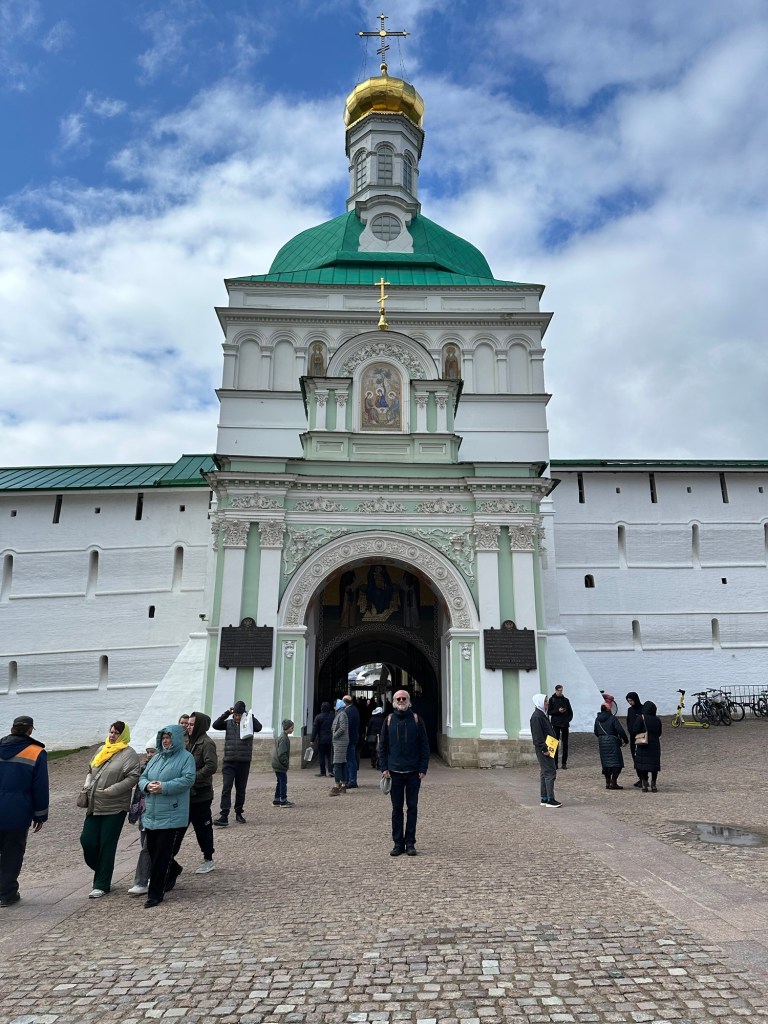
- In front of the Trinity Lavra.
- St Sergius blessing Prince Dmitry.
- The wall of the Church of the Holy Spirit with the Trinity Cathedral on the left.
- The queue outside the Trinity Cathedral.
- My photo of the Trinity icon, which forms part of the iconostasis in the position normally occupied by Christ.
- The Trinity icon in relation to the shrine of St Sergius on the right.
- In Dodo Pizza.
Jonathan Dunne
Back to the beginning: Red Square