IV. Moscow Life

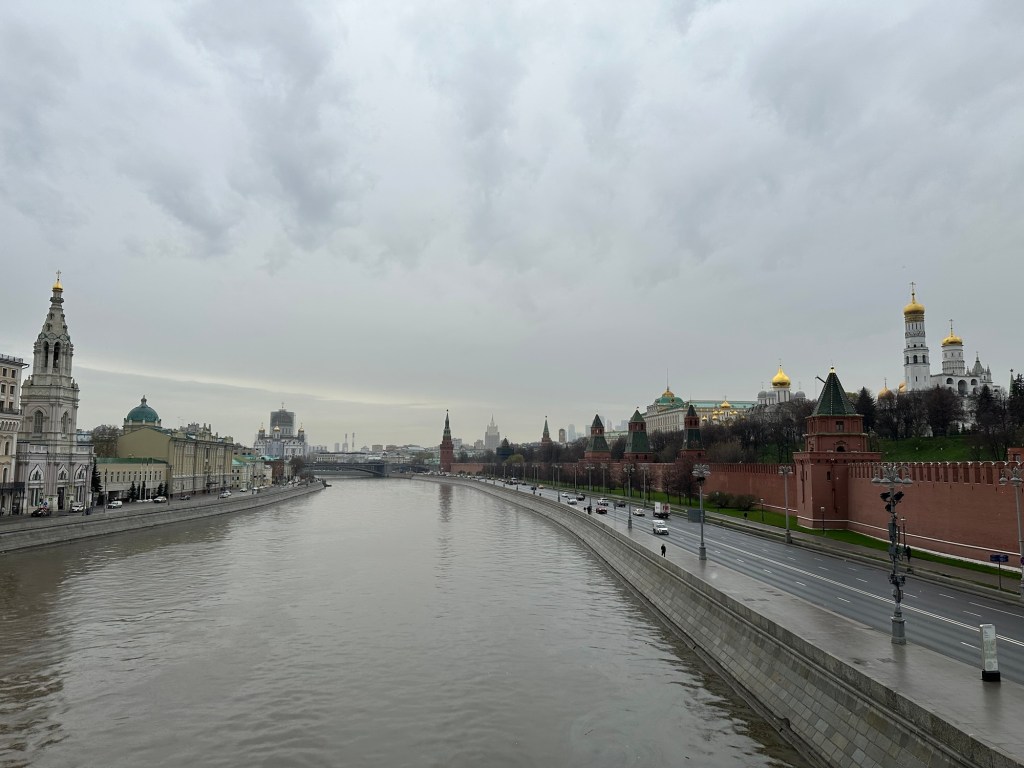
The first thing I learn in Moscow is the importance of the metro, which is said to transport ten million people a day. I am given a Troika card, which I can use to travel as much as I like (it costs eight euros for three days). My favourite line is my son’s line, of course – number 9 – and my favourite station is Borovitskaya – right to the heart of the Kremlin. On my first day, I stand on the Bolshoy Kamenny Bridge, the wind blowing down a cold and grey Moscow River, and gaze at the Kremlin towers behind me and the Cathedral of Christ the Saviour ahead. The gold dome is under scaffolding. I will visit it later on the same day, but I make the mistake of approaching the side facing the river, imagining that this will be the main entrance, when in fact the main entrance faces the other way. I’m still confused by this – how could you not face the river?

I eat my sandwich and crisps, still in Bulgaria wilderness mode. After this, I will take to having lunch in some of my son’s favourite restaurants. There is no McDonald’s or Kentucky Fried Chicken, but they have been replaced by Russian equivalents: Vkusno i tochka and Rostic’s (which I mispronounce Rustic’s), which are just as good, if not better. The idea that Russia is straining under the weight of western sanctions is quickly dispelled by a visit to the local mall, where the first thing I see is a large, well-lit western clothes store. Other western products are on offer: cosmetics, for example, or shoes. And where such products do not exist, Russians are more than capable of coming up with their own.

Similarly, people on the metro do not look harassed, afraid of being watched. They look quite calm. Most of them are on their phones, but this is not a Russian phenomenon. IPhones abound. Occasionally, you get a woman with a large tome running to more than a thousand pages, Tolstoy perhaps, like a lunchbox on her lap. Younger people read European classics from an attractively produced series. I spot Guy de Maupassant. I get the occasional glance, more curiosity than anything, I’m amazed at the ease with which Alyosha at Sretensky Monastery identifies me as English, but I am just a passing curiosity. My son teaches me to stand aside as the doors open to let the passengers out, there is a bit of pushing and shoving. Escalator etiquette is the same as in London (stand on the right, walk on the left), so I’m not a complete country bumpkin, though I feel like one.

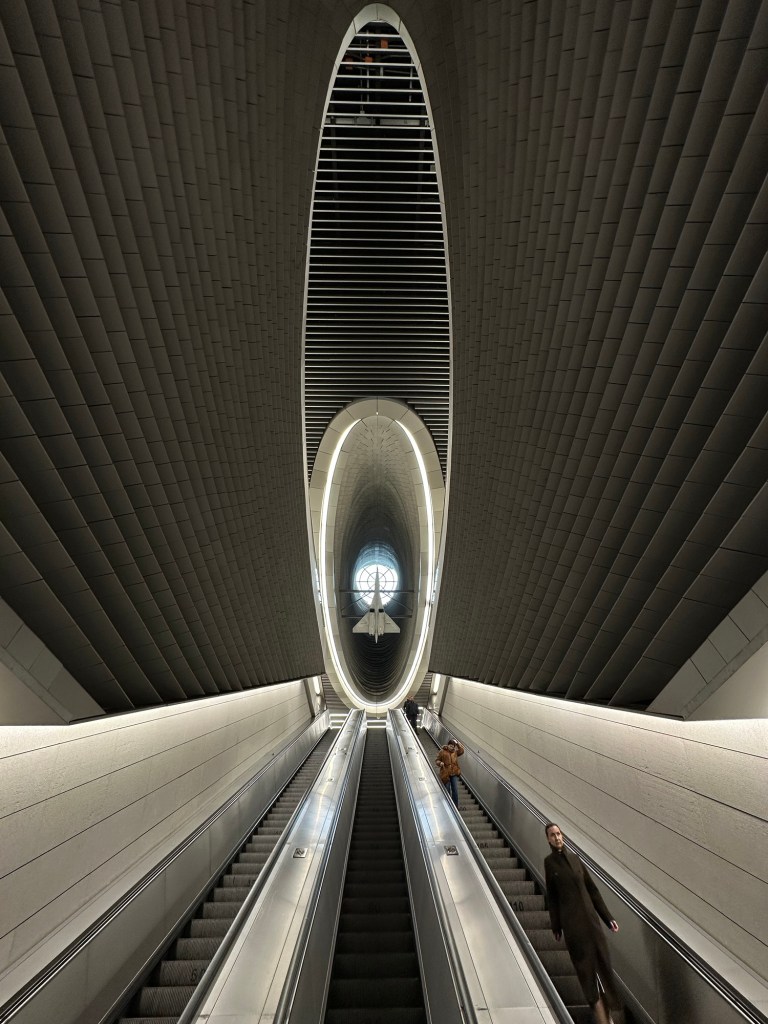
The metro stations are grand. Some of them were built under Stalin – Komsomolskaya is a prime example, with mosaics on the ceiling of generals mustering their troops beneath the banner of Christ or Lenin preaching in Red Square. I have fun taking photographs of my favourite mosaic with St Basil’s Cathedral because it is positioned above the escalator, so I have to keep descending and ascending on the elevator until I think I’ve got a good one. It’s quite hard taking a photograph of the ceiling when you’re travelling upwards. My son waxes lyrical about the station before Vnukovo airport, Pykhtino, where there is a model fighter jet attached to the ceiling above the escalator (again!). The line to Vnukovo airport, 8A, is much more modern.

There are two circle lines: an inner circle line, number 5, and an outer circle line, number 11. Line 5 is remarkably smooth, it feels like travelling on air, and the seats are comfortable, not too close together, divided into groups of two and three, with plugs to charge your phone. Each carriage on the metro is fitted with a screen, which gives information about the new river transport, safety videos for children who get lost (they are to stand beneath a sign on the wall, where they will be spotted by metro staff, who come to reunite them with their parents), videos about places – the Caucasus, Astrakhan – Muscovites might like to visit, a film about the zoo. There are themed carriages – one is devoted to the Bolshoi Theatre – and there is much excitement about Yuri Gagarin because it is the 65th anniversary of his first crewed journey into space aboard Vostok 1 (Vkusno i tochka are offering models of the spaceship with their kiddie menus, and I am tempted to get one). There is a great deal of pride in the country and its achievements, and I don’t think this is a bad thing.

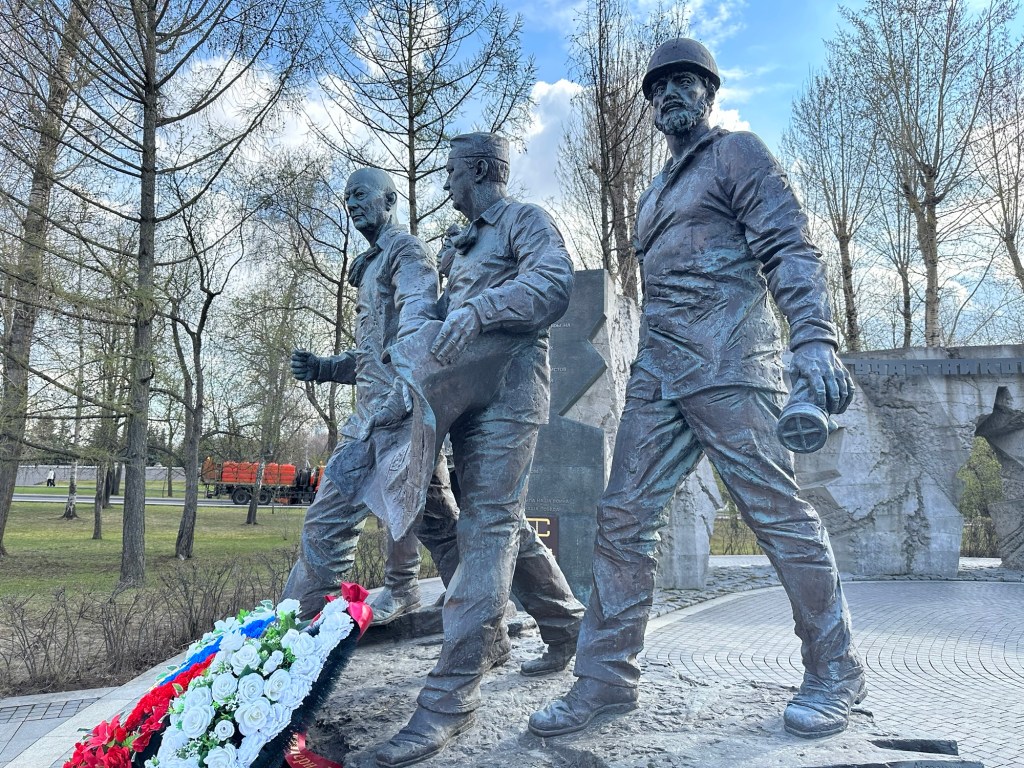
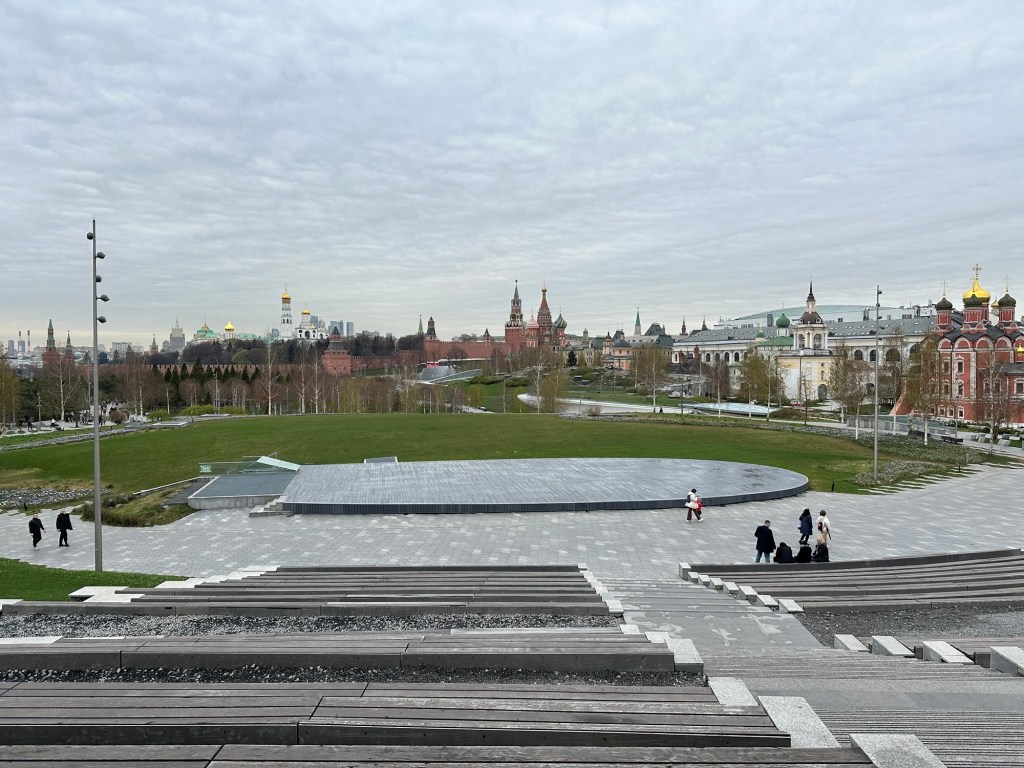
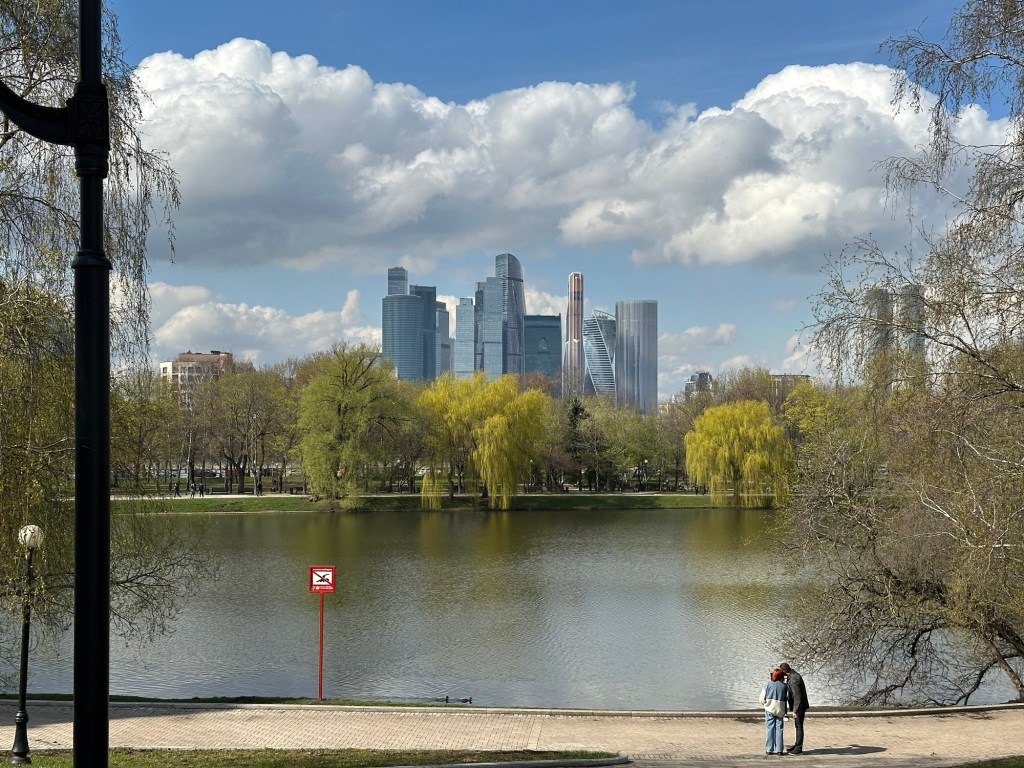
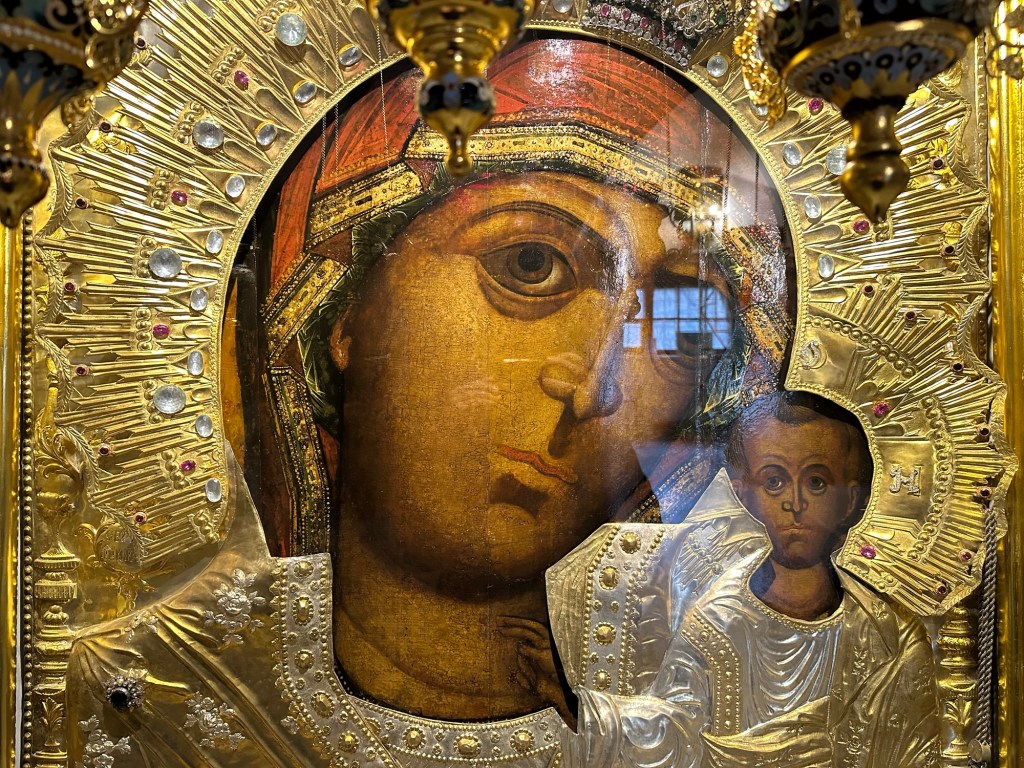
My overriding impression is one of efficiency, of services – public transport, museums, parks – being laid on for Russian citizens to make the most of. There is a sense of order and purpose. The parks are immaculate and extensive. I visit several: Victory Park (dedicated to those killed in the two World Wars and in Nazi concentration camps, as well as to those involved in the clean-up after the Chernobyl nuclear disaster and to hero cities), Zaryadye (next to the Kremlin, with its amphitheatre-like seating and carefully ordered flower beds), Novodevichyi Prudy (next to the famous convent of the same name with its illustrious cemetery), Kolomenskoye (the former royal estate, now open to the public, with its spacious walkway next to the river, perfect for jogging, and a strange bird I am unable to identify, the size of a thrush with a grey hood and round black marks over its eyes like a robber). The buildings in Kolomenskoye are closed – it is a Monday – but the foreman gives me permission to venerate the Kazan icon of the Mother and Child and asks where I am from.

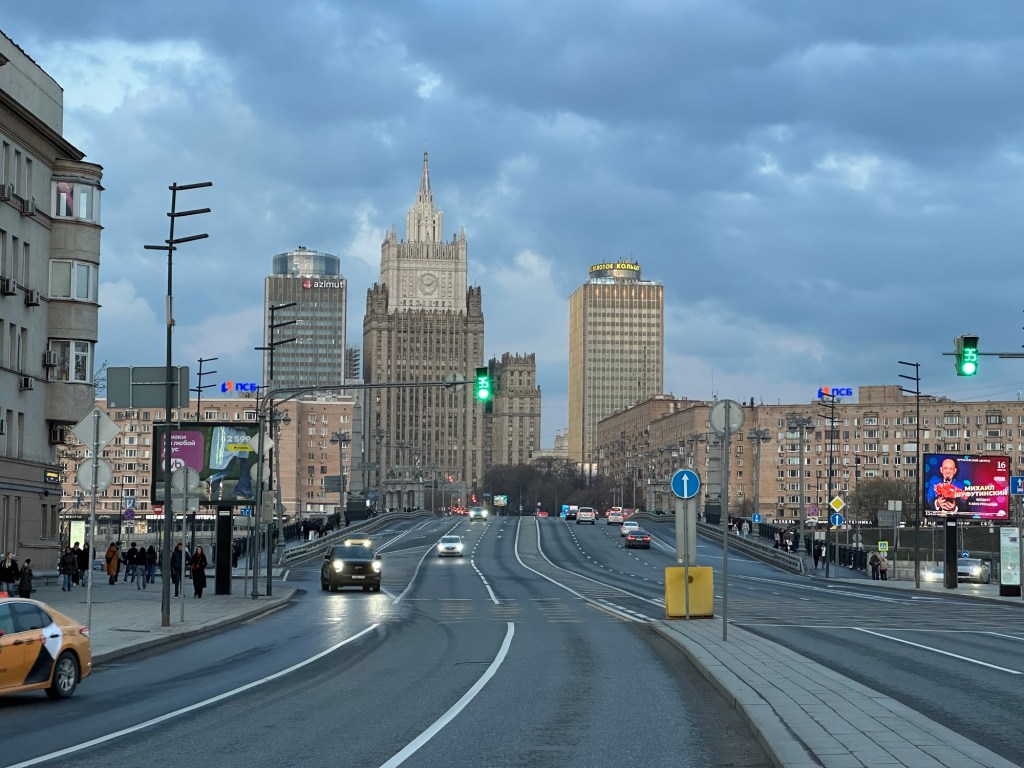
One of my most enjoyable excursions is with my son and a friend to the Arbat district of the city. We pass several buskers. My favourite is a young guy in white trainers, singing a Russian love song – the buskers put out pieces of cardboard with their bank details so you can throw in a few coins on your phone – but there are two energetic violinists playing Vivaldi in an underpass and a guy with an impossibly large balalaika, so large it has to rest on a metal pin. We pass one of Stalin’s wedding-cake buildings, the Ministry of Foreign Affairs, take up position next to the river – my son’s friend jokes that the West thinks the fishermen are snipers in disguise – visit the mall next to Kiyevskaya station (more western products or Russian equivalents), and then take the metro across the river (line 4 from Kiyevskaya to Smolenskaya).

Crossing the Moscow River between Kiyevskaya and Smolenskaya.

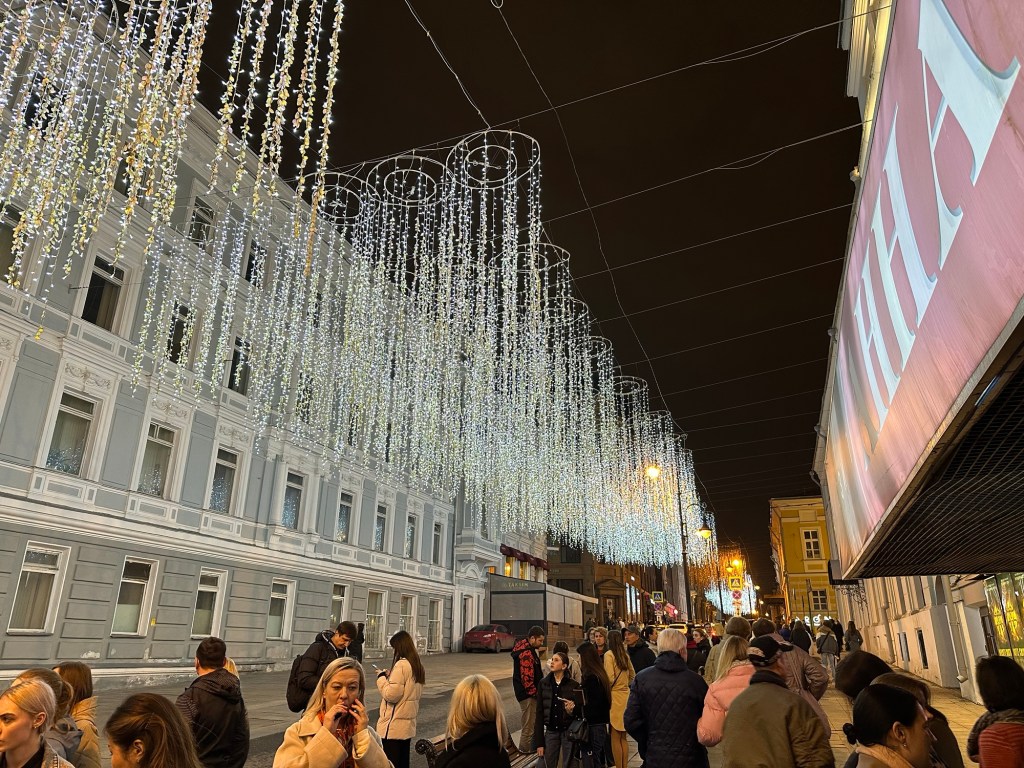
One of my favourite evenings is my son’s blind date at the operetta house. We go to see Monte Cristo. The street outside is lit with dangling lights. I think I will be bored – after all, I don’t really understand the language, the only word I can make out is “love” – but I am struck by the enthusiasm with which the singers and dancers perform and the audience responds. If I were to stay longer, I would go again – to see Anna Karenina, for example. In the interval, I order an apple juice in Bulgarian (I have decided to speak Bulgarian slowly, rather than English) and get what I want. I walk up and down the stairs, imagining I have a seat in a box or the stalls. At the end of the interval, my son turns up with the young woman in question. He is so grown up, and gallant – bringing flowers to a first date. I press her to drink something, and she orders a tea. My son flashes his debit card before I can reach for my change. I sit in the darkness, while the attendant identifies people who are using their mobile phones by squiggling with a red laser on their screens. The couple in front of me – not my son and his date – have argued, and he is now sitting a couple of seats away. She has to lean across to speak to him, but they still manage to take a selfie in front of the stage at the end of the performance. I wonder if the accompanying music – modern rather than classical – is live or recorded. There is a pit, but it doesn’t seem to house an orchestra, because one or two of the dancers jump into it, and I can’t imagine they’re having to dodge musicians as they land. I’ve lost track of who Monte Cristo is, and I can’t quite remember the story (I know it has something to do with false imprisonment and revenge), but I admire the backflips and savour the romantic melodies. When I take my leave of the young woman – my son is going to accompany her to her metro station, where she will be met by her mother – I clutch her hand. She is uncertain, and I want her to be well. The glass bits in her hair remind me of the lights outside, candles in a Christmas tree, stars that glint in a night sky. I find everything touching, perhaps because I know my time is limited.
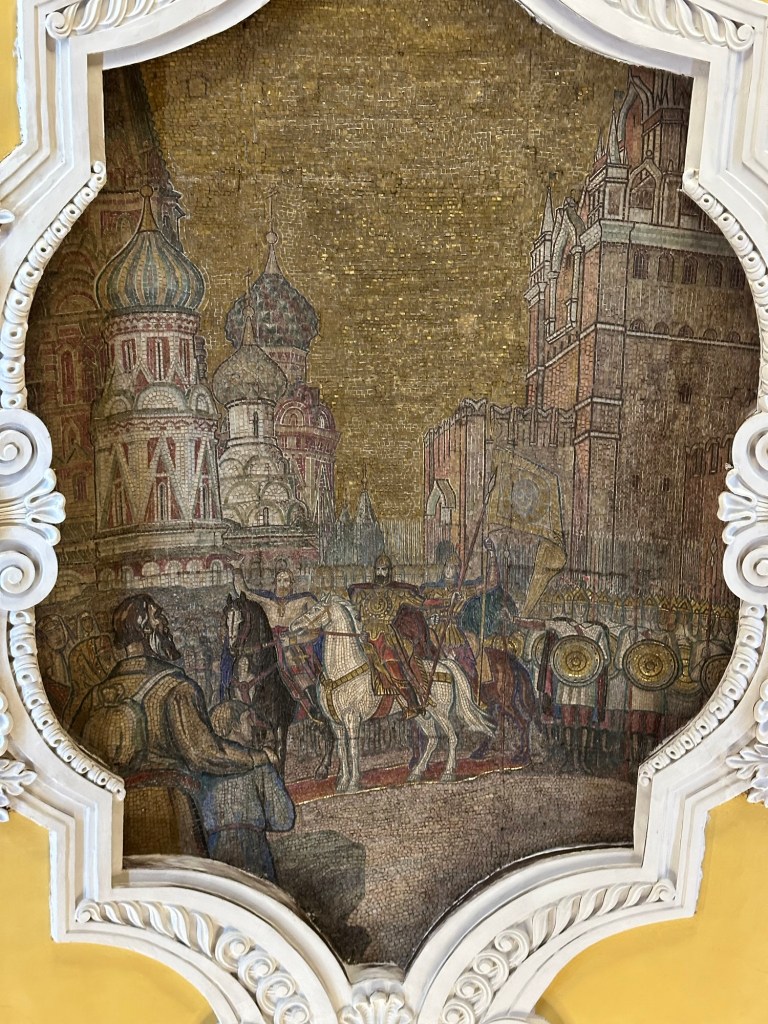
  1. The mosaic of St Basil’s Cathedral in Komsomolskaya station.
  2. The model fighter jet above the escalator in Pykhtino station.
  3. Monument to the liquidators of the consequences of the Chernobyl accident, Victory Park.
  4. The amphitheatre-like seating in Zaryadye Park.
  5. Moscow City and Novodevichyi Prudy Park.
  6. The Kazan icon of the Mother and Child on the Kolomenskoye estate.
  7. The Ministry of Foreign Affairs and Borodinsky Bridge.
  8. The lights outside the operetta house.

Jonathan Dunne

Next: A Trip to Sergiyev Posad
III. Moscow Zoo

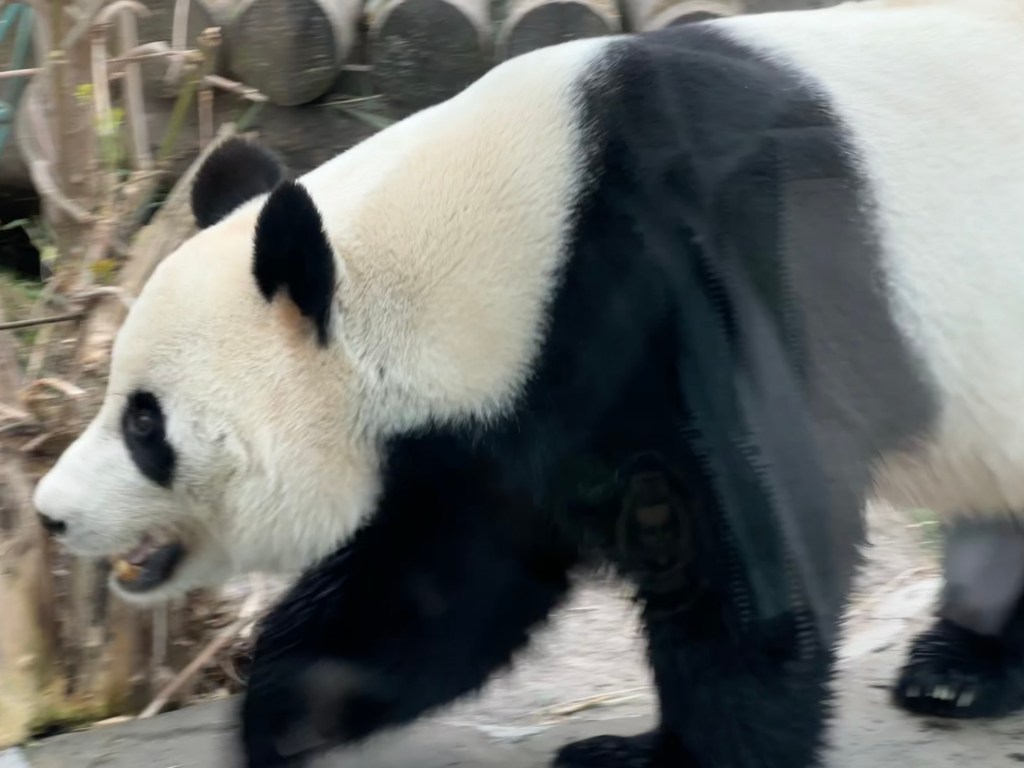
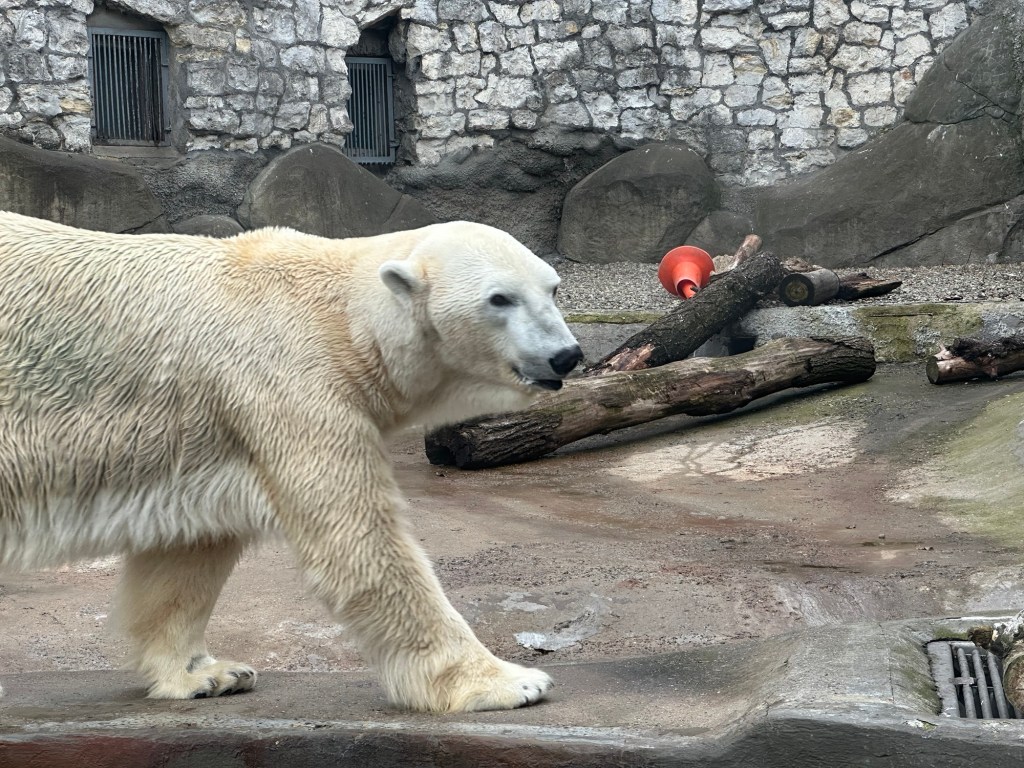
One of the few places I do not like (I suppose another might be the Expo, known in Russian as VDNKh) is Moscow Zoo. The conditions are not good. I wonder whether zoos should be placed in cities or whether they shouldn’t be in the open countryside, so that it is we who visit the animals’ environment and not the other way around. Some of the animals – large birds like the shoebill – look miserable, and they perform repetitive actions, the panda constantly going backwards along a walkway, the polar bear reaching the end of its pen, turning around, arching its neck in reverse, and then pacing in the other direction. It doesn’t look natural. And how could it? A golden eagle is not meant to be in a cage with a net over it, however tall that cage may be.

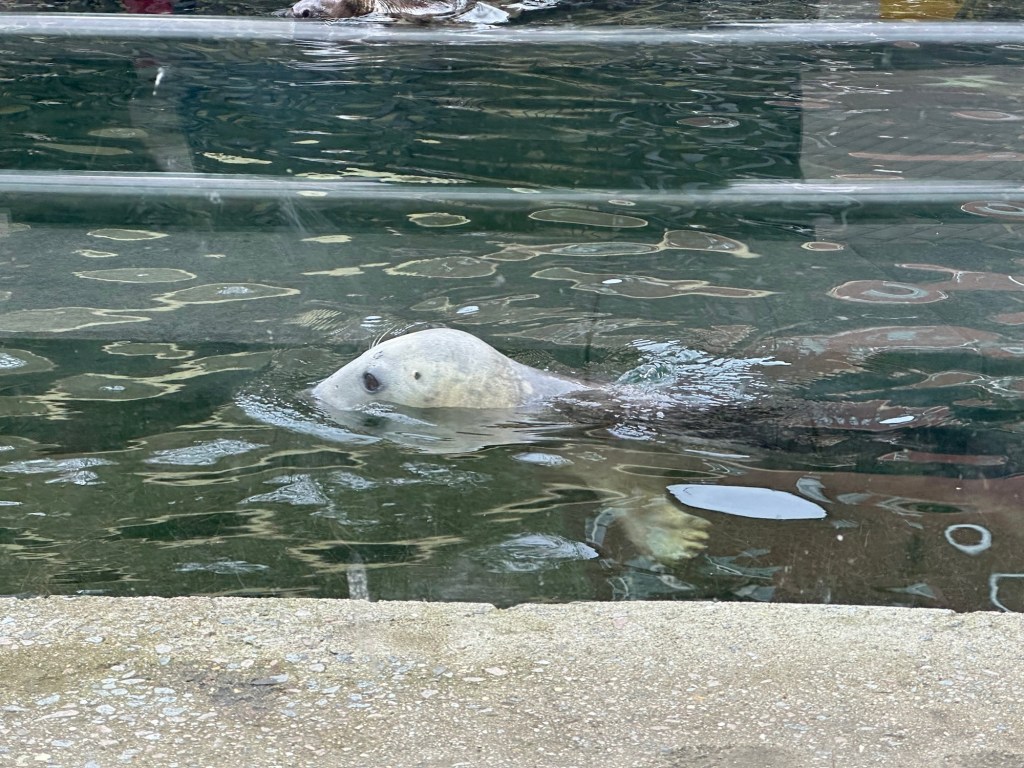
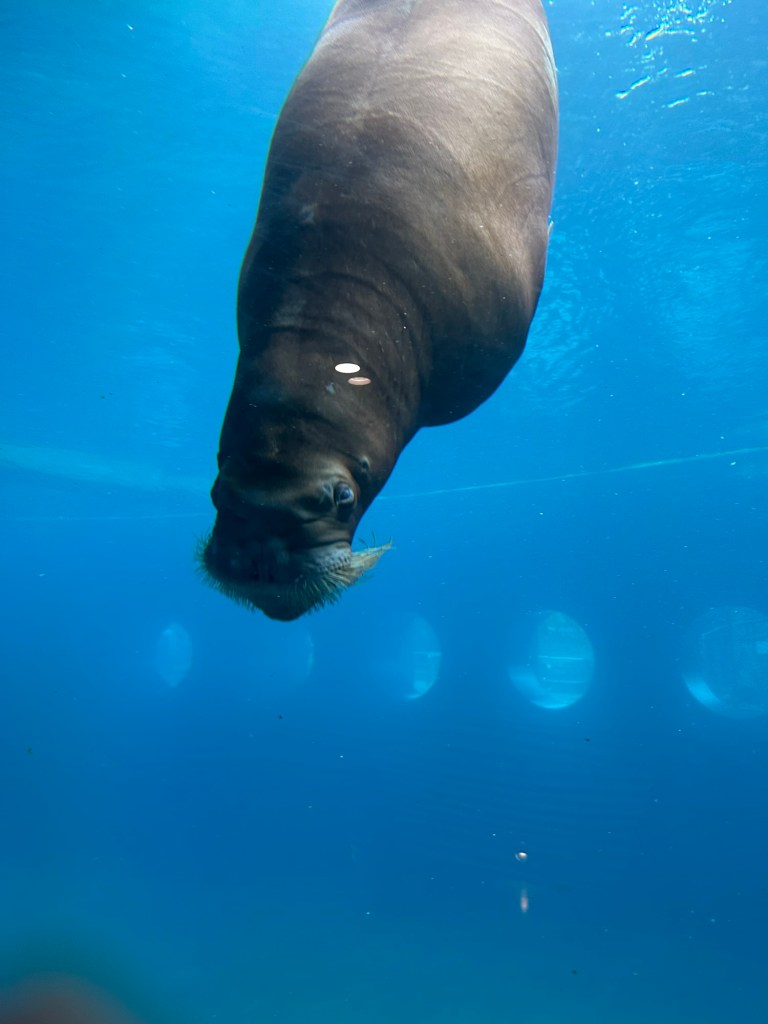
The humans behave like apes, and the apes behave like humans – or at least our impression of what their behaviour is. They (the humans) screech and laugh hysterically, chasing each other up the ramp, while the apes sit normally, playing with a sheet, wondering what the fuss is all about. When I approach the zebras, they seem to make up their mind to go outside, but of course they should be on the savannah. I wonder if it isn’t cold in Moscow for a lot of these animals, especially the ones from Africa. The only glimmer of hope is the Baltic grey seals – there is a little interaction with humans, and they swim very gracefully – and the bearded seals, where there is a pup, and again one cannot but be impressed by the gracefulness of these large animals in water. At least they have space to move in, even if it isn’t the open sea.

I am falling into a depression, I can hardly bring myself to take any photographs, and then I notice something. What the animals want is to be seen – not gawped at, not photographed, not pointed at. They do not want to be a source of entertainment, like a television screen. They want to be acknowledged. I suddenly realize that they are looking at me – in the hope that I will see them.

As a race, we are so inclined to view the environment as two-dimensional, as being put there for our entertainment and provision, but it is so much more than that. It has its own intrinsic worth, its own meaning, one we are slow to pick up on, since we believe its sole meaning is to reflect us back to ourselves, to convey our message, to fill our stomachs, to keep us amused. We see the environment, but we do not see it. It is like a picture on the wall, a backdrop to the events of our lives. I wonder how much the verse Genesis 1:28 might have to do with this.

I cannot change the animals’ conditions, I cannot break in at night and free them, transport them back to their natural surroundings. More’s the pity. But I can at least see them. I make a connection with their gaze. I put down my phone. I sympathize with them and understand something of their plight.

All the earth wants is to be seen – not exploited, not fenced in, not traded, but seen. It is we who have to change. And when we do, what we see becomes incomparably richer.

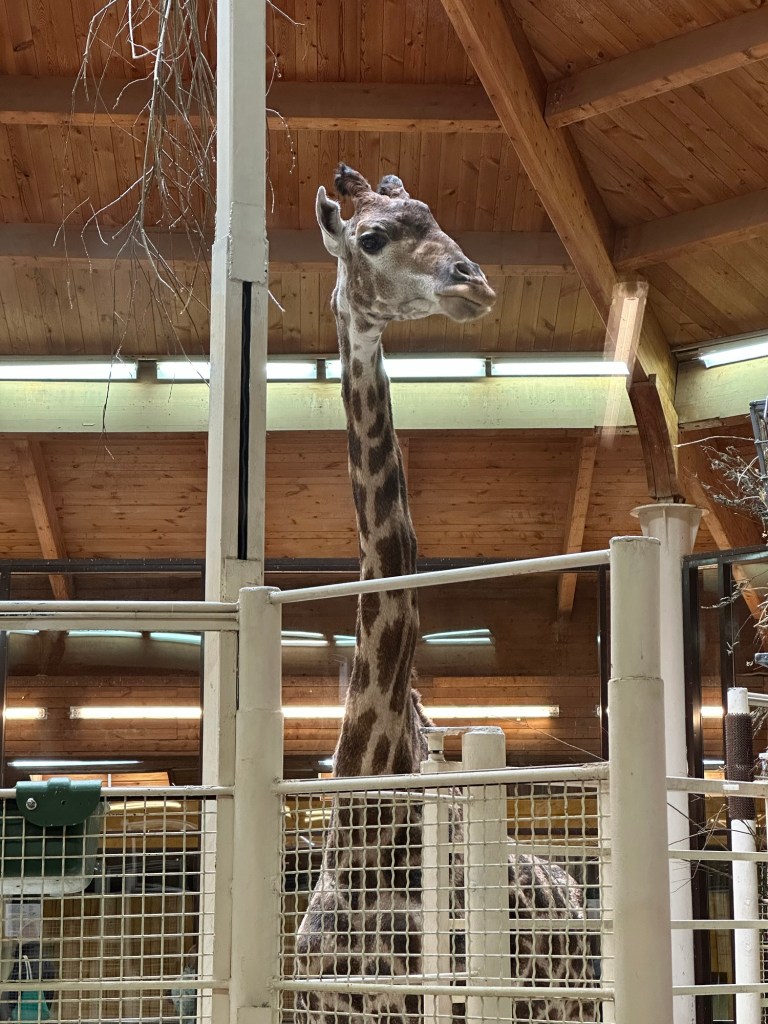
  1. The giraffe.
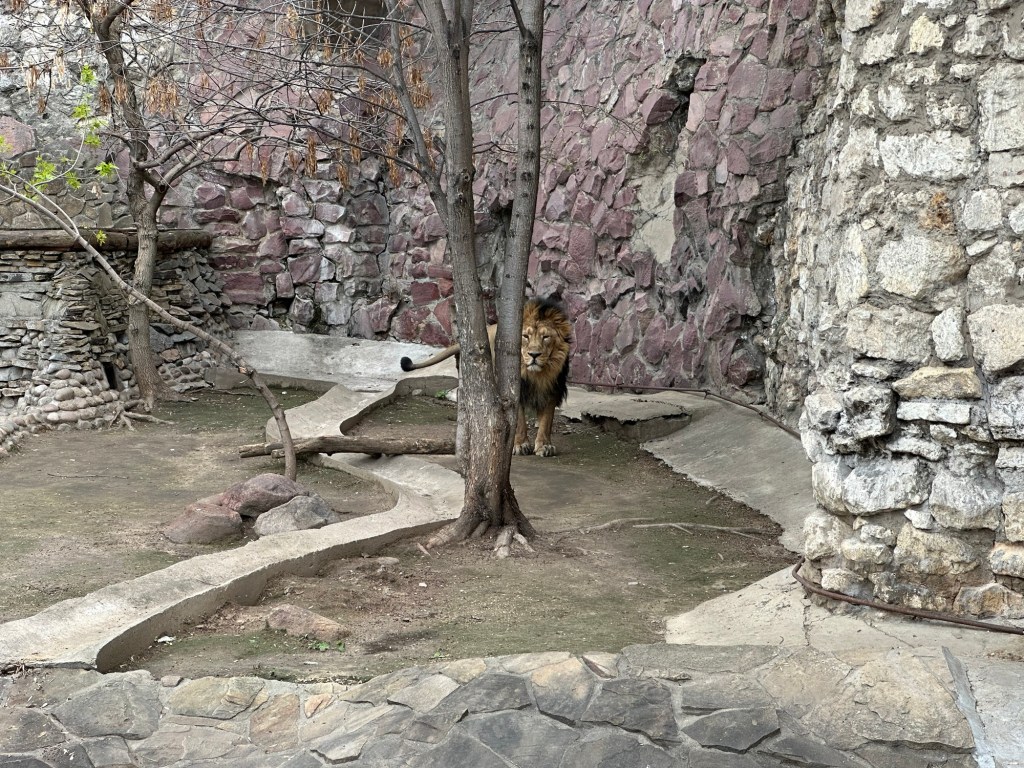
  2. The lion.
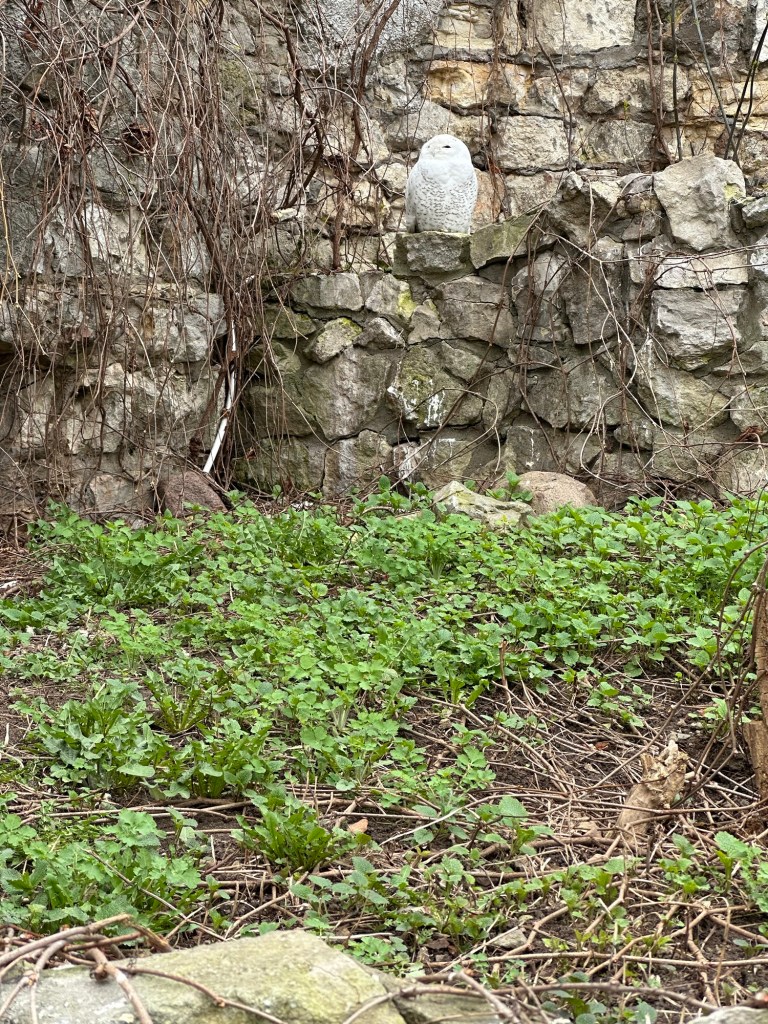
  3. The snowy owl.
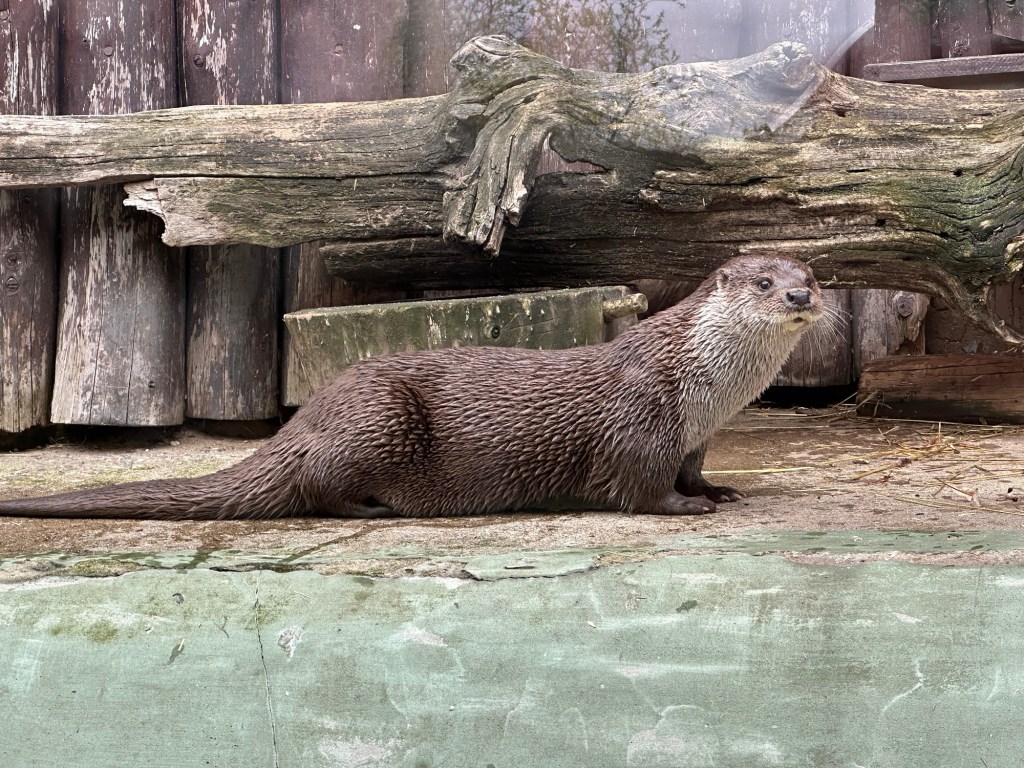
  4. The otter.
  5. The Baltic grey seal.
  6. The bearded seal.
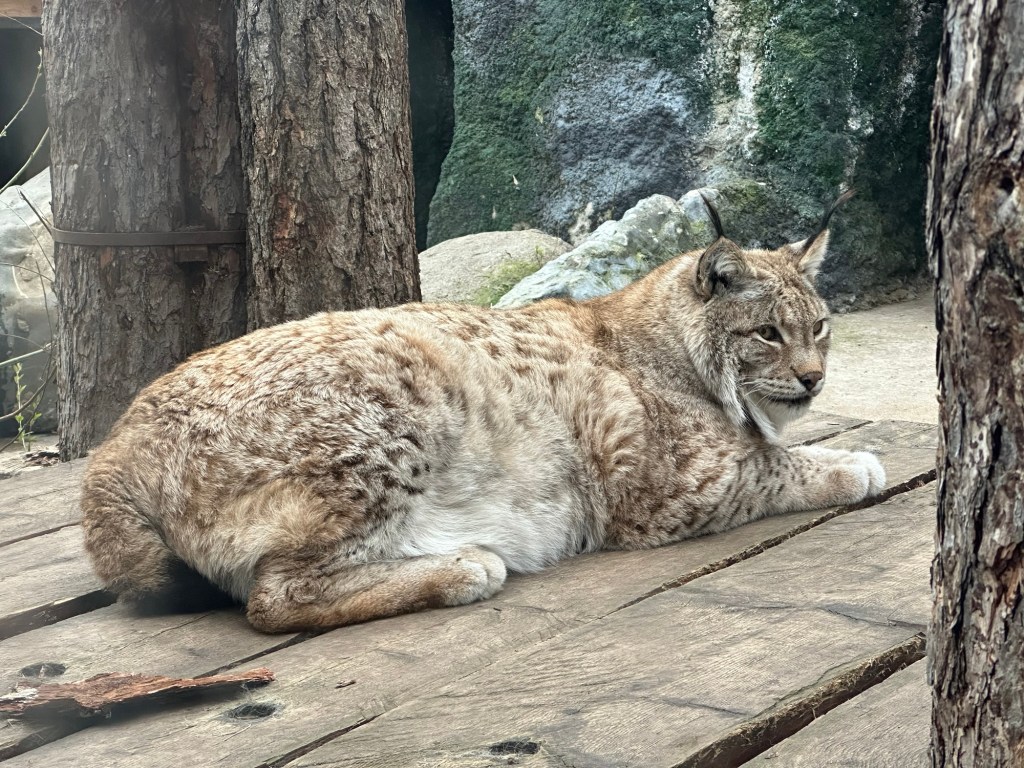
  7. The lynx.
  8. The panda.
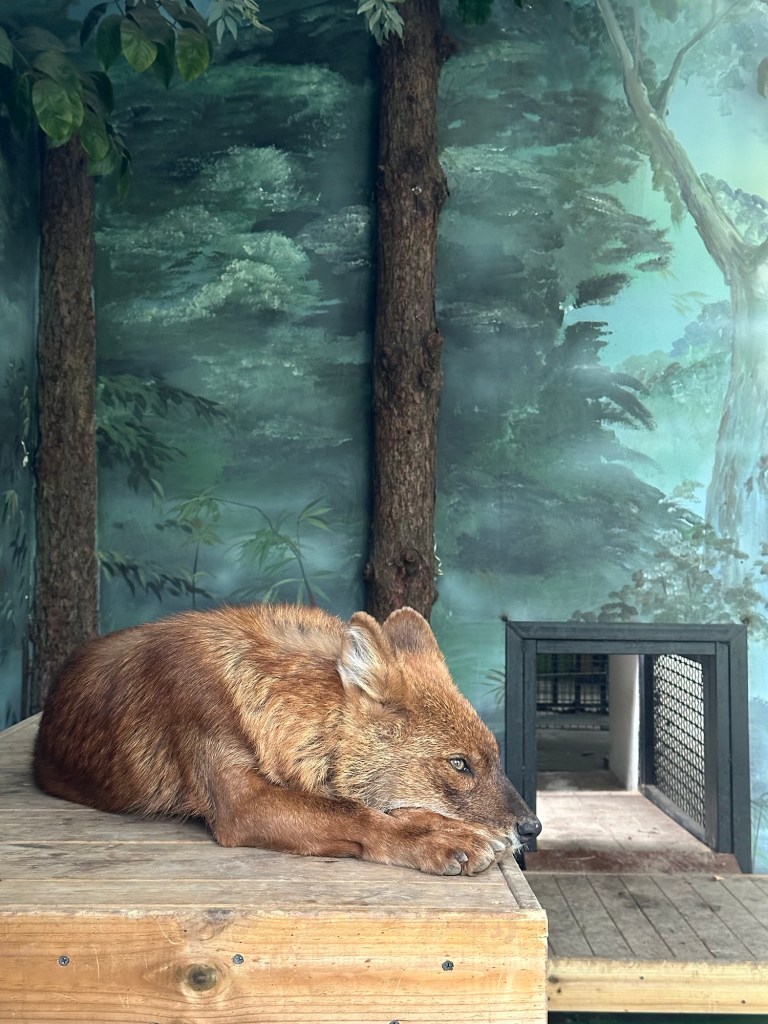
  9. The dhole.
  10. The polar bear.

Jonathan Dunne

Next: Moscow Life

II. The Tretyakov Gallery

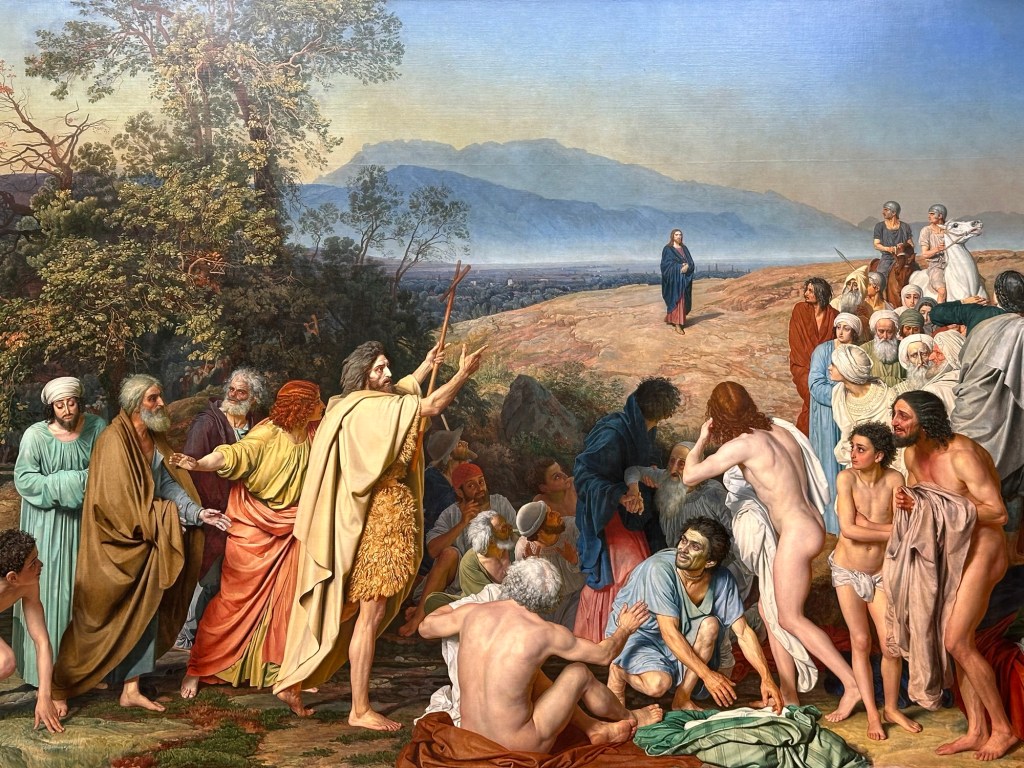
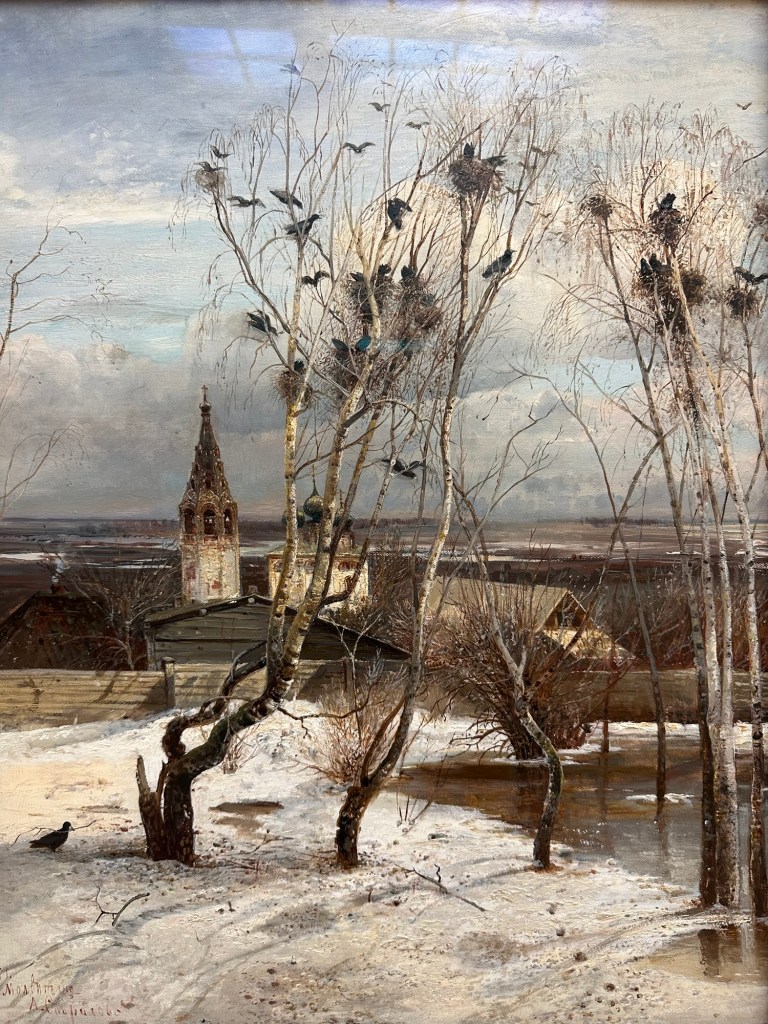
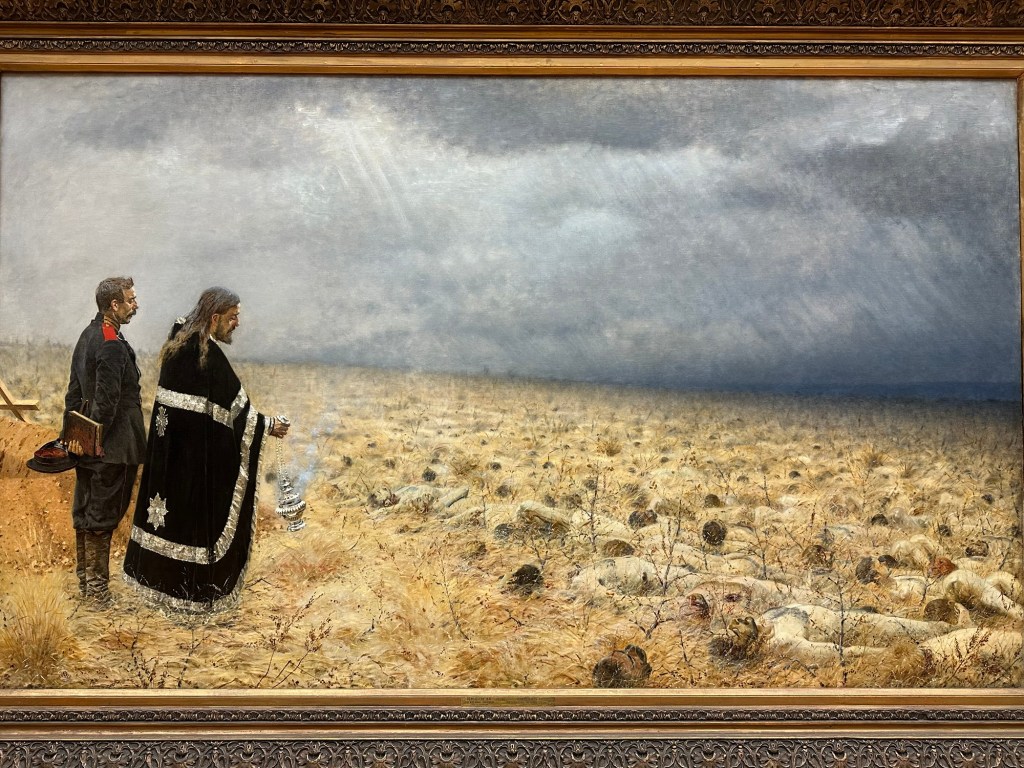
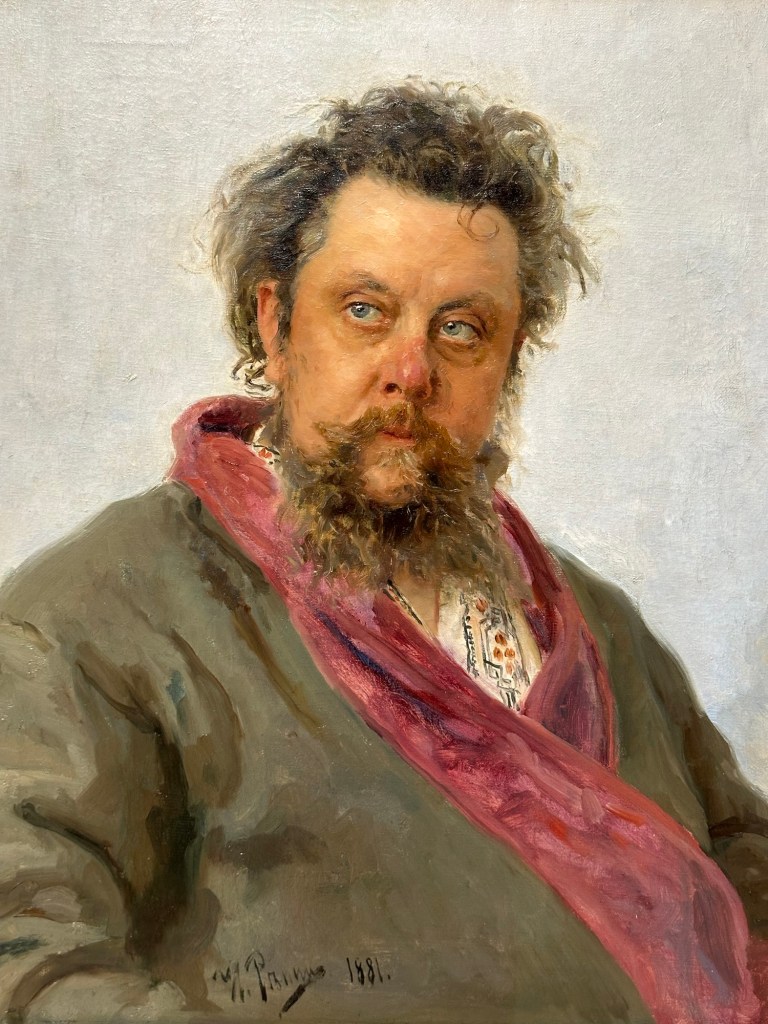
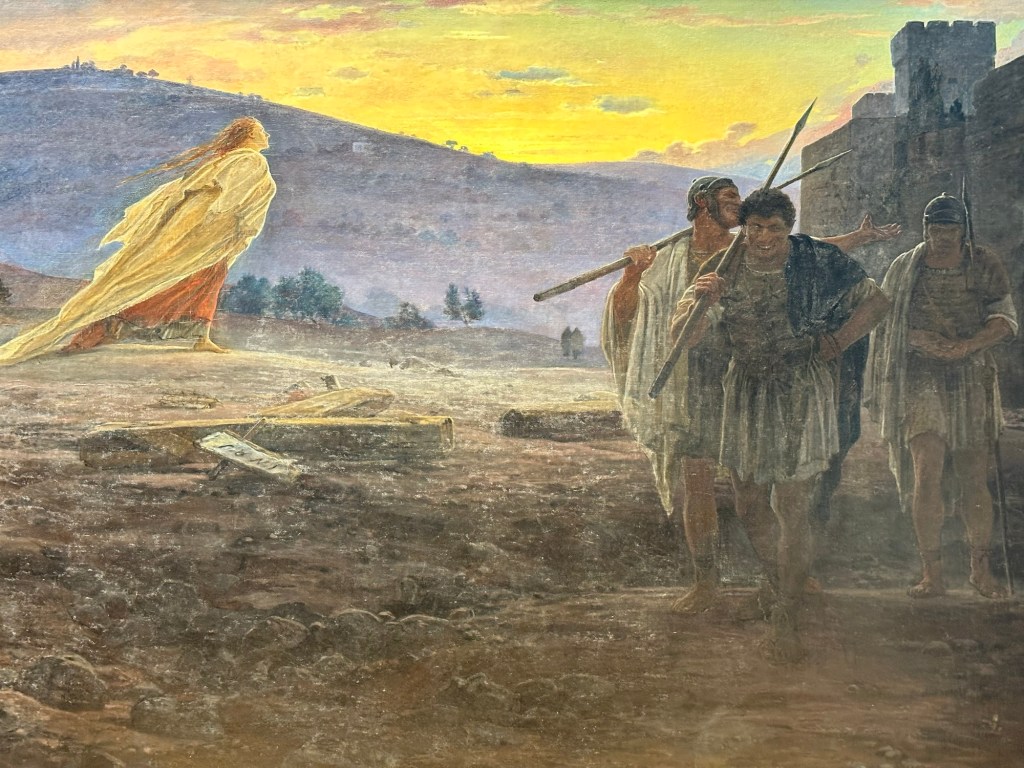
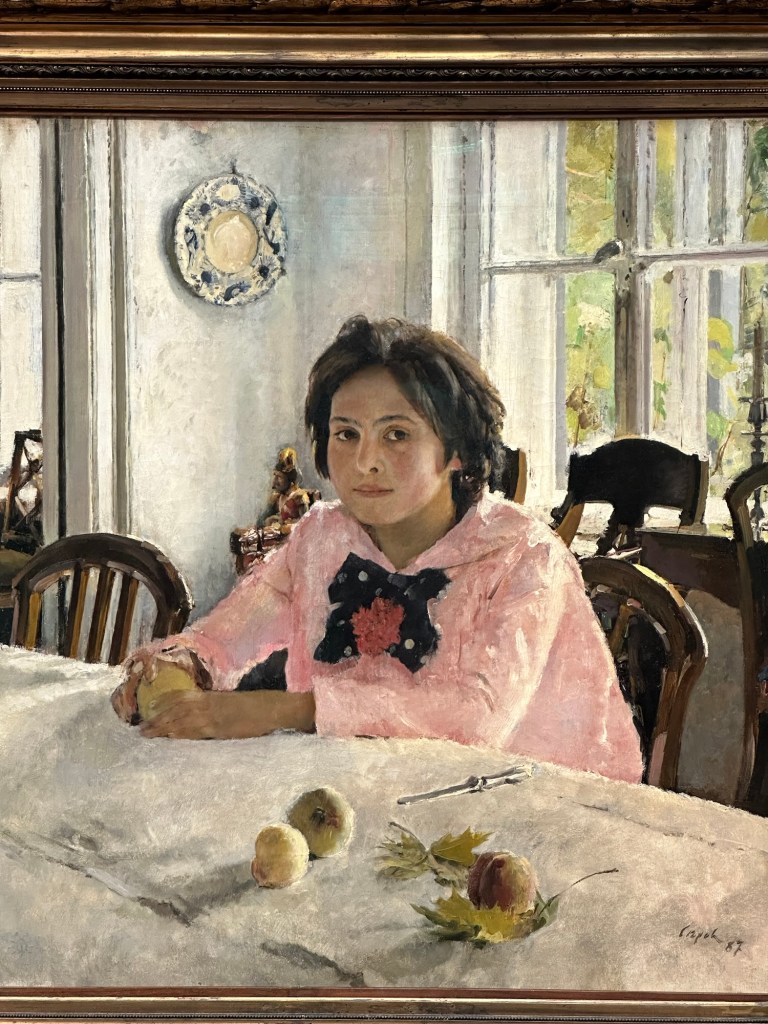
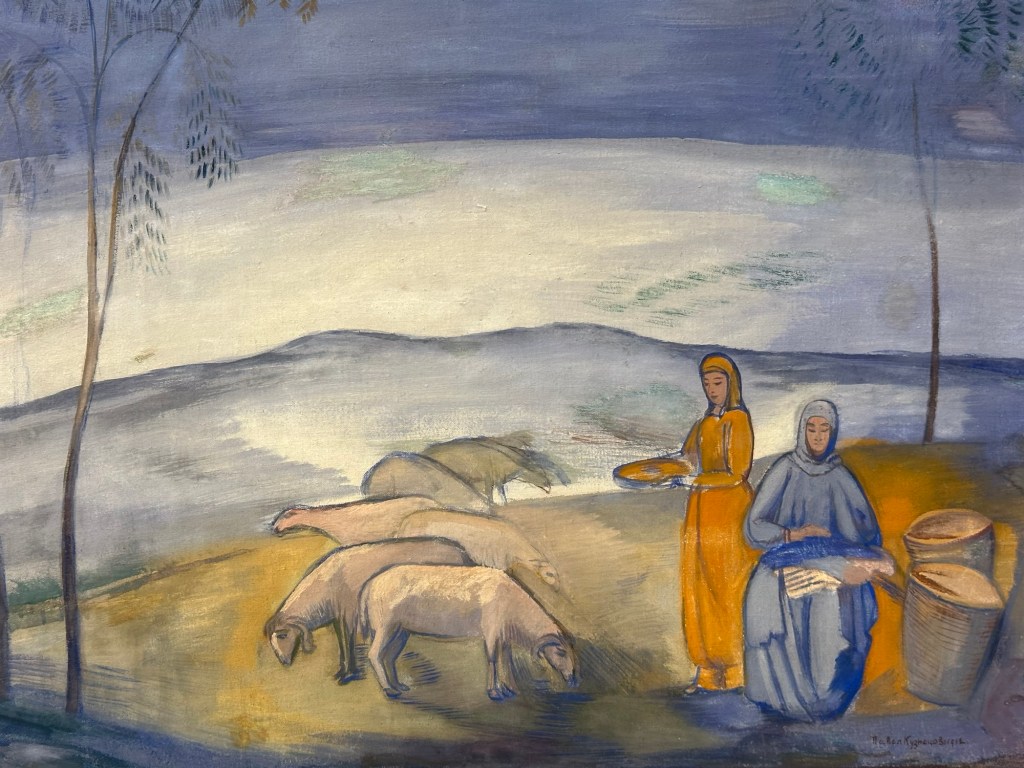
I am not a fan of art galleries – I find them ever so slightly soporific. But not the Tretyakov. I am enthralled. Each new hall – and there are sixty-two of them – reveals a new wonder. I go around, choosing my favourite painting in each room, but soon I have to surpass my limit of one and choose two or three. The paintings go from the eighteenth century (Catherine II’s Victory over the Turks and Tatars) to the mid-twentieth century (these are among my favourites). There are portraits (lots of them), rural scenes, battle scenes, a remarkable and slightly surreal Appearance of Christ to the People by Alexander Ivanov, where the focus is on John the Baptist and the motley crew that have gathered around him (Christ is in the background, and you do not notice him at first). What makes it even more wonderful is the presence in the next hall of the studies the painter carried out for each of the characters in the main painting. They are clearly recognizable. I am touched by Vasily Tropinin, his portrait of a lacemaker (and indeed his self-portrait with the Kremlin behind him). There are portraits of famous writers, from Pushkin to Gogol and Dostoevsky to Chekhov, and composers like Mussorgsky and Tchaikovsky. But my favourite portrait is the magical Girl with Peaches by Valentin Serov, the fruit and cutlery on the table, the plate on the wall, the greenery visible through the window, and the girl’s somewhat nonchalant gaze. She seems to have been captured with ruffled hair before leaping up from her chair to go out into the garden. Serov has a similarly liquid portrait of the last tsar, Nicholas II, and a scene of his happier coronation in the Assumption Cathedral, a bustle of colour and activity, movement and intensity. There is a peacefulness to the Russian countryside (the Russian soul?) – take, for example, The Rooks Have Come by Alexei Savrasov (available as a phone cover in the gift shop) or A Quiet Monastery by Isaac Levitan. There are battle scenes that reflect the futility of war (The Vanquished by Vasily Vereshchagin, with a priest censing the bodies of the dead). Ilya Repin is a master – he is famous for his painting of Ivan the Terrible and His Son Ivan, the tsar having just dealt his son a fatal blow to the head, but I prefer his portraits (his daughter sitting on a branch). I am very impressed by Nikolai Ge and his religious scenes – the Roman soldiers departing the scene of the crucifixion, almost laughing about it, while unbeknown to them, as the sun rises, an angel hastens to the ensuing resurrection. I am not such a fan of Mikhail Vrubel and his blotchy paintings – they seem to like him – but I do like the twentieth-century representatives: Evening in the Steppe by Pavel Kuznetsov, the humour of A Windy Day by Nikolay Krymov, and Constantinople. Dogs by Martiros Saryan.

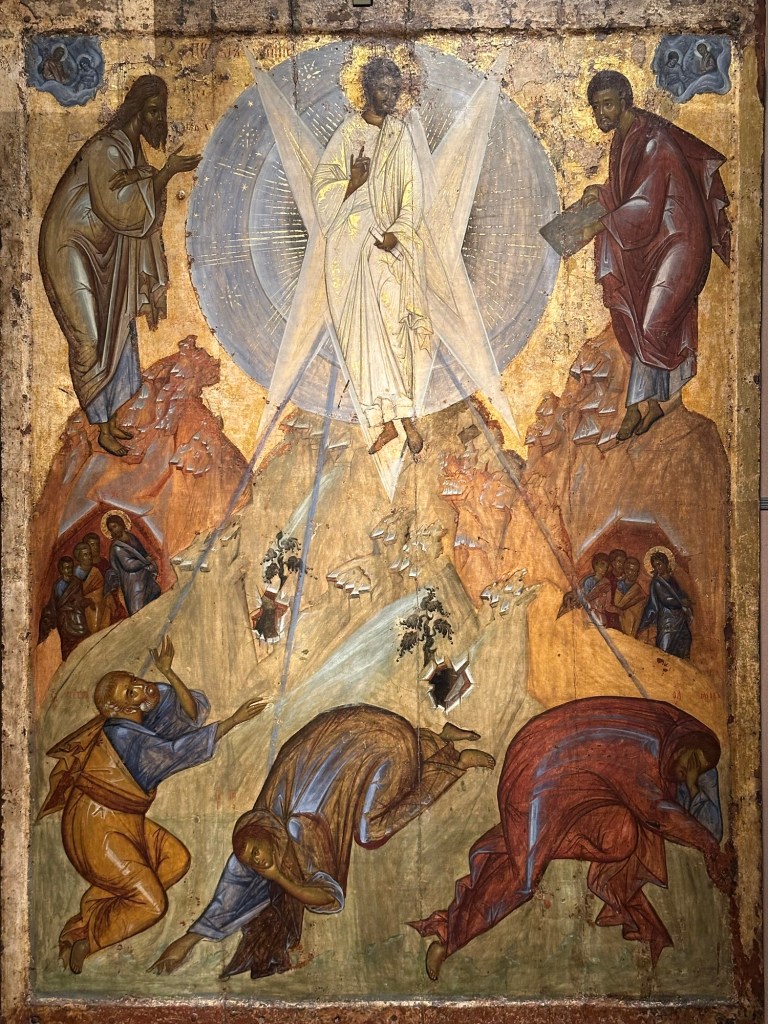
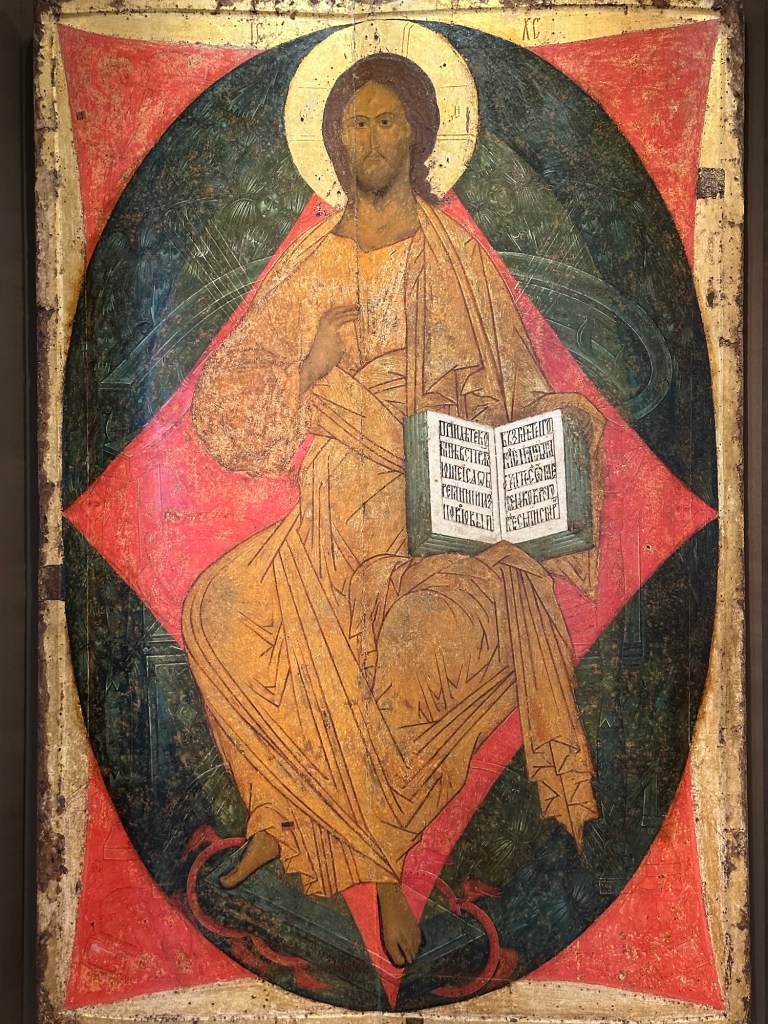
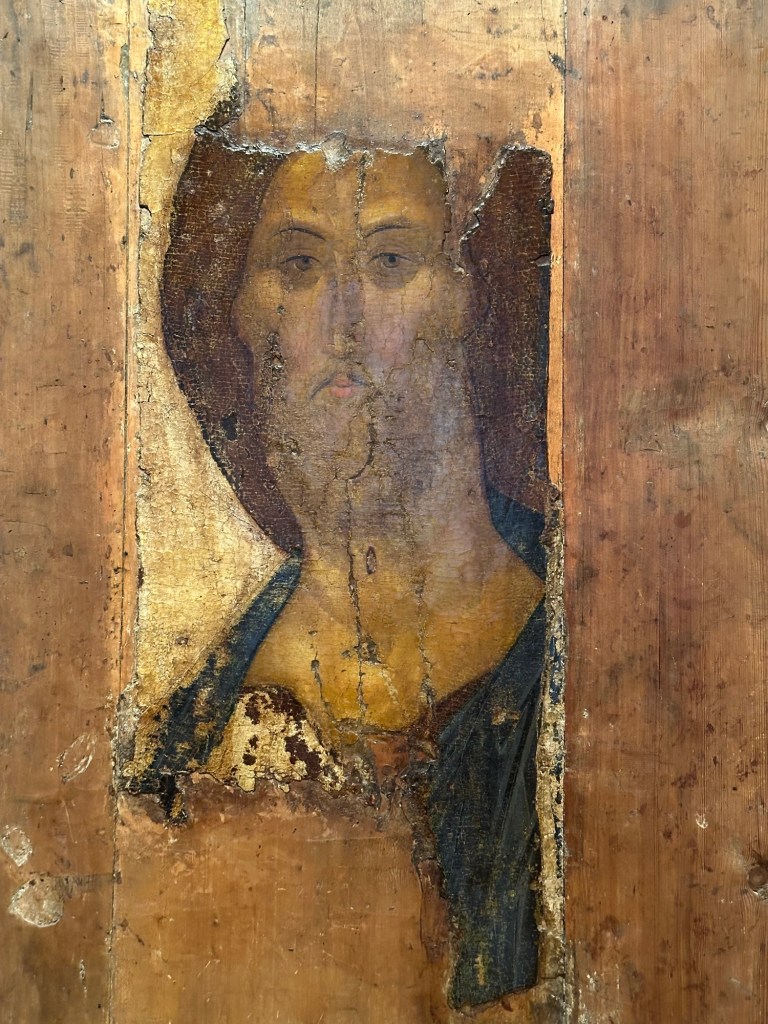
Just when I think I cannot take any more, I reach halls 56-62, the end of the exhibition, with all the ancient icons, and my breath is taken away: St Nicholas and the Annunciation, twelfth-century icons from Novgorod; the early fifteenth-century Transfiguration by a painter of the circle of Theophanes the Greek; a King of Glory from my neck of the woods (the Balkans): Christ in Majesty by Dionisius; and then the crème de la crème, Andrei Rublev and his Saviour and Archangel Michael from the Deesis of Zvenigorod. I think my mouth drops open. A Russian looks at me with bemusement. My phone battery is exhausted, so I sit on the bench and contemplate the Saviour for twenty minutes, as he stares lifelike at me from out of the wood of the Trinity.

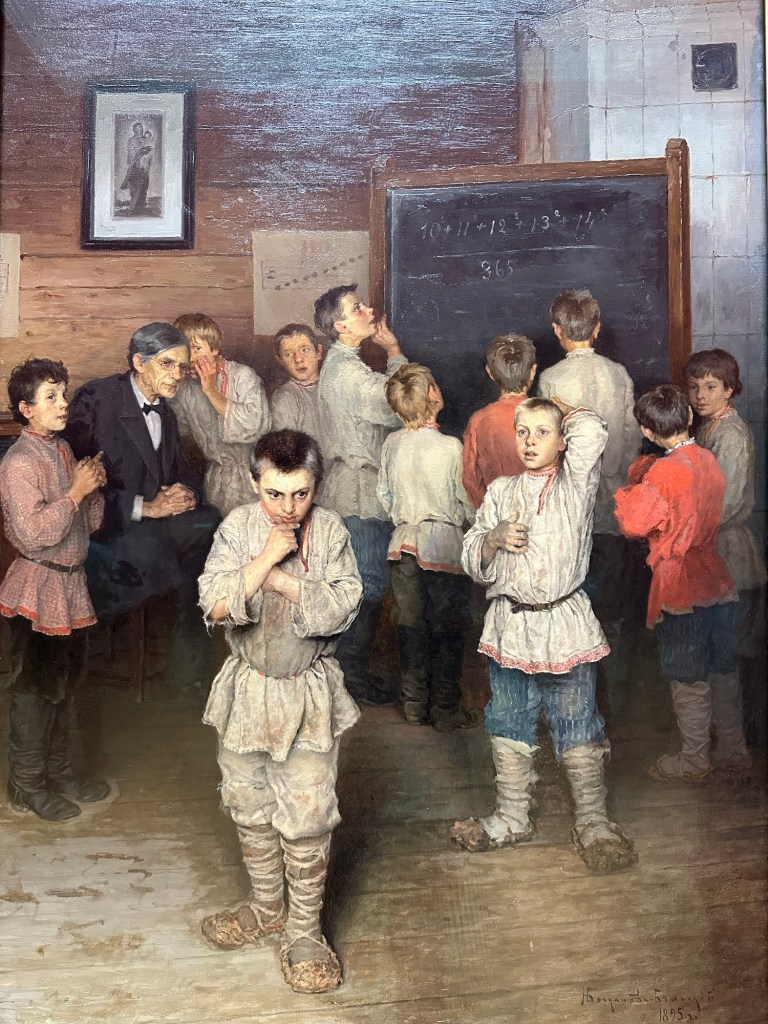
There are so many paintings to take in. I am struck by Nikolay Bogdanov-Belsky’s Mental Arithmetic, the boys in S. A. Rachinsky’s free school racking their brains to get the answer right, again the intensity of their gaze, the shared effort, the wisdom and patience of old age as the teacher waits for them to work out the equation. And this is an overriding impression in Moscow: it is a city of industry, or better industriousness, people working in concert, it is not a city that is standing still.

I decide against doing anything else that day, the Tretyakov is enough, I drink an Earl Grey tea and eat a Danish pastry, and then head back to my accommodation, my mind full of images, models gazing at me from the canvas.

  1. The Appearance of Christ to the People by Alexander Ivanov.
  2. The Rooks Have Come by Alexei Savrasov.
  3. Mental Arithmetic by Nikolay Bogdanov-Belsky.
  4. The Vanquished by Vasily Vereshchagin.
  5. Portrait of Composer M. P. Musorgsky by Ilya Repin.
  6. Heralds of the Resurrection by Nikolai Ge.
  7. A Girl with Peaches by Valentin Serov.
  8. Evening in the Steppe by Pavel Kuznetsov.
  9. The Transfiguration by a painter of the circle of Theophanes the Greek (early 15th century).
  10. Christ in Majesty by Dionisius (1500).
  11. The Saviour by Andrei Rublev (c. 1400).

Jonathan Dunne

Next: Moscow Zoo

Moscow: A Visitor’s Impressions

I. Red Square

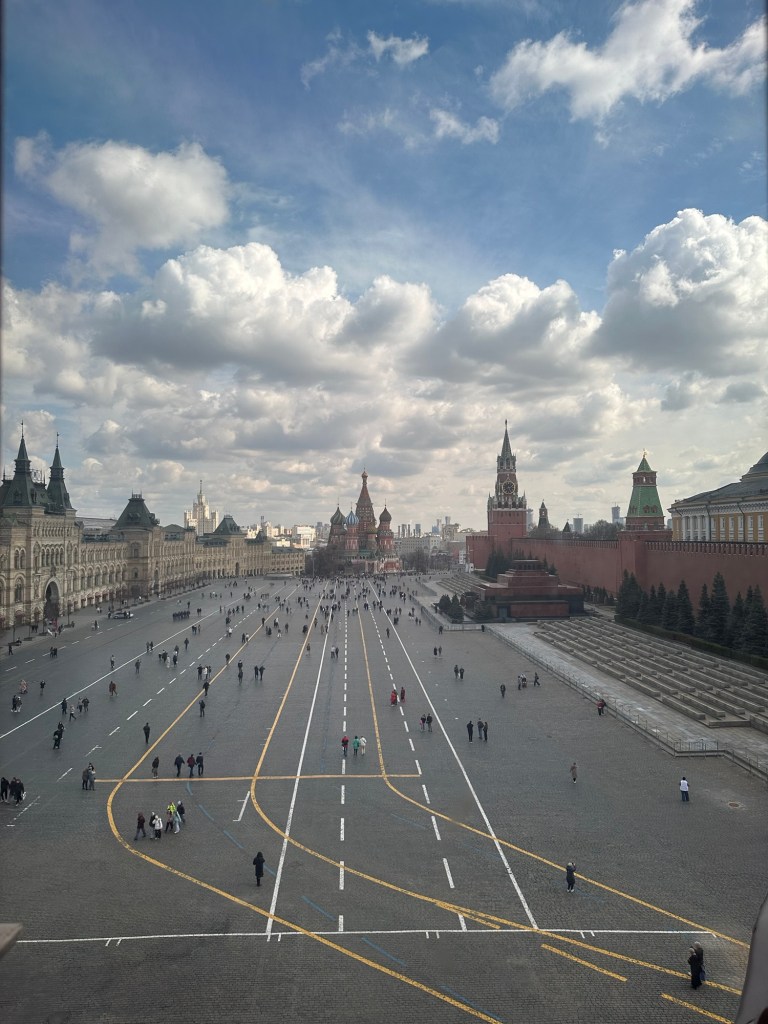
I suppose the place a Westerner visiting Moscow for the first time wants to see most is Red Square. This is probably the only image of Moscow I retained from my childhood. The military parade. Russia as a military threat. Victory Day. But when we left the Revolution Square metro station, my son took me past the statue of Karl Marx, somewhat blinded by the sun, to visit the Bolshoi Theatre. “Bolshoi”, such a resonant term for lovers of ballet, simply means “Big”. Next to it, unsurprisingly, is another theatre called “Small” and an operetta house we will go to a few days later (my son has a blind date, and I am there to chaperone him; actually he mistakenly bought an extra ticket). When I do finally make it into Red Square via the Resurrection Gate next to the History Museum, I find myself in a large, cobbled space with the Kremlin walls to my right, the emblematic St Basil’s Cathedral ahead of me, and a fancy mall on my left. Nestled beneath the Kremlin walls is Lenin’s mausoleum. One cannot help but be struck by the juxtaposition of Christianity and socialism, an impression that is reinforced later by a visit to Zaryadye Park, where on a walkway suspended above the Moscow River one can view the Kremlin (with the Archangel Cathedral clearly visible) and further down the north bank the Cathedral of Christ the Saviour. As if to make the visitor feel even dizzier, each tower of the Kremlin walls is topped by a red star. I learn my first history lesson: Russians commemorate all aspects of their past, they do not try to do away with them, as has happened in Bulgaria, for example, where socialist monuments are dismantled and Dimitrov’s mausoleum was (with some difficulty) razed to the ground.

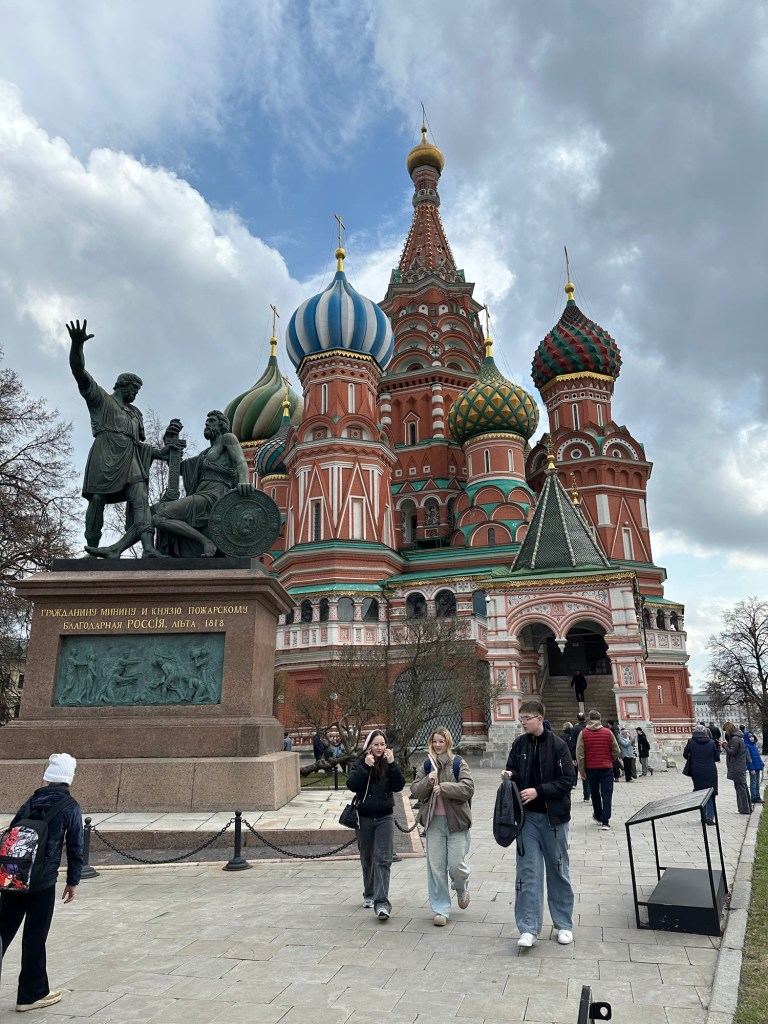
The walls are not so red, either. They are more russet. I gravitate towards St Basil’s Cathedral, known to the Russians as Pokrovsky Cathedral, a reference to the Virgin Mary’s veil (pokrov) and the protection Ivan the Terrible believed he had received in his successful military campaign against the Kazan Khanate in the sixteenth century, which was the reason for him to erect this church. The Basil in question is not the fourth-century theologian, but a contemporary holy fool who was later buried in the church. The familiar domes, looking like turbans, provide a splash of colour: blue and white, green and white, green and gold, red and green, gold. I pose in front of the church and the monument to Minin and Pozharsky, a butcher and a noble who organized resistance to the Polish invaders another fifty years later (in 1612). This would bring to an end the Time of Troubles and lead to the rise of the Romanov dynasty, which would rule over Russia for the next three hundred years, until the bloody revolution of 1917 and the rise of the Bolsheviks under Lenin.

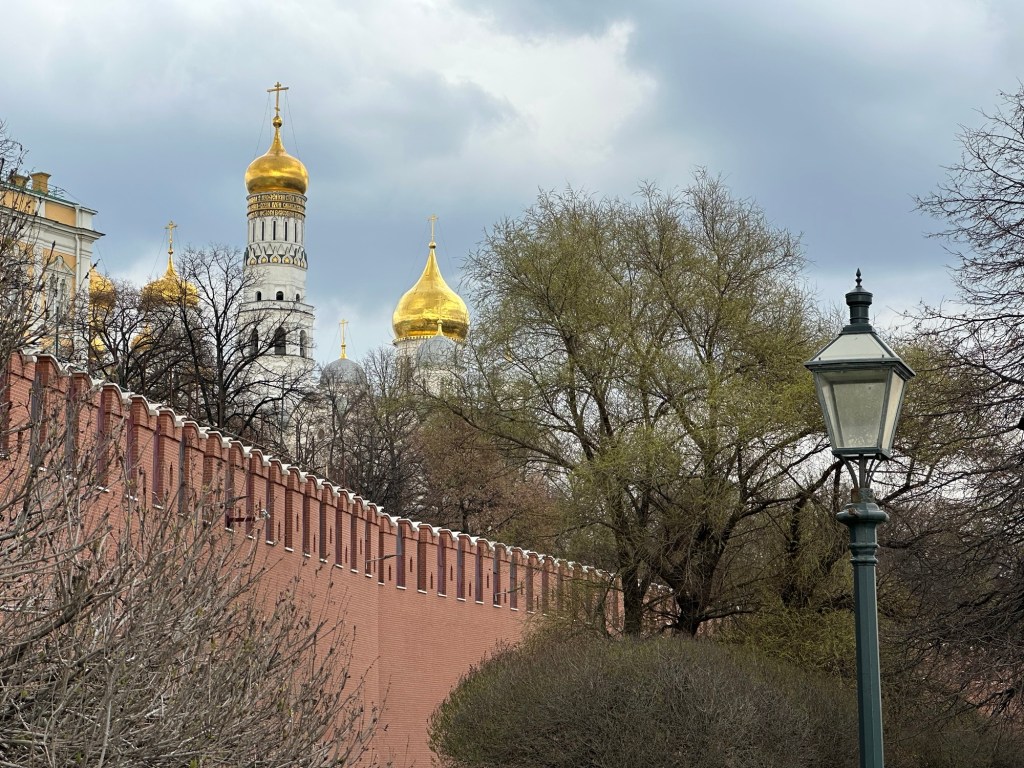
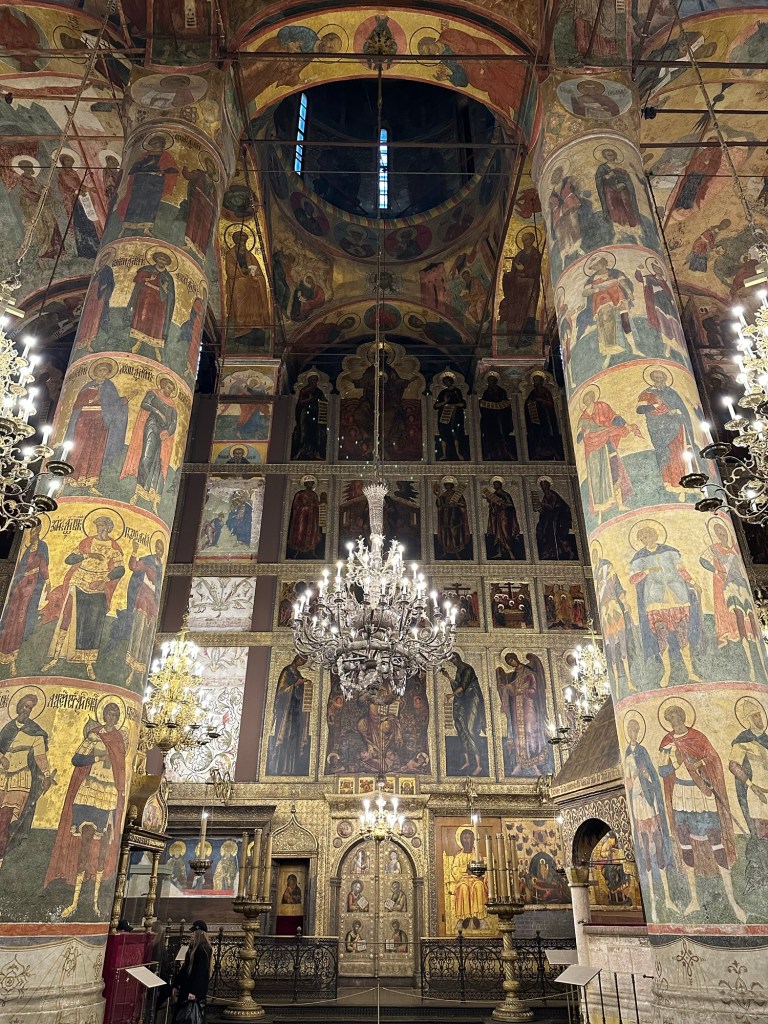
It is easy to lose one’s sense of direction because the Kremlin is not four-sided, but more of a triangle, so you have the south side facing the river, Red Square to the north-east, and Alexander Garden to the north-west. Inside the Kremlin are four ancient churches: the Assumption, Archangel, and Annunciation Cathedrals, and a smaller Church of Laying Our Lady’s Holy Robe. Here also is the Ivan the Great Bell Tower, a large bell sitting at its feet, a chunk missing – it is difficult to ascend to heaven when you are so heavy – and the Senate. The Kremlin, therefore, far from being military in character, is an enclosure that houses churches built (two by Italian architects) during the Grand Duchy of Moscow. My favourite is the Assumption Cathedral with its towering iconostasis (the icons that hide the altar from view, I notice how in some of the grander Russian churches the iconostasis consists of five levels and reaches all the way to the ceiling, the icons of the second level being particularly large, some of which I will see out of context in the Tretyakov Gallery) and frescoes adorning the columns, ceiling, and walls; the Archangel Cathedral, with its icon of St Michael, prince of the heavenly host, was used by royals to pray for military success, and many of them are buried here, while the Annunciation Cathedral was used as a private chapel.

In the Annunciation Cathedral, a Russian woman is enthusiastically explaining the icons to a group of Asian tourists. The tourists answer her questions with comparable enthusiasm, like excited schoolchildren. The Russian woman is indulgent with them and greets their correct answers with mild expressions of joy. I am waiting to take a photograph of the iconostasis, but the male tourist’s head obstructs my view of the holy doors at the centre of the iconostasis. As they move to the left, a woman comes in and stands in front of the icon of Christ. She leaves, but the Asian group automatically shuffles to the right, again making it impossible for me to gain a clear view. They then exit the church, and I think my moment has come, but just as I am about to press the shutter, they come back in – either they have forgotten something, or a point has to be made more forcefully. I rue having entered the church at the same time as them, if only I had been five or ten minutes later or earlier, but in the end they leave and I get my shot. The Russian woman flashes me a look; she is eyeing me as a prospective student.

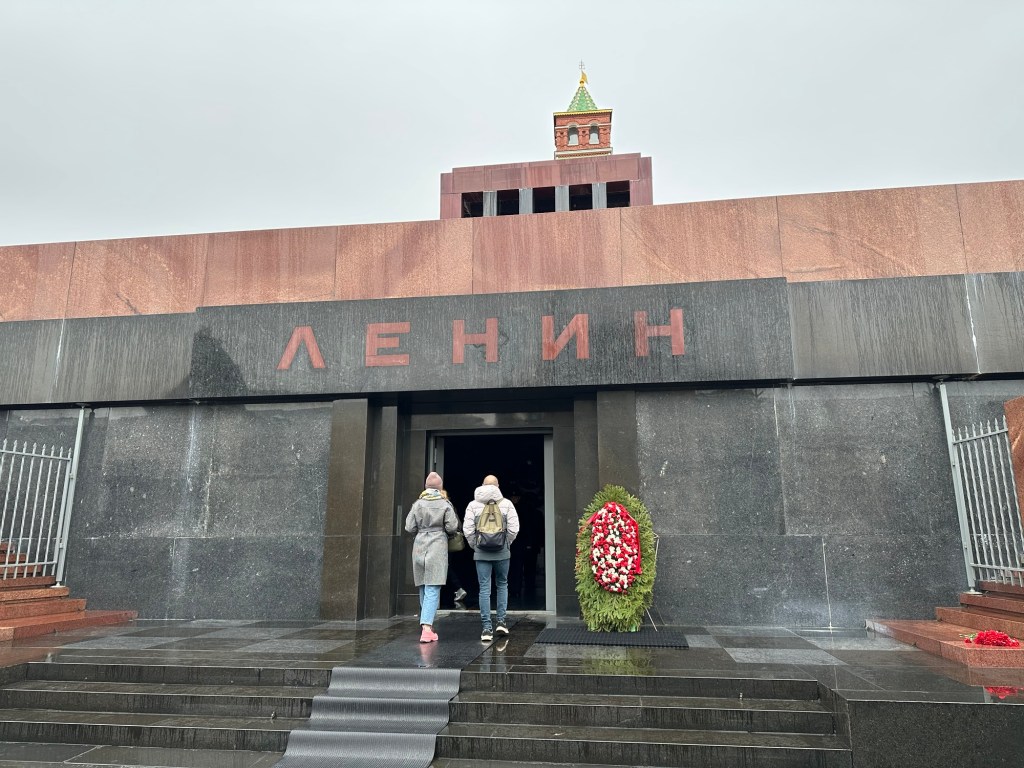
That morning, we visit Lenin’s Mausoleum. The queue is not long, and the constant drizzle helps to keep it down. We are not required to buy a ticket, entrance is free (entrance to the Kremlin is 11 euros; the History Museum and St Basil’s Cathedral both cost 20 euros, which I find a bit steep). We pass through security and along the wall, where the ashes of prominent socialists are interred, including the Scottish Arthur MacManus and the American Bill Haywood, before going down some steps and entering the mausoleum proper. A guard indicates that I should put my phone away and not take photographs. We descend some more steps, turn a corner, and there is Lenin in his casket, brightly lit in the surrounding darkness and surprisingly intact after a hundred years. Here is the architect of the 1917 Revolution, the one who promoted and was later pushed aside by Stalin. Stalin is buried outside, along with other leaders, while other prominent socialist-era politicians, such as Khrushchev, Gorbachev, and Yeltsin, are buried in the Novodevichy Cemetery in the south-west of the city. It is difficult to avoid a comparison between Lenin’s embalmed body and the relics of a saint in an Orthodox church, and the impact on Russians must have been similar. There is an aura about him. We pause for a moment before being encouraged by a disembodied voice somewhere in the shadows to move on. As we leave the area, the Spasskaya Tower strikes twelve and follows this up with a jaunty rendition of the Russian anthem. I am not sure what century I am in or what the dominant ideology is meant to be.

  1. Red Square (taken from the third floor of the History Museum).
  2. St Basil’s Cathedral with the monument to Minin and Pozharsky.
  3. The Kremlin walls and the domes inside the courtyard (Annunciation, Archangel, Bell Tower).
  4. The five-tiered iconostasis inside the Assumption Cathedral.
  5. The entrance to Lenin’s mausoleum.
  6. The view along the Moscow River from the Bolshoy Moskvoretsky Bridge.

Jonathan Dunne

Next: The Tretyakov Gallery