Kapinovo-Ruhovtsi

There are two waterfalls south-east of Veliko Tarnovo, near the villages of Kapinovo and Ruhovtsi. They can be visited together.

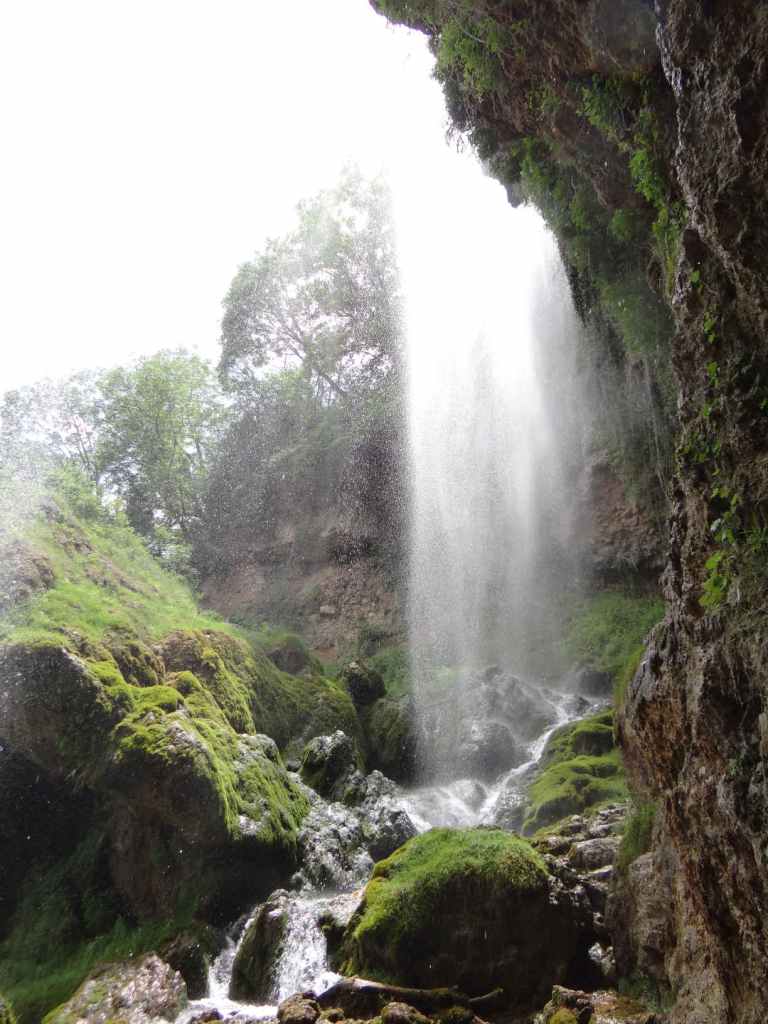
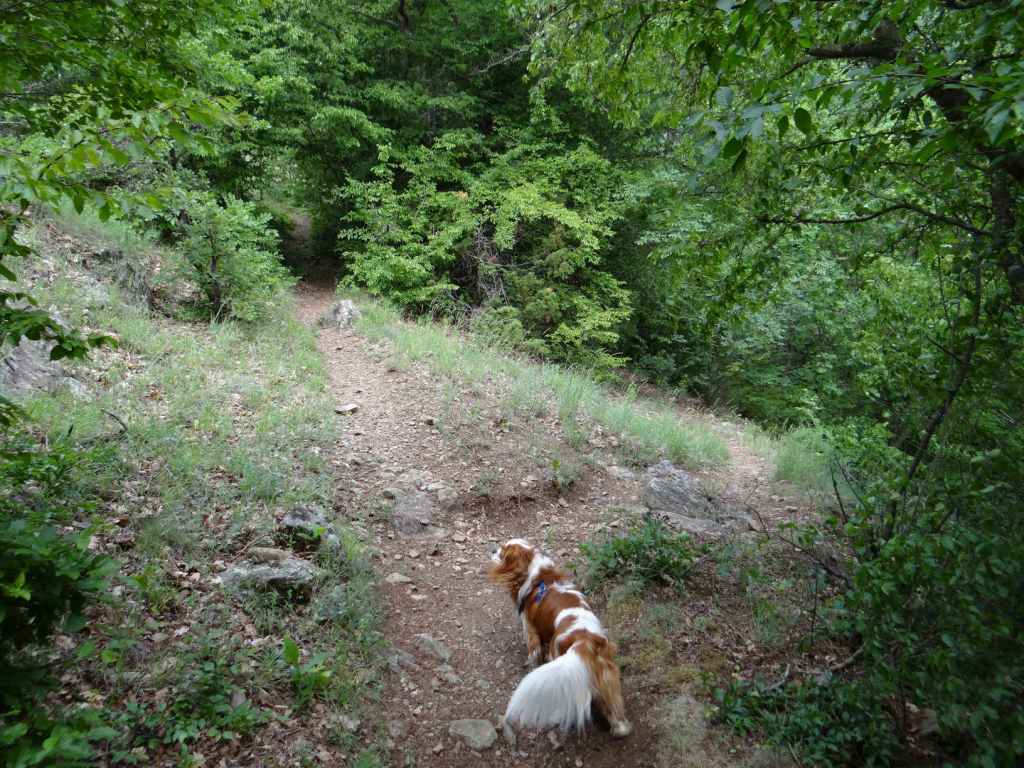
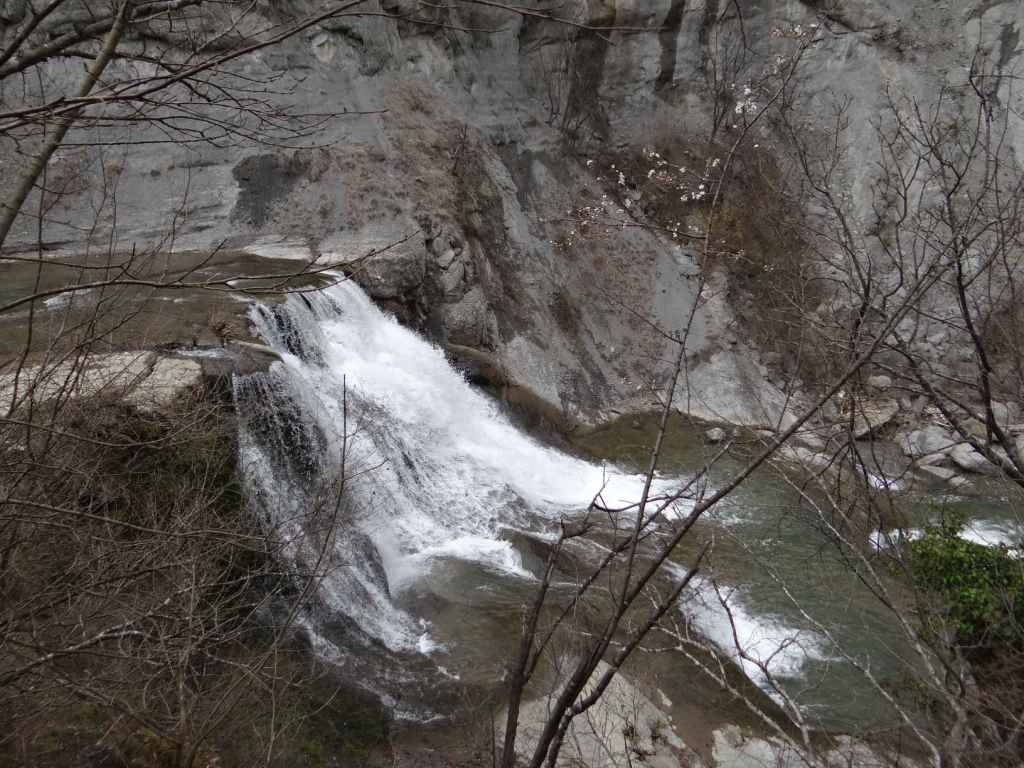
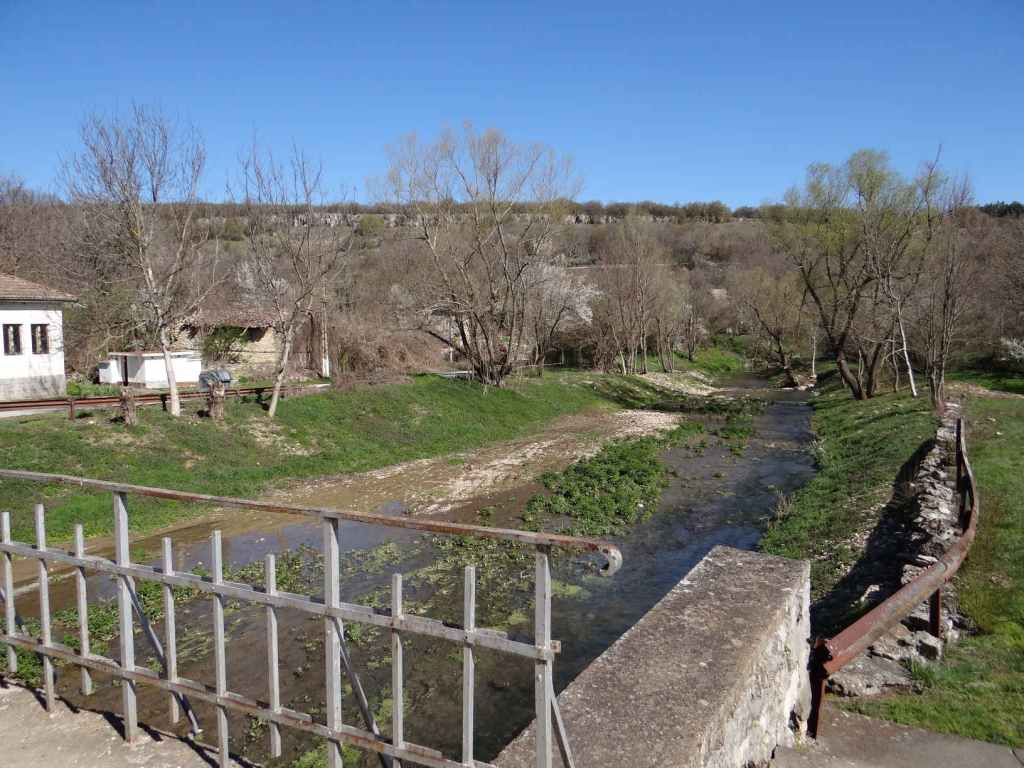
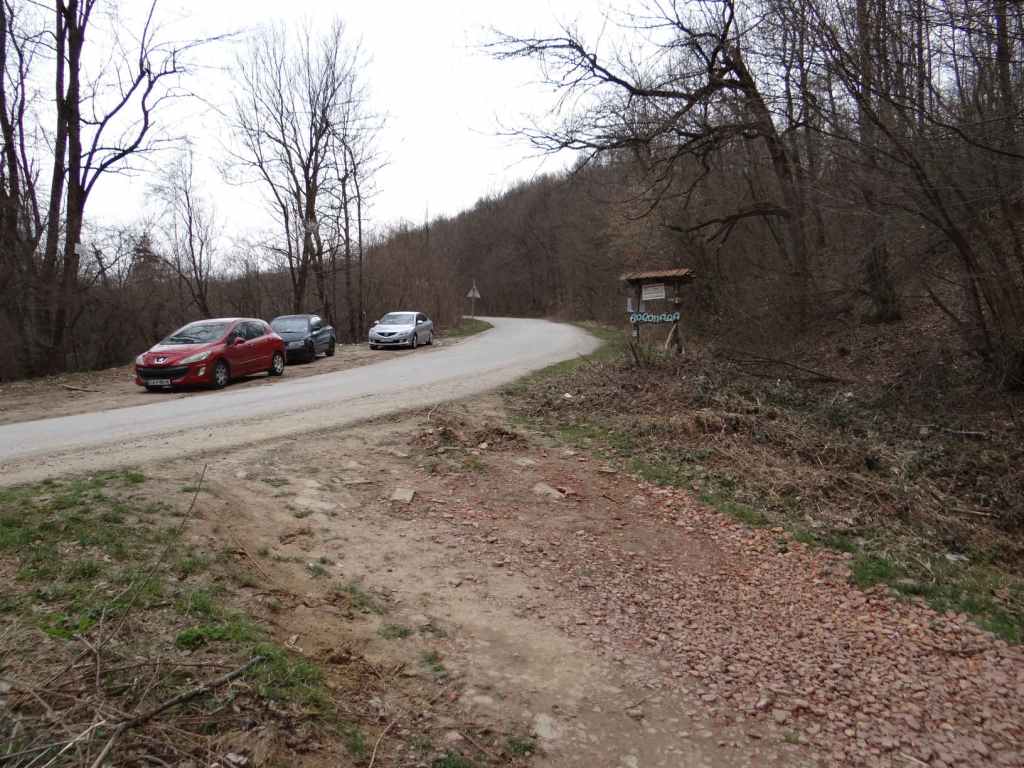
Ruhovtsi is a village 5 km east of the town of Elena. The waterfall is named ‘Hristovski’ after a nearby settlement. Drive from Veliko Tarnovo along the E772 in the direction of Varna. After 10 km, turn right for Elena (33 km). Drive past Elena and continue for another 4 km until you reach the turning on the right for Ruhovtsi (1 km). When you reach the main square of the village, turn right and continue for 1.8 km. Just after crossing a river, you will see a sign for the waterfall on your right and an open space to park your car on the left. Follow the dirt track that leaves the road on your right for about 15 minutes. The dirt track veers left through the forest and then leads directly to the waterfall. This waterfall is attractive because of the width of its cascade.

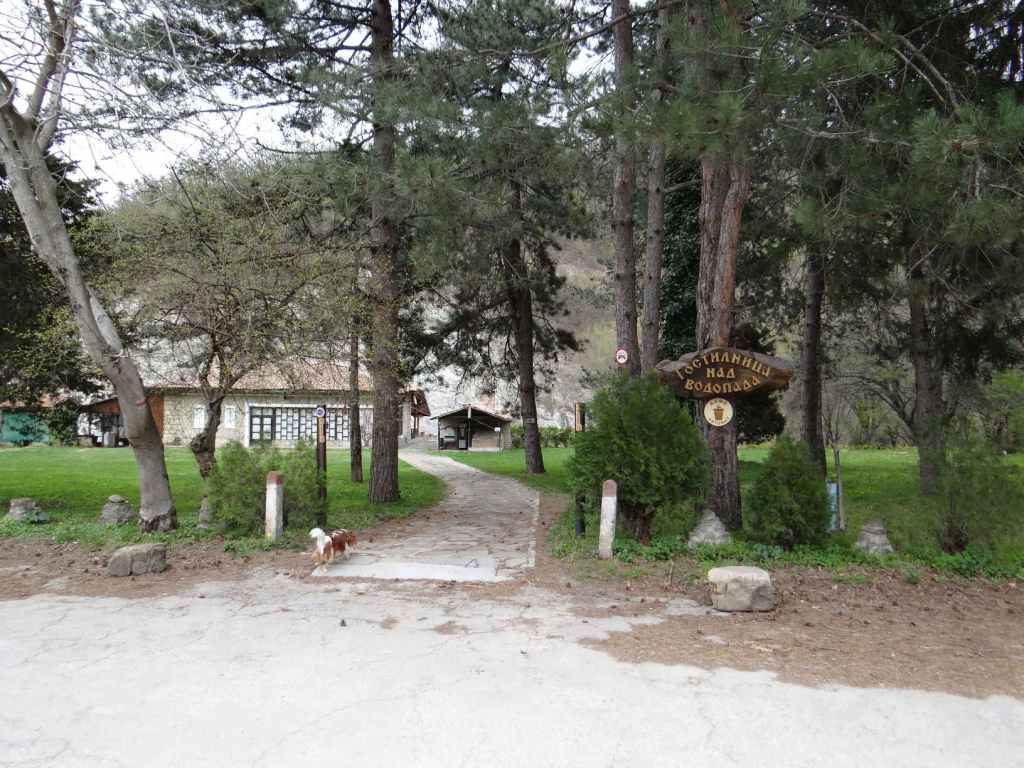
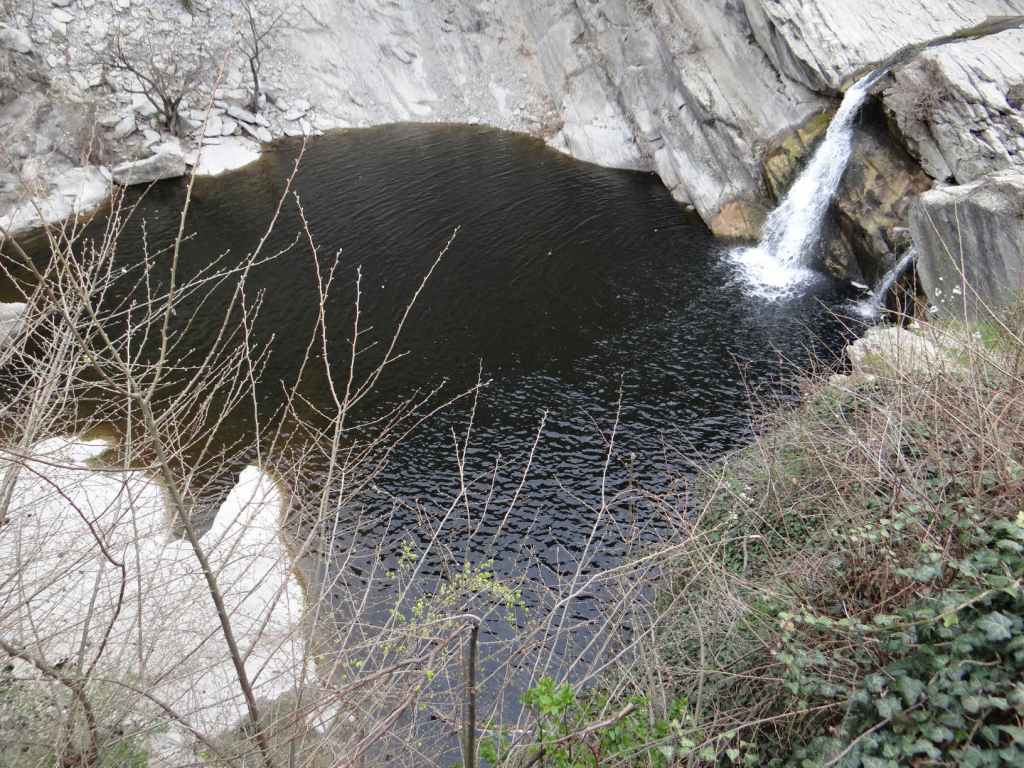
To visit Kapinovo Waterfall, you need to go not to the village of Kapinovo, but to Kapinovo Monastery. The waterfall is in the grounds of the monastery. Drive back past Elena in the direction of the E772. 15 km after Elena, you will reach the village of Mindya. Turn left for Kapinovo. Drive straight through Kapinovo (ignore the sign for Kapinovo Monastery on your left, just before the main square, the road is not fit for normal vehicles), continue through the villages of Tserova Koria and Pchelishte, and then turn left at the sign for Velchevo (7 km). Drive straight through Velchevo and continue for another 6 km to Kapinovo Monastery. The grounds of the monastery have been turned into a campsite. On entering the monastery grounds, you will be able to park the car at a small roundabout. The waterfall is over on your left, by the rocks. There is a guesthouse overlooking the waterfall. The path to the waterfall descends to the right of the guesthouse.

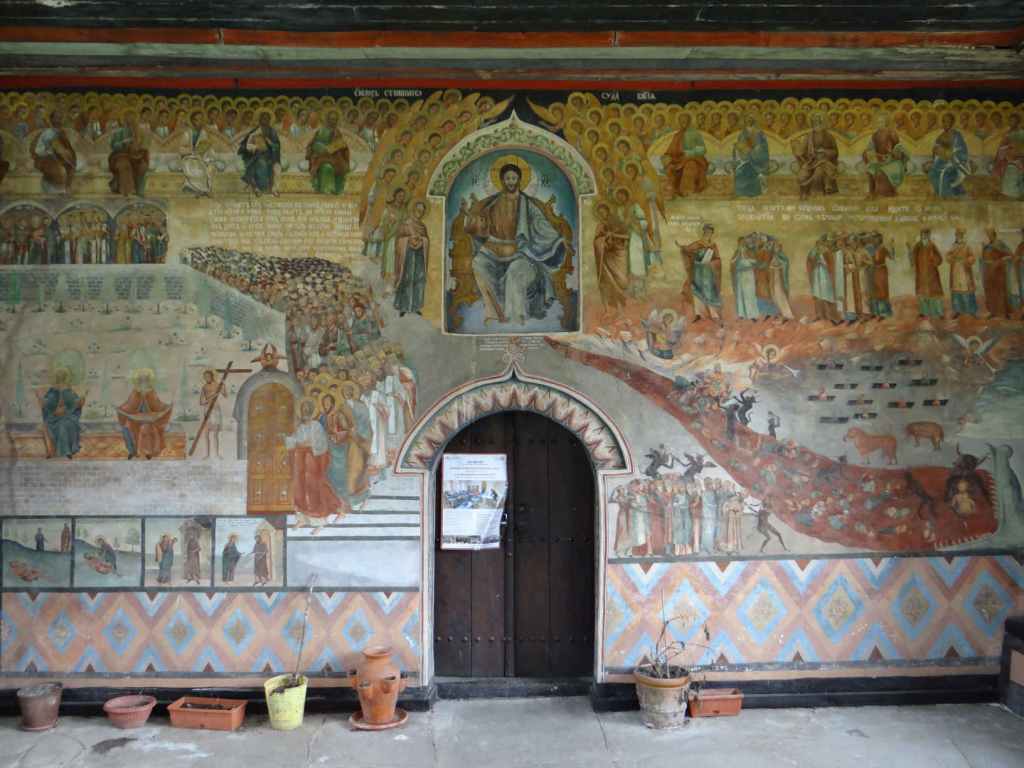
Don’t forget to visit the church of Kapinovo Monastery, which is dedicated to St Nicholas and has an impressive fresco of ‘The Last Judgement’ on its façade. The church is a short distance from the waterfall and can be reached by following a subsidiary road.

Of course, it is possible to visit Kapinovo Waterfall without going to Elena and Ruhovtsi. In which case, all you need to do is to take the E85 south of Veliko Tarnovo in the direction of Debelets, Dryanovo and Gabrovo. After only 1 km, there will be a turning on your left for Prisovo, Kapinovo and Mindya. Take this turning. Drive through Prisovo and then turn right at the sign for Velchevo (7 km). Drive through Velchevo and continue to Kapinovo Monastery.

These waterfalls are not as impressive as the waterfalls north-west of Veliko Tarnovo – Hotnitsa, Emen and Vishovgrad – but they are still beautiful and worth a visit. There are numerous other monasteries in or near the surrounding villages of Kilifarevo, Prisovo, Plakovo (this monastery is just before Kapinovo Monastery), Merdanya, Maryan… Just remember while some monasteries are located in the village, most are some distance away – at the end of the road…

Mural in Elena.
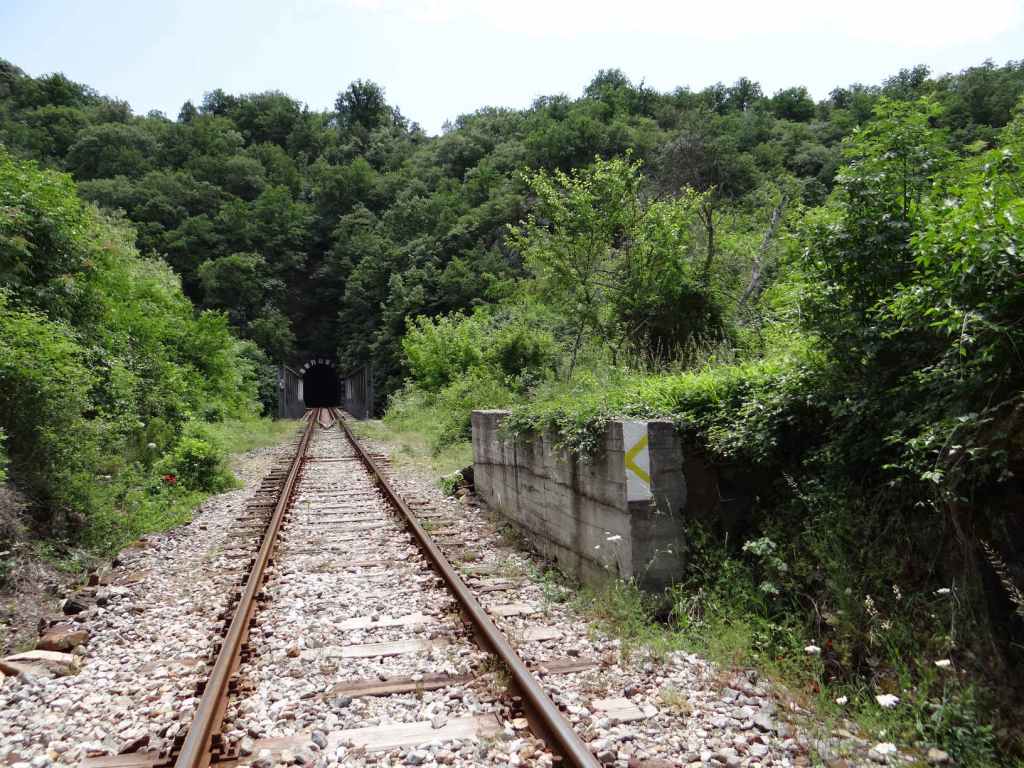
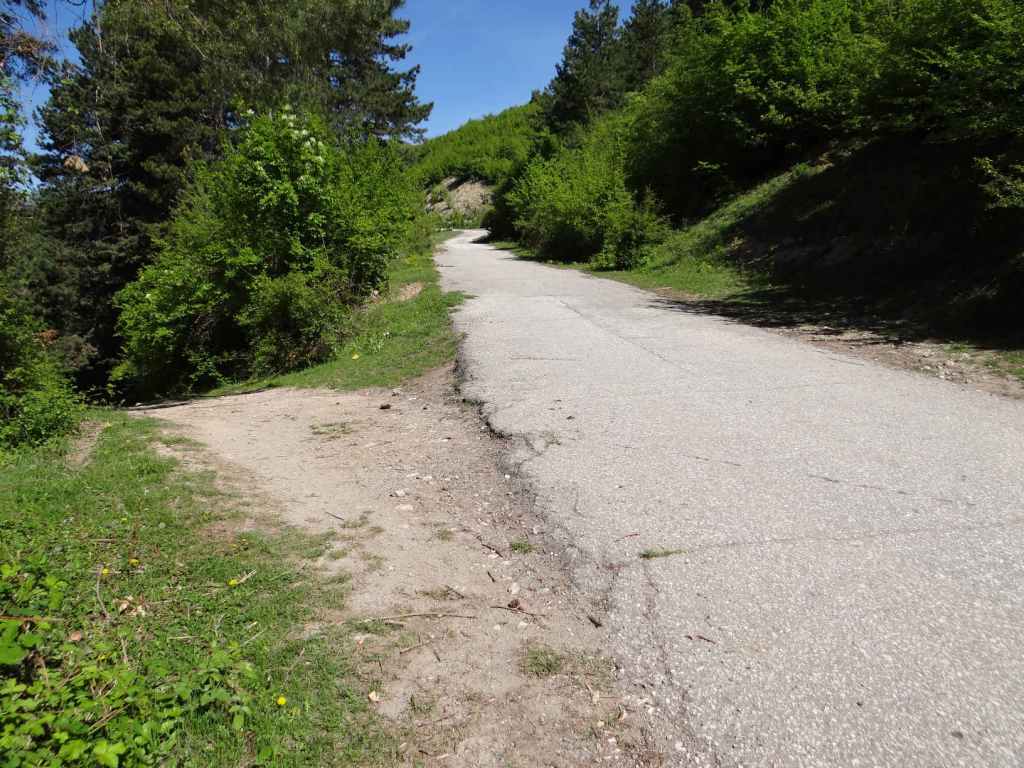
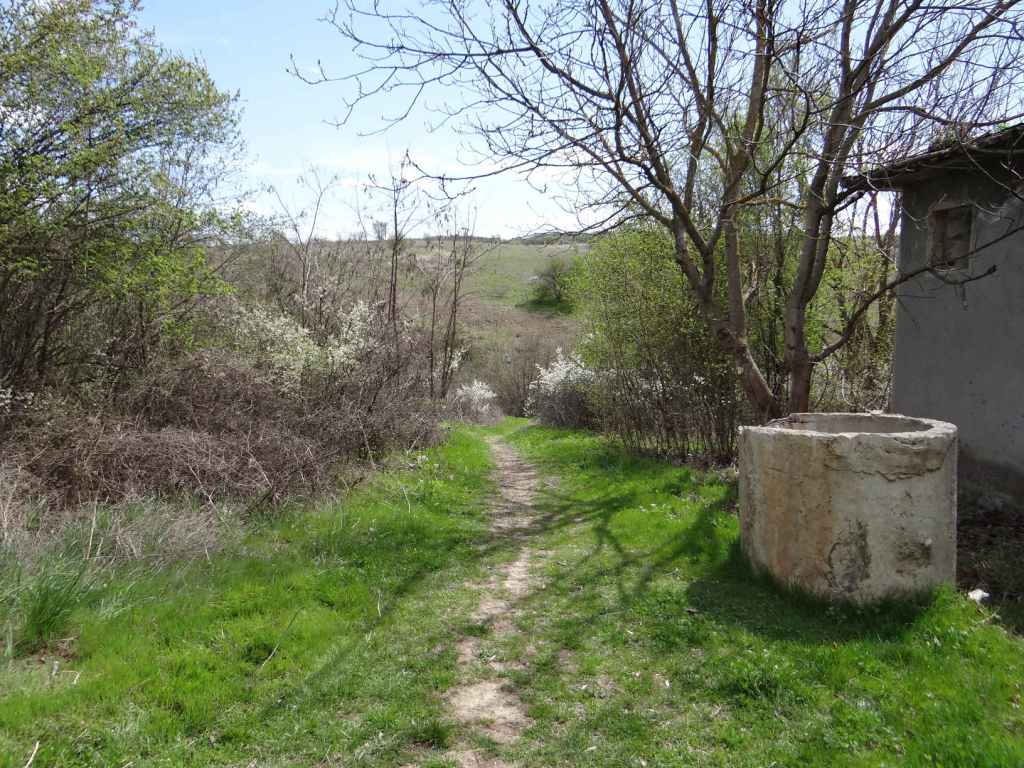
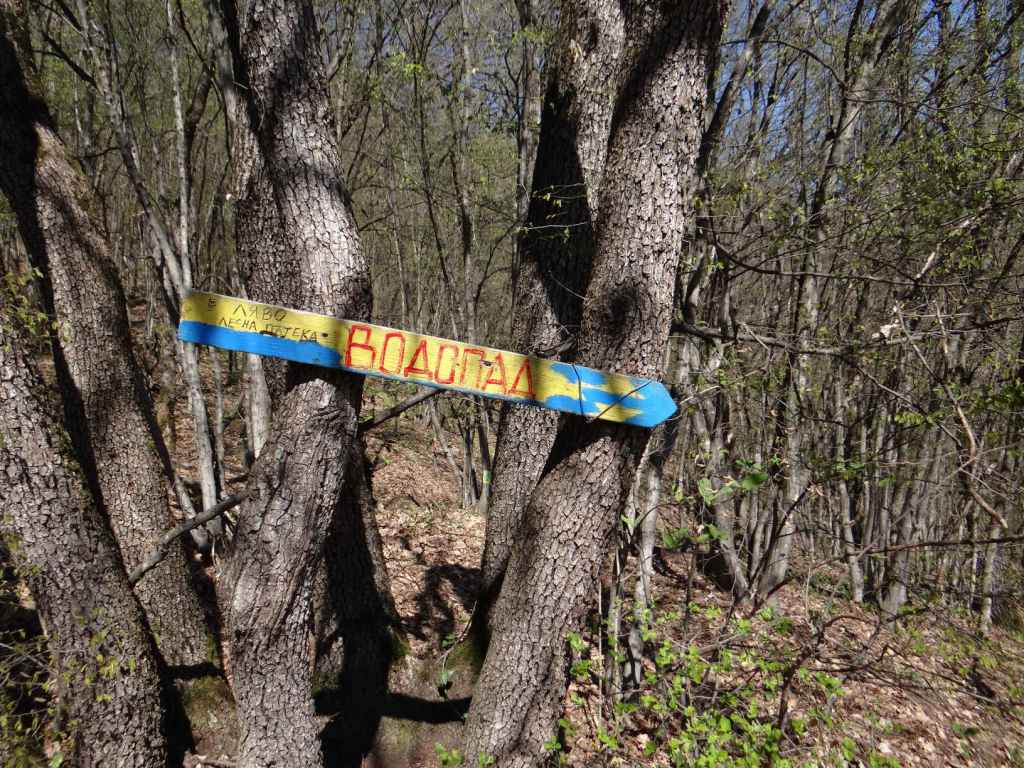
The dirt track leaving the road for Ruhovtsi Waterfall.
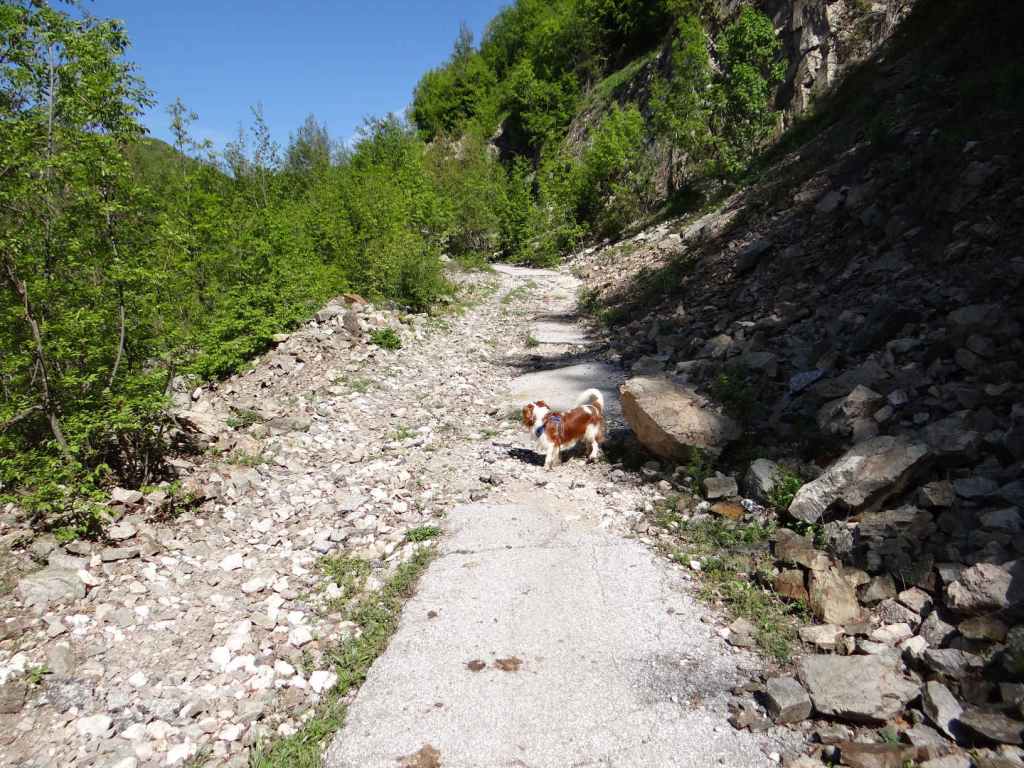
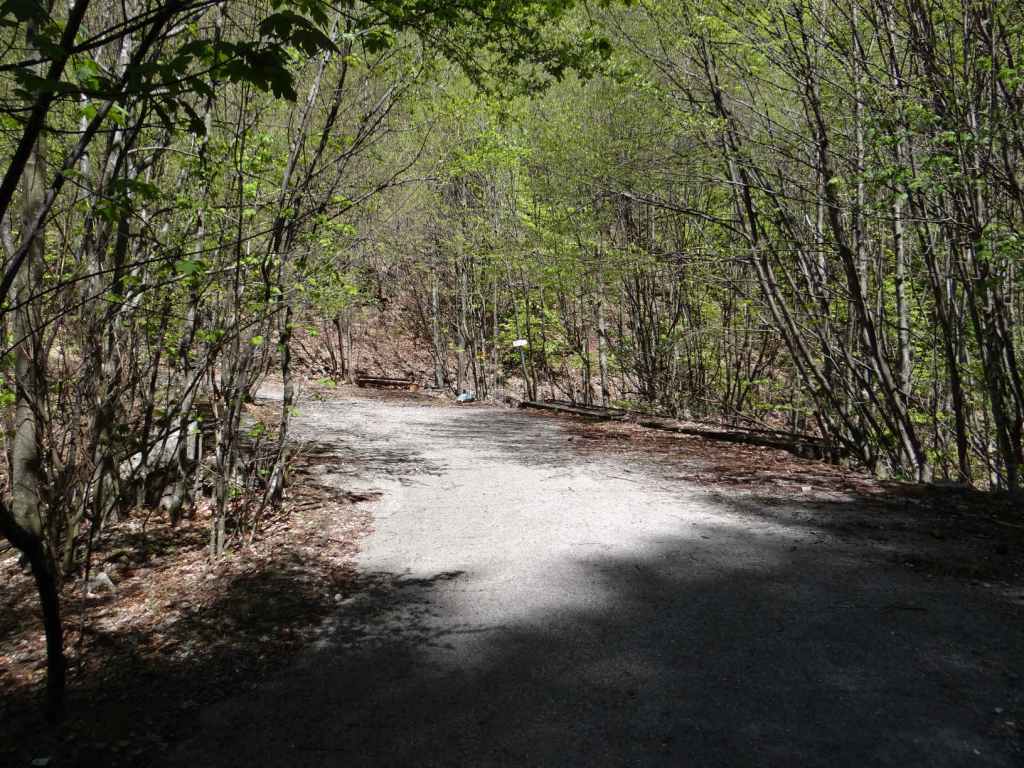
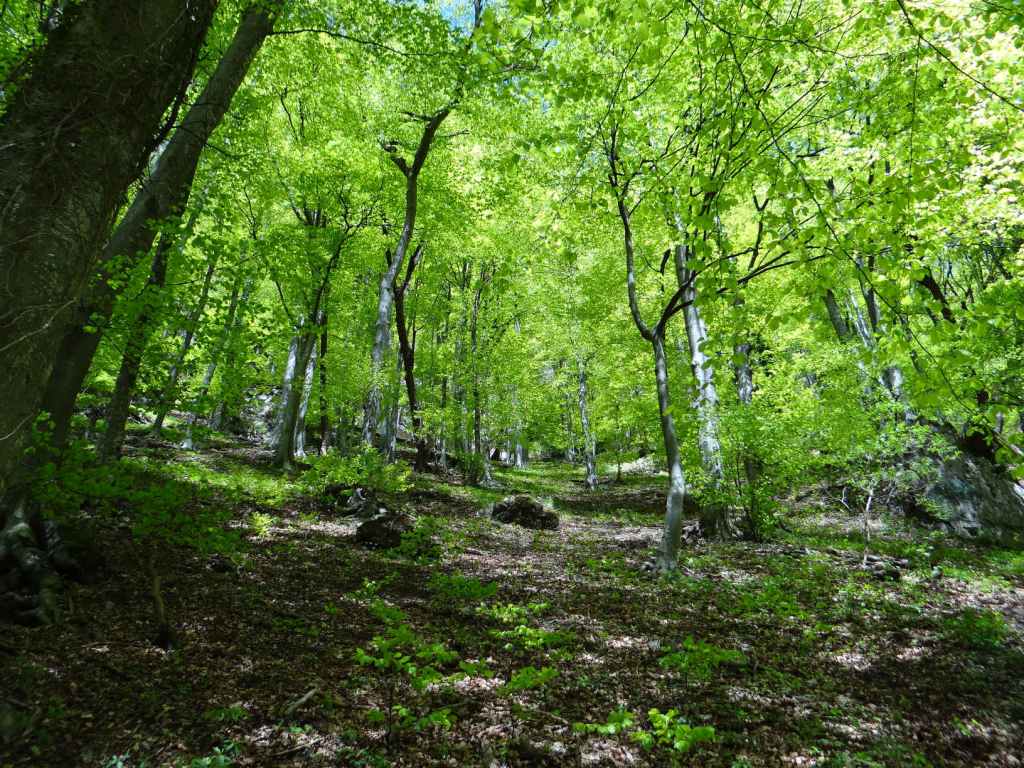
The dirt track as it passes through the forest.
April blossom!
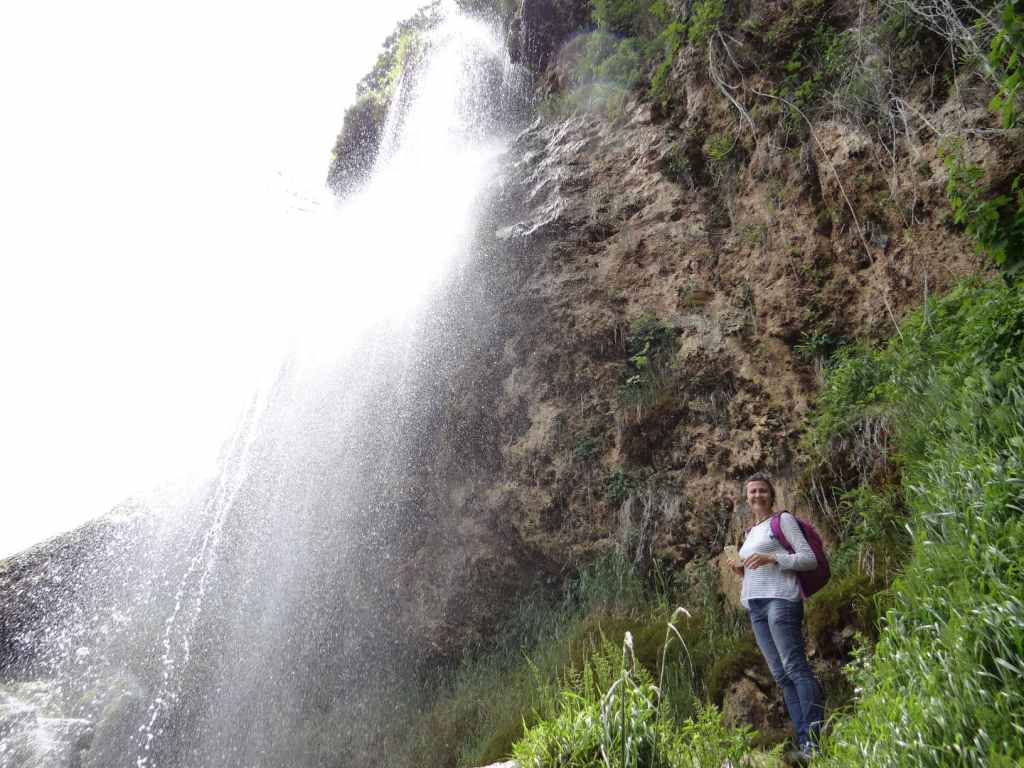
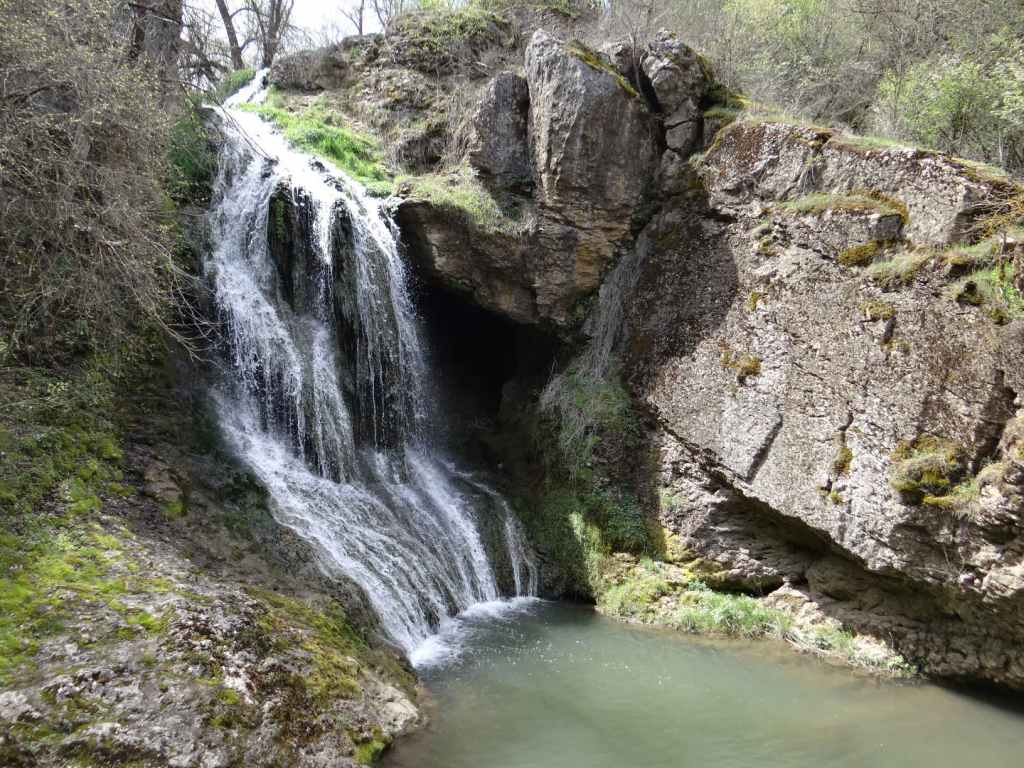
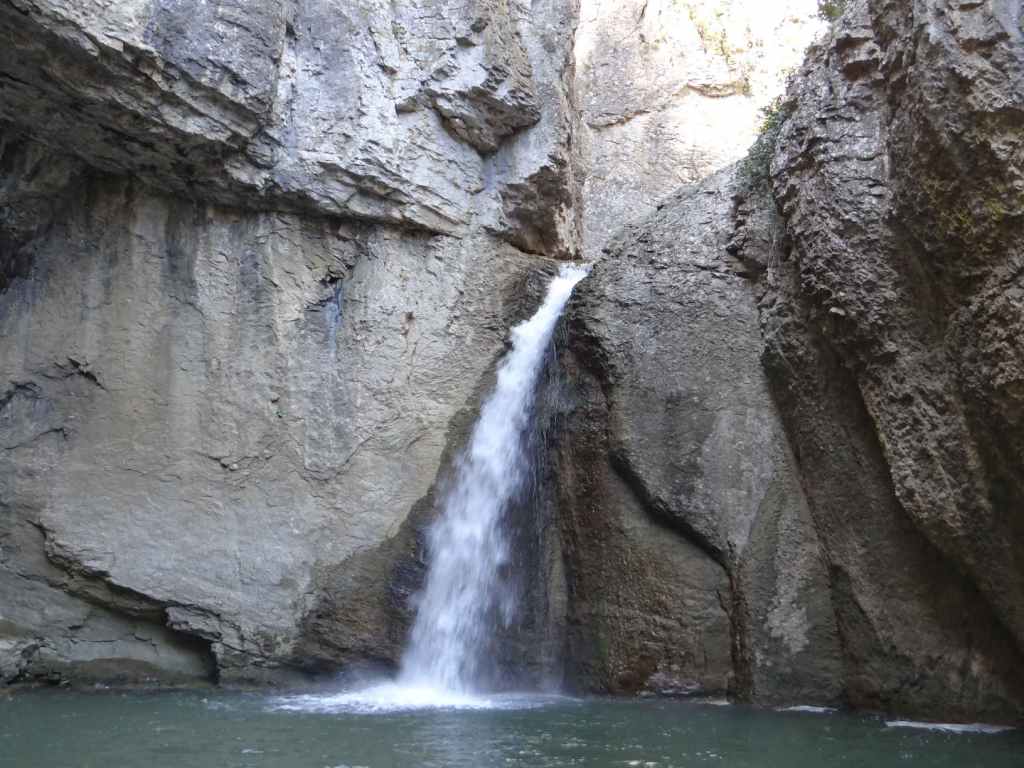
Ruhovtsi (‘Hristovski’) Waterfall.
Close-up of Ruhovtsi Waterfall.
The waterfall from the side.
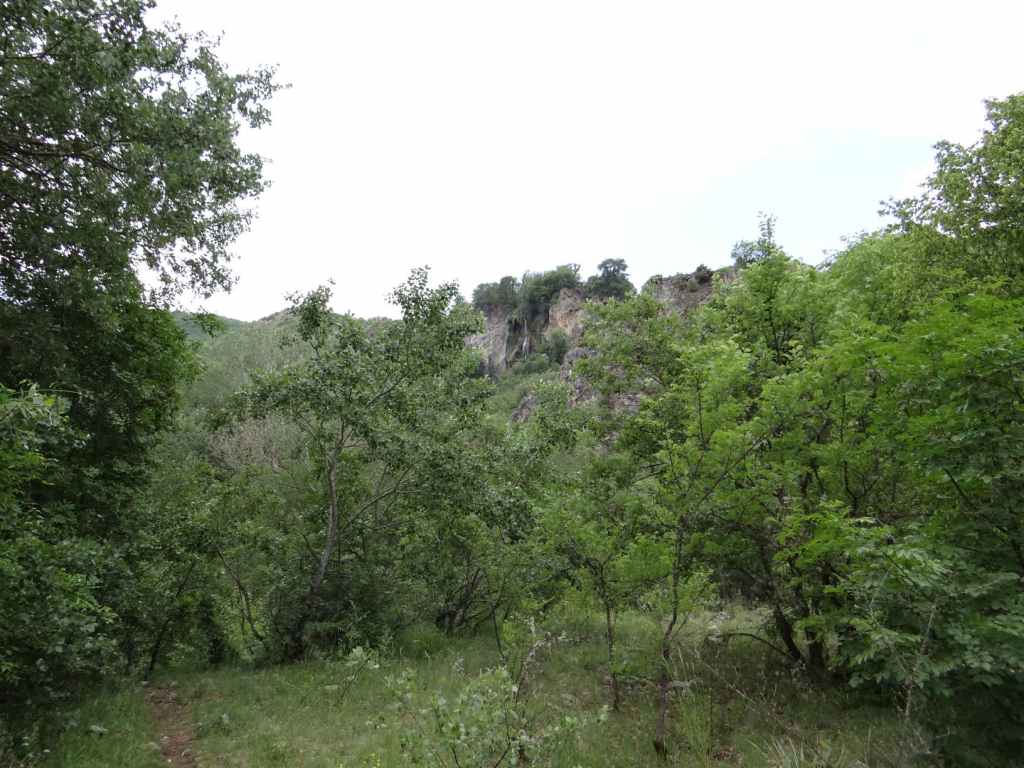
The path to Kapinovo Waterfall in the monastery grounds (campsite). The path leads right of a guesthouse.
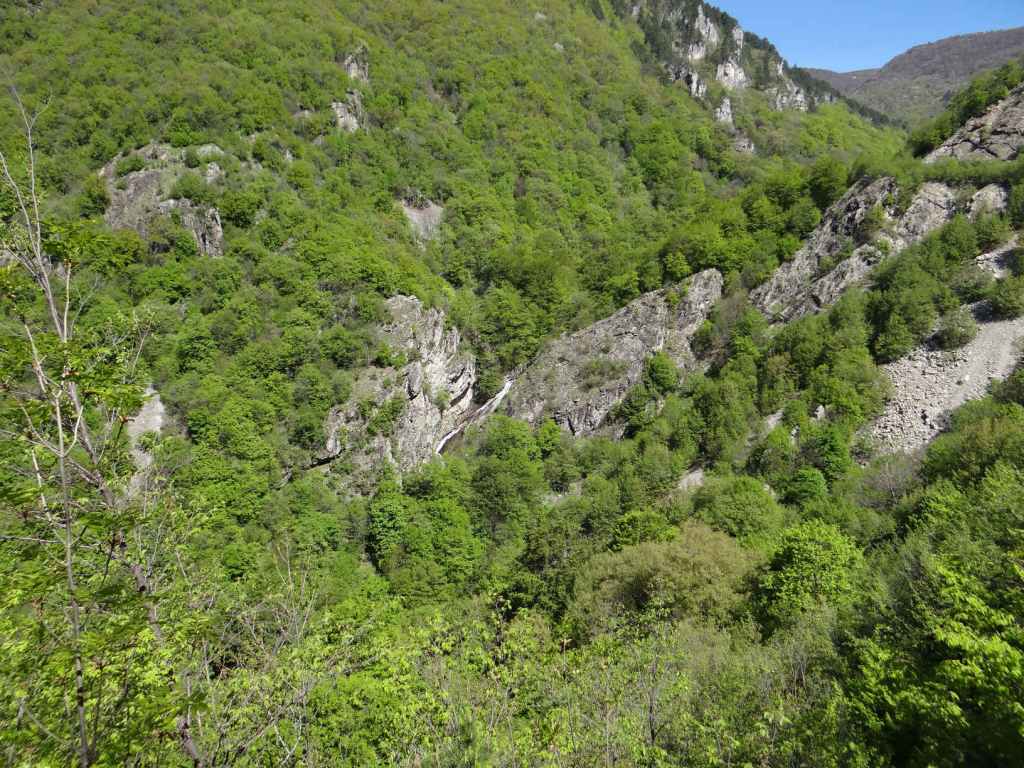
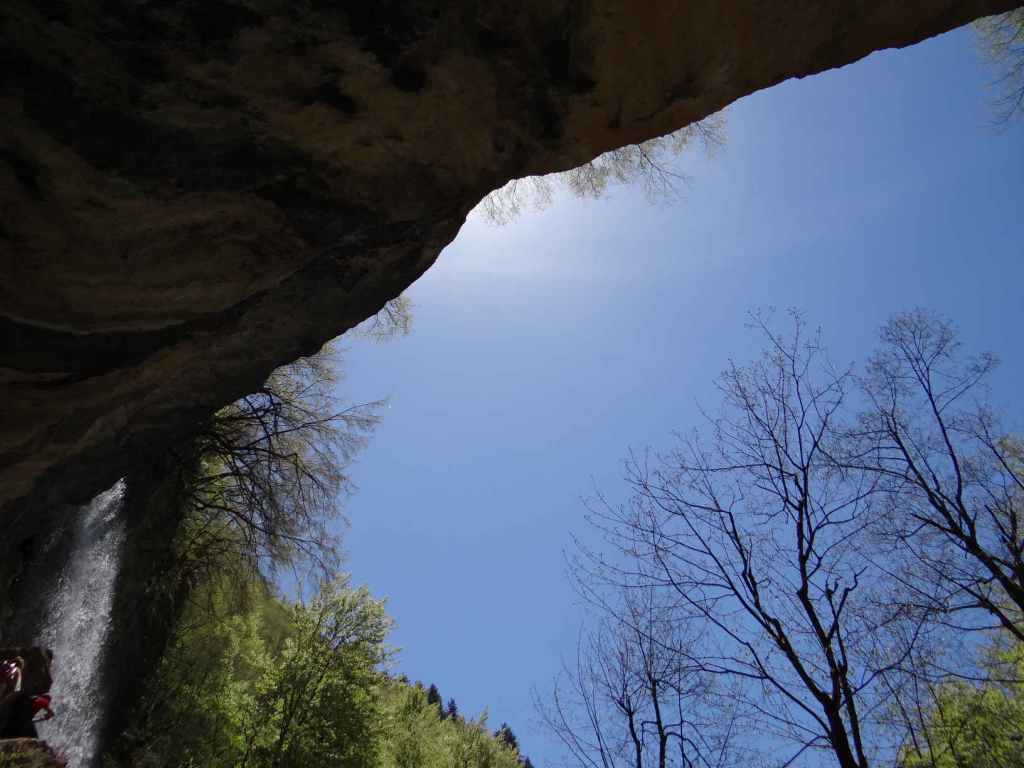
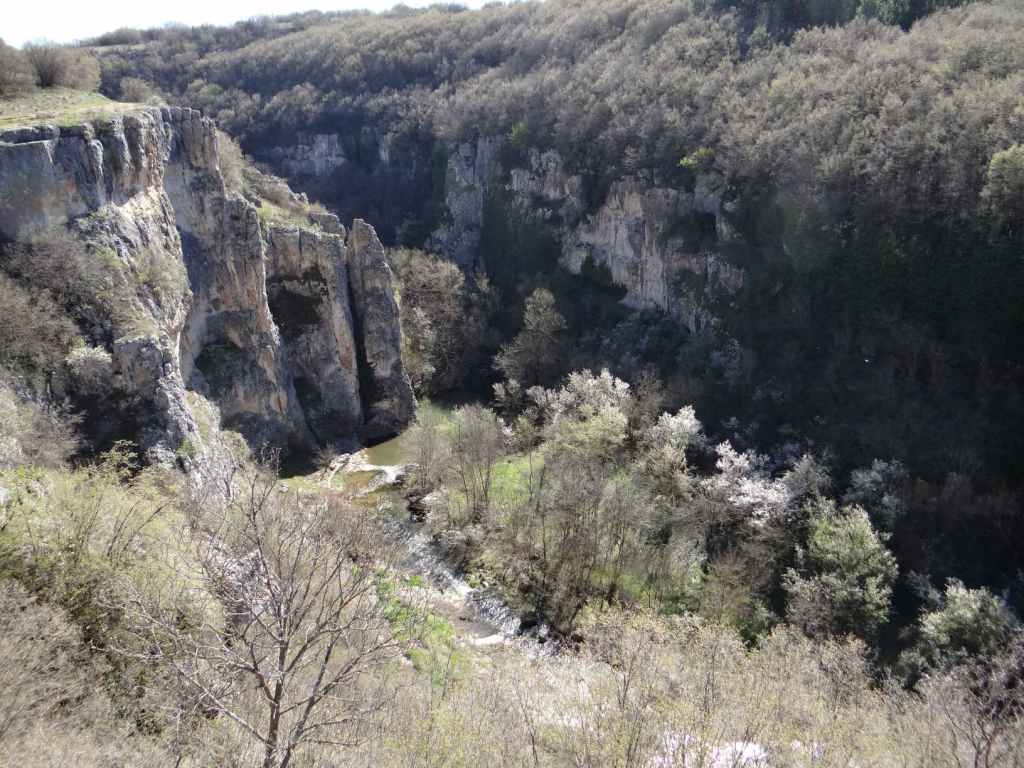
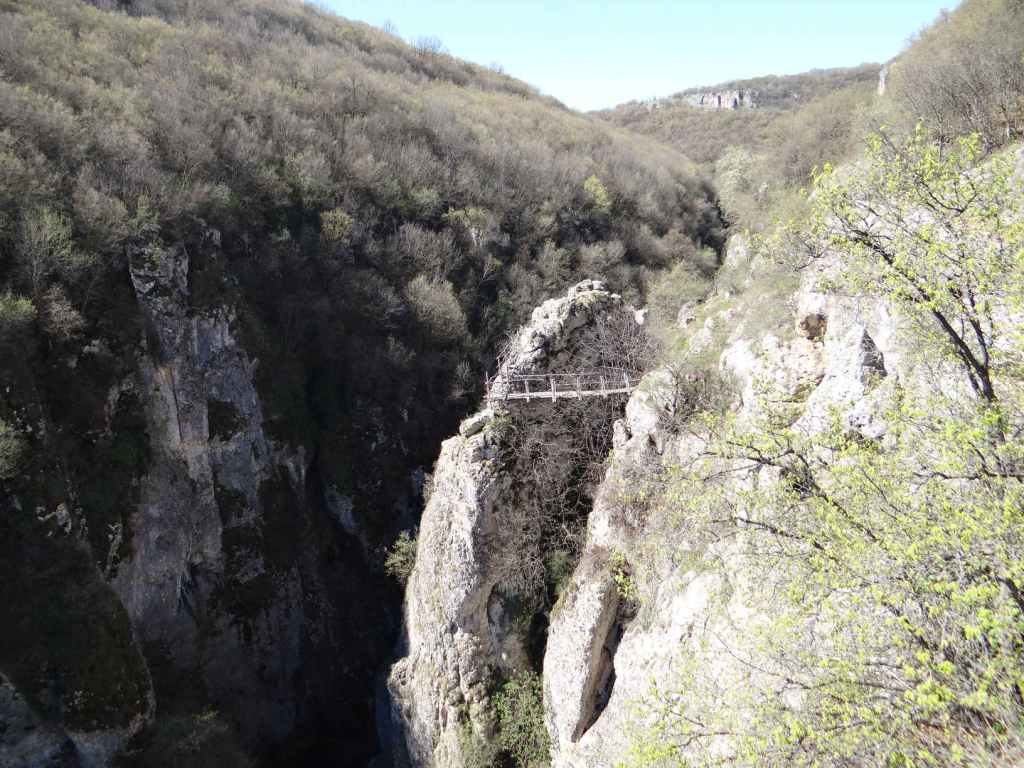
Kapinovo Waterfall from above.
Kapinovo Waterfall.
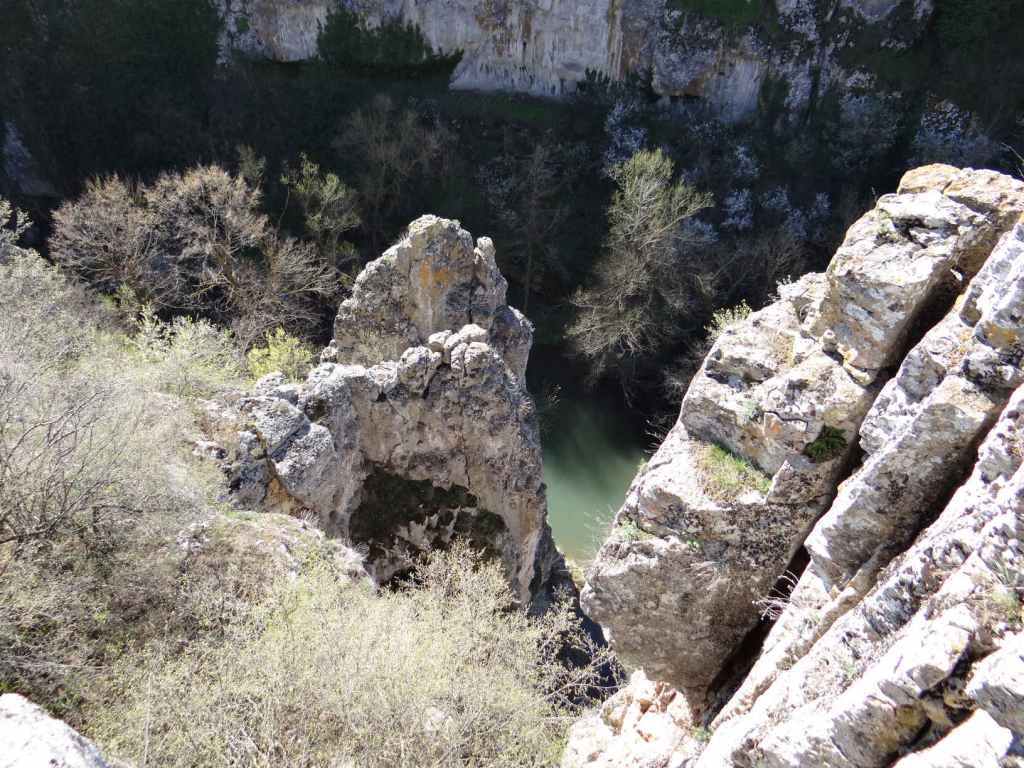
Close-up – the rock resembles a dog lapping water!
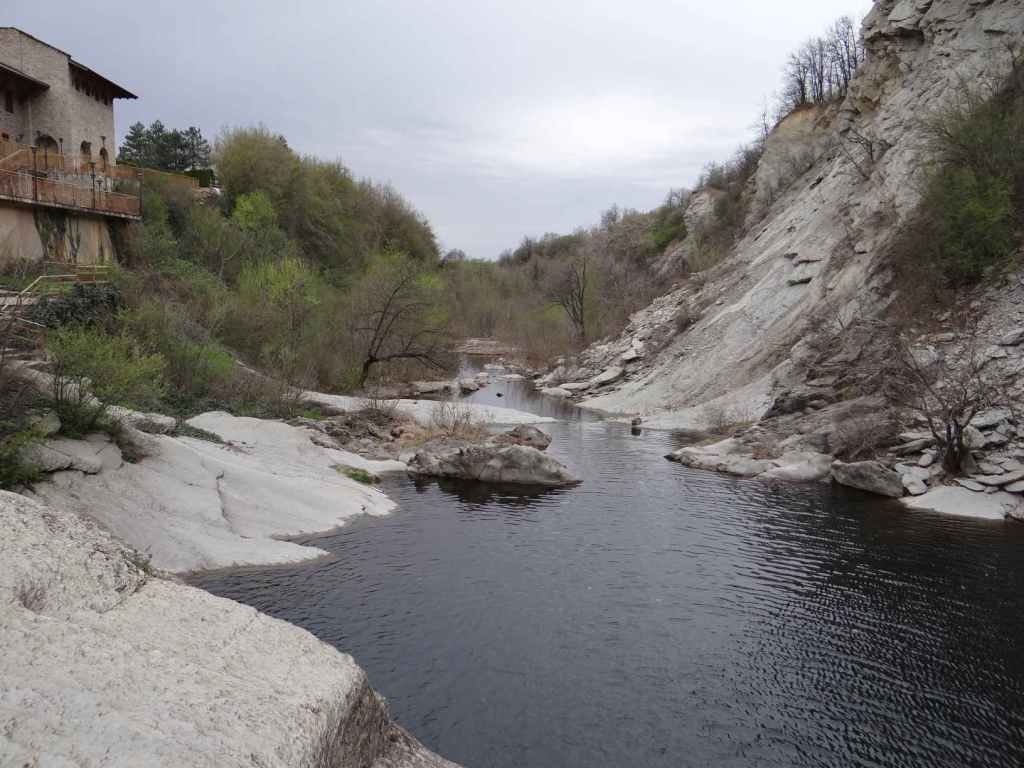
The peaceful view downstream.
The fresco ‘The Last Judgement’ in Kapinovo Monastery.

Emen

Emen is the second of three waterfalls that lie north-west of the medieval capital Veliko Tarnovo – Hotnitsa, Emen and Vishovgrad. What sets Emen apart is the canyon with the river Negovanka at its bottom. Just before the Negovanka forms a large reservoir, there is a ten-metre waterfall called ‘Momin Skok’, meaning ‘Maiden Jump’ – as with Ovchartsi Waterfall in Rila, this refers to the legend of young girls jumping to their death in order not to be forcibly converted to Islam during the Ottoman occupation of Bulgaria (14th-19th centuries).

To get there from Veliko Tarnovo, take the main road to Sofia (E772) and after 20 km turn right for the village of Balvan. Follow the road to the centre of this village and then turn right for Emen (8 km). Be careful because there is a sign for Emen in Balvan that has been turned back to front and seems to indicate that you should go straight ahead when the road veers left. This is not the case. The road veers left and after a short while you reach the centre of the village.

Here you turn right and after 8 km arrive in Emen. The road takes you over a bridge on the river Negovanka and immediately you arrive at a small square opposite the town hall where you can park the car. There is also drinking water. A smaller road leads to the right, following the left bank of the river. The road becomes a dirt track and then a path. After fifteen minutes, you reach a wooden suspension bridge over the river, but you stay on the left bank. The path climbs up to another dirt track, which then leads on your right to the beginning of the ecopath, where there is a cave. The cave is 3 km long and is home to various species of bat. In communist times, it was used as an arms depot for a military base located directly above it.

The ecopath is said to have been the first in Bulgaria and was created in 1992, shortly after the fall of communism. I think the initial idea was to follow the course of the river at the bottom of the gorge, but the wooden bridges crisscrossing the river have long since succumbed to the elements, which is a shame, and now the ‘ecopath’ actually runs along the top of the canyon on the left. From the beginning of the ecopath, where the cave is, to the waterfall is about forty minutes. The path takes you up to the top of the canyon and then winds along the edge, in amongst trees. After about thirty minutes, the path divides, but it doesn’t matter which branch you take – one continues among the trees, the other skirts the precipice. The path then descends to the left (this is clearly marked by blue arrows) to rejoin the river at the bottom. Turn right, and you will arrive at the waterfall in five minutes. You can hear the waterfall from the top of the gorge.

It is possible to drive to the start of the ecopath. Continue past the main square in Emen and after about 200 m you will reach a crossroads. Turn right, and just as you are leaving Emen, a dirt track forks off to the right, leading to the ecopath. Continue along this road, without taking the dirt track on your right, and in a short while you will reach the waterfall of Vishovgrad, ‘Zarapovo’. Both waterfalls can easily be visited on the same day since they are only a short distance apart.

The Negovanka River as it passes through Emen.
The wooden suspension bridge in Emen.
The path on the left bank of the river joins the dirt track leading to the start of the ecopath.
The start of the ecopath – steps leading up to the cave, the 17th longest in Bulgaria at just over 3 km.
The start of the ecopath, after the cave.
Having immediately climbed to the top of the canyon, view of the canyon itself.
Cragged rocks.
View up the canyon.
The path divides – either branch will lead to the waterfall.
The remnants of the ecopath clinging on for dear life!
A blue sign indicates the beginning of the descent from the top of the gorge to the waterfall below.
Emen Waterfall.
Close-up of the waterfall.
Panoramic view of the waterfall.
If you decide to drive to the start of the ecopath, you need to take the dirt track on the right. Continue along the asphalt road, and you will soon reach Vishovgrad Waterfall.

Hotnitsa

There are three waterfalls north-west of Veliko Tarnovo – near the villages of Hotnitsa, Emen and Vishovgrad. Hotnitsa (‘Kaya Bunar’) is the closest. The journey takes about forty minutes, and on the way back you have the chance to visit one of the most beautiful monasteries in Bulgaria, Preobrazhenski (‘Transfiguration’) Monastery.

The waterfall is where you park the car and is undoubtedly one of the most magical and mystical waterfalls we have visited. To get there from Veliko Tarnovo, follow the brown signs for Preobrazhenski Monastery and for the ancient Roman town Nicopolis ad Istrum. These signs will take you north of Veliko Tarnovo, from where you join the E85 and head in the direction of Samovodene. This main arterial road that joins the towns of Haskovo in the south and Ruse in the north passes along the gorge formed by the river Yantra. After a short while, you will pass the turning for Preobrazhenski Monastery on your left. Keep going straight. In Samovodene, the road divides – the right fork is signposted for Ruse, the left for Resen. You take the left fork and, about a kilometre after leaving Samovodene, take the turning left signposted for the villages of Hotnitsa (5 km) and Pavlikeni.
When you arrive in the centre of Hotnitsa, the waterfall is clearly signposted on your left. The distance from the centre of Hotnitsa to the waterfall is 3 km, and it is clearly signposted all the way. The road ends at the waterfall, where you can park the car. This astonishing waterfall is on your left. The colour of the water is turquoise blue because of the karst spring and limestone rocks.

There is an ecopath (1.5 km) that takes you up the left-hand side of the waterfall, a little up the gorge above the main waterfall and back along the top of the gorge on the right. This ecopath is not for the faint-hearted! I did it carrying our dog, but there are places where you have to climb or descend steep wooden ladders and clamber over the rocks. There are several wooden bridges that take you from side to side of the river Bohot. You can literally stand at the top of the main waterfall. There are smaller waterfalls further upstream. Once you have reached the top of the gorge on the right, the path descends slowly back to the café at the bottom.

On your return to Veliko Tarnovo, don’t miss the chance to visit Preobrazhenski Monastery, which overlooks the Yantra gorge and offers views back to Veliko Tarnovo. The church was built by noted Bulgarian National Revival architect Kolyu Ficheto and painted by another nineteenth-century Bulgarian artist, Zahari Zograf (who also painted Rila and Troyan Monasteries). It has some of the most beautiful frescoes in Bulgaria, including the famous fresco ‘The Circle of Life’ on the outside of the building. Behind the church is a very large rock that missed the church by inches and has been left there to remind us of God’s providence! On the opposite side of the gorge can be seen another important monastery, the Patriarchal Monastery of the Holy Trinity.

The road from the village of Hotnitsa ends at the waterfall.
An overview of Hotnitsa Waterfall.
The upper part of the waterfall.
A view from the side.
A view from the ecopath above – note the turquoise blue water!
The ecopath (no, it’s not a dungeon!).
A view back to the pool below the waterfall.
Standing at the top of the waterfall – be careful!
A smaller waterfall further upstream.
One of the wooden bridges crossing the river Bohot.
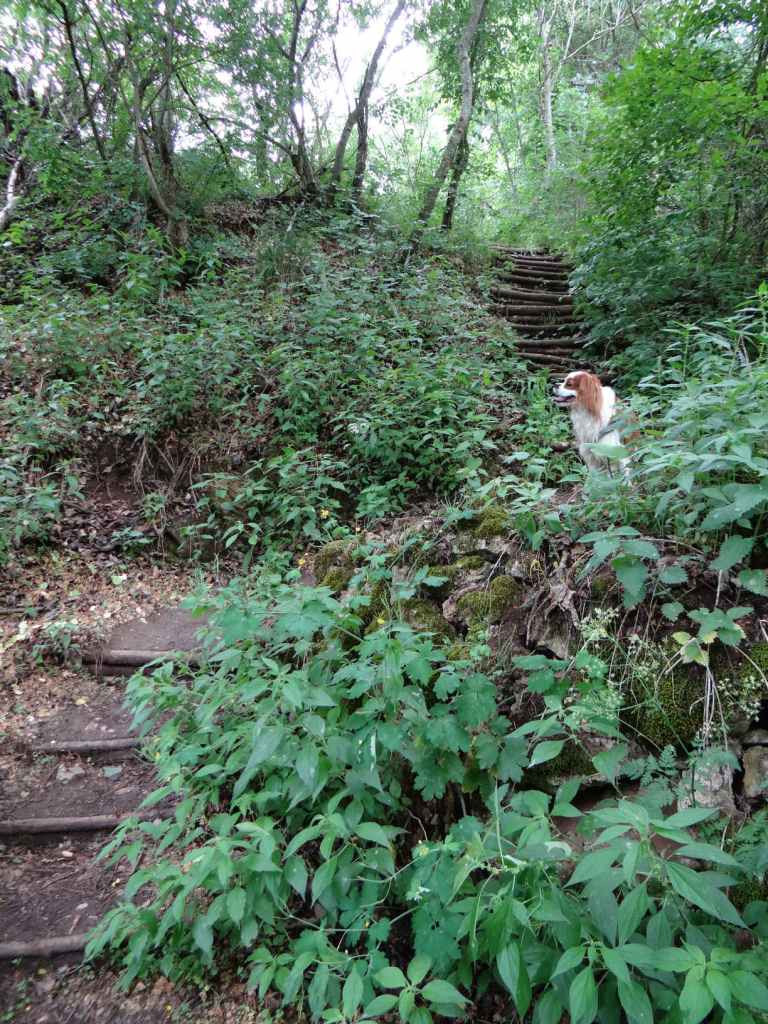
One of the steep wooden ladders.
The sun captured in the river.
A view from the top of the gorge back to the car park.
The fresco ‘The Circle of Life’ at Transfiguration Monastery.
View from Transfiguration Monastery to Veliko Tarnovo – note the plateau on the left, above the gorge, where the village of Arbanasi with its famous churches is situated.
Video

Theological English (0): The Line

In this first video on “Theological English”, Jonathan Dunne looks at the line, which represents the ego in English (I) and the number 1. Countable nouns are nouns that can have a line drawn around them – a book, a car, a tree. They are accompanied by the indefinite article, a/an. When God made man, he in effect made a countable noun – he drew a line around us and gave us free will. We do the same with products of the earth – we draw a line around them in the form of packaging – but we do this not to give things free will, but to trade in them, to sell them to each other. We appropriate for ourselves the role of author (things begin with us), when in fact we are translators (things pass through us).

To access all the videos in this course, use the drop-down menu “Theological English (Video Course)” above. The videos can be watched on Vimeo and YouTube.

The Name

That is what the verse, my verse,

that of the chosen poets, is for.

To give eternity to things.

Herein lies, then,

its true birth.

Oh, the anguish of baptizing you,

waiting for the right word

to appear!

Followed by the pain,

that ardent pleasure

of making the waiting time eternal.

It will come without its name,

naked, through the silence.

Oh, the anguish of baptizing you,

the glorious miracle of finding your name!

Because there are words that lived

only a moment

(the font, in the shade,

the luminous altar,

the invested poet),

there are also dead words

and others that live alone.

And words that throb

in the blood of a priest’s fingers.

And words to close the eyes of the dying.

And light words

that are carried by the wind.

You can live…

The name that like a blanket

will cover your body awaits you.

It will get in your blood,

it will get in your life,

in your gestures and your hours.

It will watch over your sleep.

You will have the same fragrance as your name,

which, in silence,

will always be making you,

and will be the only part of you

you take from this world.

from Shadow on Air by Grass (1959) by the Galician poet Luís Pimentel, translated by Jonathan Dunne

Dobravitsa

The longest river to run entirely in Bulgaria is the River Iskar, which rises in Rila Mountain and flows into the Danube between Bulgaria and Romania. Geologically, it is the oldest river in the Balkan Peninsula. Plenty of reason to admire it, then.

North of Sofia, it forms the Iskar Gorge, a fact that is taken advantage of by the railway, which runs alongside the river. The first major town heading north from Sofia is Svoge, famous for its chocolate factory, and from here Dobravitsa Waterfall is only twelve kilometres away!

So expect a windy road that follows the course of the river, with some spectacular views. To get there from Sofia, you need to go round on the ring road to Novi Iskar and then follow the signs for Svoge and Mezdra. Svoge is 38 kilometres north of Sofia, so the distance to the waterfall is 50 kilometres, but because of the twists and turns the journey takes about an hour and a half.

When you enter Svoge, do not follow the signs for the centre, which is left of the main road. Keep going and turn left when you reach the sign for Iskrets. You will pass the chocolate factory on your left and now you are following the course of another river, the Iskretska. Drive through Iskrets, but before you exit the town, take a right turn for Breze (5 km). This takes you up into the hills.

Pass an abandoned factory, and shortly after you ‘enter’ Breze (though the village itself is further on) you will see a dirt track leaving the road on your right. This is signposted for the waterfall and for the village of Dobravitsa. You can either park the car here, next to the main road, or risk driving your car up to the village. The distance from the main road to the waterfall is 3.9 km and takes about an hour and twenty minutes. If you drive to the village, the distance to the waterfall is 1.7 km and takes about forty minutes.

Immediately as you enter the village of Dobravitsa, the track veers to the right (the village is ahead of you). Follow this track for 800 m. When the track forks, turn left. The waterfall is another 900 m. There are some wonderful views over the hills, and you can see back to Iskrets.

As you approach the waterfall, you will see a remarkable rock formation on top of the hill in front of you, forming the Greek letter omega (Ω). Follow the rock with your eyes as it descends to the left. The waterfall is at the end. As the track veers back on itself, you leave the track and continue on a path to the waterfall, which is directly in front of you.

On your return through Iskrets, do consider stopping at Iskrets Monastery, which is in the grounds of the Tsar Ferdinand I Hospital, a specialized lung hospital. There is another beautiful waterfall just north of Svoge, near the village of Bov. The autumn colours here are amazing! But this might be better left for another day!

The Iskar Gorge with the railway running alongside it (in the background is Vitosha, the mountain south of Sofia).
The River Iskar as it passes through Svoge.
The dirt track leaving the road in Breze (the yellow sign is for the waterfall, the blue sign is for the village of Dobravitsa).
The dirt track leading to the village of Dobravitsa.
At the entrance to the village, the track veers right (again, the waterfall is signposted).
An island in the sky.
Here, the track forks – turn left (again, the waterfall is signposted).
The Omega formation on the hill in front of you.
Ice in a rut!
The waterfall in front of you.
Arriving at the waterfall.
The waterfall close up.
When we were there, ice kept cracking off the rock and landing in the water near us!
An overview of Dobravitsa Waterfall.
Iskrets Monastery.

Ukraine

I don’t think we’re particularly interested in the other person’s viewpoint. We like to listen to our own voice, to something that is familiar. If we had a real interest in the other person’s viewpoint, we would be avid readers of foreign literature in translation, but we’re not. Translated titles are supposed to make up only 3% of new publications in the U.S., according to the blog Three Percent. Attention paid to foreign titles in mainstream media is scarce. And translators put themselves at great risk in order to devote themselves to crossing that line between one culture and another.

It is an irony because the translator, who believes in intercultural understanding, is more or less forced to live on the land that separates cultures, in no man’s land. The translator is no man. They don’t exist. They don’t receive a salary, paid holidays, a pension. If they are paid (and there is often an expectation that they won’t be), they are often paid after the project is complete, begging the question, “How do they live while they are working?”

We prefer to hear our own voice and to believe that we are right. After all, what’s the alternative? The idea of believing that we are not right would so undermine us that we reject it out of hand. It cannot be. It is impossible. For us to hold on to our sanity, we have to be right.

There is now a crisis between Ukraine and Russia, a crisis that has been a long time in the making. Conflicts arise when people (because I don’t think anybody else does this) draw lines. When you draw a line, implying that you are an author, that something starts or ends with you (a false premise, we are translators, things pass through us), then you rely on two words to maintain the status quo (as you have established it): LAW and WAR. It is curious that these two words are obviously connected by the phonetic pair (pair of consonants pronounced in the same part of the mouth) l-r. The trouble is people don’t know their phonetic pairs, so they don’t see this.

I could give more examples. The reverse of LIVE is EVIL, one path open to us in this life – to do evil. But if we take the ego, “I” in English, and remove it from LIVE (that is, if we count down from “I” to “O”, from 1 to 0), we get LOVE, the other path open to us in this life. Live: evil-love. I study these connections in my book Seven Brief Lessons on Language.

The line that is the ego in English (I) is the same line that separates countries, properties, rich and poor, whatever social divide you care to think about. And where there is a line, there is conflict. Which is why the translator works so hard to engage with the other (OTHER, by the way, is connected to LOVE and THEOS), to cross that line, even though they know they cannot make a living.

I wrote an article at the time of the outbreak of the Covid pandemic about the connection between where the pandemic is said to have started, WUHAN, and the word HUMAN (turn the w upside down and rearrange the letters). Also, between COVID and VOICE (rearrange the letters and take a step in the alphabet, d-e). Human voice. Was Covid, a terrible disease causing pain and suffering in the world, meant somehow to bring us to our senses, to make us pay more attention to the vulnerable, to make us work together in the face of a common enemy? I don’t know, but the connections are there.

Now, this morning, looking at the word UKRAINE on my phone, I suddenly realized there was a very clear connection. It involves the similarity between a capital I and a lower case l. It can then be seen that UKRAINE with the letters rearranged spells NUCLEAR (c and k have the same pronunciation).

There is meaning in words, even though we don’t usually (choose to) see it. There is meaning in words, but, like all things spiritual, it is slightly hidden: a step in the alphabet (d-e), a phonetic pair (l-r), pairs of letters that are similar (i-l, m-w)… You just have to turn a corner.

Why is it that the word NUCLEAR can be found in UKRAINE? Is this a reference to the Chernobyl disaster in 1986 that affected not just Ukraine, but other countries as well? I certainly wouldn’t want to think that the current crisis between Ukraine and Russia could lead to nuclear war. Such an outcome would be unthinkable.

Another clear connection with UKRAINE relates to another phonetic pair: g-k. If we apply the phonetic pair g-k to the word UKRAINE, we will see that in the middle of the country is GRAIN. Two dangers have been highlighted during the conflict in Ukraine: the danger of damage to nuclear plants, and the danger to world food supplies if grain is not exported. It is interesting that both these words are found in the name of the country. And if we take away GRAIN, we are left with two letters: U-E, which could be a reference to the European Union (EU).

We need to consider the other. We need to hear the human voice, the voice of the other. And that involves not judging people on the basis of our own criteria and actually trying to get to know them, to understand their motives. That hasn’t happened very much between Ukraine, Russia and the West. Perhaps now would be a good time to start. To see what we have in common instead of spitting at each other over the fence. And to hire a translator who will enable us to hear what the other is saying.

Jonathan Dunne, http://www.stonesofithaca.com

Ovchartsi

Undoubtedly one of the most beautiful waterfalls in Bulgaria, Ovchartsi Waterfall is named after a Bulgarian maiden, Goritsa, who lived in the local village and was betrothed to a shepherd called Yovitsa. This was during the time of Turkish slavery, Ottoman rule in Bulgaria during the fourteenth-nineteenth centuries. The Turkish overlord or bey was struck by Goritsa’s beauty (it must have been a slightly terrifying time to be beautiful) and ordered his servants to fetch her for him. Goritsa took to the hills, in search of Yovitsa, who was watching his flocks, but the servants reached her before she could get to him, so she threw herself off the cliff. Ever since then, the waterfall (39 metres) and the river have borne her name.

The waterfall is above the village of Ovchartsi on the northern slopes of Rila Mountain. To get there from Sofia is about an hour and a quarter by car. You take the motorway to Greece (Kulata) and leave the motorway at the signs for Dupnitsa. You actually leave the motorway seven kilometres before Dupnitsa and follow the old road into Dupnitsa, past a succession of second-hand car dealers. On entering Dupnitsa, you take a right just before the OMV petrol station, signposted Sapareva Banya. You then follow this road, ignore a left turn that is signposted Plovdiv and Samokov and continue to the next set of lights, where you turn left for Sapareva Banya and Panichishte. If you take the road for Plovdiv and Samokov, you will have a very picturesque ride alongside the northern slopes of Rila, but you will not be able to reach the villages that nestle on these slopes. This is why you continue to the next set of lights and turn left here. This road takes you through the villages of Samoranovo and Resilovo to Ovchartsi.

In Ovchartsi, head to the central square, where there is a town hall and a children’s playground. Turn right on the near side of the square and go straight up the steep road in front of you, which bears right at the top, leading to a fountain and a place to park. From here, continue on foot. There is an ecopath to the waterfall, and it only takes about fifteen minutes to get there. Admire the view. When we went in February, there was a lot of ice, which made the path very slippery and people were having difficulty going up and down (with the inevitable laughter).

You can also make your way down to the river below the waterfall, but to do this you have to leave the path and climb down a slightly steep slope. Heading upstream, you will come to the lower part of the waterfall, with a wonderful view of the rocks above and trees silhouetted against the light.

Between Resilovo and Ovchartsi is the Resilovo Convent of the Holy Protection. It is a short drive from the road. The nature is beautiful, and the church has stunning frescoes. You can light a candle for your loved ones and enjoy the view back to Sofia!

The road into Dupnitsa, flanked by second-hand car dealers. Rila Mountain is right in front of you.
The fountain where you can park the car.
The steps at the start of the ecopath, with information boards in Bulgarian and English.
A peak in the distance.
A second, longer flight of steps.
With a wooden bridge at the top, leading to the waterfall.
Ovchartsi Waterfall.
The upper waterfall.
A sign with the story of Goritsa (Goritza).
The lower waterfall, seen from above. From here, the rock resembles the head of a young woman.
Beautiful February cloud formations.
The ice rink!
The river below the waterfall.
The lower waterfall. The rock now resembles the head of an old woman.
Directly above the rock, note the figure in white against a black background that seems to be jumping, thus confirming the legend.
The whole waterfall, seen from below.
Ovchartsi Town Hall (which has pictures of the waterfall).
Resilovo Convent of the Holy Protection.
Gallery

Frescoes

There are three major monasteries in Bulgaria: Rila in the south-west (a World Heritage site), Bachkovo in the foothills of the Rhodope Mountains to the south, and Troyan in the Balkan Mountains in central Bulgaria.

But aside from these three major sites, there are many monasteries dotted about Bulgaria, in particular around the capital, Sofia, and many of these are inactive or abandoned. The monasteries around Sofia make up what is known as ‘the Little Holy Mountain’, a reference to the Holy Mountain, Mount Athos in Greece, famous for its monasticism.

You can be in Sofia and not realize that there is a different experience awaiting you only twenty minutes by car from the capital. Unfortunately, many people don’t get this opportunity to travel further afield or don’t know about these places. When you leave Sofia, you enter a different world, one of beautiful nature and one of great spirituality. We do not realize that nature has its own language and it takes time to begin to decipher it.

The Bulgarian poet Tsvetanka Elenkova and I visited 140 monasteries from our home in Sofia during the period 2006-2012. The fruit of this pilgrimage was a series of ten essays by Tsvetanka contained in a book published in Bulgarian as Bulgarian Frescoes: Feast of the Root (Omophor, 2013), accompanied by more than a hundred of my photographs. These essays cover different feasts, from the Nativity of Christ to his Resurrection and Ascension. We have made a small selection of the best images to give people an idea of the riches hidden away in monasteries in Bulgaria that are often abandoned and can be difficult to get to.

The best example is Seslavtsi, a district of Sofia 12 km north-east of the capital. The frescoes here are breathtaking. They were painted by a famous iconographer, Pimen of Zograph, a monk from the Bulgarian monastery of Zograph on Mount Athos who was called by St George in a dream to return to his homeland and to build and paint churches, which he did at the start of the seventeenth century, four hundred years ago. The church containing these frescoes was used for target practice during Communism and is next to a uranium mine. The quality of the frescoes is so good that attempts have been made to cut them out of the wall and take them. The frescoes have not been restored, which gives them a lifelike quality. Once frescoes are restored, they lose something of their spontaneity and acquire a sheen.

Other monasteries containing high-quality frescoes in the environs of Sofia are Alino, a village on the south side of Mount Vitosha, the mountain that overlooks Sofia from the south; Eleshnitsa, a village 25 km north-east of Sofia; and Iliyantsi, a district of Sofia in the north.

Further afield, we find the church of Berende, a village 50 km north-west of Sofia in the direction of Serbia, overlooking a disused railway and with wonderful autumnal colours. Not far away from Berende is the village of Malo Malovo, a very difficult monastery to find. Our first attempt was unsuccessful. We were with our year-old baby and unexpectedly came across some young lads hanging out in the mountain. We caught the glint of metal, beat a hasty retreat and returned a week later, this time without our child, successfully locating the monastery, which was hidden away behind an elevation, perhaps deliberately if one considers that a lot of these monasteries were built during the Ottoman occupation of Bulgaria in the fourteenth-nineteenth centuries, when churches were not supposed to exceed the height of a man on horseback and so had to be dug into the ground.

To the north-east of Sofia, still in west Bulgaria, we find Strupets and Karlukovo. To the west of Sofia lies Bilintsi, on the road to Tran, which has a very attractive gorge. Here, we came across a monk who had taken it upon himself to paint over the old frescoes and who kindly offered us tea in the hovel he was living in (which had a large hole in the ground). Fortunately, his work of ‘restoration’ was incomplete and we were able to photograph some of the original frescoes.

South of Sofia, near the motorway to Greece, is Boboshevo, another excellent monastery for frescoes. And then in central Bulgaria, we have Arbanasi, a hill with old churches next to the medieval capital Veliko Tarnovo. One of these churches is the Church of the Nativity, an example of a building that is sunk into the ground, with sumptuous frescoes inside. A little to the north of Veliko Tarnovo, overlooking the river Yantra, with Holy Trinity Monastery on the other side, is Preobrazhenie (Transfiguration) Monastery, which has a wonderful Wheel of Life fresco on the outside.

These are only some of the monasteries we visited, but they are the ones with the most important images. Our aim in presenting these images is to show the high quality, the naivety (we must become like children to enter the kingdom of heaven), the deep spirituality of Bulgarian frescoes. In the West, our attention is drawn to the likes of Michelangelo and the Sistine Chapel, considered a high example of religious art. Some of these monasteries – Seslavtsi, in particular – can quite rightly be included in the same canon of European religious art.

An English edition of the book Bulgarian Frescoes: Feast of the Root is forthcoming.

Jonathan Dunne

(In the slideshow above, captions are by Tsvetanka Elenkova, photographs and translation are by Jonathan Dunne.)