The Spanish Riveter

Hats off to the editors of The Spanish Riveter, a magazine freely available online and published by the European Literature Network, West Camel and Katie Whittemore, for producing a very thorough and inclusive, 294-page issue packed full of interesting writing and features. I can’t think of a better way of dipping into contemporary writing from Spain in all its manifestations: Basque, Castilian, Catalan, Galician…

There are sections not only on the four languages I have just mentioned – I was privileged to be asked to write the introduction to Galician literature on pages 200-204 – but also on publishing, grants, poetry, children’s literature, women’s writing (let us not forget that the last Spanish National Book Award for Fiction was won by a Galician woman writer, Marilar Aleixandre, who wasn’t even born in Galicia and adopted the language later on) and the Latam Boom.

All the people I have worked with over the last thirty years seem to have been included, and this is a testament to the editors’ hard work and open approach.

I fancy that some Galician editors would not agree with Katie Whittemore’s statement that “there is the sense that Spain’s other languages, while perhaps still on the back foot, so to speak, are experiencing growth in the book sector, with more institutional support, as well as a greater appetite from readers both within and without the Spanish territory” (page 8). Francisco Castro, director of the most traditional Galician publishing house, Editorial Galaxia, stated only the other day in the Faro de Vigo newspaper that “the Galician market is getting smaller and smaller, every year it is getting more and more difficult to reach income levels.” He goes on to talk about the great tragedy being experienced in Galicia, “which is the loss of its language,” and affirms that “a market that has to see a language in decline is destined for extinction.”

I would say that literary translators are “destined for extinction” and not much has been achieved since the heady days of the 1990s, when there was much talk of literary translation being a profession. Literary translators are still required to take significant personal risks, they do not receive a salary, sick leave or a pension, very little attention is paid to their work, and the juggernaut that is the English-language book market is hurtling along at such a pace it simply crushes the tossed-aside can of books in translation, offering little space in mainstream media to add to the difficulty of rising printing and distribution costs. We were never much inclined to listen to the other’s voice, which is a shame, really, since this would not only enrich our lives, but also lead to better international relations. Institutions, and the general public, are inclined to toss a coin in the cap of literary translation (without really understanding what it is), not much more.

As a publisher, I would strongly disagree with Alice Banks’ appraisal of grants on pages 62-63. She mentions one source, Acción Cultural Española, whose grants “cover the cost of translation.” This is typical of how it looks on the outside and how it really works in practice. In 2020 I applied for a grant for the Oxford professor John Rutherford to translate a Galician classic, Memoirs of a Village Boy by Xosé Neira Vilas. I asked for 2960 euros and was offered 1332 euros (that is, nine euros per page). That is a long way off the UK Translators’ Association’s recommended *minimum* rate of £100/1000 words (approximately 22 euros/page). Ainhoa Sánchez, the person responsible for literature, confirmed by email that “our grants are a support and are not meant to cover the overall cost, since we do not have the necessary budget.” This is an excuse I have heard many times, but it is not true – you simply support fewer projects with the same budget. I declined the grant, and we published the book on our own. There is a review by Paul Burke on pages 208-209 of the magazine.

But let us celebrate the diversity that this excellently produced magazine has brought to the fore and thank that ever hopeful cohort of translators, editors and publishers who continue to work and strive for translation. There is much to admire here.

Zlatni Mostove – Planinarska Pesen – Bor – Septemvri – Zlatni Mostove

Starting coordinates: 42.6097479, 23.2361762

Distance: 7.8 km

Elevation Gain: 360 m

Time: 3¼ hours

Difficulty: Moderate

Transport: by car, or by bus no. 63 to Zlatni Mostove


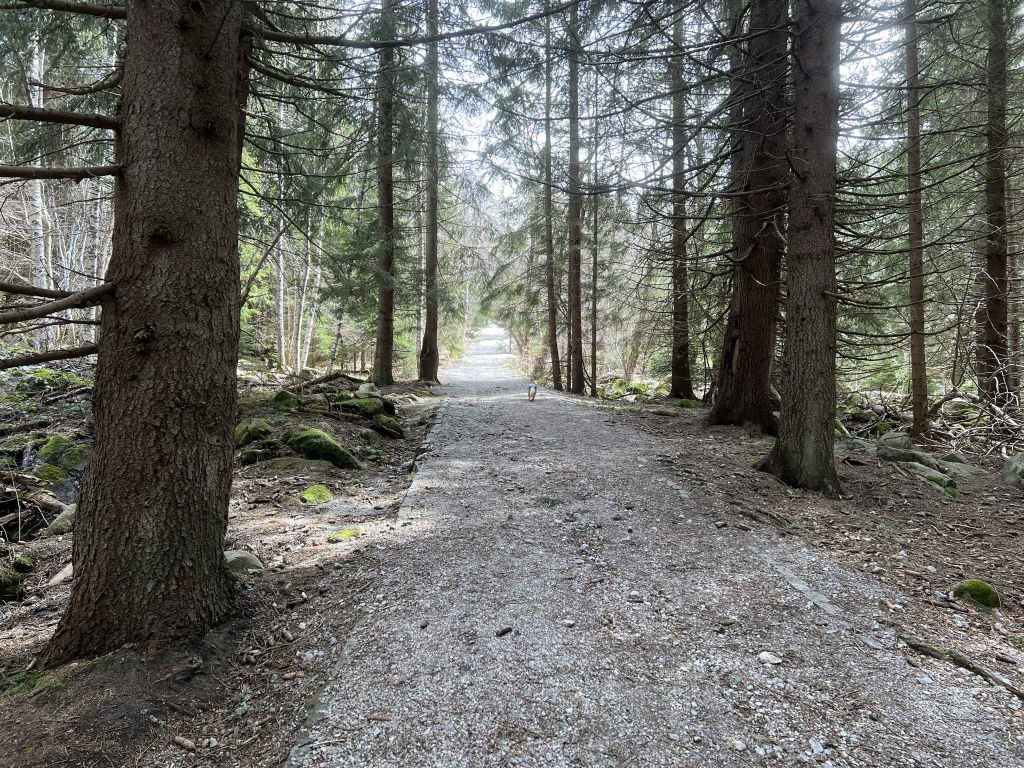
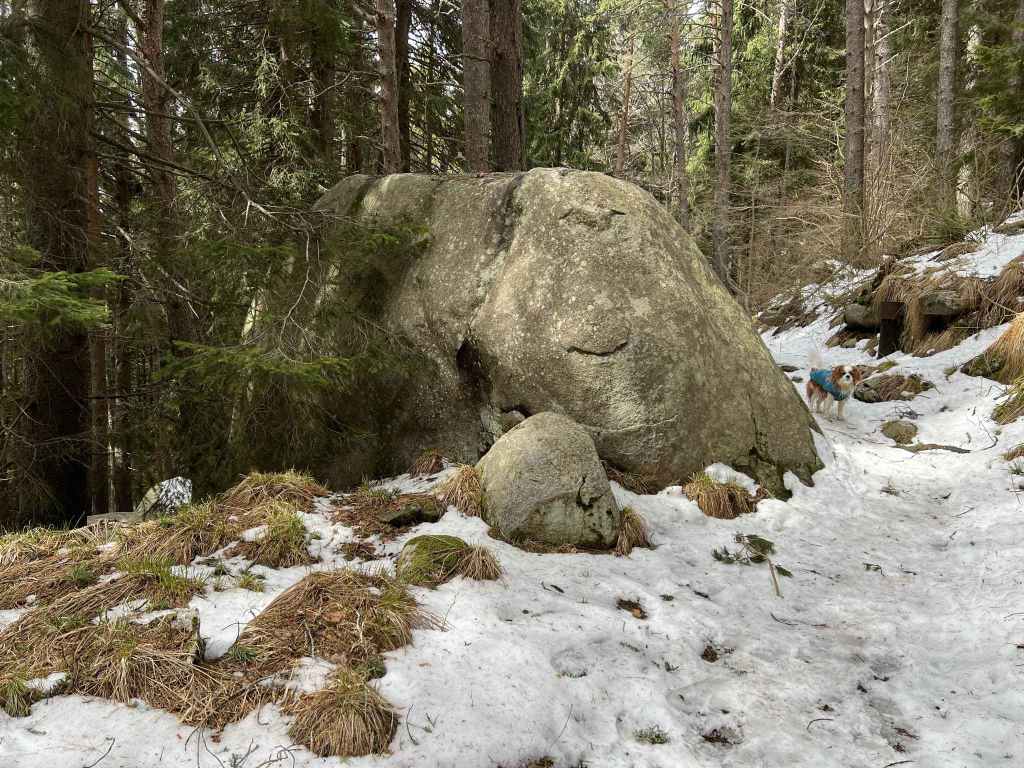
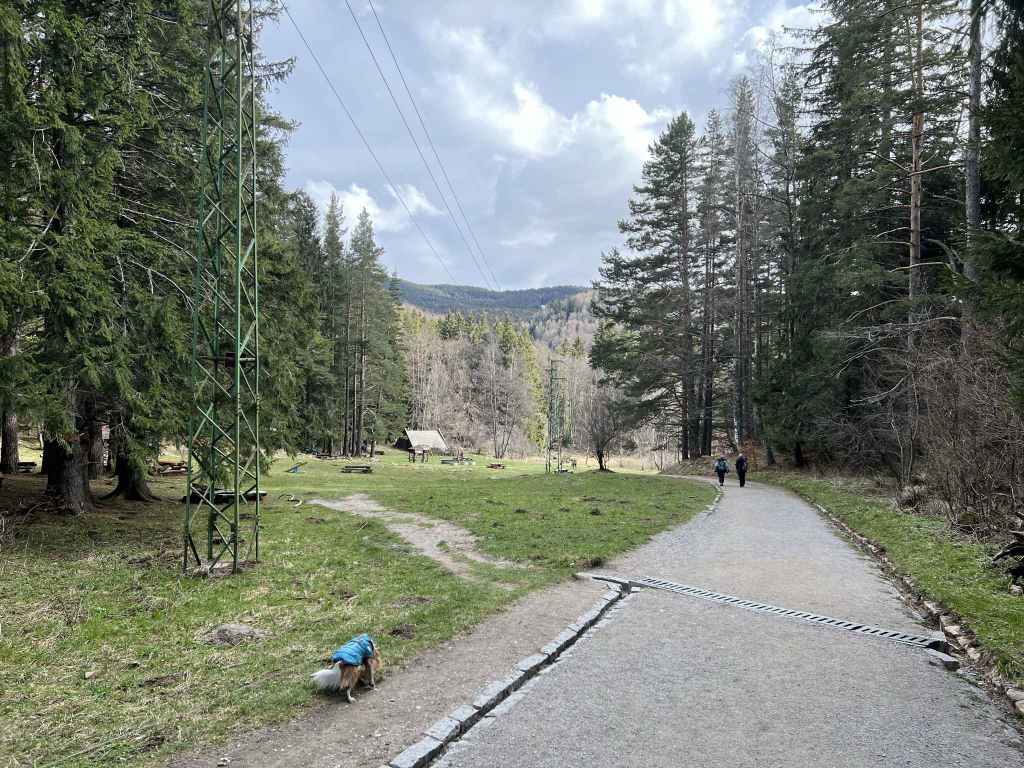
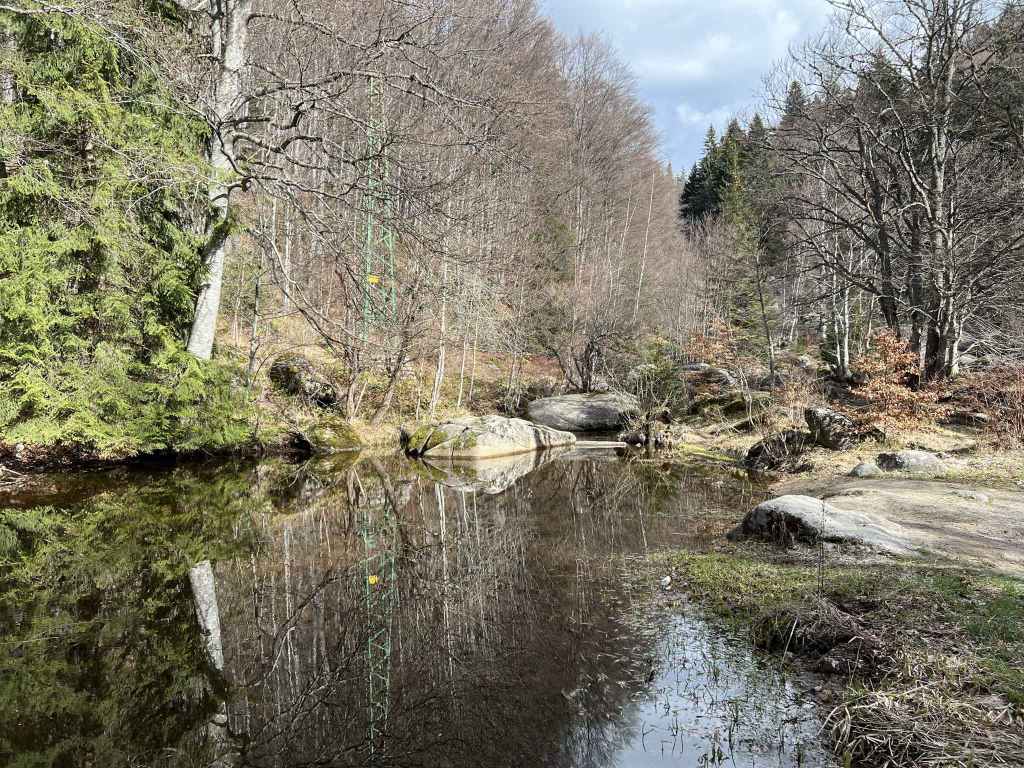
This is a classic Vitosha walk which has as its starting and end point an important location on the mountain: Zlatni Mostove (“Golden Bridges” in Bulgarian). Zlatni Mostove is memorable because of the river of moraines, large boulders, that tumbles down the mountainside and also because of the beautiful open meadow a little to the north, Beli Bryag. It is also where bus no. 63 turns around and goes back down the mountain, so there is no need to worry about where to get off!

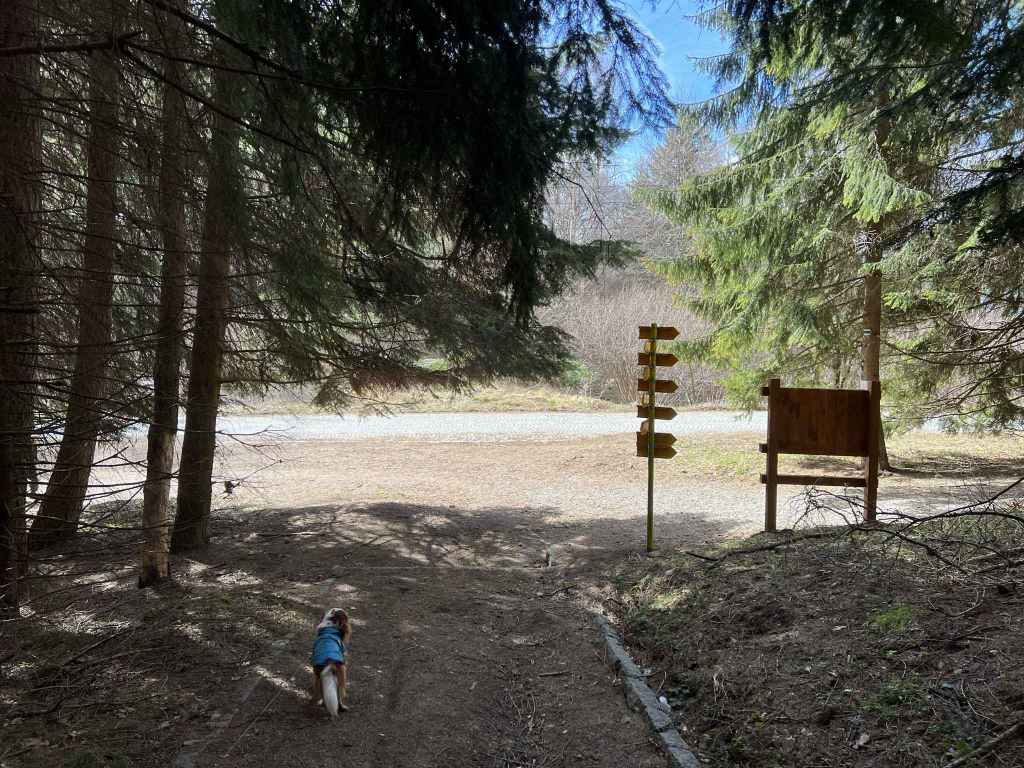
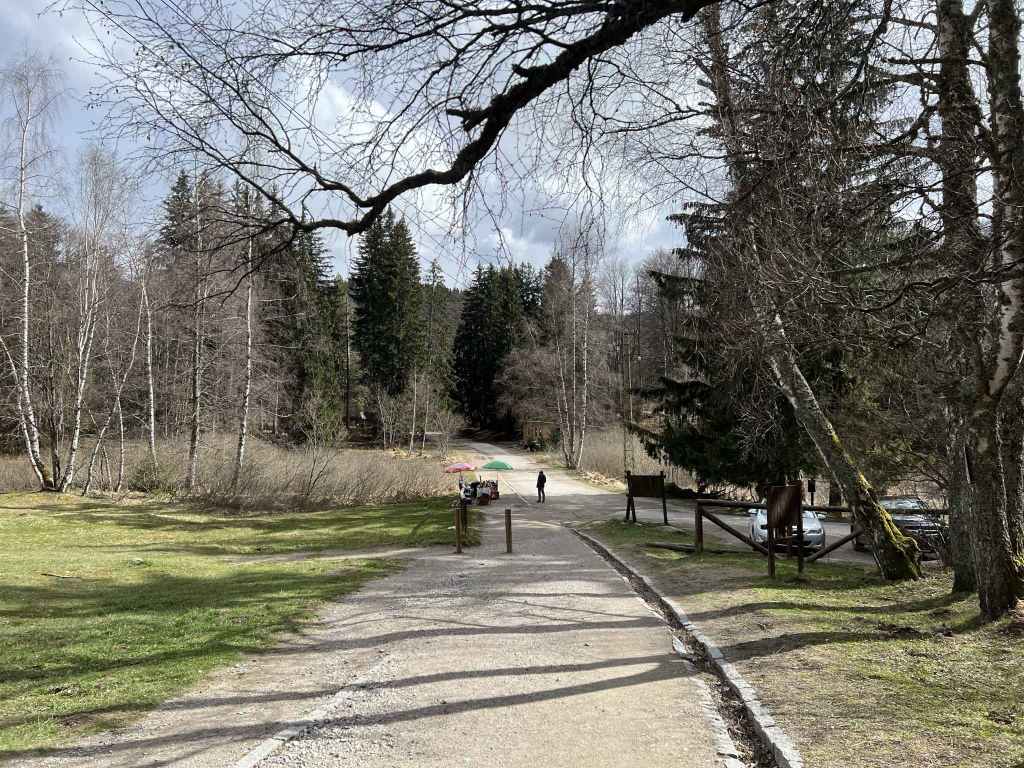
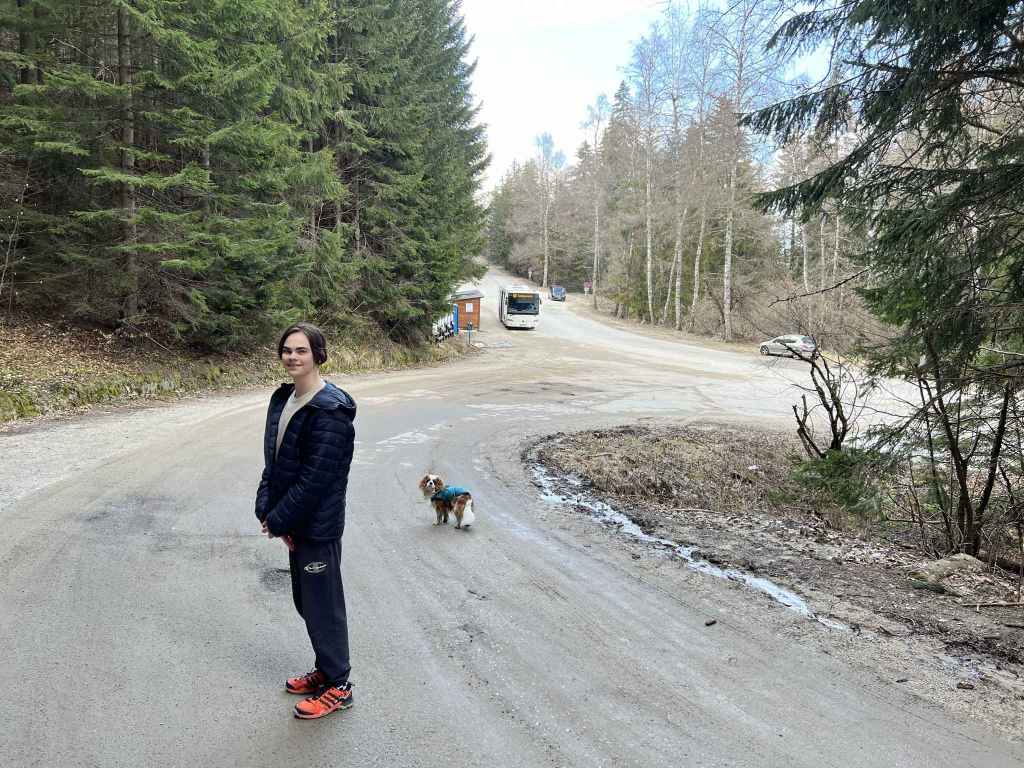
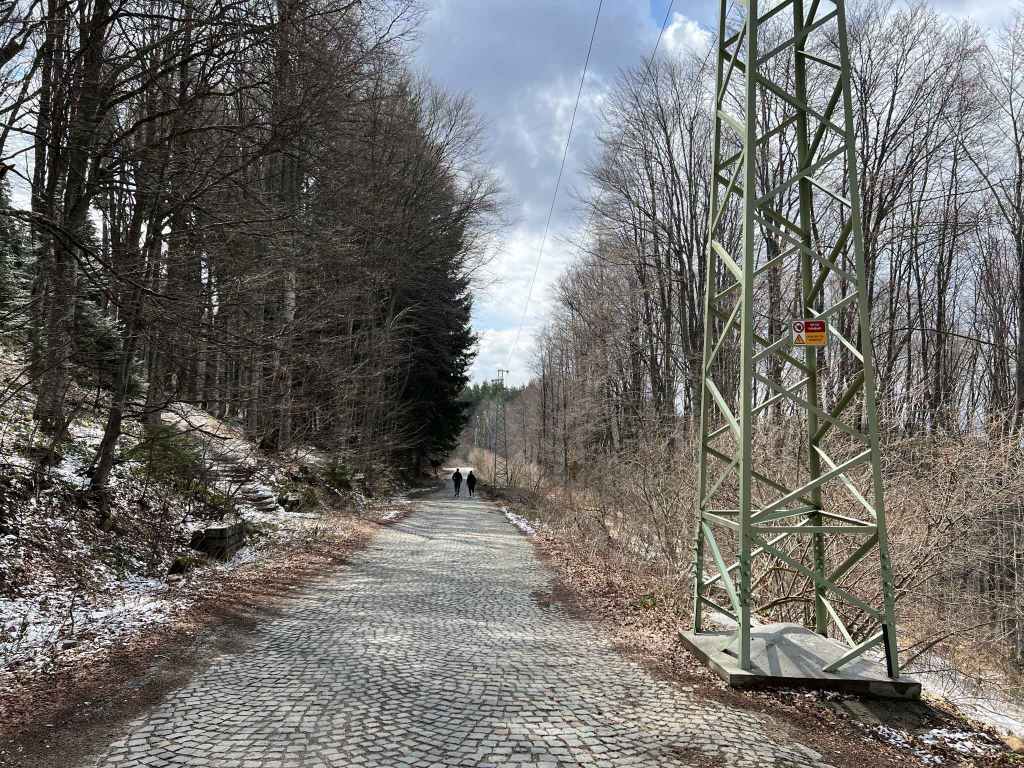
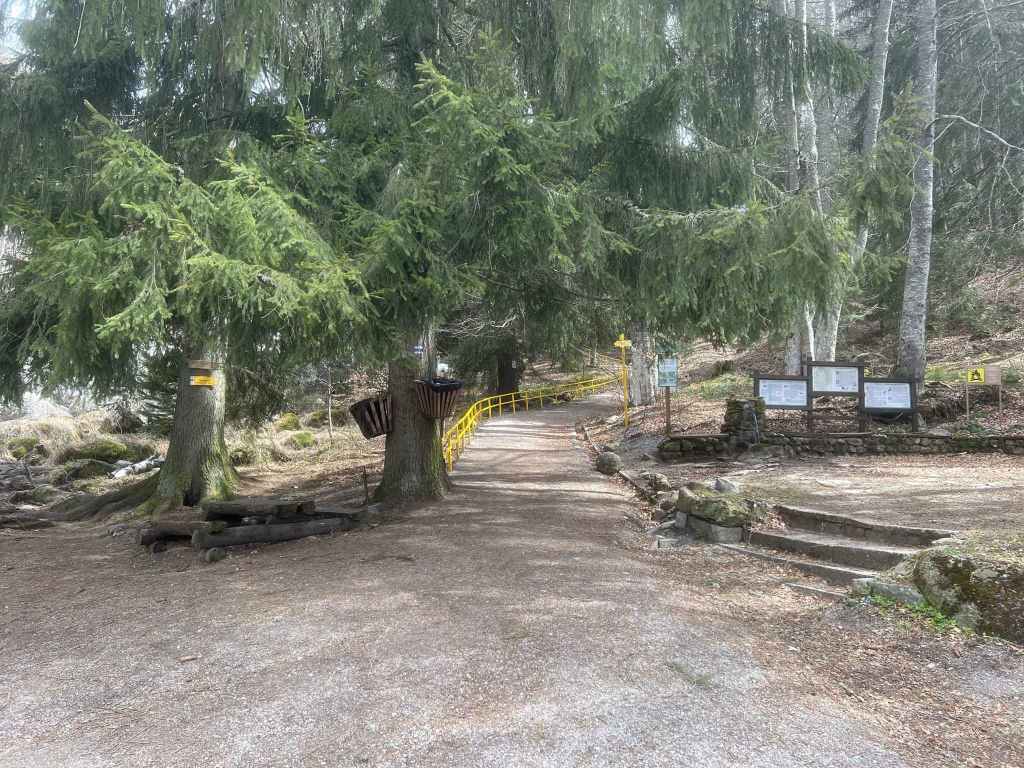
You again go through the district/village of Boyana and continue up the mountain, going past the Dendrarium on your right and the turning to Kopitoto on your left, until you get to an open area on the road with a large bus stop. This is Zlatni Mostove. It is fourteen kilometres from the ring road that goes around Sofia. Park the car somewhere nearby. The main road continues up the mountain and soon becomes cobbled, but for Zlatni Mostove itself you want to take a side road on your left. Continue up this road for three minutes and, as the road veers to the left, with the river of moraines on your left, you will see two paths departing from the road. One heads to Artistite and Selimitsa, it sort of doubles back. The path you want is the left of the two, signposted for Planinarska Pesen and Kumata. You climb some steps with the moraine river on your left. After fifteen minutes, you come to a stream (actually, two streams with small bridges over both of them). A short distance after the streams, the path divides. Continue left.

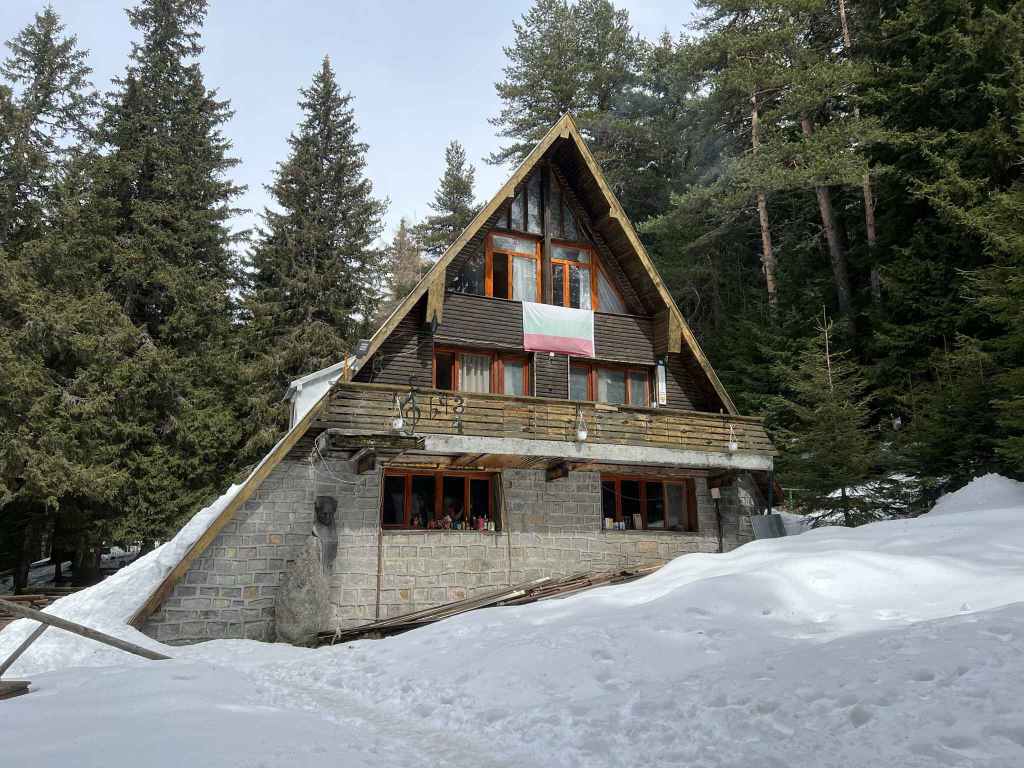
The path now heads straight up the mountain for about twenty-five minutes. Towards the top, you come to an intersection. If you continue up the mountain, you will cross the main road and the path will take you to Kumata. If you go right, you will come to Ofeliite. But you want to go left. Follow this path for about ten minutes. It doubles back and climbs to the main road. At the main road, go left (the smaller road opposite leads to Kumata). You will come to three mountain huts located close together: Boeritsa on your left; ahead of you, then on your right, Borova Gora; and finally Planinarska Pesen, which means “Mountain Song” and fittingly has a few metal notes affixed to the wall. Just before this last hut, there is a path descending on your left, signposted for Zlatni Mostove and Bor. Take this path.

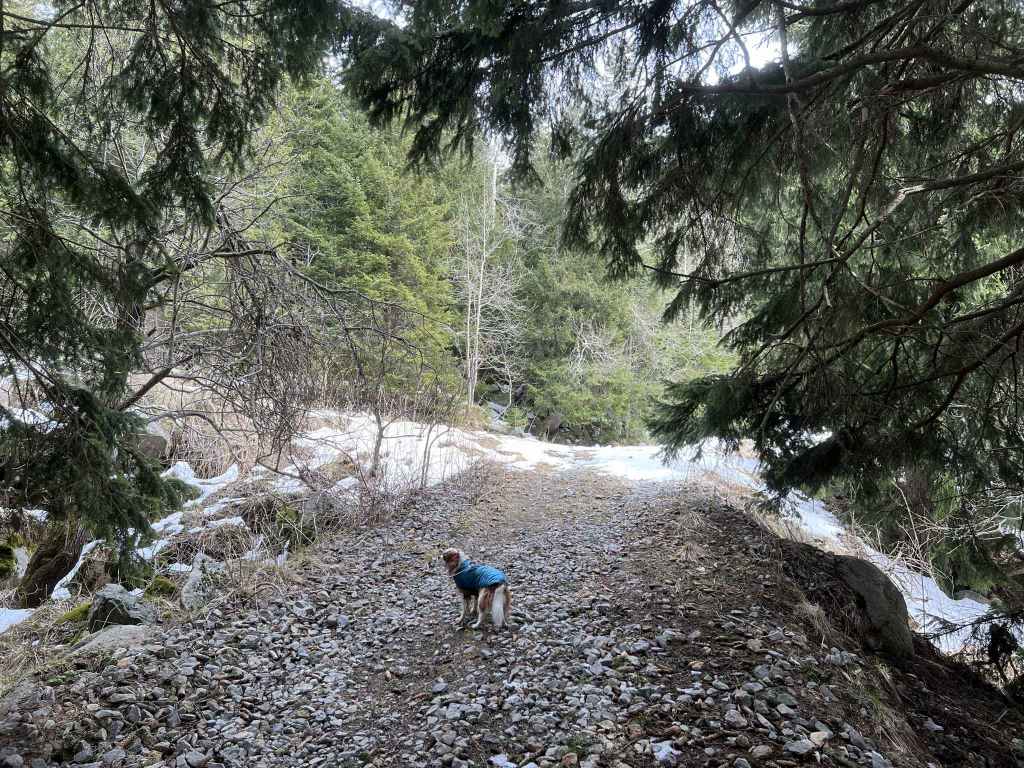
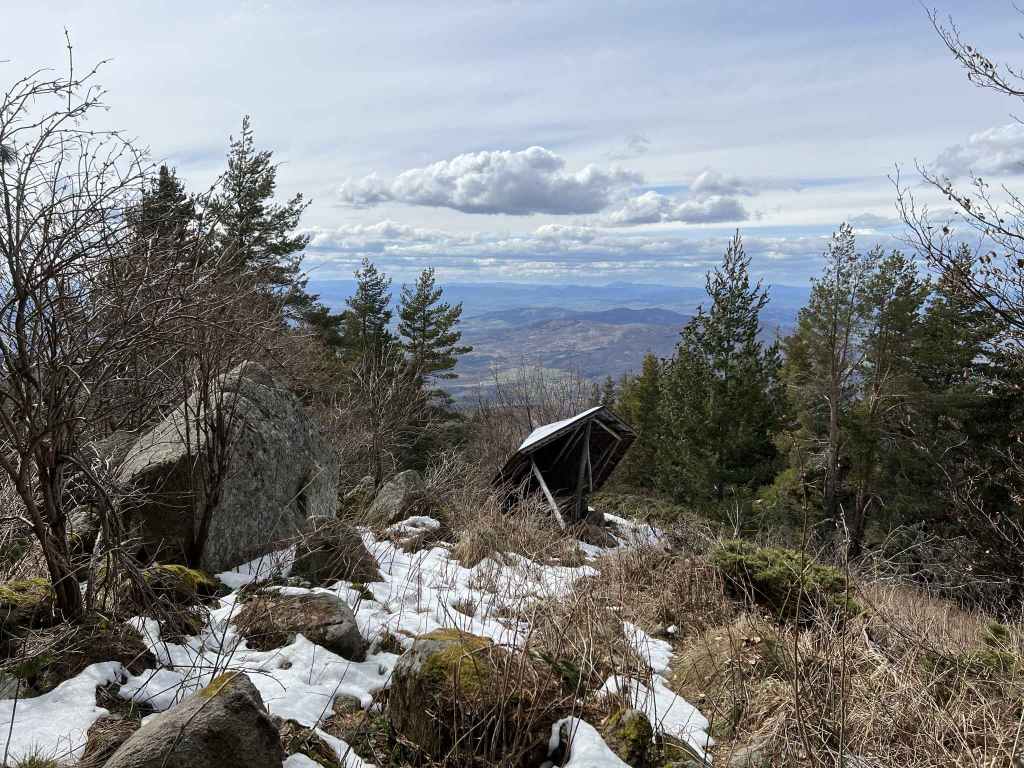
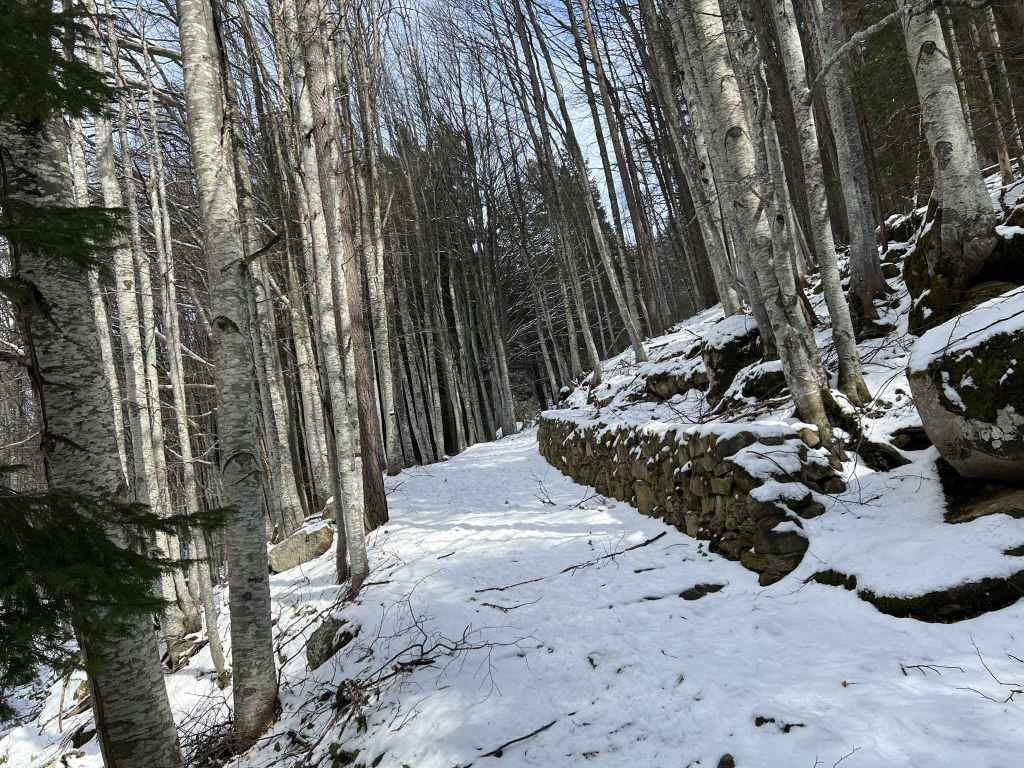
The path descends abruptly and then levels out with some wonderful views in a westerly direction. It winds through the forest, past large rocks, across minor streams. After about twenty minutes, the path begins to descend. It is signposted for Septemvri. But a new path begins on the right, signposted for Bor and Momina Skala. You want to go right in order to maintain your elevation, not to go down the mountain yet.

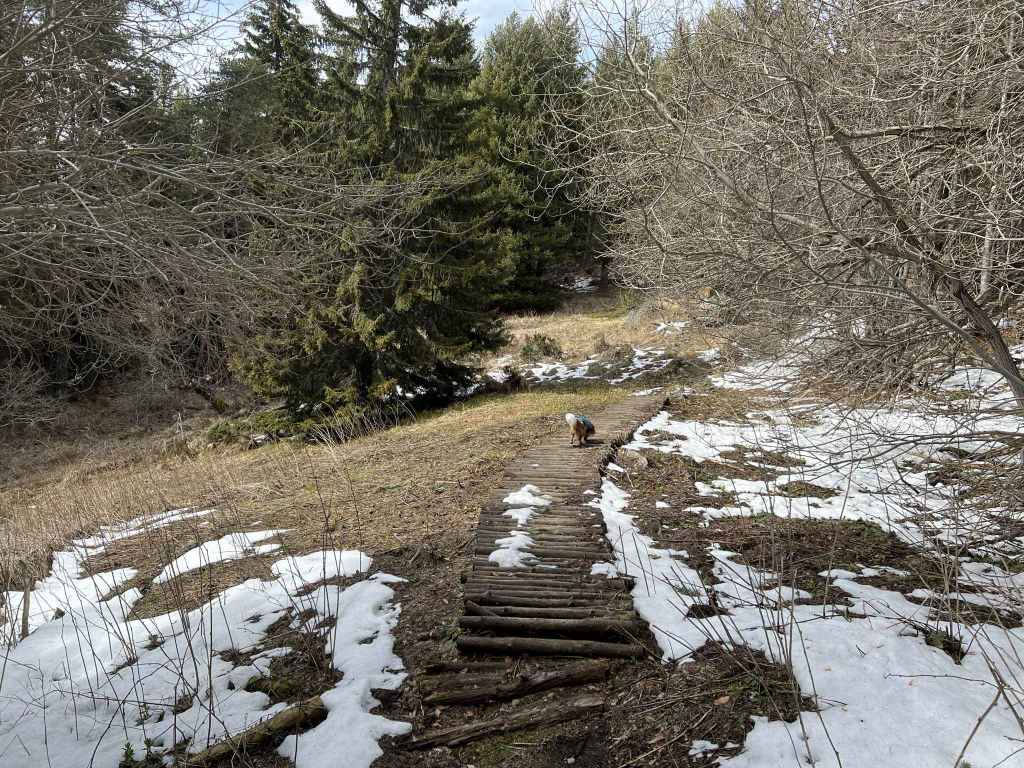
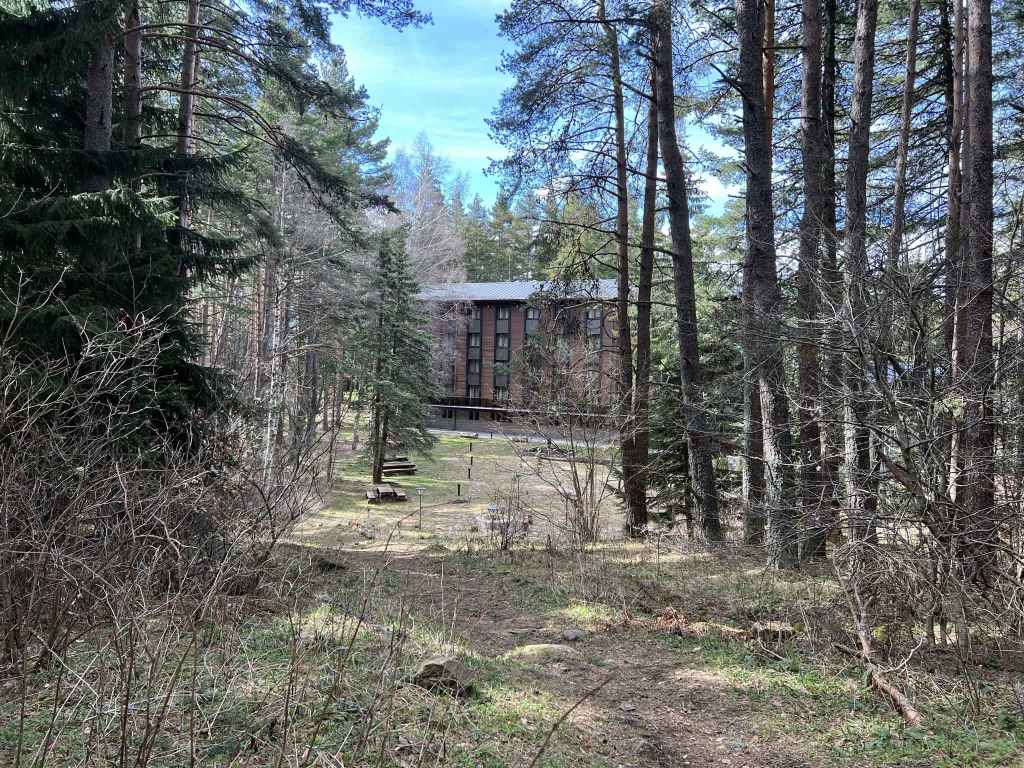
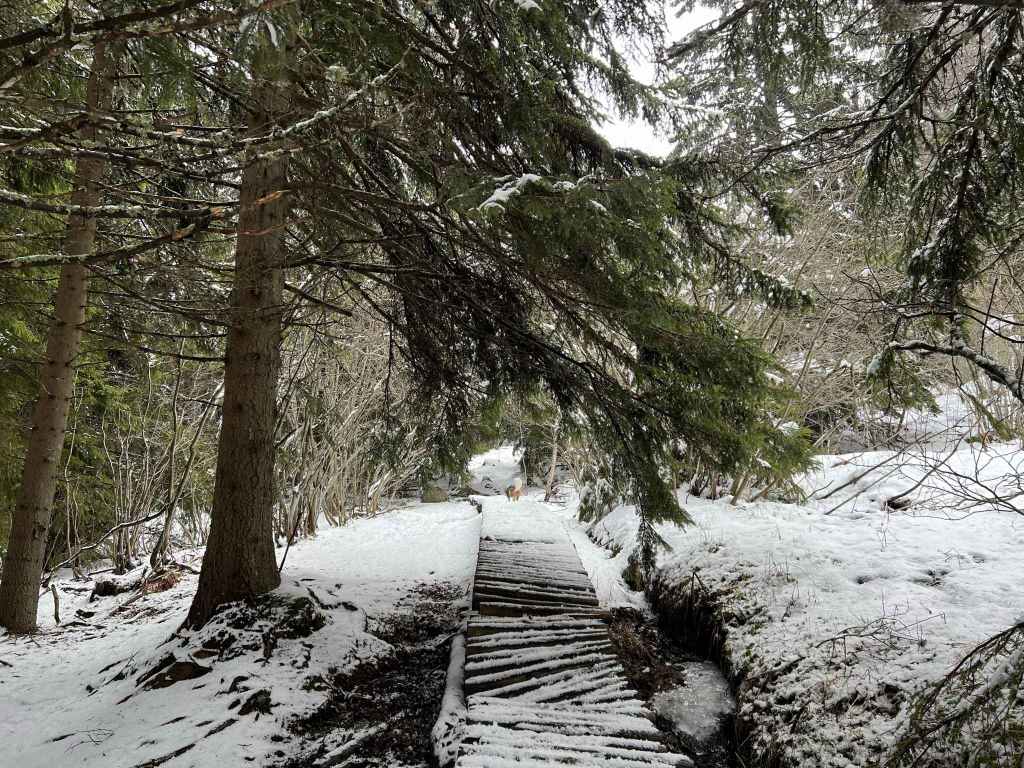
You continue along this new path, again with wonderful views in a westerly direction, for about thirty minutes. There are some wooden walkways where the ground is wet. After thirty minutes, you come to a clearing. This is the same clearing that features in the walk from Planinets. Directly ahead of you is Boyana River and Bor mountain hut, but when you reach the far side of the clearing, there is a path that doubles back on your left. It is signposted for Septemvri and Zlatni Mostove. Take this path and follow it all the way down the mountain. Again, there are some wooden walkways where the ground is wet. After twenty minutes on this path, there is a turning right to Septemvri. You can ignore this. In a few more minutes, you reach an intersection with the hotel Elitsa on your right. The path coming down the mountain on your left is the path you joined at Planinarska Pesen, but then left in order to join a new path on the right. None of this matters. You continue straight and in less than ten minutes you come to the road that connects Zlatni Mostove and Momina Skala.

At the road, turn left and take the path that goes past an open meadow called Beli Bryag. The view here always reminds me of Switzerland, I don’t know why. It is a lovely open area with benches where people like to picnic and have barbecues in summer. The path skirts the meadow and rejoins the road further down. At the road, continue left and follow the road for ten minutes. It will lead you directly back to the main road with the no. 63 bus stop.

This route up, across and down the mountain, which affords some wonderful views and has the added attraction of the moraines or large boulders, is shaped like an upside-down triangle. You go up one side, across the top and back down the other side until you return to the same point. The route can be shortened by following the path to Septemvri and turning left at the bottom (with Elitsa hotel in front of you). This new path will take you to the road, with the meadow, Beli Bryag, on your left.

No visitor can consider themselves acquainted with the mountain until they have come to Zlatni Mostove. On the final stretch, between the meadow and the bus stop, there are several stalls selling corn and jam and a couple of restaurants where you can get bean soup or meatballs (kyufteta).

I and Me

The line divides. The line is a wall or a tower. It defines. We use it to mark the borders between countries. To cross the line, you need permission, although nature will cross the line at will. This is a human invention. We use it to indicate private property and enact laws that will punish anyone who trespasses the line without permission. We use it in a sense to make ourselves out to be authors, as if the land, the products of the land, somehow belonged to us. We have misunderstood our role as translators. Our role is to take what is there and to transform it, hopefully for the better, to make it useful (to ourselves and others). But we cannot do anything without the earth and its gifts, as we cannot cook without ingredients. We are recipients.

But we do not like this idea, because it takes away our sense of control. We like to pretend that things begin with us, when they don’t, they pass through us. We cling to the line, because without the line there is a hole, we feel empty.

The ego in English is a line: I. And so is the number 1. We count up from 1 when we do business. We teach our children to do the same. We forget to count from 0. Once you start counting from 1, there is no end, there is no knowing where you will get to, so it produces a sense of uncertainty, not control. We feel the need to produce things (despite the obvious harm to the environment), to make a profit. We put ourselves in control, in the driver’s seat. We make ourselves the subject: I think, I do, I decide. But this is an illusion, or at least it doesn’t last.

A verb has a subject and an object. The subject carries out the action of the verb, the subject is in the driver’s seat (where we want to be). The object is acted on, the object is the recipient of the action. As we grow in the spiritual life (as we grow older), we begin to realize that perhaps our role is more to receive than to do. We receive help, we receive healing, we learn (we receive knowledge). We embrace that hole we avoided earlier, the circle (0), and find it actually makes us whole. Where is the difference between “hole” and “whole”? It is in the letter “w” at the beginning of the second word.

Language, like nature, wishes to tell us something. It is full of spiritual knowledge waiting to be seen, deciphered, harvested. A tree when it begins life is like the ego: a straight line (I). But it does not remain a straight line, otherwise it will be fruitless. So it branches out. It blossoms. And bears fruit. The tree is a lesson in what we have to do with the line, the ego, in our lives. It is an ego turning to God. The line (1) acquires branches and becomes 3 (think of a child’s drawing). This is why “tree” is in “three” (the only difference is breath, the letter “h”), because if it doesn’t branch out, it is not a tree, it is just a stick.

Nature and language wish to tell us something, but we are completely blind to this aspect. We think of nature and language as a tool to be used to our advantage (in short, to make money). But we are not here to make money, we are here to grow spiritually, so that we can prepare ourselves for the life to come. We are here to gain experience. Experience teaches us, it makes us more humble, it make us realize that not everything depends on us.

“I” is a subject. But God does not want us to remain as a straight line (we will not be able to bear fruit if we do). What is the object of “I”? If “I” is the nominative, then what is the accusative, the one who is acted upon, the one who receives? It is “me”.

I-ME. This is the same process undergone earlier by the tree. If we turn these words into numbers, we will see that “I” closely resembles 1, a straight line, but “ME” (written with capital letters) closely resembles two 3s (all I have to do is rotate the letters). When we cede control, when we accept that control was never really with us, when we allow ourselves to be acted upon, when we embrace the hole, the uncertainty, that is at the centre of human existence, then the process of spiritual growth can begin. Then we open ourselves to healing.

We become like the tree. We branch out.

This can be seen in other ways, too. What word sounds like “I”? “Eye”. An eye when it is closed is a straight line. What happens when we open our eyes? The eye becomes a circle. We count down. I-O. This process of opening the line is what God requires of us. We open our eyes and begin to see (“see” is in “eyes”). We open our ears and begin to hear (“ear” is in “hear”).

And it can be seen in language. Take the word “live”. In reverse, this word gives “evil”. That is what happens when we distort the purpose of human life and act selfishly. But if we count down and replace the “I” with “O”, we get “love”. It is the same with “sin” and “son”. Again, the line has been breached, we have accepted that not everything is under our control and have made ourselves receptive to healing (note that this takes an act of will on our part, it is not the response of an automaton, we have free will).

Now, in language, the consonants, the flesh of language, are divided into phonetic pairs according to where and how they are produced in the mouth. One such pair is “d-t”. These two consonants are produced in the same way, with the tongue against the front of the roof of the mouth. The only difference is that “d” is produced with voice, while “t” is voiceless. So they are a phonetic pair.

And what happens when we add this phonetic pair to “see” and “hear”, the result of opening our eyes and ears? We get “seed” and “heart”. So a seed is planted in the earth of our heart, in the soil of our soul.

On this Good Friday in the Orthodox calendar, when Christ himself counted down (I-O) by going to the Cross, I would like to suggest that while we think of language and nature as being at our service (which they are, but not to be exploited), their real purpose is to teach us. They are not tools to make money, they are tools for learning. We become like the tree and branch out (1-3). Away from the line that divides us. Or we count down (I-O). Proof of this can be seen in the landscape that surrounds us, in the language we use every day and in the Christian understanding of the Trinity (3 in One).

Jonathan Dunne, http://www.stonesofithaca.com

Planinets – Zlatni Mostove – Bor – Momina Skala – Planinets

Starting coordinates: 42.6246831, 23.2397177

Distance: 6.1 km

Elevation Gain: 320 m

Time: 3 hours

Difficulty: Moderate

Transport: by car, or by bus no. 63 to the Dendrarium


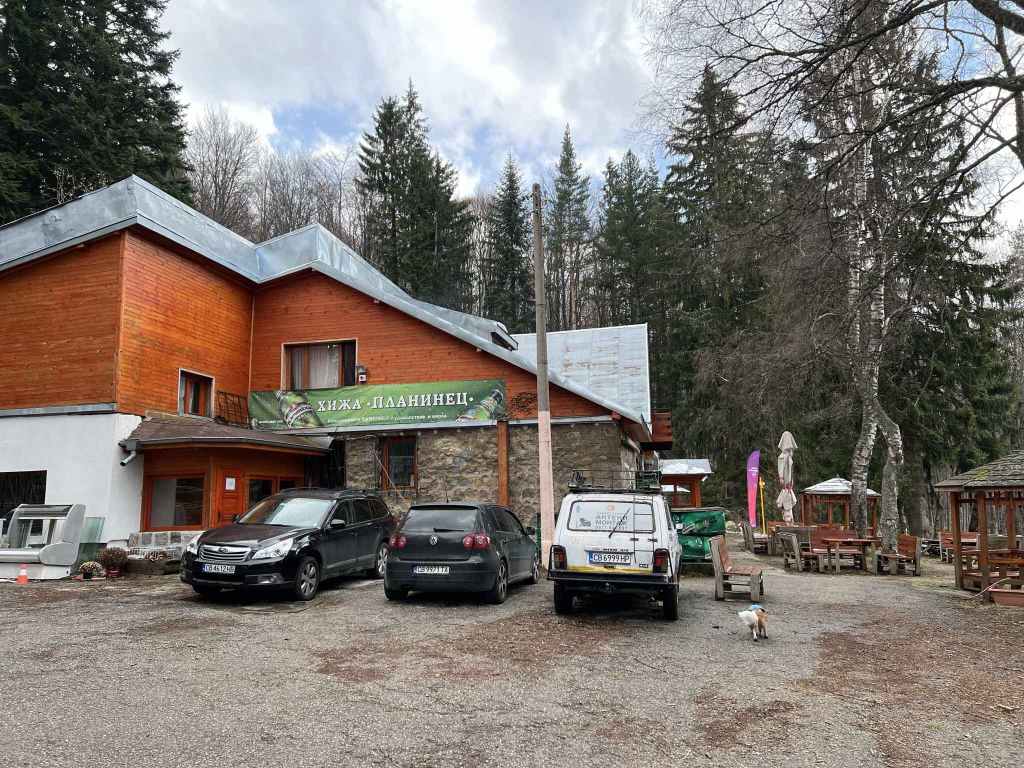
This is a wonderful, circular walk that starts and ends at the mountain hut and restaurant Planinets. To get there, you need a car. The alternative is to take bus no. 63 to the Dendrarium and to walk from there, but this will add at least an hour.

You take the road to Vitosha that goes through the village of Boyana, follow the road up the mountain. Immediately after you pass the Dendrarium on your right, there is a turning on the left to Kopitoto (where there is a hotel and a television tower). Take this turning. Before you get to Kopitoto, there is a turning on the right to Planinets. Take this smaller road, but be careful, it is full of potholes. The mountain hut/restaurant is at the end.

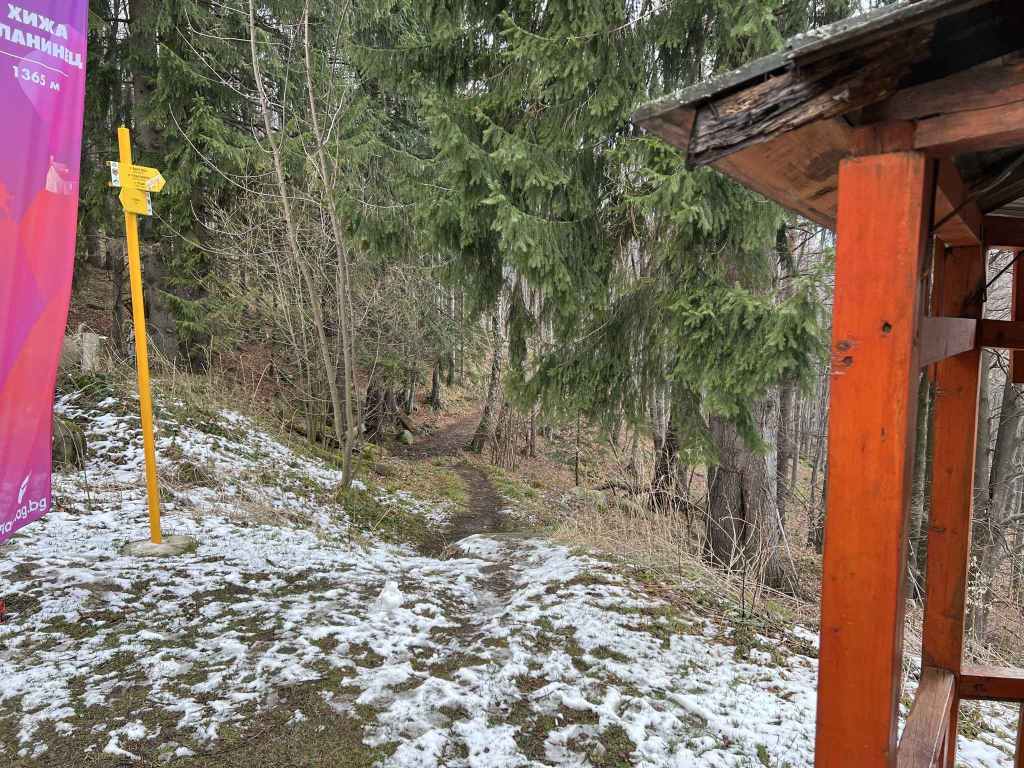
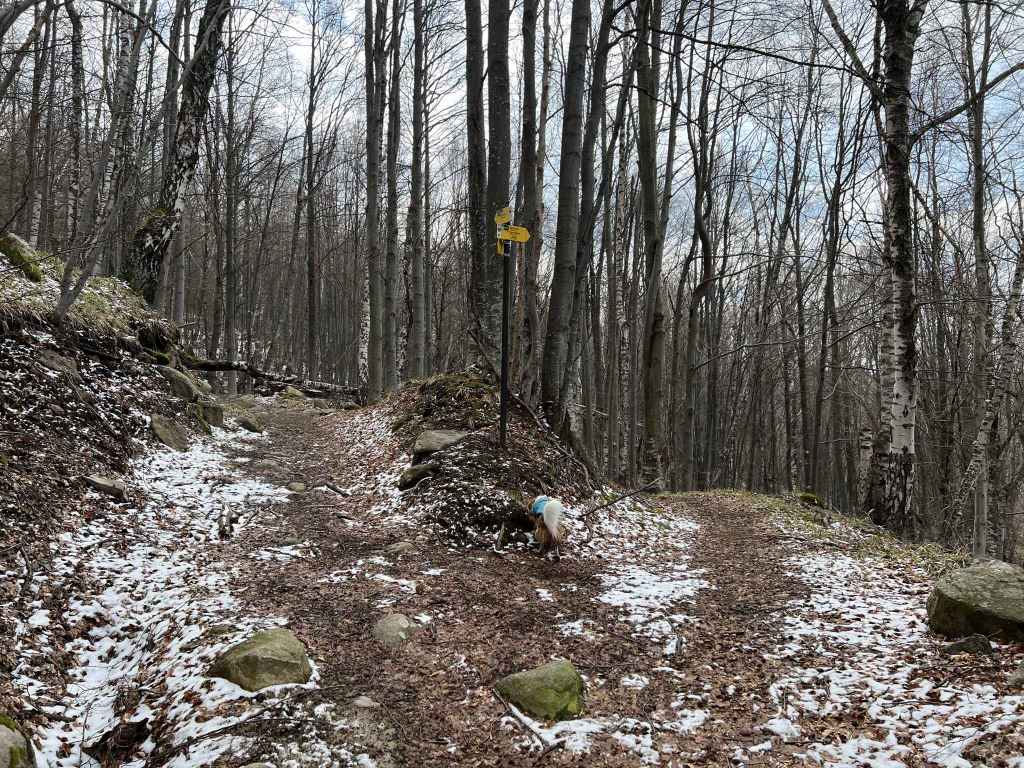
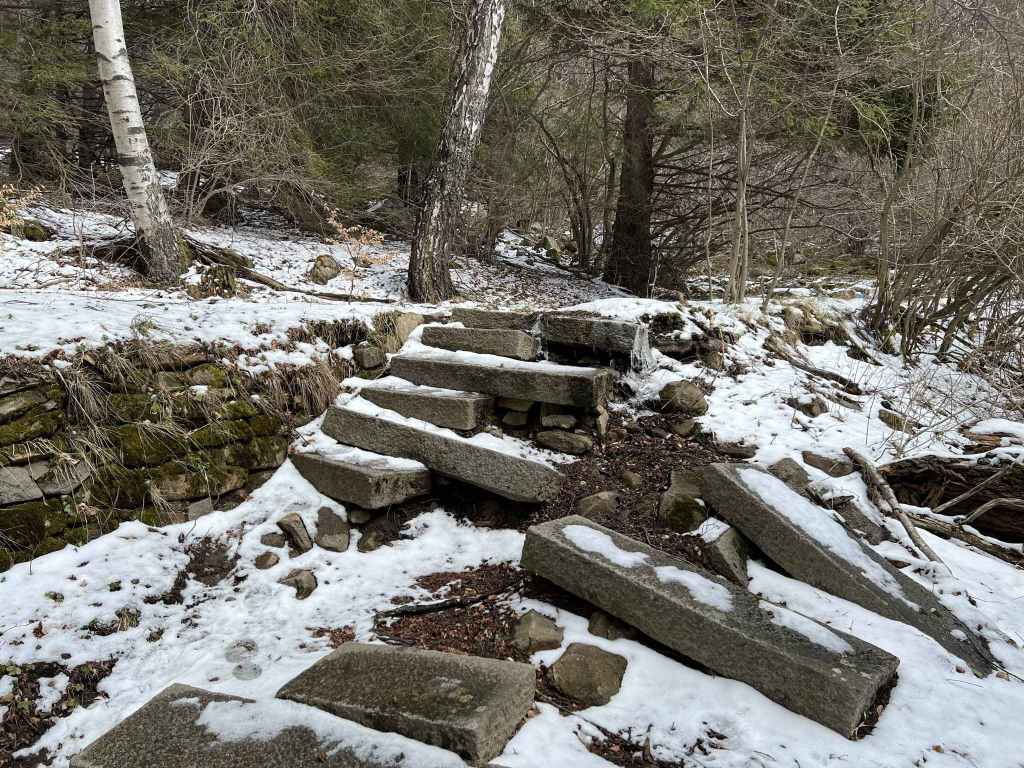
To start the walk, go past the mountain hut on your left and take the path that descends directly in front of you. After a short descent, this path begins to climb gradually through beautiful forest. It divides after about ten minutes. Take the left fork. A trunk has fallen across the path, so you have to bow your head. Continue for another ten minutes until you reach some large stone steps. At the top of these steps, turn right and after five minutes you will come to the cobbled road that goes from Momina Skala on your left to Zlatni Mostove on your right. Cross the road, climb the steps directly opposite and join the path that connects Momina Skala and Zlatni Mostove. Go right, the path descends steeply for a few minutes. At the bottom, take the path that climbs directly on your left (the road is on your right, and Zlatni Mostove is in front of you). You will now stay on this path for forty minutes or thereabouts.

The path climbs steeply for ten minutes (this is the hardest part of the walk, but nothing too strenuous). Ignore the crossroads, with a hotel (Elitsa) on your left. Keep going straight. After a few minutes, ignore the turning to Septemvri on your left. Keep straight. The path levels out, you cross little streams and pass large boulders called moraines. Eventually you will come to a clearing with plants. Here you join another path coming from Planinarska Pesen. Go left, and in a few metres you will reach a bridge over Boyana River. This attractive river tumbles down the mountainside and further down becomes Boyana Waterfall. This is an ideal spot to have a rest. It is also about halfway through the walk. From now on, the walk is downhill.

When you are rested and have enjoyed one of my favourite spots on the mountain, cross the bridge over the river. There is a mountain hut on your right, Bor. You want to go left (not straight). You can walk on the road, or better take the path that is on the left of the road. On the path, you will keep crossing the road as it winds down the mountain (the path is more direct). After a few minutes, cross the road, and then you will reach the mountain hut Tintyava. Immediately after the hut, turn left, with the building on your left. Cross the road again, and you will descend some steps to the mountain hut Rodina. Go straight past the building on your left. Cross the road again, and now you are on the path to Momina Skala. After fifteen minutes, a path joins the path you are on from the right. At the bottom, turn left and cross the bridge over the same river, Boyana River, you were sitting by earlier, except that now you are further downstream. Pass the mountain hut Momina Skala on your left and climb the short path to a large open area where there is a meadow and places to sit. This is Momina Skala, a popular destination in summer.

Cross the meadow (do not take the path that veers off on your right, this goes to Kopitoto). On the far side of the meadow is a restaurant. Pass the restaurant on your right and a hundred metres away, on the other side of a parking area, is a path marked “Planinets” heading west. This path goes straight down the hill and has wonderful views west of the mountain. Keep going straight down the hill. After ten minutes, you will cross a path connecting Zlatni Mostove and Kopitoto, but do not take it. Keep going downhill. Towards the end of the day, the light here is very attractive as the sun begins to set. Twenty minutes after leaving the restaurant in Momina Skala you will reach the road to Planinets. The mountain hut is just on your left.

This is one of my very favourite walks on Vitosha, but it can be shortened. When you get to the cobbled road, instead of going right, you can go left. The path will take you straight to the meadow in Momina Skala, and from there you can head downhill to the road leading to Planinets. This will shorten the walk by several kilometres, but I recommend the longer route.

Panagyurishte

The road winds through the forest.

We are unsure about it at first.

Will it be passable? Potholed?

Where does it begin?

It begins, as all things do,

at a crossroads,

which is to say

it has no beginning.

It comes out of nowhere,

leads somewhere,

but it doesn’t then end

– it is we who leave it.

The road continues through the trees.

Their shadows lie across the road

like corrugated iron,

a cattle grid,

protesters.

They resemble the bars of a prison,

but they are just that

– shadows of trees

that from time to time

morph into potholes.

I steer carefully

to avoid sudden disappointment,

ranging from third to fourth

to neutral.

At one stage a golden leaf

has an unexpected burst of enthusiasm

and jangles (like your bracelets)

across the road,

reminding me of destiny.

Are we just Hardy’s playthings?

I have a different view.

Nothing begins or ends with us

(like the road).

Things pass through us,

or we pass through them

(like the forest).

What counts is how we respond

(with love or hatred).

It is our response

that makes us human.

We stop for lunch.

The sun lights up a patch of ground.

To the south,

Rila stands majestic.

In the north,

the Old Mountain belies his years

and blushes.

Tenderness abounds.

Jonathan Dunne, 17 February 2023

Elenkova Reviewed

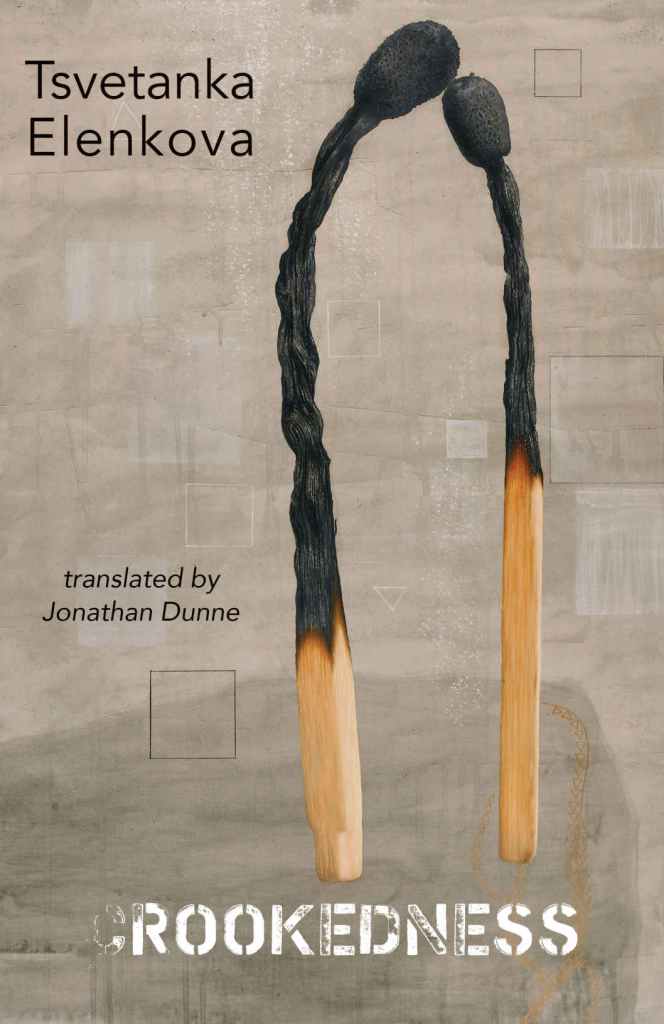
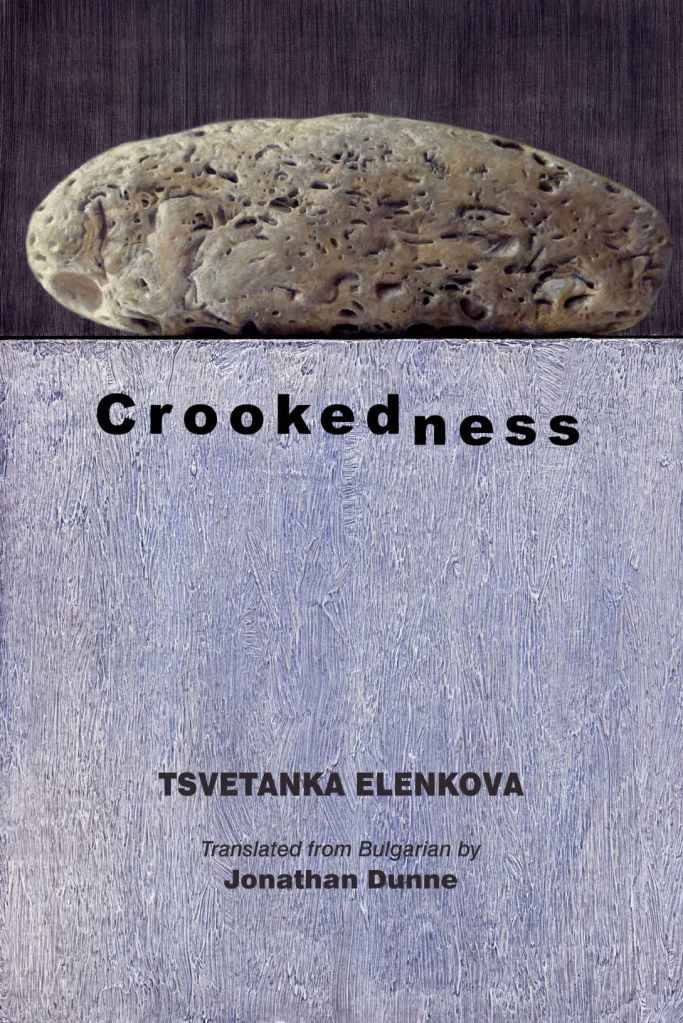
A collection that got slightly lost when it was published by Tebot Bach in 2013, Crookedness by Tsvetanka Elenkova, was happily recovered by Tony Frazer at Shearsman Books in 2019, in a smaller, more manageable edition. This is the second collection by Tsvetanka Elenkova, a poet on a European scale, that I have translated and is soon to be followed by Magnification Forty, which received a PEN Translates award.

It is so rare for a book of foreign poetry to be translated into English, and so little attention is paid to them, that one should be grateful when such a book of quality is reviewed in a magazine of the stature of The Poetry Review, the mouthpiece of the UK Poetry Society. I only just found out that Crookedness received such attention from the Singaporean poet Theophilus Kwek (wonderful name!). Well, I have never had my translation described as “clean, almost earnest” before. Here is the part of the review that deals with Elenkova’s book:

Two other recent translations deal with quieter forms of disappearance and loss. Unlike Zurita, whose canvas is the oceans and seas, Bulgarian poet Tsvetanka Elenkova chooses to dwell on the fine print of the physical world: the echo from a conch, or the wind heard “through the open throat” of a bottle. These images, from her opening poem (‘Pain’), give tender shape to what is otherwise hollow or invisible: “a single slight hiss / as of a punctured bicycle tyre”, or “pain from the emptied body”. She returns in later poems to chart the psychological experience of pain; the death of a friend, for instance, is compared with sitting “under the crown of a broad-leaved tree / which is an upturned conifer […] to watch the coming storm” (‘Hourglass’). The precision of Elenkova’s images shines through (and even transcends) the clean, almost earnest diction of Jonathan Dunne’s translation.

In a new introduction, Fiona Sampson describes Elenkova as a mystic of our times, her “lucid” observations bringing to light “a poetic world […] of religious mystery, mortality, love and desire”. Though Crookedness borrows liberally from tradition, the poet is quick to disclaim immediate parallels with Orthodox iconography: “Your body has nothing in common / with the cross”, she writes (and adds – “or Leonardo / or the sun god”, for good measure). What is at work here is not the stained-glass imagery of the church, but something plainer and still more sensuous: “an interweaving (of the ankles) / an open / eight / a curve (of the wrists)” (‘This Is It’). Such earthy and abundant beauty carries with it always the hard edge of impermanence, unless, of course, it is transformed into poetry. As one of the briefest poems in the collection’s second segment (‘Pansies after Rain’) puts it, “reflection is capture” (emphasis mine).

Crookedness actually contains one of my favourite poems by Elenkova (together with ‘The Time We Are Together’ from The Seventh Gesture, my absolute favourite, and ‘The Train’, which appeared in an issue of The Massachusetts Review and in their special sixtieth-anniversary issue And There Will Be Singing). It’s the poem that opens the book, ‘Pain’:

PAIN

When you hold a bottle and hear the wind
through the open throat
when you put a conch to your ear
the echo pain from the emptied body
and when a single slight hiss
as of a punctured bicycle tyre
finally fills the empty space
like a newborn’s wail
Take it carefully in your arms
and give it or don’t to its mother
but take it carefully
it’s so fragile all cartilage
Give it water or leave it on the shelf
by your head
Gallery

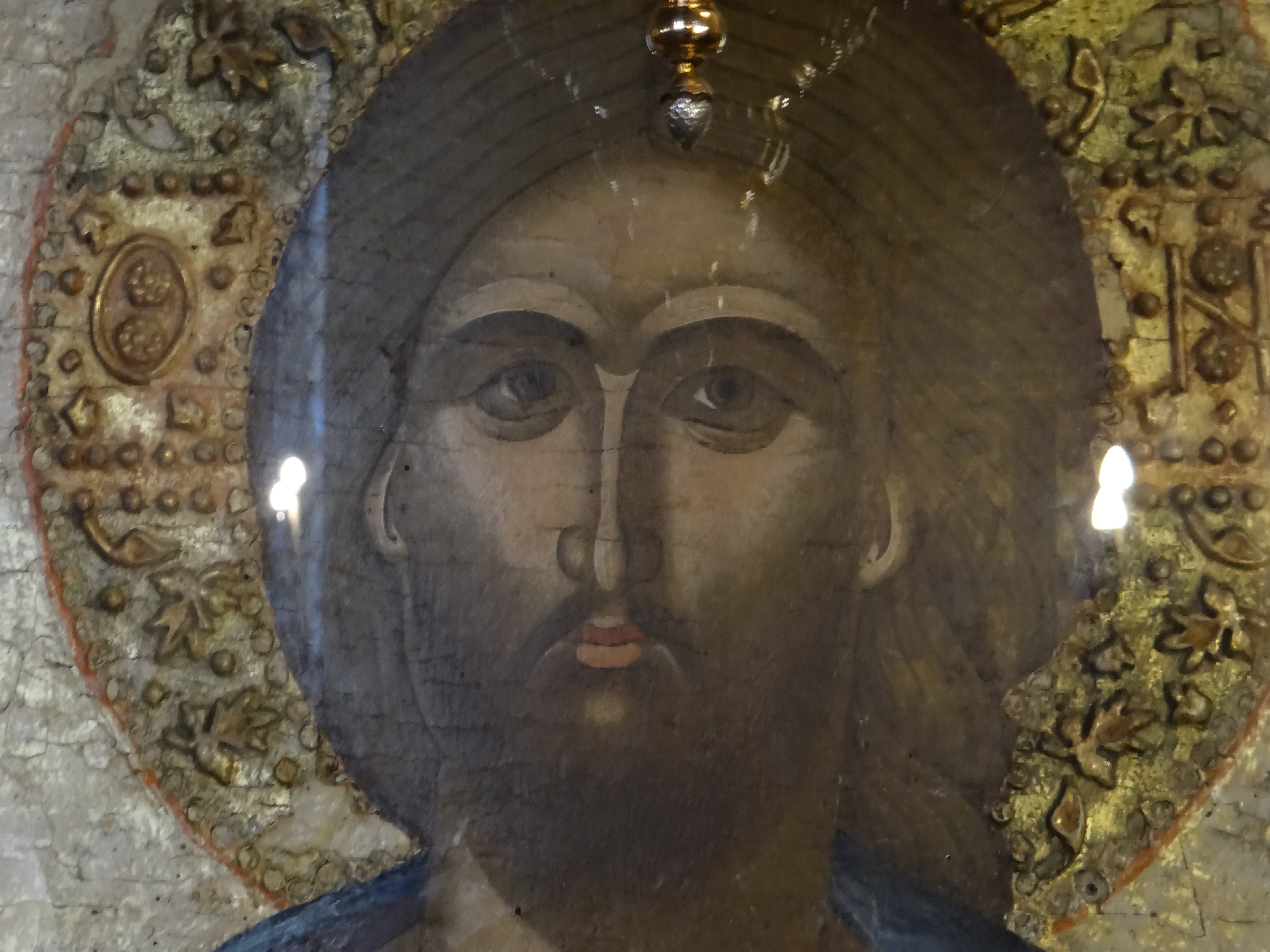
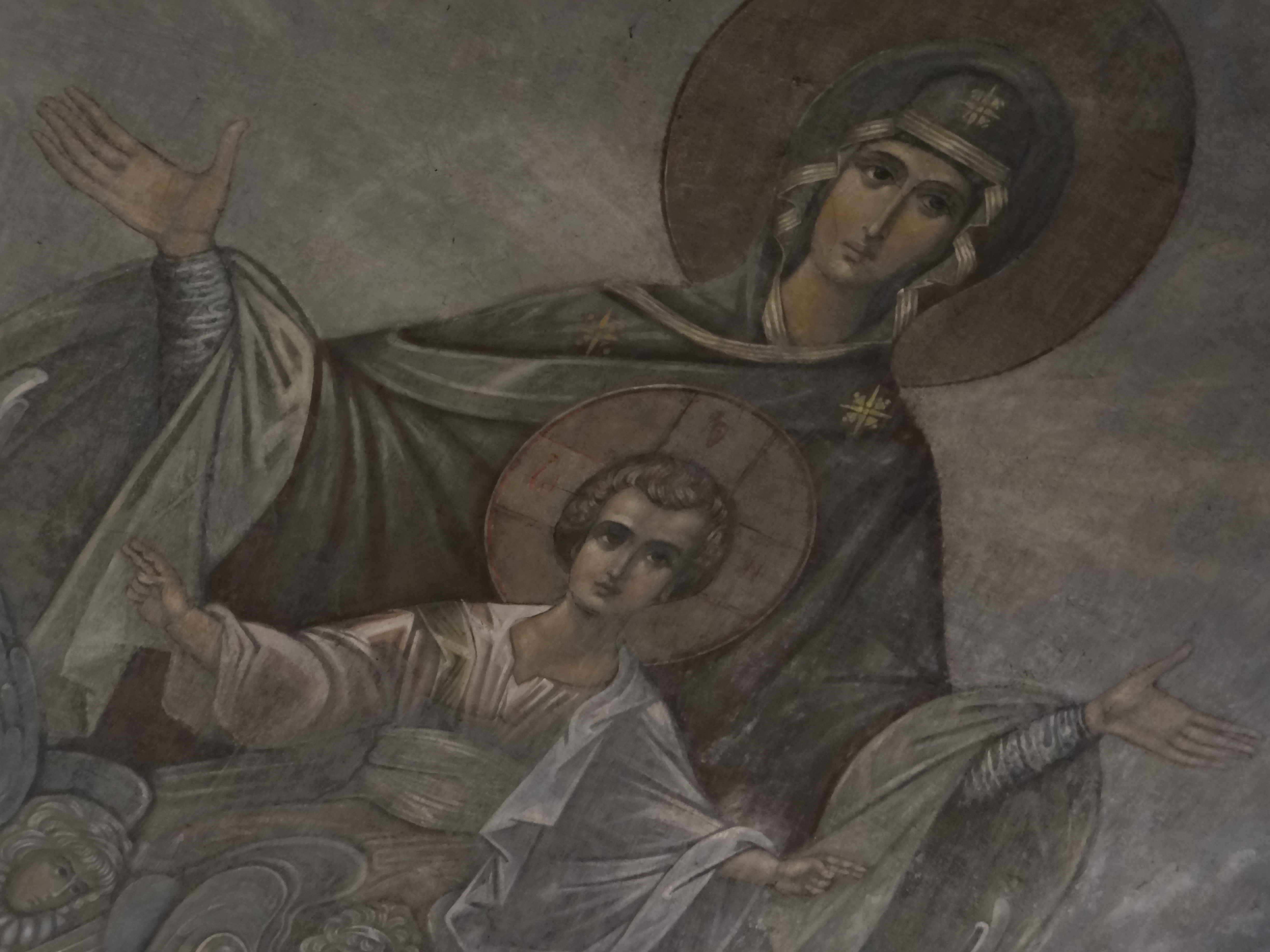
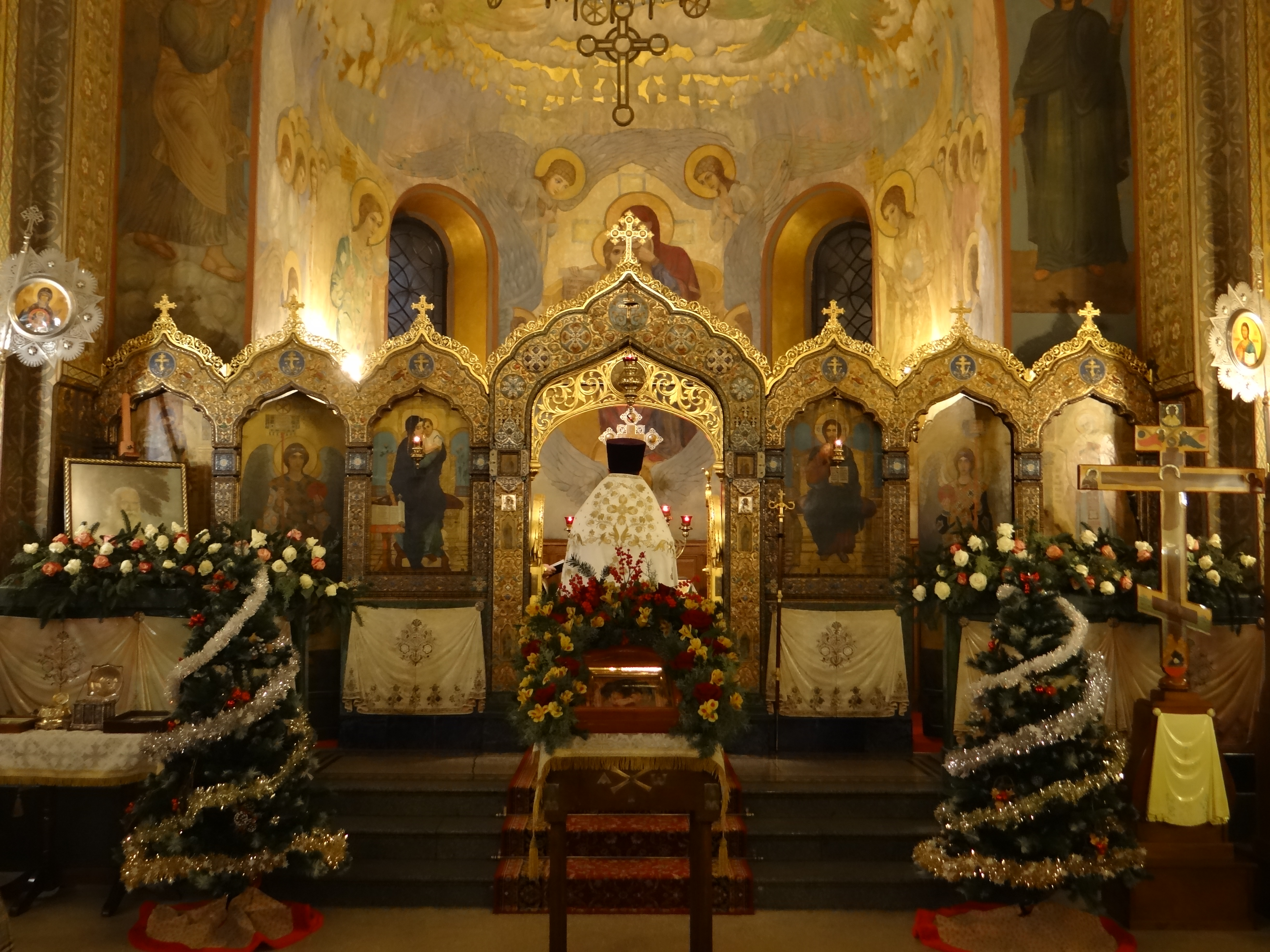
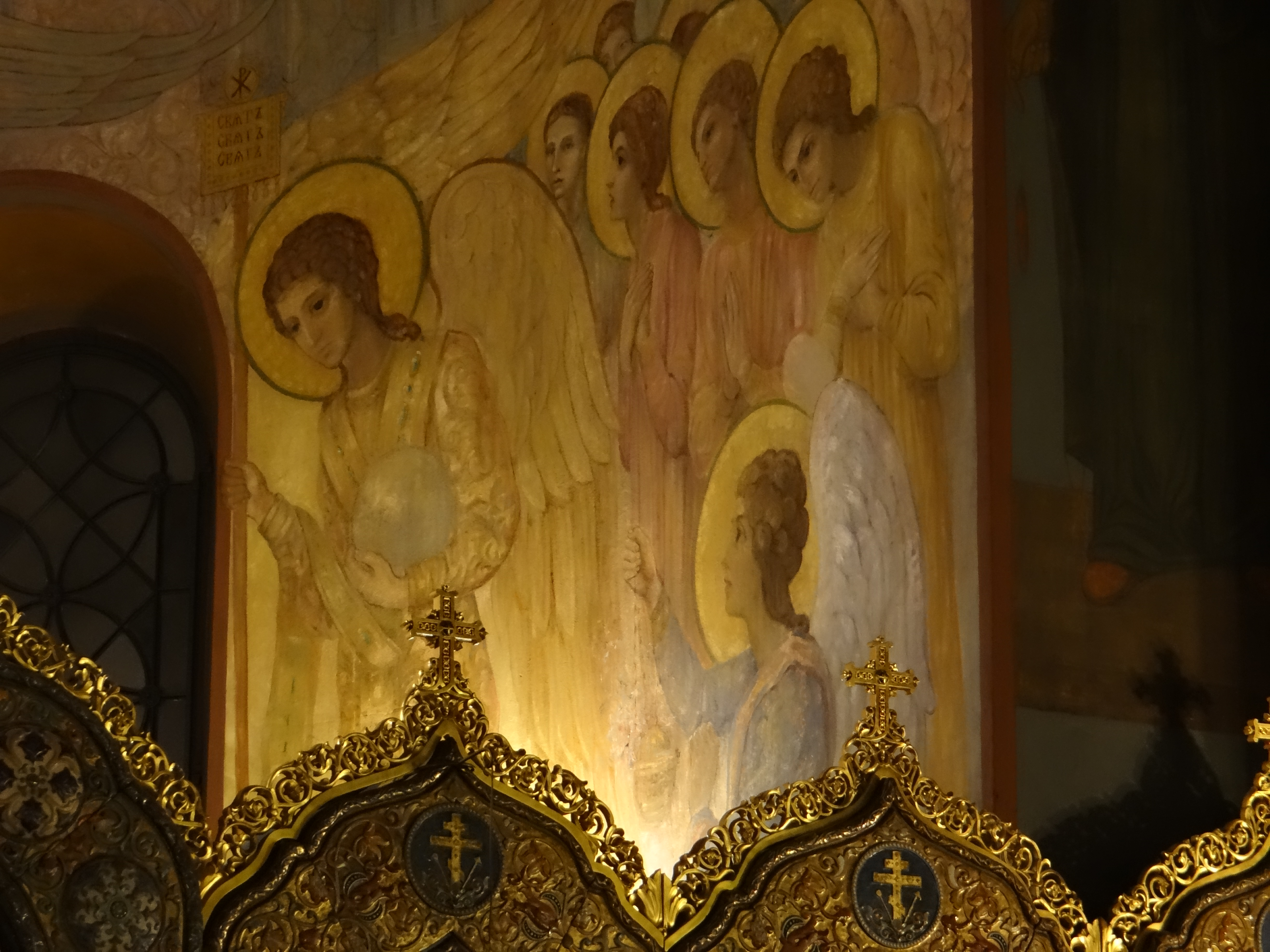
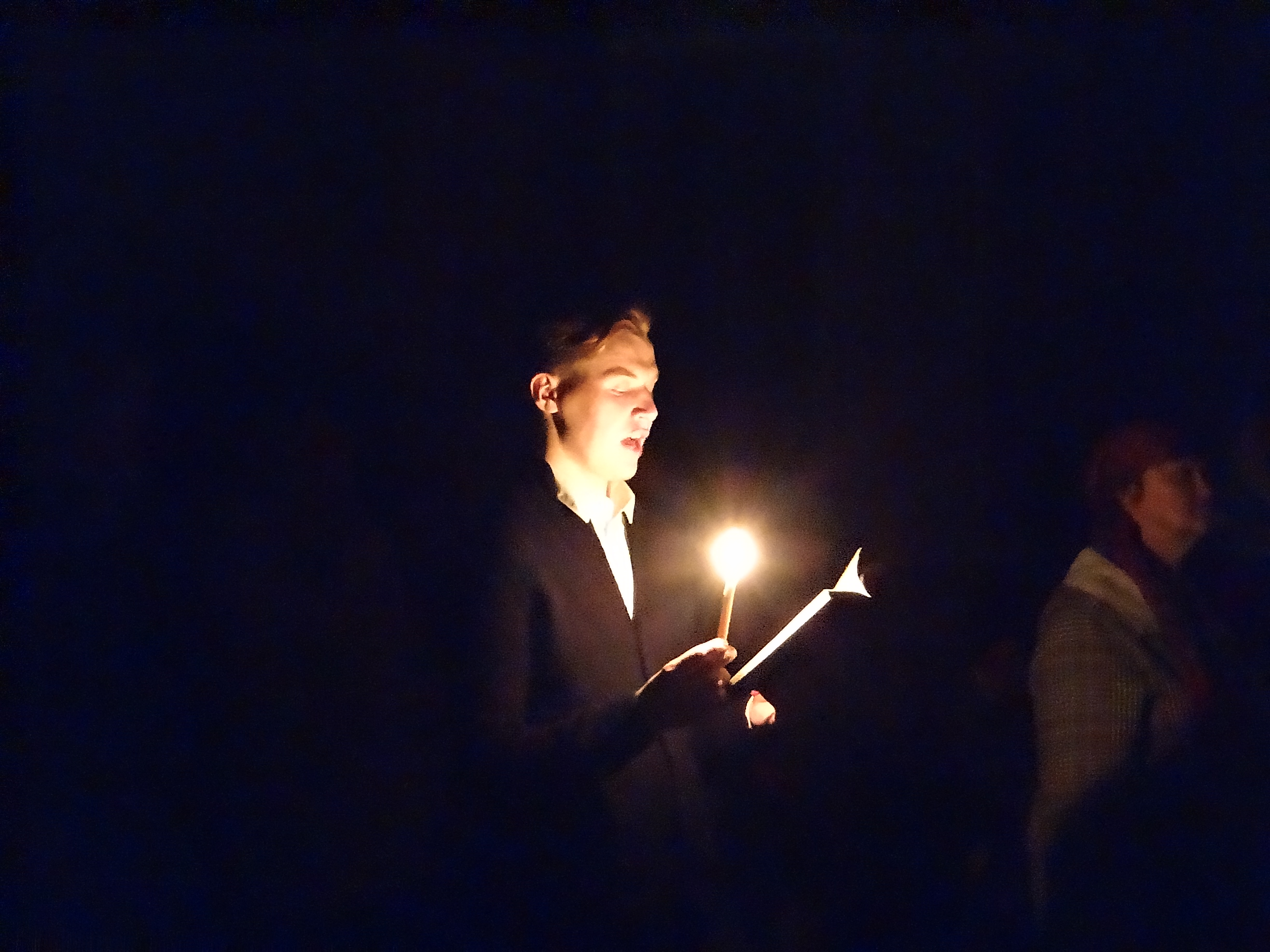
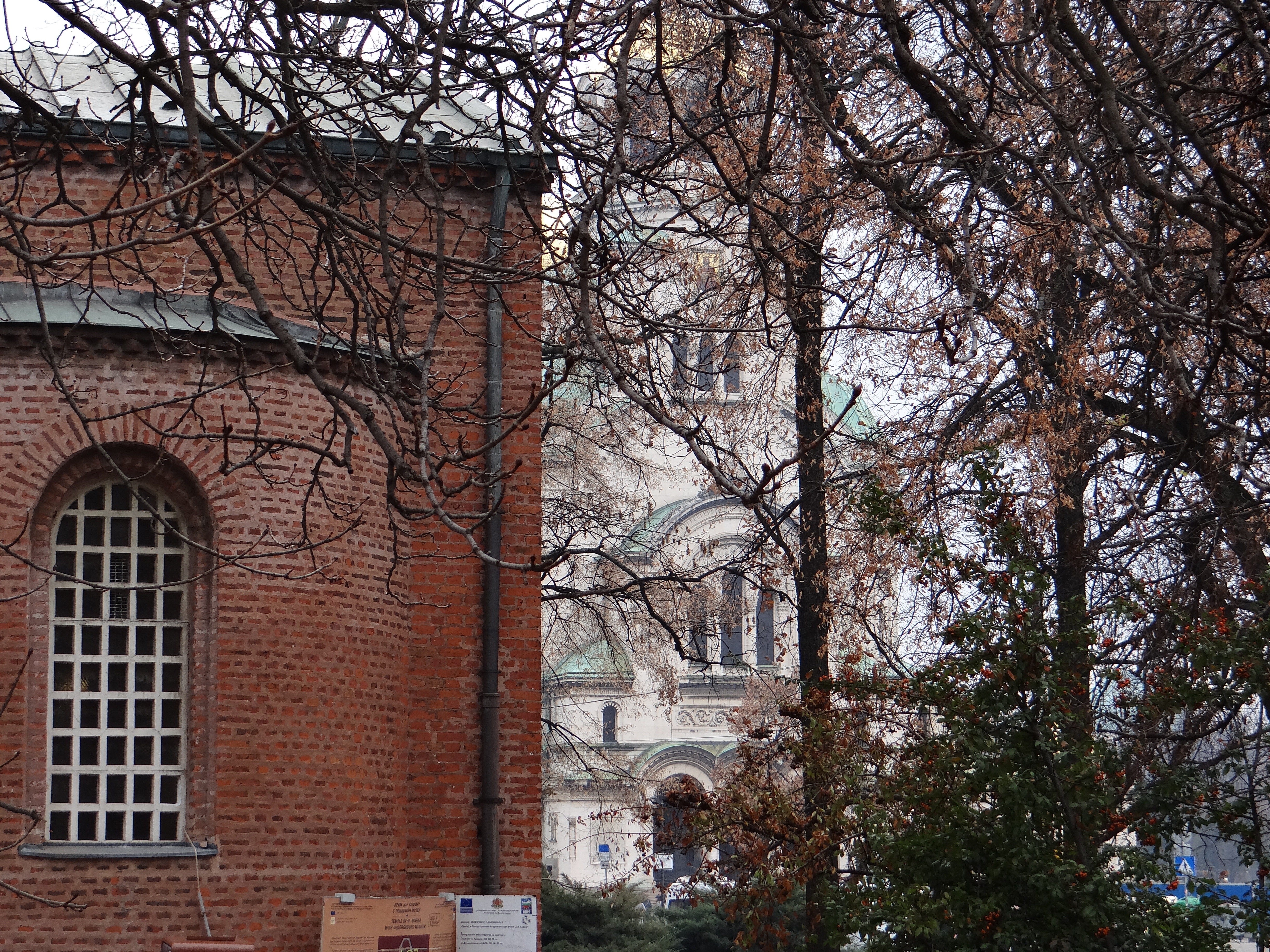
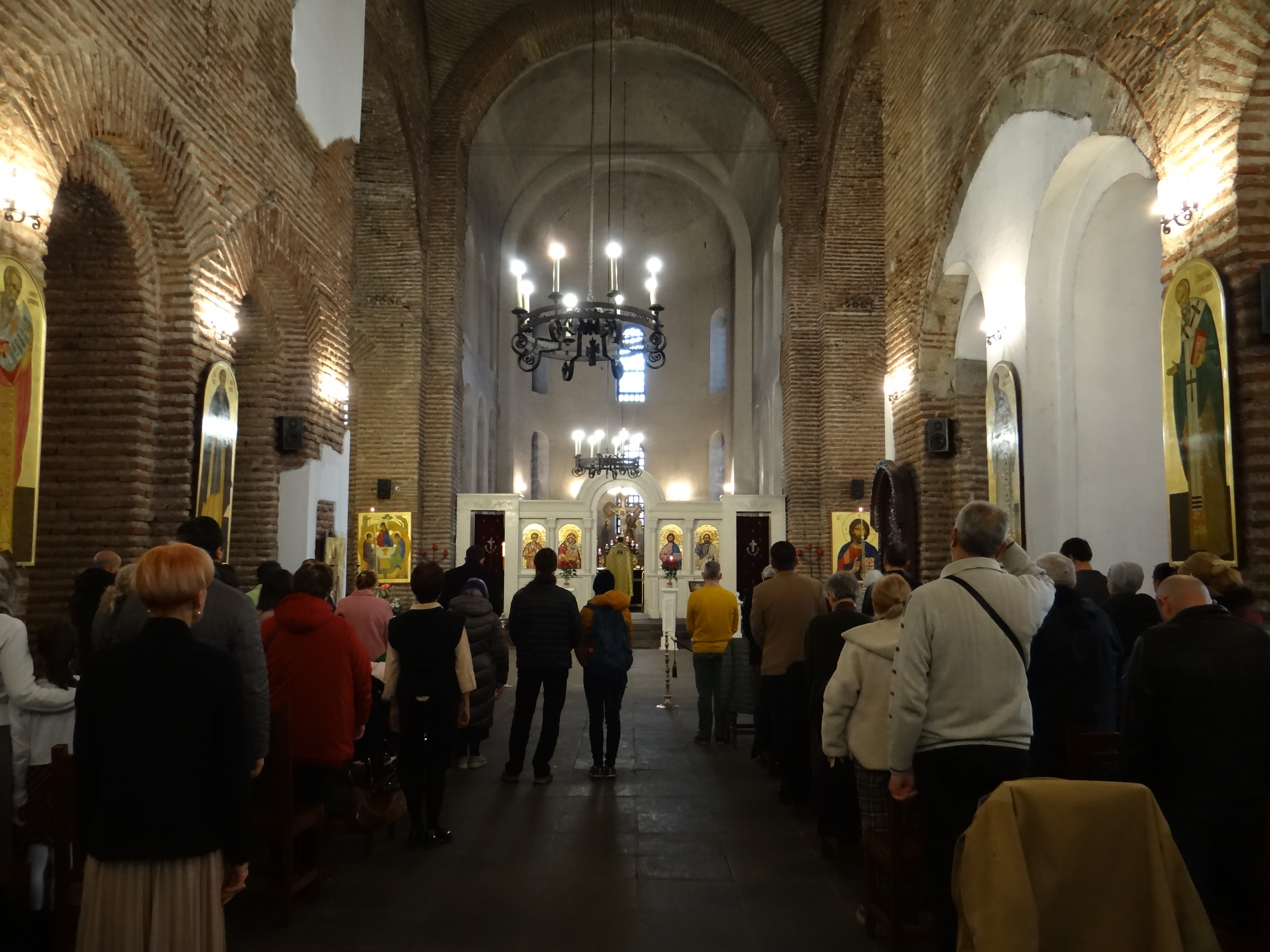
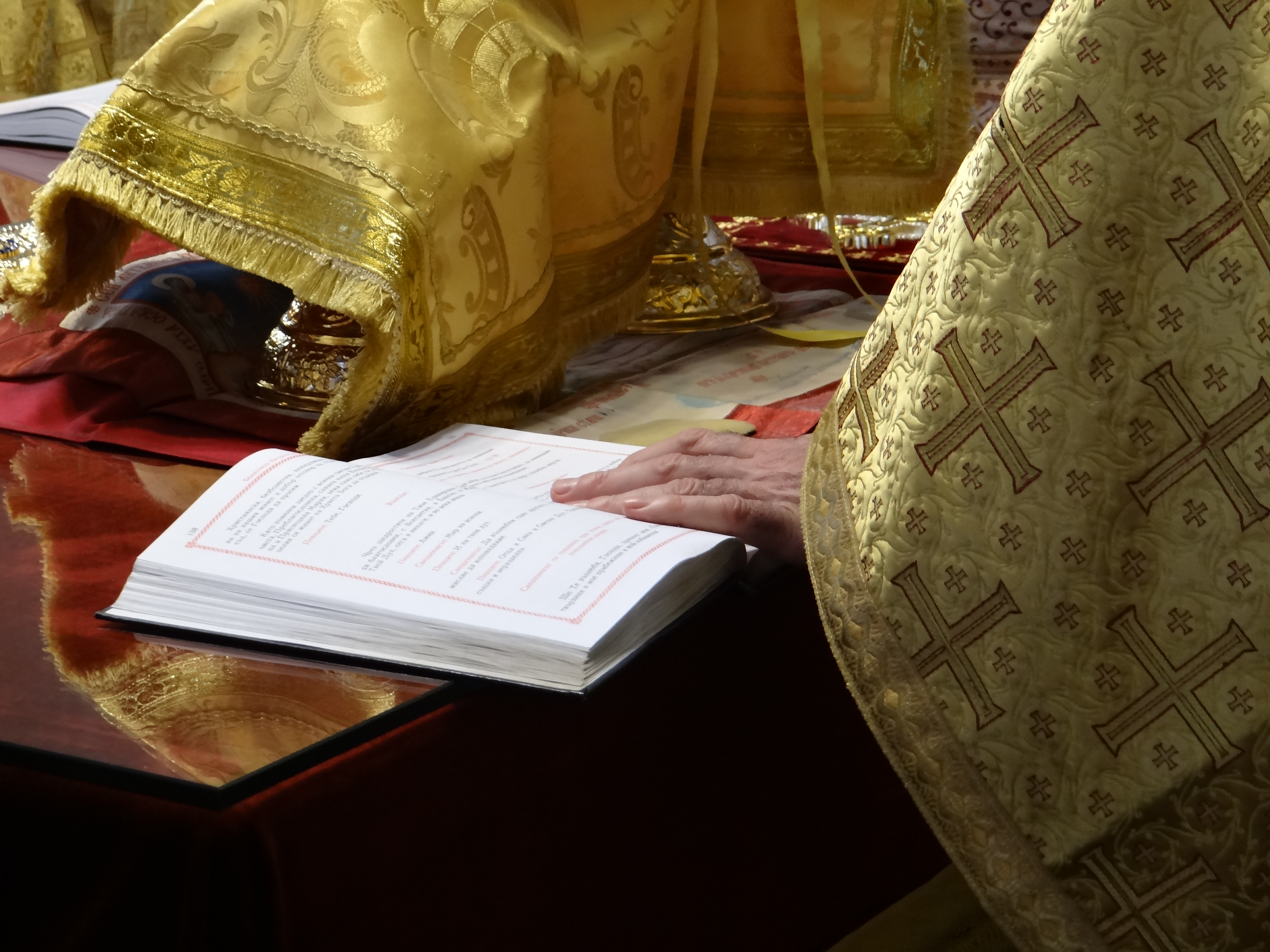
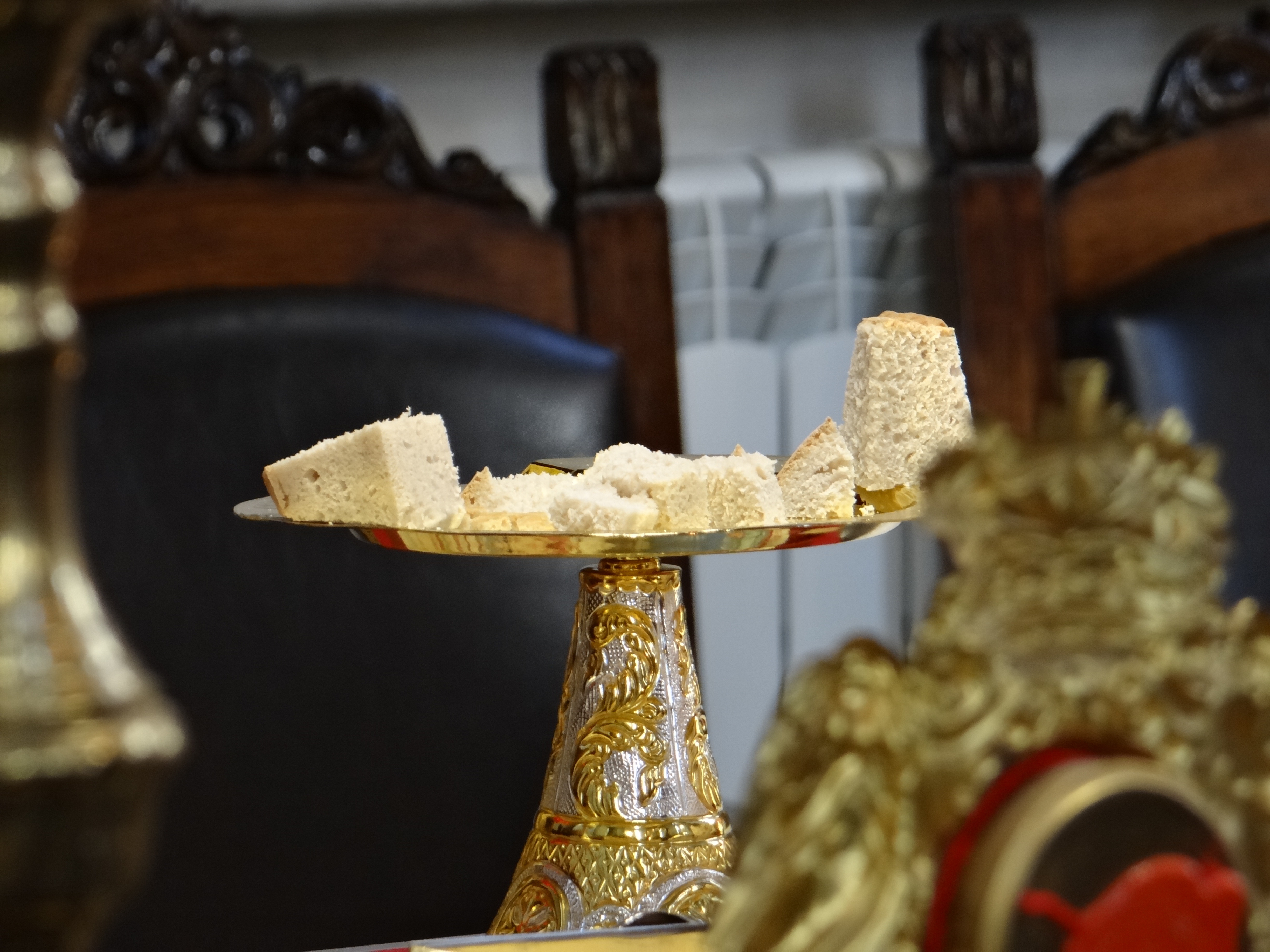
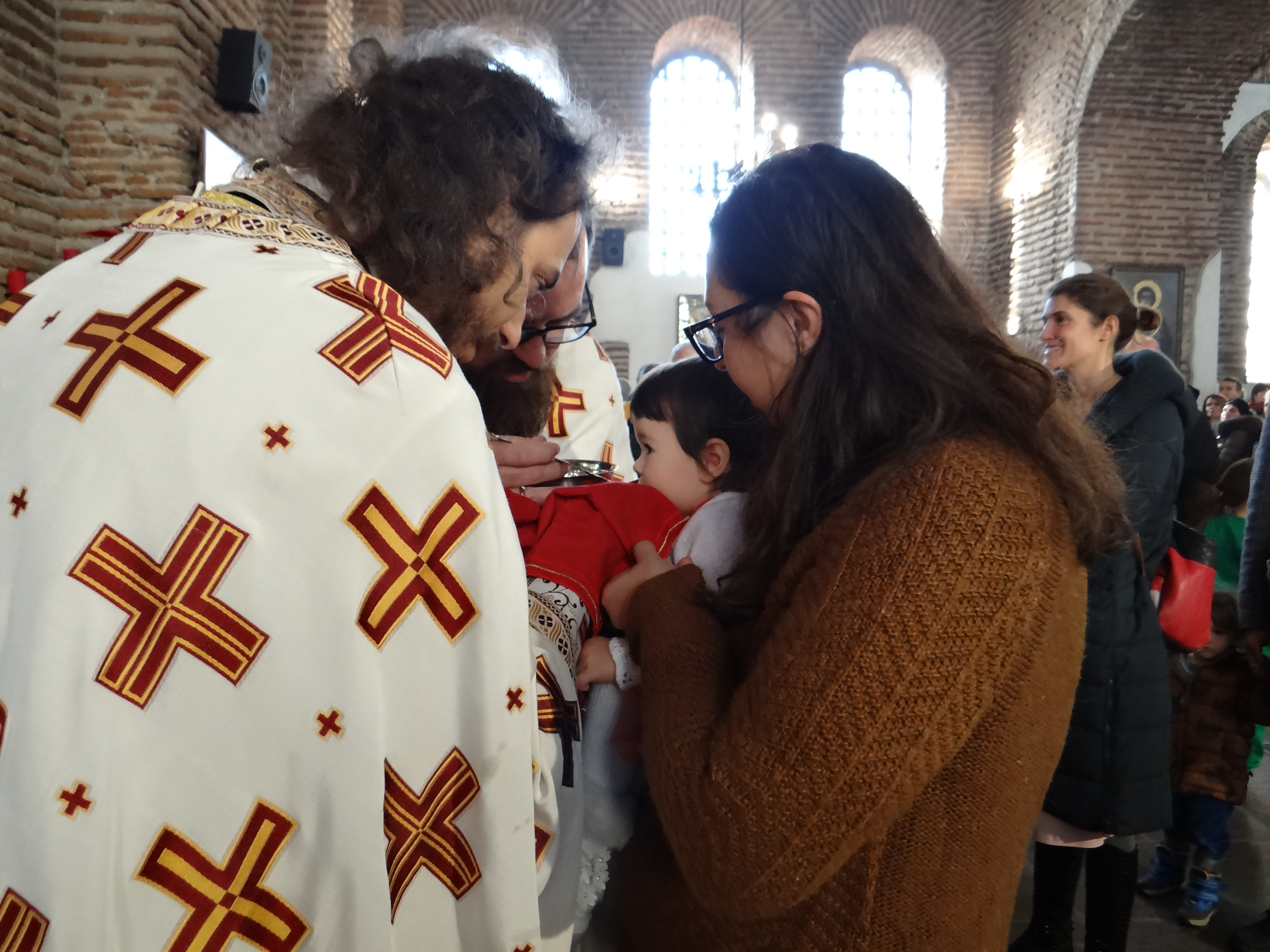
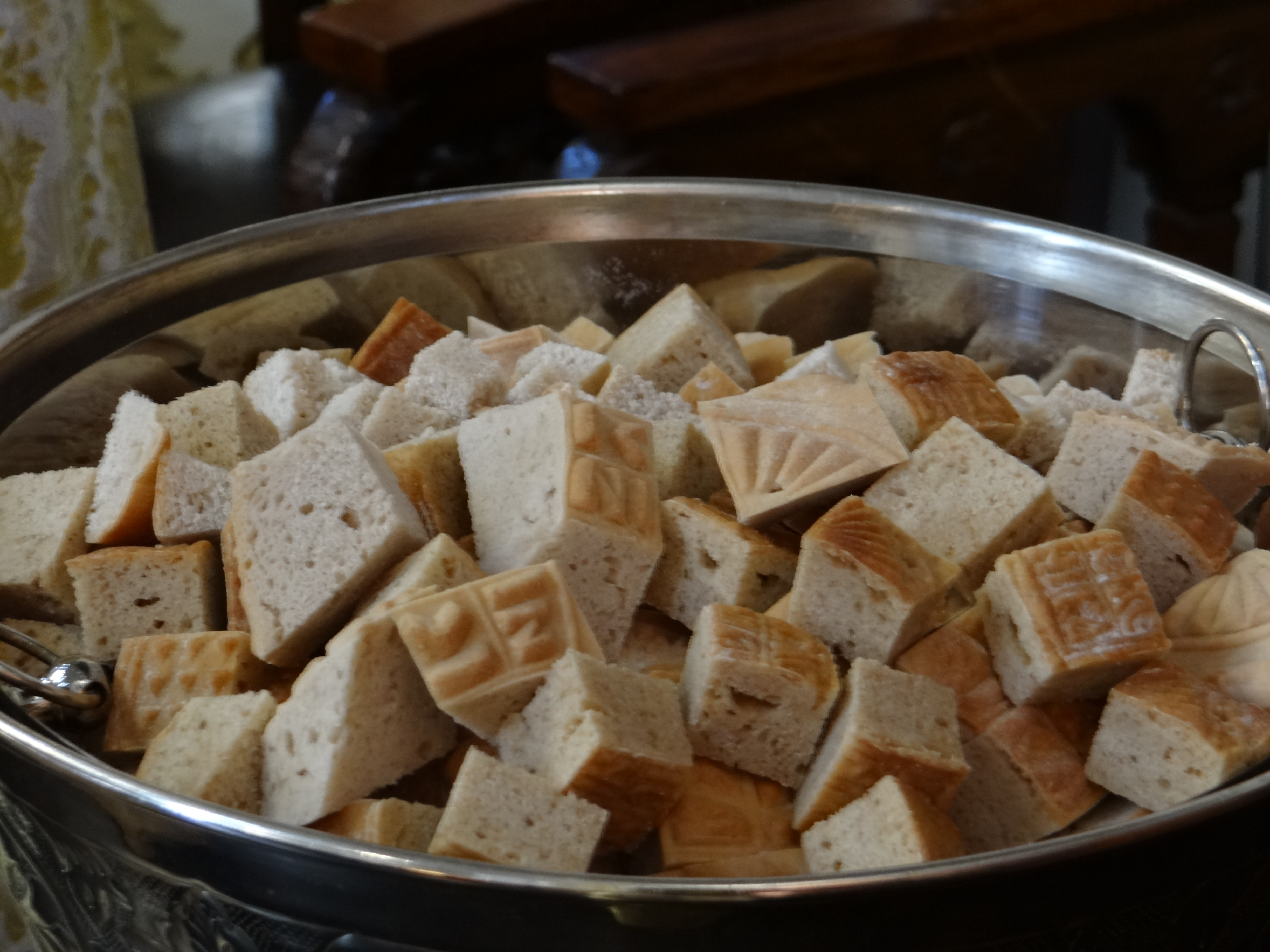
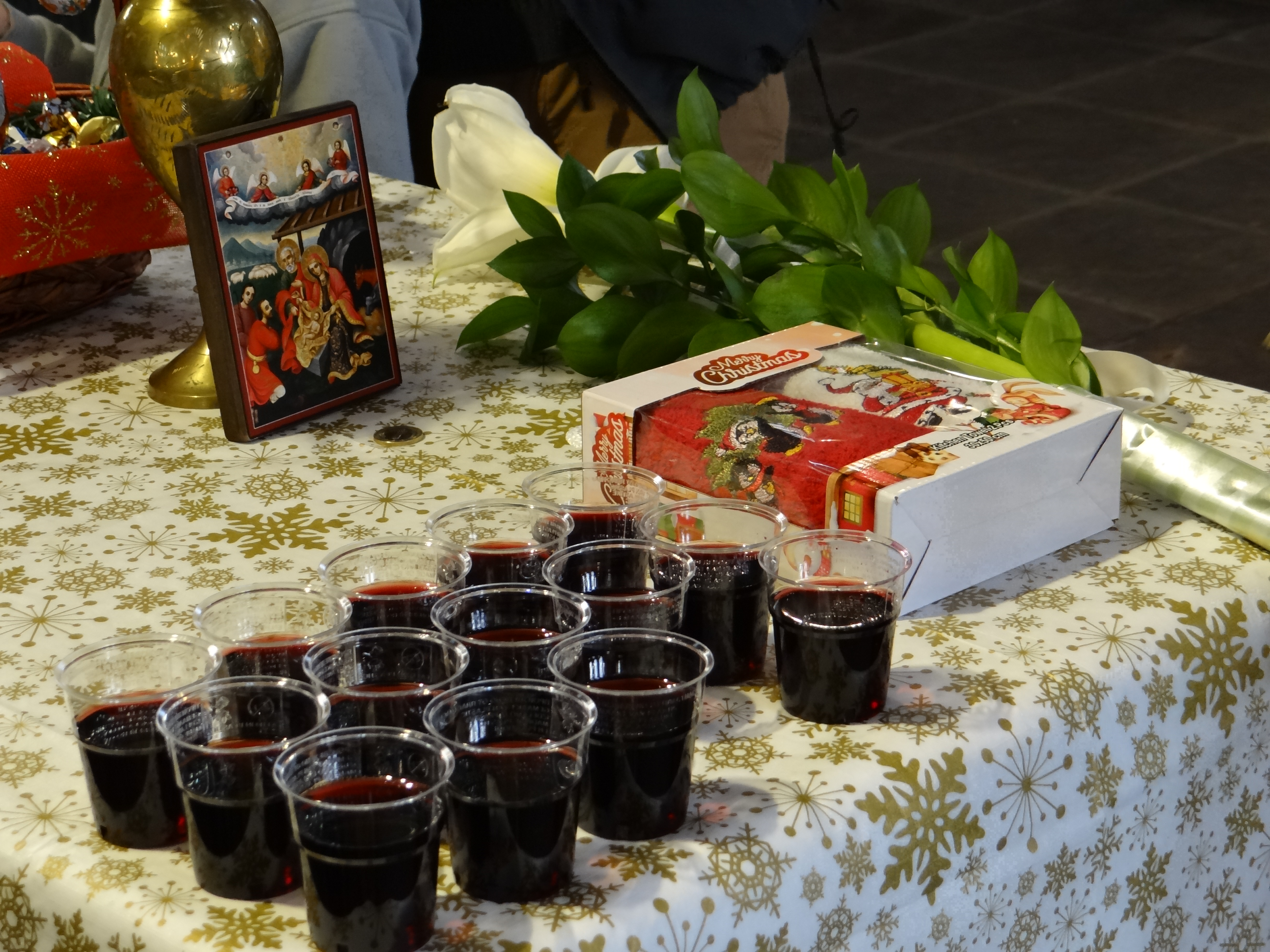
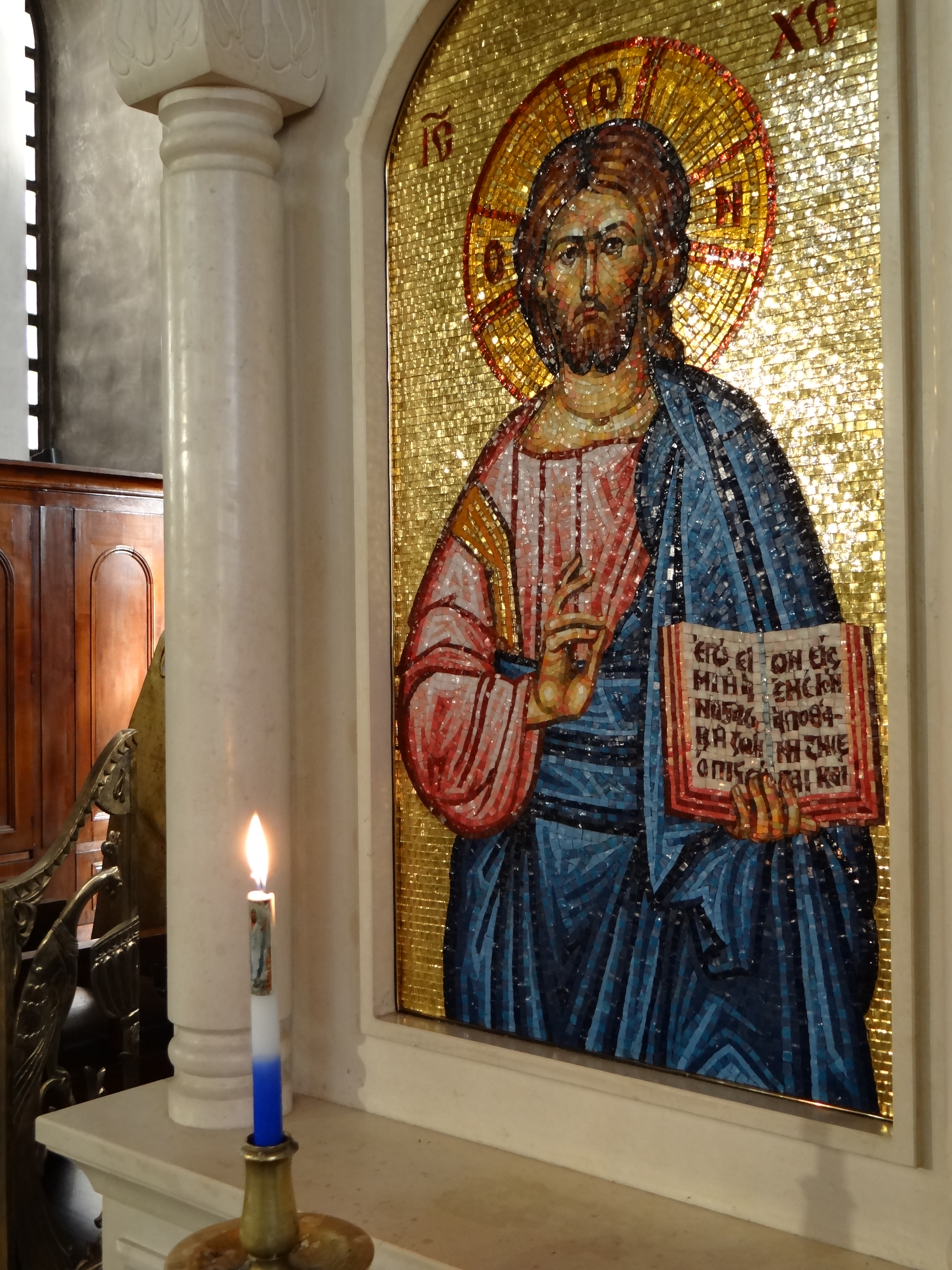
Orthodox Christmas in Bulgaria

These photos were taken in the Russian Church of St Nicholas and the Bulgarian Church of St Sophia, both in central Sofia, with the permission of their respective priests.

Berkovitsa

Sofia irradiates roads. I discuss the three that go to the Black Sea in my description of Sopot Waterfall. Then there’s the II-16 that takes you north along the Iskar Gorge to Bov and Dobravitsa. And the E79 (or the A3 motorway) that takes you south to Ovchartsi and then Greece. The E871 heading south-west in the direction of Polska Skakavitsa and Kyustendil. And don’t forget the II-63 that takes you west to Tran on the Serbian border (I still remember visiting Bilintsi Monastery along this road and meeting the abbot, who gave us tea next to an open pit and had taken it upon himself to ‘improve’ the ancient frescoes in the church).

Well, here we are going to take the II-81, which also heads north from Sofia in the direction of Montana and Lom. It is as if Sofia has antlers – the II-81 on the left, and the II-16 on the right. What makes the II-81 famous is Petrohan Pass, which you must pass over in order to reach north-west Bulgaria (Vidin and Romania). You leave Sofia through the district of Nadezhda and cross the ring road. The II-81 starts gently enough, passing through Kostinbrod and Buchin Prohod (from here you can turn right and cut across to the II-16 if you’re suddenly overwhelmed by a desire to visit Dobravitsa Waterfall).

After Buchin Prohod, ignore the turning to Godech on the left (though this, for me, is a very attractive part of Bulgaria with the wonderful Razboishte Rock Monastery) and the ‘Historical Road’ (the main road continues left), and pass through the pretty village of Gintsi, much favoured by artists and beekeepers. The road then begins to twist and turn as it climbs Petrohan Pass. The pass is often closed in winter because of snow, but the rest of the year it’s normally fine. The top of the pass is 65 km north of Sofia. There’s a large reservoir, which I understand was once a fish farm.

The road then descends on the other side. More twists and turns (try not to get stuck behind a van!). Ten more kilometres, and you reach what in my parlance would be called a ‘roadside caff’ on the other side of the road, a restaurant much favoured by my father-in-law, I am told (he was a famous opera singer and his family hailed from Vidin) – you can always stop here to try the kebabs and meatballs. Another six kilometres, and you enter Barzia, the Gintsi of the north, so to speak. From here, a road heads right to Klisura Monastery, well worth a visit, if you have the time.

But we must continue to the town of Berkovitsa in order to reach Haidushki Waterfall. So stay on the main road. Three kilometres out of Barzia, you will see a turning on the left, marked ‘Berkovitsa, 2 km’. Take this turning, climb the hill, and soon you will reach an OMV petrol station. I have a particular fondness for this petrol station, because this is where I bought Timon, the meerkat who features in The Lion King and was once my son’s favourite teddy.

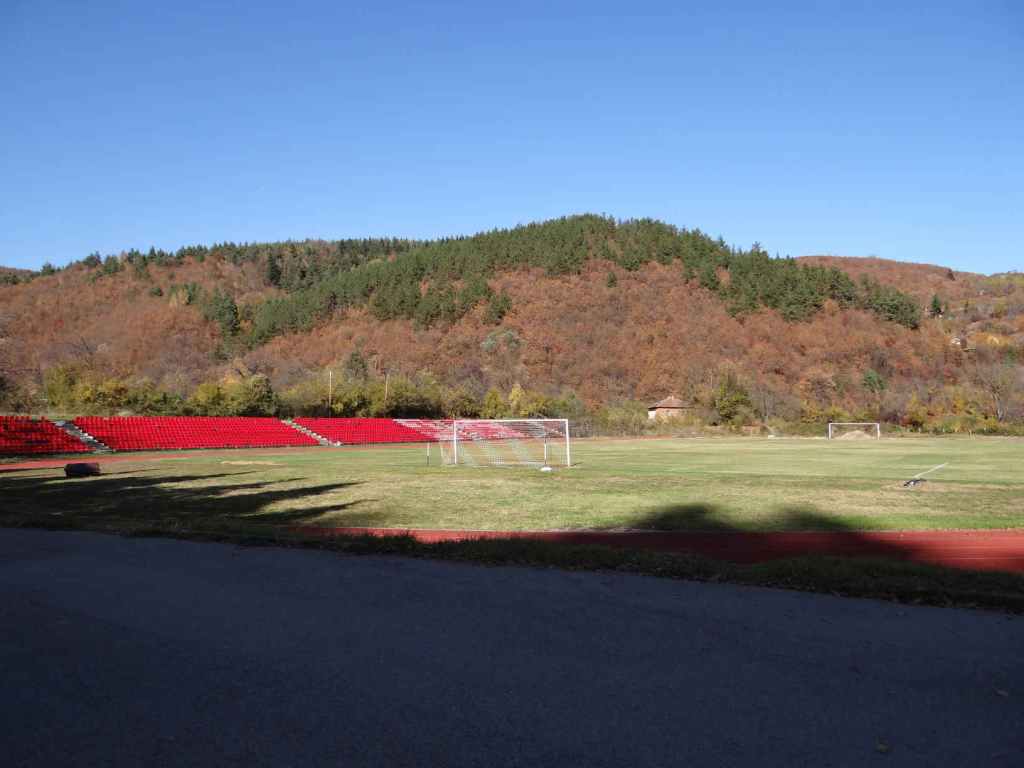
You can stop here for petrol or a coffee. After OMV, the road goes right, alongside the railway. After 1000 m, the road goes right again, over the railway, but you go left. This turning is marked ‘x. Kom, 17 km’. Another 700 m, and you must take a turning right, marked ‘Kom Peak, 14 km’. Continue along here for 2½ km, passing a stadium on your right, until you reach a fork in the road. Take the right turning, and now you have a decision.

The road you are now on leads directly to the waterfall. I can’t tell you the distance, because I parked the car by the marble (‘mramor’) factory which is in front of you and walked. But plenty of people take the car further, there being lots of picnic places and several summer houses along the way. So you have a choice. How far do you want to walk?

The car journey from Sofia to this point is about 1 hour 45 minutes (90 km). The walk in front of you is the same, 1 hour along the flat, and then 45 minutes gently climbing the mountain. You never leave the road, though it becomes progressively more rutted and covered in leaves, and I wouldn’t want to think what happens if you’re on the mountain and meet a car coming the other way. You’ve also got the question of having to turn around. So it’s really the 1 hour on the flat that can be shortened. Plenty of people drive this distance, leaving the car as the road begins to climb (this point is marked by the beginning of an ecopath, for which there is a rusty yellow sign).

If you leave the car by the marble factory, you will have a 4½-hour outing there and back, including a lunch stop. You walk alongside the marble factory for ten minutes, the road then appears to fork – actually it continues on the left (this is where many people park), while a track heads right, up the hillside. After that, you can’t get lost, unless you want to. All along the road, there are picnic spots. It’s up to you how far you take the car. But after an hour’s walking, when the road begins to climb and the waterfall is only 45 minutes away, it really is time to leave the car behind and enjoy the nature.

We went at the end of October. Haidushki Waterfall is a series of beautiful short waterfalls, and one of the few waterfalls it doesn’t matter if you go in the spring (after the snow melt) or in the autumn. Leaves carpeted the ground. The river below the waterfalls shone black. Other leaves that hadn’t reached the ground yet seemed to rain down on us, but it was the river that kept drawing my attention. Sometimes the leaves on its surface meant you didn’t know it was there, and it was easy to put your foot in it – in fact, I did precisely this: I became part of the waterfall for a moment.

It is clear when you reach the waterfall, because there are several signs. You have to descend a little. There is a shelter with some benches, a small mirador, and then the waterfall in front of you, but don’t forget the other waterfall on your right, hidden around the corner. They’re both beautiful.

If you continue upriver or downriver, no doubt you will come across other cascades. The traffic coming back into Sofia was dense, I had to drive with only one sock (the other was wet), but we had had our adventure. Life is not a choice, we only think it is – it is an experience.

The OMV petrol station in Berkovitsa (the road goes right).
After 700 m, you take a turning right, marked ‘Kom Peak, 14 km’.
The stadium in Berkovitsa.
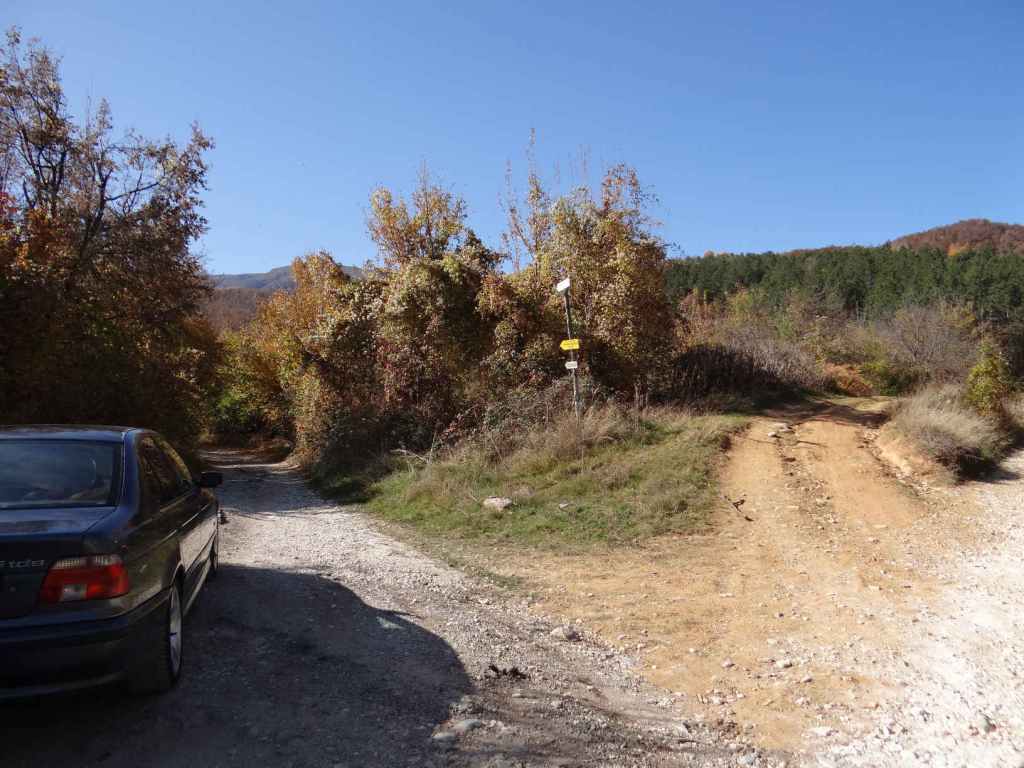
The fork in the road – the road on your right leads all the way to the waterfall, but becomes progressively more rutted and leaf-strewn.
The marble factory on your right – we parked here.
After ten minutes, the road continues on your left, while a track heads uphill.
Autumnal colours.
The road through the trees.
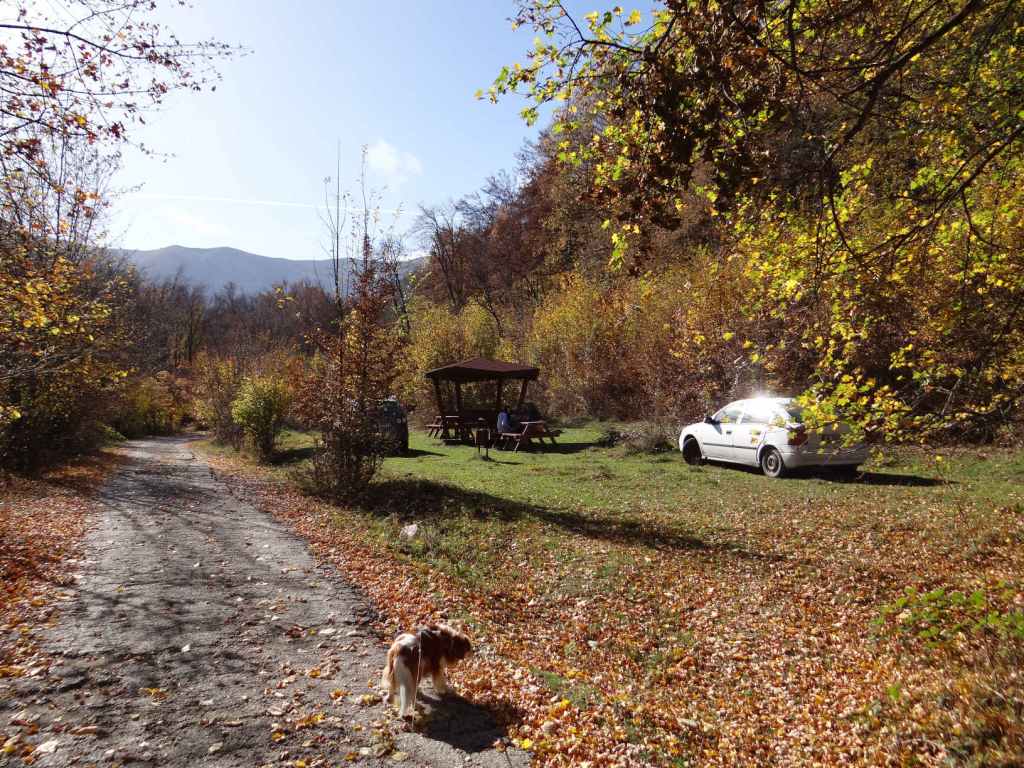
One of the picnic places.
Yellow sign indicating the start of an ecopath – the road begins to climb the mountain.
The river with leaves on its surface.
The road on the mountain.
A landscape painting.
Arrival at the waterfall (which can be seen bottom left).
The roof of the shelter.
Haidushki Waterfall (left).
Haidushki Waterfall (right).
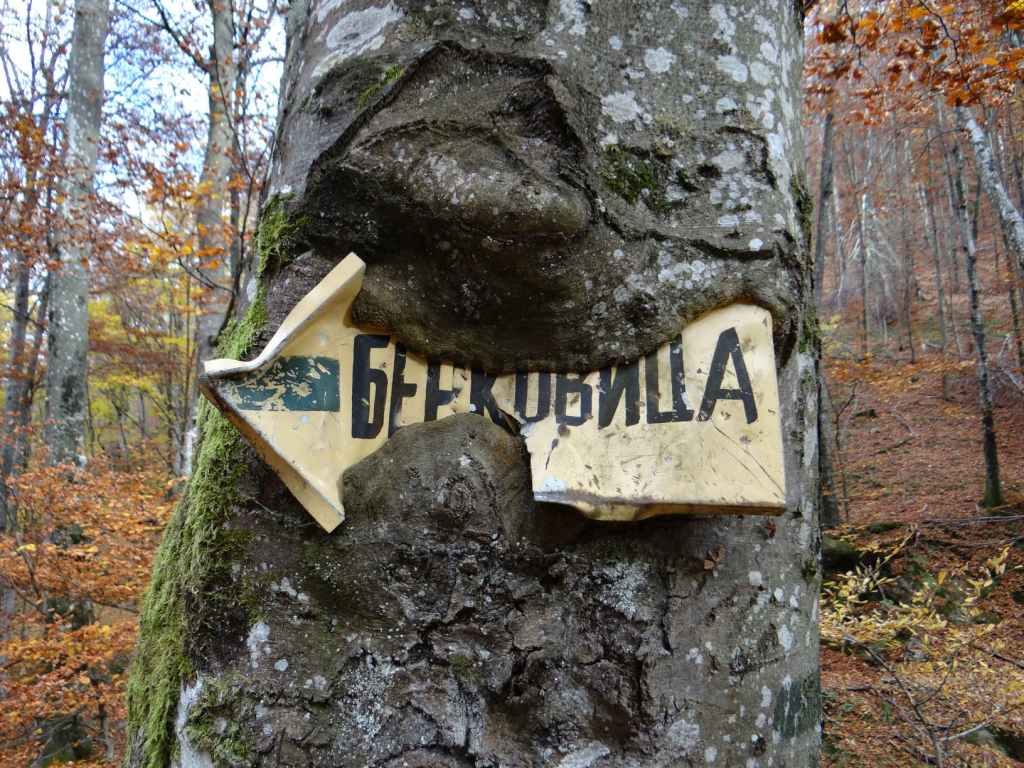
The road back to Berkovitsa (being eaten by a tree).
Video

Notes on Slavko Vorkapich’s Short Film “Moods of the Sea” (1941)

I feel like a bird the water tries to crush, but without this danger – what kind of flight is it? Accelerating competitor in front of whom is a hard rock.

The best place for nesting is in the eaves, barely a few centimetres wide, beneath which is the abyss. Grooming is primary care. The main occupation, done with skilful étourderie. The fear of water teeming with mammals down below, the first serious conviction.
The sea, which embraces and instantly retreats like a timid or attentive lover.

Defeated armies that withdraw with their dignity intact as after a refusal to dance.

Huge waves like full lips. Waves like ocean waterfalls. Waves that invade like a shower of kisses and don’t let you breathe.

Weightlifters lined up, lifting in perfect synchrony, pushing up the weight of the world record.

Foam – the sea rises. It grows without ascending. Without wanting to, it rises. Like everything that rises, by the way.

Armies of clouds conspiratorially moving on the bias.

Cirrus clouds that depict the giant skeleton of a bird in flight. And then a tractor’s deep furrow in clay soil.

Only a drenched bird, a bird completely submerged in tons of water, has the right to jump to another space.

The ribs of the waves.

Birds that land on moving water.

Foam upon foam.

A bird that playfully sews the air to the blanket of water.

Flowing, running water that floods an island of smooth, calm water.

Birds that proudly resist the wind, as if the right to do so transforms their action into a reasonable position.

There is no similarity between the tide and all other tides.

There is no difference between the tide and the eruption of a volcano or the sun.

from The Heart Is Not a Creator (2013) by the Bulgarian poet Yordan Eftimov, translated by Jonathan Dunne